
 The worlds’ largest soup maker has purchased a Bakersfield company that grows carrots, makes salad dressing and refrigerated drinks.The price tag, $1.55 billion.
Campbell Soup Company (NYSE:CPB) announced this week that it has entered into an agreement to acquire Bolthouse Farms from a fund managed by Madison Dearborn Partners, LLC, a private equity firm.
Founded in 1915, Bolthouse is a vertically integrated food and beverage company focused on developing, manufacturing and marketing proprietary, high value-added natural, healthy products. The company has leading market positions in fresh carrots and super-premium beverages in the U.S., along with a growing presence in refrigerated salad dressings.
The company employs more than 2100 in Kern County.
Campbell says the acquisition of Bolthouse will provide them with significant presence and a new platform for expansion in the rapidly growing, $12-billion market for packaged fresh foods. The addition of Bolthouse’s market-leading super-premium refrigerated beverages will complement Campbell’s successful “V8” beverage business and will create one of the industry’s largest healthy beverage platforms, with annual sales of approximately $1.2 billion.
Bolthouse’s strong market position in fresh carrots in the U.S. and Canada will also provide an attractive opportunity for growth with value-added products in healthy snacking. Between Bolthouse and rival Grimmway Farms of Kern, the two produce about 90% of the state carrot crop.
Denise Morrison, Campbell’s President and Chief Executive Officer, said, “Bolthouse is a great strategic fit with Campbell. Its business platforms, capabilities and culture are well aligned with the core growth strategies we announced last year. Its strong position in the high-growth packaged fresh category complements our chilled soup business in North America, and offers exciting opportunities for expansion into adjacent packaged fresh segments that respond directly to powerful consumer trends
Category: Business

New Report Sees Trucking Gains Through 2023
Arlington, Va. – After a significant dip during the Great Recession, and a mild economic recovery, the U.S. freight economy, particularly for trucking, is projected to grow significantly in the years ahead, according to American Trucking Associations’ U.S. Freight Transportation Forecast to 2023.
The Forecast, a product of collaboration between ATA, IHS Global Insight and Martin Labbe Associates, lays out the current state of the freight economy where trucking is the leading mode of transportation and projects an even more robust role for trucks in the future.
“The trucking industry continues to dominate the freight transportation industry in terms of both tonnage and revenue, comprising 67% of tonnage and 81% of revenue in 2011,” ATA Chief Economist Bob Costello wrote in this year’s forecast.
Overall, total freight tonnage is expected to grow by 21% by 2023, and revenue for the freight transportation industry is projected to rise 59% in that same timeframe. Trucking’s share of the tonnage market will rise over 2 percentage points to 69.6% by 2023, while the industry’s share of freight revenues will increase to 81.7% from 80.9%.
In other surface modes, rail’s overall share of tonnage will fall to 15% in 2023 from 15.7% in the baseline year of 2011. However, intermodal tonnage will rise 6.2% a year between 2012 and 2017, and then 5.4% annually through 2023.
Domestic waterborne tonnage will show very modest growth between now and 2023 – growing 1% annually through 2023. Domestic airfreight tonnage is slated to grow over 4% annually during the forecast period.

Gas Prices Fall 50 Cents
 Good news on the gasoline front with 9 Visalia stations including Costco selling gas for $3.69 this week(June 21). Statewide there has been a 50 cent price drop in the past month. Now you can spend that extra jingle elsewhere instead of burning it. “The drop is great news for July Fourth travelers and may encourage even more trips than AAA’s projected 5 percent increase in holiday travel compared to 2011 says AAA’s Jeffery Spring.”This makes three weeks of double-digit declines” down 13 cents in the past week the “first time since the financial meltdown of 2008.”

Slow Growth Projections For Central Valley
 ( from April 2012 – Update: Neither the city or county have yet to address their general plan updates as of July 1)
Both the City of Visalia and Tulare County are updating their general plans this year using 5 year old demographic estimates that may now need a re-write.
A new demographic forecast for the San Joaquin Valley’s eight county-wide Metropolitan Planning Organizations was published March 27 as part of the San Joaquin Valley Regional Blueprint process. Fresno COG coordinated the study that includes Tulare County Association of Governments(TCAG) who, like others, will utilize the forecast to model their long term community plans going forward.
Unlike state Department of Finance demographic studies done in 2007 the 2012 report suggests that the Valley’s population growth that has crawled along in recent recession years will continue at a slow pace over coming decades impacting plans that cities and counties have to add subdivision land,make infrastructure capital improvements, build schools and plan their budgets.
Not only local governments but private sector players alike home builders,developers and retailers will be paying close attention to the trends that are likely to impact their bottom lines.
What is the bottom line? Past studies may have strongly overstated how fast we can expect to grow in the Valley.One factor is an expected exodus of the white population out of the region(see other story).
The new projections are upending the assumptions currently in use.
Case in point is Tulare County who had a population of around 449,000 as of 2010. Projections done by Tulare County Association of Governments using 2007 DOF numbers have predicted future growth of 2.5% resulting in a population of 599,000 by 2020 and 743,000 by 2030. Note that the 2010 number for Tulare County was too high as well,before Census numbers were known. Later numbers have compounded the overestimate.
But now comes the new Blueprint estimate for 2030 that suggests closer to 1 percent annual growth and a 2030 population in Tulare County of only 570,000. That’s less than TCAG had estimated for 2020 in the previous study and 173,000 people too high for 2030, a huge difference.
The old
numbers
The outdated projections have been used for recently adopted plans like the 2010 Housing Element of the Visalia General Plan. All the county’s cities rely on the TCAG numbers as well. The County’s new General Plan to be adopted by the supervisors next month uses the old numbers.
Also, the same dated formula has been used for the City of Visalia’s new General Plan Update that has just being adopted that says Visalia can expect to grow to 165,000 by 2020, a 2.9% increase over 2010 numbers (125,000) and an anticipated 211,000 residents by 2030.
But if the Blueprint is right, Tulare County’s’ population growth is likely to be much closer to 1%. At that rate Visalia would add about 13,000 new residents by 2020 and some 27,000 by 2030. The population in Visalia by 2030 would not be 211,000 as modeled, but more like 152,000!
What’s the difference? First, it is up to every general plan study to consider all the information before setting a policy. More importantly perhaps, Visalia may not need an extra 34,700 homes to accommodate that 211,000 population they expected. That’s hundreds of new subdivisions we may not fill,a glut that could further reduce existing home values as it did with the overbuilding in 2006.
Looked at it another way, the current number of homes in Visalia is now around 44,000. But there is a 6.5% vacancy rate meaning there are 3000 empty homes. Once more people come in – we can accommodate perhaps 9000 more residents figuring 3 persons per house.
In addition the General Plan Update (GPU) says there are about 7000 homes in the “existing pipeline”, already zoned and approved to be built without paving over any new farm land.
So added together Visalia sports an inventory of 10,000 residential units that could accommodate 30,000 more people in town than it has today.
That would allow the city to grow to 154,000 residents – about the population the new 8 county Blueprint might expect for Visalia using their estimate of 1% growth.
Builders Know The Score
How fast are builders pulling permits for new homes in 2012? The slowest in 2 decades – on pace to build around 150 new homes this year in Visalia compared to 269 in 2011,329 in 2010,397 in 2009, 496 in 2008,869 in 2007,1317 in 2006 and 1450 in the year 2005.
Do you kind of notice a trend here?
But because of inflated estimates the GPU plan calls for adding new subdivisions right away,several million square feet of new retail space and immediately adding new acreage for development so we don’t fall behind, we are told.
The preferred plan put forward by the GPU committee calls for around 1800 new acres of ag land along 198 to be developed mostly as new residential land under the plan as soon as the gavel drops and it is adopted, now set for December of 2012.
The issue of phasing of development might be the key. If the proponents of development believe there is demand – why not let the single family building permits be our metric? Let the market be our guide.
If the pace of home building picks up in Visalia it should be a signal that we are starting to fill our substantial inventory of subdivision land.
But even if the pace doubled from 2012 to 300 new home permits a year – that translates to 3000 units built in ten years – with no danger of running out of acres.
Visalia is gonna’ grow in the next 20 years But will it add 80,000 new residents or more like 30,000? The school district wants to know too. Do they plan for nearly 30 new schools as they are preparing to do? What will happen to growth after this extended recession is over ? Time will tell.
The upshot: set a trigger of opening new lands based on several years of building permits trending higher but not before. The new Blueprint report screams ‘slow down’.
The Blueprint study suggests Valley housing wont be strong in coming years saying “significant factors will likely continue to push the rate of home ownership downwards, and hence, increase the rentership rate. The factors include wages and incomes, housing finance, and demographics.”
“The decrease in home owner equity means that fewer households will be able to fund the down payment to purchase another house using their current equity.”

Travel/Tourism Watch
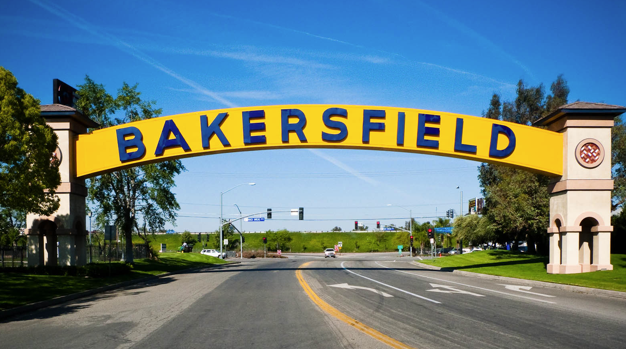 No More Bakersfield Jokes! Not known for its scenery,Bakersfield nevertheless continues to attract plenty of visitors leading the state in May 2012 in the percent increase in rooms sold vs 2011- up 13% and up 11% in occupancy as well. Bako’s closely watched RevPAR was up 16.2%.
Statewide California was up 3.9% on rooms sold in May while Tulare/Visalia metro improved from April (when it was down-3.4%) with a 5.7% increase in rooms sold and 4.2% increase in RevPAR .
Over on the Coast, SLO County showed a 4.8% increase in rooms sold and 5.5% RevPAR jump.
The research done by Smith Travel shows RevPAR’s highest increase was around airport area hotels – up nearly 12% from May 2011.
Back in Kern County other signs of a resurgent economy are evident like this news item.“Among California metro areas, Kern County had the fourth highest rate of five year growth in median household income. In an analysis released Monday of U.S. Census Bureau estimates, the Sacramento Business Journal identified 25 metro areas in the state with the largest percentage gains in median household income from 2005 to 2010.During those five years, Kern’s median household income grew by 13.2 percent, rising $5,300 to $45,524.”
Got to like those gasoline prices ,falling every day, that may help boost summer travel in the Golden State in coming months.The nation’s airlines jet fuel index as measured by their industry group -is down 15% from a year ago and 11.5% lower than just one month ago. Hey,pass some that down!
But there should be more savings at the retail pump for that July 4 trip on tap. Why? Gasoline providers are getting wholesale gas(CARBOB/LA) at 90 cents cheaper per gallon as of June 20 than they got as of May 15 while the retail price of gas to you and me has dropped 40 to 50 cents. California Energy Commission website reports a spike in margins in the past few weeks as they slooooolwly meter out the savings on lower oil costs.

State Home Sales Surge
 California’s housing market continued to improve in May, with home prices posting solid gains for the third straight month and home sales well above last year’s pace, the CALIFORNIA ASSOCIATION OF REALTORS® (C.A.R.) said this week.
“California home sales were strong in May, continuing the gradual recovery of the California housing market,” said C.A.R. President LeFrancis Arnold. “First-time buyers are recognizing that the housing market has hit bottom and are now seeing a sense of urgency to take advantage of ultra-low interest rates and advantageous home prices. Additionally, trade-up buyers are returning to the market after sitting it out for the past few years to get in on favorable home prices.”
Closed escrow sales of existing, single-family detached homes in California climbed 3.4 percent from April’s revised 553,670 to a seasonally adjusted annualized rate of 572,260 in May, according to information collected by C.A.R. from more than 90 local REALTOR® associations and MLSs statewide.
Sales Up 21.5%
May sales surged 21.5 percent from May 2011’s revised 470,910 pace, marking the highest year-over-year sales increase since May 2009. The statewide sales figure represents what would be the total number of homes sold during 2012 if sales maintained the May pace throughout the year and is adjusted to account for seasonal factors that typically influence home sales.
The May 2012 sales pace was the highest since February 2009, when 598,770 homes were sold at a seasonally adjusted annualized rate.
Home prices appear to be stabilizing, with the median home price posting both month-over-month and year-over-year gains for the third consecutive month. The statewide median price of an existing, single-family detached home was $312,110 in May, the highest since September 2010.
May’s price was up 1 percent from a revised $309,050 in April and 6.6 percent from a revised $292,850 recorded in May 2011. The May 2012 figure was 27.3 percent higher than the cyclical bottom of $245,230 reached in February 2009. The median price has posted above the $300,000 level for the second straight month after remaining below that mark for 15 months.
The increase in the median price can be attributed to the strong sales increase in the higher-priced coastal regions, particularly in the San Francisco Bay Area, where job growth is strong and the economy is growing faster than other areas of the state.
San Luis Obispo home sales in May were up 42.8% year over year and 31.5% higher than just one month earlier. The median price climbed to $382,470, up 6% for the month but just 0.3% higher year over year. Homes are selling faster in SLO County,an average of 42 days compared to 59.6 days in May 2011.
Valley Contrast
By contrast sales in the Central Valley are showing only some improvement with sales actually declining 10.9% in Tulare County and up 3% in Fresno year over year, The median price climbed 4% year over year in Tulare County to $123,190 and up 3.5% in Fresno County.Time on the market in Tulare County in May 2012 was just 25 days in Tulare County and 28 days in Fresno indicating keen buyer demand. A year ago the market took nearly 40 days in Fresno County.
California’s housing inventory sank lower in May, with the Unsold Inventory Index for existing, single-family detached homes dropping to 3.5 months in May, down from 4.2 months in April. May’s housing inventory was down from a revised 5.7 months in May 2011. The index indicates the number of months needed to sell the supply of homes on the market at the current sales rate. A 7-month supply is considered normal.
“Low housing inventory continues to be the critical issue in the California market,” said C.A.R. Vice President and Chief Economist Leslie Appleton-Young. “Inventory levels have not been this low since December 2005, when the supply matched the current level. The Bay Area has the greatest shortage of homes for sale, with inventory levels in the two- to three-month range for Santa Clara, San Mateo, Alameda, and Contra Costa counties.”
Interest rates continued their downward trend in May, with 30-year fixed-mortgage interest rates averaging 3.80 percent, down from 3.91 percent in April and 4.64 percent in May 2011, according to Freddie Mac. Adjustable-mortgage interest rates averaged 2.74 percent in May, down from 2.78 in April and 3.13 percent in May 2011.
Homes are moving faster on the market with the median number of days it takes to sell a single-family home dropping to 46.6 days in May, down from a revised 48.9 days in April and 52.0 days in May 2011.