Chance For Some Rain This Weekend

September 9,2015-

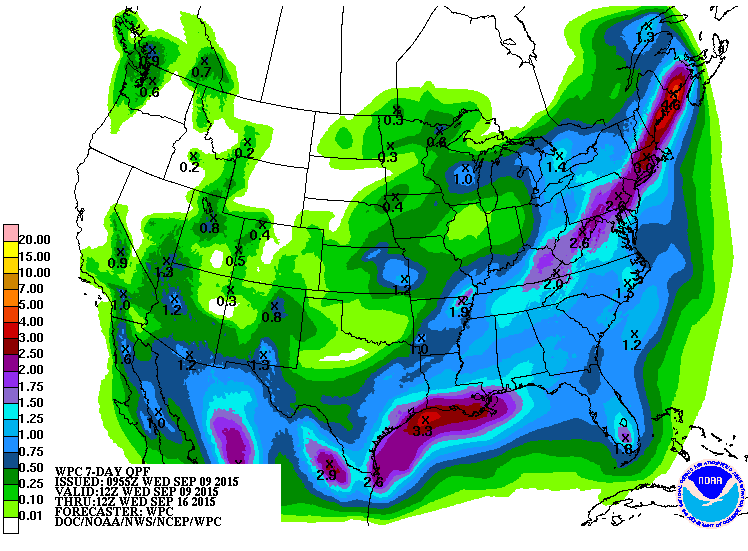
Screen Shot 2015-09-09 at 10.22.43 AMNOAA weather model for the next week shows the possibility of some rain in middle California coming up from Baja including rain in SLO and Tulare Counties and up in the Sierra. Of course, storms are likely to be isolated and could include lighting strikes in the Sierra where we don’t need them.
The map is total accumulation for Sept 9th-16.

California Weather Blog Points To Wet Winter, Flooding

September 6,2015-

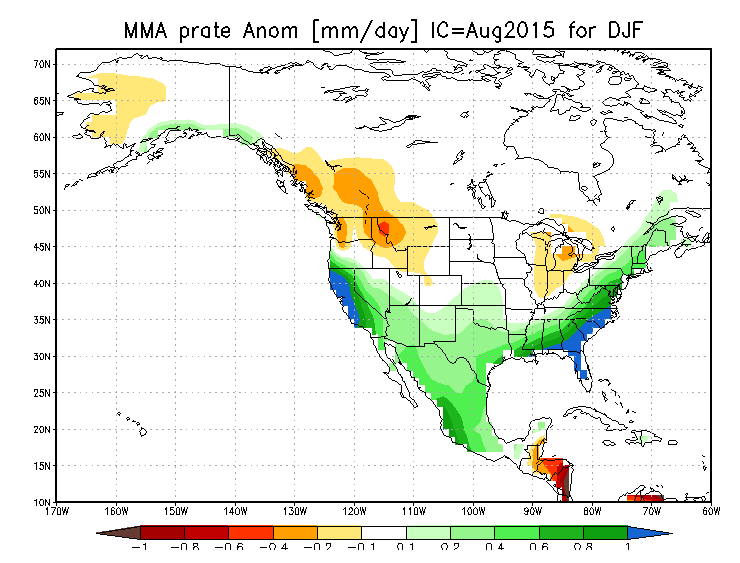
A respected weather blogger Daniel Swain of Stanford points to the NOAA weather forecasts for this winter (see map) as El Nino heats up the tropical Pacific waters to more than 2 degrees hotter than usual and strengthening. This excerpt from the California Weather Blog is dated September 2.
The present very strong El Niño is expected to substantially strengthen the subtropical jet stream and associated low-latitude storm track near California this winter, which will bring the potential for more frequent and dynamically stronger systems than would typically occur during the December-March period. Further, water temperatures along the immediate Pacific coastline are expected to remain very warm through the coming winter, which will likely increase the amount of lower-atmospheric moisture available to California-bound storm systems (and perhaps also increase near-surface instability). All of this suggests that there could be a substantially increased risk of precipitation-related hazards this winter in California, including flooding and landslides.

Looks Like Wet Winter

Anna’s Linens Will Close All Stores Here

September 4,2015-

Screen Shot 2015-09-05 at 12.28.52 PMAnna’s Linens is closing all 268 stores this month including the Visalia Mooney Blvd location.”We are closing this Wednesday” says a Visalia store employee. There are 4 Anna’s  locations in the the Fresno /Clovis metro area that are also closing.

On the Coast the company will close its Santa Maria location as well.
Anna’s Linens, a home goods retailer, filed for bankruptcy in June, and stores across the country are currently holding going-out-of-business sales to clear merchandise.
The company operated a chain of 268 retail stores in 19 states and generated more than $300 million in annual revenue. The company also employed a workforce of more than 2,500 associates, according to its website.

Biz Briefs

Tulare Building Permit Value Higher

The value of all building permits in Tulare this year through July, seven months, is $23.4 million compared to all of last year at $28.3 million withe several large projects pending.The jump comes in commercial building permits. Home permits are slower. In 2014 the city issued permits for 203 homes. So far through 7 months the city has issued 86 single-family home permits.

Walnut Crop Looks Good

USDA says the 2015 California walnut production forecast is at a record 575,000 tons, up 1 percent from 2014. Despite a lack of chilling hours and a drought that continued to impact California, the 2015 walnut crop forecast is at a record level. Relatively mild summer temperatures have benefitted the crop. Crop quality is reported to be excellent with low disease and insect pressures. Tulare County has over 40,000 acres of walnuts.

Screen Shot 2015-09-04 at 11.25.58 AMSequoia Park Visitation Up 10%

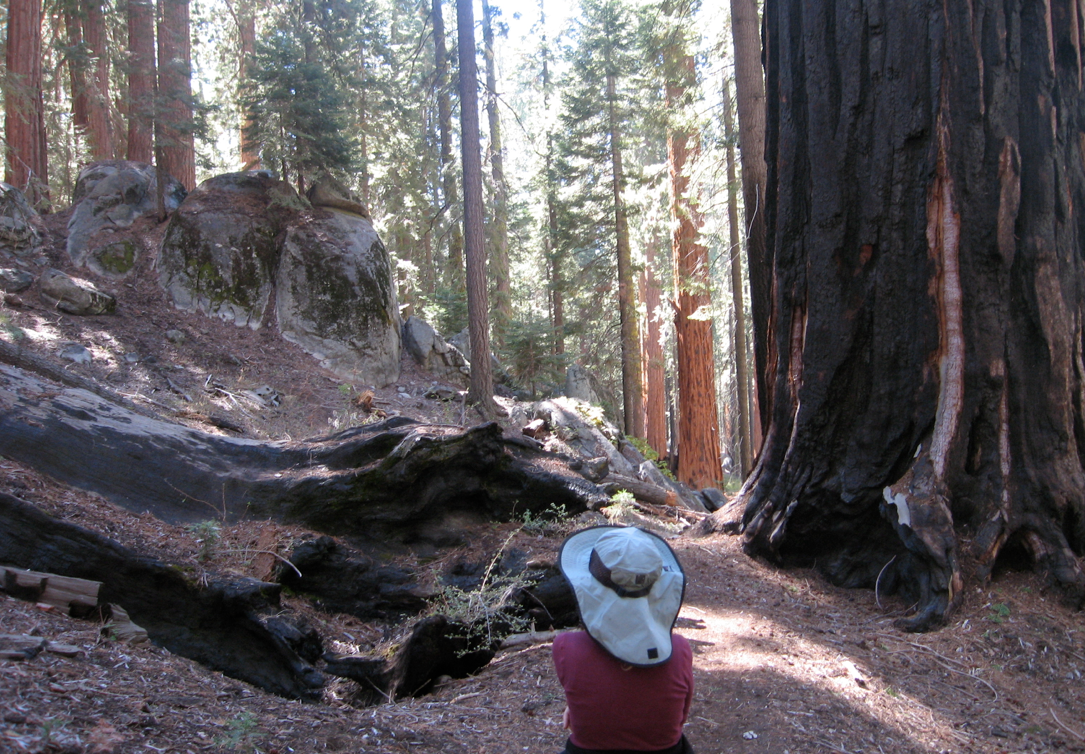
Recreational visitation to Sequoia Park was up over 10% in July according to NPS figures.

If US Exports Oil – What Happens to Domestic Gasoline Prices?

With a glut of oil in the US – some in the industry want to export crude.But will the oil companies gain be the consumer’s loss? The US Energy Information Agency says no. “ Petroleum product prices in the United States, including gasoline prices, would be either unchanged or slightly reduced by the removal of current restrictions on crude oil exports. As shown in a previous EIA report, petroleum product prices throughout the United States have a much stronger relationship to North Sea Brent, an international crude oil benchmark price, than to West Texas Intermediate (WTI), a domestic benchmark price.”

Study: Scientists Say GM Foods Safe But Public Says No

A new PEW study points to a big gap between scientists and the public  view of genetically modified foods. A majority of the general public (57%) says that genetically modified (GM) foods are generally unsafe to eat, while 37% says such foods are safe; by contrast, 88% of  scientists say GM foods are generally safe. The gap between citizens and scientists in seeing GM foods as safe is 51 percentage points. This is the largest opinion difference between the public and scientists.

California Exports Hold Steady Despite Global Conditions

September 3, 2015 –

Screen shot 2012-06-15 at 12.12.22 PMCalifornia’s export trade in July remained on a par with the state’s export trade during the same month one year earlier, according to a Beacon Economics analysis of foreign trade data released this morning by the U.S. Commerce Department.
The state’s exports of goods to foreign markets in July totaled $13.80 billion, down 0.4% from the $13.85 billion recorded in July 2014. By way of comparison, overall U.S. merchandise exports fell by 6.8% over the same period, while exports from Texas shrank by 13.0%.
California’s exports of manufactured goods in July declined by 0.7% to $8.97 billion from $9.03 billion last year. Exports of non-manufactured goods (chiefly agricultural produce and raw materials) tumbled by 12.4% to $1.48 billion from $1.69 billion the previous July. Re-exports rose by 6.9% to $3.35 billion from $3.13 billion.
“The good news is that California’s exporters and trading companies pretty much held their own during an especially dicey time for global trade,” said Jock O’Connell, Beacon Economics’ International Trade Adviser. California’s export trade so far this year is lagging  last year’s pace by 2.4%.
Overall, sluggishness in the international economy and in global trade hasn’t affected the broader U.S. economy. “The numbers continue to look good for the U.S.,” said Beacon Economics’ Founding Partner Christopher Thornberg. “Despite recent swooning in the financial markets, not only does the U.S. economy not look fragile, it looks increasingly able to weather whatever storm is unleashed in Asia by a slowing Chinese economy.”
A Closer Look At The Numbers
As always, Beacon Economics cautions against reading too much into month-to-month fluctuations in state export statistics, especially when focusing on specific commodities or destinations. Significant variations may occur as the result of unusual developments or exceptional one-off trades and may not be indicative of underlying trends. For that reason, Beacon Economics compares the latest three months for which data are available (i.e., May – July) with the corresponding period one year earlier.
California’s merchandise exports during the May-July period totaled $43.03 billion, a nominal decline of 1.7% from the $43.79 billion recorded during the same period twelve months earlier. The state accounted for 11.2% of total U.S. merchandise exports in the latest three months.
California’s export trade is highly diversified. Eleven major categories of goods each accounted for at least $1 billion in exports in the latest three-month period. Among the top ten categories, performance was variable in the latest quarter with only four categories showing growth.
On the plus side, topping the export list was Computer & Electronic Products, up 3.8% to $10.78 billion from $10.39 billion. Transportation Equipment exports rose 8.7% to $4.80 billon from $4.42 billion. Non-electrical Machinery exports increased 10.6% to $4.01 billion from $3.63 billion, and exports of Agricultural Products edged up 1.6% to $3.18 billion from $3.13 billion.
On the downside, exports of Miscellaneous Manufactured goods dropped by 4.7% to $4.16 billion from $4.37 billion. Chemical exports were off 5.9% to $3.36 billion from $3.58 billion. Exports of Food and Kindred Products fell 13.2% to $2.40 billion from $2.76 billion. Electrical Equipment exports slipped by 2.3% to $1.76 billion from $1.81 billion. Exports of Petroleum and Coal Products plummeted 32.1% to $1.20 billion from $1.77 billion. Fabricated Metal exports fell 4.8% to $1.05 billion from $1.10 billion. Finally, exports of Waste and Scrap were down 13.7% to $1.05 billion from $1.22 billion.
Mexico continued to rank as California’s single largest export destination during the latest three-month period, with the value of exports jumping 6.8% to $6.92 billion from $6.48 billion. Exports to Canada slipped by 4.4% to $4.30 billion from $4.50 billion, while shipments to China dropped by 11.9% to $3.85 billion from $4.37 billion. Exports to Japan also declined by 3.8% to $2.96 billion from $3.08 billion. South Korea, up 8.7% to $2.27 billion from $2.09 billion, rounded out California’s ‘Top Five’ national export destinations in the May-July quarter.
Regionally, California’s exports to the Asia Pacific region (including Australia and New Zealand) dropped 4.2% to $16.20 billion from $16.91 billion, a dip propelled largely by the fall-off in exports to China. California’s exports to the European Union slipped by 1.2% to $7.43 billion from $7.52 billion.
California’s exports to Latin America and the Caribbean (excluding Mexico) were down by 12.9% to $2.27 billion from $2.61 billion. California’s exports to South Asia (chiefly India and Pakistan) were off 1.7% to $1.38 billion from $1.41 billion. The state’s exports to Sub-Saharan Africa in the latest three months amounted to just $191 million, up 5.3% from $181 million during the same period twelve months earlier.
By mode of transportation, 46.7% of California’s $43.03 billion merchandise export trade in the latest three months was shipped by air, with Los Angeles International and San Francisco International Airports accounting for the vast majority of the state’s airborne trade. Seaports handled 29.1% of the state’s export trade, while 24.3% traveled by other modes, chiefly overland by truck or rail to Canada and Mexico.
The Outlook
Beacon Economics’ outlook for California’s merchandise export trade does not see a resumption of positive growth in the offing. We are not encouraged by recent developments in China where the promise of a burgeoning middle-class driving a growing import trade has not been borne out. Given the recent devaluation of the Chinese currency, we expect merchandise exports to China (the state’s third largest export market) to continue to decline through the balance of this year.
Exports to Canada (California’s second largest export destination) have been ebbing in recent months as the resource-rich country copes with a recession caused largely by the collapse in oil and gas prices. Aggravating the situation for California exporters is the fact that the Canadian dollar has continued to lose value against the U.S. dollar.
While Beacon Economics expects modest growth in California’s exports to Europe later in the year, the biggest gains are likely to be seen in the state’s exports to Mexico. As we have noted previously, a very sizable portion of California’s export trade with Mexico involves factories south of the border that export the vast majority of their output to the United States. In that way, California’s export trade with Mexico tends to rise or fall in tandem with economic activity here rather than in Mexico. That should bode well for California exporters in coming months.

Oil Price Drop In Kern / Boost For LA Water Supply

Kern Oil Poised To Drop Below $40

Screen Shot 2015-08-19 at 1.40.32 PMMidway Sunset crude oil is expected to drop into the high $30s range August 20 following the big drop in WTI crude in the $40 range today.
Crude oil for delivery in September settled at $40.80 a barrel, down $1.82, or 4.3% on the New York Mercantile Exchange today, with prices marking their lowest settlement since March 2, 2009. The price sank after the U.S. Energy Information Administration reported an increase of 2.6 million barrels in crude supplies for the week ended August 14. Analysts polled by Platts forecast a crude-stock fall of 1.2 million barrels.
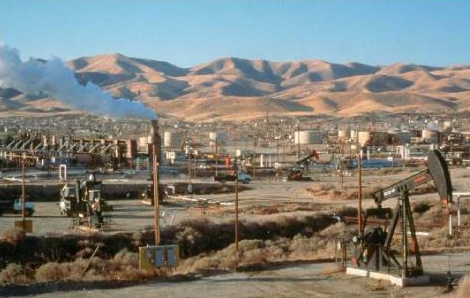
The last time Kern crude fell this low was in January of 2015. Midway Sunset oilfield holds approximately 18% of California’s estimated reserves, 532 million barrels – the state’s largest oilfield.The oil is sent by pipeline to Chevron’s refineries in Richmond and El Segundo, California. Midway Sunset oil price as posted by Chevron has ranged from $10 in the 1990s to the $30s as recently as 2004 and well over $100 a barrel in 2013 before dropping this year. The low price for oil is hurting the Kern County economy.

Colorado River Storms Boost LA’s Water Supply
Savings On Dust Control

if there is a bright spot in the California drought it is a few states away in the Rocky Mountains  where May and June storms have boosted  the water supply of 40 million residents of 7 southwest states  including the big population of Los Angeles. The US Bureau of Reclamation  recently announced that an increase in high country rain this summer has prompted  them to project normal water deliveries through 2016 and even likely 2017.

“We may have dodged a bullet for the next few years,” said William Hasencamp, Colorado River resources chief for the Metropolitan Water District of Southern California.

Meanwhile, LA has been doing some serious saving on water  including making a deal with Owens Valley to implement waterless dust control measures in the old lake bed .
As a result, LADWP expects to save nearly 8,600 acre feet, or nearly 3 billion gallons, of water this year.  That is enough water to serve 43,000 people. And the path is set to significantly expand those savings in the future.
The Agreement stems from the recognition that the enormous Owens Lake dust control project that LADWP has implemented on more than 45 square miles of the lakebed over the past 15 years at a cost of over $1.3 billion has eliminated more than 90% of the excess blowing dust.

NOAA’s “Unanimous Forecast” Calls For Strong El Nino

13 August 2015-
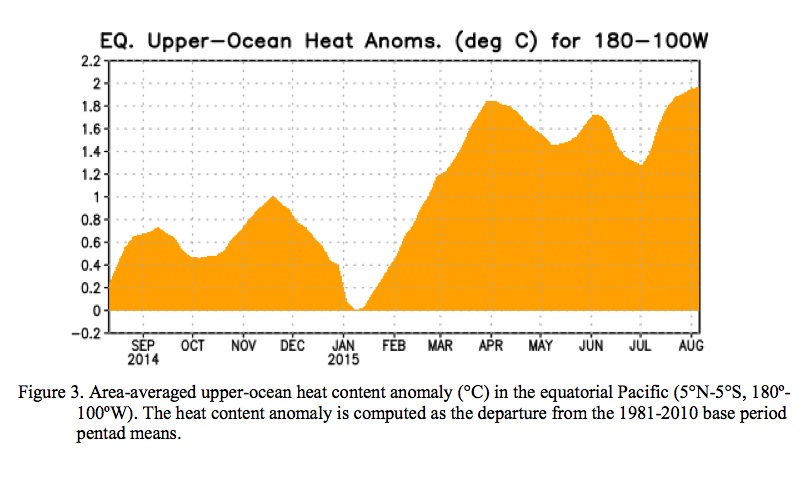
hot water 2015-08-13 at 8.14.47 AMThe latest forecast form NOAA”s Climate Prediction Center released today calls for a strong El Nino weather pattern this fall through early winter, a bullish forecast for rain for California. NOAA says there is a greater than 90% chance that El Niño will continue through Northern Hemisphere winter 2015-16, and around an 85% chance it will last into early spring 2016.
“Strengthening El Nino”
“All models surveyed predict El Niño to continue into the Northern Hemisphere spring 2016, and all multi-model averages predict a strong event at its peak in late fall/early winter (3-month values of the Niño-3.4 index of +1.5°C or greater. At this time, the forecaster consensus unanimously favors a strong El Niño, with peak 3-month SST departures in the Nino 3.4 region potentially near or exceeding +2.0°C. Overall, there is a greater than 90% chance that El Niño will continue through Northern Hemisphere winter 2015-16, and around an 85% chance it will last into early spring 2016 (click CPC/IRI consensus forecast for the chance of each outcome for each 3-month period).
The statement says “During July, sea surface temperatures (SST) anomalies were near +1.0°C in the central equatorial Pacific Ocean, and in excess of +2.0°C across the eastern Pacific (Fig. 1). SST anomalies increased in the Niño-3 and Niño-3.4 regions, while the Niño-4 and Niño-1+2 indices decreased slightly during the month (Fig. 2). Positive subsurface temperature anomalies strengthened in the central and east-central equatorial Pacific during the month (Fig. 3), in association with the eastward movement of a downwelling oceanic Kelvin wave (Fig. 4). The atmosphere remained coupled to the oceanic warming, with significant low-level westerly wind anomalies continuing from the western to east-central equatorial Pacific, along with anomalous upper-level easterly winds. Also, the traditional and equatorial Southern Oscillation Index (SOI) were both negative, consistent with enhanced convection over the central and eastern equatorial Pacific and suppressed convection over Indonesia (Fig. 5). Collectively, these atmospheric and oceanic features reflect a significant and strengthening El Niño.
The CPC says the 3-month seasonal outlook will be updated on Thursday August 20th.

Amid debate over labeling GM foods, most Americans believe they’re unsafe

August 11, 2015
From PEW

The debate over the safety of genetically modified foods has put state lawmakers who favor requiring labeling of these products at odds with counterparts in Congress who oppose it. Americans’ concerns about GM foods are providing the backdrop: A majority of them believe such foods are generally unsafe to eat.

The House last month passed a bill that would nullify any state laws that require labeling, dealing a blow to state lawmakers and advocates who support such a move. A similar bill has yet to be introduced in the Senate. This comes after three states – Vermont, Connecticut and Maine – passed legislation this year making GM food labeling mandatory; dozens of other states are exploring similar bills on the issue.

As this issue plays out on Capitol Hill, polls show that a majority of Americans support labeling genetically modified foods, and half check for GM food labels while shopping.

More than half (57%) of U.S. adults believe that GM foods are generally unsafe to eat, while 37% say these foods are safe, according to a Pew Research Center survey. Women are more likely than men to view GM foods as unsafe (65% vs. 49%). Opinions also vary by race and ethnicity; blacks and Hispanics are more likely than whites to say that genetically modified foods are generally unsafe to eat.

The Pew Research survey also found differences in views based on education levels and science knowledge. Those with lower levels of educational attainment or science knowledge are more inclined to view GM foods as unsafe.


Commercial Construction Activity in California Rises to its Highest Level Since 2001

Screen Shot 2015-08-12 at 6.36.06 AMSteady Optimism Bolstered by Flourishing Technology and Media Industries, Job and Income Growth

LOS ANGELES, Aug 12, 2015 (BUSINESS WIRE) — Commercial construction activity in California has risen to its highest level since 2001. Available financing, low cap rates, an increasingly high demand from technology, advertising, media and information companies, and a shortage of multi-family housing have sparked the industry boom. The outlook for the next three years, based on the most recent Allen Matkins/UCLA Anderson Forecast California Commercial Real Estate Survey, is for continued growth in commercial property development. The Survey, examining seven of the state’s major markets, is a leading indicator of future commercial construction. The analysis of the three-year outlook for real estate development activity provides insights to new, not yet on the radar, building projects.
“Continued optimism in this Survey is supported by job and income growth and a lack of sufficient building supply,” said Jerry Nickelsburg, adjunct professor of economics at UCLA Anderson School of Management and senior economist with the UCLA Anderson Forecast. “While the outlook remains positive through 2018 with no weakening in occupancy rates, a few of the survey panel participants did express slight caution with regard to this next stage of the CRE building cycle.”
The 2015 Summer/Fall Allen Matkins/UCLA Anderson Forecast California Commercial Real Estate Survey and related videos are available for download here.

View the 2015 Spring Allen Matkins/UCLA Anderson Forecast California Commercial Real Estate Survey infographic here.
Commercial Office Space: Decreasing Vacancy Rates, Low Unemployment Drive Demand
The Survey’s overall outlook for the office market in each of the six markets surveyed in this sector remains strong, due in part to falling vacancy rates and an overall positive outlook for the economy. Technology, advertising, media and information companies are the new driving force for this positive sentiment, as the recovery of service-provider companies, such as accounting, finance, insurance and legal has remained tepid. None of the Survey participants foresee rental or occupancy rate weakness through 2018.
Over the next 12 months, 40 percent of the Southern California Panelists stated they expect to begin at least one new project. This compares to the 23 percent that began one or more new developments over the past 12 months.
Similarly, the Bay Area panels expressed optimism, but the panel had some concerns with respect to rental and vacancy rates. For some of the panelists, though far from a majority, current new construction is sufficient to meet what they perceive to be future demand. Therefore, they do not expect future rental or vacancy rates in these markets to be either better or worse than today. In the December 2014 Survey, only 39 percent of the panelists reported plans for a new development project in the following 12 months. In the current Survey, the percentage rose to 67 percent of the participants.
Multi-Family Residential: Development Remains Strong in All Markets
Multi-family developer optimism remains strong in each of the five regions surveyed, and is reflected by the fact that 74 percent of the panelists started a new project within the past year and even more are expecting to begin new projects in the coming six months. This positive view of the future of multi-family housing is expected to continue as job growth in California will continue to be skewed towards these five coastal communities. Increased employment translates directly into new household formation and additional demands for housing. The Orange County and San Diego County markets were added to the most recent Survey, and as with the previously surveyed markets – Los Angeles, San Francisco and Silicon Valley – the new survey panels expect no decrease in vacancy rates over the next three years.
The story of the current economic expansion has been a shift in tastes from single-family housing to a balanced mix between single-family and multi-family housing. Though overall residential construction has remained at depressed levels in the state, multi-family construction has rebounded sharply. The forecast for higher rents and continued low vacancy rates should induce a further increase in multi-family construction. The UCLA Anderson Forecast, consistent with the Survey, expects that multi-family construction will achieve a 25-year high during the next three years.
Industrial and Warehouse Space: Outlook Remains Steady But Strong
The current Survey of industrial space developers indicates little change in sentiment over the last year. The optimism expressed continues to be manifested in new building, particularly in the Inland Empire. In the current survey 68 percent of the panel are planning one or more new industrial projects in Southern California between June 2015 and June 2016.
While the sentiment is unchanged at strongly optimistic, there is clearly a continued strengthening in the Southern California industrial space market. This is due in part to post labor dispute, increased imports through the San Pedro Bay Ports and more generally to the increase of consumer spending and the increased use of retail distribution centers. The expectation of the panels is for Southern California industrial space markets to remain hot for at least the next three years.
Retail Space: Market Reviving with Consumption Growth
The most recent Survey, the first in which the retail market was included, suggests strong optimism with regard to retail space in the Los Angeles, Orange County and San Diego markets. Two-thirds of the panelists are planning new retail construction in the next 12 months. Though there are not previous surveys to benchmark these results, the technology, advertising, media and information industry boom, and economic growth in specific regions, combined with the optimism expressed by the Survey panels suggests at a minimum a re-vitalization of retail construction in Southern California retail sub-markets.
About the Survey 
The Allen Matkins/UCLA Anderson Forecast California Commercial Real Estate Survey polled a panel of California real estate professionals in the development and investment markets, on various aspects of the commercial real estate market. The survey is designed to capture incipient activity by commercial real estate developers. To achieve this goal, the panel looks at the markets three years in the future, and building conditions over the three-year period. The survey was initiated by Allen Matkins and the UCLA Anderson Forecast in 2006, in furtherance of their interest in improving the quality of current information and forecasts of commercial real estate.
About Allen Matkins 
Allen Matkins, founded in 1977, is a California-based law firm with approximately 200 attorneys in four major metropolitan areas of California: Los Angeles, Orange County, San Diego and San Francisco. The firm’s areas of focus include real estate, construction, land use, environmental and natural resources; corporate and securities, real estate and commercial finance, bankruptcy, restructurings and creditors’ rights, joint ventures and tax; labor, employment and OSHA; and trials, litigation, risk management and alternative dispute resolution in all of these areas. Allen Matkins is located on the web at www.allenmatkins.com.

Suncrest Bank Relocating To Main Street In Visalia

August 11,2015-

Visalia-based Suncrest Bank has been busy lately opening a branch in Kingsburg, buying Sutter Community Bank and also raising $13.4 million in new capital. Now the fast growing  bank will relocate its main branch and corporate office from Center Street to a prominent location  at 501 Main Street around the end of the year says CEO Ciaran McMullan. The bank first opened in Visalia in 2013.

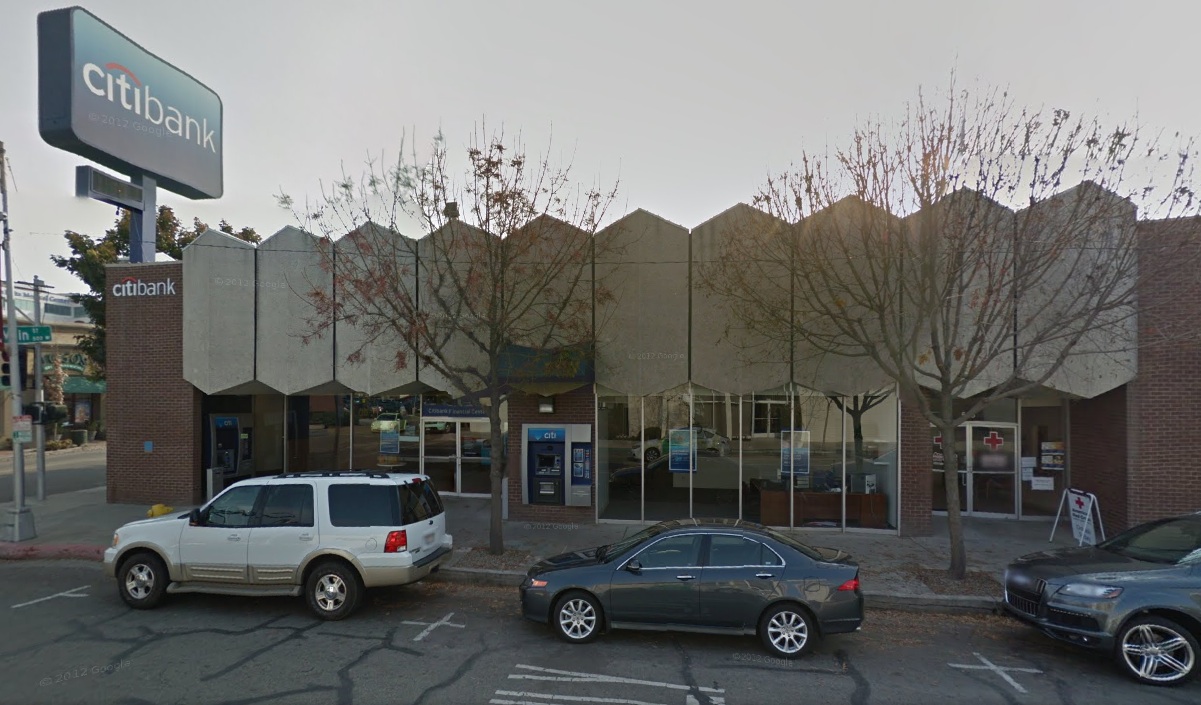
Suncrest 2015-08-11 at 1.37.47 PM“We had an opportunity with the closing of CitiBank in Visalia to locate  our home branch in a permanent location with more space” says McMullan adding they will be purchasing as well as doing a major remodel of the building vacated by Citibank earlier this year as well as a location in Kingsburg.

Citibank closed 9 branches Valley wide in the past 6 months.

Suncrest Bank leases their current location at 400 West Center.

With the merger announced last month Suncrest Bank headquartered  in  Visalia, had approximately  $200  million in  total  assets as of  March  31,2015  and  operated  three  branches  in  Tulare  and  Fresno counties.   Sutter  Community   Bank   is  headquartered   in   Yuba   City,   CA,   with  approximately  $67  million  in total  assets operating one  branch in  Sutter  County.