California Unemployment Rate Drops To Lowest Point In Eight Years

October 17,2015-

“In addition to the 8,200 Nonfarm jobs added last month, the Farm sector also added 4,400 jobs despite the drought that has persisted for several years.”

Screen shot 2012-06-15 at 12.12.22 PMCalifornia’s unemployment rate has fallen below 6% for the first time in almost 8 years. The state’s unemployment rate dipped 0.2 percentage points in September, hitting 5.9%. The last time the percentage of unemployed workers was this low was in November 2007—prior to the official start of the ‘Great Recession’, which began in December 2007. The state also added 8,200 new jobs Nonfarm in the latest numbers.

While the overall number of employed residents increased by 11,900 in September, the state’s labor force also declined last month as 31,900 formerly unemployed workers left the workforce. Beacon Economics has some doubt about this contraction and finds that California’s labor markets continue to perform well.

“The extremely small sample size of the unemployment survey (0.04% of all households) casts doubt on the large decline in the state’s labor force, particularly in light of gains in farm and nonfarm jobs and the increase of more than 11,000 employed residents,“ said Jordan Levine, Economist and Director of Economic Research at Beacon Economics. “September’s job growth was down compared to growth in August, but represented growth nonetheless; the employment outlook for the Golden State remains very positive.”

As always, Beacon Economics cautions against reading too much into any single month’s numbers. EDD data is derived from sample-based estimates and may be revised up or down in subsequent months.

Key Points:

  • In addition to the 8,200 Nonfarm jobs added last month, the Farm sector also added 4,400 jobs despite the drought that has persisted for several years. California is expected to experience heavy precipitation this winter, but the lack of rainfall to date has done little to arrest growth in the agricultural sector. This winter’s much-needed rainfall may give the Farm sector a shot in the arm for 2016, although it remains to be seen as to how much of the forecasted weather will actually materialize.
  • The Job growth was spread across a variety of industries, with both high- and low-wage categories seeing an increase. Administrative Support jobs, a middle-income category which includes temporary workers, saw the largest boost with 6,800 new jobs created. The Information sector, which includes everything from Motion Pictures to Software Publishing, posted a 4,900 job increase. This sector tends to be one of the highest paying in the state, with an annual average wage of more than $152,000 as of the first quarter of 2015.
  • The Arts and Entertainment, Construction, and Retail Trade sectors also posted healthy increases, adding 3,100, 2,100, and 1,500 jobs, respectively. The uptick in overall employment and wage growth that the state has been experiencing, along with housing market gains, undoubtedly helped propel these sectors forward in September as Californians spent more money and builders responded to the dwindling supply of homes available for sale or rent. Even the public sector saw solid increases, with 6,200 new positions added – driven entirely by the Local Government sector (cities, counties, and local agencies).
  • Still, several sectors did see job losses last month. Manufacturing employment declined in September by a modest 200 positions. The Healthcare sector, which has been a stalwart throughout the recession and recovery, also shed 900 jobs after adding more than 17,000 in August. However, the largest losses came in the Financial Activities, Professional, Scientific, & Technical Services, and Hotel/Restaurant sectors, which shed 5,900, 5,800, and 2,200 jobs, respectively.
  • Regionally, gains and losses were spread across the state. Los Angeles (+22,300), San Diego (+5,700), San Francisco (+4,100), the East Bay (+1,900), and the Inland Empire (+1,000) experienced the largest upticks. However, these gains were offset by losses in Sonoma County (-1,100), Silicon Valley (-4,100), and Orange County (-5,700). Every other metropolitan area saw gains or losses that were less than 1,000 jobs. Again, these numbers are based upon a survey and are likely to be revised. California continues to set new all-time high levels of employment and while some areas and sectors are doing better than others, the overall outlook remains positive.


 

SLO County Jobless Rate Falls To 4.1 Percent

October 16,2015-
Screen shot 2013-01-19 at 11.41.42 AMThe unemployment rate in the San Luis Obispo County was 4.1 percent in September 2015,
down from a revised 4.7 percent in August 2015, and below the year-ago estimate of 5.4 percent. Over the year the county added 3700 new non-farm jobs while farm jobs remained the same.
This compares with an unadjusted unemployment rate of 5.5 percent for California and 4.9 percent for the nation during the same period.

NOAA: Strong El Nino To Bring Wet Weather To California

October  15,2015

Winter Oulook Issued

Click To Enlarge
Click To Enlarge

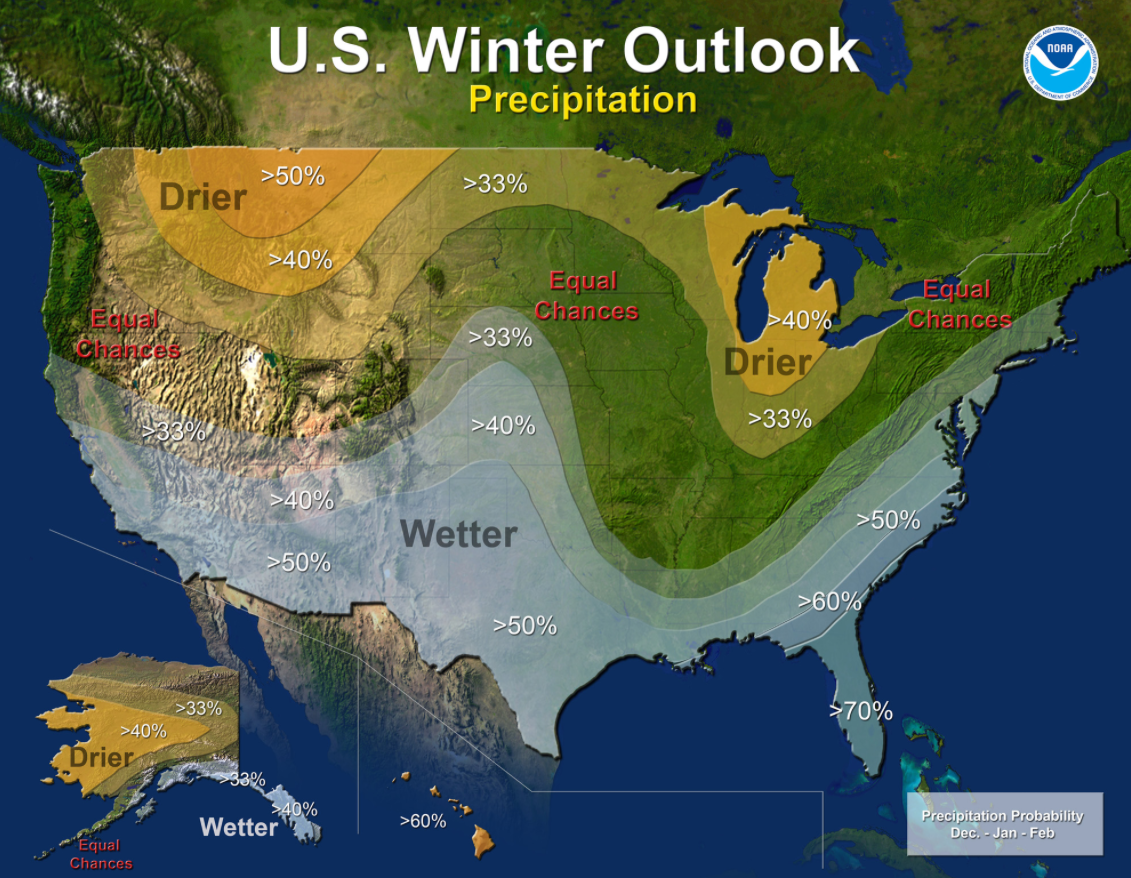
Forecasters at NOAA’s Climate Prediction Center issued the U.S. Winter Outlook today favoring cooler and wetter weather in Southern Tier states with above-average temperatures most likely in the West and across the Northern Tier. This year’s El Niño, among the strongest on record, is expected to influence weather and climate patterns this winter by impacting the position of the Pacific jet stream.
“A strong El Niño is in place and should exert a strong influence over our weather this winter,” said Mike Halpert, deputy director, NOAA’s Climate Prediction Center. “While temperature and precipitation impacts associated with El Niño are favored, El Niño is not the only player. Cold-air outbreaks and snow storms will likely occur at times this winter. However, the frequency, number and intensity of these events cannot be predicted on a seasonal timescale.”
Other factors that often play a role in the winter weather include the Arctic Oscillation, which influences the number of arctic air masses that penetrate into the South and nor’easters on the East Coast, and the Madden-Julian Oscillation, which can impact the number of heavy rain storms in the Pacific Northwest.
The 2015 U.S. Winter Outlook (December through February):
Precipitation Outlook:
Wetter-than-average conditions most likely in the Southern Tier of the United States, from central and southern California, across Texas, to Florida, and up the East Coast to southern New England. Above-average precipitation is also favored in southeastern Alaska.
Drier-than-average conditions most likely for Hawaii, central and western Alaska, parts of the Pacific Northwest and northern Rockies, and for areas near the Great Lakes and Ohio Valley.
Temperature Outlook:
Above-average temperatures are favored across much of the West and the northern half of the contiguous United States. Temperatures are also favored to be above-average in Alaska and much of Hawaii. Below-average temperatures are most likely in the southern Plains and Southeast.
Drought Outlook:
The U.S. Drought Outlook shows some improvement is likely in central and southern California by the end of January, but not drought removal. Additional statewide relief is possible during February and March. Drought removal is likely across large parts of the Southwest, while improvement or removal is also likely in the southern Plains. However, drought is likely to persist in the Pacific Northwest and northern Rockies, with drought development likely in Hawaii, parts of the northern Plains and in the northern Great Lakes region.

State Public Health Officer Warns of Invasive Mosquitoes Detected in California

October 15,2015-

Screen Shot 2015-10-15 at 5.56.28 AMCalifornia Department of Public Health (CDPH) Director and State Public Health Officer Dr. Karen Smith is warning Californians to protect themselves from two invasive mosquito species recently found in California. Both species can transmit infectious diseases, such as dengue fever, chikungunya and yellow fever. This warning comes as two more counties are added to the list of counties where Aedes aegypti (the yellow fever mosquito) and Aedes albopictus (the Asian tiger mosquito) have been detected.
“It is important to know these species of mosquitoes because they are not what we’re used to in California, and they can transmit diseases such as dengue fever, chikungunya and yellow fever,” Dr. Smith said. “While the risk is still low in California, infected travelers coming back to California can transmit these viruses to mosquitoes that bite them. This can lead to additional people becoming infected if they are then bitten by those mosquitoes.”
In September 2015, Aedes aegypti was detected for the first time in San Bernardino and Riverside Counties.  Since 2013, when this species was first discovered in Madera, Fresno and San Mateo counties, it has been found in Tulare, Kern, Los Angeles, San Diego, Imperial, Orange, and Alameda counties. Also in September, Aedes albopictus, was detected in Kern and San Diego counties and has expanded in regions of Los Angeles County.
Neither of these mosquitoes is native to California. They are known for their black-and-white stripes, biting people during the middle of the day and readily entering buildings. The more-familiar Culex mosquitoes bite primarily at dusk and dawn.
“There is no vaccine or treatment for chikungunya or dengue fever.  To prevent these diseases from becoming established in California, it is important for everyone to take steps to keep these mosquitoes from spreading” Dr. Smith said. “If you notice that you are being bitten by mosquitoes during the day, or notice black-and-white striped mosquitoes, call your local mosquito and vector control agency. Your participation in mosquito surveillance greatly aids in efforts to detect new infestations.”
To prevent mosquito-borne illnesses present in California, such as West Nile virus disease, or abroad, such as chikungunya and dengue, Dr. Smith offers the following tips:
Apply mosquito repellents containing DEET, picaridin, IR3535, and/or oil of lemon eucalyptus to your skin and clothing.
Wear long sleeve shirts, long pants, socks and shoes when mosquitoes are most active.
Use air conditioning, and keep mosquitoes from getting into your home by having intact window and door screens.
Eliminate potential mosquito-breeding sources, such as water-filled containers, from around your home and where you work. Drain water that may have collected under potted plants, in bird baths and discarded tires. Check your rain gutters to make sure they aren’t holding water, and clean pet water-dishes weekly.
Aedes aegypti mosquitoes can lay eggs in containers holding as little as a teaspoon of water, and eggs, which are laid just above the water line, can survive dry conditions for months. This is why it is important to dump, drain, or eliminate unnecessary sources of standing water around your home and scrub containers to dislodge eggs.
If you travel to Mexico or other countries in Latin America, it is especially important to be aware of Aedes mosquitoes and the diseases that they can carry. This year, Mexico has had a dramatic increase in the number of chikungunya cases. So far, about one-third of the 120 chikungunya cases imported into California were contracted in Mexico, with 91 percent of cases coming from Latin America. Sixty-nine imported cases of dengue have been reported in California this year.
More information on Aedes mosquitoes, including prevention tips and a map showing the known detection sites, can be found on CDPH’s website.

Fire’s Big Impact On Cedar Grove Visitation

October 12,2015-

Screen Shot 2015-10-12 at 3.37.32 PMSEQUOIA AND KINGS CANYON NATIONAL PARKS, Calif. October 3, 2015–The Rough Fire had a huge impact on Kings Canyon National Park this summer. Because of the impacts of the fire Cedar Grove and the road to it, California Highway 180, have been closed to public entry for many weeks now.
We know that Cedar Grove is a very popular destination for people from all over the world. Unfortunately rock fall is common along the roadway due to unstable cliff faces, active fire is still on the ridges above Cedar Grove, and fire crews are still working in the area. In the face of these hazards and in the interest of public and staff safety, the closure will remain in place until further notice.
Currently park managers are working with fire staff, local and state government agencies, and other stakeholders to make assessments of the area. This includes a specialized fire response group known as a BAER (Burned Area Emergency Response) Team which looks at short-term and long-term effects the fire had on the ecosystem and infrastructure.
The hope is that Cedar Grove will be open for normal operations in 2016;this as Sequoia and Kings Canyon National Parks join the 406 other National Park Service units across the world in celebrating our 100th anniversary.

Central California Could Get Wet Mid-Month

October 12,2015-

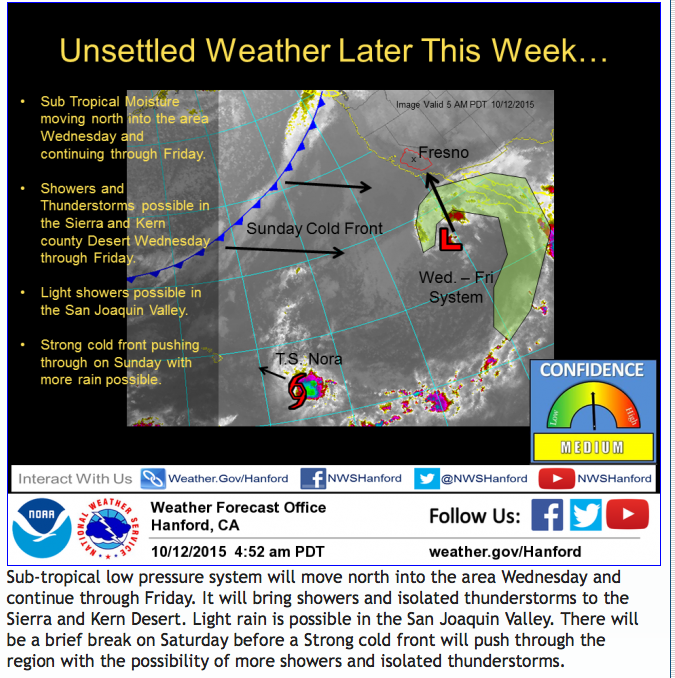
Both warm tropical moisture and a descending cold front from the north could converge on California over the next week say forecasters.
NWS Hanford shows a pincer movement from both systems with the cold front coming in next weekend.

Screen Shot 2015-10-12 at 6.52.19 AM

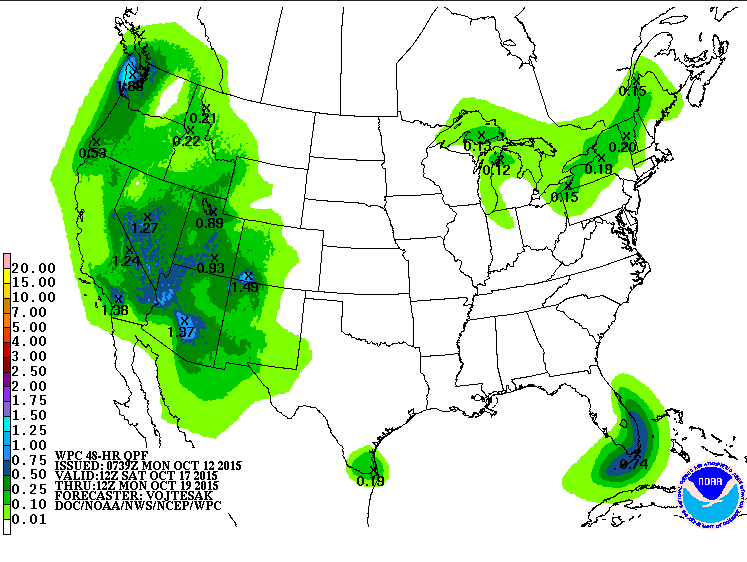
NOAA’s 7-Day Precip Accumulation  shows parts of the state getting more than a inch of rain accumulated by next Monday and the whole state getting wet.

Screen Shot 2015-10-12 at 9.45.18 AM

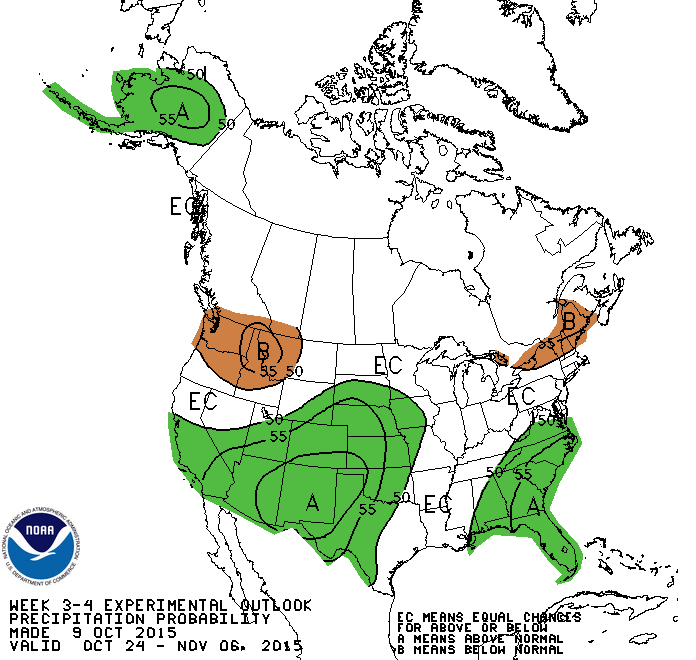
Also the Climate Prediction Center’s Experimental Outlook Precip Probability calls for above average chances for rain across the southwest over the next 3-4 weeks – hopefully beginning of the El Nino pattern we are all waiting for.

Screen Shot 2015-10-12 at 1.50.29 PM

China Railway Will Help Build LA To Las Vegas High Speed Rail

Screen Shot 2015-09-17 at 4.59.14 PM
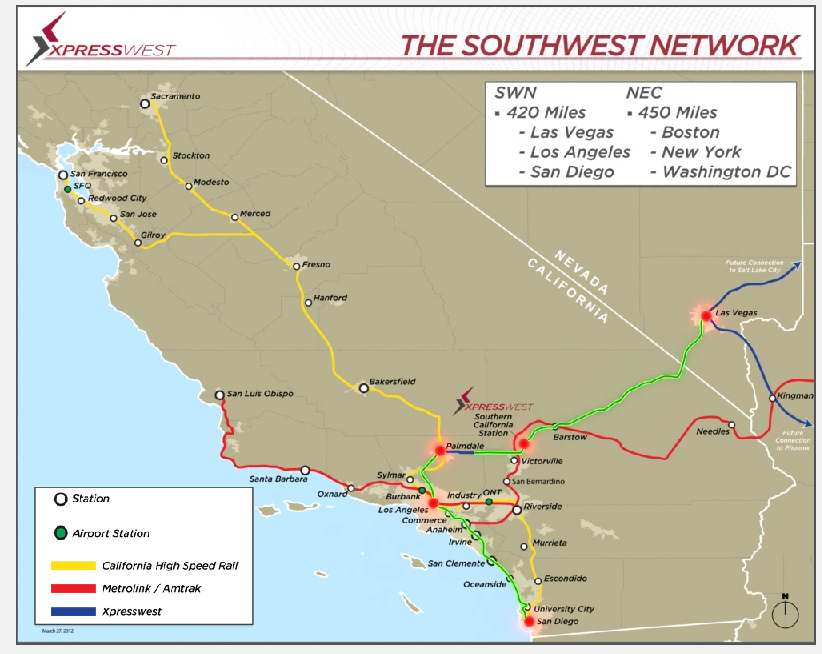
(Beijing, China, September 17, 2015 – Las Vegas, Nevada, September 18, 2015) China Railway International USA CO., LTD. and XpressWest have agreed to form a joint venture that will accelerate the launch of the XpressWest rail project connecting Las Vegas, Nevada to Los Angeles, California (the “Southwest Rail Network”). The Project will develop, finance, build and operate the Southwest Rail Network, with stations in Las Vegas, Nevada, Victorville, California, and Palmdale, California, and service throughout Los Angeles. The decision to form a joint venture is the culmination of years of work and builds upon the significant accomplishments of XpressWest.
Supported by $100 Million in initial capital, this new high-speed rail line (approximately 370 km(s) in length) will create new technology, manufacturing, and construction jobs throughout the interstate corridor and will connect Southern Nevada and Southern California which will drive new economic development and grow the tourism industry which is vital to the economy of the region. The Project will serve as a model of international cooperation and will firmly establish a United States-based high-speed rail industry that will result in significant job creation throughout the Southwest with construction planned to commence as early as September 2016. The Project will immediately undertake all necessary regulatory and commercial activities to advance the reality of regional high- speed rail in the United States. Implementation will begin within the next 100 days.
About the Companies:
XpressWest is a private interstate high-speed passenger railroad company led by the Marnell Companies, and dedicated since 2005, to developing a high-speed passenger rail line connecting Las Vegas to Los Angeles. Authorized by the United States federal government to build and operate the Southwest Rail Network, XpressWest has completed its required federal permitting work, obtained approvals from the Surface Transportation Board, and completed significant development work for the route, including completing the federal environmental review process. Investment-grade ridership studies, a prerequisite for obtaining project financing, demonstrate the Southern Nevada-Southern California corridor is a robust market for future rail passengers.

Screen Shot 2015-09-17 at 4.58.03 PM
China Railway International U.S.A. CO., LTD. is a newly-formed Nevada limited liability company owned by a consortium of the world’s premier experts in designing, building, financing and operating high-speed passenger rail projects, including: China Railway International Co., Ltd, China Railway Group Limited, CRRC Qingdao Sifang Co., Ltd, China Construction America, Inc., CREEC USA, and CRSC International Co., Ltd.
To obtain more information concerning XpressWest, China Railway International and the Southwest Rail Network, please review the following:
  http://www.xpresswest.com/network.html
  http://www.crecg.com/tabid/173/default.aspx
  http://www.crrcgc.cc
  http://www.chinaconstruction.us/
  http://www.cccme.org.cn/shop/cccme4855/index.aspx

Showers Today Cooling California Wildfires

September 14,2015-

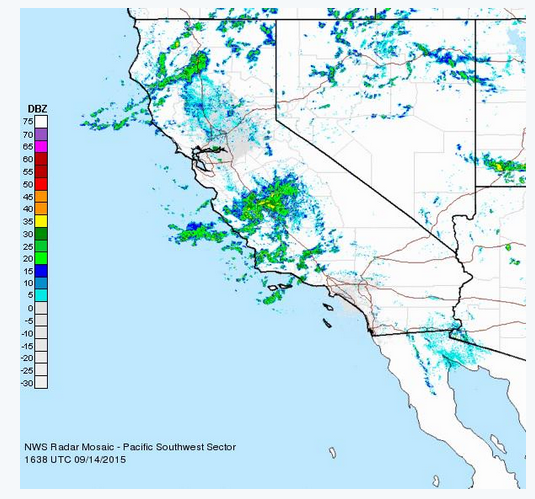
Screen Shot 2015-09-14 at 12.04.08 PMShowers in both Central California and Northern California today are expected to cool the spread of those huge wildfires in both the Central Sierra and the Lake County region of the state. Cooler weather has already helped. Radar map as of 11 AM today.

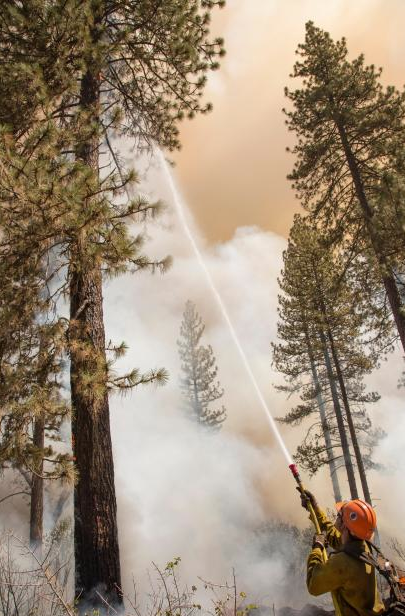
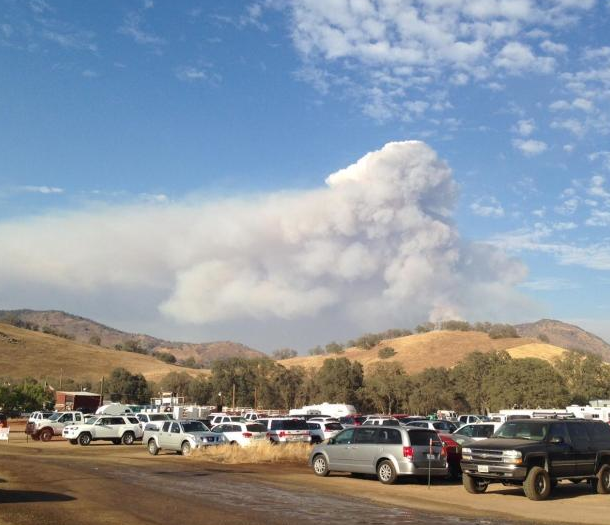
Pictured here is photo of the Rough Fire Screen Shot 2015-09-14 at 12.12.44 PMin Fresno County  as of yesterday. Fire fighters report the fire is now 40% contained.

Record Cargo Numbers Continue at the Port of Long Beach

Sept. 9, 2015
Cargo Containers on vesselsFor the second month in a row, the Port of Long Beach broke its own record for cargo volume in its 104-year history. In a clear sign that customers are confident in the Port, overall cargo volume grew by 22.8 percent in August compared to the same month last year.

Cargo volume, measured by the number of containers moving through the Port, reached 703,652 twenty-foot equivalent units (TEUs). The amount beats July’s cargo volume and marks two consecutive months of record-breaking volumes. A total of 1,393,896 TEUs moved through the Port of Long Beach in July and August.

“Our partners once again have expressed their confidence in the Port of Long Beach and we thank them for their business,” said Port of Long Beach CEO Jon Slangerup. “We have been working with all our stakeholders and the results are our best month ever.”

As consumer confidence grows, the dollar strengthens and retailers stock shelves, the Port of Long Beach’s strategic partnerships continue to yield positive results. Through the first eight months of 2015, Long Beach cargo numbers are growing faster than the overall economy and are up 5.4 percent compared to the first eight months of 2014.

“We thank our partners for choosing the Port of Long Beach,” said Slangerup. “We’re building the port of the future by investing $4 billion in improvements because as the economy grows, we will grow. We have not seen volume like this in our entire 104-year history and that is the clearest sign that consumers are buying.”

Not only did imports climb by 358,262 TEUs, or a 19.1 percent increase over last year, but exports grew 9.4 percent to 138,765 TEUs. Empty containers, meanwhile, rose 42.1 percent with 206,625 TEUs.