Turning Winemaking Waste Into Food Supplements & Flowerpots

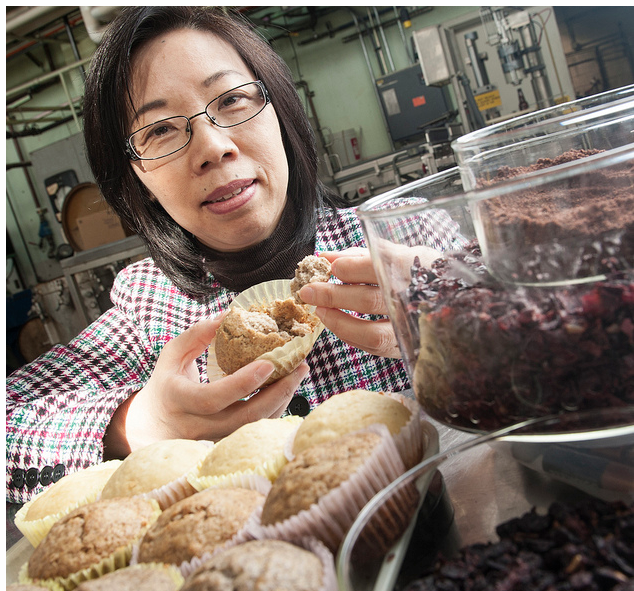
Food scientist at Oregon State University, holds a muffin made with grape pomace.

CORVALLIS, Ore. – Researchers at Oregon State University have discovered how to turn the pulp from crushed wine grapes into a natural food preservative, biodegradable packaging materials and a nutritional enhancement for baked goods.
The United States wine industry creates a tremendous amount of waste from processing more than 4 million tons of grapes each year, mostly in the Pacific Northwest and California, according to the U.S. Department of Agriculture. Wineries typically pay for the pulp to be hauled away, but a small percentage is used in low-value products such as fertilizer and cow feed.
“We now know pomace can be a sustainable source of material for a wide range of goods,” said researcher Yanyun Zhao, a professor and value-added food products specialist with the OSU Extension Service. “We foresee wineries selling their pomace rather than paying others to dispose of it. One industry’s trash can become another industry’s treasure.”
The pulp, which consists of stems, skins and seeds, is known as pomace and is packed with dietary fiber and phenolics, which have antioxidant effects. OSU researchers have dried and ground it to create edible and non-edible products.
For example, they extracted dietary fiber from pomace and turned it into powders that can be added to foods. Because the phenolics in pomace also control microbial growth and keep fats from deteriorating, OSU researchers also added the powdery fiber to yogurts and salad dressings to extend their shelf life by up to a week without changing taste and texture.
The researchers also used pomace to make colorful, edible coatings and films that can be stretched over fruits, vegetables and other food products. They contain antioxidants, seal in moisture and control the growth of some bacteria.
Additionally, the scientists added pomace powders, which are gluten-free, to muffins and brownies. They replaced up to 15 percent of the flour in the recipes with it and thus increased the fiber and antioxidants in the baked goods. The research continues as scientists are also adding pomace to yeast breads.
“Adding fiber-rich ingredients can change a dough’s absorption qualities and stiffness,” said OSU cereal chemist Andrew Ross. “We’re trying to find the right balance of pomace in dough while measuring the bread for its density, volume, color and taste. Commercial bakeries need this information before using pomace flour for large-scale production.”
OSU has also made pomace into biodegradable boards, which can further be molded into containers, serving trays and flowerpots. After burial in soil for 30 days, the products degraded by 50 percent to 80 percent.
Researchers found that the methods for making products from pomace vary depending on if the pulp is from red or white grapes. That’s because winemaking processes differ for each varietal and they produce pulp with different levels of sugar, nitrogen, phenolics and other compounds. In their experiments, researchers used pomace from grapes that included Pinot Noir, Merlot, Morio Muscat and Müller Thurgau.
Now, OSU is seeking to establish partnerships with companies interested in marketing the products it developed.

Ag Beat… Tulare/Kings Dairy Woes / Pumped Up Pistachios / More Solar


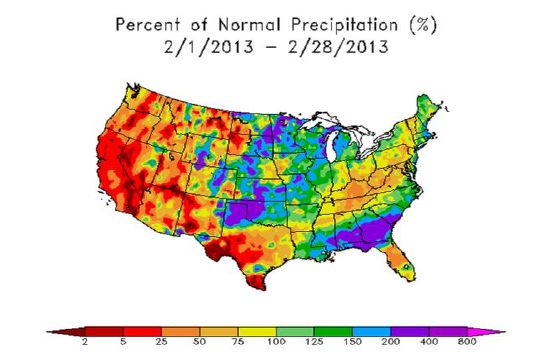
some hope…a wet corn belt for a change

Pistachio Plantings Surge: Fresno County will over Tulare County as the number 2 pistachio producing county predicts Bob Klein, Manager at the Administrative Committee For Pistachios. Kern is far and away number one.Klein expects farmers to plant 20,000 new acres of pistachio trees this year – up from 13,710 in 2012 and the highest since 2007.It takes 6 year for the trees to come into full production.Right now there is 200,000 bearing acres and 75,000 non bearing clustered in the south Valley. The plantings in western Fresno ,where cotton was once king, have drawn number one processor Paramount to build a new plant in Firebaugh that will process nuts this fall. Abut 65% of the nut crop is exported with declining competition worldwide. Klein says California’s crop at 555 million pounds last year is on pace to nearly double to 1 billion pounds by 2020 with demand by the growing middle class around the global very bullish.

More Local Dairies Selling Out
: If it is boom time for nuts – it’s  gloom time for the milk producers. Last month it was another”complete dispersal” auction held at the 57 year strong Atsma-Cameron dairy next to 198 at the Kings /Tulare line – who watched their 850 cow milk cow herd being sold off. Mary Cameron, 82, has run her dairy east of Hanford with her sons since her husband died in 1965. This month it is Graceland Dairy – near Tulare  -where and auction happened March 15 selling off one of several dairies- including all the rolling stock – owned by John Visser of Strathmore who like  other dairymen locally is going through the painful bankruptcy  process.

These complete selloffs are now more common as long-time farmers say they have no choice but to throw in the towel.

“We’ve basically been doing about two [complete dispersals] every month since November,” said Nick Martella, co-owner of A & M Livestock Auction, Inc. in Hanford – speaking to the Hanford newspaper recently.
Several of the Visser dairy farm properties are for sale including the Visser Ranch on Ave 208 in Strathmore,a large calf ranch in operation for the past 25 years on almost 1000 acres. The property is for sale for $17.5 million.

Diary broker John Grimmius of Visalia says when he takes a drive “west of Tulare 10 miles out,down one road and back another, I count  7 vacant dairies. Grimmius adds “the question is with all these closures – will there be enough milk?

Figures for January 2013 show Tulare county dairy farms pumped out 2.6% less milk than in January 2012 and in Kings County milk volume is down 6.2%.

On the plus side,two trends. First,the Midwest where most  of our feed comes from looks wet so far and that could help this fall’s corn crop. Second, its very dry in New Zealand,our competitor on the world market, and that could help boost US dairy prices.

Dinuba’s Family Tree Farms is installing a $1.8 million ground- mounted solar system on 3.65 acres next to their packing and cold storage facility says Brian Peterson,the company’s purchasing manager.”This will offset 76% of our power bill for our largest meter “says Peterson – noting the solar panels will generate 1 MW of power. Peterson says timing was right for the  investment considering  that rebates are going away and the attractive price of solar these days. “We want to credit the good work of JKB Development” the contractor on the project who also doing the same at several  other ag enterprises. Power will get turned on in May.

Investment Flows Where Crops Grow


Tulare County Ag Industries Expanding

Investment is not falling far from the tree,literally – as food and ag companies in Tulare County are in expansion mode updating processing, adding value to local crops like milk,nuts, oranges and even ag waste. Here’s a roundup of recent and pending farm-industry expansion around the nation’s number 2 ag production county.

Colony Energy Partners – TULARE:
LA-based company is building a $25 million biogas digester starting by midyear 2013 say partner Matt Schmitt, taking organic wastes from farms and food processors nearby and turning the waste into biogas. The liquids – from cow manure for example – will be discharged in the city wastewater treatment plant next door. The low carbon natural gas will be injected in the SoCal Gas pipeline where it will be bought by power companies or sold to make liquid natural gas for transport.Contracts are in place. The organic waste to biogas would replace 5,000 gallons per day of diesel fuel. Operational by mid 2014 the state’s power industry is expected to be a big customer required to reduce their greenhouse gas emissions. Food comapies are under a madate to reduce global warming emissions  as well and may be both suppliers of waste and customers for the biogas.

More: Pixley Biogas and Harvest Power of Tulare are building new projects,each in the permitting stage.

TOL Inc – TULARE: Tree topper machine saves labor costs on more Valley trees. Israel-based company has expanded the market for its tree topping and hedging machines that now clip not just citrus but tree fruit and nut orchards, the later having grown in recent years to 1.5 million acres. Plant manager Scott Harmon says the firm came to Tulare in 1980 and is the parts distribution center for the company in the US. TOL Inc has 12 employees and is  constructing a new 14,400sf warehouse to have more office and shop space in their current building at 955 R Levin. A hearing on the plan is scheduled.


CaliCheese Co -TULARE: Plans for a 220 job cheese plant are moving forward. The Tulare City Council approved the sale of 59 plus acres in January to CaliCheese Company LLC, to build a 300,000 sf cheese plant on city-owned land next to the wastewater treatment plant.
The deal calls for just over $2 million for the land with the money changing hands between June 30, 2013 and the end of the year.
According to the company’s business plan the start-up cheese plant will to employ 220 producing both cheddar cheese and whey protein -both big sellers in the export market in Asia. They put the value of the project at $250 million and say it would produce 4 million lbs of milk a day to start. Tulare is already home to many of the worlds’ largest diary product producers  and the largest cluster of dairy firms in the US West.
If you have not thought of the wastewater treatment plant as a big draw for new companies coming to Tulare – think again. Five firms are building or planning to build nearby.

Ventura Coastal – VISALIA/TIPTON: Recently completed expansion projects at their site north of Visalia include a warehouse, state of the art packaging room and the addition of high tech blending equipment for the production of premium blended juice products.  This has allowed the company to expand into the specialty citrus juice (i.e., low pulp and clarified juice) and citrus puree product markets.Right now they are  constructing a 20,000sq. ft.  freezer in Visalia to support the expansion of their drummed and pail packaged juice and specialty products business.

At Ventura Coastal/Sunkist operations in Tipton, the company says it is making significant investments in its production capabilities of premium” not from concentrate” ( NFC) juice products in the super-premium category. Additional Tipton expansion is planned in citrus oil processing, warehousing and shipping capabilities.
As a result – some job growth is expected. Bill Borgers, President/CEO stated that “the growth and asset investment at our Visalia and Tipton Operations is part of Ventura Coastal’s ongoing commitment to remaining a premier producer, packager and marketer of premium citrus products while delivering value to our grower partners”.

More Citrus: Vita-Pakt Citrus Products has purchased juice maker CCPI In Lindsay and is building a new juice plant now in Tulare.

Global Milk Specialties – VISALIA: Company will employ 60 in Visalia according to their website. The company has co-located in the Provisions Foods dairy plant on Divisidero In Visalia, the former Kraft plant. Provisions makes mostly cultured dairy products. Milk Specialties Global manufactures nutritional ingredients for the health and wellness industry, with certified manufacturing facilities in WI, MN, NE, IL and now UT, and CA as of January. The core of MSG’s business is in value-added dairy ingredients including whey protein isolate, concentrate, and hydrolysate, as well as milk protein, micellar casein, and lactose.  MSG also manufactures products which support animal nutrition including milk replacer and energy booster supplements.

Setton Nut Co – TERRA BELLA:
Company will build a 4 story vertical processing plant this year This year’s pistachio crop is selling fast with year-to-date shipments versus the same period last year up 20 percent. A larger volume of the popular nut is expected in coming years, pushing processors like Terra Bella’s Setton Nuts to plan how to handle bumper crop of pistachios coming off thousands of acres of new trees. Lee Cohen, CEO of Setton Nuts, says the company is designing a new four-story nut processing plant with state-of-the-art engineering. The plant will be unique in the industry, using “gravity as our friend,” he says. The plant should be in place for this fall’s crop year.
The second-largest pistachio nut processor after Paramount, Setton has already added a huge volume of storage tanks this past fall and plans several other additions.

More:
Nichols Farms near Corcoran is expanding their pistachio plant capacity

M&A Foods – PIXLEY
: Start-up pomegranate processor has big plans for a processing facility in Tulare County, is under construction and expected to open by the end of February at 220 South Main Street in Pixley. M&A Foods – based in Mountain View Ca, will employ around 20 to start says founder Dr. Aamir A. Farooqui.
The new company will pack high quality pomegranates for the fresh market, ready-to-eat naturally fresh arils – the pulp, make pomegranate gourmet jam, jelly, syrup, and preserves and produce fresh salad pack for fresh market. The jams and jellys are expected to provide” 35-40% revenue of M&A Foods.”
Dr Farooqui says “marketing of pomegranate arils in a way that makes them easy to eat is a way to promote consumption of the fruit. Currently, there are only two competitors – POM Wonderful and Young’s Town, both, unable to meet the market demands,” he believes.
M&A Foods plans to first extract the Arils by hand and once they have enough orders, plan to purchase automatic deseeding plant from Israel. Farooqui, a UC Davis computer scientist and inventor by training – plans a 100,000 sf facility eventually. He has pomegranate trees in the Alpaugh area.
There are about 4500 acres of pomegranates in Tulare County and some 30,000 acres Valleywide. In 1980 there were only 2500 acres before the health benefits of the ancient fruit were widely known.

Solar Investment

Strathmore’s Villa Park
orange packing house along Hwy 65 is installing a 5 acre solar farm next door that is expected to cover 80% of the power needs for the big Sunkist packing house and cold storage says manager Jammie Logan.The $3.2 million system is going on line at the end of February.

Add Tipton’s Pitigliano Farms to the local ag enterprises taking advantage of solar technology to cut their costs. Mike Pitigliano says a solar farm is being built on their ranch by March that promises to cut  85% of their current electricity costs for some of their ranches. The permit is valued at near $500,000  with the units being put in by Korea-based Hanwha Solar.

USDA DECLARES KINGS DISASTER AREA DUE TO DROUGHT

The U.S. Department of Agriculture has designated Kings County in the Central Valley as a primary natural disaster area due to damages and losses caused by the drought.On Feb. 27, ten other counties in California received the same designation. Those counties are Fresno, Inyo, Kern, Lassen, Los Angeles, Modoc, Mono, Riverside, San Bernardino and Tulare.

Farmers and ranchers in counties contiguous to the primary disaster counties are also eligible for natural disaster assistance. The earlier primary disaster designation of ten counties applies to 17 additional contiguous counties.The current Kings County designation makes the following five contiguous counties also eligible: Fresno, Kern, Monterey, San Luis Obispo and Tulare.All the counties were designated natural disaster areas March 13 making all qualified farm operators in the designated areas eligible for low interest emergency loans from USDA’s Farm Service Agency, provided eligibility requirements are met.Farmers in eligible counties have eight months from the date of the declaration to apply for loans to help cover part of their actual losses. FSA will consider each loan application on its own merits, taking into account the extent of losses, security available and repayment ability. FSA has a variety of programs, in addition to the EM loan program, to help eligible farmers recover from adversity.

Clues To Saving Citrus From Dreaded Disease

A nutrition expert at UC Davis has discovered important clues to the deadly attack strategy of a puzzling plant pathogen that has destroyed hundreds of thousands acres of citrus across the world. The novel research by Carolyn Slupsky, associate professor in the Departments of Nutrition and Food Science and Technology at UC Davis and the Agricultural Experiment Station, and her team may pave the way for safe, effective ways to treat and prevent the spread of huanglongbing disease of citrus or HLB.

“HLB is not just bad for growers and for the economy,” said Slupsky. “The loss of fresh oranges and other citrus could seriously impact our health.”

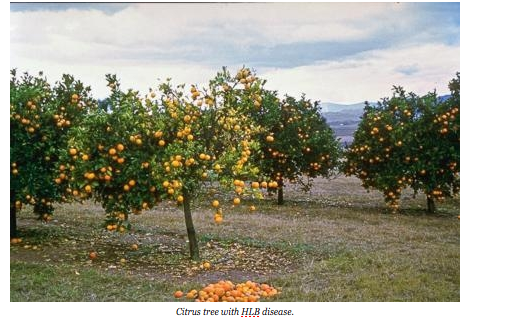
HLB is a disease caused by a microbe called Candidatus Liberibacter asiaticus and spread by the Asian citrus psyllid, a tiny insect that feeds on the leaves and stems of citrus trees. There is no cure yet for HLB, so once a tree is infected, it will slowly die. The disease has decimated citrus groves in Asia, Brazil and the Dominican Republic. Florida has lost one-third of its citrus to the disease. Both HLB and the Asian citrus psyllid have recently been spotted in California.

HLB is a silent killer – an infected tree can live for years without symptoms, allowing the pathogen to spread undetected to other trees. Symptoms emerge over time, as a tree’s fruit starts to turn green and misshapen, with a bitter, metallic taste.

Is there a way to spot HLB before visual symptoms occur? The microbe that causes HLB can sometimes be found in a leaf sample, but since the pathogen isn’t evenly distributed throughout the tree, results can be misleading.

“Just because the pathogen doesn’t show up in one leaf, that doesn’t guarantee the tree isn’t infected,” said MaryLou Polek, vice president of science and technology for the California Citrus Research Board. “So when you sample a leaf, there’s a high probability of a false negative result.”

Slupsky and Andrew Breksa, research chemist with the USDA Agricultural Research Service based in Albany, Calif., tried a different tack, searching for clues in a tree’s chemical fingerprint. They used nuclear magnetic resonance spectroscopy to study the amino acid composition of juice from three types of citrus: fruit from healthy tress, symptom-free (asymptomatic) fruit from HLB-positive trees, and fruit with symptoms from HLB-positive trees.

“We found major differences in the chemical fingerprint among healthy, asymptomatic and symptomatic fruits,” Slupsky said.

With further research, the profiles may prove to be a reliable, rapid, and early indicator of the presence of the HLB pathogen. With early detection, growers and regulators can know which trees might need to be removed before the disease spreads throughout the orchard (and beyond).

“These findings are huge for citrus growers, backyard gardeners and everyone who loves fresh citrus,” Polek said.

And there’s more. While analyzing the amino acids, Slupsky and Breksa discovered what looks like a mechanism underlying the microbe’s mode of attack.

“The pathogen responsible for HLB seems to cause havoc with a tree’s ability to defend itself from infection,” Slupsky said.

Trees need amino acids for growth, development and defense. From Slupsky and Breksa’s studies, it looks like the HLB pathogen affects the trees’ ability to create, use and recycle some of those amino acids. For example, a tree can convert the amino acid phenylalanine into cinnamic acid, a precursor to compounds important to the tree’s defense systems. But juice from oranges of HLB-positive trees had significantly higher concentrations of phenylalanine. Also, juice from oranges grown on HLB-infected trees contained a lot less of the amino acid proline, which a tree usually synthesizes when it knows something is wrong.

“It could be that the pathogen is outsmarting the tree by undermining its defenses,” Slupsky said. “That’s a spectacular discovery, because when we understand the mechanisms behind the attack, we have a chance at blocking them.  Maybe we can find ways to enhance a tree’s natural immunity.”

As tough as HLB has been on citrus in Florida, the stakes are even higher in California where so much of the world’s fresh citrus is produced.

“Florida’s citrus industry produces mostly orange juice, and they can use additives and filtration to adjust for the bitter taste of HLB-affected fruit,” Polek said. “It can be reduced to sugar water, essentially, and then built back up to taste like orange juice. We produce fresh citrus here in California, and chemistry is not an option.”

Losing fresh citrus is a real possibility if HLB spreads throughout California, and that prospect is the driving force behind Slupsky’s research.

“From a nutritional standpoint, it’s hard to beat the importance of fresh citrus,” Slupsky said. “Oranges provide energy, pectin, and a wide variety of nutrients, vitamins and minerals. They’re one of the most consumed fruits in the United States. I can’t imagine life without fresh citrus.”

Slupsky and Breksa collaborated with Thomas G. McCollum of the ARS Horticultural Research Laboratory in Fort Pierce, Florida, along with Anne Slisz and Darya Mishchuk of Slupsky’s lab. A peer-reviewed article on their findings was published in the Journal of Proteome Research in June 2012. You can access the article at http://pubs.acs.org/doi/abs/10.1021/pr300350x.

Water Supplies Shrink As Officials Act To Protect Fish

February 20, 2013
By Kate Campbell
Curtailed water transfers from the Sacramento-San Joaquin Delta have so far translated into an estimated loss of more than 700,000 acre-feet of water that otherwise would have been stored for future use by California farms and families. State and federal officials said last week cutting back the pumps to protect delta smelt, which in past weeks have been drawn into the water transfer equipment, underscores the need for extensive habitat improvements and a new water conveyance system around the delta.
They conceded that immediate fixes and interim measures to address the current conflict are few, although they did ease the pumping restrictions later in the week.
The U.S. Bureau of Reclamation said it is joining state agencies in discussions about potential alternatives to help simultaneously meet the needs of fish and water users during what is shaping up to be a dry year. The federal agency also re-emphasized its commitment to move forward with the Bay Delta Conservation Plan, a 50-year, multi-species habitat conservation plan.
Calling last week’s curtailment a “crisis,” officials said about 75 percent of the year’s “incidental take” of adult delta smelt allowed under the Endangered Species Act has already occurred, with nearly two months left before the period of concern for the fish ends.
“These ongoing crises will continue to reveal themselves until we fundamentally change the way we manage the delta,” Mark Cowin of the California Department of Water Resources told reporters during a media briefing last week. “We need to be looking at this (around-delta conveyance system and habitat restoration) as a long-term solution so six years from now, somebody is not looking back at today’s headlines and asking, ‘Why didn’t they do anything?'”
Because hydrologic conditions since mid-January have been dry and the water transfer pumps have been cut back, the Fresno-based Westlands Water District advised farmers on the west side of the San Joaquin Valley to anticipate no more than a 20 percent contract-water allocation for the upcoming crop season.
“This notice is not intended to suggest that a 20 percent allocation is either reasonable or acceptable,” Westlands officials said.
During the past several weeks, water from the delta originally destined for farms, homes and businesses has instead flowed to the ocean in an effort to comply with the ESA. The cutback at the pumps is intended to avoid hitting the incidental take limit for delta smelt. By last week, more than 228 adult fish had been lost. Exceeding the incidental take limit of 305 delta smelt would trigger a full shutdown of the pumps until the fish have moved to other locations.
The California Farm Water Coalition said the loss of water for storage in recent weeks represented about 13,000 lost farm jobs, $873 million in lost crop production and a potential economic loss to the state of about $2.2 billion this year.
“This redirection of water could last through March, with water losses escalating every day,” said coalition Executive Director Mike Wade. “Sadly, these regulations aren’t working to protect the fish they were intended to help. It’s time we take a sensible look at how we provide for the ecosystem while at the same time supporting California farms, jobs and people, and our nation’s food supply.”
Experts say the most recent cutbacks in water transfers from the delta to storage in San Luis Reservoir were prompted when delta smelt made an early appearance near the pumps at a traditional time of active pumping, most likely because heavy December storms sent a pulse of turbid runoff down the Sacramento River, signaling the fish to migrate for spawning.
Danny Merkley, California Farm Bureau Federation director of water resources, noted that chronic interruptions in securing water supplies are the “exact reason new and increased water storage is needed in California. Without new storage, agriculture, and California’s economy, get caught in the laws and the science.”
With warmer, more unpredictable precipitation and increasing species protections, none of which were envisioned when the Central Valley Project and State Water Project were built, Merkley said greater storage capacity would build much-needed flexibility into the water supply system.
“The dry weather we’ve had this winter shows that we cannot continue to miss out on opportunities to store water when it’s available,” he said.
(Kate Campbell is an assistant editor of Ag Alert. She may be contacted at kcampbell@cfbf.com.)

Troubling Honey Bee Shortage in California Almond Orchards

Feb. 8, 2013

Honey bee on almond blossom. (Photo by Kathy Keatley Garvey)

Honey bee on almond blossom. (Photo by Kathy Keatley Garvey)

DAVIS–California almond growers may not have enough honey bees to pollinate this year’s crop of   800,000 acres, says  Extension apiculturist Eric Mussen of the UC Davis Department of Entomology. He attributes the difficulty to winter losses and less populous hives.

“We need 1.6 million colonies, or two colonies per acre, and California has only about 500,000 colonies that can be used for that purpose,” he said. “We need to bring in a million more colonies but due to the winter losses, we may not have enough bees.”

Those winter losses–still being tabulated–and the resulting fewer bees per hive could spell trouble for almond growers, he said.

“Last year was not a good year for honey production in the United States,” Mussen said, “and it could be one of the worst honey production years in the history of nation, although it’s been pretty rough in some of the previous years. Usually when we’re short of nectar, we’re short on pollen, and honey bees need both.  So, 2012 was a bad year for bee nutrition.”

Malnutrition is one of the stressors of colony collapse disorder, the mysterious malady first noticed in the winter of 2006 that has decimated one-third of the nation’s bees every year.  Some beekeepers have reported winter losses of  90 to 100 percent.

In CCD, the adult bees abandon the hive, leaving behind the queen bee, brood and food stores. Bee scientists think CCD is caused by a multitude of factors, includes, pests, pesticides, parasites, diseases, malnutrition and stress.

“We don’t know how many more bees will be lost over the winter,” Mussen said. “We consider the winter ending when the weather warms up and the pollen is being brought into the hives.”

“Many, many colonies are not going to make it through the winter,” said Mussen, an apiculturist in the UC Davis Department of Entomology since 1976.  “We won’t have as large a bee population as in the past.”

In other words, fewer colonies will be available for the almond growers and the colonies that are available aren’t going to be as populous, he said.” Almond growers usually want at least eight frames of bees per hive,” Mussen said, “but this year they may be lucky to get six.  That’s one-third less bees per hive to pollinate the orchards.”

Mussen estimated a good solid hive with eight frames amounts to 2000 bees per frame or 16,000 bees.

Already brokers are getting calls from beekeepers saying “I can’t fulfill the contract. I’m going to be short.”

Mussen said it may all work out well in the end as “bees pollinate almonds on a community basis. The strong colonies will make up for the weak colonies. The strong colonies will clean the orchard of pollen by early afternoon and then go down the street and grab food from nearby orchards.”

San Joaquin almond orchards are already starting to bloom, “but it’s going to be late up here in the Sacramento Valley,” he said.  Kern County grows more almonds than any other county in the state.

“If we hit abnormally warm stretches that push out all the bloom at once,  that will be good,” said Mussen. “It’s likely that cross-pollination will be better if we have a steady period of warm weather, instead of a warm-cold fluctuating period.”

Although the almond growers are paying a lot of money for their pollination services –an average of $150 per hive—there’s no guarantee it will be a good nut set, Mussen warned. “If it’s too cool, fertilization may not occur.  The pollen tubes won’t grow all the way down to the base of the flower to the ovum.  The good nut set occurs within the first three days of pollination or at the most, within five days.”

On the other hand, if the weather is too hot and dry, the tissue dries out, he explained.  “So we need nice warm weather that’s not too hot or too cold to get good fertilization and nut set. It’s not always  the bees’ fault if the nuts fail to grow.”

Many beekeeping operations truck in thousands of colonies to pollinate California’s almonds. One beekeeping operation used to bring 16,000 colonies, Mussen said, “but that 16,000 could be half that this year.”  The bees are trucked here from all over the nation.

Around Feb. 14 the average almond orchard in California is in full bloom, but some orchards bloom earlier or later, depending on the cultivar and the weather.  An almond orchard blooms a total of about two weeks, he said, pointing out that “the season is short.”

“Around March 7 to the 10th is the last pollination period for almonds in California,” he said. That means that some beekeepers can do double duty with their bees , first pollinating orchards in early February and then heading off to other orchards  for the last blooms of the season.”

Almonds are California’s biggest export.  This year the National Agricultural Statistics Service is forecasting a record-breaking 2.10 billion meat pounds, valued at approximately $3 billion. Eighty-percent of the global supply of almonds is grown in California, and about 70 percent of California’s crop is marketed overseas.


‘Global Worming’…

Earthworms contribute to climate change

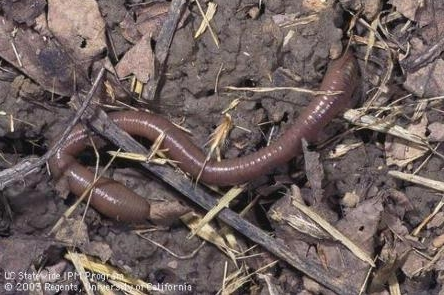
Earthworms are long revered for their beneficial role in soil fertility, but with the good comes the bad: they also increase greenhouse gas emissions from soils, according to a study published Feb. 3 in Nature Climate Change by a research team that includes a University of California, Davis, soil scientist.

The team found that earthworms do not, as was suspected, stimulate carbon sequestration in the soil, which helps to reduce greenhouse gas emissions. Instead, they actually increase greenhouse gas emissions through a variety of ways.

“There was a hypothesis that earthworms were having a positive effect on the greenhouse balance, but they don’t,” said co-author Johan Six, a plant sciences professor at UC Davis during the study who is now a professor at ETH Zurich in Switzerland. “I would never say you have to take out the earthworms because of greenhouse gases. It’s just that you cannot give them credit for reducing greenhouse gases.”

The scientific team was led by Jan Willen van Groenigen of Wageningen University in the Netherlands, and, along with UC Davis, included colleagues from Trinity College Dublin, and the International Center for Tropical Agriculture in Cali, Colombia.

The team gathered all relevant published research to date: 57 different experiments.

The research team then employed a statistical technique called meta-analysis to discern overall patterns in the data.

They found that the presence of earthworms increased nitrous oxide emissions from soil by 42 percent and carbon dioxide emissions from soil by 33 percent. But they found no indications that earthworms affect soil organic carbon stocks — the carbon stored within the soil.

According to the researchers, earthworms likely increase greenhouse gas emissions several ways: they mix organic plant residues in the soil, which may increase decomposition and carbon dioxide emissions; the earthworm gut acts as a microbial incubator, boosting the activity of nitrous oxide-producing microbes; and the earthworms, by burrowing through the soil, make it easier for greenhouse gases in the soil to escape into the atmosphere.

Small changes in soil greenhouse gas dynamics can have important repercussions for global warming, the researchers said. But lead author Ingrid Lubbers from Wageningen University said it is not yet clear to what extent the effects of earthworms on plant growth may negate earthworm-induced increases in greenhouse gas emissions.

“Our literature search also pointed out a large gap in the published studies,” Lubbers said. “We need more experiments that include growing plants, as well as more long-term studies and more field studies before we can decide to what extent global worming leads to global warming.”

Ag Beat: Tomato /Chocolate Milk / Bees

Middle California – More Tomatoes Per Acre
Farmers are coaxing more crop per acre from Valley fields. Witness the processing tomato industry that is yielding near 50 tons per acre in 2012 compared to 38 in 2002, 33 tons in 1992, 26.5 in 1982 and 17 tons per acre back in 1967. The value of processing tomatoes from about 200,000 to 250,000 acres of land has jumped about 10-fold in this time. Farmers expect to harvest 13 million tons this year, the most since 2009.The total acreage planted to this crop has fallen from around 317,000 acres to 258,000 – much of it in Kings and Fresno counties.Fresno County produces about 40% of the crop by itself.The yields in Fresno and Kern county exceed 55 tons per acre, highest in the state.

California grows 96% of the US crop, almost all machine harvested.
But this winter a drought in China who typically is a  big producer of tomato paste has hurt  global supply and is expected to be down 11% this year putting the squeeze so to speak  on ketchup prices in world markets but not likely in the US .
Americans consume three-fourths of their tomatoes in processed form. U.S. consumption of processed tomatoes began a steady climb that accelerated in the late 1980s with the rising popularity of pizza, pasta, and salsa.

California Produces Half US Vegetables

California produced about half the value of all vegetables grown in the US in 2012 says USDA. California accounted for 49% of the production.

Chocolate Milk Loses High Fructose Corn Syrup

Dean Foods has introduced a reformulation of its popular brand of chocolate milk, TruMoo. The new product, which hit shelves in January 2013, contains 35 percent less total sugar than the leading chocolate milk competitor, and has 40 percent less sugar than its previous formula and no high fructose corn syrup.
In a 2012 MilkPEP survey of more than 1,000 moms of school-aged children, 85% report feeling positively about the benefits chocolate milk provides their children.
“Together, these nutrients help strengthen bones and build and repair muscles,” said Willow Jarosh MS, RD of C&J Nutrition. “And a low-fat chocolate milk with no high fructose corn syrup and very little added sugar is a practical way to get kids the nutrients they need without all the sugar they don’t, and from a source moms can trust.”
Critics of chocolate milk helped get the beverage pulled from school cafeterias in past years saying there was too much sugar in the drink.
Busy As Bees:
Trucks carrying beehives are crisscrossing the state in preparation for the spring bloom, but their cargo may be a little lighter. Beekeepers say their colonies are smaller, in part due to a poor winter last year that didn’t produce enough food to keep the bees healthy. The U.S. Agriculture Department reports that the bees’ annual work on the state’s farms will begin in almond orchards, where 1.6 million honeybee colonies will be needed to pollinate the crop.

More California Dairies Closing?

With only a a little relief from the CDFA on prices – California dairy leaders are worried more Central Valley milk shippers will be closing their barn doors and selling off their cows. CDFA Secretary Ross decided late last month to raise the minimum price paid to dairymen only 25 cents disappointing the farmers. Since then” I’ve seen more announcements of herd sales” shrugs Western United Dairymen president Tom Barcellos of Porterville.

These dairy operators were hoping for an 80 cent to $1 bump in the price the state’s processors including cheese makers must pay on an emergency basis for the next 6 months.Dairymen call the 25 cents a drop in the bucket.

In the meantime “we lost that much on the CME” market in recent days where dairy futures are traded says Hanford dairyman Joaquin Contente. California milk prices rise and fall with the price of of dairy commodities in Chicago.

Those prices have been falling since the New Year with 500 lb barrel of cheddar that went for $2/lb last October fetching about $1.54 today.

At the same time feed costs are staying high at $7.36 per bushel for corn on the futures market until the new Midwest crop comes in next summer. The drought has also hurt hay prices and availability with Valley alfalfa hay going for $300 a ton. Lots of hay was exported keeping prices up and China is expected to buy double what they bought last year. All eyes are on rain forecasts for this summer in the Midwest to see if there will be another drought year. It was dry this winter hurting the winter wheat crop.

Dairy Body Count

Testimony at the most recent CDFA hearing on the subject suggests more dairymen threw in the towel recently. Some of that testimony includes a body count of lost dairies.

– From DFA:  Data from Frazer LLP shows net income losses per cwt. for first six months at $0.92/cwt. in Kern County, $1.75/cwt. in San Joaquin area, and $2.24/cwt. in Southern California.
-Have seen abnormal exodus in farm counts within the co-op Dairy Farmers of America membership in 2011 (20 farms went out of business) and 2012 (34 farms have failed or exited).
Western United Dairymen testified – Just within WUD, 50 dairy sell outs occurred in the last eight months.
California Dairies co-op testified – The cost of feed makes up nearly 70 percent of the cost of producing milk. California witnessing an unprecedented drop off in milk production: September 2012 was the lowest month of milk production since 2005, about 13 percent lower than the peak month.
California Dairy Campaign testified- Estimated that more than 100 dairies will close their doors in 2012, more than in the devastating year 2009.
Land O Lakes co-op testified -In 2012, 43 LOL member farmers have discontinued milking.
Fresno bankruptcy attorney Walter Riley testified – Over last two years have worked with 60 dairymen and their families who have
experienced extreme financial pressure due, in part, to low milk prices.

This month the Overland Stockyard in Hanford has a full scheduled of dairy herd sales announced, several “complete dispersals”.

In Tulare County, milk production was down 1.4% in November says CDFA. The state’s dairies are selling nearly 4% less fluid milk to  consumers this year.( but nearly 10% more organic milk).Cheese consumption was up 0.01% through November and butters sales are  6% higher.

Losing Their Shirt

CDFA says the average price paid producers in 2012 was $16.39 per cwt compared to $18.63 in 2011. At the same time CDFA says dairy farmers cost of production in the South Valley in the 3rd quarter was $20.12 per hundred lbs weight (CWT).That compares cost of $18.54 for the same period in 2011.

The numbers don’t lie, dairymen say, they are losing their shirt.

If California dairymen are complaining about the low price they get for their milk,so are NY dairymen this month ,a newspaper reports. NY dairy operators say they can’t sell their milk because California milk prices undercut them.

“A large part of California’s dairy edge stems from its milk pricing system, which is set by the state, rather than using the federal milk pricing system that most states utilize, including New York. Dairy farmers in California are often paid up to several dollars less per hundred pounds — about 12 gallons — of milk than farmers in New York. In December, preliminary average milk prices paid to farmers were $18.80 per hundred pounds of milk in California, according to the USDA’s National Agricultural Statistics Service. Farmers in New York received $22.20 per hundred pounds of milk in the same month.”

At next weeks Tulare Farm show a panel of dairy experts from around California will weigh in on the idea of abandoning the California system and joining the federal program like New York.