
Category: Agriculture

Protecting Coastal Winegrapes From Frost
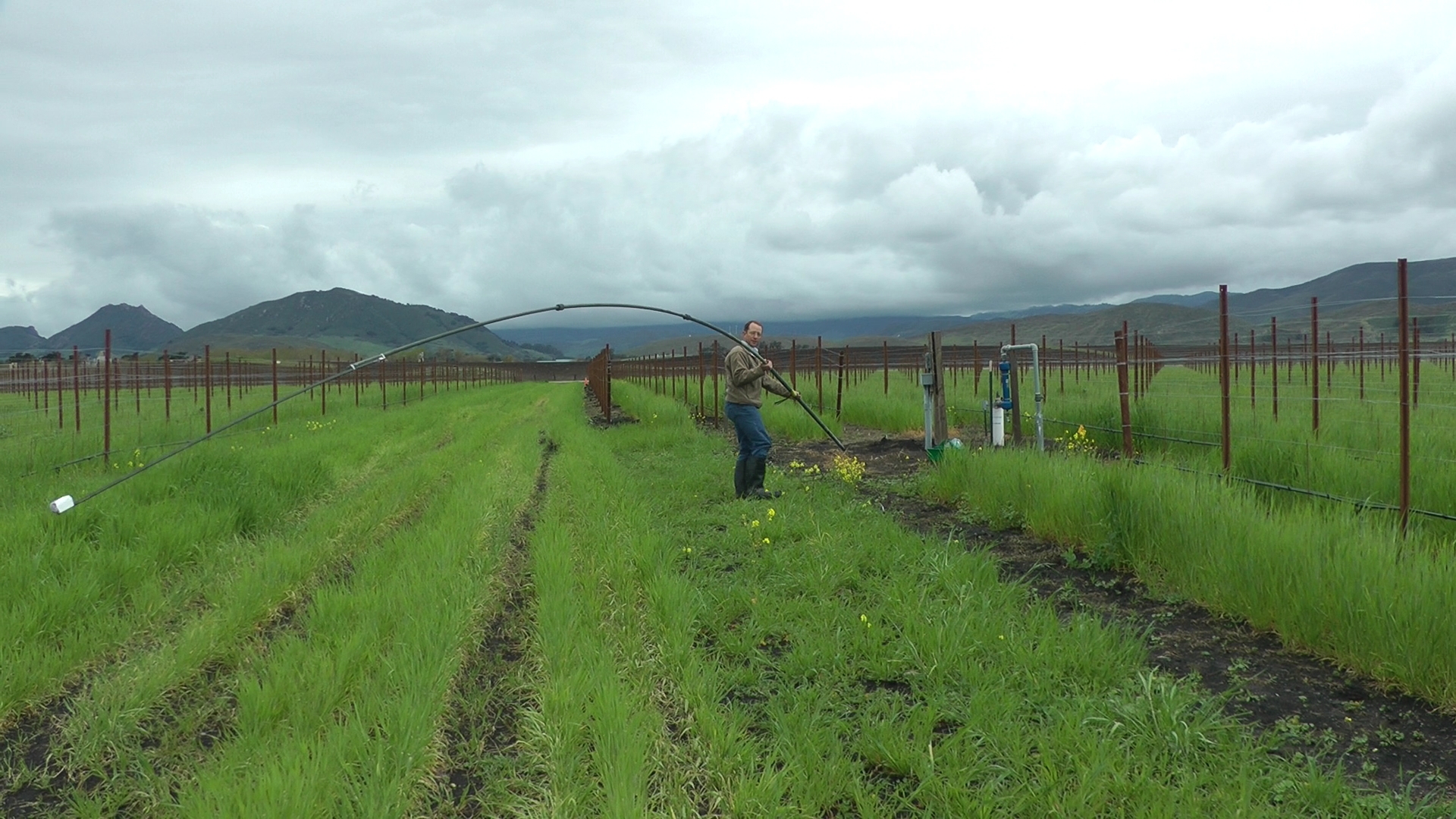
In California’s coastal winegrape-growing regions, a spring freeze can be devastating. Tender shoots and leaves burn back, causing damage that reduces the crop yield when it is harvested many months later.“We’ve had some very severe frosts in San Luis Obispo County and on the Central Coast over the years,” said Mark Battany, UC Cooperative Extension advisor in San Luis Obispo and Santa Barbara counties. “In 2011 we had the most severe frost in 30 years and many millions of dollars of crop and wine value were lost because of that freeze.”
Farmers take various measures to protect their crops when temperatures dip below freezing, such as mowing or tilling the vineyard row middles, or running sprinklers with water pumped from underground aquifers or diverted from streams.
“Sprinkler frost protection is very effective in many areas,” Battany said. “The concern we have in California is that water is becoming more limited. We don’t have the ability to easily import water from other areas to our coastal regions, and our local supplies are being stretched quite thin.”
Some farmers are considering wind machines, which mix warmer air high above the ground with air closer to the ground to raise the temperature. But wind machines are expensive, and the potential effectiveness depends on the strength of the temperature inversion. UC scientists are now gathering data to help inform farmers before making the costly investment.
Battany and his colleagues – Rhonda Smith, UCCE advisor in Sonoma County, Richard Snyder, UCCE specialist in the Department of Land, Air and Water Resources at UC Davis, and Gwen Tindula, UCCE staff research associate – are collecting temperature inversion data at different locations in 60 coastal vineyards throughout three counties to document inversions during frost events.
The scientists installed 35-foot-high meteorological towers with data loggers at the top and at the five-foot height to measure the difference in temperature. In the first year of the study, there were useful inversion conditions on nearly three-fourths of the nights when there was frost.
“That’s a fairly good success rate,” Battany said. “The wind machine will provide quite a bit of protection under those conditions.”
The study will continue this year and in 2014. Farmers who wish to install their own meteorological towers with data loggers can do so at a cost of about $250 each. Installation instructions and specifications are available on the UCCE website.
The UCCE research is funded with a grant from the American Vineyard Foundation and a CDFA Specialty Crops Block Grant.
For more details, see the video below:
Posted on Friday, April 5, 2013 at 9:20 AM
- Author: Jeannette E. Warnert

Scientific Ingenuity Produces A Fantastic Fruit
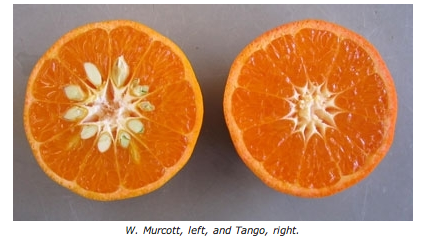 Look Ma..No Seeds!
UC scientists took a page from nature when they developed the Tango mandarin. Tango is the result of a mutation induced by irradiating budwood of W. Murcott mandarin. The process mimics nature’s manner of improving fruit. Radiation from the sun or natural errors during cell division can cause a single branch or fruit to mutate and develop unique characteristics, which scientists call a “sport.” People have been reproducing favorable sports for generations. In fact, all navel oranges are sports – natural mutations of oranges with seeds or other navel oranges.
W. Murcott mandarins, originally from Morocco, are favored for their deep orange color, easy-peel rind and tangy-sweet flavor. However, when planted within five miles of other seed-bearing citrus – such as Clementine mandarins, lemons or grapefruit – they can be cross-pollinated by bees and become seedy. The Tango maintains the best W. Murcott traits, but because it produces very little viable pollen, it is virtually seedless wherever it is grown.
“This is the most promising mandarin the university has ever produced,” said UC Riverside genetics professor Mikeal Roose.
The Tango mandarin was patented, and registered trees were established by the UC Citrus Clonal Protection Program. Distribution of budwood to citrus nurseries began in June 2006 and was limited exclusively to California growers for one year. Tango was introduced into Florida in 2007 and the trees were available internationally under exclusive licenses since 2009. Tango trees are available to home gardeners through retail nurseries.
The Tango was made possible by a UC and citrus industry partnership going back nearly 15 years. Roose and staff research associate Tim Williams began field testing the fruit in 2001. The research and evaluation program was supported by the Citrus Research Board.
“What’s exciting is the parent variety of the Tango is a good piece of fruit,” said Ted Batkin, director of the Citrus Research Board. “It is without a doubt the most widely planted variety that we have released in the past 25 years.”

Gene Discovery May Yield Lettuce That Will Sprout In Hot Weather

A team of researchers, led by a University of California, Davis, plant scientist, has identified a lettuce gene and related enzyme that put the brakes on germination during hot weather — a discovery that could lead to lettuces that can sprout year-round, even at high temperatures.
The study also included researchers from Arcadia Biosciences and Acharya N.G. Ranga Agricultural University, India.
The finding is particularly important to the nearly $2 billion lettuce industries of California and Arizona, which together produce more than 90 percent of the nation’s lettuce. The study results appear online in the journal The Plant Cell.
“Discovery of the genes will enable plant breeders to develop lettuce varieties that can better germinate and grow to maturity under high temperatures,” said the study’s lead author Kent Bradford, a professor of plant sciences and director of the UC Davis Seed Biotechnology Center.
“And because this mechanism that inhibits hot-weather germination in lettuce seeds appears to be quite common in many plant species, we suspect that other crops also could be modified to improve their germination,” he said. “This could be increasingly important as global temperatures are predicted to rise.”
Most lettuce varieties flower in spring or early summer and then drop their seeds — a trait that is likely linked to their origin in the Mediterranean region, which, like California, characteristically has dry summers. Scientists have observed for years that a built-in dormancy mechanism seems to prevent lettuce seeds from germinating under conditions that would be too hot and dry to sustain growth.
While this naturally occurring inhibition works well in the wild, it is an obstacle to commercial lettuce production.
In the California and Arizona lettuce industries, lettuce seeds are planted somewhere every day of the year — even in September in the Imperial Valley of California and near Yuma, Ariz., where fall temperatures frequently reach 110 degrees.
In order to jump-start seed germination for a winter crop in these hot climates, lettuce growers have turned to cooling the soil with sprinkler irrigation or priming the seeds to germinate by pre-soaking them at cool temperatures and re-drying them before planting — methods that are expensive and not always successful.
In the new study, researchers turned to lettuce genetics to better understand the temperature-related mechanisms governing seed germination. They identified a region of chromosome six in a wild ancestor of commercial lettuce varieties that enables seeds to germinate in warm temperatures. When that chromosome region was crossed into cultivated lettuce varieties, those varieties gained the ability to germinate in warm temperatures.
Further genetic mapping studies zeroed in on a specific gene that governs production of a plant hormone called abscisic acid — known to inhibit seed germination. The newly identified gene “turns on” in most lettuce seeds when the seed is exposed to moisture at warm temperatures, increasing production of abscisic acid. In the wild ancestor that the researchers were studying, however, this gene does not turn on at high temperatures. As a result, abscisic acid is not produced and the seeds can still germinate.
The researchers then demonstrated that they could either “silence” or mutate the germination-inhibiting gene in cultivated lettuce varieties, thus enabling those varieties to germinate and grow even in high temperatures.
Other researchers on the study were: Post-doctoral researcher Heqiang Huo and staff researcher Peetambar Dahal, both of the UC Davis Department of Plant Sciences; Keshavulu Kunusoth of Acharya N.G.
Ranga Agricultural University, India; and Claire McCallum of Arcadia Biosciences, which provided the lettuce lines with variants of the target gene to help confirm the study’s findings.
Funding for the study was provided the U.S. Department of Agriculture National Institute of Food and Agriculture and the National Science Foundation.

Corn Prices Drop As Supply Worries Ease… But It’s Too Early To Celebrate
Central Valley dairymen are breathing a little easier this week as corn futures have been in a virtual free-fall over the past few days since USDA signaled there were ample supplies on hand,low demand and a good crop coming this summer.
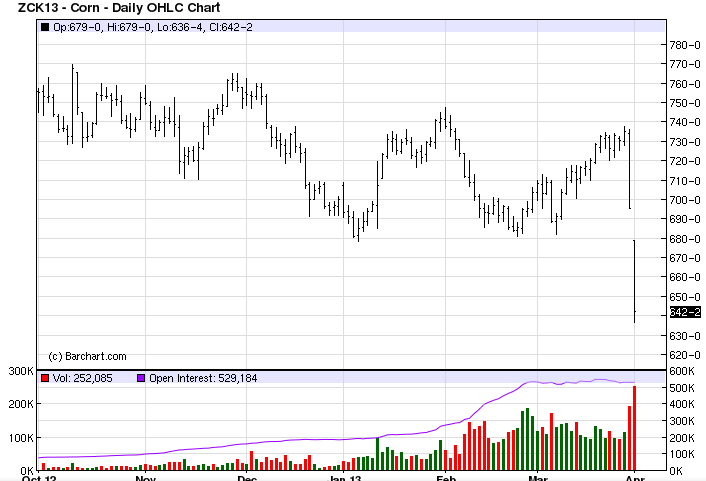
Corn futures have declined about a dollar since last Thursday with May futures declining to $6.42 a bushel today.Corn jumped over $8 last summer as the extreme Midwest drought help drive future prices to record highs.
Prices in Chicago are down 23 percent since last year’s closing high of $8.3875 on Aug. 21.
Speculation has helped move commodity prices in wilder swings in the past few years many observers agree.
USDA is predicting farmers will plant 97.282 million acres this year, the most since 1936. Once the crop comes in – by September – future prices are now down to $ 5.51 bushel – closer to historical averages.
The reality is that a good moisture year will be needed in the Midwest for that to happen.So far this Spring moisture has been good in many parts of the corn belt.
California milk producers import the majority of their feed from the Midwest.
Livestock owners have been hurt hard by the drought last summer that helped drive increasing numbers of families out of the business in places like Kings County – where milk production has fallen by more than 9%.
Corn costs are the biggest expense dairymen face.The high price of corn also whipsawed all livestock owners as well as ethanol makers who rely on the feedstock to make biofuel.The record cost has idled scores of plants.
Too Early To Celebrate
Western United Dairymen president Tom Barcellos says it’s “too early to celebrate.We need relief on feed costs and on the milk price that needs to go up – to get a decent margin.”
Barcellos says that California producers are focusing on changing the milk marketing through a federal order instead of the state although they have not given on trying to change the California system through AB31.
Barcellos, who farms near Tipton, says milk volume is up this week as dairy cows enter the Spring Flush period when good weather boosts milk production.

Ag Watch….The Latest Numbers For Milk / Corn & Cotton
California milk production fell 8% in February compared to a decline of 3.5% across the US. The drop in California’s milk production came on 2,000 less cows and 155 less pounds of milk per cow. In Kings County there was a 9.3% drop – Tulare County down 6.5% and a 22.4% drop in San Bernardino County as southern California continues to lose dairies.
Californians continue to drink less fluid milk with sales down 3.2 % in February compared to the year earlier but up 9.1% for organic milk.
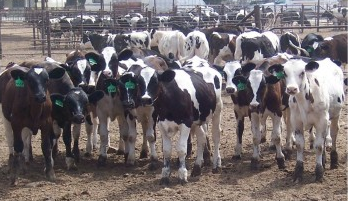 Another “complete dispersal “ of a local dairy farm – this time it is the George Santos Dairy in Laton set for April 12 with rolling stock to be auctioned April 2. The dairy, that supplied DFA, is for lease.The family is going through a bankruptcy process.
Some rare hope for dairy as cheese prices are rising in the face of a severe drought in New Zealand strengthening export prices.Meanwhile on the feed front there is hope for lower prices this fall.This week Sept corn dropped the limit – 40 cents – to $5.63 promising lower feed costs for livestock producers later this year.
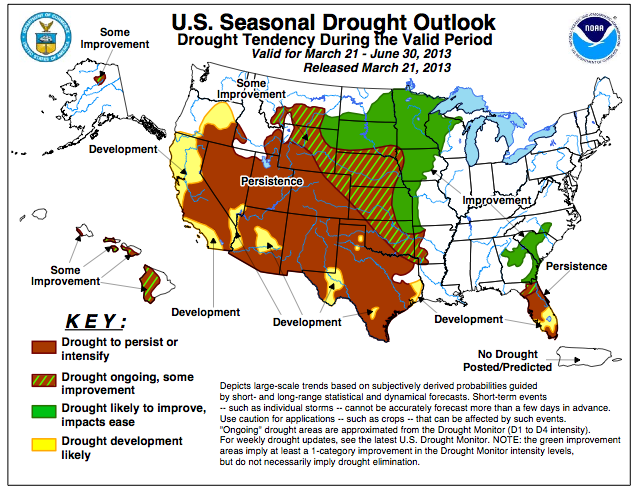
While New Zealand and California are experiencing a drought, the corn belt in the US Midwest has seen improved winter rain and snowfall helping to replenish dry ground in major parts of the corn belt. A normal corn harvest this year could be a boon all around.
USDA says US corn growers intend to plant 97.3 million acres of corn for all purposes in 2013, up slightly from last year and 6 percent higher than in 2011. If realized, this will represent the highest planted acreage in the United States since 1936 when an estimated 102 million acres were planted.
In California corn farmers are planning to plant 8% less corn than last year says USDA.The big drop in “ prospective plantings ”came in cotton with Upland varieties down 37% and Pima down 16% from last year.
Cotton acres across the US are expected to drop 27 percent in 2013 as more producers plant corn and soybeans, according to the National Cotton Council’s annual planting intentions survey.

Demand Up For Asian Veggies
- Author: Jeannette E. Warnert
March 27, 2013

Rising demand for Asian vegetables in urban areas of California is creating an improved market for produce grown by the San Joaquin Valley’s Asian farmers, reported Yu Wei in the San Francisco-based China Daily.Richard Molinar, UC Cooperative Extension advisor in Fresno County, told the reporter that demand is driving increased cultivation of Asian vegetables in Fresno County.
“We have around 50 to 75 Chinese farmers here in Fresno County and over 2,000 acres of Chinese crops selling locally as well as nationwide,” Molinar said.
The article noted that UC Cooperative Extension offers advice and services to these growers.
“In addition to providing them with technical support, we also help those farmers to find new marketing opportunities,” Molinar said.

More Water Cuts For Central Valley Farms

The California Department of Water Resources announced that water allocations for the State Water Project are being reduced from 40% to 35% due to a dry January-March period, coupled with pumping restrictions imposed in December and January to protect Delta smelt and salmon.
The Bureau of Reclamation announced that Central Valley Project allocations for south-of-Delta agricultural contractors are being reduced from just 25% down to 20%. Municipal and industrial contractors south of the Delta will see their allocation decreased from 75% to 70% of their historic use.
Local communities face more than $1 billion in lost economic activity due to reduced water supplies for farmers in Westlands Water District ,the district estimates.
“The water supply reductions facing farmers will devastate the local communities. We understand that the most recent cut imposed by Reclamation is a result of record dry conditions experienced in January, February, and March; but this reduction is being imposed after the loss of hundreds-of-thousands of acre-feet of water experienced during a record wet December. Those losses are difficult to comprehend,” said Thomas Birmingham, general manager of Westlands Water District. “Once again, the needs of our community and the livelihood of our workers are being sacrificed due to questionable decisions by federal officials to protect Delta smelt.”
While rainfall the second half of this water year has been low a wet November and December helped fill a number of key northern California reservoirs to above historical average including Shasta,New Melones and Oroville.
California Senator Dianne Feinstein said “A water allocation of 20 percent for South-of-Delta farmers is a crippling blow to California’s farm community. This is the second very low allocation since 2009, so it should be clear that California needs to store water from the dry years for the wet years. Any water bond put on the ballot must have a strong storage component. Absent that, California will be in deep trouble with respect to water.
“With respect to this 20 percent allocation, all I can say is it’s devastating. In 2010 we were able to work out—thanks to the Department of the Interior, Bureau of Reclamation, water contractors and the state—an additional 150,000 acre feet. I encourage Interior and Reclamation to follow that same formula this year. The water allocation must be increased if California farmers are going to be able to produce.”
Friant Division contractors’ water supply that waters the Valley’s eastside is delivered from Millerton Reservoir on the upper San Joaquin River. The first 800,000 acre-feet of water supply is considered Class 1, and the next 1.4 million acre-feet is considered Class 2. Based upon DWR’s February WY 2013 Runoff Forecast, the Friant Division water supply allocation is currently 65 percent of Class 1. There are fears that could be lowered if the mid Sierra gets no more storms.

Ag Beat: Honey / Milk / Goat Milk
 Honey Production Way Down In California
Honey production in 2012 from producers with five or more colonies totaled 147 million pounds, down 1 percent from 2011. There were 2.62 million colonies producing honey in 2012, up 5 percent from 2011. Yield per colony averaged 56.1 pounds, down 6 percent from the 59.6 pounds in 2011.
In California where fears of a bee shortage have been told colonies were down says USDA, to 340,000 compared to 370,000 in2011.
Even more dramatic was the decrease in honey production in California over the same period declining from 17.7 million lbs in 2011 to 11.9 million lbs in 2012.
Colonies which produced honey in more than one State were counted in each State where the honey was produced. Therefore, at the United States level yield per colony may be understated, but total production would not be impacted. Colonies were not included if honey was not harvested. Producer honey stocks were 32.9 million pounds on December 15,2012, down 10 percent from a year earlier. Stocks held by producers exclude those held under the commodity loan program.
Record High Honey Prices
Honey prices increased to a record high during 2012 to 195.1 cents per pound, up 11 percent from 176.5 cents per pound
in 2011.
Exports Key For Dairy:
A new report from Rabobank has recommended that product innovation and export markets are key for future dairy industry growth.The Rabobank Agribusiness Research and Advisory (FAR) group released its dairy industry report “California Dairies: Getting More Moola”.
The report offers insight into how value in the dairy industry could be maintained for the benefit of both producers and processors.Authored by Vernon Crowder, agricultural economist and senior vice president at Rabobank and James DeJong, dairy industry analyst with Rabobank, the report looks at moving the industry more in line with the free market system.The report states that infrastructure investment and different practices are necessary in order to move away from milk marketing orders (MMO), the long standing protection for farmers against unbalanced pricing.Despite refinements over the years Crowder and DeJong state that minimum price formulas and the redistribution of milk revenue to farmers remains the same. The future of dairy farming, they predict, will depend on product innovation and tapping into the value of dairy produce internationally.”There’s a growing demand on the world market for a variety of milk by-products and California dairies need to position themselves to capture that market share,” said Mr Crowder. “California dairies can’t simply continue to produce and market products for the satisfaction of their own domestic market, they really have to think globally.
Since 2008, the export market has started to offer greater possibilities alongside domestic revenues. Rabobank recommend that US farmers follow New Zealand’s lead and tap into markets by tailoring products for exportation.Referencing The Northwest Dairy Association (Darigold) as an example of a cooperative that targets good relationships with key export customers, Rabobank suggest that processors need to initiate expansion.
Goats’ Milk With Antimicrobial Lysozyme Speeds Recovery From Diarrhea
Milk from goats that were genetically modified to produce higher levels of a human antimicrobial protein has proved effective in treating diarrhea in young pigs, demonstrating the potential for food products from transgenic animals to one day also benefit human health, report researchers at the University of California, Davis.
The study is the first on record to show that goats’ milk carrying elevated levels of the antimicrobial lysozyme, a protein found in human breast milk, can successfully treat diarrhea caused by bacterial infection in the gastrointestinal tract.
The findings, slated to appear March 13 in the online scientific journal PLOS ONE, offer hope that such milk may eventually help prevent human diarrheal diseases that each year claim the lives of 1.8 million children around the world and impair the physical and mental development of millions more.
Milk Specialties Global Begins Visalia Production
Milk Specialties Global began production from the Visalia plant partnering with Provisions Foods in the former Kraft plant in Visalia.
David Lenzmeier, CEO stated, “Tulare County, California is one of the largest milk producing counties in the US. The ability to produce Milk Protein Concentrates in this county allows us to take full advantage of a fresh, local supply of milk, providing the highest quality Grade A, rBGH-free Milk Protein Concentrates to our customers. We are really excited to be able to meet our customers’ growing needs, and I would like to send my deepest appreciation to our MSG family for all of their hard work in getting our fifth food grade facility up and running.”
The Milk Protein Concentrate market is expanding in the areas of Sports Nutrition, for sustained release and Functional Foods, for protein fortification. Major growth categories include: ready-to-drink nutritional beverages, Greek yogurt, sports nutrition powders, processed cheeses and chocolates and candy.
Suvash Kafley, Director of Research & Development says, “With the growing demand of milk proteins and micellar casein, we have dedicated our Visalia, CA facility to Milk Proteins Concentrate and Isolate production. We will also be making native micellar caseins and low-grit micellar caseins, as well as caseinate replacers for creamer applications. The plant can produce high quality liquid or powder milk protein concentrates and isolates in less than 24 hours, allowing us to provide an estimated 1 million pounds each month, of milk protein concentrates and milk protein isolates to the market place, in order to meet current demand.”

Sinking Land Cuts Key Channel Capacity
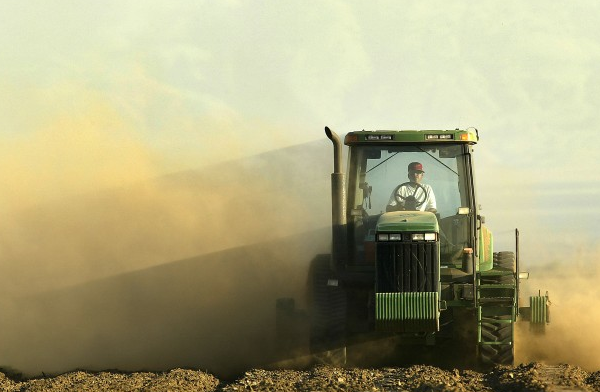 There is a growing ripple effect on the San Joaquin River flow capacity due to vigorous groundwater pumping in one part of the Valley – in Madera County. The land below some farmers feet is sinking and sinking faster and the implications resonate far and wide.
Land adjacent and just east of the San Joaquin River between Dos Palos and Los Banos is sinking at an accelerated rate new state studies have found. So says Chris White,manager for Central Valley Irrigation District who told his findings to a meeting of Associated California Water Agencies (ACWA) in Fresno last week.
Survey work on the San Joaquin River as part of the Bureau of Reclamation restoration process in 2010 found land subsidence in this area of nearly 2ft compared to benchmark survey done in 2008.
White says a dramatic illustration of the drop came when a farmer last July texted him a photo of his well casing that had been painted a bright color down to ground level a few years earlier but now was unpainted a good 18 inches from the ground.”What’s going on here” asked the farmer?
It wasn’t gophers. More like an episode of ’Honey, I Sunk The Farm.’
“If this problem is left unchecked it is possible to see land subsidence of 28 feet or more.” Did he say 28 feet?
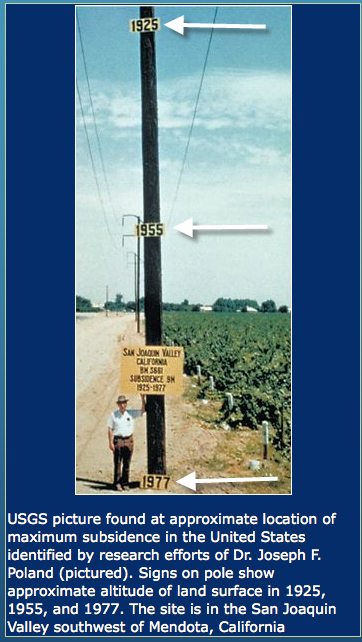
A famous photo shot near Mendota in 1977 shows just how much Valley farm land sunk from 1925 to 1977 which was about 28 ft according to a USGS study. More on this later.
The subsidence has been a long term problem in the area caused by over pumping of deep groundwater by farmers but the rate until recently had been slower. Identification of a rapid ground level decline in this specific area only dates to May of last year, says White, and adds up to as much as 5 ft over the past few years at at a rate of 1.25 ft a year.
“This land subsidence if left unchecked has serious impacts to public safety,flood conveyance and water supply” White told the AWCA meeting of fellow water agencies.
25% Decline In Channel Capacity
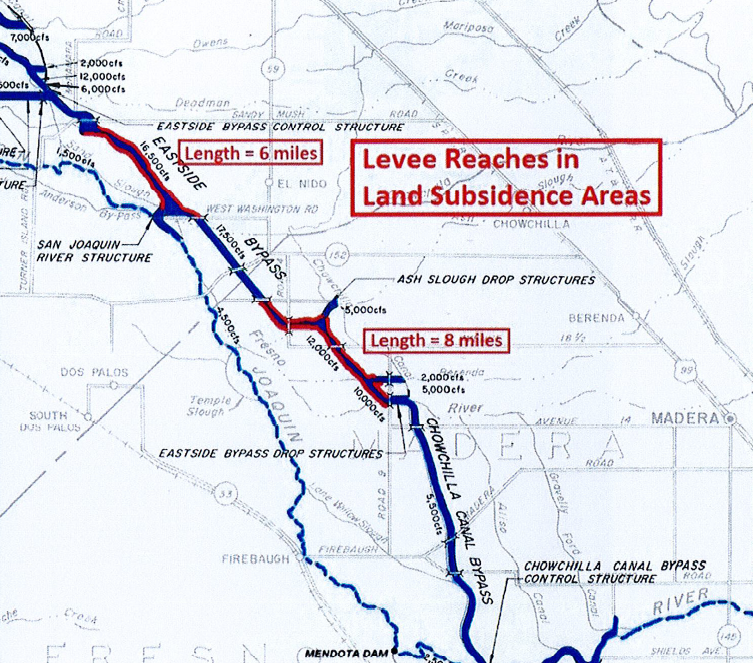
A recent analysis by the state DWR shows that “subsidence has caused about a 4000 cfs reduction in flood water conveyance or about 25% of capacity along the river’s important East Side Bypass. The parallel San Joaquin River flow capacity has also been reduced he says, although that flow reduction level is still under study. “It looks like the river channel is sinking about 6 inches a year but we don’t know how much that has cut its carrying capacity.” He says “we may know in a few weeks.”
The sinking land could spell all kinds of trouble. In the event of a flood flow the size the region experienced in 2006 – the river would overflow its bank says White, likely flooding Hwy 152,the City of Dos Palos, farmland nearby and an elementary school in the Red Top area.
Beyond flood issues,the sinking land has water supply implications for Valley water districts nearby and in other parts of the Valley.
White explains that the Bypass and the San Joaquin River depend on gravity flow to deliver water and if the subsidence continues at the current pace it would “ jeopardize about 55,000 acres in the San Luis Canal Co district and the Central California Irrigation District” that White heads up.The district serves some 1600 farms.
About 14 miles along the ByPass are affected.
Since these key channels can not pass some flood flows from both the San Joaquin River drainage and Kings River – the reservoirs that hold water back could face new management issues including Pine Flat,Friant Dam and Hidden and Buchanan Dams, in other words the water supply for much of the Valley.
Flood vulnerability in the Los Banos area would force the Corp of Engineers to require earlier and reduced water releases to avoid the flood potential.The upshot would be that all who depend on those waters would be at risk of reduced water supply since the SJR is the only outlet to the sea for the Central and South Valley.
The issue is a touchy in in the current drought climate when Valley farmers are giving up water for fish and because of the same drought -farms have literally pumped up ground water extraction to keep their plants alive.
It becomes a vicious circle.
“This problem could lead to finger pointing by a number of water users affected by the pumping of a few farmers” says Ron Jacobsma of Friant Water,who depend on SJR River water. A lower level in this area could lead to migration of groundwater from one area to another also raising water quality issues – salt water moving for example. Along the river landowners affected by failing levees could claim damage.
Seeking Solutions
White says a short term plan now underway will be to buy and deliver 10,000 acre ft of surface water and replenish the deep aquifer near Sack Dam where the worst of the subsidence is happening.”These farmers don’t currently have access to surface water for recharge.”
White says long term the plan will be to develop more conjunctive use water adding around 700 acres of recharge basins,developing a plan to divert flood water,developing a 10,000 acre ft annual supply of purchased water to continue the recharge effort and re-drilling deep wells as shallow wells to allow the recovery of water levels below the Corcoran Clay that hold up what has been termed the richest ag region in the world.
Besides problems in in this district – levees along the entire stretch of the San Joaquin as it heads to the Bay Area are at risk – almost 200 miles as the land sinks and those levees sink too – creating instability and leaks that turn to floods.
There is an issue for the Department of Reclamation as well planning the restoration of the San Joaquin River to accommodate salmon with plans to invest millions in infrastructure to do so. Sack Dam where the subsidence is worse is a focal point as the engineers look to design fish passage through sinking waterways.”What elevation should they design for” asks Friant’s Jacobsma.
White adds that the area where they are designing fish ladders for salmon returns for 3 decades of useful life – the rug is being pulled under the engineers who may now need to build the infrastructure as much as 15 ft higher.
Reduced capacity on the San Joaquin also could affect Friant’s ability to get restoration water flows recirculated that they are counting on long term in this water short valley.
28ft drop
DejaVue All Over
In a 1977 USGS report Dr Joe Poland wrote in an abstract:
Land subsidence which began in the mid-1920’s due to ground- water overdraft in the San Joaquin Valley has caused widespread concern for the past two decades. Withdrawals for irrigation increased from 3 million acre-feet in 1942 to 10 million acre-feet in 1966. Water levels declined at unprecedented rates during the 1950’s and early 1960’s.
Pumping lifts became inordinately high,well casings failed at alarming rates, and differential settlement caused numerous farming and engineering problems.
By 1970, 5,200 square miles of Valley land had been affected, and maximum subsidence exceeded 28 feet.( see pic)
The valley wide volume of subsidence totaled 15.6 million acre-feet one-half the initial storage capacity of Lake Mead. This subsidence represents one of the great environmental changes imposed by man.
The report adds that importation of surface water in the late 60s and early 70s through the Friant-Kern Canal and the California Aqueduct has meant pumping of ground water has been reduced, and the rapid decline of artesian head has been reversed in parts of the areas of overdraft.
A similar recharge effort of surface water in the Hwy 152 area could help stem the falloff says White, adding he is optimistic the cooperation of farmers to do recharge and limit pumping will make this happen.
Farmers in the rest of Valley hope he is right.