
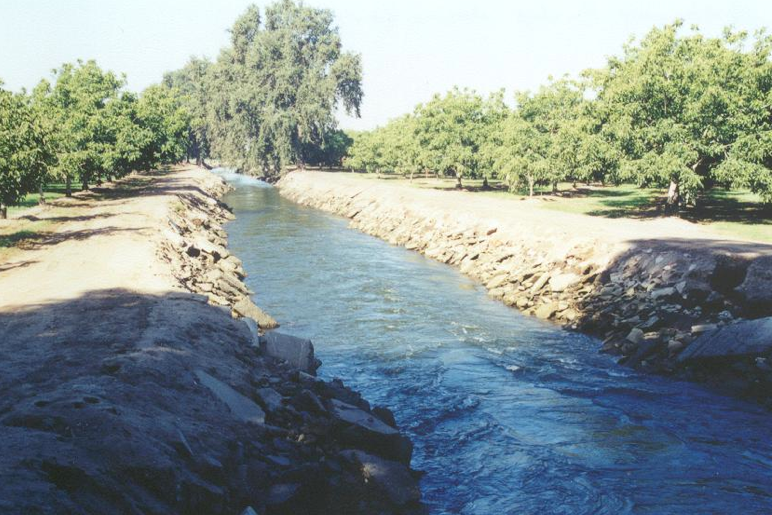
 The driest January through April in California history has delivered a knockout punch for Tulare Irrigation District water deliveries.
General Manager J. Paul Hendrix said TID will have no water run for only the fourth time in its history the district’s board decided last week
TID gets canal water from the federal Central Valley Project (Friant Kern Canal) and has a small Kaweah River allotment but growers in the district will have to totally rely on their pumps and ground water supply this season says Hendrix.
TID gets a good supply of Friant Kern Canal water in wet years like 2010 and 2011 and sunk about half of around 300,000 acre ft each year just for leaner times like these.
“The small amount of surface water coming to us would be only about a weeks supply and half of that would be lost to seepage” along the earthen canals adds Hendrix. The 70 square mile district is a good 30 miles from both the Friant Kern and Lake Kaweah.
“Instead we will trade the asset we have to water districts who have little or no groundwater supply” says Hendrix, foothill water districts like Exeter and Terra Bella who are are in real need this year.
TID is looking to make deals on a supply delivered this year in exchange for say, double that amount in a wet year coming back to Tulare. “We are not not peddling our water to buy a pick up truck.It all goes to water in the future.”
Dry years in past were 1977,1987 and1990 says Hendrix, with this year considered second worst after 1977 when Friant Water Users got just 25% of contracted Class 1 water. This year Friant districts will get just 45% of contracted amounts although that could go up or down a little in coming weeks says Friant GM Ron Jacobsma.
“It depends in part on high elevation snow melt that may or may not be there.”
On the Kaweah, Lake Kaweah is expected to get to 100,000 acre ft this Memorial Day similar to the pattern of 1990 – another drought year.The lake can hold 185,00 acre ft. It will be just a puddle by October.
Back on the Fraint Kern Canal, a 45% allocation would mean just 340,000 acre ft of water out of 800,000 acre ft under contract would be available to Friant districts along the eastside of the Central Valley.
Not just farms but muni water districts like Fresno, Orange Cove and Lindsay depend on the federal surface water for drinking.Lindsay and Orange Cove are struggling this summer with wells with high DBCP levels and need clean surface water to blend with the tainted water to meet standards.
Friant’s source is San Joaquin River water stored in relatively small Millerton Lake above Fresno that is expected to go down to dead dead pool elevation of 135,000 acre ft when it can no longer deliver water to the Friant Kern Canal.
Jacobsma says restoration flows delivered to the San Joaquin River below the dam under the settlement will also be reduced this dry year even as farmers get less. Under a critical dry scenario restoration flows for the water year could be cut 100,000 acre ft resulting in some water coming back to Friant users. Jacobsma says it is not yet clear if we have reached that level.
“We have had 2 dry years in a row and third one this coming year would mean a real hardship for growers” with little reservoir back up around the state – a plus we enjoy this year to do water exchanges.
Near Tulare, Lower Tule River general manager Dan Vink says their district may do a short water run for famers late this summer but can’t make it pencil out if the run would last any less than 12 days.
Further south, Arvin Edison water district is tapping their joint water bank with Metropolitan Water District with each district benefiting after years of sinking part of MET’s state water supply on Arvin Edison ground.
Just how tough it will be this season depends in part how long and hot the summer of 2013 will be.
‘We want to at least keep our permanent plants alive” says Jacobsma noting there will be some fallowing of field and vegetable cropland this year because of the drought.
The US Climate Prediction Center calls for a warmer than average summer over the West including the Central Valley and inland parts of the state.
Category: Agriculture

California Dairies Inc Elects New Board Chairman
 VISALIA, Calif. — May 30, 2013 — California Dairies Inc. (CDI), the nation’s second largest dairy processing cooperative, announced today the election of a new executive committee for the 2013-2014 term that includes the election of John Azevedo, former first vice chairman, to chairman of the board. Azevedo succeeds Brian Pacheco whose term as chairman has concluded. Pacheco will continue to serve on the board of directors and will remain on the executive committee as a member-at-large.
Also elected were John Bidart, former second vice chairman, to first vice chairman, and John Moons, former treasurer, to second vice chairman. Executive committee members, John Dores and Gary Bos, were re-elected to secretary and member-at-large, respectively. Board member Jamie Bledsoe will join the executive committee as treasurer.
“I am honored to have been elected chairman of the board at California Dairies, Inc. To be given an opportunity to represent the member-owners of the largest milk processing cooperative in the state of California is a responsibility I respectfully assume,” shared Azevedo. “It is an exciting time at California Dairies, Inc. as the cooperative grows its markets, its products and the return on investment to its member-owners. I look forward to the challenge of improving the cooperative and the California dairy industry.”
A member of the board of directors since 2007, Azevedo also serves on the California Dairies’ Political Action Committee, the Milk Fat Marketing Challenge Dairy Products, Inc. Committee, and the Finance and Capital Base Planning Committee. As chairman he will serve in an ex officio capacity on all committees.

New Citrus Variety
 Author: Toni Siebert, Ottillia Bier, David Karp, Georgios Vidalakis and Tracy Kahn
May 24, 2013
In the last two decades, many distinctive citrus selections have become available at retail markets in the US. These include cultivars such as ‘Cara Cara’ navel orange, ‘Cocktail’ pummelo-mandarin hybrid, ‘Variegated Pink’ lemon, ‘Seedless Kishu’ mandarin and ‘Buddha’s Hand’ citron. Among specialty ctirus growers, there is intense interesst in acquiring nev varieties with novel or unusual chracteristics of appearance, coloration, flavor, size and functional properties.
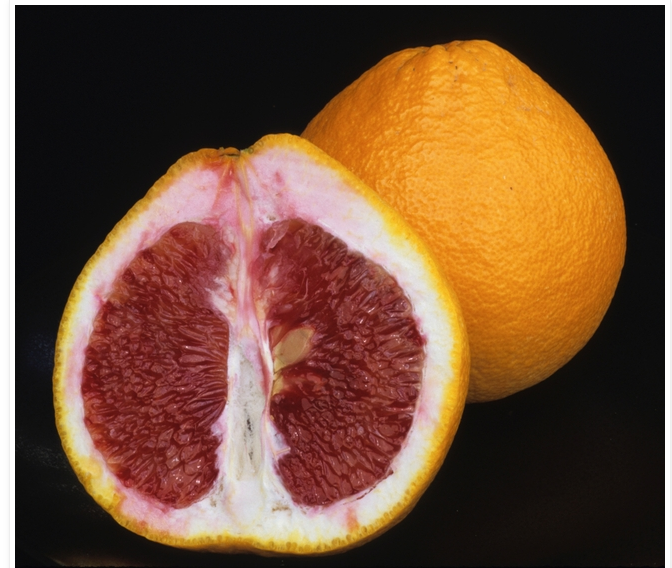
The newly released pummelo hybrid ‘Valentine’, combines the large size and low acidity from its pummelo parent, complex, floral taste from ‘Dancy’ mandarin and juicy red pulp from ‘Ruby hybrid. It matures in mid-February near the Valentine’s holiday and when it is cut lengthwise and turned upside down, the flesh of the fruit resembles a vibrant red heart. It is unique in being a grapefruit-like fruit with anthocyanin pigmentation, which is a potential marketing advantage at a time when many anitoxidant-rich fruits, such as pomegranate, bleuberry and blackberry, have seen sales increase because of their percieved health benefits.
Learn more about this new fruit and other citrus in the UC Variety Collection at:

Tulare County Farms See Labor Shortage – Could See Citrus Pest Restrictions Lifted
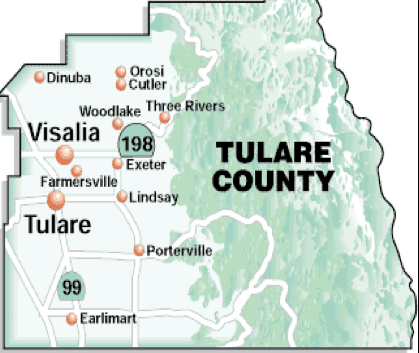 Restricted Zone For Citrus Pest in Tulare County Could Be Lifted
Restricted movement of citrus fruit and citrus plants out of 2 five mile zones in Tulare County as the result of an invasive pest could be lifted next month. The Asian citrus psyllid threatens citrus crops because it can carry a disease that kills trees.The pest – but not the disease – has been found in Tulare County, leading to restrictions on fruit grown near where the insects were found last year. For example, farmers within the restricted zones must take extra steps to ensure no leaves travel with their fruit, a costly business.
Now six months after the 3 finds, Tulare County Ag Commissioner Marylin Kinoshita anticipates CDFA will lift the restrictions as of the third week of June. The bottom line and some very good news – no new finds of the insect despite plenty of traps out there. The theory is that the psyllid finds may have been random hitchhikers and not an indication of a full infestation like they have in Florida.Worse,Florida has the disease the insect carries Citrus Greening – that has cost Florida’s economy $4.5 billion and 8,000 jobs. Citrus is this county’s number 2 crop.
Tulare County Farmers Report Labor Shortfall
Ag Commissioner Marylin Kinoshita says farmers here are complaining this season about short crews showing up at picking time echoing a theme heard in other parts of the state. Kinoshita says she heard workers are choosing to go to Oregon and Washington to pick because the pay is better.
Tulare County Farm Bureau president Steve Godlin suggests the need for legislation. ”In an online survey conducted by the California Farm Bureau last year, California farmers and ranchers described continuing problems in finding enough people to take on-farm jobs. Nearly two-thirds of the farmers who responded to the survey described significant problems hiring enough employees.”
He adds that” reform of immigration laws should secure our borders and allow immigrants who are contributing to our communities to work in farming.”
This week the U.S. Senate Judiciary Committee approved a massive immigration reform bill, voting to send it to the entire Senate for debate.
A recent paper printed in a Giannini Foundation ag econ newsletter has the provocative title “Mexicans Are leaving Farm Work” and offers that there will be no more farm labor abundance for US fruit and vegetable farms.

AG ROUNDUP
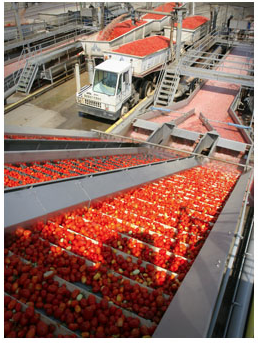 Its not just wine, beef, milk and fruit that are enjoying booming exports. It’s tomato paste too. Through March the US exported 2.2 million tons of paste compared to 1.95 million tons this time last year.That’s nearly a 13% increase, all from California. It’s not just the world warming to ketchup. Mexico is big importer for their salsa. Processors are paying $70.50 a ton – up $1.10 from last year.
Cherry crop in May is good quality but a limited supply say industry sources.One Tulare County grower reported a very short crop says Ag Commissioner Marylin Kinoshita. Cherries are the first of the tree crops that get harvested.
Kinoshita reports that some 700 young almond trees just planted northeast of Visalia were stolen,carted off in a midnight raid recently. Almonds and almond trees are increasingly valuable these days.
The ag commissioner says stone fruit growers are looking forward to a nice crop of peaches,plums and nectarines this year with small sizes heading increasingly to Mexico. “There is a strong market right now” says Kinoshita with about 30% of the fruit fumigated using criteria approved by Mexico.We like to think that Mexico sends plenty of produce our way but it works the other way around as well.
Almond Production Higher: The initial subjective forecast for the 2013 California almond production is 2.00 billion pounds. This is 6 percent above last year’s production of 1.89 billion pounds. Yield, forecasted at 2,470 lbs/acre, is up 3 percent from the 2012 yield of 2,390 lbs/acre. Forecasted bearing acreage for 2013 is 810 thousand.
Here is music to the ears for both livestock owners and ethanol producers. USAD’s latest estimate calls for a record of 359 million metric ton corn harvest for 2013, up 31 percent from 2012’s drought impacted harvest of 274 million tons. Average corn price ($/bushel) in 2013/14 is projected at $4.30-5.10, down from $6.70-7.10 in 2012/13. Of course it all depends on the weather. Last year’s drought appears to be over in the Midwest but things could change.

Hearing On Milk Prices Highlights Lack Of Agreement
 Issue Date: May 22, 2013
By Ching Lee
Dairy farmer organizations and processors have not yet reached an agreement on how to update the state’s milk pricing formula and, more specifically, on how to establish a whey value that would be satisfactory to both sides.
During a hearing held by the California Department of Food and Agriculture in Sacramento Monday, dairy farmer groups and dairy cooperatives stuck by a proposal they have introduced through Assembly Bill 31, to establish a milk pricing formula for dry whey that would bring California prices closer in line with what’s paid to dairy farmers under the federal milk marketing order.
CDFA called the hearing to consider temporary changes to all classes of milk, after receiving a request from leaders of the Assembly Agriculture Committee, which held a hearing earlier this month to consider AB 31.
Dairy farmers have long held that there has been a huge disparity between the whey value in California’s Class 4b price—what cheese manufacturers pay for milk—and the federal order’s whey value.
Not ready to make the sweeping changes in AB 31, the Assembly Agriculture Committee amended the bill but kept it alive to give producers and processors time to work out a compromise. At the same time, they asked CDFA Secretary Karen Ross to hold a hearing to find a short-term solution.
Producer groups and cooperatives were united in asking CDFA to raise the Class 4b price by $0.138 per pound, or about $1.20 per hundredweight. Their proposal mirrors the Class 4b pricing formula adjustment found in AB 31 and would result in an increase of roughly 50 cents to the overbase price, or basic pool price, that producers earn.
“The temporary increase proposed for Class 4b is to get to what the producer side of the industry has been advocating for almost three years: a fair pool value from cheesemaking revenues,” Michael Marsh, CEO of Western United Dairymen, said in his testimony.
Groups that testified in support of the WUD proposal included the Milk Producers Council, California Dairy Campaign, California Dairies Inc., Dairy Farmers of America-Western Area, Land O’Lakes and Agricultural Council of California. Tulare County dairy farmer Tom Barcellos also testified in support of the proposal.
Processors were unified in asking CDFA to extend the same temporary price increases the department had set back in February but that are scheduled to expire at the end of this month. Those price adjustments were made as a result of a hearing in December 2012 and amounted to an increase of about 25 cents per cwt. in producers’ average monthly pool price. Under the processors’ proposal, the current price increases would be in effect from July through the end of the year.
At the same time, processors expressed their support for efforts of the Dairy Future Task Force, a group of producers and processors formed by Secretary Ross last year to work on a long-term overhaul of the state’s milk pricing system.
“Based on what we have observed over the past few years, neither processors nor producers are fully satisfied with our regulated pricing system as it currently exists,” said William Schiek, an economist for the Dairy Institute of California, which represents the majority of processors.
Noting that producers tend to believe the current system “does not deliver enough revenue” to them while processors feel it “distorts markets and creates disincentives to investment in plants, processing technology, new products and new markets,” Schiek said the institute’s proposal to continue the existing price increases is “an effort to give our industry the time it needs to address the longer-term pricing issues” so that the task force can continue to work on a successful solution for both sides.
Rob Vandenheuvel, general manager of the Milk Producers Council, acknowledged the efforts that are currently underway to make longer-term, structural changes to the state milk pricing system, including discussions about crafting a federal milk marketing order for California and the work being done by the CDFA task force. But he stressed that “dairy families are in need of this price adjustment immediately.”
“The problem has been and continues to be specific to the way we price milk sold to California cheese manufacturers and the significant discount our current Class 4b pricing formula provides,” he told the CDFA hearing panel.
The California Dairy Campaign had previously asked CDFA to increase prices on all classes of milk so that they align with federal order prices. But Executive Director Lynne McBride said this time, the group chose to unify with other dairy producer organizations and cooperatives in calling for 80 percent of the federal order price of $1.20 per cwt.
“We continue to believe that alignment with the federal order is the only way to end the inequity in our state pricing system,” McBride said in her testimony. “As a compromise for this hearing, we are instead focused in changes to the 4b price only, where the greatest gap between the federal order class prices and the California class prices continues to exist.”
California Farm Bureau

Ag Beat: Most Tulare Co Crops Look Good
The Valley’s ‘King Cotton’ acreage was up in recent years but now it’s down again. California farmers intend to plant 90 thousand acres of Upland cotton in 2013, down 37 percent from the acreage seeded in 2012. In addition, growers expect to seed 190 thousand acres of American Pima cotton in 2013, down 16 percent from last year. Tulare County cotton acreage is expected to be down 11,000 acres in 2013 from 30,500 acres in 2012 says a state survey.
Meanwhile tangerine production is way up – 24 % compared to last year as more trees planted in the past few years come into production in Tulare and Kern counties. “The fruit is sweet and the quality is awesome “gushes Tulare County ag commissioner Marilyn Kinoshita.
Regards tree fruit this year Kinoshita says drought aside,our stone fruit crop has enjoyed perfect weather with no freeze or hail damage.
Speaking of good weather. this year’s cherry crop is only weeks away now and industry sources say it could be a record crop. Last year the industry packed 8.5 million boxes. Tulare County has about 2000 acre of cherries and more 320 acres of non bearing trees as of 2011.
The recovering ornamental nursery business is looking up as the state’s housing sector rebounds has but Kinoshita says it has a way to go yet. Still nurseries here have shipped out more product inspected by the county each year. In 2008/09 Tulare County nurseries recorded 4500 shipments, in 2009/10 – 5700 shipments and in 2011/12 – 6760. The latest year’s numbers will be totaled after June 2013.
The Harvest-Tulare composting facility near Tulare currently holds operating permits to compost green material, food, and dairy manure and the company wants to increase and shift types of materials and quantities accepted at the facility. Both a high solids digester (processing food and green material) and low solids digester (processing primarily food material) alternatives will be studied. They seek a permit to allow a maximum tonnage to increase from 156,000 tons per year to a potential 216,000 tons per year. An additional 60,000 tons will be allowed at the proposed anaerobic digester facility. The facility will produce transportation fuel through a compressed natural gas (CNG) refueling station. Public hearing will be held April 24, 2012 at 9:00 A.M. at the Board of Supervisors Chambers.
Good news for dairy farmers this week as block cheese prices in Chicago have jumped to $1.87 a pound this week.That’s up from a low $1.55/lb in early March. If dairy prices are up – there is more good news – feed prices are down.Corn for May delivery sits at $6.48 to down from $7.35 a bushel in late March.
Farmers Could Catch a Break on Diesel Prices this spring that are already below $4 at some stations with the drop in oil prices promising a further drop. It’s down to $3.77 in Bakersfield. The California average was $4.30 in mid-March.
Tulare County and the City of Visalia plan to offer a version of the PACE program later this years offering financing for businesses to get into solar without a big upfront cost.The amount borrowed through the program is paid back through your property tax bill .The board is scheduled to adopt the program April 23. Staffer Mike Washam says he is hopeful dairies will use the program allowing them to improve cash flow with no upfront cost or impacting their credit .
The City of Visalia has supported the PACE effort but seeks changes that would allow use for residential properties.
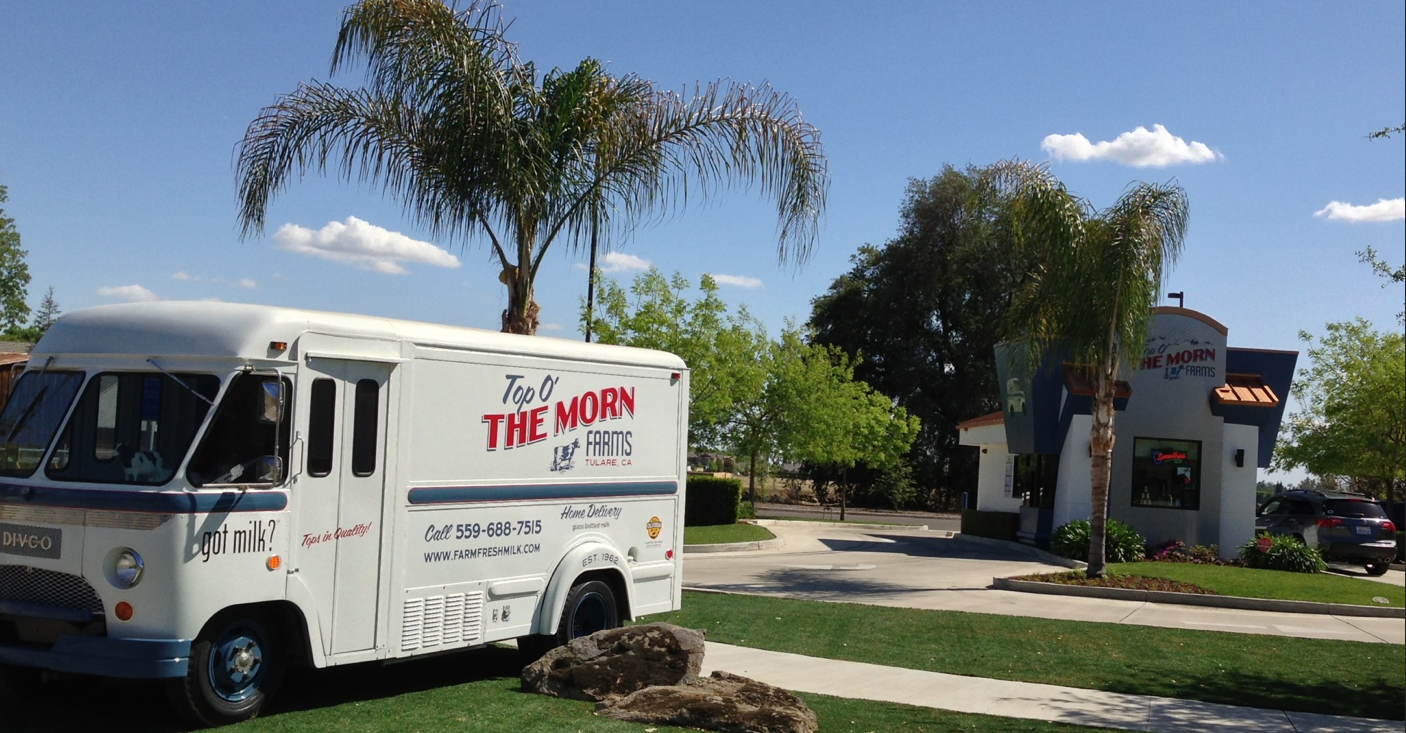
Tulare Dairy Family Opens 2nd Drive-Thru Store .The drive-thru milk store is back. Top O’ The Morn Farms of Tulare set out on a new way to offer fresh milk to the consumer last fall beginning to do home deliveries in Tulare,Visalia and Exeter. Then they took the next step opening a retail drive-thru retail outlet in Tulare in December on Prosperity Avenue. The store is near Evolutions fitness.
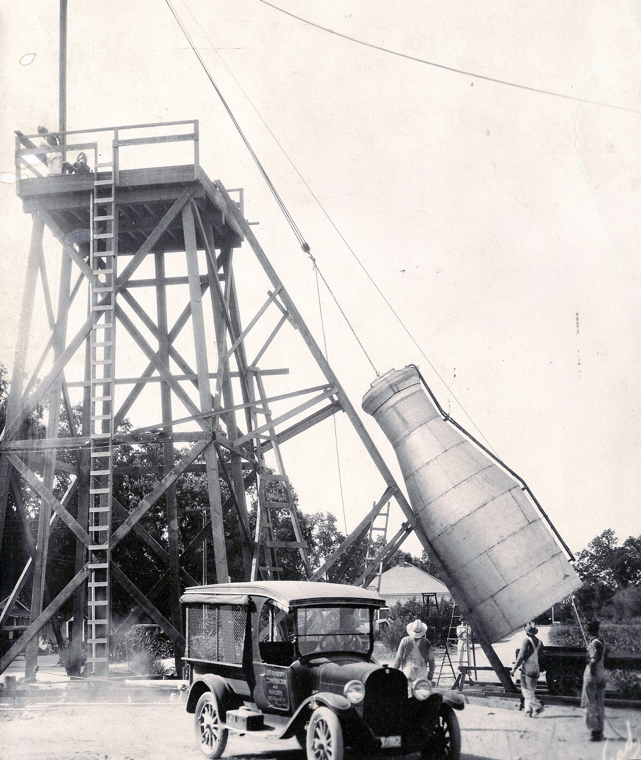
This week they opened a second drive-thru dairy store on Caldwell in Visalia just east of Mooney bringing back a tradition popular in the 1950s in California and Visalia too; you used to be able to drive into the Hyde Ranch in Visalia where a giant milk bottle greeted you where Kmart is today.
Top O’ The Morn fresh milk is offered in glass bottles that seem to say farm fresh and good ol’ days all in one. ””People have such a long history with drive-thru dairies and home delivery that we want to bring some of those good feelings back” says owner Ron Locke.
Locke says the new 700 sf store in the Stonebrook Plaza at 1103 W Caldwell is next to Gozen restaurant. The store offers not just fresh milk but a variety of locally produced foods.”We have fresh brewed and packaged coffees,all your favorite coffee drinks “ using locally-made Mavericks’ Coffee – also located on Caldwell Ave.
In addition the new store offers smoothies, local cheeses from a variety of Valley cheesemakers, Sam Cookseys eggs,food products from Simonian Farms and more.
Blueberry production is up in California – now more than 7000 acres harvested.Farm advisor Manuel Jimenez who helped push growers to plant heat tolerant varieties in the Central Valley says the berry’s popularity is tied to its health benefits. Key to growing blueberries here is to use drip irrigation and acidify the soil he says, enabling the berry to be grown away from the traditional cool climate growing areas. One of the world’s largest blueberry farmer is Munger Farms with a ranch near Richgrove in Tulare County. Local berries are being picked right now.

Shanghai – An Excellent Market For California Agriculture
April 12, 2013

Our trade mission through China with Governor Brown continues with a stop in the exciting city of Shanghai – home of more than 23 million people and one of the largest cities in the world. It is the commercial and financial center of mainland China. In short, it is an excellent market for California exports, including, of course, agriculture.
Governor Brown has opened the California-China Office of Trade and Investment – a resource for California and Chinese companies to expand cooperation and business ties. As the first official presence for California in China for several years, this office demonstrates the long-term commitment California has to this growing market.
For the agricultural sector in particular, we have seen dramatic growth and continuing success. Ag exports to China are increasing impressively – up 25 percent last year in reaching a value of more than $1.7 billion. Almonds increased 41 percent; pistachios were up 27 percent; wine was up 52 percent; walnuts were up 10 percent; citrus increased 17 percent; table grapes were up 20 percent; dairy products were up 54 percent; and raisins were up 65 percent. These are very encouraging gains and an indicator of the importance of working closely with our Chinese partners to understand what consumers are looking for, and to ensure market access.
During our time in Shanghai, we had the opportunity to meet with some of the top agricultural importers in the area to discuss opportunities for greater collaboration and trade growth. E-commerce was a key topic in the meeting and we were very pleased to have Governor Brown join us for a part of our discussion.
Traveling with representatives from the almond, beef, citrus, dairy, raisin, rice, organic products, pistachio, and wine sectors only reinforces California’s commitment to China. I look forward to working throughout this trip and beyond to leverage our agricultural trade opportunities here in Shanghai and throughout China.

CITRUS INDUSTRY VETERAN TO TAKE THE HELM AT CALIFORNIA’S CITRUS RESEARCH BOARD

Ken Keck, former executive director at the Florida Department of Citrus, has been named the next president of the California Citrus Research Board, based in Visalia.
Keck will succeed Ted Batkin on June 1. Batkin, president since 1993, is planning to retire in September, according a CSRB release.
Keck, a grower, was executive director and general counsel at the Florida organization for six years. Before that he was its director of government affairs 2002-06, and director of legislative and regulatory affairs 1999-2002.
The California board chose Keck in part for his experience combating citrus greening, chairman Earl Rutz said in the release. The disease is also known as huanglongbing, or HLB.
“As an industry we are facing some serious threats, most notably the continued spread of the Asian citrus psyllid and identification of HLB in our state,” Rutz said. “(Ted’s) are big shoes to fill, (but) we believe Ken’s track record, enthusiasm and alignment with the perspective of California growers will make him an excellent asset.”
During Batkin’s tenure, the board increased research investment to more than $5 million. The primary research focus is the HLB disease and vector management of the psyllid.
At the Florida Department of Citrus, Keck secured an average $7 million annually in state and federal funding and helped establish a $10 million foundation for annual disease research as well as development and commercialization efforts. Florida growers saw a return of $3 to $5 for each marketing dollar under Keck, according to the release.
“I know what it feels like to have your livelihood threatened, and I want to use this understanding and my experiences in Florida to benefit the California industry,” he stated.
“I am a third-generation grower in Florida, so I know the nature of the business. I know what it means to depend on the harvest each year. I know what it feels like to have your livelihood threatened, and I want to use this understanding — and my experiences in Florida — to benefit the California industry.”
Keck holds a bachelor’s degree in Spanish from Stetson University, and a juris doctorate degree in law from Widener University School of Law.
The Florida Citrus Department is a state agency charged with promoting Florida citrus products and is financed largely through a tax paid by growers on the annual citrus harvest.
The Citrus Research Board administers the Citrus Research Program, a grower- funded and directed program established in 1968 under the California Marketing Act as the mechanism enabling the state’s citrus producers to sponsor and support needed research.

2012 Wine Sales in U.S. Reach New Record
 Record California Winegrape Crop to Meet Surging Demand
April 8, 2013
SAN FRANCISCO — Wine sales in the U.S. from all production sources—California, other U.S. states and foreign countries—increased 2% from the previous year to a new record of 360.1 million 9-liter cases with an estimated retail value of $34.6 billion, according to wine industry consultant Jon Fredrikson of Gomberg, Fredrikson & Associates in Woodside. Of the total, almost two-thirds or 207.7 million cases of California wine account for a 58% share of U.S. wine sales with an estimated retail value of $22 billion. Including exports, 2012 California wine shipments to all markets in the U.S. and abroad reached 250.2 million cases.
“The U.S. is the largest wine market in the world with 19 consecutive years of volume growth,” said Wine Institute President and CEO Robert P. (Bobby) Koch. “Competition for retail shelf space and consumer attention is intense, so California’s high quality, record winegrape harvest in 2012 could not have come at a better time. California vintners continue to respond to growing worldwide demand with a wide array of outstanding wines from regions throughout the state and Wine Institute is supporting the effort by opening markets and eliminating trade barriers in the U.S. and abroad.”
“Wine shipments to the U.S. market climbed by nearly 50% since 2001 and it is likely that American consumption will continue to expand over the next decade as wine continues to gain traction among American adult consumers” said Fredrikson. “The amazing diversity of choices and exciting new offerings are attracting new consumers and boosting consumption. Among the key growth drivers are favorable demographics, a widening consumer base and increasing points of distribution in both on- and off-sale outlets. For example, Starbucks is now serving wine in some key markets and Amazon.com and Facebook Gifts both sell wine online.”
Varietal Trends in Chain Retail Outlets
Wine sales in U.S. food stores and other off-premise measured channels from all domestic and foreign producers grew 2% by volume and 6% by value, according to Nielsen, a global provider of information and insights into what consumers buy. California wines grew faster than the overall category by a full percentage point. By varietal in the table wine category, Chardonnay remained the most popular varietal with a 21% share of volume, followed by Cabernet Sauvignon, 12% volume share; Merlot, 9% share, and Pinot Grigio/Gris, 8% share. The largest percentage gains were Muscat/Moscato, up 33% in volume with 6% market share, and domestic red blends/sweet red wines, up 22% in volume with 5% share of market. Also of note was Malbec, up 21% by volume with a 1% share.
“Consumers have more access to wine throughout the country with wine-selling locations expanding by well over 50,000 from five years ago. Off-premise retail outlets grew 15% to almost 175,000 outlets, while restaurants and other on-premise outlets increased 12% to 332,000 locations in the U.S.,” said Danny Brager, vice president of the beverage alcohol practice at Nielsen. “Retailers recognize that wine is a large and growing category, even in economically challenging times, and tends to attract upper income consumers, and all legal drinking age groups. Wine also pairs well with food, leading to larger, more profitable shopping baskets.”
Sparkling Wine and Champagne
Shipments of sparkling wine and champagne reached 17.7 million cases in 2012, up 2% over the previous year. California sparkling wine grew 3% with Moscato based sparklers driving the growth. While overall total 2012 volume slowed after a major surge in 2011, sparkling wine shipments to the U.S. in 2012 were at their highest level since 1987.
U.S. Wine Exports
U.S. wine exports, 90 percent from California, reached $1.43 billion in winery revenues in 2012, an increase of 2.6% compared to 2011. Volume shipments reached 424.6 million liters or 47.2 million cases. Of the top markets for California Wines, the European Union’s 27-member countries are the largest accounting for $485 million, up 1.7%; followed by Canada, $434 million, up 14%; Hong Kong, $115 million, down 30%; Japan, $111 million, up 6%; China, $74 million, up 18%; Vietnam, $27 million, up 22%; Mexico, $20 million, up 4%; South Korea, $16 million, up 26%.