A Champion Of Tulare County Small Farms, Manuel Jimenez, Retires In June

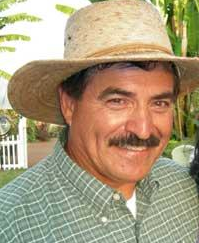
Manuel Jimenez went from hard-scrabble farmworker to world-renowned farming authority, all while living in and serving his hometown – the small, rural community of Woodlake, Calif. The University of California Cooperative Extension advisor, who worked with small family farmers in Tulare County for 33 years, retires in June.
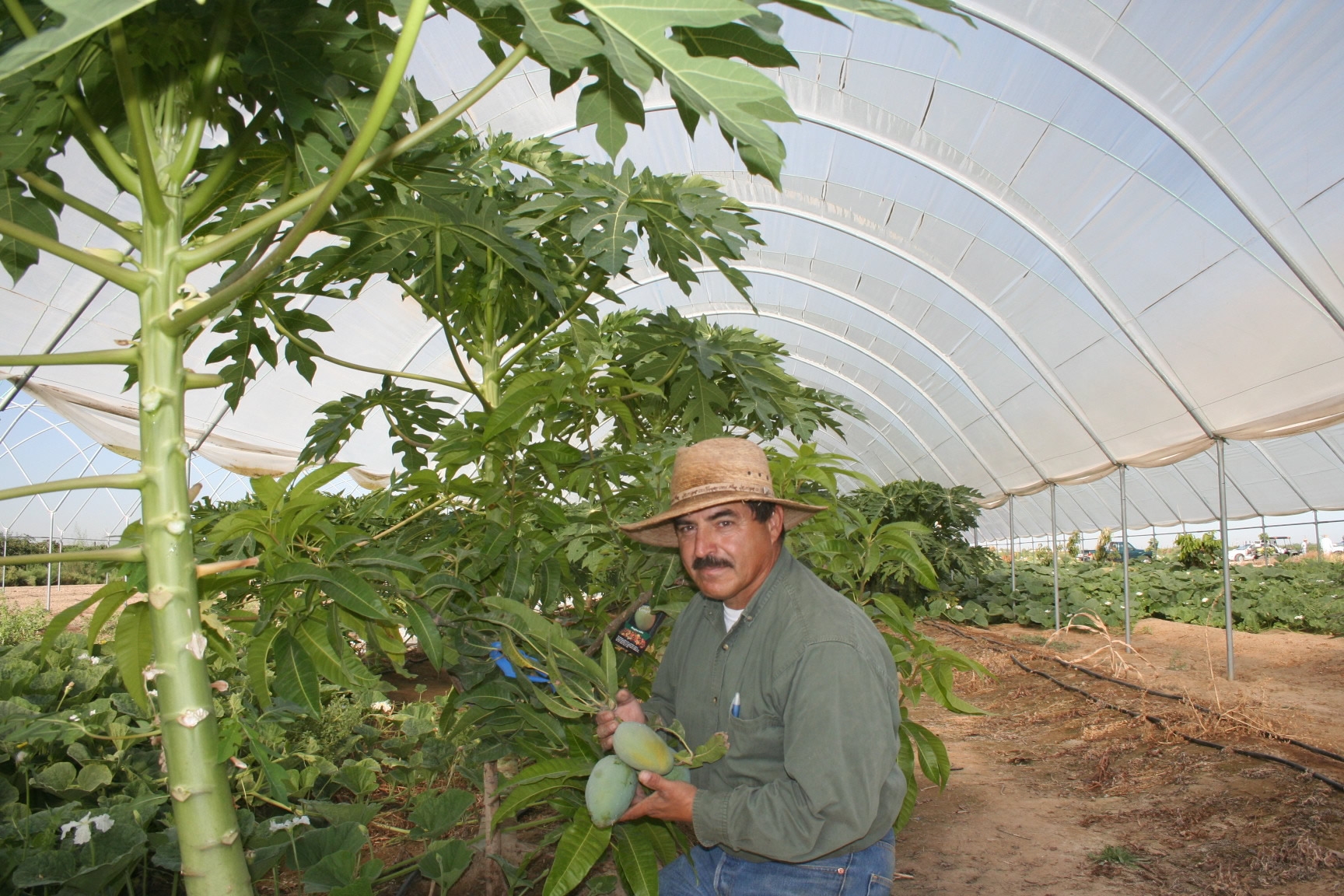
Jimenez has a storied California heritage. His grandmother was half Chumash Indian; his father an immigrant from Zacatecas, Mexico. The extended family of farmworkers settled in Exeter, where his grandfather, an early labor organizer, planned a strike in the 1950s, long before Cesar Chavez came on the scene. Subsequent hard feelings forced the family to migrate to other areas for work.

“My family was entrenched in farm labor,” Jimenez said. “I had the good fortune to go to college.”

Completing college wasn’t easy. He married his wife Olga right out of high school, and they immediately started a family. Jimenez worked in the fields and Olga in a packing house while they scrambled to find childcare.

Ultimately Jimenez earned a bachelor’s degree in plant sciences at Fresno State University in 1977. Not long after graduation, he was named senior agronomist for the North American Farmers Cooperative, an organization of 300 small-scale vegetable and fruit producers based in Fresno.

“We were responsible for visiting all the farmers twice annually – 600 farm calls a year,” Jimenez said. “I was overwhelmed very quickly, but learned a lot.”

While working for the cooperative, he met Pedro Ilic, then a UC Cooperative Extension advisor in Fresno County, who encouraged him to apply for a new small farm advisor position in Tulare County.

“I was hired in 1980 and have been here ever since,” Jimenez said.

Jimenez was able to make his first mark on the industry by experimenting with a novel pest control strategy for tomato pin worm on cherry tomatoes, the most valuable crop produced on small-scale farms at the time. Growers were making 15 to 20 pesticide applications per season, and the pest developed resistance to the chemical. The heavy pesticide use also killed beneficial insects that keep leaf miner in check. The result was completely defoliated plants that produced nothing.

Working with UCCE specialists at UC Riverside and UC Davis and other UCCE advisors, Jimenez conducted research proving that dispensing a non-toxic insect pheromone was an effective and economical alternative to chemical treatment.

“This research really paid off because it worked on all tomato types,” Jimenez said.

With this success, Jimenez became established as a valuable resource for the agricultural industry and had opportunities to share the research in statewide and international presentations. His primary goal, however, was sharing agricultural advancements with the small-scale growers in Tulare County.  He surveyed the clientele, most of whom were Latino, and found they were unlikely to read newsletters or magazine articles to learn about agricultural technology. But they did listen to the radio.

Jimenez established a relationship with Fresno-based KGST “La Mexicana,” one of the oldest radio stations in California, and developed an agriculturally themed morning radio program in Spanish. Later he regularly appeared on a question and answer program, Entrevistas y comentarios, with host Estela Romo. The collaboration lasted 30 years, until Romo retired.

“It was a great way to reach small growers,” Jimenez said. “On the morning show, we gave them market news every week, and then we went into education on agricultural issues we felt were important – food safety, fertility, pest management.”

A difficult time in his career came during the recession of the 1980s when many small-scale producers lost their farms. The number of small farms in Tulare County dropped from 400 to 70.

“It was heart wrenching,” Jimenez said. “Small growers were so deeply in debt, when the tomato industry crashed, they lost their livelihood and way of life.”

Jimenez came to realize that market forces, more than anything else, influenced the success or failure of small farms. He began to look at new market opportunities for profitable small-scale production, and saw blueberries. New Southern highbush varieties were becoming available, and, with technology to acidify the valley’s alkaline soil, he expected it to be fairly easy to grow the healthful and valuable fruit.

In 1998, Jimenez established variety trials at the UC Kearney Agricultural Research and Extension Center.  Each year, the planting attracts hundreds of people to the field station for the annual Blueberry Day.  New varieties have been added over the years and new production practices researched. In 2012, Jimenez grafted the most common commercial blueberry varieties on the roots of farkleberry plants (Vaccinium arboreum). Farkelberry is a small, stiff-branched evergreen bush that is more tolerant of alkaline soils than blueberries.

The plants are growing well, Jimenez said. The coming years will reveal whether using this technique will improve the economic viability of California blueberry production.

Jimenez’ service to the people in his community is not limited to his work on the job. In 1993, Jimenez and his wife Olga founded Woodlake Pride, a volunteer organization that puts youth to work in innovative beautification projects throughout the community.  The program aims to channel the young people’s time and energy into constructive endeavors and keep them out of trouble and street gangs. In time, Woodlake Pride created the 14-acre Bravo Lake Botanical Garden, the first agricultural botanical garden in California.

Jimenez is now working with the City of Woodlake to secure a grant to improve the safety, infrastructure and esthetics of the garden. If the $1 million grant is approved, new restrooms, drinking fountains, and fences will be added to the community park.

For his work both on the job and in Woodlake, Jimenez has received numerous awards. Among them was the first-ever Tom Haller award at the California Farm Conference in 2008.  Jimenez was named the 2000 Citizen of the Year in Woodlake.  He was one of three recipients of the California Peace Prize in 2011.

After working continuously since he was a youngster, Jimenez said is looking forward to traveling  around the state of California when he retires.

“I was born here, but I haven’t seen a lot of it. I’ve been too busy working,” Jimenez said.

However, he won’t shirk either his professional or volunteer service. Jimenez plans to work with potential blueberry research successors to maintain the research plot at Kearney, and he is considering invitations from overseas’ companies to share his agronomic and community building expertise to a still wider audience.


CDFA Approves Small Increase In Price Of Milk


Issue Date: June 26, 2013
By Ching Lee

The minimum milk price paid to California dairy farmers will go up starting next month, but the adjustments amount to just a fraction of what producers had requested and half of the last price increase the California Department of Food and Agriculture granted earlier this year.

In a hearing decision announced last week, the department ordered the temporary price increase—which applies to all five classes of milk and takes effect starting in July until the end of the year—despite a recommendation from CDFA’s own hearing panel to not raise prices at all.

The changes come as a result of a hearing held in May and will raise producers’ monthly pool prices for the next six months by about 12.5 cents per hundredweight, according to CDFA. Specifically, the department will increase Class 1 milk prices by 3 cents per cwt.; Class 2 and 3 by 5 cents per cwt.; and Class 4a and 4b by 15 cents per cwt.

The current increases are half the level of what the department previously adopted after a hearing last December. That hearing resulted in a raise to producers’ monthly pool price by about 25 cents per cwt. for four months—from February through the end of May.

In a letter to dairy stakeholders, CDFA Secretary Karen Ross said she has ordered the temporary price relief for milk producers even though their “testimony on the hearing record failed to provide economic data to justify the industry’s positions.” But she said current market conditions, specifically “the uncertainty of the 2013 corn crop and questions about the stability of the market recovery,” warrant a temporary adjustment to minimum milk prices.

Producer groups expressed disappointment in the latest decision. They had asked CDFA to raise the Class 4b price—which cheese manufacturers pay for milk—by about $1.20 per cwt., an adjustment that would have resulted in an increase of about 50 cents to producers’ basic pool price.

Processors supported a six-month extension of the same temporary price increases the department had set back in February, which would have increased producers’ pool price by about 25 cents per cwt.

“This is the first time in recent memory that CDFA has adopted a producer price increase that is less than the amount that large private processors considered fair,” said Lynne McBride, executive director of Turlock-based California Dairy Campaign. “The decision by the secretary makes it clear that our state system is failing dairy producers.”

The proposal that producers presented during the hearing mirrors a milk pricing formula they have introduced through Assembly Bill 31, which would establish a formula for dry whey that brings California prices closer in line with what’s paid to dairy farmers in surrounding states under the federal milk marketing order.

Dairy farmers have long held that there has been a disparity between the whey value in the state’s Class 4b price and the federal order’s whey value. They decided to sponsor AB 31—which would direct CDFA to set a value for dry whey in the 4b price no less than 8 percent of the whey value used in the federal order—after repeated attempts to address the issue through hearings with CDFA, said Michael Marsh, CEO of Western United Dairymen.

Marsh said dairy organizations are “going to keep pushing the California Legislature” to see if it will provide relief beyond that announced by CDFA.

AB 31 is now held in the Assembly Appropriations Committee as a two-year bill, after the Assembly Agriculture Committee in May decided it was not yet ready to make the sweeping changes in the bill but wanted to keep AB 31 alive. Instead, committee leaders asked CDFA to hold a hearing to consider the need for additional price relief.

But in the end, CDFA’s hearing panel determined that milk prices have improved enough this year to push producer margins positive again, even with feed costs continuing at historic high levels, and that the state’s milk supply appears to be balanced in relation to demand.

Without concrete data, the panel said, there is concern that a temporary price increase would disrupt “the normal marketing conditions of the state’s milk supplies or finished dairy products.”

Rachel Kaldor, executive director of Dairy Institute of California, which represents processors, said the group’s hearing testimony reflected the findings of the hearing panel—that there were no economic factors to justify a continuation of a milk price increase. But given that several legislators had asked for the CDFA hearing—saying that the Legislature is not the place to impose one side’s milk pricing preference—and given that they had also asked producers and processors to work toward short- and long-term solutions, “we requested that the secretary’s decision be modest and of short duration,” Kaldor said.

The hearing panel did not address a key concern for dairy farmers—that the state’s dry whey value continues to lag behind what’s in the federal order.

“That’s unfortunate, because it was an opportunity to bring some clarity to very muddy waters,” Marsh said.

Rob Vandenheuvel, general manager of Milk Producers Council, said even though the law requires CDFA to consider the relationship between the state’s minimum milk prices and the prices paid for comparable milk around the country, the department did not mention the issue in its hearing panel report.

“We obviously think the staff at CDFA made a gross error in their analysis by ignoring this critical piece,” he said.

In her stakeholder letter, Ross continued to stand by the California Dairy Future Task Force that she formed last year as the best venue to work on a long-term overhaul of the state’s milk pricing system, even as she acknowledged other ongoing efforts—through legislation and, potentially, the federal milk marketing order—that are attempting to achieve the same goal.

Meanwhile, three dairy cooperatives—California Dairies Inc., Dairy Farmers of America and Land O’Lakes—said they are moving ahead with drafting regulatory language to initiate the process of replacing California’s current milk marketing order with a federal order. The cooperatives said they decided to pursue the change after reviewing findings from a study they had commissioned last year that suggests “a properly written federal milk marketing order” could potentially result in higher farm gate prices and benefit California dairy farmers.

In addition to drafting the language, the process for implementing this change requires a petition to the U.S. Department of Agriculture, a public hearing and approval by two-thirds of the state’s dairy farmers.

(Ching Lee is an assistant editor of Ag Alert. She may be contacted at clee@cfbf.com.)

 California Farm Bureau Federation

Global Investment Firm Finds Home In Downtown Visalia

AGR Partners, a new global agribusiness investment firm, opened their headquarters in downtown Visalia’s historic Bank of the Sierra building earlier this month. The company is overseen by managing member Ejnar Knudsen who worked as a VP with Western Milling for  7 years after 10 years living in New York. “Downtown Visalia is great place to recruit young professionals” he adds, having just brought in a new staffer from NYC who will be part of 10 member investment team in town.”We love the farmers market and can’t complain about the commute”he jokes, noting he drives to work from Exeter each day.
The firm expects to have a portfolio of more than several hundred million dollars investing in typically family-owned agribusiness firms who want to maintain control but provide some liquidity for family members who may no longer want to participate in the family business.”Our minority ownership strategy is kind of unique in that way.”
About half of the investments are likely to be in North America including the Valley and the rest overseas.
AGR recently has bought a 19.5% stake in one of Australia’s largest animal feed firms, Ridley Corporation for $56 million. Like a number of other investments – the Australian firm is well positioned to provide a ready source of protein for a growing Asian middle class.”We are looking at food processors in the Valley and salmon aquaculture” in Scandinavia.

Good Year For Citrus: Targeting Those ‘Little Angels’

Sending Lemonade To Florida

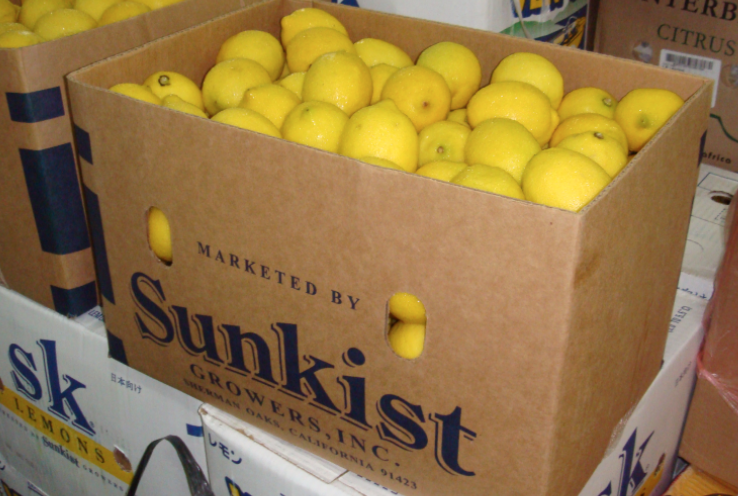
Sunkist Growers board chair and Dinuba farmer Mark Gillette says the board voted some months ago to move their corporate headquarters to Valencia from Sherman Oaks after their building was sold. Visalia had hoped to be in the running for the move.Gillette says lack of a large airport and the fact that they did not want uproot staff and their families from the the LA Basin were key factors.
Gillette says Sunkist is enjoying another good year buoyed by increasing orange exports.Korea has been a big customer for the industry says Gillette as per capita consumption of citrus is way up there. ”We are happy young people are more attracted to the newer varieties and that is good news for all of citrus.”
Gillette says the joint venture with Ventura Coastal operating the Tipton juice plant has worked well with the big modern plant installing  new tanks for lemon juice from California that is then shipped to Coke in Florida to make the popular Simply Lemon refrigerated not-from- concentrate juice.
Gillette says Sunkist growers are pleased that they now get a dividend adding up to $8.5 million this past year and an estimated 5% more this and each year following.
When the Wall Street Journal wants to do a story about oranges they come to – where else – Orange Cove. An article this week quoted shipments of California oranges up 8.4% this year under the new  industry protocol to ship sweeter tasting oranges.
Thirty years ago the average American ate 15 lbs of oranges a year but in 2012 that was down to 10.7 bs.
That is why Gillette and others believe they need to spark the interest of those the young eaters..starting with their moms.
Announcing the new name for Paramount Citrus mandarins under the Halos brand President  of the company David Krause emphasizes “Over the past few years, moms have really fallen in love with this fruit. This is a perfect snack for parents and their little angels.”

Food Companies Boost Local Economy

New tangerine varieties from UC research are hot commodities these days but they are not the only ag product that has gained recent public notice. This month press reports suggest that they still ” scream for ice cream” and  people around the world are going nuts for our nut varieties.  Sometimes all the activity leads to a good old fashioned food fight.

new Halo brand from Paramount Citrus

Food Fight For Tangerines:

These past few weeks competition to market those wonderful new seedless tangerines/mandarins has burgeoned into a real food fight. Three major players market most of the new varieties from California even as tangerine supply from Florida are on a down slide,along with all their citrus.

The 2011-2012 California tangerine crop was up 4 percent from  the season before says USDA but this year tangerine production in California is forecast to be 27.0 million cartons for 2012-2013 – a 24 percent increase over the last season.

In part that is due to a great number of non-bearing,new trees that were planted in the past few years that are now  coming into production. As of 2012 there  were nearly 6000 acres of new tangerine trees planted since 2009 out of about 43,000 acres statewide. Of that the acreage now in the ground in Kern and Tulare counties accounts for over 27,000 acres.
So it is no wonder that the three major players in this industry are jostling to market the new crop of seedless or nearly seedless easy peel fruit coming off  Valley trees. In recent weeks Exeter-based Sun Pacific announced its acquisition of the Cuties trademark and the end of its partnership with Paramount Citrus, with Cutler based Wawona Packing Co. and Reedley-based Moonlight Companies LLC  joining their Cuties Cooperative. The Cuties trademark on clementines and mandarins dates from 2001-  owned equally by Sun Pacific and Paramount Citrus until about May 20 of this year when the sale was announced after some litigation.

Then Paramount announced marketing for the new Halo brand they plan to promote with a hefty marketing budget of $ 100 million to let moms know about the new brand.
“Over the past few years, moms have really fallen in love with this fruit,” David Krause, president of Paramount Citrus, said in a press release. “For children, it’s a healthy alternative to fatty foods like chips and cookies. Kids love the taste, and the small size and the easy ‘peel-ability’ make this different from other fruits. Halos are fun to peel and sweet to eat. This is a perfect snack for parents and their little angels.”

Now Sun Pacific has hosted a grower convention June 11 in Visalia to encourage more growers to ship with them.

CEO of Sun Pacific Berne Evan attending the Visalia session was quoted in the trade press saying “We have a tremendous following in retail from Wal-Mart, Sams Club, Kroger, Costco — you name it,” Evans said. “Not that they’re on the hook, but they like Cuties and want to continue so we need more volume.

“Last year we sold under Cuties about 100 million 5-pound boxes for a packinghouse f.o.b. around $450 million,” he said. “It’s going to be a $1 billion industry before it’s over, probably bigger than the navel industry. That’s the way it is in Europe, anyway. They sell 500 million boxes of clementines to the same population. We’re selling 60 million.”

About 160 growers attended the powwow.

Not to be left behind Sunkist wants to be a bigger player in this arena.  At this year’s annual meeting Sunkist chairman Mark Gillette said “Sunkist’s customer-focused approach guides everything we do,” said Mark Gillette, re-elected chairman of Sunkist’s Board of Directors.Gillette is a Dinuba farmer and president of Sunkist-affiliated Gillette Citrus Inc. “Our growers, including myself, are expanding production of newer varieties consumers favor because we know it will continue to improve our sales success for years to come.”


Because The Cows Are Here

A recent Valley Public Radio show spotlights ice cream made in the Central Valley. Here are some excerpts.

Clifford Fung, eats a lot of ice cream. Three to five times a day Fung and his crew of ice cream tasters chop taste and decide if the Haagen-Dazs ice cream made in Tulare, California, is one… palatable and two … worthy of your freezer and belly.

Fung works at the smaller of Nestlé’s two ice cream factories in the region. It’s second only to the Dreyer’s ice cream facility in Bakersfield, which the company claims is the largest ice cream plant in the world.”

Nestlé’s Bakersfield and Tulare plants alone use just under 1 billion gallons of dairy products each year.
Nestlé in Kern County employees 1,200 people at their Dreyer’s Bakersfield plant. But the Valley wasn’t always an industrial scale ice cream Mecca.

Around the turn of the century Bill Dreyer immigrated to America from Germany and started an ice cream business in Oakland. In  2003, Dreyer’s  began operations in Bakersfield thanks to the San Joaquin Valley’s strong agricultural economy. In 2005, they expanded the facility, eventually shifting production to the valley from older plants in Commerce and Union City.
“The reason that we are located here in Bakersfield is number one, we are closest to the raw materials, we’re closest to the dairy source primarily and close to some of the other agricultural products that we include in our ice cream, such as nuts.”

Today the 600,000 square foot Bakersfield facility accounts for 33 percent of Nestlé’s domestic ice cream production.
Dreyer’s also came up with the original flavor Rocky Road, after the stock market crash in 1929 to make people smile during rocky times.
Just like Dreyer’s, the minds behind Haagen-Dazs saw Central California as the best kept secret for ice cream production. The so-called “superpremium” brand was licensed to Nestlé Dreyer’s in 2003.

In the case of Haagen-Dazs the decision to locate a factory in Tulare in the 1980’s was initially met with skepticism from the company’s founder, Reuben Mattus.  But according to Maci Daramy, new products manager at the Haagen-Dazs plant in Tulare: “They flew him out here, he saw the area and he thought Tulare would be a great place to make this ice cream, ultimately, because this is where the cows are.”

The company with the funny name started in the Bronx, New York in the 1960’s and is now owned by General Mills Inc. worldwide – licensed to Nestle in the U.S. and Canada.
“We have a constant supply, a constant flow coming in from these dairies. The flavor of that milk is always very consistent because the herds eat very similar nutrients for their diets, because the milk that a cow produces – the taste is really determined by what they eat.” – Maci Daramy

“We have a lot of larger scale dairies that we can provide a lot of milk to the factory,” says Daramy. “We have a constant supply, a constant flow coming in from these dairies. The flavor of that milk is always very consistent because the herds eat very similar nutrients for their diets, because the milk that a cow produces – the taste is really determined by what they eat.”


Nuts: Diamond Works To Regain Footing
Working to regain the trust of walnut growers after an accounting scandal SF-based Diamond Foods are relaunching their Emerald brand and looking to rebuild its walnut supply.
A June 11 press account with president of the company of Brian Driscoll mentions the difficulty in getting enough walnuts even as demand for nuts has skyrocketed and the industry as a whole is thriving.

“We are seeing positive signs from the grower community, but it is difficult at this stage to determine if these positive sentiments will translate into an increase in supply in the short term,” Mr. Driscoll said. “That said, the work we have done to provide contract terms, services and pricing to growers that are competitive with alternatives they may have appears to be resonating. … As I’ve indicated before, it will take time to rebuild our position, but doing so can produce attractive long-term economic benefits to Diamond.

Friant Contractors Get Second Water Boost

Reclamation Announces Update to the 2013 Central Valley Project Water Allocation for Friant Division Contractors

FRESNO, Calif. – Due to better than expected hydrologic conditions through the first 12 days of June, the Bureau of Reclamation has determined that it will further increase the Central Valley Project’s Friant Division water supply allocation.

In consultation with Friant Division contractors, the Friant Division Class 1 water supply allocation is being increased from 50 percent to 55 percent. On June 5, Reclamation announced an increase from 45 percent to 50 percent. Class 2 water remains at 0 percent. (The first 800,000 acre-feet of water supply is considered Class 1 and the next 1.4 million acre-feet is considered Class 2). The latest information on upstream operations, canal demand schedules, and the San Joaquin River Restoration Program flow release schedule have also been incorporated into this allocation update.

Currently, precipitation in the Upper San Joaquin River watershed at Huntington Lake is about 20.5 inches, which is about 49 percent of average for this time of year. Additionally, accumulated natural river flow to date for Water Year 2013 for the Upper San Joaquin Basin is about 766,000 acre-feet, which is about 57 percent of the historical average for this date, and about 43 percent of the total Water Year average of 1.8 million acre-feet.

Milk & Raisins – Ups & Downs

Local dairymen are excited about more export of product,particularly powder – to China and for good reason. A USDA report this week says China’s dairy product consumption is expected to increase 38 percent by 2022, with fresh dairy products accounting for most of this growth. Dairy imports are also set to rise 20 percent with milk powder accounting for 82 percent of total dairy requirements. USDA just raised estimates of forecasts for US dairy exports to all countries in 2013 to $5.3 billion from $5.17 billion last year. In April shipments of nonfat dry milk/skim milk powder (NDM/SMP) were 55,187 tons, 40% more than last year and the highest month ever by a significant margin says a report this week.
If the market improves for dairy operators it will have to be without the support of AB31 that died in the Ag Committee in recent days. The bill’s author vows to revive it in the full Assembly where it needs a two thirds vote.Meanwhile Kings County reported a 13% decline in milk receipts in 2012 and 22 dairies closed says the ag commissioner.
Raisin industry has bounced back from a decade ago with a smaller crop fetching $1900 a ton in 2012 – double what growers got in 2000 and up from $1125 per ton as recently as 2009. Some 80% of growers operate within a 30 mile radius of Fresno that includes Tulare County with about 18,000 acres.

California Raisin Administrative Committee (RAC) president Gary Shultz says a surplus of raisins has been brought into supply/demand balance after growers yanked lots of vines over a decade ago and acreage has been culled since. There were 255 thousand acres of raisins in 2003, 221 thousand acres in 2008 and down to 205 thousand acres as of 2012. California produces about half the world’s supply now with half the growers that were here.

A decade ago the RAC oversaw a “set aside” of a portion of the crop to keep prices up but in recent year that has not been necessary says Shultz. A battle over the issue still rages however with a case pending in the Supreme Court over unpaid fees.

The biggest change in the fields has been the rapid rise of mechanically harvested Dried On The Vine (DOV) grapes now estimated to be more than a quarter and up to half the raisin crop with conversion to DOV rising each year. Investment can cost $3000 an acre to change over but there is a giant labor cost saving and the yield can double over traditionally harvested raisins. On a macro-scale the innovation is curtailing the need for workers for the most labor intensive crop in the Central Valley traditionally demanding an estimated 50,000 farmworkers over a 6 week period in September.

Reclamation Increases Friant Water Allocation

FRESNO, Calif. – After reviewing the latest runoff data from the California Department of Water Resources and the National Weather Service that was developed since the week of May 29, the Bureau of Reclamation has determined that better than expected conditions allow for an improvement in the Central Valley Project’s Friant Division allocation.

In consultation with the Friant Division Contractors, the Friant Division Class 1 water supply allocation is being increased from 45 percent and returned back to 50 percent. Class 2 water remains at 0 percent. (The first 800,000 acre-feet of water supply is considered Class 1 and the next 1.4 million acre-feet is considered Class 2). The latest information on upstream operations, canal demand schedules, and the San Joaquin River Restoration Program flow release schedule have also been incorporated into this allocation update.


Currently, precipitation in the Upper San Joaquin River watershed at Huntington Lake is about 20.4 inches, which is about 50 percent of average for this time of year. Additionally, accumulated natural river flow to date for Water Year 2013 for the Upper San Joaquin Basin is about 730,000 acre-feet, which is about 60 percent of the historical average for this date, and about 40 percent of the total Water Year average of 1.8 million acre-feet.

Ag Update: Kings Crop Value Lower / More

Milk Takes Kings County Crop Value Lower
The gross value of all agricultural crops and products produced during 2012 in Kings County was $2.21 billion – a slight decrease of $4.5 million from the 2011 record value.
Livestock and Poultry had the largest increase in value at $73.69 million (38.4%) due to more cattle and calves sold and at a higher price. Field Crops increased $21.99 million (3.6%) due primarily to increased cotton and wheat yields, as well as the wheat price. Vegetable Crops increased $7.16 million (4.0%) due mainly to an increase in processing tomato acreage. Fruit and Nut Crops increased $555,000 (0.1%) due in large part to increased nut prices. Apiary Products increased in value $316,000 (4.7%) attributed to increased pollination acres and price per colony.
Livestock and Poultry Products had the largest decrease in value at $106.65 million (13.1%) due to lower total milk production and prices. Seed Crops declined in value $1.62 million (21.7%) due to decrease

Dried plum forecast looks light
There will be fewer dried plums—also known as prunes—coming from California farms this year, according to a forecast from the U.S. Agriculture Department. Surveys sent to California farmers showed that growers anticipate a crop that is 24 percent smaller than last year. One reason is that some older prune trees were taken out after the 2012 harvest. For the orchards replanted in prunes, it will be five years before the trees return to peak production.

Walmart Demands Traceability

The Packer newspaper offers the following report on produce traceability.
“Fresh produce suppliers who ship to Wal-Mart distribution centers must use case labels that comply with the Produce Traceability Initiative by Jan. 1, or their products will be rejected.
The Bentonville, Ark.-based retailer sent a letter to suppliers May 29 outlining the deadline schedule. The letter describes the PTI requirement as part of Wal-Mart’s heightened focus on the quality of its fresh produce, which also includes a new money-back guarantee for consumers.
“These efforts are designed to create a transparency in the supply chain so our customers can be confident in the freshness of the produce,” according to the letter.”

Kings Co Pistachio Production Hits Record
This weeks Kings County release of its 2012 crop report offers the following report on pistachio production.
The first large scale commercial pistachio crop in the U.S. was produced in 1976 with 1.5 million pounds produced on just a few thousand acres – small in comparison to today’s production. The 1979 Iran hostage crisis helped the domestic industry as Americans had begun developing a craving for the nuts and all imports from Iran were interrupted. By 1980, there were 25,773 bearing acres to meet demand, more than doubling to 53,700 ten years later. Today, there is an estimated 250,000 acres (bearing and non-bearing) planted in California alone, representing nearly 98 percent of the acreage in the U.S. Estimates on the 2012 production in California are 500 to 550 million pounds, which will set a new benchmark in production.
Kings County is one of the top five pistachio-producing counties in California. The first acre- age on record was reported in the county in 1972 with 1,729 acres listed as non-bearing. By 1980, the annual crop report listed 2,792 acres in production. By 1990, the county was at 5,218 acres, increasing to 6,916 acres ten years later. In 2012, the county has 16,159 acres in production with another 4,000 non-bearing acres. Improved rootstock and cultural practices developed over the last 30 years, as well as the increase in acreage, have lead to record production in Kings County as well.
The future of the pistachio nut appears to be very bright. Fueled by increasing demand both domestically and internationally, the nut has established itself as a healthy alternative in the diet of many American and International consumers.

State Officials Release Draft of Bay Delta Plan Fiscal Analysis – $5 Billion Benefit Estimated


from ACWA

Submitted by Pamela Martineau on Wed, 05/29/2013

MILPITAS – State officials released a draft fiscal analysis of the Bay Delta Conservation Plan (BDCP) during a press conference in Silicon Valley Wednesday, revealing estimates that new conveyance facilities in the Sacramento-San Joaquin Delta could bring a $5 billion net benefit to the agricultural and urban water districts expected to pay for most of the project.

Brown Administration officials have been releasing chapters of an administrative draft of the plan in stages over the past few months. The plan’s final chapters 8 through 12 were released Wednesday at a press conference where leaders from business, labor and agricultural sectors joined water officials in stressing the importance of a reliable water supply to California’s economy.

Several speakers at the press conference stressed that doing nothing to improve water conveyance and the ecosystem of the Delta would leave the state vulnerable to natural disasters and unreliable flows that could threaten California’s water supply and economy. Many of the economic scenarios laid out in the plan compared the fiscal benefits of proposed Delta fixes to the costs of doing nothing to restore  and strengthen the estuary.

“California’s current water supply system is clearly vulnerable to many threats, and the cost of its failure would be enormous,” California Natural Resources Secretary John Laird said. “As public officials we are duty bound to address these threats. This conservation plan provides the most comprehensive, well-conceived approach to ensuring a reliable water supply to 25 million people and restoring the Delta ecosystem.”

Laird and others stressed that the BDCP is not viewed by officials as the ultimate solution to the state’s water challenges. It is part of a multi-faceted approach that includes water conservation, recycling, integrated regional water management plans and targeted water transfers.

“Water conservation is one of our key strategies for meeting future water demands,” said Beau Goldie, chief executive officer of the Santa Clara Valley Water District.

“Yet with these efforts….the future still depends on imported water,” Goldie added.

The fiscal analysis states that the BDCP is a “beneficiary pays” project in which water users are expected to pay about 68% of the estimated $24.5 billion cost of constructing and operating the conveyance facility as well as its mitigation and adaptive management during its 50-year implementation period.

The remaining estimated $7.9 billion for the project’s habitat restoration, pollution control, and other measures to reduce ecological stress will be funded through a variety of programs, including federal and state financial participation that could include general obligation bonds in future years, according to a press release from the California Natural Resources Agency.

The report states that agricultural and urban water districts that will likely pay the bulk of the costs of the project would see a roughly $5 billion net benefit over the 50-year life of the project if the preferred alternative of twin tunnels that could convey 9,000 cfs of water is adopted. The benefits to water users include improvements in water supply reliability and water quality and reduced seismic risk to Delta supplies.

The report outlines the costs and benefits of the nine alternative projects being studied. It states that  the estimated $10 billion cost of a 3,000 cfs alternative outweighs the estimated benefits of $8.9 billion by $1.1 billion. A version of a 3,000 cfs facility has been supported in recent months by a coalition of business and environmental groups.

“What’s clear from this report is that a new conveyance facility must be adequately sized in order to make it a worthwhile investment,” Terry Erlewine, general manager of the State Water Contractors, said in a press statement released Wednesday. “The smaller, single tunnel touted by some critics of the Bay Delta Conservation Plan very obviously does not pencil out from a cost-benefit standpoint.”

A broader economic analysis of the statewide economic impacts of the proposal is expected to be released by the Brown Administration in July.

Letty Belin, counselor to the deputy secretary of the U.S. Department of the Interior, said the Obama Administration is “arm in arm” with state officials on crafting a solution to the problems in the Day Delta.

“We very much agree with the state about the urgency of the problem,” said Belin. “We strongly believe that inaction is the worst option.”

Department of Water Resources Director Mark Cowin highlighted the economic benefits to the state of the project, saying the “economics of doing nothing is embedded in every part of the analysis.”

”The draft chapters released today demonstrate the value of the benefits of our proposed project to water users and we can consider the cost from the perspective of our nearly $2 trillion economy,” said Cowin. “Meanwhile, we urge Californians to get acquainted with the details of the draft plan and to bear in mind the high costs – from species extinction to water supply disruptions in the Delta – of doing nothing.”

In recent years, water deliveries from the Delta have been restricted to protect endangered fish such as smelt. Two-thirds of California’s population and 3 million acres of farmland draw water conveyed through the Delta by the State Water Project, operated by the California Department of Water Resources, and the Central Valley Project, operated by the U.S. Bureau of Reclamation.

The entire administrative draft of the plan is available at http://baydeltaconservationplan.com. A formal draft of the plan is expected to be released for public review in October.