Program Links New Farmers With Produce Distributers

It’s not easy to find markets for your produce when you’re an immigrant farmer or someone new to farming. You can sell your crops at fruit stands or farmers markets, but you may not have the contacts or even the language skills and cultural customs to connect with large-scale produce distributors.

Meanwhile, in restaurants, grocery stores, schools, hospitals and corporate lunchrooms across the state, buyers are clamoring for locally grown food.

“The demand for local, sustainable food is large and increasing,” said Gail Feenstra, food systems coordinator for the UC Sustainable Agriculture Research and Education Program and the Agricultural Sustainability Institute at the University of California, Davis. “Distributors can’t find enough locally grown produce to meet the need.”

But that’s changing, thanks to a new Small and Ethnic Farmer Market Tour Project which introduces small farmers to conventional distributors interested in offering a line of locally grown food. The project is run by the UC Davis Agricultural Sustainability Institute and funded by CoBank, a national cooperative bank serving rural America, and three farm credit associations: Farm Credit West, American AgCredit and Farm Credit Services of Colusa-Glenn.

“With this round of funding, UC Davis will work with growers from the Monterey/Salinas area and from the Sacramento Valley,” Feenstra said. “We conducted three tours last year — in Sacramento, Los Angeles and San Francisco — and they were wonderfully successful,” Feenstra said.

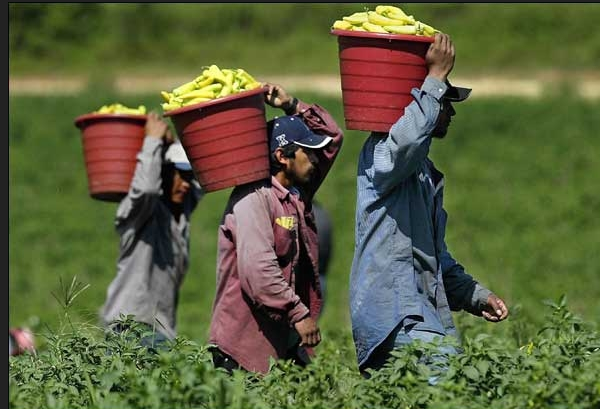
The tours work like this: Farm advisors and Cooperative Extension specialists identify the small, specialty-crop growers in their areas, many of whom are Hmong, Mien and Latino. The growers climb aboard a bus along with tour leaders like Feenstra and David Visher, an analyst with the UC Sustainable Agriculture Research and Education Program.

“We have translators on board, too, if needed,” Feenstra said. “We drive to terminal markets, produce houses or processing facilities where growers meet face-to-face with distributors who explain their produce needs.”

The program also helps farmers create an action plan for selling their crops and prepare a farm profile — a flyer that explains who they are and what they grow.

“Workshops and field days are great education tools, but nothing makes markets happen as well as simply introducing a willing seller to a willing buyer and then stepping out of the way,” Visher said. “We help growers tell their stories and make good-value propositions to buyers, but it’s really up to these business people to make their own deals.”

Often, small farmers need to joins forces in order to efficiently sell to wholesale buyers. The program helps them do that, too.


“We hear a lot of great conversations on the bus between growers about how best to aggregate their product,” Visher said.

The farmers and distributors make lasting connections, according to those who participated in last year’s tours.

“We’ve been getting good responses from the promotional flyer David (Visher) helped us prepare for our avocado ranch,” said Los Angeles area farmer Steve Bailey. “Thanks to the contacts and advice, we’ve started selling to local restaurants.”

“We’re always on the lookout for new sources of organic produce and local farms,” said David Weinstein, sales manager at Heath & Lejeune, Inc., a certified organic wholesaler in Commerce, Calif. “Our firm knows firsthand that some of these small farmers will become important suppliers in the future and it is in our interest to help them know how to do business at our level.”

CoBank and its Farm Credit partners say they are happy to help.

“Local food initiatives prove that the food we eat can do more than nourish our bodies,” said Leili Ghazi, Western Region president of CoBank. “They can strengthen and support our communities and create tremendous economic opportunities. The challenge has always been connecting the right people and businesses at the right time. CoBank and our Farm Credit partners are so pleased to support UC Davis in its efforts to help introduce the region’s small, ethnic farmers to those who can truly help them grow their business.”


Farm News Briefs

Mushroom Production Rises
To keep up with our growing appetite for mushrooms, California farmers have been increasing their production. In addition to familiar button mushrooms, more exotic species are also being raised on the state’s farms. Mushroom sales in the U.S. reached a record of more than $1 billion last year. California ranks as the second-largest producer of mushrooms, growing about 20 percent of the nation’s crop.
Harvested Produce Chills Out
Hot temperatures can lead to wilted produce. To combat the heat, farmers employ cooling technologies, including with the help of new inventions. Larger farms use coolers to keep produce at its optimal storage temperature to ensure freshness. Now, the University of California says smaller farms can use a micro-controller device to turn a well-insulated room with regular air conditioning into a successful produce-cooling room.
Navel Orange Harvest Ends
With the California navel orange harvest now ended for the season, estimates show the crop to be nearly on par with last year’s volume total. The U.S. Agriculture Department said it expects this year’s navel-orange crop to fill 90 million cartons, which would be 1 percent lower than last year. Each carton holds about 40 pounds of oranges. California farmers are now harvesting Valencia oranges, grapefruit and lemons.
California Cotton Acreage Down
California cotton acres are down from last year. California growers planted 120 thousand acres of Upland cotton and 210 thousand acres of of Pima.Upland is down 15% and Pima acres down 7%  from 2012.
Hay Acreage Down
California growers are expected to harvest alfalfa from 900 thousand acres – down about5% from last year.
Powder Milk Exports Higher
USDA reports that for the second straight month,milk exports increases were led by large shipments of milk powder. April-May exports of NDM/SMP were 111,173 tons, up 31% from the prior year. In May, a big chunk of the improvement came from new sales of 4,430 tons to Algeria, as well as increased sales to China, Indonesia, Malaysia and Thailand.
Sugar Surplus Headed Down
Record-breaking yields of sugar crops and a global surplus have driven down U.S. sugar prices, and U.S.D.A. is required to act to stabilize the domestic market,” the U.S.D.A. said. At the same time, the department is required by law to operate the sugar program at the least cost to the government.
“Today’s actions are designed to manage the sugar program while minimizing federal sugar program expenditures,” the U.S.D.A. said.
Domestic bulk refined sugar prices reported by Milling & Baking News currently are around 27c a lb f.o.b., down about 40% from a year ago and down 55% from 2011 highs.

Ag Update: Friant / Corn /Heat /Baseball

Friant WD Gets 62% Water Allocation
FRESNO, Calif. – Due to better than expected hydrologic conditions through the latter part of June and first 12 days of July, the Bureau of Reclamation has determined that it will further increase the Central Valley Project’s Friant Division water supply allocation. 

In consultation with Friant Division contractors, the Friant Division Class 1 water supply allocation is being increased from 55 percent to 62 percent. On June 13, Reclamation announced an increase from 50 percent to 55 percent. Class 2 water remains at 0 percent. (The first 800,000 acre-feet of water supply is considered Class 1 and the next 1.4 million acre-feet is considered Class 2). The latest information on upstream operations, canal demand schedules, and the San Joaquin River Restoration Program flow release schedule have also been incorporated into this allocation update. 

Currently, precipitation in the Upper San Joaquin River watershed at Huntington Lake is about 20.5 inches, which is about 49 percent of average for this time of year. Additionally, accumulated natural river flow to date for Water Year 2013 for the Upper San Joaquin Basin is about 822,000 acre-feet, which is about 50 percent  of the historical average for this date, and about 46 percent of the total Water Year average of 1.8 million acre-feet.

Heat Shrivels Grapes
Tulare County ag commissioner Marilyn Kinoshita and others say more than week of record heat has helped shrivel some of the Valley’s grape crop.”It doesn’t make a big difference grapes headed for juice but for the fresh market workers are going to have cut those out.”
One Fresno grower David Sarabian told newscasters he figures he lost 10% of hsicrop.

Chinese Buying US Corn Crop
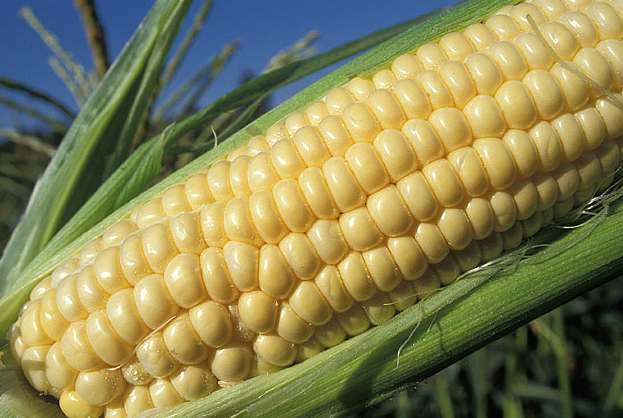
On July 12, the U.S.D.A. reported a historically large sale of 960,000 tons of corn to China for 2013-14 delivery. Futures prices this week are around $5 a bushel for December delivery falling from around $5.70 in mid June. A record US corn crop with good soil moisture should provide some relief  to the US livestock industry along with the Chinese.
The USDA July World Agricultural Supply and Demand Estimates says China will import 7 million tons of corn in 2013-14, more than double the 3 million tons estimated for 2012-13 and up 34% from 5.23 million tons in 2011-12.

fewer broken bats?

Rate of Shattered Baseball Bats 50 Percent Less, Thanks to Major League Baseball and the U.S. Forest Service
WASHINGTON July 12, 2013 – As the 2013 Major League Baseball (MLB) season slides into the All-Star break, U.S. Department of Agriculture Secretary Tom Vilsack announced the results of innovative research by the U.S. Forest Service, and funded by MLB, that will result in significantly fewer shattered baseball bats.
“This innovative research by the U.S. Forest Service will make baseball games safer for players and fans across the nation,” said Secretary Vilsack. “The U.S. Forest Products Laboratory has once again demonstrated that we can improve uses for wood products across our nation in practical ways – making advancements that can improve quality of life and grow our economy.”
Testing and analyzing thousands of shattered Major League bats, U.S. Forest Service researchers at the Forest Products Laboratory (FPL) developed changes in manufacturing that decreased the rate of shattered maple bats by more than 50 percent since 2008. While the popularity of maple bats is greater today than ever before, the number of shattered bats continues to decline.
“Since 2008, the U.S. Forest Service has worked with Major League Baseball to help make America’s pastime safer,” said U.S. Forest Service Chief Tom Tidwell. “I’m proud that our collective ‘wood grain trust’ has made recommendations resulting in a significant drop in shattered bats, making the game safer for players as well as for fans.”
“These results would not have been possible without the outstanding work of the Forest Products Laboratory and the tireless efforts of its project coordinator, David Kretschmann,” says Daniel Halem, MLB’s Senior Vice President of Labor Relations. “Major League Baseball greatly appreciates the invaluable contributions of the Forest Products Laboratory and Mr. Kretschmann on this important issue.”

Six New Citrus Psyllid Finds In Tulare County

Its back!

Less than a month after the state lifted restrictions on citrus plant and fruit because of no new finds of a deadly citrus pest after many months – the pest has been found again.

County ag officials confirm 6 new citrus psyllids were found in the citrus growing area south of Porterville and north of Terra Bella in late June. The tiny pests were found in traps meant to find other pests put out June 11 and picked up June 26.The six finds were in three locations – one of them near Terra Bella, within the restriction zone that had been just lifted June 17.

The finds were east of Hwy 65 including one near Ave 120 and another near Ave 150.

As a result of the previous pest finds two five mile square zones had been set up by CDFA – one near Lindsay and the second around Terra Bella.

Citrus fruit or nursery trees grown within the zones faced movement restrictions and all plant material had to be removed on any shipment out of the zone.

Back in June CDFA Secretary Karen Ross said they had determined that the earlier finds “had not developed into a sustained infestation.” Some hoped the three finds last November were only hitchhikers and were not reproducing  here.

Now it is likely CDFA will again order restrictions in coming days that could extend into the fall/winter growing season coming up.

The restrictions are a major headache for growers costing them money to treat fruit as well as remove all plant material like leaves from any fruit shipped out.

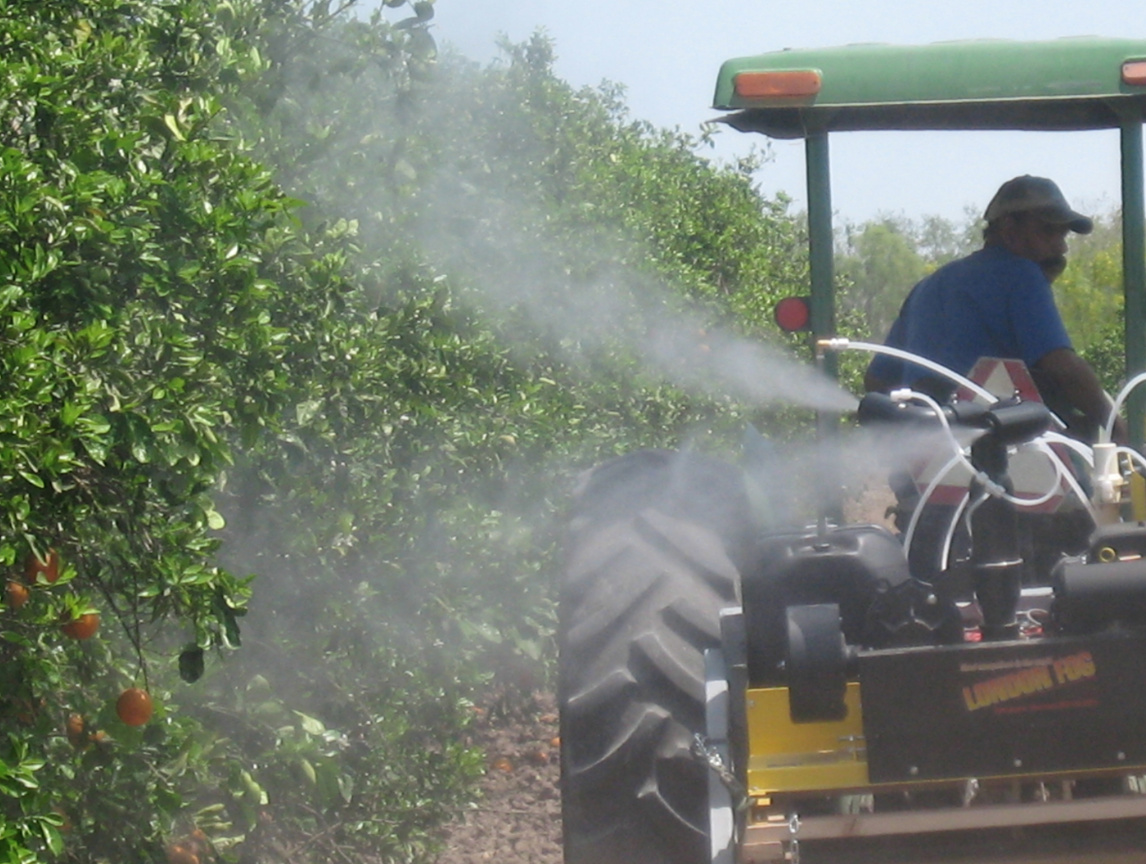
Scientists fear this pest that can carry HLB or citrus greening disease that has devastated Florida with $1.3 billion in lost revenue and other parts of world’s citrus regions.
To date the pest has been found in the southern part of California but not the disease.

Tulare County is the number citrus growing county in the state.

Officials expect the Tulare County Ag Commissioner to put out a news release on the finds later today.

Fruit & Vegetable Consumption Falls

USDA photo

Despite efforts by governments to promote the benefits of a healthy diet, consumption of fruit & vegetables in Western Europe and the US has declined over the past decade. A report by Rabobank cites lower incomes and perceived price increases, alongside strong competition from processed and convenience foods, as the major factors driving this trend. Producers, processors and retailers must all explore ways to inspire greater consumption of fruit & vegetables if the industry is to flourish.

Cindy van Rijswick, Rabobank analyst commented: “The challenge for the fruits & vegetables industry is to close the gap between what consumers say they want and what they actually do. Surveys have shown that, in principle, consumers are positive-minded about healthy eating, but in practice they are easily swayed by creative marketing of processed food and beverages and exhibit a strong bias for convenience products”.

On a household level there is a clear relationship between income and fruit & vegetable intake, meaning that in a tough economic climate, consumers become more susceptible to fluctuations in price. This impact can be exacerbated by the common misperception among consumers that unhealthy food is cheaper to eat than healthy food. Between 2006 and 2011, in both the EU and US, average consumer prices for fruits & vegetables in fact increased less than prices of the total food category, but consumption levels fell.

Processed foods have become a strong competitor for fruits & vegetables for different reasons: availability, taste, marketing, product range and convenience. Even when consumers do opt for a healthy choice, they will likely select processed foods in the ‘health and wellness category’ over a fresh option (despite the fact that research has found that two-thirds of US and half of all European products referencing fruit on their packaging contained no or only a trace amounts of fruit). It is extremely difficult for the fresh produce industry to match the sophisticated marketing efforts of processed health foods as most fresh products are sold unpackaged and unbranded.

There are three ways in which the industry must invest/evolve in order to boost consumption levels:

  1. Reducing inconvenience: Convenience is often cited as a barrier to consumption of fruits & vegetables, a claim that is supported by the increasing popularity of prepared (i.e. washed, cut, diced, sliced and packaged) products. The industry must continue to find innovative ways to boost convenience e.g. offering chopped vegetables that can be heated directly in the microwave without removing packaging
  2. Marketing based on more than health benefits: Most consumers are already aware that fruit & vegetables are good for them and governments are the best vehicle for promoting the benefits of a healthy diet. Therefore, the industry should focus on informing consumers about the convenience, taste, enjoyment and versatility of fruits & vegetables
  3. Better cooperation along the supply chain: keeping inferior quality products off the market is crucial to securing consumer buy-in. Short dedicated supply chains in which the brand owner is in control can enable partners to work together more closely to improve basic features, such as quality and freshness (e.g. by reducing the time to market or choosing the tastiest varieties)


Water : Bond Debate On Tap In Tulare County / District Gets $3 Mil In Funding

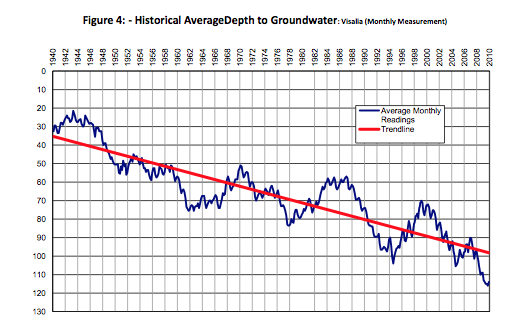
that sinking feeling – falling ground water in the Kaweah delta
click to enlarge

State Funds Kaweah Water Project 

Kaweah Delta Water Conservation District got some good news recently.The state funded around half of a $6 million project along the  Kaweah River near Woodlake to build a a 1500 acre/ft reservoir at Hannah Ranch, the former rock quarry – that can divert Kaweah and Friant Kern canal water on to a 380 acre parcel owned by KDWCD.”We will be able to gravity feed storm water off of the system and re-release it at a better time protecting down stream property during wet periods and using the water for trades or recharge further down stream” for example, says Mark Larsen, General Manager of KDWCD. The district has some 5000 acres of sinking basins to help recharge our aquifer.

 Water Bond Debate On Tap

Tulare County Water Commission – advisory to the Board of Supervisors – will grapple July 8 with a recommended position on the latest version of a state water bond that does not include water storage but is heavy on conservation and Delta repair.  The latest version appears to have some support from the Brown administration.
“There would not be a $5.6 billion dollar agriculture industry in Tulare County if it weren’t for one natural resource – water”says Allen Ishida, commission chair and member of the BOS.”It would be foolish to strip funding away from water storage” Ishida wrote recently.
But civil engineer Dennis Keller, a commission member says not so fast. Improving the Delta could protect Friant Water Users who bring in 1 million acre/of water into Tulare County annually. Keller wants to be cautious before judging a final version of the bond.Parties have been trying the scale the bond down to below $10 billion.
But ag interests are not happy that Governor Brown’s representatives seem to favor a water bond without new dams. Brown, himself, has remained silent.

Ag Beat: Raising Shasta Dam / Almonds / Organic Milk / Solar

Shasta Dam

RAISE SHASTA ? The 90-day public comment period opened  this week on the Bureau of Reclamation’s Draft Environmental Impact Statement on the Shasta Lake Water Resources Investigation (SLWRI), a study which examines the impacts of raising Shasta Dam.The Draft EIS evaluates six alternative plans to modify the existing Shasta Dam and Shasta Reservoir Project, located near Redding. The proposed project is intended to increase survival of anadromous fish populations (salmon) in the upper Sacramento River as well as increase water supply and water reliability for agricultural, municipal and industrial, and environmental purposes.
The 90-day comment period on the investigation begins July 1 and runs through Sept. 30. Three public workshops on the investigation are scheduled in mid-July. Formal public hearings on the proposal will be held in September. The dates of the formal hearings will be announced in August.
The three public workshops will be held at the following times and locations.
·         Tuesday, July 16, 6-8 p.m., Holiday Inn, Palomino Room, 1900 Hilltop Drive, Redding.
·         Wednesday, July 17, 1-3 p.m., Cal Expo Quality Inn Hotel & Suites, Conference Room, 1413 Howe Avenue, Sacramento.
·         Thursday, July 18, 6-8 p.m., Merced County Fairgrounds, Germino Building, 403 “F” Street, Los Banos.

2013 CALIFORNIA ALMOND FORECAST DOWN

USDA says California’s 2013 almond production is forecast at 1.85 billion meat pounds, down 7.5 percent from May’s subjective forecast and 2 percent below last year’s crop. The forecast is based on 810 thousand bearing acres. Production for the Nonpareil variety is forecast at 650 million meat pounds, 4 percent below last year’s deliveries. The Nonpareil variety represents 35 percent of California’s total almond production.

After a very cold winter, the 2013 almond crop began bloom 2 weeks later than normal. Bloom was strong and fast, which shortened overlap and pollination time. High winds in early April knocked nuts and branches off trees, as well as knocking down some trees. Water has been an issue as well. The average nut set per tree is 6,686, down 5 percent from 2012.

FIGS GO SOLAR

Valley Fig growers will install enough solar power panels for their processing to cover 60% of the power needs the co-op announced this week., The co-op’s board of directors approved investing $1.4 million in the 625 kilowatt photovoltaic electrical generation system to be install the panels on the roofs of all warehouses.

ORGANIC MILK SALES

Fluid milk sales are on the wane  except for  the organic category says the state. The CDFA reports California fluid milk sales listed as organic are up 18.5% this year from January thru May compared to the year before.

$5 Corn?

More good news this week as the price of corn for delivery in December dropped to $5.01 a bushel today.

U.S. CORN ACREAGE UP FOR FIFTH STRAIGHT YEAR SAYS USDA

Corn Futures Fall To $5.16/Bushel
Great news for California livestock farmers including the hard hit dairy industry. Corn prices took a dump today as USDA released planting figures for the new crop. December corn prices on the CBOT  fell to $5.16 a bushel assuring farmers here who depend on the crop for feed will – as of this fall – no longer be forced to pay a high premium for the feed that has severely punished their bottomline for the past two years.
ON Friday June 28 USDA announced that “U.S. farmers successfully overcame a cold and wet early spring this year, planting 97.4 million acres of corn, up slightly from 2012, according to the Acreage report released today by the U.S. Department of Agriculture National Agricultural Statistics Service (NASS).”
“This is the highest acreage planted to corn since 1936 and marks a fifth year in a row of corn acreage increases in the United States.
This growing season did not get off to a good start. Hampered by cold and wet weather in early spring in much of the major corn-producing region, U.S. growers had only 5 percent of the crop planted by April 28, making it the slowest planting pace since 1984. In May, however, the weather conditions improved significantly, helping U.S. corn growers to make great strides in planting. The week of May 19, farmers tied the fastest corn planting pace on record, planting 43 percent of the total crop during that one week. Overall, 63 percent of the corn crop was reported in good or excellent condition as of June 2, compared with 72 percent at the same time last year.”
The bullish USDA report surprised the market who thought planting numbers would be falling. In Chicago the prices for the new crop lost ground, with CBOT corn for December delivery falling as much as 5.2 per cent to $5.11 a bushel before trading at $5.16½ – down more than 27 cents on the day.
Traders had speculated that corn for December delivery would be as high as $6.60 a bushel last summer. But with the big planting and end of the Midwest drought – corn prices appear to be settling down.
By contrast livestock farmers and biofuel makers in California had been paying as high as $7 to 8 a bushel for corn during the Midwest drought last year. Many dairy operators quit the business as the industry is almost totally dependent on imported corn.
Corn price that are still near $7 a bushel in July should fall to around $5.50 by September and further as the year goes on baring some other disaster.

Ag to Valley House GOP: ‘ Inaction Not An Option’ On Immigration

Now that the US Senate has passed a comprehensive immigration reform bill satisfactory to agriculture – what is the House and particularly the California GOP delegation going to do?

The Senate passed the bill 68 to 32 this week (including 14 Republicans voting yes) – “ a big victory for California agriculture “says farmer advocate Manuel Cunha.

But what happens now in the House where the Farm Bill got throttled a week ago?

“I don’t know why the House Republicans want to do their own bill when 99% of agriculture backs the Senate version?” says Cunha.

Adding their voice to the notion has been the California Farm Bureau as well.

California Farm Bureau Federation President Paul Wenger said the bill passed by the Senate will help family farmers and ranchers address chronic problems in hiring an adequate, legal immigrant workforce.

“People who work on California farms make a big contribution to our state and its economy,” Wenger said. “It’s time we provide immigrant farm employees with a system that recognizes their contributions and permits them to work legally on our farms and ranches.”

Cunha has worked for years with all the players to get to this moment.

“We worked 80 hours a week for 9 months to get to this compromise that both farmers and farmworkers advocates including the UFW have agreed to.”

This week the UFW hailed the Senate bill saying “S. 744 is a truly bipartisan comprehensive immigration reform bill that calls for a roadmap to citizenship for the estimated 11 million undocumented immigrants currently living in the country.”

Cunha says House GOP representatives from the Valley Jeff Denham and Hanford congressman David Valadao have broken with their colleagues over a rival bill by GOP Rep Bob Goodlatte that does not back a roadmap to citizenship for unauthorized workers already here.

Cunha say he believes Denham and Valadao will back the Senate version but Bakersfield congressman and House leader Kevin McCarthy and Rep Devin Nunes from Tulare are indicating they may have problems with the Senate version.

“Nunes has told us he has problems with the wages and caps” says Cunha.

“But what we have repeated is that if agriculture can live with it why would you who represent us not back your constituency?”

Cunha says a recent paper by UC Davis professor Phil Martin points out that agriculture would immediately get “a legal workforce” and existing unauthorized workers who currently live here would get a blue card. Farmers would later get legal guest workers.

Secondly, Martin adds “costs should be stable since average hourly earnings in California are well above the minimum wage that must be paid to guest workers as of 2016. California crop workers got an average of $12.56 an hour in 2012” he says.

Martin believes the new law will offer California growers “advantages over farmers in lower-wage ares of the United States.”

“The capacity to hire legal guest workers for up to six years at $9.64 an hour with wage increases limited to 2.5% a year should make it easier to plan investments in labor-intensive agriculture and secure financing for them.”

Dairymen are behind the Senate version as well.

Western United Dairymen President Tom Barcellos said the bill will help California dairy farmers meet their labor needs. “This vote is a landmark step on the road to ensuring that California dairy families have access to a legal, skilled and stable workforce,” he said. “The provisions contained in the legislation not only address agriculture’s current undocumented workers, but would institute a new, market-based visa program to fix this issue once and for all going forward.”
 
Barcellos thanked California Sen. Dianne Feinstein for her leadership on immigration reform. “Senator Feinstein has worked relentlessly over the past decade in pursuit of a workable solution for the farm labor situation. We very much appreciate her willingness to work closely with Western United Dairymen to address our industry’s unique needs all along the way.”
 
Attention now turns to the House, where GOP leaders have indicated they will bring forward their own immigration reform legislation rather than consider the Senate bill. “It is important that the House consider a bill addressing the needs of agriculture. Inaction is not an option,” pointed out Barcellos. “We will be letting House members know the importance of this legislation to our dairy families.”

Local dairy farmer and Republican David Valadao sworn in this year as Kings County’s new representative in the 21st Congressional District seems to heading in this direction.

Rejecting a bill by House GOP leader Bob Goodlatte, Valadao wrote  that “It is time to move forward, not backward. Congress must work together to find middle ground that benefits both the temporary guest workers as well as the agricultural employers. Final legislation must create incentives for farm workers to continue to work in the industry so that the United States can continue to feed the world. We believe in a comprehensive approach to immigration reform that includes earned legal status. This approach is critical for our country, our families, and our economy.”

Martin’s paper concludes that farmers and farmworker advocates will strongly resist changes to what is a “delicately balanced compromise”

A bipartisan group of eight House members that includes input by Valadao is working on its own proposal that is expected to be released soon.

Farm Leaders Urge House To Follow Senate And Pass Immigration Reform

Now that the U.S. Senate has passed comprehensive immigration reform, the leader of California’s largest farming organization says the House of Representatives should follow suit. California Farm Bureau Federation President Paul Wenger said the bill passed today by the Senate will help family farmers and ranchers address chronic problems in hiring an adequate, legal immigrant workforce.
“People who work on California farms make a big contribution to our state and its economy,” Wenger said. “It’s time we provide immigrant farm employees with a system that recognizes their contributions and permits them to work legally on our farms and ranches.”
Wenger said the agricultural program included in the Senate immigration bill represents an agreement among agricultural organizations and the United Farm Workers on a system to benefit both farmers and their employees. It contains an agricultural program that accounts for people who want to enter the U.S. to work on farms and the people who are already in the country and can earn a chance for legal status while continuing to perform farm jobs.
“People who are already in the country would have to pass a background check. If they don’t have legitimate work documents, they should be required to pay a fine. They should also be allowed to come out of the shadows and continue to contribute to our communities,” Wenger said.
He noted that the program in the Senate bill represents a bipartisan compromise.
“It’s not perfect but it’s a big improvement from current programs that don’t work for either farmers or their employees,” Wenger said, encouraging the House to adopt similar reforms.
“A workable agricultural immigration system benefits border security,” Wenger said, “allowing border agents to concentrate on preventing drug dealers and other criminals from entering the country. We will work to make sure our representatives recognize that and create a reformed immigration system for farmers and their employees.”
The California Farm Bureau Federation works to protect family farms and ranches on behalf of more than 74,000 members statewide and as part of a nationwide network of more than 6.2 million Farm Bureau members.