Ag Updates: Vilsack Coming To Fresno

Screen Shot 2013-11-15 at 10.52.12 AMUS Ag Secretary Tom Vilsack will visit the Central Valley this weekend meeting with farm leaders. Topics of discussion include already booming ag exports and ideas on water which is in short supply.Local leaders have been invited to meet with Vilsack (pictured right). On Sunday, Nov. 17, Agriculture Secretary Tom Vilsack, U.S. Trade Representative Michael Froman and Congressman Mike Thompson will hold a press availability to discuss record agriculture exports.American agriculture achieved record exports once again in Fiscal Year 2013, and the period 2009-2013 stands as the strongest five-year period for agricultural exports in our nation’s history.

 Secretary Vilsack will also discuss the need for Congress to pass a comprehensive Food, Farm and Jobs Bill to support a strong U.S. agriculture sector and continue the trade promotion programs that helped American agriculture achieve these results. These trade promotion efforts return $35 in economic benefits for every dollar invested.


Exeter: Wilbur-Ellis Co announced this week that it has signed a letter of intent to purchase the assets of Orange Belt Supply. OBS is a retail agriculture provider located in Exeter and has been in operation since 1921 servicing growers in central California, including many citrus growers. Started as a co-op, Orange Belt Supply once had locations in Exeter,Woodlake and Lindsay. Today the ag supply business has one location sited between Exeter and Lindsay. Wilbur-Ellis’ Agribusiness Division generates more than $2 billion in sales revenue.

While booming export demand is helping dairy farmers this fall it has been tough going for the past year. In the last twelve months, Visalia-based California Dairies Inc has lost 35 dairies that were producing a combined 2.5 million lbs. of milk per day said Dr Eric Erba of CDI in testimony before the CDFA recently.

Ag Beat: LOL Sales Up / Citrus News

Screen Shot 2013-11-13 at 8.27.00 AMLand O’Lakes, Inc. Reports Third Quarter Sales increase 4 percent to $3.1 Billion; Earnings up 173 percent to $49.4 million

ARDEN HILLS, Minn., (November 12, 2013) — Land O’Lakes, Inc. announced third quarter financial results showing solid sales and strong earnings that surpassed the prior year for both the quarter and year-to-date.

Third quarter net sales were $3.1 billion, up 4 percent from the same quarter last year while earnings increased to $49 million, 173 percent higher than the third quarter of 2012. Year-to-date sales were $11.1 billion compared with $10.4 billion last year while net earnings through September were $198 million, 32 percent higher than the $150 million reported during this period in 2012.

“The strong third quarter and year-to-date results reflect the on-going implementation of growth strategies that add value and expand markets of our brands,” said Chris Policinski, president and CEO of Land O’Lakes, Inc.

Policinski said the company’s Dairy Foods business is experiencing strong earnings driven by its iconic butter and cheese brands. “The 2013 earnings in Dairy Foods have also grown as a result of new products such as Kozy Shack® refrigerated desserts and continuing innovations such as the recently expanded line of Sauté Express® Sauté Starter products,” he added. 

Land O’Lakes, Inc. total debt as of September 30, 2013, was $1.87 billion, up 2 percent from the same date one year ago. The increase was due to higher working capital, which was largely offset by improved cash flow.

LOL operates one of the largest dairy plants in the state in Tulare.

U.S. Orange Production Down

A Nov 8  U.S. Department of Agriculture  forecast  says 2013-14 U.S. orange production will be 7,960,000 tons (183 million boxes), down 5% from 8,349,000 tons in 2012-13.
Florida orange production is estimated to be 5,625,000 tons (125 million 90-lb boxes), down 6% from 6,013,000 tons in 2012-13.USDA says that Florida’s crop was reduced by early-season dry conditions and ongoing citrus greening, a disease that causes fruit to fall from trees prematurely and reduces fruit size. If realized, the Florida crop would be the smallest since the freeze-reduced crop of 1989-90.California’s crop is expected to be the same as last year.

New Orange Maturity Standard Working Well

The Packer newspaper says  “a new maturity standard went into effect last year for California navel oranges, but growers say conditions have been so favorable that meeting the standard has been no trouble.By requiring that navels meet a certain sugar/acid ratio, the industry hopes even the first navels to hit supermarket shelves each fall will be sweet and flavorful, prompting repeat sales.“Adopting the California Standard will increase the probability that the consumer will have a positive eating experience when they purchase a navel orange,” California Citrus Mutual says on its website.”

Applied Nanotech Receives $400K Contract From California Citrus Research Board

Screen Shot 2013-11-12 at 11.35.00 AMFunds to Be Used for Early Detection of HLB Disease

 AUSTIN, TX, Nov 12, 2013 (Marketwired via COMTEX) — Applied Nanotech Holdings, Inc. (otcqb:APNT) announced that it has received a contract from the California Citrus Research Board (CRB), worth approximately $400,000, that will fund increased instrument development and testing for HLB disease and other pathogens in citrus trees, with a focus on early detection.

 The contract is a Year 2 continuation of the development and refinement of Point of Analysis Agricultural Pathogen detection systems. This contract includes further development of the EZKnowz(TM) pathogen detection systems for faster response and research to expand the instrument capability to other citrus pathogens. This novel point of analysis agriculture pathology system will be used to boost research and understanding into detection and monitoring of citrus diseases.

 HLB (Huanglongbing, also known as Citrus Greening Disease) is a bacterial infection that poses a severe threat to citrus production worldwide. The citrus industry of Florida has been significantly impacted. Early detection of the disease is essential since the disease spreads from tree to tree and significantly impacts fruit quality and tree death. Removal of infected trees is the most effective method to contain and eradicate the disease.

 Greening disease (HLB) and other pathogens cause more than $1 billion in lost revenue to citrus growers annually. Early detection and monitoring will not only save billions of dollars, but also millions of trees while keeping fruit and juice prices from skyrocketing.

 “The advancement of this technology fills a critical need for the continued production of citrus worldwide,” reported Ken Keck, President of the Citrus Research Board. “I have already witnessed how damaging this disease has been to the citrus industry in Florida; the CRB is doing everything it can to prevent the spread of HLB into California.”

 APNT will be partnering with UC Davis, one of the world’s premiere research institutions with a long and distinguished track record in addressing the needs of the citrus industry. Professor Cristina E. Davis and her team have expertise in mobile chem/bio sensor platforms and accurate identification algorithms, developed over several years of experience working with the citrus industry as well as topics critical to human health and safety.

 “This system and technology will provide an important asset to the citrus industry’s early disease detection and monitoring needs in preventing the spread of industry-crippling diseases,” said Dr. Zvi Yaniv, President and Chief Operating Officer of APNT. “This contract extension is important to accelerating commercial development of our technology and is a very important milestone towards convincing the healthcare industry that breath analysis using our EZKnowz(TM) broad chemical, point-of-care sensor platform could revolutionize and lower the cost of digital preventive healthcare.”

 About Applied Nanotech Holdings, Inc.

 Applied Nanotech Holdings, Inc. (APNT) is an Austin, Texas-based global leader in nanotechnology research and development and has ongoing research programs and license agreements with product innovators around the world. APNT’s team of Ph.D. level scientists and engineers works with companies and other organizations to solve technical impasses and create innovations that will create a competitive advantage. For more information about Applied Nanotech Holdings, Inc., please visit http://www.appliednanotech.net.

 About Citrus Research Board

 The Citrus Research Board is a grower-funded program to sponsor and direct research for the betterment of citrus production in California. The program includes work on new varieties, quality assurance, disease prevention, and pest management systems. The CRB also cooperates with the Florida Citrus Research and Development Foundation to address issues of national and international concern. HLB is considered to be the highest threat to all citrus production regions worldwide. More information can be found at the CRB Website: www.citrusresearch.org

 About UC Davis

 For more than 100 years, UC Davis has engaged in teaching, research and public service that matter to California and transform the world. Located close to the state capital, UC Davis has more than 33,000 students, 2,500 faculty. 21,000 staff, an annual research budget of nearly $750 million, a comprehensive health system, and 13 specialized research centers. The university offers interdisciplinary graduate study and over 100 undergraduate majors in four colleges — Agricultural and Environmental Sciences, Biological Sciences, Engineering, and Letters and Science. It also houses six professional schools — Education, Law, Management, Medicine, Veterinary Medicine and the Betty Irene Moore School of Nursing.


Central Valley Project Began 2014 Water Year With 5.1 Million Acre-Feet

from ACWA

New Melones Dam
The Central Valley Project (CVP) began the 2014 water year that started on Oct. 1 with 5.1 million acre-feet of water stored in its major reservoirs, the lowest amount since 2009.
Surface storage in California has taken a big hit after consecutive dry years. Two years ago there was 9.3 million acre-feet in the CVP’s six big reservoirs — Folsom, Millerton New Melones, Shasta, Trinity and the federal-state San Luis. A year ago there was 6.9 million acre-feet.
The 15-year average carry-over for these reservoirs on Oct. 1 is 7 MAF.
Water managers across the state are urging users to conserve where possible and are preparing for the possibility of another dry year, although officials have stopped short of declaring a drought. The Bureau of Reclamation, which manages the CVP, said it has initiated several meetings with water contractors, power customers, state and federal agencies and other stakeholders to brainstorm potential actions, if they are needed.
“We began to examine operational flexibilities with our partner agencies and look at new water management strategies with stakeholders throughout California,” Reclamation’s Mid-Pacific Regional Director David Murillo said in a Nov. 4 news statement. “I was encouraged by the collaboration and cooperation displayed by our customers and stakeholders during the meetings and impressed with their creative and wide-ranging ideas. I am pleased to announce that the resultant Draft WY 2014 Water Plan is now available on our region’s website.”
Reclamation said it announce the CVP’s preliminary  water supply conditions for the 2014 water year in late January, and the initial allocations prior to March 1 when the contract year begins. The allocations will be adjusted if needed to reflect precipitation and snowfall conditions as the year goes on.
The federally run Central Valley Project supplies water that irrigates 3 million acres of agricultural land, as well as municipal and industrial water used by millions of Californians. CVP also is a critical water source for fish and wildlife habitat.
For current water allocations, reservoir levels and other management information, visit the Bureau of Reclamation’s website here.


Ag Updates / More Cheese / Immigration Reform / Gerawan Election

California diary processors manufactured about 10% more cheese in September than they did a year ago say USDA. Leading the charge was a 12.2% increase in mozzarella production than a year ago.Of the 187 million pounds of cheese made in the state in September – about  119 million pounds of that were the Italian variety.  Cheese prices are up this fall with block cheddar selling at 20 cents more a pound than this summer.

Still dairymen here are unhappy with the CDFA’s latest pronouncements offering no relief on 4b prices.”California dairymen are getting $2 less for hundredweight than dairymen across the border in Nevada” says Tulare County supervisor Pete VanderPoel who comes from a dairy family.
“When we are talking about million of pounds of milk – that adds up to a lot of money.”

Screen Shot 2013-11-04 at 2.32.55 PMWill GOP congressman Devin Nunes support the latest House immigration bill now backed not just by Democrats but three  Republicans? “No” says Nune’s congressional spokesman.

But Niesi Farmers League president Manuel Cunha says with the congressional  break this week he hopes”when the state GOP delegation is home this week we think they will get the message that HR 15 is not perfect but it’s a good start “ to get to conference and “on the President’s desk by December 31.”

“I think you will see more of the California delegation coming out in favor of it” says Cunha.“If the bill does not pass this year,Cunha says,“we will have to start all over and in an election year and it is hard to get anything done.” Local papers saw adds encouraging House leader Kevin McCarthy support the bill.

A decertification election is scheduled to be held Tuesday Nov 5 a the Gerawan ranches near Reedley after a see saw battle over the validity of a worker petition.The ranch is one of the largest farm operations in the Central Valley with some 2600 workers.  The state Ag Labor Relations Board last Friday reversed a staff decision to halt an  election. Staff had argued that Gerawan has inappropriately lobbied   workers – contrary to the law. The ALRB’s general counsel had said that some of the signatures appeared to be falsified, and that Gerawan supervisors may have helped in the deertification effort. After that happened  some of the workers seeking to decertify the UFW staged protests at ALRB offices.

Workers at the ranch will now vote Tuesday for no union or the UFW with an election being pushed by by Gerawan worker Silvia Lopez who insists “the workers have the right to vote. “
The UFW won an election at Gerawan over 20 years ago but no contract was ever agreed to as both sides blamed each other.

Now the law calls ls for mandatory mediation of a contract dispute that has been going on for months but has had no success.

The UFW says the negotiating committee of workers at the ranch was successful in raising current worker pay from $1 to $2.50 an hour as general labor pay increased from $9 to10 an hour – something that would not have happened without pressure by the union.

But the workers will get the final word. “On Tuesday, November 5th, millions of Americans will go to the polls to choose their elected officials. It is fitting that Gerawan’s workers will be given the chance on that same day to exercise that same sacred right to decide their own economic destiny” said a statement from the Gerawan family.

The Search for What Makes a Tasty Tomato

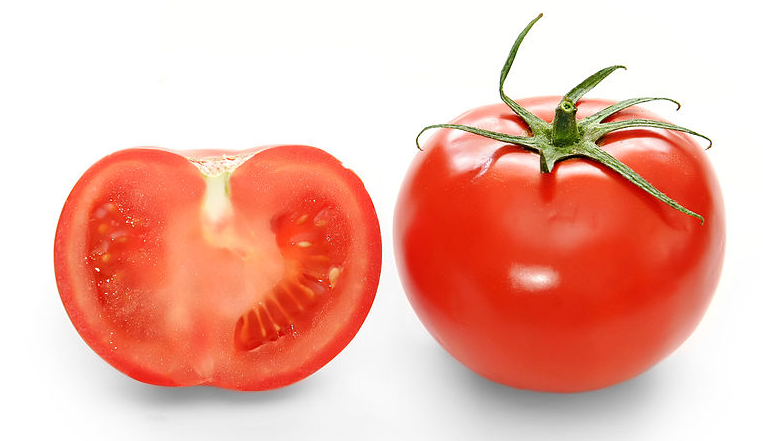
Screen Shot 2013-11-04 at 8.45.43 AMTomatoes are a $2 billion crop in the United States, but a common complaint is that the varieties in supermarkets often lack the flavor of locally grown varieties. To improve flavor, breeders need to know more about the types of tomatoes that hold the greatest potential for enhancing taste.

U.S. Department of Agriculture (USDA) molecular biologist Joanne Labate and plant geneticist Larry Robertson at Geneva, N.Y., worked with Dilip Panthee of North Carolina State University to explore tomato’s diversity in a study designed to help breeders develop tastier tomatoes.

Labate and Robertson work at the Agricultural Research Service (ARS) Plant Genetic Resources Unit at Geneva. ARS is USDA’s principal intramural scientific research agency, and this research supports the USDA priority of promoting international food security.

The team raised 173 varieties on test plots in North Carolina, trained 10 volunteers in sensory analysis, and asked them to rate the varieties on a scale of one to five in four sensory areas: odor, taste, flavor, and texture. The varieties were selected from the approximately 6,000 accessions in the ARS Tomato Germplasm Collection in Geneva because they represent a cross-section of the world’s tomato diversity.

The results, published in Plant Genetic Resources: Characterization and Utilization (2013), represent one of the most comprehensive efforts to date for identifying sources for boosting flavor among commercial varieties and lines used for breeding. They also are a treasure trove for breeders, offering a comprehensive set of rankings on flavor qualities, sweetness, vitamin C content, sugar and acid content, and other characteristics.

The findings show that although thousands of compounds go into determining flavor and other characteristics, two components play a key role: the amounts of sugar and acid. There also was a positive correlation between sweetness and flavor. The sweeter the tomato, the more flavor it contained.

The findings are good news for breeders because they show a lot of variation and a broad range of possibilities for adjusting sugar levels and developing more flavorful tomatoes. Breeding to enhance flavor shouldn’t be that difficult because both sugar and acid content can be reliably and inexpensively measured, according to the researchers.

Read more about this research in the October 2013 issue of Agricultural Research magazine.

Big Lemon Company Sweet on Tulare County

Screen Shot 2013-11-02 at 8.00.38 AMLimoneira Acquires 760 Acres / Expects to Add Approximately 200,000 Cartons of Lemons in Fiscal Year 2014

Santa Paula-based Limoneira Company (NASDAQ: LMNR), a leading agribusiness firm specializing in lemons  announced this week that it has completed the acquisition of approximately 760 acres of agricultural property near Porterville in Tulare County for $8.75 million cash.
This property consists of approximately 400 acres of productive lemon orchards and 360 acres primarily utilized for cattle grazing. The acquisition includes water assets and agricultural equipment and supplies. The firm says they plan to add more trees.

The addition of this property brings Limoneira’s owned and leased lemon holdings to over 1,000 acres in the San Joaquin Valley, total lemon acreage to approximately 3,400 acres in California and Arizona and over 10,000 acres of owned, leased or managed property in the two states.

The acquired lemon orchards are typically harvested and sold from November through March. Limoneira expects production of approximately 200,000 cartons of lemons for fiscal year 2014 and expects to produce in excess of 100,000 additional cartons of lemons in future years after certain orchard redevelopment on the property.

The company has an existing lemon orchard on Ave 116 near Porterville.The existing Porterville Ranch consists of approximately 669 acres. The company has approximately 650 acres of agricultural plantings on this property which consist of approximately 145 acres of lemons, 376 acres of Navel oranges, 27 acres of Valencia oranges, and 102 acres of specialty citrus and other crops.

They also own a Ducor Ranch of approximately 1,027 acres located about 50 miles north of Bakersfield, California. The company has approximately 974 acres of agricultural plantings on this property which consist of approximately 97 acres of lemons, 431 acres of Navel oranges, 168 acres of Valencia oranges and 278 of specialty citrus and other crops.

Limoneira expects to achieve annual production of approximately 300,000 to 350,000 cartons subsequent to new orchard redevelopment on the just purchased property.

Company is a leading producer of lemons, avocados, oranges, specialty citrus and other crops.The company has been in expansion mode announcing in  September that it had bought Arizona’s Associated Citrus Packers Inc. for $18.6 million.

Lemons are a good bet for the company with  the latest financial results showing revenue for the third quarter of fiscal year 2013 includes $19.1 million in lemon sales, compared to $15.5 million of lemon sales during the same period of fiscal year 2012, reflecting a larger number of cartons of fresh lemons sold, as well as higher average price per carton.

Sales of lemon by-products were similar compared to the same period last year. Avocado revenue increased to $7.7 million, compared to $5.5 million during the same period of the previous fiscal year, reflecting increased volume, partially offset by lower average price per pound. The Company recognized $1.5 million of orange revenue in the third quarter of fiscal year 2013 compared to $2.1 million of orange revenue in the same period of fiscal year 2012.

Ag Briefs: Groundwater Forum / SoCal Milk Production Down 21% / Corn Prices Down

Groundwater Overdraft: A regional forum Nov. 18 in Tulare will look at the challenges and concerns associated with groundwater overdraft in the San Joaquin Valley and the American West.Organized by the nonprofit American Ground Water Trust, the forum will explore how different communities throughout the West have dealt with groundwater overdraft and consider if local control is a feasible water management solution for San Joaquin Valley water users. Sponsors include Kaweah Delta Water Conservation District and  Tulare Irrigation District.The forum is all day at the World Ag Expo.

Screen shot 2012-07-03 at 8.52.35 AMMilk Production Up In Central Valley / Down In SoCal

CDFA  statistics  for August 2013 show Central Valley milk production has recovered from last year with a 4.9% increase recorded in Tulare County,a 4.6% increase in Kings Co, a 6.4% increase in Fresno County and Kern with a 3.9% increase. All volumes are compared to the same month of 2012. By contrast in San Bernardino County production in August 2013 was down 21 % from August 2012 and down 18,8% in Riverside County as the region continues to lose producers.

Screen Shot 2013-10-28 at 7.28.01 AMCorn Prices At Multi-Year Low

Good news for livestock producers – corn futures for December are at multi year lows as this year’s corn crop is harvested.Prices dropped to $4.30 a bushel today.

California Agencies Seek Dairy Digester Projects

Proposals Due November 1, 2013

SACRAMENTO, September 16, 2013 – The California Department of Food and Agriculture, the U.S. Environmental Protection Agency and their partner
agencies in the California/Federal Dairy Digester Working Group have announced a joint solicitation for dairy digester concept proposals.
California is the largest dairy state in the USA, with approximately 1.7 million cows producing more than 3.6 million dry tons of manure per year that must be
managed to reduce or mitigate environmental impacts. Manure can be processed by anaerobic digesters to produce biogas, a flexible renewable source of energy.
The ultimate goals of the collaboration are to see the widespread adoption of digester systems to better manage manure and nutrients, help address air and water
quality concerns, reduce greenhouse gas emissions, and produce renewable energy, fertilizer, and other value added products.
“California farmers and ranchers are innovators by nature,” said CDFA Secretary Karen Ross. “Dairy digester technology is an idea whose time has come, and that
is largely due to work done right here on California’s dairy farms. We are at a point where focused funding can help us make the transition to wider adoption and
implementation of digesters in our state.

TULARE COUNTY WALNUT BUYING PERIOD TO START NOVEMBER 1ST 

Tulare County Agricultural Commissioner Marilyn Kinoshita announced today that the walnut-buying period will begin Friday, November 1st as the County’s nut theft ordinance continues to be enforced.
“Commercial production and handling of walnuts constitute an important industry here in Tulare County” Kinoshita said. “Unfortunately, some people steal them from orchards and attempt to sell the walnuts illegally on the streets. County staff has been actively enforcing the nut theft ordinance by conducting compliance checks at places where walnuts are sold to ensure that this practice stops.”
In 2012, the Tulare County Board of Supervisors unanimously approved amendments to an existing nut theft ordinance to assist with an issue that has long plagued the walnut industry. Walnuts are typically shaken from the trees and left unattended until workers can gather them up, making them prime targets for overnight heists.
One amendment to the ordinance mandates that non-processing walnut-buying stands shall not operate within the boundaries’ of Tulare County until a “Walnut Buying Period”, as established by the Agricultural Commissioner, is in effect. Kinoshita said that consensus was reached amongst walnut growers to determine the appropriate start date.


Poultry Grower Pitman Family Farms Invests In Hanford Facilities

Screen Shot 2013-10-25 at 8.21.23 AM pictured – David Pitman

Pitman Family Farms of Sanger has made two significant property purchases in recent weeks in facilities in the Hanford Industrial Park setting the stage for what is expected to be a major expansion of operations into Kings County.

The latest transaction as of October 14 was the purchase by Bel’s Poultry,the family’s limited liability company, of 110 acres owned by the city’s redevelopment successor agency.

The purchase price was $2.75 million or $25,000 an acre with escrow set to close in 30 days. The acreage is clustered on the western side of 10th Ave east of the BNSF tracks at Iona Ave. The 110 acres includes three different parcels of land.

The purchase complements Pitman Family Farms earlier purchase in August from Cargill of their Hanford, Calif. feed manufacturing facility. The sale included the land (about 16 acres), buildings and machinery said Cargill in a news release. Terms of the agreement were not made public.

Pitman has already taken over operations at the former Cargill Nutrena feedmill that sits next to the BNSF tracks on one side and the 110 acre parcels they are buying now on the other side,putting the total land at over 126 acres.

Just what is planned on the large site is unclear but a good source says “it will be big.”

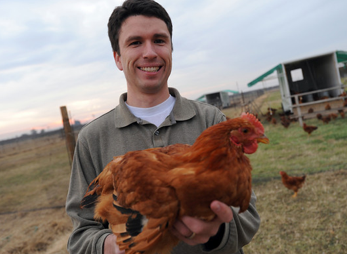
Pitman Family Farms has its current packing/slaughterhouse in Sanger and its ranches scattered in the Central Valley.  The family owned  company produces  free range, organic and non organic chickens,turkeys and ducks for the US market. They now offer a line of pasture-raised chicken said to offer fuller flavor.  The family farmer has been praised for their ethical treatment of the birds with their products sold at Whole Foods stores and others.

The company is also growing its ranches this month with permits for 7 new chicken barns near Traver issued.

Ag Watch: Chinese Currency / Milk,Pistachio Exports Bulge

Screen Shot 2013-10-23 at 6.55.57 AMChinese Currency Strengthens Vs Dollar – Bullish for Exports
The Chinese yuan traded stronger than 6.10 per dollar for the first time in 20 years after the central bank raised its daily fixing rate to a near record high and the nation stepped up efforts to increase the Chinese currency’s global use reports China Daily this month.
“The yuan strengthened for three consecutive days and closed at a record high of 6.0995 against the US dollar in Shanghai on Wednesday amid the ongoing impasse over US debt talks, China Foreign Exchange Trade System prices showed.
It touched 6.0965 earlier, the strongest level since the government unified the official and market exchange rates at the end of 1993.”
The move supports increased US ag exports like milk powder, citrus and nuts from the Valley to China with products being cheaper to consumers there in their currency.

Milk Exports Increasing 25 Percent
The U.S. Dairy Export Council (USDEC) projects that by the
end of this year the value of U.S. dairy exports will total $6.5 billion, up more than 25 percent from 2012. Barring a dramatic change in market conditions, 2013 will mark a fourth consecutive record year for U.S. dairy exports

Pistachio Exports Bulge in September
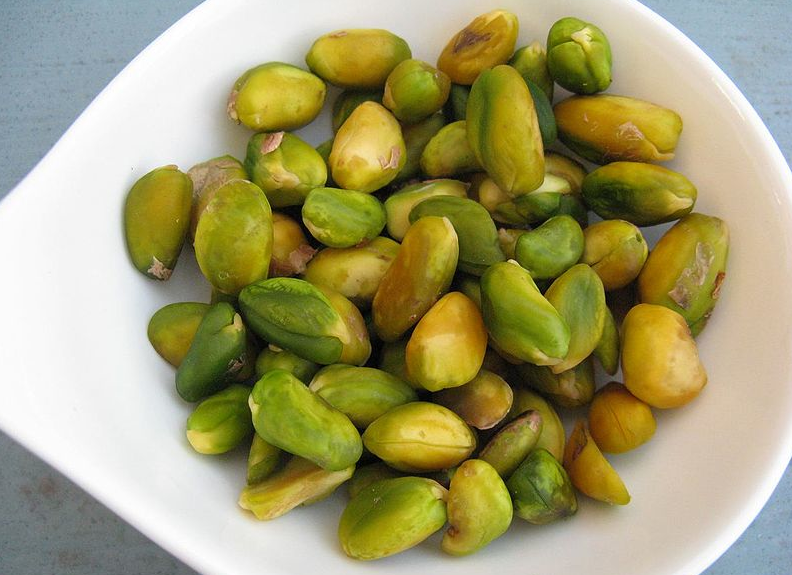
California’s pistachio nut crop came to harvest this summer and the first shipment of the new crop year were recorded in September. The numbers are and the results are eye popping.  The industry shipped 17.8 million tons in September compared to 11 million tons last year,13.7 million tons Sept 2012 and 6.1 million tons in Sept 2011. Of the 17.8 mil tons shipped this Sept – 12.7 mil tons went to the export market – double last year’s number.

Strawberries Still Number 1
Strawberries remain the favorite fruit of U.S. households according to a study by the California Strawberry Commission, which found increased recognition of the berry’s health benefits in the past three years the Packer reported.
Ninety-six percent of consumers are eating strawberries, and more than half of those are eating them once or more each week, the Watsonville, Calif.-based commission found. Women and younger adults are the heaviest users, according to a news release. Heavy users are 52% of eaters vs 35% in 2010.

OJ Consumption Way Down
US consumers are drinking less OJ particularly concentrate reports the Wall Street Journal recently.
“Frozen concentrated orange juice is melted and mixed with water before being consumed. It and juice mixed from concentrate before hitting supermarket shelves comprise 44% of total U.S. retail sales of orange juice. That is down from 53% 10 years ago” says a recent Wall Street Journal article. But “Not-from-concentrate orange juices, such as Coca-Cola’s Simply Orange or PepsiCo’s Tropicana Pure Premium, also have risen in popularity. Not-from-concentrate juice is perceived as healthier and fresher because it is pasteurized instead of frozen. The category comprises 56% of the domestic retail orange-juice market.”

Screen Shot 2013-10-23 at 7.00.16 AMLabor Issues In Olives
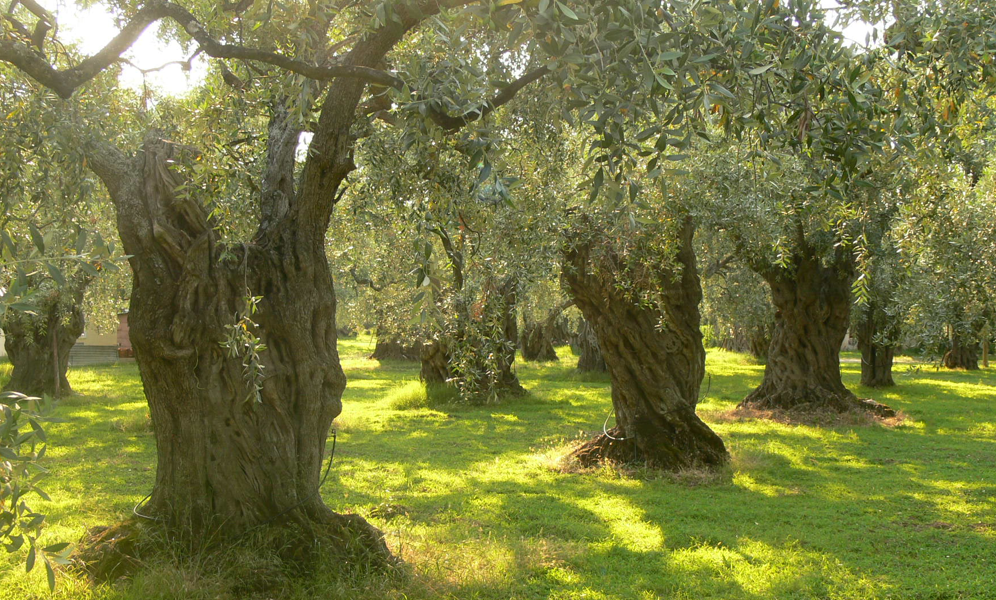
Olives in the San Joaquin Valley haven’t sized as well as expected because of a lack of rain, said Adin Hester, president of the Olive Growers Council of California in Visalia. This years crop picking is about finished in Northern Calif and will be complete in Central Valley by first of November.

Hester says California is now down to probably less than 25,000 acres of table olives from a high in the 1980’s of nearly 40,000.

Crop was reasonably good in Tulare County (60%) of California acreage and short in the north.
Prices were identical as past three years. ”Labor continues to be an issue. Always on the short side and some coyote contractors who bid harvest on cheap side, then put the gun to the grower’s head for more money. Frustration in grower community is rampant. Some growers, after harvest, brought in bulldozers and pushed their trees out. Getting tired of fighting labor, paying 50- 60 % of gross for labor when changing over to mechanically harvested nut crops that are doing well also reduces labor need and cost.”
Hester says California is now down to probably less than 25,000 acres of table olives from a high in the 1980’s of nearly 40,000.

World Processing Tomato Crop Is Low

Tomato curly top virus in the San Joaquin Valley has helped cut this year processing tomato crop here by 1 million metric tons or 8.4% lower than estimates made in June.The new estimate by World Processing Tomato Council is about 10.9 mm. A world crop if 32.8mm would be the smallest since 2007 but some carryover to relieve  shortages they say.