UC Davis Decoding Mother’s Milk

“What a genius strategy –  Mothers are recruiting another life form to babysit their babies.”

Oct 11, 2013 Diane Nelson
Researchers are decoding the mysteries of mother’s milk, discovering a wealth of information about how best to feed and protect the human body, lessons that will enhance health not just for infants but for us all.
UC Davis decoding mother’s milk for clues to lasting health

Julia Luckenbill and her daughter, Sarah.

University of California at Davis
Oct. 5, 2013

Preventative medicine: It’s an excellent concept, right? We all love the idea of keeping healthy people healthy. But the truth is, health care in our society is based less on wellness and more on fighting disease.

“That’s where the money is,” said Professor Bruce German with the UC Davis Department of Food Science and Technology and director of the UC Davis Foods for Health Institute. “We invest in the diagnostics and drugs to fight illness. But finding ways to make healthy people healthier – what would that even look like?”

That’s not a rhetorical question for German. For nearly 10 years, German and his colleagues at the UC Davis Foods for Health Institute have been exploring the power of science, nutrition and health. Taking an evolutionary approach, they hunted for a food designed under selective pressure to promote health.
And they found it: mother’s milk.

“Mother’s milk is the Rosetta Stone for all food,” German said. “It’s a complete food, a complete diet, shaped over 200 million years of evolution to keep healthy babies healthy.”

German and his team are now decoding breast milk to better understand its components and why they work so well. They are discovering a wealth of information about how best to feed and protect the human body, lessons that will enhance health not just for infants but for us all.

Solving a mystery

The two most abundant biomolecules (molecules produced by a living organism) in breast milk are proteins and lipids, which babies digest and convert to energy. The third most abundant biomolecule is something the human baby lacks the enzymes necessary to digest. In other words, it goes in their mouths and out into their diapers with no digestion along the way.

That makes no sense. Of the 500 calories a lactating woman burns each day to make milk, 10 percent is spent synthesizing something the baby treats as waste. If it didn’t have value to the developing baby, wouldn’t natural selection have discarded it long ago?

“We were gob-smacked when we discovered how much of what lactating mothers produce is indigestible matter,” German said. “What is it? What does it do?”

Turns out, the indigestible matter is a slew of complex sugar polymers called oligosaccharides that are extremely difficult to detect and analyze. Enter Professor Carlito Lebrilla with the UC Davis Department of Chemistry and the UC Davis Foods for Health Institute. Using cutting-edge lab instrumentation, Lebrilla and his team developed new analytical methods to separate, identify and quantify the oligosaccharides in human breast milk.

What do the oligosaccharides do? Researchers theorized they fed bacteria since they didn’t nourish the baby, but what strain of bugs do they feed and why?

That puzzle was solved by Professor David Mills, the Peter J. Shields Endowed Chair in Dairy Food Science with the UC Davis departments of Food Science and Technology, and Viticulture and Enology. Mills and his team pinpointed one particular gut bacterium called Bifidobacterium infantis, which is uniquely able to break down and feed on the specific oligosaccharides in mother’s milk.

So lactating mother’s produce the oligosaccharides to help B. infantis proliferate and dominate, keeping their babies healthy by crowding out the less savory bugs before they can become established, and, perhaps more important, nurturing the integrity of the lining of the babies’ intestines, which plays a vital role in protecting them from infection and inflammation.

“What a genius strategy,” German said. “Mothers are recruiting another life form to babysit their babies.”

Sharing the wealth

Capitalizing on what they’re learning about mothers’ milk, UC Davis researchers are working to promote wellness for humans beyond healthy babies.

Premature infants, for example, are often not healthy babies. They are particularly susceptible to a gastrointestinal disease called necrotizing enterocolitis, which destroys the bowel. Up to 10 percent of extremely premature infants get the disease and up to 40 percent of those with the severest form of the disease die. Researchers at the UC Davis Foods for Health Institute are working with Mark Underwood, professor of clinical pediatrics at UC Davis Children’s Hospital, on a clinical trial giving premature babies oligosaccharides and their corresponding bacteria to see if it can improve their intestinal and overall health.

The researchers believe providing oligosaccharides and specific bacteria could also be used to treat gastrointestinal disease in adults, restoring microbial balance in their digestive tracts.
Similar treatments could soon be used to boost the immune defenses of people with compromised immune systems, such as people with the human immunodeficiency virus (HIV), patients undergoing chemotherapy, the elderly, and others.

It’s too early to know whether healthy adults should add oligosaccharides (or other bacteria feeders) to their diets for preventative health. Scientists can’t even say for sure what a healthy bacterial community in our guts should look like. But one thing is certain, German says.

“Our good bacteria play a much more important role in our health than we realized,” German said.

Turning trash into treasure

For treating premature infants and others in need of microbial balance, where are we going to find the oligosaccharides that help the good bugs thrive? Nursing infants can get them from their mother. What about the rest of us?

Barilelab.jpg
Barile lab: Juliana Maria Leite Nobrega de Moura Bell, project scientist; Daniela Barile, professor; Renata Ferreira Ferraz, undergraduate; Leticia Fraga Matos Campos de Aquino, graduate student.

Work by led by Professor Daniela Barile with the UC Davis Department of Food Science and Technology and Professor Juan Medrano with the UC Davis Department of Animal Science demonstrated that cows make the necessary oligosaccharides, although the amounts produced decrease after the cow’s first few days of lactation. Medrano is searching for approaches to selective cow breeding to promote cow oligosaccharide production and to slow the reduction of oligosaccharides with the progress of lactation
Barile and her team are exploring another option, which seeks to turn one industry’s waste into a bacterial treasure. Whey is the waste product of cheese making and it’s produced in enormous amounts. For every pound of cheese produced, 10 pounds of whey are left over. The waste is hard to dispose of – it’s not environmentally friendly – but it still contains oligosaccharides, as Barile and her team have discovered. They are now looking to alter the industrial processing of millions of pounds of whey and other dairy waste, identifying, extracting and delivering health-promoting oligosaccharides from these underused streams.

Could plants also be a source of oligosaccharides? That, too, is under exploration by researchers at the UC Davis Foods for Health Institute including Professor Kent Bradford with the UC Davis Department of Plant Sciences and director of the UC Davis Seed Biotechnology Center.
Stay tuned.

Tip of the iceberg

The magic of mother’s milk goes beyond oligosaccharides. New research from biochemists Carolyn Slupsky and Bo Lönnerdal, both of the UC Davis Department of Nutrition, indicate that formula-fed infants not only develop different communities of bacteria in their guts than breast-fed babies, they also experience metabolic stress that could make them more susceptible than breast-fed infants to health issues such as obesity, diabetes, liver problems and cardiovascular disease.

Slupsky and her team are now working to compare how compounds in breast milk differ between woman and at different times during lactation, as well as how different formulas with varying nutrient content affect infant metabolism.

So there’s still a lot to learn. But breast milk is already providing researchers intriguing clues to lasting health.

As German said, “By decoding mother’s milk, this astonishing product of evolution, we’re learning so much about diet, nutrition and how to stay healthy in the 21st century.”

Walnut Crop May Run Shorter Than Projected

By Christine Souza

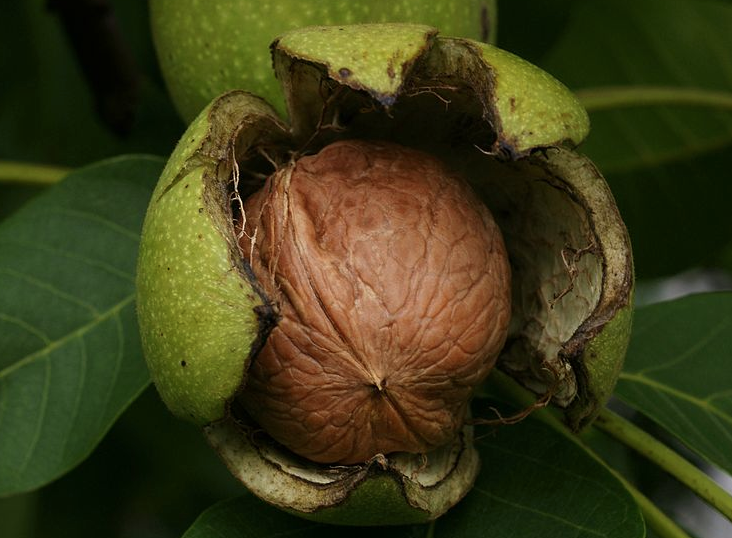
Walnut grower Gordon Heinrich of Heinrich’s Hulling and Dehydrator in Modesto tests a walnut to ensure it has an 8 percent moisture level, which will protect the nut during storage.
Photo/Christine Souza


It’s a good time to be in the walnut business: That’s the feeling among many California farmers as this year’s harvest nears the halfway point.

Growers confirm the nuts remaining on the trees are large and good quality, and say they wish they had more to sell, to meet growing global demand.

“A long time ago in another business, I learned that being tight on stock or out of stock was a high-class problem,” said Dennis Balint, California Walnut Commission chief executive officer. “More trees are going in the ground, but we need more walnuts. Demand is very strong and we want to keep it that way.”

Once harvested, walnuts go through the huller, where the outer green husks are removed and the nut is mechanically dehydrated, or air dried, to an 8 percent moisture level, which protects the nut during storage.

“When the walnuts leave here (the huller), they go to a buyer or broker, who will fumigate them, size them and, in some cases, crack them for the meats. Some walnuts will be sold as meats and some will be sold as inshell,” said Heinrich, who is building a new hulling facility that will handle four times the volume. “Walnuts are shipped all over the world. There are many handlers in the business and they are all competing for the product.”

The key to success, according to people in the walnut business, is growing demand around the world. To help expand export demand, California walnut growers gained access to India this summer under a new phytosanitary protocol that gives walnut marketers the ability to sell to the country’s growing middle class.

“The protocol was completed and regulations have gone out to the ports, so India is ready to receive walnuts,” Balint said. “That’s another market that’s going to be accepting walnuts and of course the Pacific Rim and Asia in general has in the last few years become very important.”

Sixty percent of California-grown walnuts are exported to Asia, Europe and the Middle East. The crop ranks as California’s fourth-leading agricultural export, according to the commission. Tonnage sold domestically has increased by about 25 percent during the last 15 to 20 years, with California walnuts accounting for more than 99 percent of the commercial U.S. supply.

“We believe we have turned the corner. Looking at data, we saw the strength of the market all of the way back in 2000,” Balint said. “Demand was good, demand was rising, but demand was not ahead of supply. Now, demand is way ahead of supply, and that’s a very positive situation.”

Walnut grower Mat Conant of Rio Oso said he foresees a good year for walnut growers.

“Production is down a little bit, but prices are up and the quality is good,” Conant said, adding that the earlier-than-usual harvest helps in moving walnuts to ports to ship to overseas customers in time for the Christmas buying season.

“Buyers want them on the boat before the first of November, so this year, that is going to be an easier deadline to meet,” Conant said.

Growers said they expect tonnage per acre will be down for all walnut varieties. Younger walnuts coming into production are doing well, but Conant said the additional production from newly bearing orchards will not be enough to make up for the overall reduction.

“We could have really used a good-sized crop this year just because there is nothing really in the pipeline to speak of to help meet demand,” he said.

A lower supply of walnuts from the U.S., coupled with fewer Chinese walnuts on the market due to a freeze there, means a worldwide shortage of walnuts, Conant said. As a result, the price that California growers will earn could be higher than average, in some cases 20 cents a pound higher than last year.

“I’m hearing $2 (a pound), maybe a little more on really good quality Chandlers. Last year, the Chandler variety was $1.80 to $1.85 and that is a really good price, so I’m thinking this year we’ll be seeing 20 cents more per pound for walnuts,” Conant said.

Farmers have responded to the price increase by replacing other commodities with new walnut trees. Early this year, USDA reported that tree nurseries sold out of walnut varieties for this year, were backed up for 2014 and were taking orders for 2015. Walnut growers say they expect the trend of increased plantings to continue.

The walnut sector, Balint said, has created good demand in the marketplace, with dramatic increases in supply, production and price.

“What we want to do now is make the efforts necessary to keep demand ahead of supply,” Balint said. “Once people have a rational belief that walnuts are a healthy food, then it is a matter of reminding them and showing them how to use walnuts, and that’s where we have to go. It is a challenge for this industry in the next 10 years.”

(Christine Souza is an assistant editor of Ag Alert. She may be contacted at csouza@cfbf.com.)

CFB News

Ag Beat RoundUp: Fighting HLB With Trickery

Immigration Reform: If the GOP leadership will not advance immigration reform, House Minority Leader Nancy Pelosi is spearheading a plan to do so advance in the House of Representatives say a Politico article.
“The California Democrat’s strategy includes introducing legislation combining the comprehensive bill that passed the Senate Judiciary Committee in May with a bipartisan border-security bill from the House Homeland Security Committee, according to sources familiar with the plans.”
Despite the urging of virtually all the California ag leadership and trade groups the House Republicans have yet to put forward a bill.

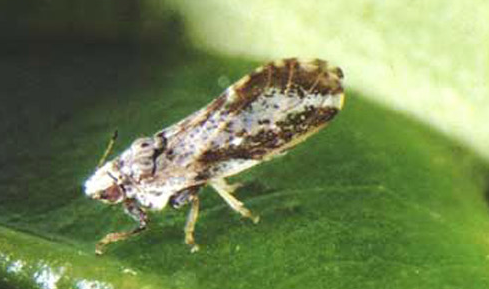
Screen Shot 2013-09-25 at 4.35.33 PMTrickery & HLB: More finds of Asian citrus psyllids in Tulare County this week as separate,widespread discoveries imply not a general infestation says scientist Dr Beth Grafton Cardwell. As of yet the insects are not carrying the dreaded citrus greening disease or huanglongbing (HLB) disease that kills citrus trees and is spread by an insect, the Asian citrus psyllid.

Still the disease was found in one LA backyard some years ago and it is “just a matter of time” until the disease finds its way to Tulare County – the number one citrus producing county.”We assume it is in LA and it is moving up from Mexico.”

Backyard citrus is a major problem since homeowners don’t typically watch for the tiny insect.Some 60% of homes in the state have citrus and there are more backyard citrus trees in the state than commercial citrus trees says Grafton Cardwell.

Researchers are working on several fronts including developing a rapid detection test that “sniffs VOC’s” put out by a diseased tree.

Both cold weather and hot weather slow the insect down, a benefit of the California climate.

Researchers have a few tricks up their sleeve when disease does come here. One involves using the vector for another citrus disease – the mild strain of Tristeza (CTV) spread by aphids that causes little production losses compared to severe strains.  Grafton Cardwell says the idea is to use the CVT virus as a carrier into the tree that would inoculate the tree from HLB. Also modify a psyllid that can not acquire HLB and flood the area where these harmless insects disrupt the mating of HLB carrier psyllids.

Rainy Winter? Farmer’s Almanac Says So: Weather watchers can’t agree but the old standby Farmer’s Almanac has an optimistic forecast. “Winter will be much rainier and cooler than normal, with mountain snowfall much greater than normal. Most of the rain, snow, and storminess will come in January and February, when storm damage will be a concern. The coldest periods will be in mid-December and mid- to late January.”

Study Would Raise San Luis Dam: At a recent hearing Commissioner of Reclamation Michael Connor  announced that the U.S. Bureau of Reclamation is “looking at San Luis Reservoir and increasing storage there. We need to put everything on the table.”

The Commissioner, who made the announcement near the end of his portion of a panel discussion on Delta water issues and needs, said costs are being investigated.
After the panel was completed, Connor told reporters, “We’ve done an appraisal level analysis but we need to do more modeling.” He said a preliminary report is due October 1. If favorable, a feasibility study could follow.

Ron Jacobsma general manager of Friant Water Authority says the issue is one of dam safety but that the Bureau may decide to add additional storage as part of a fix for a safety issue.The proposal is an 18 and 1/2 ft raise.
San Luis Reservoir, located in western Merced County and built a half century ago, is a joint federal-state facility capable of storing a little over 2 million acre-feet of water. The Central Valley Project’s maximum storage share is 980,000 acre-feet. The reservoir currently holds about 350,000 acre-feet.
It is crucial to State Water Project and CVP operations in meeting water supply needs south of the Delta, including deliveries of water used within the Friant Division by eight agencies along the Friant-Kern Canal with CVP contracts for Cross Valley Canal water deliveries.

NEW TULARE COUNTY ASIAN CITRUS PSYLLID DETECTION NEAR EXETER

Screen Shot 2013-09-24 at 11.17.40 AMTulare, CA. September 24, 2013

The Tulare County Agricultural Commissioner’s office is announcing that one additional Asian citrus psyllid (ACP) has been detected on a trap south of the city of Exeter. The latest interception was confirmed by the California Department of Agriculture (CDFA). Maps and current information are available on the Agricultural Commissioner’s website by visiting: http://agcomm.co.tulare.ca.us/default/.

CDFA has already begun to survey the affected area in order to determine the extent of any infestation. The United States Department of Agriculture’s Animal and Plant Health Inspection Service (USDA-APHIS) and CDFA will work collaboratively to determine what steps are taken next.

“This latest find is in the heart of our citrus belt, so it is very disappointing to hear that psyllids are being moved into a new part of our county,” said Tulare County Agricultural Commissioner Marilyn Kinoshita.

The Asian citrus psyllid is an invasive species of grave concern because it can carry the disease huanglongbing (HLB), also known as citrus greening.  All citrus and closely related species are susceptible hosts for both the insect and the disease.  There is no cure once a tree becomes infected. The diseased tree will decline in health, producing bitter, misshaped fruit until it dies. To date, HLB has been detected on just one residential property in the Hacienda Heights neighborhood of Los Angeles.

Kinoshita points out that her staff will support the efforts of our $750 million citrus industry, as well as our residential citrus owners. “I want to emphasize that every citizen of our county plays a role in assuring that ACP is not spread from other parts of the state”.

Residents in the area who think they may have seen the pest are urged to call CDFA’s Pest Hotline at 1-800-491-1899 or the Tulare County Agricultural Commissioner. Media inquiries related to technical questions about Asian citrus psyllid and huanglongbing disease are encouraged to contact Katie Rowland, Account Coordinator for Nuffer, Smith, Tucker Inc. at (661)817-3638.

UC Researchers Help Growers Find Alternatives To Methyl Bromide

A special collection of original research on methyl bromide alternatives is part of the July–September 2013 issue of California Agriculture, UC’s peer-reviewed journal of agricultural, natural and human resources (http://californiaagriculture.ucanr.edu). Related articles will appear in the October–December 2013 issue.Screen Shot 2013-09-16 at 2.47.22 PM

Methyl bromide contributes to ozone depletion high in the atmosphere and was banned by developed countries in 2005 under the Montreal Protocol, an international treaty to protect the stratospheric ozone layer. Since then, the treaty has allowed limited use of methyl bromide for certain crops, but many of these exemptions are gone and the rest will end soon.

To develop and evaluate alternatives to methyl bromide, a team of UC and U.S. Department of Agriculture researchers was awarded a $5 million, five-year USDA grant. The project — called the Pacific Area-Wide Pest Management Program for Integrated Methyl Bromide Alternatives (PAW-MBA) — includes production crops such as grapes, strawberries and tree nuts as well as nursery crops such as cut flowers, forest trees and sweet potatoes.

“One goal of the program was to identify methyl bromide alternatives that were immediately useful and economically feasible,” says Greg Browne, a USDA plant pathologist at UC Davis who coordinates the PAW-MBA program. “Another was to foster development of nonfumigant strategies for managing soilborne pests.”

The team has identified methyl bromide alternatives that are both effective and economical for key California crops. When the best alternative is another fumigant, the researchers found ways to use less and to cut emissions. In addition, the researchers are developing alternatives that go beyond fumigants, including steam sterilization and other nontoxic approaches.

Summaries of projects and links to articles:

TIF film, substrates and nonfumigant soil disinfestation maintain fruit yields

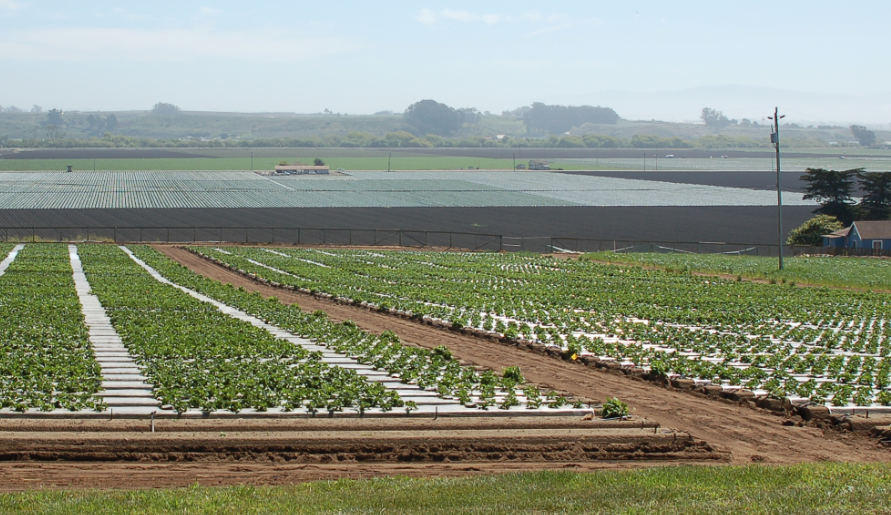
Strawberry growers use methyl bromide primarily to control soilborne diseases. Now, new UC research shows that this crop can be grown without fumigants at small scales. Three nontoxic methods — nonsoil substrates, anaerobic soil disinfestation and steam disinfestation — produced strawberry yields as high as those in conventionally fumigated soil. “Instead of understanding soil, we’ve just been fumigating it,” says Steve Fennimore, a UC Cooperative Extension specialist in Salinas who led this team. “Using physical tools is a different approach.” Researchers will next evaluate whether these alternative methods can be scaled up to commercial production fields, and whether they work in different strawberry production areas of California.

Managing the almond and stone fruit replant disease complex with less soil fumigant

Almond and stone fruit growers need methyl bromide alternatives to control nematodes and Prunus replant disease, a soilborne disorder that stunts new orchards and cuts yields. To help these growers, UC and USDA researchers tested alternative fumigants, spot and strip fumigation and nonfumigant methods including rotating orchards with sudangrass and using nematode-resistant rootstock. “Spot treatments provided adequate control of Prunus replant disease and may be very helpful to growers needing to use less fumigant for costs savings or regulatory restrictions,” Browne says. In addition, integrating the various treatments tested may also help control the replant disease with less fumigant use.

Preplant 1,3-D treatments test well for perennial crop nurseries, but challenges remain

California supplies nursery stock to the state’s fruit, nut and vineyard industries, as well as more than 60 percent of the rose plants and fruit and nut trees sold nationwide. This perennial nursery stock must be completely nematode-free, and growers use methyl bromide primarily to control these tiny soilborne worms. However, alternative fumigants such as 1,3-dichloropropene (1,3-D) don’t work as well in fine soils. “We asked how we could make them work better,” says Brad Hanson, a UC Cooperative Extension specialist in the Department of Plant Sciences at UC Davis. The researchers showed that 1,3-D controlled nematodes in fine soil when they tilled it deeper, injected the fumigant deeper and used tarps that kept more of the fumigant in the soil.

Fumigant emission reductions with TIF warrant regulatory changes

Fumigants are regulated partly because they help make smog. Totally impermeable film (TIF) can help keep fumigants in the soil and out of the air. New UC research shows that fumigant emissions can drop 64 percent when fields are tarped with TIF for twice as long as usual (10 days instead of 5). “We’re now working on safe use,” says Suduan Gao, a USDA soil scientist in Parlier who led the team. “The goal is to keep the fumigant under the tarp long enough that there won’t be a surge in emissions when it’s cut open.” This work gives regulatory agencies a new way to let growers keep using enough fumigant to control pests and diseases while minimizing the smog-forming emissions.

The entire July–September 2013 issue can be downloaded at http://californiaagriculture.ucanr.edu.

UFW Hails Higher Minimum Wage Passage

California farm workers to benefit from minimum wage increase says the United FScreen Shot 2013-09-13 at 12.33.21 PMarmworkers Union.
Gov. Jerry Brown promised to sign bill giving the state’s lowest-paid workers a 25 percent raise

United Farm Workers President Arturo S. Rodriguez issued the following statement after the California Legislature overwhelmingly supported an increase in the minimum wage from $8 an hour to $9 next July and $10 by January 2016. Gov. Jerry Brown has already promised to sign the bill into law.

“The United Farm Workers thanks lawmakers who voted to increase the minimum wage. We know thousands of farm workers and their families will truly benefit from this $2 raise.  The UFW has spent the past three years working with lawmakers and pushing for an increase on the minimum wage. In 2010, the UFW organized focus groups with union and non-unionfarm workers on issues of concern and priorities for them and their families, and it was clear that one of their concerns was to get at least a $2 increase on the minimum wage. The UFW then approached Assemblyman Luis Alejo with this request on behalf of farm workers, worked intently with lawmakers, and now we are happy to see this goal close to becoming a reality. Together, we can make a difference that benefits those who need it the most.”

Oranges,Corn & Cotton Crops Down This Year

Screen Shot 2013-09-12 at 12.04.10 PMSACRAMENTO – The USDA-NASS, Pacific Regional Field Office today released the crop production forecast for September. The latest survey, which was conducted during the last week of August and the first week of September, included the following commodities:

Oranges, Navel – California’s 2013-14 Navel orange forecast is 88.0 million 40.0-pound cartons, down 2 percent from last season. Of the total forecast, 85.0 million cartons are estimated in the Central Valley. The forecast is based on the Navel Orange Objective Measurement Survey conducted in the Central Valley. Survey data indicated a fruit set per tree of 265, down from last season, but the diameter is up from last year at 2.34 inches as of September 1.

Cotton – Upland cotton production in California is forecast at 310 thousand bales, down 39 percent from the 2012 crop. Harvested acreage is estimated at 92.0 thousand acres, down 35 percent from a year ago. Yield is forecast at 1,617 pounds per acre, up 2 percent from last month. The forecast for American Pima cotton production is 600 thousand bales, down 20 percent from the 2012 crop. Harvested acreage is forecast at 186 thousand acres, down 17 percent from last year. Yield is forecast at 1,548 pounds per acre.

Rice – All rice production in California for 2013 is forecast at 46.1 million cwt., up 2 percent from the previous year. The yield forecast is 8,300 pounds per acre, unchanged from last month, but up 2 percent from last year. Planted and harvested acreages are forecast at 561 thousand and 556 thousand acres, respectively. As of September 1, nearly all of the rice acres had headed.

Corn – Corn for grain production in California for 2013 is forecast at 904 thousand tons, down 3 percent from last year’s crop, but unchanged from the August forecast. With harvested acreage forecast at 170 thousand acres, the yield is 5.32 tons per acre. Compared with the 2012 crop year, harvested acreage is down 6 percent, but the yield is up 3 percent.

Sugarcane – The 2013 production of sugarcane in Hawaii is forecast at 1.41 million tons, up 8 percent from the previous year, but unchanged from the August forecast. Harvested acreage is estimated at 17.5 thousand acres, up 1 percent from last year. Yield is forecast at 80.8 tons per acre.

Sugarbeets – The 2013 California sugarbeet production is forecast at 1.10 million tons, unchanged from the August forecast, but up 2 percent from last season. With harvested acreage forecast at 24.5 thousand acres, the yield is 45.0 tons per acre.

Production forecasts are released on a monthly basis and do not reflect final production estimates. Late summer and fall harvests may change these estimates considerably. The next production forecast will be issued October 11, 2013.

Ag Updates: New Packing Plant / State Desigated Disaster Area / Walnut Set Way Down

Screen Shot 2013-09-09 at 2.26.24 PMFresno Packer Building New Citrus Plant

Sanger-based Kings River Packing Company is building a new 25,000sf citrus packing plant valued at $1.26 million.  The plant is at 21095 E Trimmer Springs Rd in Sanger.

USDA Designates California a Drought Disaster Area

Nearly all farmers and ranchers in California are now eligible to apply for low-interest emergency loans because the U.S. Department of Agriculture has declared the state a drought disaster area.
Agricultural operators in all California counties except for San Francisco can now apply for USDA’s Farm Service Agency (FSA) emergency loans. The maximum loan amount is $500,000.
The state’s agricultural industry is in a bind because of this year’s very dry conditions. Many ranchers are buying extra feed for livestock to compensate for meager grass growth, and some farmers are fallowing land to cope with the increasing problem of water shortages.
On Aug. 22, USDA designated 24 more counties in California as primary disaster areas due to damages and losses caused by the recent drought.
“Just about everyone in California agriculture has been negatively affected by drought this year,” said Val Dolcini, Farm Service Agency state executive director, in an announcement last week about the emergency loans. “California’s diverse farmers and ranchers of all sizes and backgrounds have experienced drought conditions and water shortages and may find help at FSA offices.”
From ACWA

WALNUT PRODUCTION FORECAST DOWN SLIGHTLY

The 2013 California walnut production is forecast at 495,000 tons, down less than 1 percent from 2012’s production of 497,000 tons. This forecast is based on the 2013 Walnut Objective Measurement (O.M.) Survey, which was officially conducted August 1 through August 23, 2013.
The survey found while acreage is up  this year, the nut set is at a record low. Nut sets per tree on the Coast is predicted to be at 857 in 2013,down from 1461 in 2102.In the SJ Valley – the nut set is estimated to fall from 1120 in 2012 to 1050 this year..
Bearing  acreage is up10,000 statewide this year to 255,000 acres stimulated by high prices per ton paid to growers. Total value exceeded $1.33 billion in 2011 compared to $558 million in 2008. Exports are driving demand.

Lindsay Orange Juice Maker Expanding

Marmalade flavorings for the baking industry 2013-09-02 at 3.19.06 PMVitaPakt Citrus Products has received approval from the City of Lindsay to add 4.3 acres of land to their plant site site in town in order to expand its operations – a move that will add  from 22 to 40 jobs says a city staff report.

Speaking at the August 13 city council meeting, Aaron Avedian, Senior VP of Operations for the Covina-based firm said the expansion would be phased over a 5 year period or longer.

Already the company has pulled permits to add the foundation for additional storage tanks on their growing industrial campus. The company is adding 4.3 acres to 14.2 acres it already owns. The city approved a rezoning of  the 4.3 acres from residential use to light industrial with a second reading of a mitigated negative declaration August 27. The acreage had been an abandoned citrus grove.

VitaPakt has been growing rapidly lately acquiring the next door California Citrus Producers Inc (CCPI) in Lindsay last November and constructing a second operation in Tulare last December processing citrus juice.That operation carries out the debittering of navel juice offering all products in bulk tankers, drums and pails.

 Phased Improvements In Lindsay

According to the city staff report:

Phased improvements proposed throughout the overall Lindsay site include a warehouse facility proposed for the northernmost parcel. The northernmost parcel project would include the following:
–  Dry storage facilities totaling 24,300 square feet.
–  A freezer of approximately 30,400 square feet.
–  An office of approximately 7,520 square feet.

A second area of site improvement would be located on the developed, middle parcel. On it are proposed an 8,800 square foot dehydrator, a dry storage facility of 2,200 square feet, and a dry storage and milling facility of 9,450 square feet.

Other site-related improvements would include an evaporative tower and conveyors to be located on the southernmost parcel as a phase 1 development. The proposed tower would comply with the height restrictions of the IL zoning district.

The southern and middle parcel are already substantially developed for light industrial use and the construction of an evaporative tower and conveyors, which require no variance approvals, would be considered accessory structures and uses located on the same site. Throughout the project some demolition or removal of obsolete items would be performed along with site improvements.

The enterprise that was to become VitaPakt Citrus Product Co. began operations in 1949 across the driveway of a Covina, California fresh citrus packing house. In 1957 the company was reorganized as VitaPakt Citrus Products Co. and quickly became the major supplier of fresh, Not From Concentrate, chilled orange juice to retail markets in California, Arizona and Nevada.

Beyond Juice

Seeing opportunities beyond juice, the company began making citrus purees for bakery applications. This was the seed to one of the most diversified citrus ingredient businesses in the world.

In 1997, VitaPakt made a strategic shift away from retail products and committed its resources entirely to the production of high quality citrus ingredients for the food and beverage industries.

Today  VitaPakt offers one of the broadest choices of citrus products manufactured by one company. Their line-up of products include single strength, Not From Concentrate juices, all natural juice concentrates, beverage bases, purees, and numerous specialty citrus peel products.  The peel products range from dried and milled granules for the spice, tea, and brewing industries to pasteurized and frozen shredded peel for preserving and bakery applications. The sugared lemon and orange flavedos, signature of VitaPakt, have become mainstay ingredients in the baking industry.

Bakers use orange flavoring like marmalade for example to make pastries, cakes and cookies.( see pic)

VitaPakt has also been certified organic processor for over 15 years.
Since 2001, VitaPakt has become a dominant processor of California grown Kiwi.

South County Groundwater Pumping Stirs Talk Of Restrictions

Success Dam – click to enlarge

But Hopes Rise To Fill Success Dam This Winter

After seven years of limitations on filling Success Dam above Porterville due to earthquake safety concerns, the US Army Corp Of Engineers is expected to lift the restrictions this fall according to several local informed sources.

That would be some rare good news in this – another drought year – because if it does rain this winter “we can capture more surface water instead of continued all-out ground water pumping” says local water expert Dick Schafer.

“But I am afraid even with several good years we are too far behind on  the overdraft of our groundwater (below Porterville) to make it up”says Schafer, a Visalia civil engineer.

Instead, two local water districts are in discussion on a possible locally
organized groundwater management plan that could potentially take several directions says Schafer

A task force comprised of landowners continues to meet every few months to talk through the growing concern over groundwater depletion within the Lower Tule River and Pixley irrigation districts and to determine what can be done to correct the problem says the latest issue of the Friant Water Users newspaper.

“This is entirely a landowner driven effort,” said Dan Vink, General Manager. “The district is simply helping facilitate the process.”

The task force is exploring a variety of options ranging from new supplies to conservation to even the possibility of self-imposed regulation if that is what is necessary to preserve the underground water supply.

It has been agreed that the current rate of use is “not sustainable.” Some parts of the water district like lands west of Pixley have seen their water table drop to 280 ft below ground compared to around 170 ft in 2008 according to the district groundwater maps.

Common Pool

Vink says while water is traditionally considered a private property issue ”it’s a common pool out there that is quickly depleting.”

Vink adds “in the past 10 years the south county has seen both more  permanent plantings and a more intense dairy industry.”

“I have guys coming to me and saying our wells our collapsing and we are seeing signs of land subsidence. There is just a lot of pumping going on.”

Schafer says “the growth in plantings of dairy feed from corn silage to alfalfa and other grains is a good amount of the problem in southern Tulare County.”

The 2012 Tulare County Crop Report says acreage of these three key feed gains totaled around 429,00 acres.By contrast 18 years ago in the 1994 crop report – these three grains grown in the county totaled 189,000 acres.

Add to the increased acreage the fact that most feed crops take double per acre what is required to water citrus or nuts, says Schafer.

Vink adds that “I’d say in the past 5 to 6 years we have experienced a groundwater crisis and now it’s turning into a disaster.”

Something has to be done agree the two leaders and that something  won’t be any fun.

Paid Not To Farm?

Schafer says the two hottest ideas being floated right now would be   that existing farm owners would pool money to pay other farm owners not to farm. An alternate would be to eliminate double cropping. A second plan following what is happening in southern California – would be some kind of well monitoring and allocation – meters for example.

“Right now it’s who can drill the deepest” shrugs Schafer.

Schafer says the district will likely work to organize a local management plan under state groundwater management legislation. Locals want to try to do this themselves rather than have the state step in. The next meeting of the farmer task force is later this August.

Regards Success Dam, allowing the 82,000 acre/ft reservoir to fill would be a boost to efforts to stem the groundwater depletion.But in many years not enough rain comes down to allow the reservoir to store up to capacity. In 2012 the dam filled to 65,000 acre/ft and this  water year only around 30,000 acre/ft was stored.The average yield is around 40,000 acre ft. Farmers got only a few weeks of irrigation run this year and to bring their crop in – turned to the pumps.

Dam Safety Official Word Coming

Last year the Corp made preliminary determination that dam safety was not a critical issue after several years of study and a eye-popping price tag to replace the dam.

Schafer says now the Corp schedule calls for report on dam safety to be given to the Corp’s Senior Operations Group that is said to suggest lifting of the restrictions.The Corp brass will give the official word in November, he says. Schafer expects a project to widen the spillway to capture a potential 1 in 10,000 year flood – will go forward.”They have a 44 ft widening plan on their desk ready to go.”

But they will drop the plan to spend $500 million to replace the dam that cost $14 million to build in the 1960s.