FDA: Phase Out Growth Related Antibiotics in Farm Animals
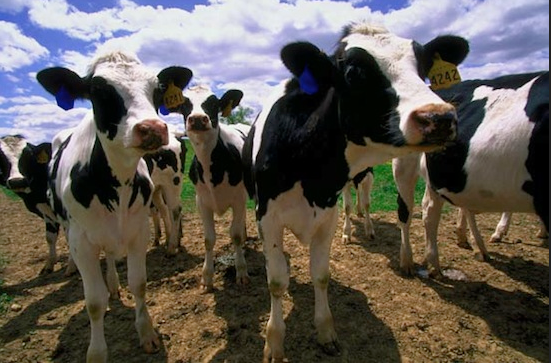
The Food and Drug Administration (FDA) is implementing a voluntary plan with industry to phase out the use of certain antibiotics for enhanced food production.
Antibiotics are added to the animal feed or drinking water of cattle, hogs, poultry and other food-producing animals to help them gain weight faster or use less food to gain weight.
Because all uses of antimicrobial drugs, in both humans and animals, contribute to the development of antimicrobial resistance, it is important to use these drugs only when medically necessary. Governments around the world consider antimicrobial-resistant bacteria a major threat to public health. Illnesses caused by drug-resistant strains of bacteria are more likely to be potentially fatal when the medicines used to treat them are rendered less effective.
FDA is working to address the use of “medically important” antibiotics in food-producing animals for production uses, such as to enhance growth or improve feed efficiency. These drugs are deemed important because they are also used to treat human disease and might not work if the bacteria they target become resistant to the drugs’ effects.
“We need to be selective about the drugs we use in animals and when we use them,” says William Flynn, DVM, MS, deputy director for science policy at FDA’s Center for Veterinary Medicine (CVM). “Antimicrobial resistance may not be completely preventable, but we need to do what we can to slow it down.”
FDA is issuing a final guidance document that explains how animal pharmaceutical companies can work with the agency to voluntarily remove growth enhancement and feed efficiency indications from the approved uses of their medically important antimicrobial drug products, and move the therapeutic uses of these products from over-the-counter (OTC) availability to marketing status requiring veterinary oversight.
Once manufacturers voluntarily make these changes, the affected products can then only be used in food-producing animals to treat, prevent or control disease under the order of or by prescription from a licensed veterinarian.
“This action promotes the judicious use of important antimicrobials, which protects public health and, at the same time, ensures that sick and at-risk animals receive the therapy they need,” says CVM Director Bernadette Dunham, DVM, Ph.D. “We realize that these steps represent changes for veterinarians and animal producers, and we have been working to make this transition as seamless as possible.” Drugs Primarily in Feed
Flynn explains that all the drugs affected by this plan are antibacterial products. They have long been FDA-approved for production (e.g. growth enhancement) purposes as well as for the treatment, control or prevention of animal diseases. Even today, he says, it is not entirely understood how these drugs make animals grow faster. The drugs are primarily added to feed, although they are sometimes added to the animals’ drinking water.
Bacteria evolve to survive threats to their existence. In both humans and animals, even appropriate therapeutic uses of antibiotics can promote the development of drug resistant bacteria. When such bacteria enter the food supply, they can be transferred to the people who eat food from the treated animal.
In 2010, FDA called for a strategy to phase out production use of medically important antimicrobial products and to bring the remaining therapeutic uses under the oversight of a veterinarian. The guidance document that FDA is issuing on Dec. 11, 2013, which was previously issued in draft form in 2012, lays out such a strategy and marks the beginning of the formal implementation period.
The agency is asking animal pharmaceutical companies to notify FDA within the next three months of their intent to voluntarily make the changes recommended in the guidance. Based on time frames set out in the guidance, these companies would then have three years to fully implement these changes.
Why Voluntary?
Flynn explains that the final guidance document made participation voluntary because it is the fastest, most efficient way to make these changes. FDA has been working with associations that include those representing drug companies, the feed industry, producers of beef, pork and turkey, as well as veterinarians and consumer groups.
“Based on our outreach, we have every reason to believe that animal pharmaceutical companies will support us in this effort,” says Michael R. Taylor, FDA’s deputy commissioner for foods and veterinary medicine.
Organic Research Capability at Kearney Field Station
Author: Alison L Kent
December 11, 2013
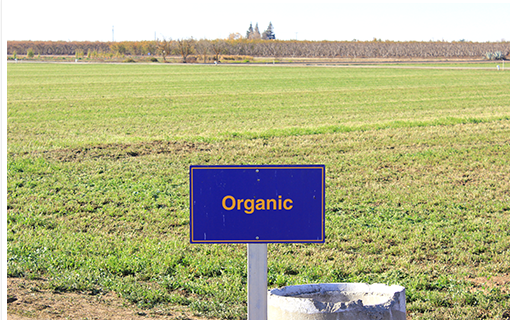
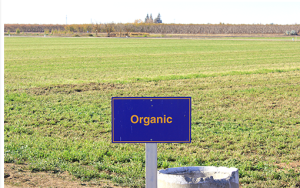
Organic certification is almost complete for over 8 acres within the Kearney Agricultural Research and Extension Center. The acreage also has an apiary extension/teaching field laboratory with flowering pasture. The U.S. organic market is relatively new, with the USDA only adopting national standards for organics in October 2002. Trends in organic farming show that the vegetable and fruit market has grown about 50% since 2011. Farmers are often willing to make the transition to organic farming because they can command much higher prices for their produce, though the organic certification process can be lengthy and rigorous. In response to the increasing demand for organic farming, KARE’s 8 acres were identified in 2006 to develop a field for meeting organic protocols.
An organic alfalfa research project evaluating seeding dates, weed pressures, companion planting and cultural practices for weed control and yield data was recently successfully completed. This year, an organic alternative to conventional soil fumigation for crown gall control in walnut nursery settings has been initiated. Anaerobic soil disinfestation is being evaluated as a novel approach for control of soil borne pathogens.
Kearney’s Research Advisory Committee welcomes research proposals from those interested in working on alternatives to conventional growing methods. See Research Proposal Forms for more information on applying for research funds.
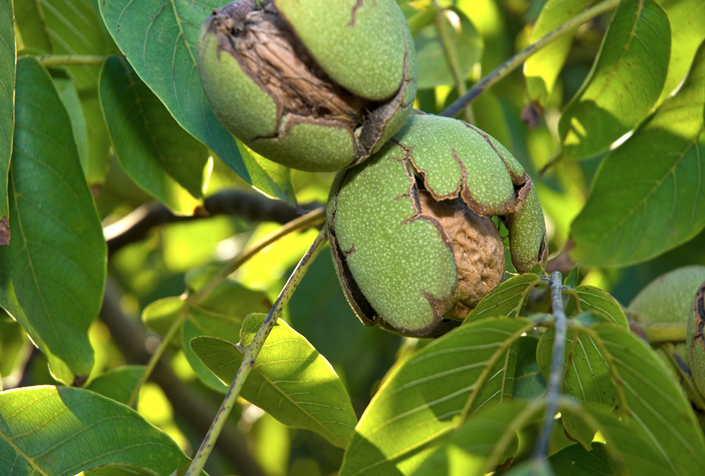
California walnuts are grown on 200,000 acres in the state
Walnut Shipments Down 2.2% Year To Date
Total walnut shipments through November fell 2.2% says the California Walnut Board although exports climbed 1.4%. For the month of November tonnage fell to 78,922 from 86,572 in 1000 pounds increments.
The California Farm Bureau reported recently that “sixty percent of California-grown walnuts are exported to Asia, Europe and the Middle East. The crop ranks as California’s fourth-leading agricultural export, according to the commission. Tonnage sold domestically has increased by about 25 percent during the last 15 to 20 years, with California walnuts accounting for more than 99 percent of the commercial U.S. supply.
“We believe we have turned the corner. Looking at data, we saw the strength of the market all of the way back in 2000,” Balint said. “Demand was good, demand was rising, but demand was not ahead of supply. Now, demand is way ahead of supply, and that’s a very positive situation.”
Walnut grower Mat Conant of Rio Oso said he foresees a good year for walnut growers.
“Production is down a little bit, but prices are up and the quality is good,” Conant said, adding that the earlier-than-usual harvest helps in moving walnuts to ports to ship to overseas customers in time for the Christmas buying season.”
Almond Shipments Up 8 Percent In November
Almond shipments from California climbed around 8 percent in November from the same month a year ago continuing the up trend this with this season’s crop..
Diamond Foods Net Sales Down 9.2% In Latest Quarter
San Francisco-based Diamond Foods continued to bleed red ink in the latest quarter as it looks to recover from an accounting scandal forcing it to cough up cash. During the quarter net sales decreased 9.2% to $234.7 million compared to $258.5 million in the prior year period.Net loss was $42.2 million compared to a $10.7 million loss for the same quarter a year ago.
“Our first quarter financial results were in line with our expectations and reflect the headwinds we anticipated from lower walnut supply and Emerald re-launch costs,” said Diamond Foods President and CEO Brian Driscoll.
“We continue to focus on gross margin improvement strategies as well as investing in brand building and innovation as we seek to achieve long-term sustainable growth. Looking ahead, we expect to benefit from the improved foundation of our business, and remain confident that we are on track to achieve earnings improvement in fiscal 2014.”
As of October 31, 2013, net debt outstanding was $583.0 million, including the Oaktree debt at its carrying value. Cash and availability on Diamond’s bank revolving line of credit on October 31, 2013 was approximately $85.3 million.
The company’s snack division did well in the latest period while the nut segment did not. The nut division reported net sales during the first quarter decreased 17.1% to $122.1 million compared to the prior year period.
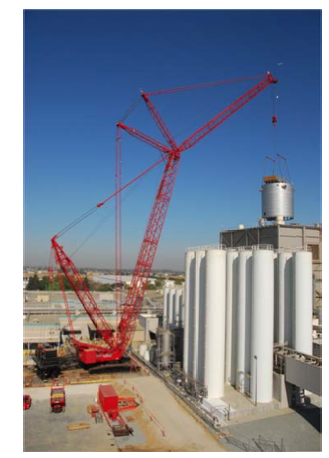
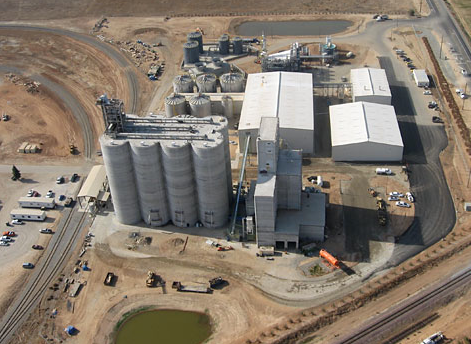
That new 139 ft tall evaporator being built by California Dairies Inc (CDI) is valued at $55 million with their existing plant on Plaza valued at around $275 million already. It’s all about China and their surging demand for baby formula ingredients. China just announced that it would relax its one-child policy setting the stage for a renewed population boom in coming years. The new evaporator, the plant’s third, will allow higher specification powder that lasts longer on the shelf to be produced allowing the plant to run at full capacity with 200 loads of milk a day says COO Dave Bush. CDI, based in Visalia, has some 500 members.
Earlier this year Harris Construction completed repairs on dryers at the CDI plant in this picture using a giant crane.
Tulare County Gas Price Is State’s Lowest
Selling gasoline this week at $3.18 a gallon, two Tulare County gas stations are offering fuel at the lowest price in the state says Gas Buddy. The two stations are the Valero on Blackstone at E Prosperity in Tulare and Eagle Feather Trading Post on Hwy 190 near Porterville. Nearly a dozen other stations mostly in Tulare follow at $3.19 as the region is the Golden State’s low cost leader for the first time in recent memory.
“It looks a lot like competition” says local oil exec Walt Dwelle noting that Tesoro bought Shell and is being more aggressive in the marketplace in Tulare recently.
Dwelle says when oil inventories went down earlier this week the price of crude jumped. “We may have seen the bottom on retail gas prices” he figures.
Visalia Roof Top Solar Permits Soar
There has been a six-fold increase in the number of roof-top solar units being installed on Visalia homes in the past 2 years. Permit figures show that in 2011 Visalians contracted to have 66 roof-top solar units put on their homes with figures through early December.
Over the same period in 2012, the number of units climbed to 273. This year so far, the popularity of roof-top solar has soared to 415 units with valuation at more than $12 million compared to $1.9 million valuation in 2011. More than half the units are being installed by SolarCity company.
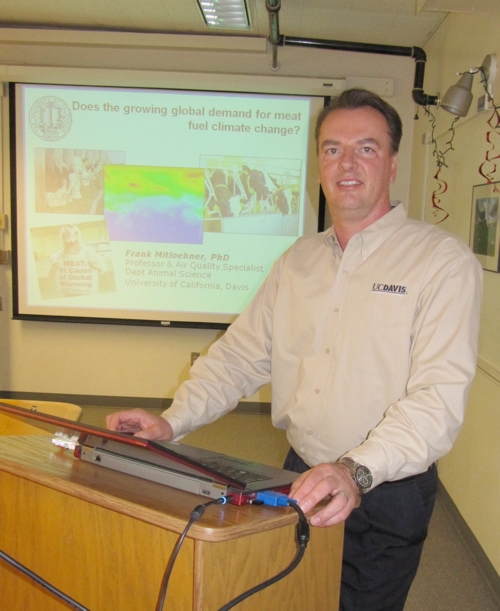
In a 1,000 year old village in Germany (Juehnde), methane is not a dirty word. The recovered methane from a manure-fueled bioreactor feeds the burners that heat water for every household in the village. The same hot water provides heating. These households benefit from living adjacent to a livestock economy whose manure was once just a smelly nuisance. The manure is transported by truck to an enclosed bioreactor, thereby reducing odor and feeding a system that powers an entire community. Frank Mitloehner once called this village home. Now a professor and air quality UC Cooperative Extension specialist in the Department of Animal Science at UC Davis, Mitloehner thinks that if this village can do it, so can California.It is easy to see how Mitloehner was inspired to study ways that California can take advantage of its plentiful supplies of animal methane. In eight bovine bio-bubbles that function as airtight barns, he captures and measures every emission from his resident livestock in order to understand how methane emissions vary with feed and herd management.
At Davis, a commercialized version of a similar methane bio-reactor has been patented and licensed by Ruihong Zhang, professor in the Department of Biological and Agricultural Engineering at UC Davis. It has been constructed at the local landfill and will be used to demonstrate a sustainable village on the UC Davis campus.
Mitloehner recently hosted a seminar for the Western Center for Agricultural Health and Safety at Davis. He is a member of the FAO committee that produced the 2006 report entitled, “Livestock’s Long Shadow.” Before joining the committee, he challenged two misleading sentences in their report. The report compared the contribution of livestock emissions to that of transportation. By saying the contributions to climate change were similar, the report led many environmental advocates to the conclusion that eating less meat was the equivalent of taking cars off the road, setting up a meat vs. miles tradeoff that exaggerated the methane contributions of livestock everywhere.
Mitloehner’s response was the publication Clearing the Air, Livestock’s Contribution to Climate Change. After his paper was released, BBC, CNN and other media published his science-based estimate that the livestock contribution in the U.S. is 3.4 percent of U.S. emissions. Globally, 18 percent of warming was estimated to be livestock related. This estimate included livestock in the broadest sense – changes in land use, deforestation and desertification in developing countries.
In spite of Mitloehner’s paper, the meat vs. miles perception has persisted among advocates, while press about transportation GHG has dwindled. Toyota took advantage in their advertising by showing how Prius emissions were more favorable than those of a sheep.Nonetheless, Mitloehner showed that U.S. methane emissions remain flat, while developing countries are increasing animal production to meet the demand for eggs, meat and dairy, especially Asia. But why is the U.S. so low?
Mitloehner shared a few facts that help explain the phenomena:
The U.S. has fewer dairy cows. Today’s 9 million dairy cows supply 60 percent more milk than the 16 million cows in production in 1950. That means there is increased efficiency per cow for the same methane produced.
Thirty percent of the methane in dairy production is from manure in ponds. There is the potential for recovery on the approximately 1,500 California farms, where the average herd size is 1,100 head.
Methane has 20 times the warming potential of carbon dioxide, but when burned to heat water or to generate power, its warming potential is reduced by a factor of 20.
The more fiber in the feed, the more methane is released by the rumen of the animal. One dairy cow in the U.S. produces the same amount of methane as five cows in Mexico, and up to 100 cows in India on an annual basis. Reasons: low fiber diet, less parasites and less disease result in more production per cow.
Mitloehner occupies that middle space between the economically driven farmers who survived years of falling milk prices and the sustainable advocates that want dairy to either disappear entirely or retreat into historical practices. When he is not serving on the President’s Council of Advisors on Science and Technology (PCAST) or the National Academies Institute of Medicine, he keeps company with local farmers and students and answers to science.
Dairy addicts like myself, whose ancestors have evolved on milk for over 10,000 years, are likely to continue to frequent the organic dairy cases, hopeful that there are mutual benefits to paying higher prices for local labels in returnable glass bottles as a way to sustain the farms.
In reality, California has been exporting surplus dairy products to growing populations since the 1890s and that won’t change soon. Those markets do more to keep dairies profitable than my weekly milk and yogurt purchase. Lactose for pharmaceuticals and whey proteins for infant formulas are shipped internationally from several of California’s mammoth cheese factories, sometimes worth more the cheese itself.
Mitloehner believes that “sustainable efficiency” is the solution to keeping local dairies viable. He believes that science will provide the path to better regulation. The dairy nations that seem determined to get at the truth – New Zealand, France, Ireland and the Netherlands – have formed an international partnership at FAO to address the issues. Mitloehner’s leaderhip keeps methane bioreactors on the agenda.
More information:
Mitloehner tells the story of how he neutralized errors in the FAO report “Livestock’s Long Shadow” (YOUtube).
LEAP site at the FAO. NGOs include World Wildlife Federation and Greenpeace. Mitloehner said that Greenpeace is also a partner although not listed on the site. Workshop materials available for download.
July 2012 opinion post by Robert Goodland at New York Times food blog. This is an example of criticism of Mitloehner’s role as head of the FAO partnership LEAP (Livestock Environmental Assessment and Performance).
SACRAMENTO, November 27, 2013 – An additional 234 square miles in Tulare and Kern Counties have been placed under quarantine for the Asian citrus psyllid (ACP) following the detection of three psyllids near Exeter, Lemon Cove and the unincorporated area southeast of Porterville in
Tulare county. This brings the total quarantined area in the region to 888 square miles.
The quarantine zone expanded approximately 197 square miles in Tulare County in the Exeter and Lemon Cove areas and in the unincorporated area southeast of Porterville. The detection in the Porterville area also expanded that quarantine area into Kern County by approximately 37 square miles. These areas are in addition to the previously announced quarantine areas in Tulare and Kern Counties. The expanded quarantine areas are shown in the “Tulare” and “Tulare/Kern” maps available online at:www.cdfa.ca.gov/plant/go/acp-quarantine-sjv<http://www.cdfa.ca.gov/plant/go/acp-quarantine-sjv>
In addition to the quarantines in these portions of Tulare and Kern Counties and nearby portions of Fresno County, ACP quarantines are in place in Imperial, Los Angeles, Orange, Riverside, San Bernardino, San Diego, Santa Barbara, and Ventura Counties.
The ACP is an invasive species of grave concern because it can carry the disease huanglongbing (HLB), also known as citrus greening. All citrus and closely related species are susceptible hosts for both the insect and the disease. There is no cure once a tree becomes infected. The diseased tree will decline in health until it dies. HLB has been detected just once in California – last year on a single residential property in Hacienda Heights, Los Angeles County. HLB is known to be present in Mexico and in parts of the southern U.S. Florida first detected the pest in 1998 and the disease in 2005, and the two have been detected in all 30 citrus-producing counties in that state. The University of Florida estimates the disease has tallied more than 6,600 lost jobs, $1.3 billion in lost revenue to growers and $3.6 billion in lost economic activity. The disease is present in Georgia, Louisiana, South Carolina and Texas. The states of Alabama, Arizona, Hawaii, and Mississippi have detected the pest but not the disease.
Residents with backyard citrus trees in the quarantine area are asked to not remove fruit from the area. Residents in the area who think they may have seen the Asian citrus psyllid are urged to call CDFA’s Pest Hotline at 1-800-491-1899. For more information on the Asian citrus psyllid and huanglongbing disease please visit: www.cdfa.ca.gov/go/acp<http://www.cdfa.ca.gov/go/acp>.
GMO Vote In State Of Washington: Voters in Washington State have voted against a bill that would have required the labeling of genetically altered foods earlier this month.News reports say “Supporters of the bill were severely outgunned in the campaign faced by corporate opposition from the likes of Monsanto, Pepsi and Nestle. “ The companies raised $22 million to fight the ballot measure vs $8.4 million from supporters. Some 70% of processed food in the US uses genetically modified ingredients .In September exports of Washington wheat to Japan were rejected because they contained GMO material from a nearby alfalfa field.
Walnut shipments are up around 10% this fall compared to the same period a year before.Tonnage through October stands at 129,518 tons vs 118,263 last marketing year. Exports are up 11.4% with European sales up 22.6%.
Say goodbye to this fall’s wonderful strawberry crop with shipments up nearly10% this year vs 2012. We have shipped 153.3 million flats so far this year vs 141.7 million this time last year California production has fallen off significantly in the past few weeks with the Santa Maria growing area recording 50,493 flats sold as of 11/23 compared to 129,437 flats on 11/18.Cold nights and rain will end the season.
Fresh produce packaging is expected to grow 33.3% a year through 2017 says an industry study.Ready to eat fruit packaging is expected to be a big driver.
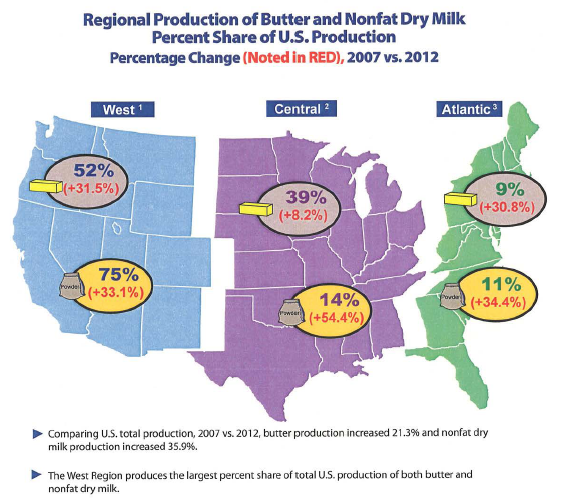
US West sells most of the nation’s butter (52%) and milk powder( 75%) says CDFA, a big jump from 2007(see map)
Harvesting at night keeps grapes and vineyard workers cool, enhancing quality and reducing energy needed to chill the fruit—just one of the many sustainable practices used to make California wine.
SAN FRANCISCO — Vintners and growers throughout California reported another high quality and generous vintage in 2013. Following a warm and dry spring with near ideal conditions for bringing grapes to maturity, harvest was remarkably smooth and wineries are at capacity and working with some very high quality winegrapes.
“Early on, the season was marked by healthy winter rains, followed by a spring and summer that showed some of the lowest rainfalls we have seen in a long time,” said Steve Smit, Vice President of Vineyard Operations for Constellation Brands. “We saw very few frost nights in the spring, few significant heat spikes and almost no high wind events. All of this—combined with uniform growing days—is exactly what a winemaker wants to see leading up to harvest. Across the board, our fruit showed great balance of acidity and sugar, good color and tannin structure and optimal flavor development.”
According to Nat DiBuduo, President of Allied Grape Growers, the crop estimate in 2013 equals that of 2012. “We believe the winegrape crush could be four million tons again,” he stated. “While the coastal regions are probably down in crop size, the interior regions are estimated to be as big as or bigger than in 2012. More new acreage has come into production this year, mostly in the interior,” said DiBuduo.
Winemakers and vineyard managers around the state are lauding the excellent quality of the vintage. “In 2013, Monterey growers were blessed with another great vintage,” said Charlie Hossom, Director of Viticulture at Delicato Family Vineyards. “It is a bit unusual to have a vintage of this quality following the standout vintage we had in 2012.”
SLO Wine Country
Paul Draper, CEO and Winemaker at Ridge Vineyards called it “a truly great vintage.” “With virtually no rain since last December, the growing season began early. Our vineyards at Monte Bello in the Santa Cruz Mountains are not irrigated, so the lack of spring rain meant grapes at harvest that were among the smallest we have seen. Harvest began a record two weeks early and we were picking fully ripe fruit as quickly as possible so as not to allow it to over ripen. Flavors and color extraction were intense. Tannins are quite fine and acidity firm. Typically we see variation in depth and complexity across the 40 some parcels, but this year virtually every one produced exceptionally high quality.”
Winemakers in the North Coast are equally optimistic. “The 2013 growing season began early, with a warm and dry spring, and the weather stayed absolutely beautiful all the way through an early harvest,” said Jon Ruel, President of Trefethen Family Vineyards and President of the Napa Valley Grapegrowers. “The whites, already dry, taste fantastic and yields were a bit above average. Grower reports on yields for the red varieties are less consistent, with some ‘up’ and others ‘down,’ but everyone agrees that the quality appears to be excellent. Cabernet Sauvignon is showing very strong tannins and color early in fermentation leading to some earlier pressing. We feel very fortunate to have had such a great harvest on the heels of the excellent 2012.”
“For Sonoma County Chardonnay and Pinot Noir, the 2013 growing season essentially offered conditions that were various degrees of wonderful,” said James Hall, Co-founder and Winemaker at Patz & Hall. “There was a synchronicity to how everything developed. Every time it looked like there might be a challenge, Mother Nature delivered just the right weather to turn the potential issue into a positive. For both our reds and whites, the wines are bright and energetic, with detailed aromatics, clearly delineated vineyard character and lots of complexity. We work with a number of great growers in Sonoma County and beyond, and everyone is incredibly happy, verging on ecstatic.”
In Lodi, Aaron Lange, Viticulture Operations for Lange Twins Winery, also noted an early start to harvest. “Weather cooperated during harvest with daytime temperatures in the 80s to low 90s and only in the 50s at night, which was perfect to develop flavor intensity. The yields were a little larger than anticipated, making crop thinning a must on certain varietals to ensure quality. We had an unexpected one-half inch of rain in mid-September that made us worry about our late ripening varieties, but those who had aggressively thinned early in the season and continued to manage crop closely after the rains were rewarded with excellent color and flavor intensity, especially in Zinfandel.”
“The 2013 harvest looks like it’s going to be a classic in Paso Robles,” said Jason Haas, Partner and General Manager at Tablas Creek Vineyard. “A growing season without either heat spikes or cool stretches produced our earliest finish to harvest since 2001, and one of our shortest ever. Yields were just below average, down 20 percent from 2012, with good ripeness and balance. We’re seeing very dark colors already and excellent intensity, similar in many ways to 2007, though a touch lower sugars at picking.”
“California’s excellent 2013 vintage statewide will allow wine lovers in the U.S and the world to continue to enjoy their favorite Golden State wines,” said Robert P. (Bobby) Koch, President and CEO of Wine Institute. “As the world’s fourth largest wine producer, we are proud of our skilled vintners and growers, recognized for growing and making their wines in a sustainable manner.”
VINTNER QUOTES AND NOTES FROM THROUGHOUT CALIFORNIA
CENTRAL COAST
Randall Graham, Founder and President, Bonny Doon Vineyard
2013 was an exceptionally early vintage for the Central Coast, the earliest in memory by at least three to four weeks, undoubtedly due in part to the preternaturally dry winter and mild spring. The fruit from Monterey, San Luis Obispo and Santa Barbara County was nevertheless lovely, flavorful and above all, fully ripe. The fruit that we received from the old vineyards in the sandy Delta was also quite exceptional, honestly the best Mourvèdre I’ve seen in years—great intensity achieved at relatively modest levels of sugar development. Yields were good to maybe slightly above average, though by no means prodigiously Biblical as they were in 2012. We observed generally good acidities in most grapes. It feels utterly odd to have all of our grapes in the barn before the middle of October, but I am rather enjoying the autumnal weather in the balmy quarter of Santa Cruz.
LIVERMORE
John Concannon, Fourth-Generation Vintner, Concannon Vineyard
This year’s harvest started about a week earlier than last year’s due to a warmer summer and a drier spring, giving us a nearly perfect growing season. Our Chardonnay fruit is of excellent quality, with particularly good yields, and the red varietals are showing great color with good tannins and very nice fruit concentrations. This year’s Petite Sirah looks to be our best in the last five years showing amazing color and pure varietal character across all of our vineyards. Overall, this year’s harvest was one of our smoothest running harvests in the last 10 years due to a consistently warm summer, slow maturation and plenty of hang time.
LODI
Stuart Spencer, Owner/Winemaker, St. Amant Winery
2013 was another abundant year for Lodi vineyards with fairly large yields across most varieties. Harvest got off to an early start due to a warm spring, but ultimately dragged on for most growers throughout the month of October. Capacity issues seemed to challenge most vintners this year as many varieties ripened up simultaneously. Empty tanks and barrels were definitely at a premium this year. While spring conditions were warm, summer saw relatively moderate temperatures creating conditions for great quality wines. Optimally farmed vineyards produced delicious vibrant wines that will surely be crowd pleasers.
MADERA
Darin Peterson, Assistant Winemaker, Quady Winery
2013 marked another dry year in Madera with rainfall below average. Warm early weather accelerated vine development and resulted in one of our earliest harvests. White varieties were harvested two weeks earlier than average, a pattern that continued on through the season with the red varieties. This left some wineries scrambling to empty their tanks. With some streaks of hot, dry temperatures in the summer, mildew management was easier than in the last few years. Many area growers reported yield increases of 10 percent over last year.
MENDOCINO/LAKE COUNTY
Martha Barra, Owner, Barra of Mendocino
From a Mendocino County perspective, it has been one of the easiest harvests (if there ever is an easy one) on record. Except for the early rains producing about 1.5 to 2 inches of rain in the North County in mid-September, the weather has cooperated. Warm days and cool, cool nights allowed the grapes to ripen slowly and acids/pH are in balance. Every winemaker we have talked to is ecstatic about the rich, mature flavors in the wines. It’s time to celebrate our dedicated workers with a sumptuous harvest party in their honor.
Milla Handley, Owner/Winemaker, Handley Cellars
Our 2013 harvest was bountiful; the weather was mild and the harvest was large with good flavors. One very light rain event about half way through harvest didn’t create any mold or problems. I can’t remember a year with both good weather and only a few hot spells. The first grapes we received were Sauvignon Blanc from Boonville on Sept. 7; the last grapes were on Oct.6, from a local grower just up the road from Handley.
MONTEREY COUNTY
Jeff Meier, COO and Director of Winemaking, J. Lohr Vineyards & Wines
In Monterey County’s Arroyo Seco we saw cooler weather in July and August, with a lot of fog and clouds, which delayed the ripening of the grapes and prolonged our harvest dates. As a result, the acids are looking typical for a coolish vintage, which will give the wines lovely structure and focus. The extra hang time on the Pinot Noir has also allowed for the signature fabulous color that is characteristic of Arroyo Seco Pinot Noir. Our Riesling and Valdiguié are the last grapes that we are currently harvesting before we wrap up on this year’s amazing Arroyo Seco vintage.
NAPA VALLEY
Kristin Belair, Winemaker, Honig Vineyard & Winery
What a fantastic vintage it has been. Our mid-August start was fast and furious with the larger than normal Sauvignon Blanc crop. Having some extra fruit on the vines this season was a plus as it allowed the flavors to develop without sugars skyrocketing. The crop seems to be about average or slightly less in size. This vintage could be epic!
Joel Gott, Winemaker, Joel Gott Wines
Overall 2013 was one of the greatest vintages in the last 20 years. The colors, the tannins and what Mother Nature gave us – the ultimate weather package. We had cool consistent temperatures, the rising heat, only one rain storm and not many days over 100 degrees. Quantity and Quality – it all came together this year.
PASO ROBLES/SAN LUIS OBISPO
Jason Diefenderfer, Winemaker, Hope Family Wines
When asked, every winemaker answers, “This is the best vintage ever!” Truthfully though, this harvest in Paso Robles was one for the record books. Veraison was a couple of weeks ahead of schedule, so we’ve had the long hang time that is important to great vintages. We experienced a hot early summer, it cooled some midsummer, the heat returned for the end of summer and remained well into the early fall. The outcome of these ideal weather conditions was early brix accumulation with high acidities. The deciding factor for this year’s harvest was the balance of acids and flavors, almost ignoring the brix levels. I remember that I said last year, “Best Vintage in Ten Years.” While that was and remains true, I do believe that 2013 will imprint those California wines with the great color, flavor, and balanced tannins that have helped us become a world-class wine region.
SANTA BARBARA
Steve Fennell, Winemaker/General Manager, Sanford Winery
I am extremely pleased with the 2013 vintage. We had reasonably good yields for both Chardonnay and Pinot Noir, and the quality was excellent across our two estate vineyards. Although the growing season was relatively warm and extremely dry, we didn’t experience any real heat spikes, which can be rough on Pinot. We were able to harvest each block as it became optimally ripe, which was at lower than average sugar levels. The wines, thus far, show great balance and structure.
Karen Steinwachs, Winemaker, Buttonwood Farm Winery & Vineyard
The 2013 harvest was fast, furious, bountiful and beautiful! With a record early start in August and a finish by the end of October, everyone here in Santa Barbara County is smiling. From east to west in our transverse valleys, growers are thrilled with the plentiful yields and winemakers are exalting the first indications of the quality of the young wines. Warm and even temperatures throughout the growing season, with little frost pressure in the spring and short-lived heat spikes in the summer months, resulted in early seed ripening, beautiful stem lignification and superb balance of flavor and acidity. Exceptional conditions prevailed throughout our early but long growing season. An exciting and exceptional vintage.
SANTA CRUZ MOUNTAINS
Bill Cooper, Winemaker & Sales, Cooper-Garrod Estate Vineyards
Early winter rains and a dry spring fueled speculation early on that the Santa Cruz Mountains harvest might be several weeks earlier than the “norm.” As summer progressed, we enjoyed a well-modulated growing season of warm days and cool nights with only one brief period of very high temperatures. What is normally a 10-week harvest was compressed into five with good yields and fine quality grapes.
SIERRA FOOTHILLS
Stewart Perry, Owner/Winemaker, Fawnridge Winery
Once again, we here on the Western Slope of the Sierras enjoyed a fantastic growing season. Overall moderate temperatures and just a brief peak in warmer conditions to support a healthy bud-break allowed vineyards to flourish. This year was once again an early harvest. It has brought a good yield, with very impressive fruit. The real challenge was finding enough barrels to accommodate the wine being pressed. The public should be enjoying some very nice Barbera, Syrah, Sangiovese and Zinfandel wines upon their later release throughout the foothills.
Sam Patterson Winemaker/Viticulturist, Shadow Ranch Vineyard
The 2013 harvest was uniform and consistent. The Sierra Foothills saw a warm growing season, not too hot, not too cold, which produced ideal growing conditions and an early harvest season. Across the board, all varieties ripened evenly and produced fruit balanced between ideal sugar and acidity. Moderate vine yield adds to the quality harvest. We are looking forward to the exceptional wines that will be produced from the 2013 vintage.
SONOMA COUNTY
Hank Wetzel, Proprietor & General Manager, Alexander Valley Vineyards
We’ve had a great harvest and we’re almost done. Yields were almost as high as last year and the quality is great. Soon after harvest began, space at the winery was at a premium, but working round-the-clock, my crew found the room. Fermentation space was so tight that I am already looking at additional equipment for next year. Rich well-balanced complex wines will be the result of this harvest.
Steven MacRostie, Owner/Winemaker, MacRostie Winery
In general, it was a very successful, trouble-free vintage. The growing season got off to a fast start in April and never really slowed down until mid-September, which provided some time for the wineries to comfortably pace their intake of fruit. Harvest start in mid-August was early compared to those of recent years, but with a mid-October conclusion, overall duration of eight weeks was about normal. Best of all, the season was warm enough and early enough to bring all grapes to delicious full ripeness without weather mishaps. The 2013 wines from Sonoma are going to be superb!
SOUTHERN CALIFORNIA/TEMECULA
Les Linkogle, Owner/Winemaker, Briar Rose Winery
In 2013, the Temecula Valley harvest was exceptional, literally perfect. This year was as close to a vintage year as we have seen. The region experienced a warm, dry spring, giving way to gradually rising temperatures during the summer days and cool, moist summer nights. These ideal growing conditions produced an overall robust harvest with greater than normal yields. The reds are deep in color with beautiful varietal expressions and flavors while exhibiting perfect acid balances. The Rhone varietals grown in the region are also poised to produce flavor-packed, full-bodied, balanced, world-class wines.
Kitty litter that’s nearly 100 percent biodegradable can be made by processing spent grains left over from corn ethanol production. U.S. Department of Agriculture (USDA) plant physiologist Steven F. Vaughn and his colleagues have shown that litter made with these grains as the starting material may prove to be more environmentally friendly than popular but nonbiodegradable clay-based litters. After use, clay litters mostly end up in landfills.
Each year, over 2 million tons of cat litter, or approximately 100,000 truckloads, ends up in landfills in the U.S. alone. Primarily this is not biodegradable or renewable and adds unnecessarily to the waste burden Some pet owners prefer biodegradable litters due to its friendliness to the environment
Spent grains are also known as DDGs, short for “dried distiller’s grains.” A DDGs-based litter may provide a new and perhaps higher-value market for the tons of DDGs that corn ethanol refineries now primarily market as a cattle feed ingredient.
In preliminary studies, Vaughn’s group tested “x-DDGs.” These are DDGs that, after being used for ethanol production, are treated with one or more solvents to extract any remaining, potentially useful natural compounds.
The team’s laboratory experiments yielded a suggested formulation composed of the x-DDGs and three other compounds: glycerol, to prevent the litter from forming dust particles when poured or pawed; guar gum, to help the litter clump easily when wet; and a very small amount of copper sulfate, for odor control.
The resulting litter is highly absorbent, forms strong clumps that don’t crumble when scooped from the litter box, and provides significant odor control, according to Vaughn. He’s based at the Agricultural Research Service (ARS) National Center for Agricultural Utilization Research in Peoria, Ill. ARS is USDA’s chief intramural scientific research agency.
The idea of using corn or other grains as the basis of an environmentally sound cat litter isn’t new. But the Peoria team may be the first to extensively study the potential of x-DDGs as the primary component of a litter, and to make their results publicly available.
Sacramento: Pacific Ethanol issued the following statement from Neil Koehler, CEO, in response to the EPA recently proposed reductions to the 2014 Renewable Fuel Standard , or RFS, targets:After the release the company stock – under pressure in recent weeks – was up 7%.
“The RFS is the single most effective energy policy this country has ever had to reduce our dependence on foreign oil, develop renewable fuels as a meaningful alternative to fossil fuels, and reduce carbon emissions from transportation while boosting the economy and lowering the cost of gasoline to consumers. Importantly, the policy is spurring innovation in new advanced biofuels as substitutes for both gasoline and diesel. The renewable fuels industry, with its existing infrastructure, stands ready to deliver the levels of renewable fuels in 2014 set by the RFS. The EPA proposes to use what we view as questionable regulatory discretion to lower the 2014 renewable fuels targets. We believe that the EPA’s proposed ruling is incompatible with the already achievable objectives of the RFS and will squander the opportunity to optimize the environmental, energy and economic benefits of this valuable policy. The market for renewable fuels is ready for continued growth. 70% of the vehicles on the road today have been approved by the EPA for the use of up to fifteen percent ethanol blends. Additionally, over 15M E85 vehicles are on the road today with over 3,000 fueling stations offering E85 across the country. We and other stakeholders will emphasize these points to the EPA during the comment period. We hope the final rule will be revised to better reflect the intentions and the promise of the RFS. The ethanol industry remains on strong footing. A record corn harvest and lower corn prices support the economics of ethanol production and blending. Ethanol is the lowest cost transportation fuel in the world. Domestic demand is strong and exports have increased significantly in recent weeks. Ethanol production margins are currently at their highest levels for all of 2013.
We believe, regardless of the final EPA ruling, that the demand for ethanol will remain strong in 2014 as the compelling economics of ethanol blending will support a tight supply and demand balance, sustaining strong industry margins. Pacific Ethanol has made significant strides this year: we strengthened our balance sheet; reduced and extended all maturing debt and retired all but $250K of our convertible debt financing; we increased our ownership position in our production facilities, which enabled us to benefit from what are currently the year’s best production margins and produce positive operating margins for the past two quarters; we introduced alternative, lower-cost feedstocks such as beet sugar and sorghum, and created additional revenue streams through corn oil production; and the LCFS is supporting technology innovation in our plants, further advancing our competitive position. We remain very optimistic about the company’s future.”
As a result of litigation all Central Valley dairies must sample and monitor their wastewater and keep adequate records through the Central Valley Regional Water Quality Control Board .Some 20% of the farmer’s fields have to be sampled each year.
Tulare County Gets New Dairy Advisor
Dr Alex Souza has been appointed dairy farm advis0r with the University of California Cooperative Extension .He received his degree from the University of Wisconsin and worked with World Wide Sires.
Holy Cow! 4X More Milk & 77% Less Feed
The Journal of Dairy Science published a recent article about the sustainability of the dairy industry.Here are some facts.
“Advances in genetics, nutrition, and herd management have resulted in more than a four fold increase in milk yield and an associated reduction in numbers of both farms and cows. In 1940,
there were approximately 21 million cows on almost 4.7 million dairy farms in the United States, but by 1980, farm and cow numbers decreased 93% and 48%, respectively, to 334,180 farms with just under 11 million cows. Farm numbers decreased to approximately 53,000 licensed dairies in 2012 and cow numbers have decreased a further 16%. Milk yield averaged 5,194 lb./cow in 1950 compared with 21,340 lb./cow in 2011.
As a result of this evolution, today’s dairy industry produces 59% more milk with 64% fewer cows, consuming 77% less feed and 65% less water per CWT of milk produced compared with dairy production in 1944.”
Tulare’s Saputo Plant Adding New Whey Silo
Saputo now owns the former Morningstar plant in Tulare on J St.The company has applied to build a new 60ft whey silo at the facility says the city.
Cali Cheese Has Until January 14 To Buy Tulare Land For Plant
Tulare officials say start-up company – Cali Cheese says they are on track to build a cheese plant in Tulare and has until January 14 to buy city-owned land for the plant as agreed to earlier this year.
Chinese Milk Demand Is Good News Excerpts from Milkweed November 2014
“China’s dairy consumption is growing. China is looking to diversify its suppliers of dairy products and commodities, following the botulism scare from New Zealand in August 2013. The U.S. is the only major alternate source of available, perceived high- quality dairy products and commodities. Chinese consumers prefer to buy quality foreign dairy products – particularly infant formula-type products. “Made in the U.S.A.” carries special marketing clout on packages of dairy products in China. We wonder how soon it will be before Chinese buyers “pull a Smithfield” (Foods): buying major U.S. dairy processing assets to have greater control.
Meanwhile, global demand for U.S. dairy proteins, butter and high-milk fat products is draining U.S. inventories. USDA data show U.S. nonfat dry milk production very low at 76.4 million lbs. for September. Meanwhile, Skim Milk Powder (for export) climbed to 54.2 million lbs. U.S. dairy processors and food processors are facing tight, expensive supplies of nonfat dry milk.
Butter inventories – troublingly close to 300 million lbs. in early summer – are being pulled down nicely. U.S. butter plants are producing more unsalted, 82-score (82% milk fat) for export buyers. U.S. butter inventories dropped about 30 million lbs. in both August and September 2013 – according to USDA’s Cold Storage report.
Export demand should only increase. The world is coming to the U.S. for dairy products and commodities. Our nation’s challenge is to produce dairy commodities that fit into the specifications of export buyers – and to put a good price on those products.”

 The Food and Drug Administration (FDA) is implementing a voluntary plan with industry to phase out the use of certain antibiotics for enhanced food production.
 Organic Research Capability at Kearney Field Station