GENE DISCOVERY MAY HALT A DEEP-ROOTED PEPPER DISEASE

May 21.2014

Screen Shot 2014-05-21 at 2.15.01 PMFor more than a century, the global hot pepper industry has been dealing with a problem. A funguslike pathogen, known as Phytophthora capsici, has spread a root rot disease that severely diminishes crop yields. Despite highly adaptive management practices and the availability of wild pepper varieties that have evolved resistance, the pathogen continues to thrive.

Now, scientists from the University of California, Davis, have identified a promising candidate gene that encodes resistance to P. capsici in peppers. The work is published this month in the journal The Plant Genome, available on line at http://bit.ly/1ocomlF.

Under the direction of plant scientist Allen Van Deynze, the director of research at UC Davis’ Seed Biotechnology Center, doctoral candidate Zeb Rehrig had begun the project by screening 31,000 genes in a population of pathogen-resistant chili peppers and jalapeños — a number far surpassing the standard 1,000 genes screened in this type of test. This allowed the researchers to build a high-density genetic map of 3,600 genes.

They then tested their findings by introducing the peppers to P. capsici samples collected from across Mexico, New Mexico, New Jersey, California, Michigan and Tennessee. Analyses incorporating the pepper genome, from a study Van Deynze recently co-authored, ultimately led them to the P5 chromosome and to the gene related to resistance, CaDMR1.

While breeders have long known of a resistant pepper gene in the area of this chromosome, no one has been able to zero in on it the way the UC Davis team has, Van Deynze said.

“The goal of when you get the gene is of course that you can have the perfect marker,” he explained, “which theoretically should be useful in really any population you test it in.”

The new DNA markers will pave the way for breeders to selectively target the exact gene and turn on the resistance mechanism, giving an industry worth $29.1 billion worldwide a much-needed new tool in the battle over root rot.

“This paper is the first chance to show all the work I’ve been doing these last couple of years,” said Rehrig. “It’s showing things you can apply directly to breeding right away.”

Understanding the mechanism of the resistance in pepper is the next goal for Rehrig and Van Deynze.

Funding for Zeb Rehrig and the project has come from a UC Davis Department of Plant Sciences Graduate Student Research grant and from a U.S. Department of Agriculture Plant Breeding and Education grant. The USDA grant also allowed Van Deynze to invite, in collaboration with the UC Davis Student Farm program, a total of about 1,500 kindergarten and elementary students to visit and take a look at the broad diversity of peppers the scientists had collected and hopefully to spark their interest plant breeding and plant science.

Read more about the hot pepper and its genome here: http://news.ucdavis.edu/search/news_detail.lasso?id=10789

Friant Seeks Restraining Order Over Feds Water Release

May 21,2014

water release 2014-05-21 at 9.36.38 AMFriant Water Authority representing water districts in Tulare,Fresno and Kern counties headed to court this week to try to shake lose some water for their hard hit farms and communities. Friant is seeking a quick ruling asking judge Lawrence O’Neill  for a restraining order to stop release of water down the San Joaquin River.

We “cannot simply sit idly by while the United States drains our farmers’ lifeblood in violation of the federal and state laws protecting the priority to this water.” the lawsuit says.

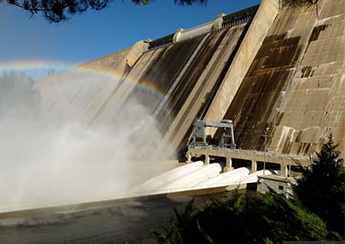
How the U.S. Bureau of Reclamation has implemented the unprecedented release of water from Friant Dam in order to provide a Central Valley Project water supply down the San Joaquin River to senior water rights holders is now being challenged in U.S. District Court in Fresno by the Friant and many of its member water agencies.

Those Friant Division contractors, all of whom normally would otherwise be receiving supplies of CVP water through the Friant-Kern and Madera canals, instead continue to face a zero CVP water supply allocation from Reclamation. That has resulted in large part because of the Bureau’s decision last week to supply the San Joaquin River Exchange Contractors from the river even though water was available from other sources.
“We want to be clear that our complaint is not against the Exchange Contractors,” Friant Water Authority General Manager Ronald D. Jacobsma stressed. “Our complaint is against the United States for failing to deliver the Exchange Contractors their substitute water supply.”

“Trees and vines that haven’t already been pushed out will soon begin dying without water”

The May 20 filing asks the Court to issue a temporary restraining order and pursue other remedies, said Jennifer T. Buckman, Friant Water Authority General Counsel. She said there is a need for immediate action, which would direct Reclamation to use sources available to it to supply the Exchange Contractors with their substitute water.

“Trees and vines that haven’t already been pushed out will soon begin dying without water and the Bureau of Reclamation will not provide water this year,” Buckman said. The eastern part of the San Joaquin Valley – from the Merced-Madera county line in the north to the foot of the Tehachapi Mountains in the south, stretches 200 miles with more than a million acres of irrigated land, most of which depends on the water behind Friant Dam.
“Our farmers cannot simply sit idly by while the United States drains our farmers’ lifeblood in violation of the federal and state laws protecting the priority to this water. No reasonable person can expect that we would. It is especially important to follow the laws of priority in droughts such as these. It is the fundamental principle that gives our water rights system its stability.”

Friant water has always been there for farmers, even in the driest water years, since the first deliveries were made from then-new Friant Dam in 1944. Until late last week, since 1951, Reclamation had always supplied the San Joaquin River’s senior water rights holders along the valley’s West Side with water pumped and exported at the Delta near Tracy for delivery through the Delta-Mendota Canal to Mendota Pool, west of Fresno, as a substitute supply. This exchange of waters for over 60 years has made possible the diversion of San Joaquin River upstream at Friant Dam for delivery into the two East Side canals, enabling growers to invest heavily in permanent plantings of citrus, fruit and nut trees, and grapes.

Communities Too

It takes at least three to five years to produce anything at all from a new tree or vine, and recovering on the investment of those years takes many more,” Buckman said. “So when the trees die, farmers, their families and those they employ will be the big losers.” Several communities, including Fresno, Orange Cove, Lindsay, Strathmore and Terra Bella also depend on Friant water.

“The United States’ decision was made just May 13, and implemented starting last Thursday (May 15), but with so little water to go around due to the drought, every day that the water goes someplace else, it will create harm that cannot be repaired,” said Buckman. “Before it is too late, the entire Valley needs the Court to adjudicate, even just temporarily, where the water should go. The status quo of the last six decades – that the government should provide the first waters pumped at the Delta to those who have the oldest rights to it, enabling those served by the Friant Dam to receive San Joaquin River water – should be held in place until the Court has time to hear the entire case.”
General Manager Jacobsma said Friant water users “have tried for months to work with Reclamation and the state Department of Water Resources to improve water supply conditions for the Exchange Contractors and the Friant Division. We have made our concerns known but, even with the late season rain events, Reclamation would not take action to provide full substitute water to the Exchange Contractors.” Instead, Jacobsma noted, Reclamation began releasing water from Friant Dam to supply the Exchange Contractors.

“That action is effectively taking all the Millerton Lake water supply that would otherwise been available to keep tens of thousands of acres of permanent plantings — primarily citrus — alive,” Jacobsma said. “We had no choice but to take legal action to protect the water rights of the Friant Division water contractors and the farms and communities supported by that water.”
According to General Counsel Buckman, Friant and its member districts have raised three strong legal arguments:

  The first claim asks the Court to confirm the rights under the Friant contracts with Reclamation. Under these contracts, Reclamation promised it would not deliver any water to the Exchange Contractors from Millerton Lake “unless and until required by the terms of” the Exchange Contract. Reclamation also promised that it would not “knowingly and voluntarily” make decisions that prevent it from supplying substitute water to the Exchange Contractors. Reclamation promised each of the Friant contractors that if there were water available — whether from the Sacramento River and its tributaries or the Delta — the federal agency would never make a voluntary choice not to supply it.

  The second claim is for violation of the Central Valley Project Improvement Act. The CVPIA provides for the Secretary of the Interior to enter into contracts with agencies administering wildlife refuges or entities that supply water to refuges. These include the Grassland Water District and Grassland Resource Conservation District, as well as the U.S. Fish and Wildlife Service. Water for these refuges is to come only from “Central Valley Project yield,” a statutory term defined as “delivery capability of the Central Valley Project . . . after . . . other flow and operational requirements imposed by terms and conditions existing in licenses, permits, and other agreements pertaining to the Central Valley Project under applicable state law existing at the time of enactment of this title have been met.” CVPIA § 3406(b)(2). In a series of prior court cases, the courts have already ruled that the amount of water necessary to provide to the Exchange Contractors as “substitute water” is not to be considered CVP yield under the CVPIA. Under the CVPIA, the marshes for migratory birds – ducks and geese – are thus to be supplied only after the Exchange Contractors’ substitute water requirements are first satisfied.

  The third claim is for violation of the 1902 Reclamation Act, under which the Bureau of Reclamation was established. That law requires the United States to follow state water rights law, including the “first in time, first in right” rule. Here, the United States holds senior water rights to the water collected from the Delta at the Tracy Pumping Plant. By providing the water to junior rights holders – the State Water Project, or the wildlife refuges – the United States is allowing junior water users to line-jump, in violation of California’s system of water rights priorities. Instead, the United States should be serving the priority rights of the Exchange Contractors with the water it obtained as a San Joaquin River exchange supply. 
The Friant Water Authority is a public joint-powers agency representing 21 water agencies that deliver Central Valley Project water from the San Joaquin River to more than one million acres along the southern San Joaquin Valley’s East Side.
The Authority operates and maintains the Friant-Kern Canal for the U.S. Bureau of Reclamation.

Focus On Central Valley Farming: Fewer Farms, Fewer Farmworkers, More Farmland

All Central Valley Counties See Fewer Farm Jobs Year Over Year

Tulare County had around 10% fewer farm labor jobs in April 2014 compared to April 2013, down around 3500.The whole Central Valley shows this same trend with the key factor likely being the drought taking hold in this most productive fruit and nut region in the world.

In Fresno County the number of farm jobs declined 2700 in April or about 5.7% from 48,200 to 45,500 year-over-year. Kern County reports 700 fewer farm jobs  from 49,600 to 48,900. Madera went from 10,900 to 9900 or almost 10% as well. Kings County fell by 100.

Screen Shot 2014-05-18 at 8.16.29 AM

Census Says Tulare County Has Fewer Farms – More Farmland

Every five years the USDA carries out a Census of Agriculture withe latest using  2012 data.The last Census of Agriculture used 2007 information.

So what’s changed?

The most recent report says Tulare County has 4,931 farms compared to 5240 farms in 2007, a loss of a little over 300 farms.

But the same report says Tulare County land in farms has gone up over the same period.In 2007 the county had 1,168,684 acres of farmland. In the 2012 Census the county had 1,239,000 acre.That’s an increase of over 70,000 acres.

The market value of products coming off those farms has increased nicely over the five year period fro $3.3 billion to $4 billion.

While that increase is substantial, the report says the average net income for farming has gone down from around $166,000 to $146,000.

It may surprise you to learn that of the 5000 or so farmers  in the county about 2000 of them have a main occupation off the farm.

The national report offered these insights:

Three quarters of all farms had sales of less than $50,000, producing only 3 percent of the total value of farm products sold while those with sales of more than $1 million – 4 percent of all farms – produced 66 percent.

Much of the increased farm income was concentrated geographically or by farm categories.
California led the nation with 9 of the 10 top counties for value of sales. Fresno County was number one in the United States with nearly $5 billion in sales in 2012, which is greater than that of 23 states. Weld County, Colorado ranked 9th in the top 10 U.S. counties.
The top 5 states for agricultural sales were California ($42.6 billion); Iowa ($30.8 billion); Texas ($25.4 billion); Nebraska ($23.1 billion); and Minnesota ($21.3 billion).
Eighty-seven percent of all U.S. farms are operated by families or individuals.
Principal operators were on average 58.3 years old and were predominantly male; second operators were slightly younger and most likely to be female; and third operators were younger still.
Farms with Internet access rose from 56.5 percent in 2007 to 69.6 percent in 2012.
57,299 farms produced on-farm renewable energy, more than double the 23,451 in 2007.
474,028 farms covering 173.1 million acres were farmed with conservation tillage or no-till practices.
Corn and soybean acres topped 50 percent of all harvested acres for the first time.
The largest category of operations was beef cattle with 619,172 or 29 percent of all farms and ranches in 2012 specializing in cattle.

Around Tulare County: More Milk, Less Water

AG NEWS

Screen Shot 2014-02-06 at 7.23.47 AM

May 16,2014

Tulare County Milk Production Rebounds

CDFA reports Tulare County milk production in March was up 3.1% from March 2013 and Kings Co was up 4.2% as milk prices have improved. Statewide, nearly half the dry milk made here is being exported to the Far East and 63% of the dry whey. Some 36% of our cheese is also exported to the Far East.

China may reopen market for citrus in June after Chinese inspectors visit Tulare County groves. The USDA has announced that a supplementary agreement has been reached with China’s phytosanitary regulatory agency to reopen the Chinese market that has been closed to California citrus exports since April 2013.  There will be a two year pilot program that stipulates that the California industry should implement certain measures. An inspection team from China will come here in June with the market likely to reopen after that.Growers agreed to certain procedures to fight plant destroying  Phytophthora with cooper sprays and other precautions. US orange exports to China and Hong Kong combined have been valued at over $100 million in the past.

Tule River’s Low Flow

Watermaster Richard Schafer says that the Tule River is going to have an April/July runoff of about 8,000 acre/feet. In an average year it produces around 70,000 acre ft.The expected 8000 af runoff is lower than 1977 drought yield says Schafer.

Despite Drought Big Table Grape Year Predicted

The California Table Grape Commission estimates the 2014-15 crop at 116.5 million, 19-pound boxes compared to last season’s record crop of 117.4 million boxes. Final estimates will be ready in June. Like a number of California crops this year – table grapes will arrive early. The Commission says efficiencies will offset lower volume due to the dry conditions.There are nearly 500 table grape farming operations in the state who produces 99% of the table grapes grown in the United States.

Tulare County Farmers Lose Millerton Water Starting May 15

Screen Shot 2014-05-14 at 6.00.20 AMTulare County farmers along the Friant Kern Canal will see water they had counted on to irrigate about a million acres of trees and vines instead flow down the porous San Joaquin River channel to wet fields in Los Banos and Mendota, the Bureau of Reclamation announced this week.The flows down the river will begin this Thursday says the federal agency, ramping up to 1000 cfs.

That translates to about 60,000 acre ft in a months time says Friant Water Authority General Manager Ron Jacobsma.”We’re not clear at all how long the Bureau expects to release water from Millerton to satisfy the Exchange Contractors as opposed to supplying their needs from north of the Delta.”

The Bureau’s news release May 13 references both sources but offers no details.

Theoretically they could drain all the water available in Millerton this summer leaving farmers from Fresno south to Tulare and Kern counties with a “zero allocation” this year. That could cause some billions in economic havoc in the South Valley suggests California Citrus Mutual with many trees dying. This is California’s citrus belt.

Dumping the stored Friant water down the river remains an inefficient way to deliver irrigation water with loses to seepage ranging from 40 to 20 percent as it moves across the sandy soils of the dry riverbed in 100plus degrees expected this week.

In the late 1930s, the Exchange Contractors agreed to “exchange” water received under their long-held senior water rights from the San Joaquin and Kings River for water delivered from the Sacramento-San Joaquin River Delta through the Delta-Mendota Canal by Reclamation. The exchange contract generally provides that whenever Reclamation is unable to satisfy the contractual entitlement from the DMC that Reclamation would provide water to the Exchange Contractors from Friant Dam.

Friant’s Jacobsma has been working with the Bureau urging them to consider more releases from Shasta reservoir this summer to meet the Exchange Contractors needs and freeing up some water for  hard-pressed Friant districts along the east side of the Valley.

He notes that late season storms have upped the amount of water expected to flow into Shasta by September to 1.1 million acre ft, some 150,000 acre ft more than was estimated in April.

Biologists want keep a pool of cold water for late summer salmon season but Friant is lobbying  for increased supply for this region on verge of economic collapse.

“In the end we may have to turn it over to the lawyers.”

Farmers in some Tulare County water districts with little or no groundwater are ready to pull trees if no relief is expected.Terra Bella ID farmer Ed Chambers says he manages an 108 year old, 40 acre block of citrus that will likely be pulled in the next few weeks.The trees are “in a dead wilt right now.”

The Bureau did announce a program to trade 30,000 acre ft of water in San Luis Reservoir that will allow Friant to run water from Miilerton in the Friant Kern Canal to help make trades possible.Some 5000 acre ft will be offered to Terra Bella ID and sold to farmers willing to pay $1200 an acre ft. Orange Cove will also benefit.

Late Rain Bumps Kaweah Water Supply / Hope Builds For Friant Water

May 10,2013

Tulare County was state's wet spot in early May
Tulare County was state’s wet spot in early May

It did not rain much the past few days in Visalia but in the mountains of the Kaweah watershed they got almost an inch of precip at several locations that is helping to bump up the total inflow expected to run into Kaweah Lake this water-year.

Already the late storms in April added 18% more water than expected before the April 25 event notes the Kaweah River Page website, increasing the expected lake inflow from what would be a record low 84,000 acre ft to 99,000 acre ft.

The late season wet weather “increased our estimate of the water that will be available by about 1%” says Mark Larsen, general manager of of Kaweah Delta Water Conservation District (KDWCD).

Larsen estimates the bump up increased water supply coming out of Terminus from 22% of average to 23%.”It’s not much but every little bit helps.”

The late storm of April 25 dropped 1.43 in of rain at one Three Rivers measuring station says the Kaweah River Page.  That amounts to some 15.5% of all the precipitation that had fell since October, 9.25 inches.

That is the increase from the late April events and in May the Kaweah watershed has been receiving more wet stuff.

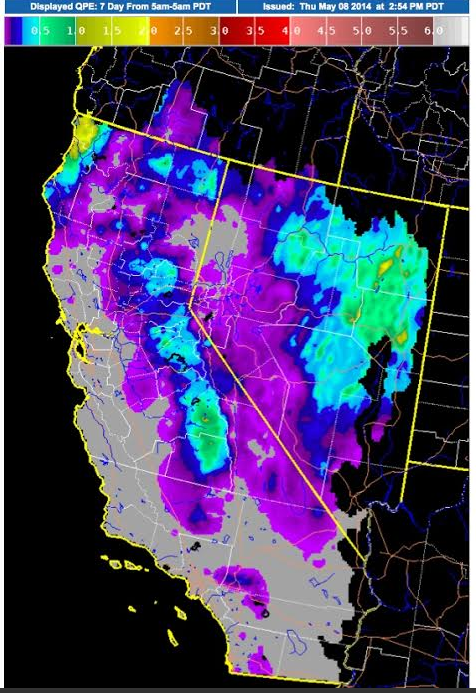
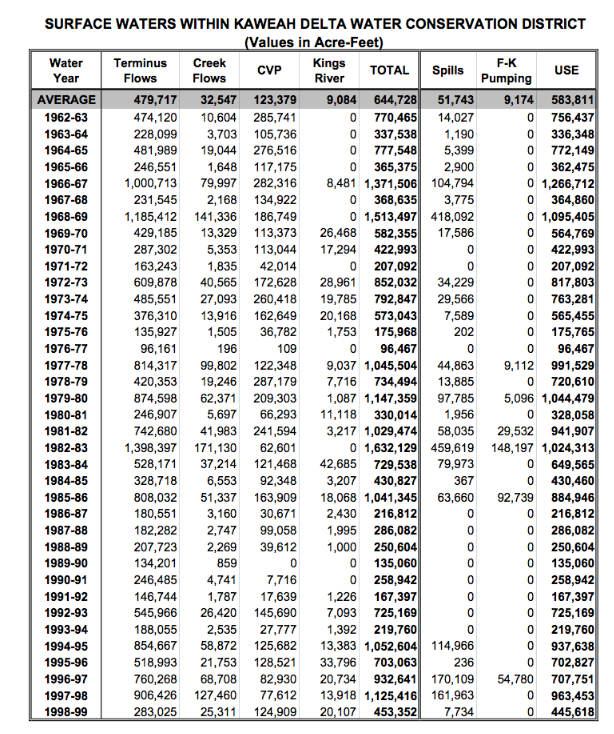
Screen Shot 2014-05-12 at 4.38.06 PMHere is a 7 day precip map of the state during the last week showing Fresno and Tulare Counties getting almost an inch of water up from the Valley floor. The map appears to show we were the wet spot in the state this past week.Inflow into Kaweah Lake peaked May 3 and warm weather is melting any snow left, fast.The May rains will likely boost inflow into the reservoir to over 100,000 acre ft this water-year, insuring 2014 will at least beat out the 76/77’ dry year, when runoff was a record low 96,000 acre ft (see chart).
Screen Shot 2014-05-08 at 6.13.11 PMIn an average year the Kaweah will deliver more like 500,000 acre ft with a 1.4 million yield in a very wet 1982/83.Larsen says local water districts this year will not take Kaweah water until early June when the irrigation season will begin a shortened run.Instead,most growers will pump groundwater to survive.Larsen says he expects the state to implement new groundwater rules “this year”,  but says he hopes there will still be some “local control.” He expects KDWCD to have an oversight role.

( chart: click to enlarge)

Some Optimism At Friant

Still up in the air this week- will Friant Water Authority get any water this year? Some Tulare County farmers who do not have groundwater sure hope so.

On Friday Friant’s General Manager Ron Jacobsma says the Bureau of Reclamation ”is doing some modeling that would indicate there may be enough water in Shasta for the Exchange Contractors” and if that pans out – Friant will get to use water above Friant Dam and the big canal will run. The big federal district includes a dozen or so districts in Tulare County now slated to get no supply- zero allocation – from the Friant Kern Canal this year.

“The Exchange Contractors were to start taking Friant water Friday but they postponed that until Wednesday” (May 14) to see if delivery of their contracted amount,some 300,000 acre feet, can be supplied from Northern California as everybody hopes. More rain in Northern California in the past 2 weeks continues to boost water supply there.

Fish agencies want to retain more water in Lake Shasta for cold water release for fish this summer.

Captions: May 9 NOAA weather map shows recent 7-day precip

1976/77 saw just 95,000 acre ft delivered from Terminus

Grape Consumption May Offer Benefits for Symptomatic Knee Osteoarthritis

Adding grapes to diet resulted in less pain related to activity

May8,2014
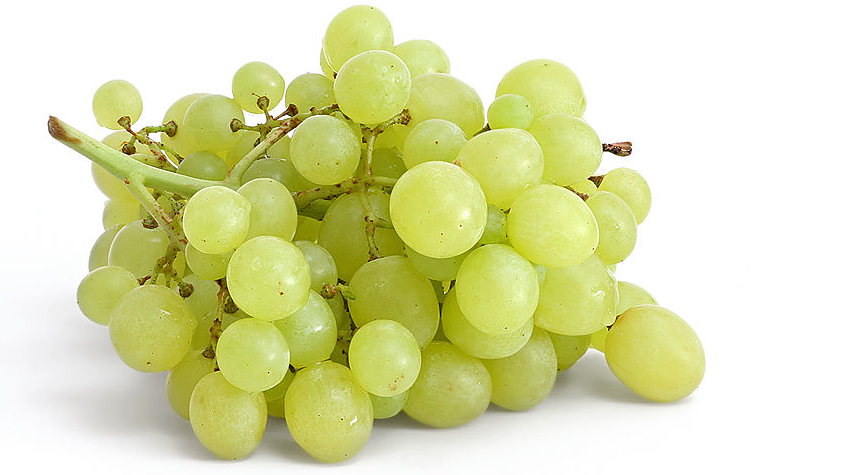
Screen Shot 2014-05-08 at 2.35.14 PMFresno, CA – New research presented this week at the Experimental Biology conference in San Diego, California, suggests that regular grape consumption may help alleviate pain associated with symptomatic osteoarthritis of the knee, and improve joint flexibility and overall mobility. Researchers attribute these potential benefits to the
polyphenols found in grapes.

The sixteen week clinical study, undertaken by Texas Woman’s University, was designed to investigate the benefits of grape consumption on inflammation and osteoarthritis outcomes. 72 men and women with knee osteoarthritis (OA) were assigned to either consume grapes in the form of a whole grape freeze-dried powder, or a placebo powder.

The study results, presented by lead investigator Shanil Juma, Ph.D., showed that both men and women consuming a grape-enriched diet had a significant decrease in self- reported pain related to activity and an overall decrease in total knee symptoms. This beneficial effect was more pronounced in females. Additionally, age-related differences
were observed: there was a 70% increase in very hard activity for those under 64 years of age consuming the grape powder, while those receiving the placebo reported a
significant decrease in very hard activity. Participants over 65 years, whether consuming grapes or the placebo, reported a decline in moderate to hard activities.

Evidence of increased cartilage metabolism was observed in men consuming the grape- enriched diet; they had higher levels of an important cartilage growth factor (IGF-1) than
those on placebo. This protective effect was not observed in the females. The researchers noted that no difference in range of motion was observed for either the
grape group or the placebo group. The serum marker for inflammation (IL1-β) measured was increased in both placebo and grape groups, although much less of an
increase was observed in the grape group.

“These findings provide promising data that links grape consumption to two very important outcomes for those living with knee osteoarthritis: reduced pain and
improvements in joint flexibility,” said Dr. Juma.

Central Coast Leads State In Wine Grape Expansion

May 5,2014

Screen Shot 2014-05-05 at 1.37.21 PM


Allied Grape Growers report that the Central Coast remains the fastest growing region in the state for wine grape production.The grower sponsored  group in a presentation made available online, says grape tonnage in the 2 Central Coast districts increased 8% in 2103,with a three year change of 16% –  each the highest increase seen in any part of the state.

The report identities pricing trends in District 7 and 8 with most varieties fetching higher prices in 2013. For example, Cabernet Sauvignon grape prices increased from $931 per ton in 2011,$1030 in 2012 and $1055 in 2013 in District 8 (SLO, SB & Ventura Counties). Also in the same district, Petite Sarah increased from $1088 to $1269 over the three years. Not everything went straight up. District 8 Zinfandel fell last year to $1273 per ton from $1354 the year before.

In the white category, District 8 Sauvignon Blanc went from $967 to $1146 over the three years. District 8 Chardonnay fell slightly last year to $1231 per ton from $1286 in 2012 and $1202 in 2011.

What are growers planting today (other than almonds)? The answer says the presentation – Cabernet Sauvignon.

Looking ahead, the report says some 90,000 acres of nonbearing grapes statewide means production will continue to grow but with chance of a looming surplus of grapes in the future that warrants watching.With the nonbearing grapes added in – the state’s grape acreage is now 645,000 acres.

California’s total wine crush was 4.7 million tons in 2013,up from 4.4 million tons in 2013.Of that 2.4 million tons were the red variety,1.8 white and 455,000 tons were raisin and table varieties used for natural sweeteners.

In San Luis Obispo County – wine grapes were the number-one ranked  commodity in value in 2013. Overall, total production increased 10% compared to the prior year. Favorable weather conditions,strong prices, high production levels and high demand helped bolster the increase. San Luis Obispo County’s wine grapes were valued at over $220 million.
SLO County’s wine grape harvest should grow if enough water is available. The plantings here includes nonbearing grapes exceeding 6000 acres with a total of around 42,000 acres.

Drought Impact On Crops

May 2,2014
Screen Shot 2014-04-22 at 12.10.01 PMCalifornia Upland Cotton Acres At Record Low With California farmers starring at a nasty drought a first look at field crop intentions in 2014 shows dramatically reduced acreage likely to be planted.Hard hit this year will be upland cotton where USDA says cotton acreage is expected to be down 35% from acreage planted last year. Only 60,000 acres could be planted based on a March 1 survey. That would be a record low for upland that once saw plantings as high as 1.7 million acres in the state. For 2014 Pima type cotton may be down 28% to 135,000 acres.

Meanwhile USDA estimates corn acreage is likely to fall 28% to 430,000 acres in the state.Wheat acreage is down about 15%
.
Processing tomato acreage will be impacted by the drought but by how much? USDA had estimated 13.5 million tons on 290,000 acres but the California Tomato Growers Association expects a lower number.They are running a contest to see who can get closest to final number. An April 4 estimate came up at 12.24 mil metric tons. Last year’s yield –  11 million tons.

Wine grape production from the Central Valley was about half the state’s total in 2013,over 2 million tons says Allied Grape Growers, up 8% from the year before. Average yield statewide is up over 7%. Allied’s Nat DiBuduo expects some drought impacts but an issue remains whether there could be a surplus rather than a shortage. Growers have planted 90,000 new acres of grapes in the state in recent years,yet to bare fruit.

New Trees: Tulare County Ag Commissioner Marilyn Kinoshita says she was amazed to see at the numbers of “baby trees” planted in the south and west part of the county,new almond and pistachio trees. “It’s mind boggling.” USDA estimate for almonds just came out forecasting 1.95 billion pounds in 2014,down from 2 billion pounds in 2013, not much of a decline in a drought year.

Pesticide Report: Kinoshita has been trying to correct the record on what she considers an inaccurate report from California Dept of Health on schools in the county impacted by pesticides applied to fields nearby. She says the report uses old data from the county. In any case  “you have to question the decisions to allow the purchase of ag land, because it is cheap, to plop down a school and then complain about pesticide use nearby.”

South Valley Farmers Face Water Loss Next Week

May 1,2014

Screen Shot 2014-03-19 at 12.01.18 PMInstead of water from Millerton Lake flowing south down the Friant Kern Canal to irrigate  farms in Tulare County – water from the dam may be released down the river to wet fields in the Los Banos area as soon as next week. With no word out of the federal Bureau of Reclamation on increasing the water allotment to the San Joaquin River Exchange Contractors, that group’s executive director Steve Chedester says they are poised to “make a call” on river water to be released from Friant Dam next week. The Exchange Contractors have priority on San Joaquin River water unless the Bureau supplies them with an alternative as they always have until this year’s drought. The contractors are guaranteed 75% of their contract supply, even in a dry year.
“We’ve been meeting with all the parties for about a month including Friant, Edison and PG&E” who manage high elevation reservoirs above Millerton, and” this release down the river is ready to go” adds Chedester.
By contract, the Bureau has an obligation to deliver water from north of the Delta or at a last resort from the San Joaquin River and due to lack of any word from the Bureau ”we are ready to take 50,000 to 60,000 acre feet out of Millerton in May ” to meet their farmers water needs.

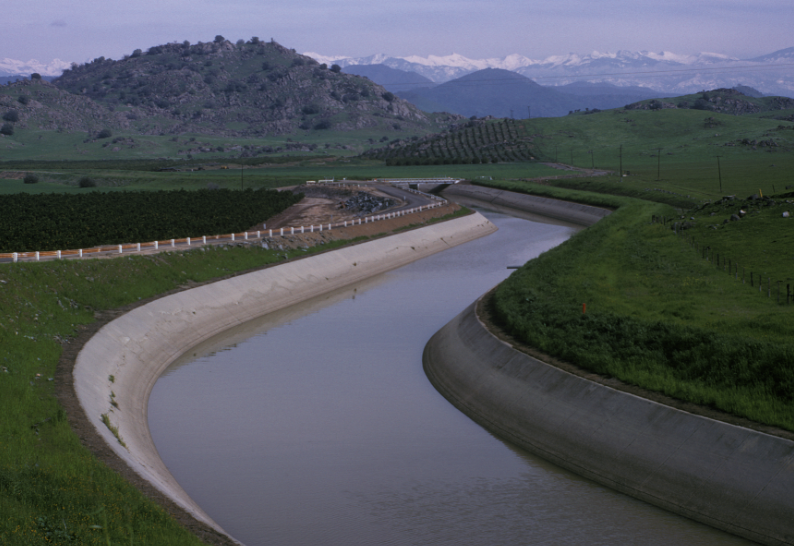
Pictured; Farmland around Porterville fed by Friant Kern Canal

To meet their contract agreement the Exchange Contractors would drain Millerton this summer to meet their shortfall (about 300,000 acre ft) leaving 24 Friant water districts from Orange Cove to Exeter down to Arvin with a “zero allocation.”
Economic losses have been estimated in the billions of dollars if the 150 mile Friant Kern does not run this year. Trees would be pulled from tens of thousands of acres says Citrus Mutual and those lands would have no ag production for years. To make matter worse – banks are likely to pull financing for some farmers with all this uncertainty.
A call the Bureau office in Sacramento Thursday has resulted in this reply:’”Things are dynamic right now but we expect no announcement this week.”

Tulare County farmer Tom Barcellos has a few choice words for the Bureau’s non-response.”They suck.”

Chedester says complicated agreements are making it difficult for the Bureau to release more water citing a  decision last week to supply 100% to Settlement Contractors on the Feather River as one example.

Friant’s Jacobsma says if the Bureau would allow the Exchange Contractors to receive their 300,000 acre ft out of Shasta, Friant could keep the estimated 150,000 to 200,00 acre ft it has stored above Friant and at least meter out a little water to keep trees alive in what is expected to be a scorching summer.