Drought & Farm Job Losses – Link Not Strong Yet

September 5,2014

cows -07-08 at 12.06.50 PMPredictions of billions of dollars of losses in the farm economy due to the California drought have yet to show up as fewer farm jobs in the monthly EDD reports.

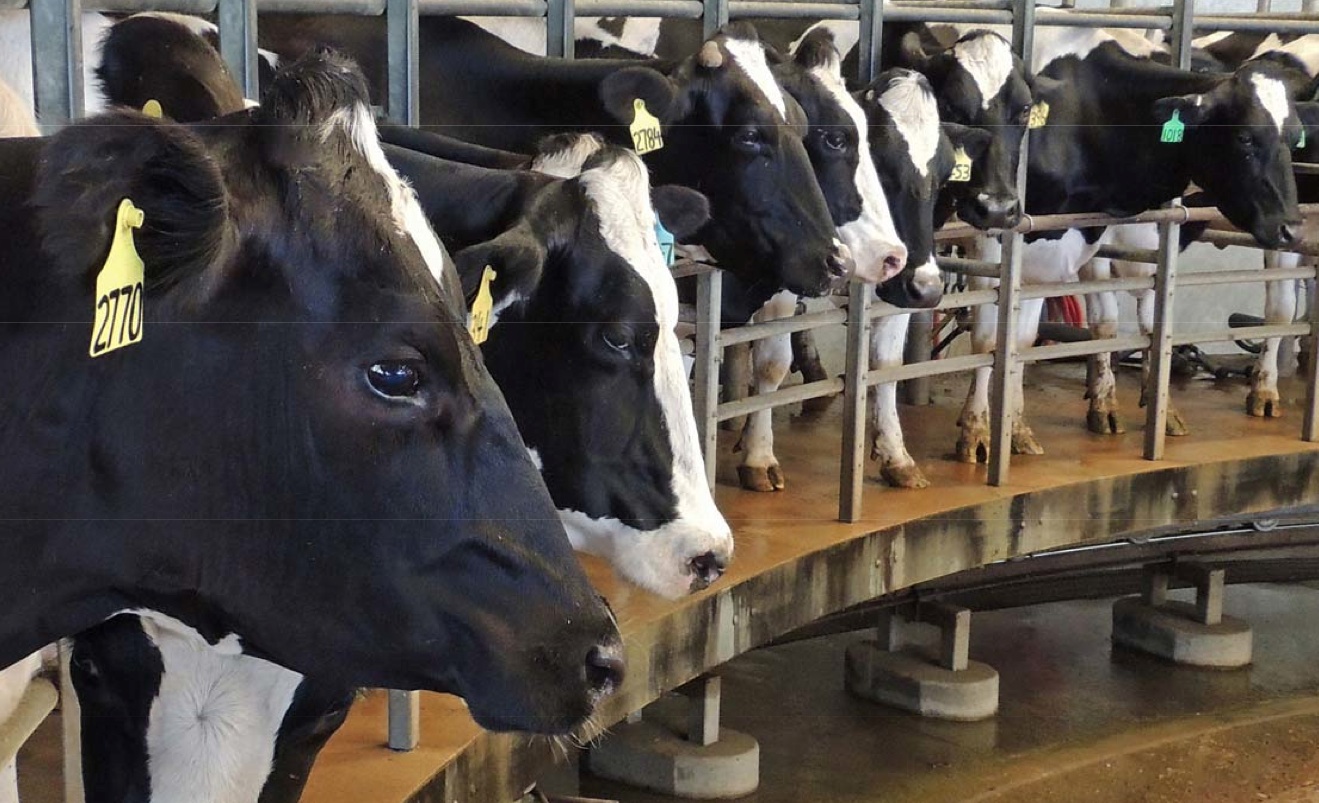
Pictured : Kings County Milk Production was up 6.8% in July

A look at farm unemployment in the largest farm production counties  paints a mixed picture with an upward creep in farm jobs in Tulare and Fresno counties in July year-over-year but down in Kern compared to July 2013. The varied result is counterintuitive since the drought is very real and farmers are clearly stressed to keep their harvest goals.

If the drought is flashing a red light to production plans – overseas demand is flashing a bright green light. So far green is winning.

In number one ag county Tulare County – the number of farm jobs in July 2014 was 35,800, 700 more than in July 2013.  In number 2 Fresno County – farm jobs were up by 600 year over year at 59,500 – about the level the county has registered for a decade with some minor fluctuation. This is happening in a county with a huge parched westside ag industrydependent on surface water delivery that is a trickle this year.

In Kern County the number of farm jobs year-over-year is, in fact  down by 1200 to 69,100 compared to 70,300 a year earlier. But Kern’s nonfarm economy is booming with 2900 more jobs than a year ago led by 1700 more construction jobs. Workers have other,better paying options.

Likewise in Fresno County where food manufacturing job gains have been a major factor says EDD. ”Fifty eight percent of job growth was recorded in food manufacturing” says the July unemployment report released August 15, 2014.

Remarkably Well

A widely reported UC Davis study released this summer pointed to a key reason why we may not have seen the worse “California’s agricultural economy overall is doing remarkably well, thanks mostly to groundwater reserves,” said Jay Lund, a co-author of the study and director of the university’s Center for Watershed Sciences. “But we expect substantial local and regional economic and employment impacts. We need to treat that groundwater well so it will be there for future droughts.”

The study’s key findings of the drought’s effects in 2014 are:
Direct costs to agriculture total $1.5 billion (revenue losses of $1 billion and $0.5 billion in additional pumping costs). This net revenue loss is about 3 percent of the state’s total agricultural value.
The total statewide economic cost of the 2014 drought is $2.2 billion.
The loss of 17,100 seasonal and part-time jobs related to agriculture represents 3.8 percent of farm unemployment.
428,000 acres, or 5 percent, of irrigated cropland is going out of production in the Central Valley, Central Coast and Southern California due to the drought.

Still, crop by crop, Valley farmers are laboring to met record demand for their crops this year despite glum water news. From milk to tree fruit, nuts to tomato paste – the world is signaling farmers to keep on trucking, so to speak.

This summer’s processing tomato crop is a case in point with USDA predictions reported in recent days that farmers will produce a record high 14 million tons of product, over 17% more than last year’s crop. Kings County acreage is up over 18% although Fresno’s’ acreage is down due to lack of water.

Likewise in the state’s number one ag crop – milk  – with dairymen despite high hay costs pushing Bessie to make more.

Kings Milk Production Up 6.8%

Kings County dairy farmers are milking at a furious pace this year with July production up 6.8% reports CDFA. Number one milk maker Tulare County increased their July year over year total 4.1%. Overseas demand for milk is considered a key reason. Obviously if dairy farmers want to make more milk they are not about to lay off their workforce.

If California almond growers are worried about water – and they should be – that worry is not yet slowing up with plans to plant  even more acreage in the state. The USDA reported in July that “There were at least 8.33 million almond trees sold by California nurseries since June 1, 2013. This represents a 25 percent increase from those sold a year earlier.” Doesn’t sound like they are ratcheting back does it?

How about wine grapes? Western Farm Press recently reported that “ many observers are projecting the 2014 wine grape harvest to total around 4 million tons. That compares to the record highs of the last two years when production exceeded that level.” which would be the third highest ever.

Hard To Keep Up

And nuts?. A recent Western Growers story points to demand as the  key factor encouraging acreage growth among all nut crops in the state.

“Bob Klein, who is the manager of both the California Pistachio Research Board and the California Pistachio Administrative Committee, said he does not see a scenario in which supplies can catch up with demand over the next several decades.  He was speaking specifically of pistachios but indicated that the future is at least equally bright for almonds.  Klein said the U.S. Department of Agriculture’s Foreign Agricultural Office has estimated that demand for all food will double by 2050 because of increasing populations and rising incomes.  Even if pistachio demand only grows by 50 percent in the next few decades, Klein said it will be difficult for growers to keep up.”

Indeed this fall’s walnut crop looks good so far according to one  recent estimate reported in Fresh Plaza. “California walnut processors expect a record crop this fall, with a consensus estimate of 541,000 tons, about 10 percent more than last year’s harvest. If accurate, the crop will also be much larger than the previous record of 504,000 tons harvested in 2010.”

DESPITE DROUGHT – 2014 PROCESSING TOMATO PRODUCTION AT RECORD HIGH

August 30,2014

Processing tomatoes are a major job producer in the Valley

The extreme drought in California has forced growers to fallow land and cut back on the acreage for many crops, but the impact on tomato acreage appears to be limited reports USDA. The projected harvested acreage of tomatoes is 288,000 acres, a 12.5 percent increase from 2013. A good portion comes from the parched fields of the westside of the San Joaquin Valley.

Farmers have contracted production of California processing tomatoes at a record high 14.0 million tons, averaging 48.61 tons per acre, according to a survey conducted by the National Agricultural Statistics Service. The current forecasted production is 17.6 percent above the 2013 crop, but unchanged from the May forecast.

Harvest started the last week of June in the Southern growing areas (Kern,Kings,Fresno) and is expected to run through mid-October. The 2014 crop year has had low disease and pest pressure.

Harvest Going Well

The primary issue affecting yield has been availability of water. Still the shipping reports published by the Processing Tomato Advisory Board show that shipments through August 23, 2014 are running 13.7 percent above that of 2013.

Helping to keep production high growers have planted the most acreage in the state since 2009. This year they have planted 290,000 acres, up from 259,000 acres in 2013. Despite water issues the yield continues above 48 tons per acre similar to the yield for the past 2 years.Yields in processing tomatoes have increased in the past few decades from 31 tons in 1991 to near 49 tons today.

The total  tonnage expected at 14 million is far above totals from the past few years at around 12 million tons.

Ag Beat: Corn / Grapes / Lemons / Frozen Food

Corn Exports To China Fall

What was the fastest growing market for US corn has turned cold after the Chinese said  the corn contained some varieties that were unapproved genetically modified . As of late July China also banned distillers grain from the US used as a feed.The news comes as the US corn crop looks like bin busting 14 billion bushel variety.To make matters worse the rails are clogged with oil cars making it harder for midwestern farmers to move their corn.
Tulare feed company owner Scot Hillman gave a speech recently saying  that the big rail companies used 9,500 oil tankers and 950 frac sand cars along the North Dakota corridor in 2008 and 395,000 oil tankers and 275,000 frac sand cars on the same rail path in 2013.
A recent Wall St journal article quoted a broker.”We’re going to see corn in piles all over the Midwest, and it’s going to take forever to eat through it all,” said Jamey Kohake, a commodities broker at Paragon Investments in Silver Lake, Kan., who is advising his clients to sell grain on any price rallies and not hold onto corn through the winter.”

Screen Shot 2014-08-22 at 2.44.18 PMState’s Grape Crop Volume Expected To Drop

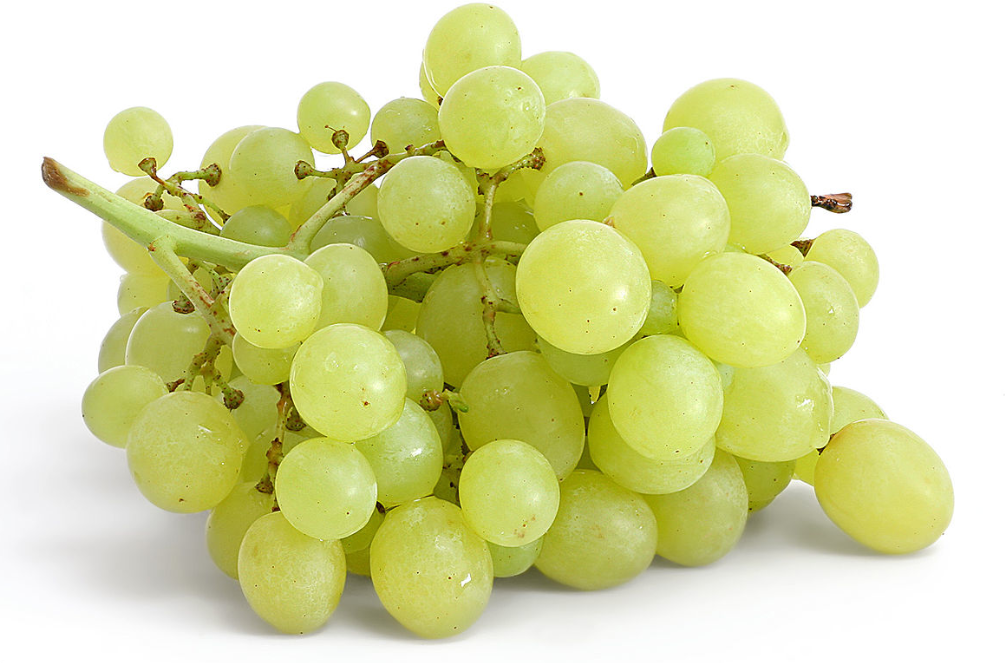
California’s wine type grape production is forecast at 3.90 million tons, down 8 percent from 2013 and represents 55 percent of California’s total grape crop. California’s raisin type grape production is forecast at 1.95 million tons, down 13 percent from last year and represents 28 percent of California’s total grape crop. California’s table type grape production is forecast at 1.20 million tons, down 2 percent from the previous year.

Sunkist Pushes Lemons To Reduce Salt Intake

Using Sunkist lemons instead of salt to flavor your next meal is an all-natural way to cut sodium by as much as 75 percent in a variety of recipes without compromising flavor.That is the story the co-op is telling consumers from research done by master chefs at Johnson & Wales University.According to a 2010 study by Bibbins-Domingo, if every American reduced his or her daily sodium intake by 400 milligrams, 32,000 heart attacks, 20,000 strokes and 28,000 deaths could be prevented each year.

Frozen Food Sales Down

Migration News reports “Frozen food sales, including frozen dinners, are falling, as many consumers switch toward fresh food. Clarence Birdseye invented a way to quick freeze fish in the early 1920s that preserved its flavor, and the growth of suburbia in the 1950s, the baby boom, and larger freezers encouraged more consumers to buy frozen food.

Consumers began turning away from frozen food in the late 1990s, as both supermarkets and restaurants began to offer more fresh foods. TV cooking shows contributed to the sense that fresh is best, despite ads from the American Frozen Food Institute emphasizing that freezing can preserve nutrients in food better than fresh produce sitting out in the supermarket.”

The Wall Street Journal recently reported that “Frozen-food sales, by dollars, have lagged behind the rate of inflation the past four years, and sales by number of units have fallen. Dollar sales of frozen juice, chicken and pizza all are down since 2009, according to market-research company Nielsen. And sales of frozen meals fell 3% to $8.92 billion from 2009 through 2013, according to Euromonitor International.”

Cuyama Valley Groundwater Withdrawals Double Long-Term Replenishment

August 14,2014

 caption below.
Cuyama Valley groundwater basin and sub-basins. (High resolution image) (1.2 MB)

SAN DIEGO, Calif. — Groundwater is the sole source for agricultural, domestic and municipal water use in California’s Cuyama Valley, located primarily in Santa Barbara County. In most areas, groundwater is being depleted faster than it naturally recharges. A new water availability report from the U.S. Geological Survey investigates groundwater conditions in the Cuyama Valley.

“The findings provide a better understanding of the use and movement of water in the valley, as well as the quality and quantity of groundwater used in the Cuyama Valley Basin,” said Randall Hanson, research hydrologist and lead author of the new report.

According to the study, an estimated 2.1 million acre-feet of groundwater have been removed from storage in the Cuyama Valley aquifer system since 1949. One acre-foot is approximately 325,000 gallons or enough to cover one acre of land with one foot of water. The study found that groundwater pumping for irrigated agriculture accounts for almost all groundwater withdrawals in the region. The total average annual pumpage of groundwater in the Cuyama Valley aquifers system from water years 1950-2010 was about twice the average estimated long-term annual recharge rate.

During the course of the five-year study, conducted in cooperation with the Santa Barbara County Water Agency, USGS scientists discovered that the geologic structure of the valley is composed of three groups of subregions in the valley – The Main zone, the Sierra Madre Foothills, and the Ventucopa Uplands; each with distinct geologic, hydrologic, and water-quality characteristics. This is important because groundwater withdrawals as well as natural and human-caused recharge affect each sub-basin differently. In the Main zone sub-basin which comprises about a third of the modeled groundwater basin, groundwater pumping for irrigation exceeds the natural replenishment rate, thus depleting groundwater storage, degrading water quality, and potentially leading to the onset of land subsidence.

Since 2000, groundwater pumping has led to land subsidence of up to 0.2 feet. Model analyses of historical conditions indicate that 1.6 feet of subsidence has occurred near the town of New Cuyama since the onset of development in the 1940s, coincident with the groundwater declines in the Main zone. An additional foot of permanent subsidence is projected in the Main zone through 2071 if current demand and replenishment rates continue.

In addition to extensive data collection, the USGS developed hydrologic models of Cuyama Valley to analyze water availability, account for changing water supply and demand, and simulate surface water and groundwater flow across the entire valley. These models can be used to address issues related to water resource sustainability, including the effects of changing land-use patterns and a changing climate on water resources. The models can also incorporate how changes in water supply and demand will affect water quality and land subsidence.

The new water availability report and related summary fact sheet are available on-line. A complete list of USGS publications related to Cuyama Valley studies can be found here on the project website.

Ag Update…Almonds,Olives & Raisins

August 13,2014

New Almond Trees Up 25 Percent

There were at least 8.33 million almond trees sold by California nurseries since July 1, 2013. This represents a 25 percent increase from those sold a year earlier. Of
those sold since July 1, 2013, 72 percent were used for new plantings, 24 percent were used to replant an already existing almond orchard and 4 percent were used to replace trees within existing orchards. Based on a new planting average of 125 trees per acre per the Almond Acreage Survey, almost 67,000 acres of almonds have been planted since the middle of 2013.

Screen Shot 2014-08-13 at 9.20.58 AM2014 Olive Down 45 Percent

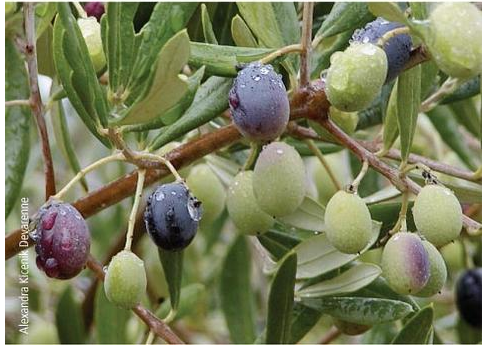
The 2014 California table olive forecast is 50,000 tons, down 45 percent from last year’s crop of 91,000 tons, according to a survey conducted by the USDA, National Agricultural Statistics Service. Bearing acreage is estimated at 23,000 for a yield of 2.17 tons per acre. The Manzanillo production forecast is 41,000 tons and the Sevillano production forecast is 7,500 tons. Other varieties are expected to total 1,500 tons.
The California table olive crop is down due to a variety of setbacks after last year’s harvest, including a hard freeze in December, another freeze and wind during
bloom, and the lack of water to allow the crop to fully produce. Some growers were not even sure they would harvest what they had due to lack of sufficient production or the lack of labor. The southern growing areas in particular have been impacted by the drought.

RAISIN-TYPE GRAPE PRODUCTION DOWN 13 PERCENT FROM THE 2013 FINAL PRODUCTION

The California raisin-type variety grape forecast is 1.95 million tons, down 13 percent from the 2013 final production. Based on the objective measurement survey conducted by the National Agricultural Statistics Service (NASS) in cooperation with the California Department of Food and Agriculture (CDFA), bunches per vine totaled 36.5, compared to last year’s record bunch count of 47.7. Acreage of bearing age is 200,000.
The 2014 California raisin-type grape crop has struggled with lack of water. Hail in the spring hit some vineyards during bloom. Crop development is ahead of last year, which was already an early year.

$7 Billion Water Bond Expected To Make Ballot

August 13,2014

Huntington Lake
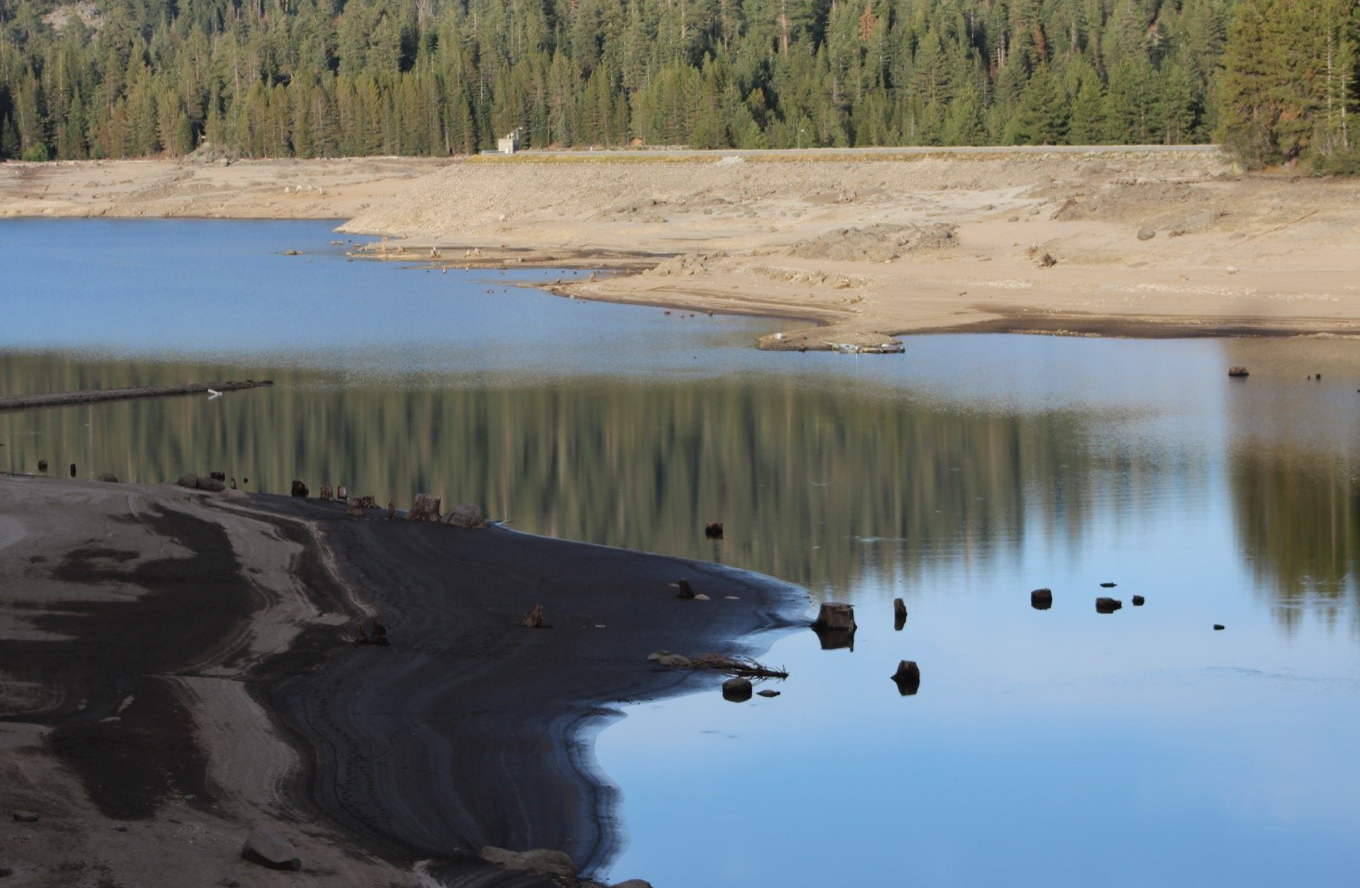
Huntington Lake

With the clock ticking California appears on the verge of new smaller water bond but one still with $2.5 billion for water storage. Governor Brown had been supporting a $6 billion bond that did not include any water storage money, important to Central Valley agriculture.  The new $7 billion compromise to be placed in front of voters this Novemeber would replace a $11 billion bond that many fear is too big for the electorate to swallow.

Water contractors represented by the Association of California Water Agencies (ACWA) backed the new bond Tuesday with Executive Director Timothy Quinn issuing a statement on recent developments on a 2014 California Water Bond:

“ACWA applauds the recent progress on developing a smaller, more viable water bond for the November 2014 ballot.  As California experiences one of the worst droughts in its history, 2014 is clearly a year to commit to the implementation of a comprehensive water program to improve water supply and drought preparedness throughout the state.  The passage of a water bond in 2014 is fundamental to this goal.

“ACWA supports the framework for a $7 billion bond released by the Brown Administration on Monday.  We believe that it takes an historic step toward addressing California’s water crisis in a fiscally prudent manner, while providing substantial funding for new storage, local resource development, watershed enhancement, and safe drinking water. We recognize that there are still significant issues under negotiation, and urge all parties to work together to resolve remaining differences as soon as possible.  If we can achieve a smaller bond with bipartisan support and broad support from water, business, labor, agricultural, and conservation interests throughout the state, the prospects for success at the ballot in November will be greatly enhanced.”

Dairy Farmers Hunt For Silage Amid Drought

By Ching Lee / CFB

Bob Headrick, who runs a custom harvesting operation in Kings County, walks along a cornfield in Hanford being harvested and chopped for silage.
Photo/Lisa Lieberman

With limited water supplies this year and fewer acres of certain field crops being grown, California dairy farmers who depend on forage such as corn silage are paying a higher price and going longer distances to find the feed.

Corn silage is already a major part of a dairy’s ration, but this year, dairy farmers are feeding more of it because another fiber source, alfalfa hay, is in even shorter supply, with prices reaching historic highs, said Tyler Colburn, a dairy nutritionist with Alpha Dairy Consulting in Visalia.

“I think that’s why you have a lot of people making an extra effort to travel to get extra silage, to reduce their dependence on the hay that they would need to purchase,” he said.

Bob Headrick, a silage contractor who runs a custom harvesting operation in Kings County, said his hauls are typically no more than 10 miles from the field to the dairy, but this year he’s going twice the distance to move the feed.

Higher demand and reduced plantings in the state have also pushed local corn silage prices up from about $35 per ton to $65 per ton or higher, Headrick said. With these soaring prices, many farmers have decided to harvest their corn for silage rather than grain this year, he added.

The state’s total corn acreage was estimated at 520,000 this year, with 110,000 acres expected to be harvested for grain—down 39 percent from 2013—according to the U.S. Department of Agriculture. Total corn acreage in 2013 was 600,000 and 610,000 in 2012. California corn silage acreage in 2013 was 415,000, compared to 425,000 in 2012, USDA reported.

Because of water shortages, Colburn said dairy farmers who grow all or some of their own feed have had to be more strategic about what they plant on their own ground. He said many of his clients along the Highway 43 stretch between Selma and Bakersfield—a region with tougher soils and hit hard by water restrictions—planted less corn with what water they have or grew more acres of a different feed crop.

He noted that one dairy he works with has cut its corn silage acreage to less than 50 percent and instead grew sorghum, which uses 30 percent less water than corn silage. Sorghum is not an equivalent substitute for corn silage, he said, but with U.S. grain prices falling, dairy farmers have been able to import more corn from the Midwest to make up the nutrient differences.

Headrick said while corn silage yields appear to be very good from what he’s seen so far, he noted that harvest season has just begun and will run through October, and it remains unclear how some of the later corn will fare if water runs out early on those fields.

Wiebren Jonkman, who runs a custom harvesting operation in Merced County, said he had to harvest a field early last month because the grower didn’t have enough water for the crop’s final irrigation. Harvesting early reduces the overall quality and nutrients of the silage, he said, and in some cases, a distressed plant can even be toxic.

Even though forage crops have been scarce this year, Jonkman said he was able to find enough feed for his clients because he started looking last fall for farmers who had the water and were willing to grow it.

Stanislaus County dairy farmer Bryan Kamper, who grows only some of his own feed, said local supplies of corn silage and other forages have been tight in his area. In past years, he was able to find corn silage within seven to eight miles of his dairy in Oakdale, but this year he’s going as far as Stockton and the delta area, about 30 miles away.

He said the short supply of corn silage has been made worse by the drought, but availability of feed crops in general has been on the decline because more land has been converted to permanent crops.

Kamper did not grow any corn silage this year but planted a sorghum-sudangrass, which will be harvested later this month and will yield a couple of cuttings. To balance the nutrients in his ration, he’s using more rolled corn, dry distiller’s grains and almond hulls.

Despite having to change his feed ingredients, Kamper said he has not noticed any impacts to his milk production.

Greg Alves, a diversified farmer and dairy farmer in Glenn County, said since the Glenn-Colusa Irrigation District delivered 75 percent of growers’ water allocation this year and he bought the remaining 25 percent from other farmers, he expects to be able to grow enough silage to last him through this winter.

Although he normally grows corn for silage and grain, he noted that he and other dairy farmers he knows have decided to chop all their corn for silage this year and buy grain off the market. He also grows wheat silage in the winter and some alfalfa. With alfalfa prices being so high, Alves said the extra silage he’s making will allow him to buy less hay.

“You don’t know what’s going to happen next year, so we’ve been trying to get enough hay and corn silage in possession, so if we run into an issue next winter, hopefully we can work through the pain,” he said.

One fiber source that Colburn said dairy farmers may soon be feeding more of is cottonseed, as cotton prices drop. U.S. cotton farmers are expected to produce a bumper crop this season, and demand from top importers such as China has also retreated, he noted.

Colburn said cottonseed had been a major part of the dairy ration over the last 10 to 15 years, but in more recent years, many dairy farmers pulled it out of their ration because it got too expensive.

With preliminary reports showing another big almond crop on the way, Headrick said the price of almond hulls, another fiber source that’s become expensive to feed, may stabilize this fall.

July Space Shot Shows SLO &Tulare County Groundwater Decline

August 8,2014

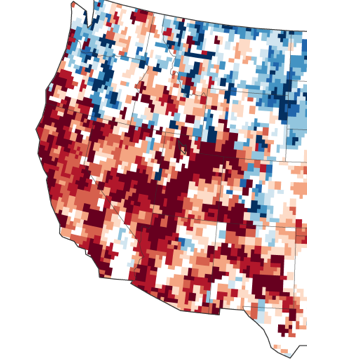
Groundwater is low in both San Luis Obispo County and Tulare County –  two areas we focus on as part of the  Sierra2thesea website. Note the dark red in these two areas in Middle California.

Screen Shot 2014-08-08 at 11.57.47 AMThe map above combines data from the satellites of the Gravity Recovery and Climate Experiment (GRACE) with other satellite and ground-based measurements to model the relative amount of water stored in underground aquifers in the continental United States. The wetness, or water content, is a depiction of the amount of groundwater on July 7, 2014, compared to the average from 1948 to 2009. Areas shown in blue have more abundant groundwater for this time of year than comparable weeks over the long-term, while shades of red depict deficits compared to this time of year.
The maps are an experimental product used by the U.S. Drought Monitor and supported by NASA’s Goddard Space Flight Center. The measurements are derived from observations of small changes in Earth’s mass and its gravity field—features that are affected by the movement and storage of water and ice around the planet.

Ag Beat: Almonds / Dwarf Trees / Corn Falls

Screen Shot 2014-08-08 at 11.31.03 AMAlmonds Beat Out Peanuts As US Favorite Nut

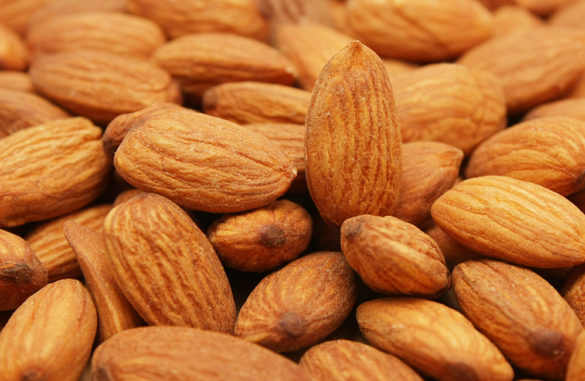
America’s love affair with almonds is paying off for Valley growers. USDA says almonds now surpass peanuts as the country’s favorite nut   with a perception change on the health of the nut. With less meat  consumption almonds are now a popular alternative as a protein source with less worry about its fat content says a University of Michigan study. Domestic consumption of almonds is up 220% since 2005. Meanwhile, US exports are are double this year what they were in the 2009/10 marketing year. One market that may go away for a while is Russia with the trade dispute with the US supplying 92% of almonds to that country. While California growers can find other customers the Russian consumer appears to be the losers. USDA expects a California crop of of 2.1 billion pounds this fall,a 4.5% increase from last year.

Dwarf Trees Cut Labor Cost

UC says shorter peach and nectarine trees can reduce labor costs without sacrificing fruit quality and yield with a 4-acre experiment at Kearny Field Station in Parlier. “We’re designing ‘ladderless’ orchards, which have the potential to cut labor costs by 50 percent or more and improve worker safety,” says UC Cooperative Extension specialist Ted DeJong, a plant physiology professor at UC Davis. Mr. DeJong and Kevin Day, a Cooperative Extension farm advisor in Tulare County, are leading the trials.
Corn Heads Lower

Corn  futures price fell this week to $3.64 for December futures, the lowest in years. That’s good news for both ethanol makers and livestock owners.

Kings Milk Rebounds

June milk production shows a rebound in volume from Kings County year over year – up 3.2% .Tulare County was up 1.2%

Commentary: American Dream flourishes in state’s strawberry fields

July 22,2014

from Ag Alert   By Lorena Chavez

Screen Shot 2014-07-22 at 6.34.22 AMFor thousands of immigrants to California, the path to the American Dream literally winds its way through the state’s strawberry fields. Perhaps more than any other crop, strawberries are defined by decades of immigrants from Europe, Asia and Mexico.

A report issued earlier this month by the California Strawberry Commission, titled “Growing the American Dream: California Strawberry Farming’s Rich History of Immigrants & Opportunity,” illustrates how many new Americans find that strawberries are a viable ladder to success.

According to the report—which can be found on the Strawberry Commission website at www.californiastrawberries.com—a diverse community of 400 family farmers dominates the state’s strawberry production, which accounts for nearly 90 percent of all the strawberries grown in the United States.

Sixty-five percent of these farmers are Latinos, a quarter of whom worked their way up from field workers to supervisors and eventually owners of their own farms. Another 20 percent are Asian Americans, primarily Japanese and, most recently, Laotians. The remaining 15 percent are comprised of European Americans, with some tracing their ancestry to Gold Rush pioneers.

The story of my father, Luis Chavez, illustrates this immigrant experience. He came to the United States from a small, rural town in Jalisco, Mexico. Born in 1934, he was raised in a home with no electricity or running water. He hasn’t attended a single day of school in his entire life. His family grew corn and beans to survive.

With no money in his pockets, he arrived in California in search of a better life in 1955, as part of the Bracero program. Like generations of immigrants, my father realized that the key to success was hard work. He first worked in a dairy, covering double shifts for 16 years until the family could scrape up enough money to lease an acre to plant strawberries.

While still working their regular jobs, my parents would get up at 4 a.m. every day to tend their plot, slowly building their business. Gradually, they expanded to become L&G Farms. My siblings and I now work side by side with my father to farm 300 acres in Santa Maria, where we employ several hundred people.

This story is not uncommon. But why are so many immigrants drawn to strawberry farming?

Due to their high yield, year-round harvesting and strong consumer demand, strawberries are able to sustain a family on a relatively small parcel of land. The barriers to entry are also favorable to immigrant farmers, because they can afford to lease and not buy their farmland.

With our deep and longstanding immigrant tradition, California strawberry farmers have been highly vocal in advocating for immigration reform. Certainly, we are concerned about the need for a pool of workers to harvest our crops. But more importantly, we share a desire to make sure that future generations of immigrants have the opportunity for the upward mobility that strawberries have provided for our family.

Along with other California strawberry farmers, and even Silicon Valley executives, I have made several trips to Capitol Hill to tell Congress about the critical need for meaningful immigration reform.

While recent election results have stalled efforts, immigration reform should not be postponed indefinitely. And it definitely should not be a partisan matter.

On one of our trips to Capitol Hill, one of my colleagues, a first-generation Mexican-American farmer from Salinas, eagerly sought out a statue of President Ronald Reagan, his hero, who granted amnesty to millions of immigrants. This simple act paved the way for my colleague to become an American citizen, gradually working his way to become a strawberry farmer employing nearly 100 workers. Another American Dream realized.

The commission’s report provides a strong reminder about the sacrifice, pride and contributions made by this nation’s immigrants throughout our history.

It also underscores the fact that immigration reform is as American as, well, strawberries.

(Lorena Chavez is a second-generation strawberry farmer from Santa Maria and secretary/treasurer of the California Strawberry Commission.)