California Dairies, Inc. Expands Product Portfolio

August 24,2015-

Screen Shot 2014-11-06 at 3.49.02 PMVISALIA, Calif.–(BUSINESS WIRE)–Building upon its successful dairy ingredients business, California Dairies, Inc. (CDI) has diversified its powdered milk offerings to include high protein powders – milk protein concentrates (MPC) and milk protein isolates (MPI). The addition of these new products demonstrates CDI’s vision to become the leading source of dairy nutrition for a healthy world.
“The driving force of CDI’s strategic plan is to profitably market member-owners’ milk through product innovation and an expanding product portfolio. The inclusion of high protein milk powders to our portfolio is yet another example of how CDI executes its strategy and creates value for its member-owners”
MPC and MPI are high-value milk powders used in high protein drinks and bars as well as infant products, yogurts and cheeses. The production of MPC and MPI is a natural extension of CDI’s powdered milk portfolio and meets the needs of its customers for highly functional milk powders.
“The driving force of CDI’s strategic plan is to profitably market member-owners’ milk through product innovation and an expanding product portfolio. The inclusion of high protein milk powders to our portfolio is yet another example of how CDI executes its strategy and creates value for its member-owners,” said Andrei Mikhalevsky, CDI CEO.
CDI is down to around 410 producers from over 600 a decade ago.

Processing tomato harvest proceeds well

August 7,2015-

from CFB

By Ching Lee

Woolf Farming and Processing in Fresno County harvests a field of processing tomatoes. Due to favorable growing conditions this season, California farmers say crop yield and quality so far look good, with tomato production potentially matching last year’s record crop if water supplies hold out.
Photo/Cecilia Parsons

Excellent growing conditions so far this season have allowed California processing tomato growers to be on track for another robust production year similar to the 2014 crop. But dwindling water supplies in the state’s key growing region of the San Joaquin Valley could still put some fields at risk and have complicated the logistics and costs of growing the crop.

The latest crop-intentions estimate from the California Department of Food and Agriculture, released in May, projected production at 14.3 million tons from 295,000 acres. That’s up slightly from last year’s record 14 million tons.

So far, weather has been cooperating, said Mike Montna, president and CEO of the California Tomato Growers Association, allowing growers to harvest record tonnage last week for this time of year. Processors have increased production capacity to accommodate more tomatoes.

“The overall crop looks really good right now,” he said. “There’s no reason to think we won’t hit that (14.3 million-ton) number, but it’s awful early. Wells going dry, weather conditions—those kind of things can obviously have an impact on the crop size going forward.”

Even though the $80 per ton contract price for processing tomatoes is lower than the 2014 price of $83 a ton, it is still the second-highest price paid for the crop, Montna noted. Processors paid $80 a ton in 2009.

At that price, processing tomatoes is a “pretty good crop to grow” for farmers who have row-crop ground available and some water, said Stuart Woolf, president and CEO of Woolf Farming and Processing in Fresno County.

His company grows and processes its own tomatoes, and also has contracts to grow for other processors. On his own farm, Woolf said he fallowed a third of his row-crop acreage in order to devote what available water he has to grow tomatoes, though he also cut back tomato plantings. He reduced his garlic and onion acreage as well, and didn’t grow any wheat. To cover its own processing needs, the company contracted additional tomato acreage from outside growers.

While Woolf described the tomato price as “pretty good,” he said farmers will not necessarily have “an incredibly profitable year growing tomatoes” because they are having to fallow land and absorb other costs associated with the drought, including pumping more groundwater.

“Even with higher prices, even with a good crop, in all likelihood tomato growers will see their margin shrink a bit,” he said.

As a processor, his margins also will be squeezed because he has to pay more for tomatoes, Woolf noted. In addition, the higher-value dollar has made exports of California tomato products, largely tomato paste, less competitive in the global market, he added.

The tempered export outlook, he noted, led tomato processors to adjust downward the contracted tonnage they originally wanted farmers to produce this year—from 15 million tons to 14.3 million, with the current estimate closer to 14 million. Processors added capacity with hopes that exports would continue to grow, he said, “but it turns out in all likelihood they won’t be” shipping more product.

With another big crop on the way and inventories building, Woolf said future prices for growers could soften, especially if tomato producers in countries such as Italy, Portugal and China also turn in a large crop.

While the drought presents water challenges for farmers, they tend to agree that crops such as tomatoes generally do well because the plants are less susceptible to mildew and fungal diseases that are more prevalent in wet years.

“Normally, yields are higher on a drought year than they are on a wet winter,” said Steve Meek, who grows processing tomatoes in Yolo County.

His cost to grow tomatoes this year also did not increase much, he said, noting that while water costs are higher, the price of diesel is lower now than it was a year ago.

For Fresno County, the state’s largest processing tomato-growing region, below-normal temperatures during the last two months likely resulted in better fruit set on late-season tomatoes, said Tom Turini, a University of California Cooperative Extension farm advisor.

Although he described the region’s groundwater quality as “lower than ideal,” with boron levels high enough in some fields that they “could cause problems,” he said any effect on tomato production would be minor.

“There are a few fields that may be suffering to some extent because of the salts, but I think largely our yields look very good at this time,” Turini said.

Beet curlytop virus, which caused significant crop losses in 2013, turned up in fields again this year, with levels as high as 45 percent in portions of some fields, he said. But distribution of the disease, which is spread by the beet leafhopper, was closer to the foothills, not as widespread as it was two years ago, when it extended into the valley.

“The impact on yield is not going to be as substantial as it was in 2013—not even close,” Turini said, noting that he is not aware of any fields that were left unfarmed because of the disease, whereas in 2013, some fields had to be abandoned early in the season.

After the 2013 outbreak, Turini said there was huge concern of a repeat this year because substantial rainfall in the foothills last December promoted growth of winter weeds that support the leafhopper. He credits an annual state program that treats the foothills where the leafhopper congregates for mitigating crop losses this year. Growers also took measures early in the season by treating their developing plants, he added.

(Ching Lee is an assistant editor of Ag Alert. She may be contacted at clee@cfbf.com.)

Permission for use is granted, however, credit must be made to the California Farm Bureau Federation when reprinting this item.

Kern Mega Dairy Replaced By Mega Food Company

August 3,2015-

Screen Shot 2015-08-03 at 2.25.31 PMThe news that a 1500 acre”mega dairy” with 4000 cows was coming to Kern County caused quite a fuss at the time back in 2002. So when the George Borba dairy abruptly closed their doors in April of this year with a complete dispersal auction of cows, rolling stock and the land, the question arose – what’s next?
With tough times in the dairy business the rumor was the big dairy farm was likely to be replaced by someone who wanted to plant nut trees. But the buyer’s name has been hush hush.

Now comes word that the buyer is Singapore-based Olam International, a mega food company with $20 billion in worldwide sales, and 5 locations in the Valley already including divisions that plant and process tomatoes, spices, onions garlic, almonds and cotton here. The firm has regional offices in Fresno.

The crop here will be pistachios says a company representative Dave DeFrank, a better bet than milk these days. Olam is removing the remainder of the diary infrastructure this summer ready to plant thousands of nut trees on this open land probably next year.

Olam is the second largest almond farmer in the world and maintains 30,000 acres of almond orchards in Australia. In California, they farm 7,000 acres of almond orchards.

Olam International was established in 1989 with 1 product in 1 country, trading cashew from Nigeria into India. Today thye are a leading agri-business operating from seed to shelf in 65 countries, supplying food and industrial raw materials to over 13,800 customers worldwide. The international company has 23,000 employees. They came to the US in 2002.

Bad News – Good News For Dairy Operators

Milk Powder Price Tanks

NFDM price are in the tank this July with a low of around 70 cents lb. That is down almost two-thirds from January 2014 when the same commodity was selling for over $2 lb.
Late last year it was $1.75. The downturn in prices is reminiscent of 2009 when a world financial slump helped take down world diary prices below the red ink level. This summer international dairy prices have hit a six-year low as demand for milk powder from major buyers – particularly China, continue to fall even as supply is expected to grow.
California co-ops including CDI in Visalia sell a huge amount of powder on the world market.

Corn Futures Take A Dive

Screen Shot 2015-07-27 at 7.46.41 AMGood news for dairy and livestock operators.
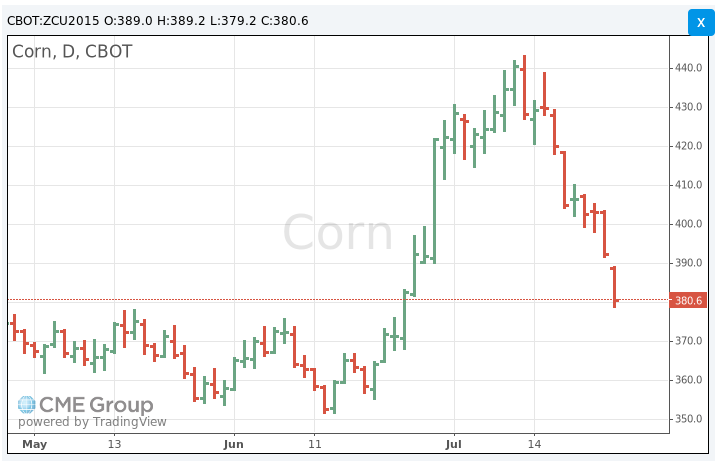
US corn futures are lower based on by good weather for crop development across the US corn belt. Prices have fallen from over $4.50 in mid month to below $3.80 Monday morning (Sept futures).

More Infected Citrus Trees Likely

July 22,2015-


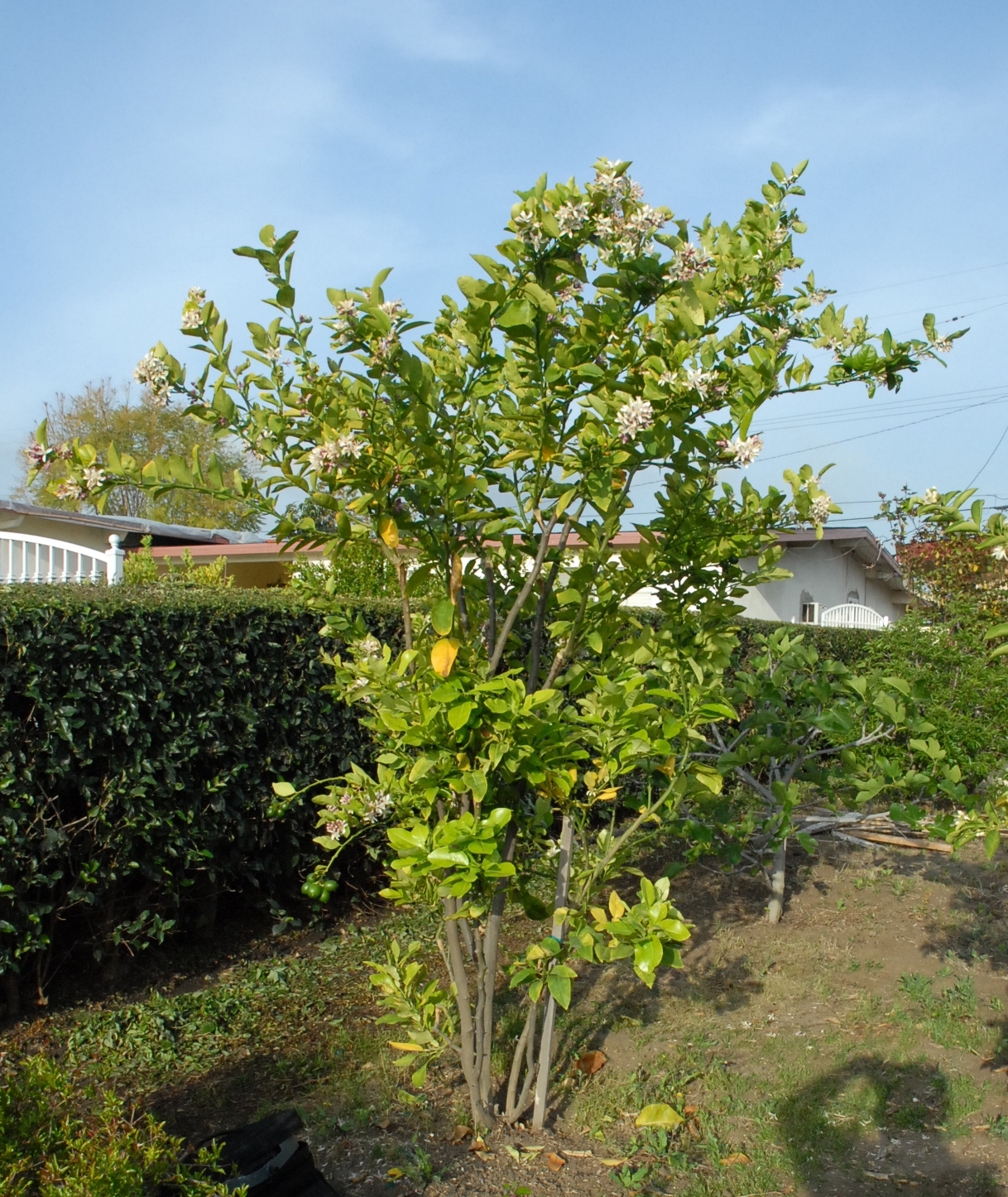
The tree in Hacienda Heights with HLB disease.

Now that two additional backyard citrus trees in Southern California were found to be infected with the bacterium that causes Huanglongbing (HLB) disease, UC Agriculture and Natural Resources (UC ANR) Cooperative Extension advisors and specialists are encouraging all citrus owners to monitor for disease symptoms and report trees suspected to be infected with HLB to the California Department of Food and Agriculture (CDFA) hotline, (800) 491-1899.

This month, a lime tree and a kumquat tree with HLB were identified in residential areas of the San Gabriel Valley. In March 2012, an infected multi-grafted citrus was found in a Hacienda Heights backyard.

“So far, the bacterium that causes HLB has been found infecting only three trees, which have all been destroyed,” said Beth Grafton-Cardwell, UC ANR Cooperative Extension citrus entomology specialist. “However, it is highly likely there are other infected trees in California. It will be critical for all Californians to assist with efforts to reduce psyllids and detect and remove infected trees to prevent this disease from devastating California citrus.”


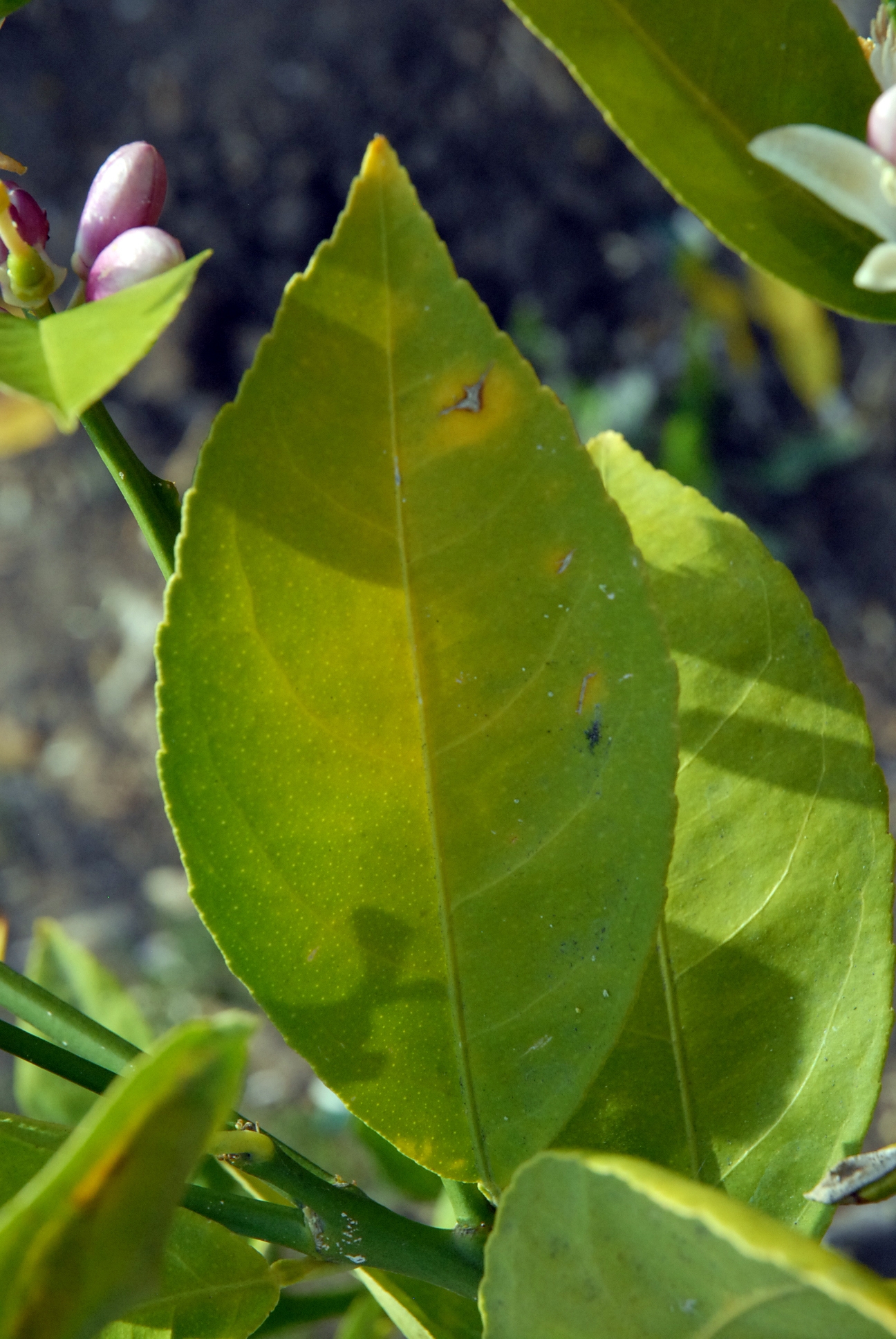
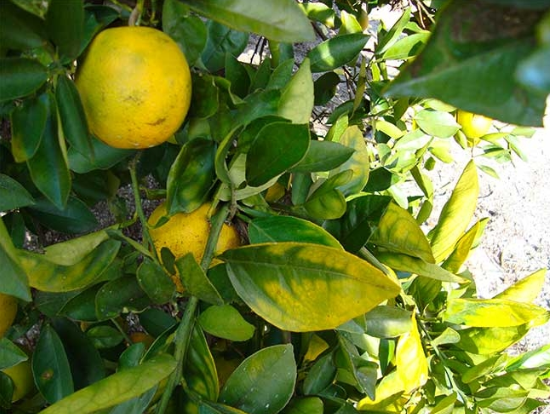
Leaf blotches on citrus symptomatic of HLB. (Photo: CDFA)

An early symptom of Huanglongbing disease is yellowing of leaves on an individual limb or one sector of the tree’s canopy, according to a UC ANR Integrated Pest Management Program Pest Note. Leaves that turn yellow from HLB will show an asymmetrical pattern of blotchy yellowing or mottling of the leaves. The Pest Note includes color pictures and detailed symptom descriptions.

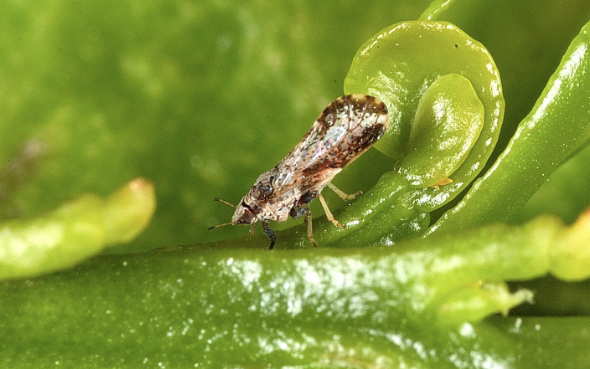
HLB disease is spread from tree to tree by Asian citrus psyllid, an invasive insect first identified in California in 2008. ACP has become established in many Southern California communities and is seen occasionally in the state’s San Joaquin Valley and Central Coast commercial citrus production areas. Locations where ACP are found are quarantined by CDFA. No untreated or unprocessed citrus fruit and no citrus trees may be moved from these areas. UC ANR maintains an online map that delineates the quarantined locations. The map also shows the area quarantined because of the recent HLB find.

Once a tree is infected with the bacterium that causes HLB, there is no cure. To prevent HLB infections, citrus owners in areas where Asian citrus psyllids are found may wish to treat their trees with insecticides.

“We believe about 60 percent of Californians have at least one citrus tree in their yard, so HLB could have a devastating effect on the California residential landscape,” Grafton-Cardwell said. “There are safe and effective ways to reduce the ACP population, which reduces the chances of losing a tree to HLB.”

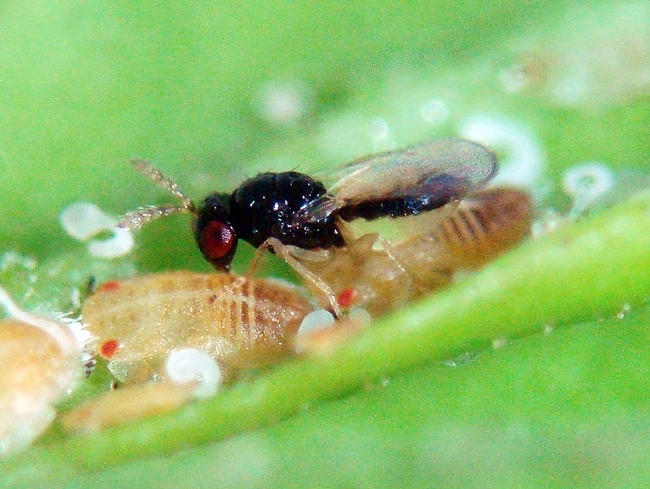
Grafton-Cardwell developed a website for farmers and residents with detailed information on managing Asian citrus psyllid. In some urban areas, a natural enemy of ACP, Tamarixia radiata, has been released. In those areas, Grafton-Cardwell recommends the use of “soft” insecticides that will reduce the number of psyllids and allow the Tamarixia to control the rest.


A tamarixia wasp attacks an ACP nymph.

If Tamarixia are not in the area, the website gives information on broad spectrum insecticides to reduce the number of psyllids. The website provides the names of the pesticides, their costs, the duration of control and the effectiveness of the pesticides against ACP.

To help California residents and commercial citrus growers deal with the ACP and HLB citrus threats, UC ANR, UC Davis and UC Riverside scientists are conducting research on a number of possible solutions.

For example, Abhaya Dandekar, professor in the Department of Plant Sciences at UC Davis, and his colleagues are studying gene fusion, which fuses two immunosuppressive genes that attack HLB in different ways to make the plant more effective at fighting the disease.

Mikeal Roose, a professor in the Department of Botany and Plant Sciences at UC Riverside, is working with researchers in Florida to sequence a rootstock that has some natural resistance to HLB and locate the gene or genes that cause HLB resistance.

Mark Hoddle, UC ANR Cooperative Extension biocontrol specialist at UC Riverside, has identified a second natural enemy of ACP from the Punjab, Pakistan. (The first one was Tamarixia radiata.) Populations of Diaphorencyrtus aligarhensis have also been released in urban areas and Hoddle is monitoring the insect’s ability to attack ACP.

Because it is important to remove trees infected with HLB as soon as possible to reduce spread, UC scientists are also studying ways to identify trees with the disease before visual symptoms occur.

For example, Hailing Jin, professor in the Department of Plant Pathology at UC Riverside, has identified small RNAs that are induced by the bacterium that causes HLB and could be used for early diagnosis.

Carolyn Slupsky, professor in the Department of Food Science and Technology at UC Davis, has identified metabolites that change in concentration when citrus is infected with the bacterium that causes HLB. She is working with the Citrus Research Board (CRB), CDFA, Texas A&M, and USDA to validate her results and determine how quickly the disease may be detected once the tree has been exposed to the pathogen. She is also part of a USDA collaborative grant to study the vector that transmits the disease to help find ways to stop transmission.

Wenbo Ma, professor in the Department of Plant Pathology Microbiology at UC Riverside, has developed antibodies against proteins secreted by the HLB pathogen – revealing whether the plant is infected. These antibodies have been evaluated in California, Florida and Texas for HLB detection.

DEPARTMENT OF FOOD AND AGRICULTURE FUNDS 5 “DAIRY DIGESTER” PROJECTS IN CENTRAL VALLEY

 
Projects designed to cut global-warming methane emissions and generate revenue

Screen Shot 2015-06-18 at 1.59.58 PMSacramento, July 13, 2015 – The California Department of Food and Agriculture (CDFA) has
selected five projects for approximately $11.1 million in grants
 to implement digester technology on California dairy operations that will reduce greenhouse gas emissions (GHGs) from dairy manure.

Financial assistance for the installation of dairy digesters comes from the state’s cap-and-trade program for combating climate change. Through the Greenhouse Gas Reduction Fund, CDFA and other state agencies are investing cap-and-trade auction proceeds in projects that reduce greenhouse gas emissions while providing a variety of additional benefits to California communities.

Recipients of the CDFA grants will provide an estimated $18.9 million in matching funds for the development of the digester facilities.

“These projects demonstrate a commitment by California to support efforts by dairy farmers to fight climate change by reducing greenhouse gases from the agriculture sector,” said CDFA Secretary Karen Ross. “This is definitely a win-win for agriculture: cutting methane emissions and improving the environment while also generating revenue from renewable bioenergy.”

Dairy manure produces methane when it decomposes. Dairy digesters collect manure in tanks or lagoons for decomposition in an oxygen-free environment and then capture the methane produced so none escapes into the atmosphere.  That methane can then be used as a biofuel to power generators that produce electricity or fuel natural gas vehicles.

Methane is a powerful greenhouse gas, trapping more than 80 times as much heat in the atmosphere as carbon dioxide over a short-term (20-year) period. These dairy digester projects support California’s efforts to reduce methane and other short-lived climate pollutants, helping meet the state’s goal of reducing greenhouse gases to 40 percent below 1990 levels by 2030, as recently called for by Governor Edmund G. Brown Jr.

CDFA conducted a multi-stage review of all applications, including administrative, financial and technical reviews, to verify applicants’ GHG reduction calculations and assess the feasibility of digester technologies.  Final scoring and review was conducted by the multi-agency Dairy Digester Research and Development Program’s Technical Advisory Committee, a subset of the California
Federal Dairy Digester Working Group
.

The projects also fulfill the requirements of SB 535 (De Leon, 2014) that at least 25 percent of Greenhouse Gas Reduction Fund grants benefit disadvantaged communities, as identified by the California Environmental Protection Agency. Disadvantaged communities in the Central Valley will benefit from improved air and water quality protections, as well as job creation.  Additionally, Central Valley dairy farmers will have revenue-generation potential by converting agricultural waste into renewable bioenergy.

In the process of developing the program guidelines for incentivizing and implementing digesters, CDFA worked closely with staff from the State and Regional Water Control Boards and air districts to ensure the program implements the highest levels of water and air quality protections consistent with existing regulatory requirements.

Citrus Greening Disease Found In LA

Screen Shot 2015-07-11 at 6.30.53 AMSacramento, July 10, 2015 – The California Department of Food and Agriculture (CDFA) and the United States Department of Agriculture (USDA) have confirmed detection of the citrus disease known as huanglongbing (HLB), or citrus greening. The disease was detected in plant material taken from a kumquat tree in a residential neighborhood in the San Gabriel area of Los Angeles County.

This is the second time HLB has been detected in California. The first detection occurred in 2012 in a residential citrus tree in Hacienda Heights, about 15 miles from San Gabriel.

HLB is a bacterial disease that attacks the vascular system of plants. It does not pose a threat to humans or animals. The Asian citrus psyllid can spread the bacteria as the pest feeds on citrus trees and other plants. Once a tree is infected, there is no cure; it typically declines and dies within a few years.

“Citrus is a cherished part of our landscape and our shared history, as well as a major agricultural crop,” said CDFA Secretary Karen Ross. “CDFA is moving quickly to protect the state’s citrus. We have been planning and preparing for HLB detections with our growers and our colleagues at the federal and local levels since before the Asian citrus psyllid was first detected here in 2008.”

A CDFA crew has removed and disposed of the infected tree and is preparing to conduct treatment of citrus trees for Asian citrus psyllid infestation within 800 meters of the find site. By taking these steps, a critical reservoir of disease and its vectors will be removed, which is essential.

An intensive survey of local citrus trees and psyllids is underway to determine if HLB exists anywhere else in the area. Planning has begun for a quarantine of the area to limit the spread of the disease by restricting the movement of citrus trees, citrus plant parts, green waste, and all citrus fruit except what is commercially cleaned and packed. As part of the quarantine, citrus and closely related plants at nurseries in the area will be placed on hold.

Residents of quarantine areas are urged not to remove or share citrus fruit, trees, clippings/grafts or related plant material. Citrus fruit may be harvested and consumed on-site.

CDFA, in partnership with the USDA, local agricultural commissioners and the citrus industry, continues to pursue a strategy of controlling the spread of Asian citrus psyllids while researchers work to find a cure for the disease.

HLB is known to be present in Mexico and in parts of the southern U.S. Florida first detected the pest in 1998 and the disease in 2005, and the two have now been detected in all 30 citrus-producing counties in that state. The University of Florida estimates that the disease causes an average loss of 7,513 jobs per year, and has cost growers $2.994 billion in lost revenue since HLB was first detected in that state in 2006. HLB has also been detected in Georgia, Louisiana, South Carolina and Texas as well as Puerto Rico and the U.S. Virgin Islands. A total of 15 states or territories are under full or partial quarantine due to the detected presence of the Asian citrus psyllid: Alabama, American Samoa, Arizona, California, Florida, Georgia, Guam, Hawaii, Louisiana, Mississippi, Northern Mariana Islands, Puerto Rico, South Carolina, Texas, and the U.S. Virgin Islands.

The Asian citrus psyllid was first detected in California in 2008, and quarantines are now in place in 17 California counties. If Californians have questions about the ACP or HLB, they may call CDFA’s toll-free pest hotline at 1-800-491-1899 or visit: http://www.cdfa.ca.gov/phpps/acp/

Vineyard Expansions Challenge Production-Demand Balance in California

July 2,2015
A Structural Mismatch Between Grape Supply and Demand in Certain Wine-Price Tiers Will Impact Inventories and Future Production

Screen Shot 2015-07-02 at 11.34.21 AMFRESNO, CA–(Marketwired – July 02, 2015) – California’s wine industry is struggling to find a balance between production and demand in certain price tiers following rapid vineyard expansion and a shift in demand in recent years, according to a new report by Rabobank.
“Too much of a good thing?” published by Rabobank’s Food & Agribusiness Research (FAR) group reports that the most challenging dynamics are found in the San Joaquin Valley, where approximately 45 percent of California’s wine is produced. Demand for the region’s wines, many of which are priced at less than US $10 per bottle, is down mainly due to declining consumption among baby boomers, core drinkers of low-cost, large-format wines. Millennials, whose income levels and affinity for higher-priced wines are rising, are gravitating towards more premium wines priced $10 to $25.
While demand for wines under US $10 continues to drop, supply in the San Joaquin Valley is on the rise. Rabobank’s report states that approximately 57,000 acres of vineyards have been added in the region since 2012, and are set to come into production by 2017. Due to declining demand, growers have already begun removing vineyards in the San Joaquin Valley, and unless demand for low-priced wines rebounds, or regional producers capture a larger share of the $10 to $25 price segment, up to 40,000 more acres will likely be removed over the next three years.
“The degree to which fruit from the SJV (San Joaquin Valley) — particularly the northern SJV — is used in wines priced $10- $25, will reduce the structural excess and the need to remove vineyard acreage…” conclude the report’s authors, Stephen Rannekleiv, executive director, Food & Agribusiness Research at Rabobank, and Vernon Crowder, senior vice president and senior analyst and manager at Rabobank.
Their report also examines production and other dynamics in California’s two other main wine regions — the Central Coast and North Coast. In contrast to the dynamics in the San Joaquin Valley, supply for key varietals in California’s North Coast is expected to remain relatively tight. In the Central Coast, grape production capacity may be slightly ahead of demand at the moment, but this situation should correct itself fairly quickly in the coming years.