California Feld Crop Acreage Up

The state’s farmers have apparently recovered from the drought planting significantly more land to field crops this year.

Screen Shot 2016-07-14 at 11.56.43 AMCalifornia farmers are planting more field crops this year than last in almost all categories.USDA’s Mid-year report say barley plantings  are up 20%, the corn harvest is expected to be up 25%, cotton acreage is higher led by Pima -up 32% and Upland up 17%. Alfalfa hay acreage is up 10%,rice acres are up 33%, safflower acres are down 5%,while sugar beets are up 1%. Sunflower acres are up 32% while sweet potato plantings  increased by 5%. Duram wheat acres continue a down trend  at 25% while other wheat varieties are up 5%. Oats are down 8%.


Ag Briefs

July14,2016

Sheep, goats help reduce threat of wildfire
As the wildfire threat has grown around California, so has interest in using sheep or goats to eat vegetation that could fuel fires. Livestock ranchers who provide animals for such “targeted grazing” say demand for the service has risen. One rancher says she has six herds of sheep and goats grazing in five counties. Most customers are public agencies, but more private landowners have inquired about using animals to reduce the fire threat.
Screen Shot 2016-07-14 at 11.36.25 AMAvocado growers produce larger crop
It hasn’t always been easy, but California avocado farmers say they have been able to ship more fruit to market this season. A mid-June heat wave in Southern California damaged some fruit, and farmers have also had to cope with higher water costs and other obstacles. Nonetheless, avocado farmers say they’ve seen more fruit in their groves than they expected, heading into the season, and that demand for California-grown avocados has been strong.
Drones provide farmers with birds’-eye view
People who study use of unmanned aircraft systems in agriculture say they expect more California farmers to take advantage of drone technology. Agricultural engineers and farm advisors say drones provide farmers with new and potentially less expensive options for monitoring their crops—particularly through aerial imaging. One University of California farm advisor says he thinks almost all farmers will be using drones within the next 15 years.
Hackathon aims to create agricultural apps
Sponsors have upped the ante in a contest to design new mobile apps for farmers and ranchers. The University of California and the California State Fair will host an Apps for Ag hackathon this weekend. In the three-day event, teams will compete to develop apps to help farmers manage pests, irrigation, soil or other aspects of agriculture. Now, UC says it has added more cash to the prize money for winning teams of app developers.

courtesy CFB

Rethinking stink about antibiotics in manure

Screen Shot 2016-04-24 at 7.42.08 AM
June 15, 2016 – Antibiotics and manure. You probably don’t think of them at the same time. But across North America, manure and antibiotics often share the same pile.

Antibiotics ward off diseases. Low levels of antibiotics are also often fed to livestock to improve their growth. However, much of the antibiotics fed to livestock goes to waste–literally.

Animals that received antibiotics in their diet, and the antibiotic-containing manure accumulation on the floor of the pen. Photo credit Andrew Olson.“Often, 90% or more of the antibiotic is excreted, according to previous studies,” says Francis Zvomuya. “Manure containing these is then used as fertilizer on crops.” Zvomuya is a researcher at the University of Manitoba in Winnipeg.

And that’s not the end. Once applied with manure to crops, those antibiotics are in the natural environment, mixing with air, soil, and water. This can lead to antibiotic-resistant bacteria, a public health concern across the world.

One way to prevent such a chain reaction is to make sure antibiotics are broken down before they reach the field, for example, via composting or stockpiling. The question is, “How quickly are these antibiotics breaking down during such handling?” says Zvomuya.

Traditionally, researchers have tried to answer this question by adding antibiotics to antibiotic-free manure. They then use the manure as fertilizer or compost it before applying to crops and test how long it takes the antibiotics to degrade. The process is cost-effective and efficient. However, it doesn’t accurately represent how antibiotics get to the manure pile in the real world.

To find the real scoop, researchers fed combinations of antibiotics to steers. Then they collected their droppings. A second group of steers was not fed antibiotics. Researchers added the same antibiotic combinations to these steers’ antibiotic-free manure. Then it was a matter of time: Which antibiotics would degrade faster during composting?

Results were mixed. For some antibiotics, the excreted antibiotics degraded more quickly. Other antibiotics degraded faster when added directly to manure.

That result is to be expected, says Inoka D. Amarakoon, first author of the study. Amarakoon is a Ph.D. student at the University of Manitoba. When antibiotics pass through the digestive system of animals, they undergo different chemical and biological changes. “That can affect how quickly they degrade once they are excreted,” says Amarakoon.

Also, compared to the antibiotics added to manure, excreted antibiotics can be arranged differently within the manure. “That can change whether the antibiotics are even available for chemical or biological degradation,” says Amarakoon.

Zvomuya, Amarakoon, and their colleagues at Agriculture and Agri-Food Canada found that composting manure for 30 days reduced the concentrations of the antibiotics by at least 85%. Some results were as high as 99%. “This shows that composting manure before using it as fertilizer can reduce the spreading of antibiotics to the environment, thus reducing the risk of antibiotic resistant bacteria,” says Zvomuya.

Zvomuya recommends real-world accuracy over convenience. “We need to exercise caution while looking at results from studies in which antibiotics are added to excreted manure,” he says.

Around The Valley: Overtime,Cherries,Spuds, Biofuel / More

Farmworker Overtime Bill Fails

Legislation to give farmworkers in California overtime pay beginning in 2017 was rejected recently by the California Assembly much to the relief of many Valley farmers. Tulare County Farm Bureau Facebook page offered  “Excellent news … AB 2757 was defeated! A victory for farm workers and farmers.” The UFW supported the proposal arguing AB 2757 was needed since it  would gradually move toward paying California farm workers overtime if they labor more than eight hours a day or 40 hours a week by the year 2020. “We’ve had two previous efforts to enact an eight-hour overtime law in California” says the union after news fo the defeat.
Farm leader Manuel Cunha said farmworkers  would have earned less if the bill had passed as it was many farmworkers are leaving California. “We are going to be in real trouble this summer when the raisin crop comes in” due to lack of labor.  After Donald Trump’s Fresno visit last week Cunha urged the GOP candidate “not to deport workers vital to agriculture.”

Cherry Crop Hit By Rains

This year’s cherry crop was affected by the weather says a trade association. Rain storms caused cracking on cherries. Trade press reports that  California growers will likely ship about 4.7 million boxes of cherries this spring, down from a pre-season estimate of 8.1 million boxes, Chris Zanobini, executive director of the Sacramento-based California Cherry Board, said May 25.

Milk Futures Rise

As four more dairies close their doors in Tulare County in May some glimmer of hope for milk price futures-rising prices for a change. Tulare County dairymen Tom Barcellos told the press the other day “Milk prices weren’t great last year but at around $16 a hundredweight, dairymen could cover things with some carryover feed inventory. But milk prices now running below $13 per hundredweight don’t cover the bills.” Futures prices for this fall had dropped to $13 in recent weeks after heading lower most of 2016 but have climbed out of the cellar in the past week to $15 a hundredweight. Still a ways to go before there is real relief.

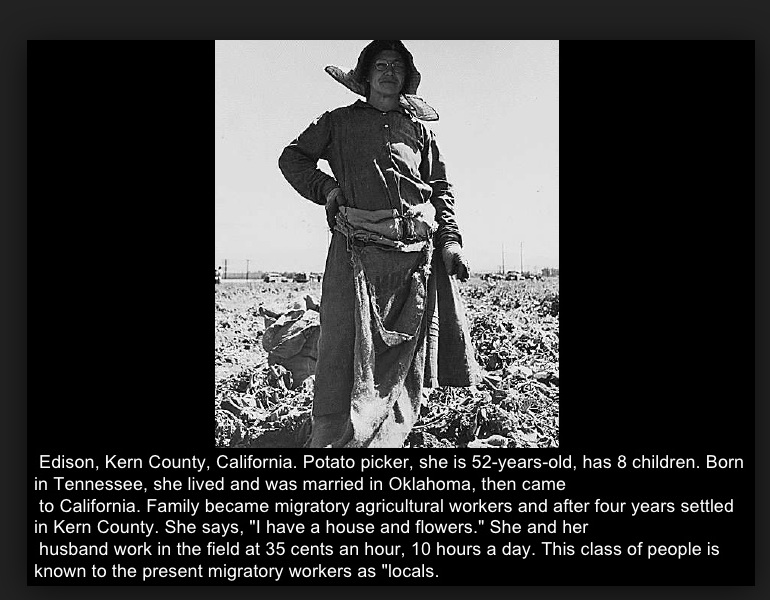
Potato picker USDA  2016-06-03 at 12.43.59 PMKern Russet Potato No More

Russet potatoes from Kern County,famous because they sustained the ‘Okies’ back in the Depression era used to be a 8000 acre crop here but today. For the first time, there are none planted say growers.Instead Kern’s farmers are planting those small red ,gold an white varieties that have caught on with shoppers, about 5000 acres overall. Russets can be grown more cheaply in the northwest where they are stored underground.

Mexico/China Need US Ethanol

Mexico could be the next big ethanol fuel market as that country seeks to transition to a cleaner burning octane enhancer and low carbon fuel and away from MTBE. USDA Acting Deputy Secretary Michael Scuse led a U.S. ethanol mission to Mexico on May 24–25 to explore trade opportunities between the two countries.
The mission participants include representatives from the Renewable Fuels Association, Growth Energy and the U.S. Grains Council who will attend meetings with government officials, legislators and the Mexican private industry.
As USDA explained, mission members will share their experiences with both ethanol production and the development of renewable fuels policies, with the goal of demonstrating how Mexico can implement its own renewable fuels program.
State-owned oil company PEMEX has plans to begin selling E6 (5.8 percent) ethanol-blended gasoline in selected cities in the Mexican states of Tamaulipas, San Luis Potosi, and Veracruz. Implementation of a nationwide E6 fuel option in Mexico would create a potential market for 790 million gallons of ethanol.
“Mexico, with the right policies in place, has the potential to achieve similar benefits producing ethanol from sugarcane,” Scuse said in a statement. “We view this as a partnership that can provide benefits for both Mexico and the United States.”
“The U.S. is the world’s largest producer of ethanol and for several years now has been the low cost supplier as well, allowing us to dramatically increase our exports. With domestic use artificially capped by EPA at 14.8 billion gallons, we will continue to seek export opportunities,” said Renewable Fuels Association General Counsel Ed Hubbard, who is on the trade mission.
Also this month looking to help clean their air China is importing more US made ethanol.Through the first three months of 2016 China imported 75.2 million gallons of ethanol from the United States-  than the 70.5 million gallons China imported from the US for all of 2015.

California Tomato Processors Expect 13 Million Tons in 2016

CDFA reports that California tomato processors have signed contracts adding up to 13 million tons this year. That is 9.1% less than last year Acreage is down to 260,000 from 297,000 last year. Kings County contracted acreage is up from 26,500 to 28,100 in 2016. Fresno County acreage is down by nearly 9000 acres.

Nurseries Sell 18,021 Acres Of Walnut Trees – Prices Down

California walnut nurseries sold over 18,000 acres worth of walnut trees in 2015- almost double want they sold back in2011. Most of the trees  were the Chandler variety. California walnut acreage in 2015 was 365,000 acres, up 12 percent from 2012. Tulare County walnut acres are 27,900 of which 2652 are recently planted non-bearing trees. In the past year walnut prices have plummeted by up to 50% cutting grower returns from well over $3000 a ton seen in the past few years.

Livestock and Climate Change: Facts and Fiction

May 15,2016-

By Frank Mitloehner
As the November 2015 Global Climate Change Conference COP21 concluded in Paris, 196 countries reached agreement on the reduction of fossil fuel use and emissions in the production and consumption of energy, even to the extent of potentially phasing out fossil fuels out entirely.
Screen Shot 2016-05-15 at 7.56.25 AM

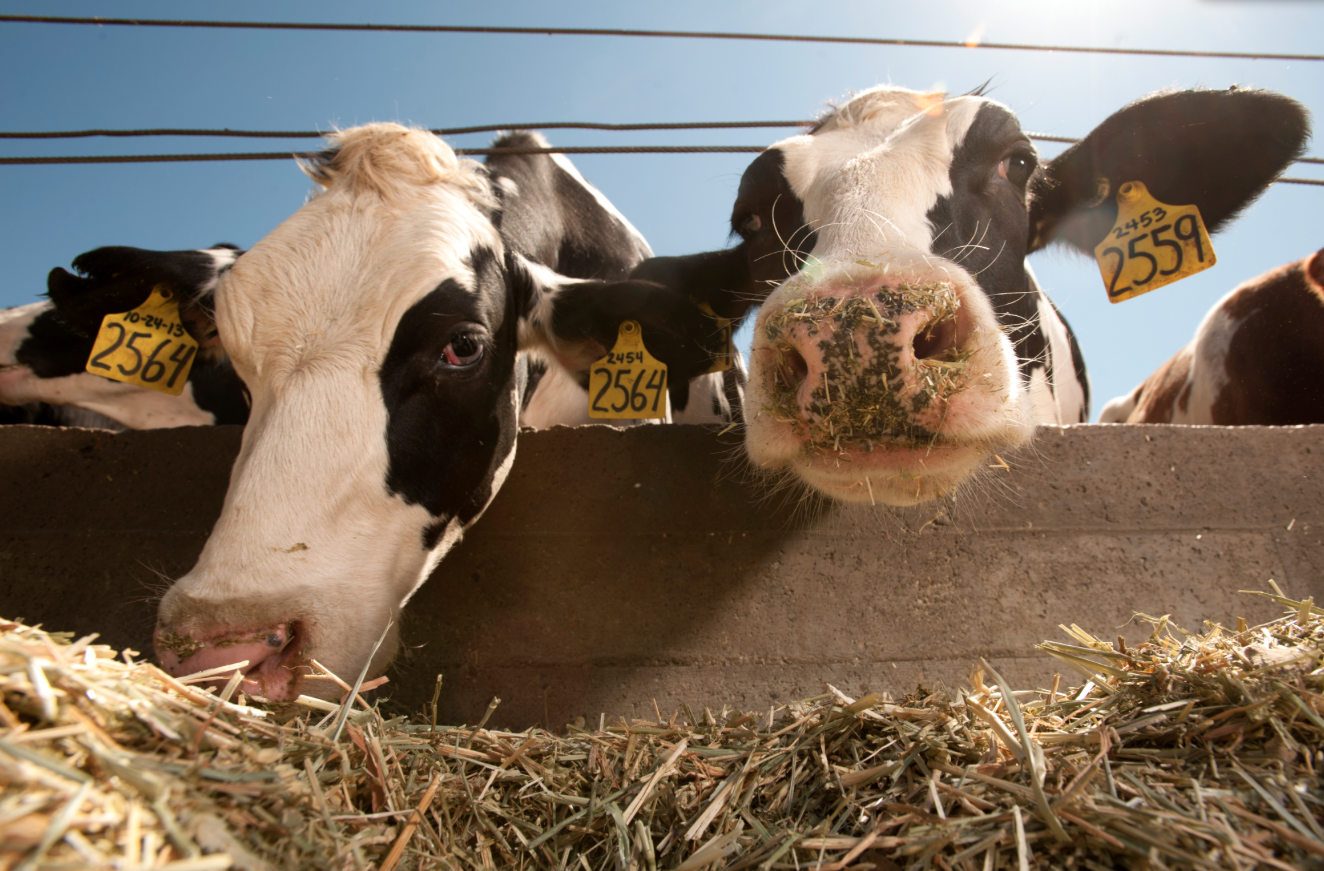
Holstein cows eat lunch at the Dairy Cattle Facility at UC Davis. Credit: Gregory Urquiaga, UC Davis
Both globally and in the U.S., energy production and use, as well as the transportation sectors, are the largest anthropogenic contributors of greenhouse gasses (GHG), which are believed to drive climate change. While there is scientific consensus regarding the relative importance of fossil fuel use, anti animal-agriculture advocates portray the idea that livestock is to blame for a lion’s share of the contributions to total GHG emissions.
Divorcing Political Fiction from Scientific Facts
One argument often made is that U.S. livestock GHG emissions from cows, pigs, sheep and chickens are comparable to all transportation sectors from sources such as cars, trucks, planes, trains, etc. The argument suggests the solution of limiting meat consumption, starting with “Meatless Mondays,” to show a significant impact on total emissions.
When divorcing political fiction from scientific facts around the quantification of GHG from all sectors of society, one finds a different picture.
Leading scientists throughout the U.S., as well as the U.S. Environmental Protection Agency have quantified the impacts of livestock production in the U.S., which accounts for 4.2 percent of all GHG emissions, very far from the 18-51 percent range that advocates often cite.
Comparing the 4.2 percent GHG contribution from livestock to the 27 percent from the transportation sector, or 31 percent from the energy sector in the U.S. brings all contributions to GHG into perspective. Rightfully so, the attention at COP21 was focused on the combined sectors consuming fossil fuels, as they contribute more than half of all GHG in the U.S.

Greenhouse gas emissions by sector.

GHG Breakdown by Animal Species
Breaking down the 4.2 percent EPA figure for livestock by animal species, shows the following contributors: beef cattle, 2.2 percent; dairy cattle, 1.37 percent; swine, 0.47 percent; poultry, 0.08 percent; sheep, 0.03 percent; goats, 0.01 percent and other (horses, etc.) 0.04 percent.
It is sometimes difficult to put these percentages in perspective, however. If all U.S. Americans practiced Meatless Mondays, we would reduce the U.S. national GHG emissions by 0.6 percent.
A beefless Monday per week would cut total emissions by 0.3 percent annually. One certainly cannot neglect emissions from the livestock sector but to compare them to the main emission sources would put us on a wrong path to solutions, namely to significantly reduce our anthropogenic carbon footprint to reduce climate change.
U.S. Population Replace Incandescent with Energy Star bulbs = 1.2 percent GHG savings
 U.S. Population “Meatless Monday” = 0.6 percent GHG savings
 
In spite of the relatively low contributions to total GHG emissions, the U.S. livestock sector has shown considerable progress during the last six-plus decades and commitment into the future, to continually reduce its environmental footprint while providing food security at home and abroad. These environmental advances have been the result of continued research and advances in animal genetics, precision nutrition, as well as animal care and health.
U.S. Dairy and Beef Production Carbon Footprint Reduced
Since the 1950s, the carbon footprint of the U.S. beef and dairy sector has shrunk as production increased or stayed the same.
Dairy:
• 1950: 22 million dairy cows produced 117 million tons milk
• 2015: 9 million dairy cows produced 209 million tons of milk. (Fifty-nine percent fewer cows produced 79 percent more milk than they did in 1950.)
Beef:
• 1970: 140 million head of cattle produced 24 million tons of beef
• 2015: 90 million (36 percent fewer) head of cattle produce 24 million tons of beef
Globally, the U.S. is the country with the relatively lowest carbon footprint per unit of livestock product produced (i.e. meat, milk, or eggs). The reason for this achievement largely lies in the production efficiencies of these commodities. Fewer animals are needed to produce a given quantity of animal protein food, as the following milk production example demonstrates:
• The average dairy cow in the U.S. produces 22,248 lbs. milk/cow/year. In comparison, the average dairy cow in Mexico produces 10,500 lbs. milk/cow/year, so it requires more than two cows in Mexico to produce the same amount of milk as one cow in the U.S.
• India’s average milk production per cow is 2,500 lbs. milk/cow/year, increasing the methane and manure production by a factor of nine times compared to the U.S. cow. As a result, the GHG production for that same amount of milk is much lower for the U.S. versus the Mexican or Indian cow.
Production efficiency is a critical factor in sustainable animal protein production and it varies drastically by region.

Improvements in livestock production efficiencies are directly related to reductions of the environmental impact. Production efficiencies and GHG emissions are inversely related—when the one rises, the other falls.
The 2050 challenge to feeding the globe is real. Throughout our lifetime, the global human population will have tripled from three to more than nine billion people without concurrent increases of natural resources to produce more food.
Our natural resources of land, water and minerals (fertilizer) necessary for agricultural production have not grown but in fact decreased. As a result, agriculture will have to become much more efficient worldwide and engage in an efficient path similar to the one it has traveled down in U.S. livestock production in recent decades.
UN’s FAO Committee Develops Global Benchmarking Method
How can emissions accurately and fairly be assessed to lay ground for a path for solutions?
In its quest to identify a sustainable, scientific path toward fulfilling the future global food demand, the Food and Agriculture Organization of the United Nations (FAO) has formed an international partnership project to develop and adopt a “gold standard” life cycle assessment (LCA) methodology for each livestock specie and the feed sector.
The ‘Livestock Environmental Assessment and Performance Partnership’ (LEAP), engaged with more than 300 scientists from the world’s most prestigious academic institutions in this unprecedented effort to develop a global benchmarking methodology.
The first three-year phase project was finalized in December 2015 with six publically available LCA guidelines. This globally harmonized quantification methodology will not only allow the accurate measurement by livestock species and production regions across the globe today, but will also identify opportunities for improvement and the ability to measure that progress in each region going forward.
Efficiency and Intensification Key to Low-Carbon Livestock Sector
Addressing the 2050 challenge of supplying food to a drastically growing human population can sustainably be achieved through intensification of livestock production. Indeed, intensification provides large opportunities for climate change mitigation and can reduce associated land use changes such as deforestation. Production efficiencies reduce environmental pollution per unit of product.
The U.S. livestock, poultry and feed industries are one of the most efficient and lowest environmental impact systems in the world. The research, technologies and best practices that have been developed and implemented over time in the U.S. can also be shared with other production regions around the world.
It is important to understand that all regions have unique demands and abilities, and so require regional solutions. However, the advances in the U.S. agriculture and food system can be adapted within these regional solutions.  These significant environmental advances and benefits are in addition to the well-documented human health and developmental value of incorporating animal protein in the diets of the growing population.
The livestock sector is committed to continuous improvement of their environmental impact in North America, and to doing its part in transferring knowledge, technologies and best practices to enhance global environmental livestock impact by region.
Now is the time to end the rhetoric and separate facts from fiction around the numerous sectors that contribute emissions and to identify solutions for the global food supply that allow us to reduce our impact on the planet and its resources.
Frank Mitloehner is a professor of Animal Science and Air Quality Specialist at UC Davis. He recently concluded chairing a Food and Agriculture Organization of the United Nations committee to measure and assess the environmental impact of the livestock industry.

Florida citrus growers: 80 percent of trees infected by greening

May 9,2016-

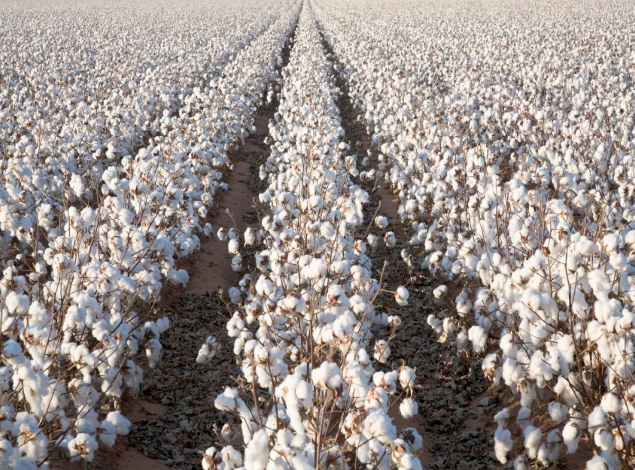
Screen Shot 2016-03-18 at 12.17.22 PMFlorida’s citrus growers say as much as 90 percent of their acreage and 80 percent of their trees are infected by the deadly greening disease, which is making a huge dent in the state’s $10.7 billion citrus industry, a new University of Florida Institute of Food and Agricultural Sciences survey shows.

The survey, conducted in March 2015, shows the first grower-based estimates of both the level of citrus greening in Florida and the impact of greening on citrus operations in Florida.

“Even though the industry acknowledges that greening has reached epidemic proportions across the state, estimates of the level of infection and its impact on citrus operations are scarce,” the researchers wrote in the paper.

Assistant professor Ariel Singerman and associate professor Pilar Useche, faculty members in the UF/IFAS food and resource economics department, surveyed about 200 growers to estimate their losses from the disease. They obtained about 76 completed surveys; those growers operate approximately 30 percent of Florida’s citrus acreage. They also estimate greening has reduced their yield by 41 percent.

Surveyed growers said, on average, 90 percent of citrus acreage and 80 percent of trees in their operations had been infected, on average, in any given operation in Florida.

Singerman and Useche conducted their survey at the UF/IFAS Citrus Research and Education Center, where Singerman conducts his research. Useche works at the UF Gainesville campus.

Their results are outlined in an Extension document, http://edis.ifas.ufl.edu/fe983.

Around Kings County- Methane Issue / Almonds

ARB Plan To Reduce Methane Emissions On Dairies Worries Kings Dairyman

Screen Shot 2016-04-24 at 7.42.08 AMAt least one Kings County dairy is installing equipment to capture methane emissions.With substantial help from the State of California they are spending $4.5 million on the technology. Now the state wants more dairies to do the same to fight climate change.

A new California Air Resource Board report vows to cut methane emissions by 40 percent below current levels in 2030 by avoiding or capturing methane from manure at large dairies, meeting industry targets for reducing methane emissions from enteric fermentation (belching), effectively eliminating disposal of organics in landfills,and reducing fugitive methane emissions by 40-45 percent from all sources.

By next year in coordination with CDFA and local air quality and water quality agencies, ARB says they “will initiate a rule making process to reduce manure methane emissions from the dairy industry in-line with the objectives in this proposed strategy.” ARB says dairy methane emissions can be significantly reduced by switching from flush water lagoons to solid-scrape or dry manure management systems. They propose more capture of methane gas, a potent greenhouse gas, to make useful biogas fuel.

Kings County diary operator Frank Cardoza of Philip Verwey Farms is cutting methane emissions by installing a dairy digester. ”It should be in operation by mid-August” says Cardoza. The farm got a $3 million grant from the CDFA to help fund the operation that includes a cover over the lagoon at their Hanford ranch. They milk 8700 cows. Cardoza extolls the benefit of “turning waste into useful energy to run our farm while trapping those gases.”

But asked if it might be a good idea for the state to mandate local dairies to also reign in methane, Cardoza warns that for a number of older,smaller dairies who may not have either capital or room –  mandating they cut emissions ”will be very tough on them”particularly now with red ink all around.

“If you take a look at how bad milk prices are this could easily push more dairies out of business.”

The state report issued last month seems to acknowledge that they would not need to mandate methane capture for smaller diaries to meet state goals targeting ”a small fraction of the State’s dairies.”

The state could target 60% of milk cows on on 30-35% of California’s dairies (about 550) to reduce 75% of the methane problem, they figure.

Cardoza points out that milk volume as well as prices are down now 14 months in a row putting some processing plants short on milk as the entire industry is feeling the pain. Just this week cheese prices on the CME dropped to $1.34 lb for blocks vs of the $2 plus level we saw in 2014.Today’s prices are closer to 2010 levels when the industry was just coming out of the 2009 milk price collapse. Hopes that prices would trend higher in late 2016 are fading even as other key Kings ag commodity prices are way down.


Kings Almond Acreage Climbs

California almond plantings were up in 2015 to 1.1 million acres, a six percent increase over 2014 says USDA. Kings County has 8,923 acres  of the high valued nuts in the ground including 1,116 acres recently planted and non-bearing. Farmers here planted nearly 700 acres of new almond trees last year. The value of California’s almond crop has skyrocketed until recently from around $2.3 billion in the 2005-2009 time frame to $4.8 billion in 2012 to $6.4 billion in 2013 and 2014.

Almonds are the state’s most valuable agricultural commodity, representing about a quarter of California’s farm exports but were widely scolded for using so much water during the drought.

Now nut prices have collapsed in the past 6 months.

Farmers at the peak were getting nearly $5 per pound last year one report shows. Nonpareil inshell almonds that sold last September for $4.80 a pound are selling for $2.34 today according to Merlo Farming Group. Walnuts too have taken a tumble by about half.
Meanwhile almond exports are down this crop year about 11 percent as of March and down 20 percent to Asia.

Ag Beat: ARB Targets Methane Emissions / Citrus Update / More

ARB Wants To Reduce Methane Emissions On Dairies

Screen Shot 2016-04-24 at 7.42.08 AMA new California Air Resource Board report vows to cut methane emissions by 40 percent below current levels in 2030 by avoiding or capturing methane from manure at large dairies, meeting industry targets for reducing methane emissions from enteric fermentation ( belching), effectively eliminating disposal of organics in landfills,and reducing fugitive methane emissions by 40-45 percent from all sources. By next year in coordination with CDFA and local air quality and water quality agencies, ARB says they ” will initiate a rule making process to reduce manure methane emissions from the dairy industry in-line with the objectives in this proposed strategy.” ARB says dairy methane emissions can be significantly reduced by switching from flush water lagoons to solid-scrape or dry manure management systems. They propose more capture of methane gas to make useful biogas fuel.

Honey Production Down 34% Last Year

California honey production was down some 34% in 2015 compare to 2014, likely due to the drought. California produced 8.2 million pounds in 2015 compared to 12.4 million pounds in 2014.

Citrus Crop: Florida Volume Drops 27 Percent While California Climbs 7 Percent

The US citrus crop forecast for 2015/16 is at 7.95 million tons, down more than 12 percent from the 2014/15 final utilized total of 9.02 million tons, and down almost 16 percent from 2013/14.  The forecast is down largely due to Florida’s huge 27% drop from last season. Florida orange juice production is expected to decline by 25%. The orange crop is the smallest in 65 years hurt by citrus greening disease as wells lower demand for OJ.
In contrast, the 2015/16 California all-orange production is estimated to be  2.1 million tons—a 7percent increase from last season. The navel crop is estimated at 1.68 million tons, up 6 percent from last season while the Valencia crop is up 11 percent. Despite the projected increase in the navel orange crop, slow movement to market assisted in keeping early-season prices above last season.  Total production of U.S. tangerines/mandarins is estimated at 907,000 tons, and if realized, will be the largest harvest on record. Production gains in California are making up for declining production in Florida says USDA.

More Farm Work – Larger Employers Have Large Percentage Of Workers Here

The average employment of hired workers or the number of full-time equivalent jobs in California agriculture has been rising, and was 410,900 in 2014. The total number of workers employed for wages sometime during the year is twice as high, 829,300. The two-to-one ratio between total workers and average jobs was similar in 2007, 2012, and 2014.EDD reports in Tulare County, 1,169 farm businesses had 36,900 employees during the third quarter of 2012. The 59 farming businesses with 100 or more employees were less than five percent of employers, but they hired 35 percent of workers and paid 30 percent of wages.

Click here to Reply or Forward
8.34 GB (55%) of 15 GB used

Terms – Privacy

Cage Free Eggs Becoming Standard Across Nation

Chicken Little Is Wrong…
Sky Not Falling But Egg Prices Are

April 19,2016-

Michael Sheats, USDA’s Director of Ag Analytics, has seen egg prices rise and fall – but nothing like this past year.

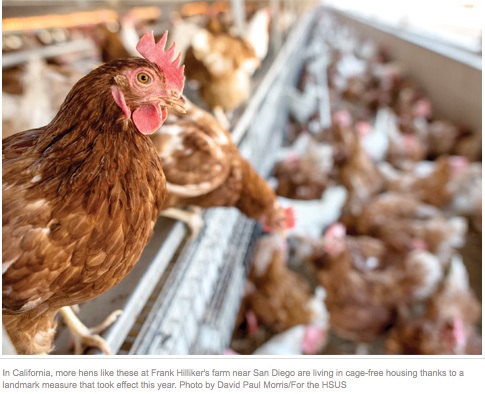
Humane Soc pic 2016-04-16 at 7.18.24 AMWhen a virus swept the Midwest poultry belt last year where the bulk if the nation’s egg farms are – some 42 million egg-laying hens were lost over a short time. Iowa, the largest single egg producing state, lost 30 million birds.

“They were just gone” remembers Sheats. That pushed companies in the food service business like McDonalds who buy by the truckload into the shell egg market where you and I purchase eggs – a dozen at a time.

Sheats says the result was that the available supply was gobbled up and of course,prices soared. European producers flooded the market to make up the difference. But US producers were not about to lose all that business and Sheats says “ they recovered much more quickly than anyone thought they would.” After falling to 270 million hens we are at back to over 310 million according to USDA.

Meanwhile California had its own drama compounded by that same bird flu, a declining in-state hen population and a new law pushed by animal welfare groups.

Back in 2008 California’s voters approved Prop 2 by a surprising two thirds – requiring eggs sold in the state to be from hens able to at least flap their wings and stretch their limbs. The law went into effect in January 2015 after an unsuccessful attempt to block the law by midwest and southern egg farmers who did not want to be told how to raise their chickens.

Miscalculation

When the law went into effect in California ”the industry still thought the law was going to be reversed” argues Sheats. But they miscalculated. From the first of the year there was a shortage of “California compliant” eggs that just got worse by April 2015 when Midwest eggs farmers saw a huge hen die-off.

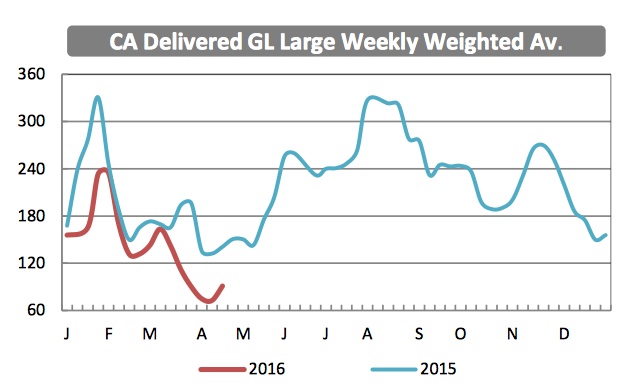
As the avian flue got worse  -prices did too – both nationwide and in California according to USDA. In California the wholesale “California Index” price hit the roof on July 20,2015 at a painful $3.61 a dozen – meaning the retail price was somewhere around $5 or more. Critics of Prop 2 wasted no time telling California voters how they made a mistake and the result was to be more expensive food.

California has been reducing the size of their egg industry in the face of higher costs and urbanization for years.In 2005 California had some 19.3 million hens. By 2015 the numbers fell to 11.4 million.

It seemed that Chicken Little was right. Critics of Prop 2 pointed to the high cost of eggs in the state and how this was hitting the poor hardest of all. And others did not like regulation, especially from those Hollywood types. Here is one press account.

“Should California tell farmers throughout the country how to run their farms? Rep. Steve King, R-Iowa, says no.

“After a while, you end up with a patchwork quilt of 50 states with different regulations and it’s impossible to comply with them,” King said. If his measure doesn’t pass, he worries that more states could try to dictate farm policy to the rest of the country.”

But there were egg shortages not just in the Golden State but nationwide as for months consumers continued to read headlines like” US egg prices are at their highest in more than 30 years.”

But Sheats says the bird flue and high eggs prices nationwide finally peaked in August 2015. After the debacle the nation’s egg farmers worked feverishly to rebuild their flocks At the same time a growing chorus of food companies, food service firms and and grocers announced they wanted more eggs from “cage free” hens turning a steady push for egg producers to change their ways into a good shove.

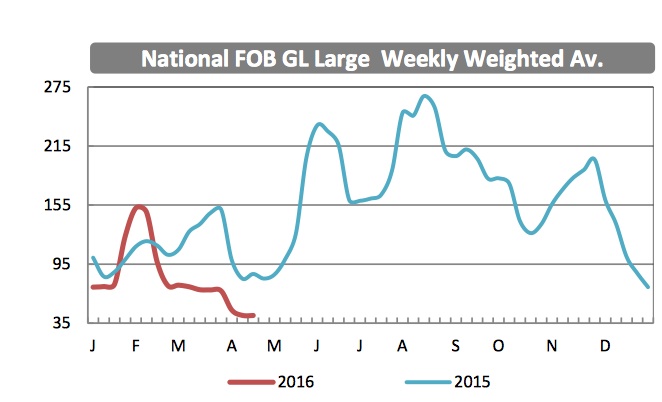
Natl Index PMPrices Fall
Meanwhile egg shortages turned into egg surpluses nationwide after the Christmas buying season last year. In August 2015 the nationwide wholesale (National Index) average hit $2.66 a dozen. Today that index price is way down – an amazing 43 cents according to USDA (see charts).

Cal Index 2016-04-18 at 12.23.12 PMIn California the trend has been the same with the wholesale “California Index” price at its high in July 2015 at $3.61 a dozen but falling to $1.15 a dozen today for cage free eggs. Retail price is around $2.60 a dozen. Meanwhile the state’s layers are on the rebound – up from 11.41 million in 2015 to 12.27 million in 2016.Many cage free eggs operators set up shop in nearby states including Nevada and Arizona to be near the nation’s largest egg market.

Nationwide midwest egg farmers are quickly switching to cage free  convinced it may be a good money maker after all.

”Grocers like cage free because they have higher margins and at least some consumers seem to want it” notes Sheats.”We are in the year of cage free” declares Sheats.

“It’s A Revolution”

”It’s a revolution that started in California but is sweeping the 48 states.”

Case in point is news this past week that one of the largest midwest egg producers will do more cage free eggs. “One of the nation’s largest egg producers says it plans to build a new cage-free farm in eastern South Dakota that will house 3 million egg-laying hens.

Spirit Lake, Iowa-based Rembrandt Foods supplies egg products to food manufacturers, food service providers, restaurant chains and retail grocers. It announced plans to increase the number of hens housed in cage-free barns last year.Rembrandt president Dave Rettig says growing consumer demand for cage-free eggs has pushed more than 100 food companies, including Wal-Mart and McDonalds, to switch to cage-free eggs in the next ten years.

The way Mr Sheats figures “some two-thirds of the chickens will be cage free“ in the near future.
Walmart, the nation’s top grocer, announced a few weeks back that it plans to get 100 percent of the eggs it sells in the U.S. from cage-free suppliers by 2025. Walmart will require all their egg suppliers to be certified by United Egg Producers which certifies each hen should be allotted between 1 and 1.5 square feet of space and 6 inches of elevated perch space, and 15 percent of the usable floor of the hen house must be a scratch area. But it does not mean that the birds get to go outdoors.

With more producers adopting cage free practices, the premium on cage free should come down argue some advocates.“Studies show only a slight difference in the cost to produce cage-free eggs, but no difference between cage-free and conventionally produced eggs themselves, says Josh Balk, senior food policy director for The Humane Society of the United States.”The cost is going to come down,” Balk says. “These production practices are going to gain in efficiency because producers are going to understand even better how to do it.”

Around Kings County

April13,2106

Kaweah & Kings Runoff Offers Some Relief

Screen Shot 2016-04-13 at 12.30.51 PMChair of the Kaweah Delta Water Conservation District Don Mills says runoff on both the Kaweah and Kings River should be around 73% of average based on the snowpack – a whole lot better than 26% of average last year. Local districts who get Kaweah water include the Boswell company and Lakeside Water District who should see about 4 weeks of irrigation runs while Kings River water users might get 5 to 7 weeks of runs. ”It will feel more like a normal year where people will be able to float down the Kings River in inner tubes.” But Mills adds that while things feel better after four years of drought, El Nino did not pack the punch some thought it would. While rainfall in the Sierra stands around 100% of average – snowpack is down to 73%.  “We need much more than that to repair the damage done by the drought. At least for a part of the summer – farmers will be able to turn off their pumps.”
Next crisis will be the approaching deadlines to form state-mandated Groundwater Sustainability Agencies (GSAs) in Kings County.”The state has set us locals up to be the bad guys, to tell farmers they will have to restrict their pumping.” Mills adds that “this program is not going to be popular.” On the other hand if locals don’t do it and the county does not act – the state will organize it “and nobody wants that.” Mills says one deadline to organize is by year’s end.

Report Says Ag Land Values Here Head Lower

The annual report from the California Chapter of the American Society of Farm Managers and Rural Appraisals released Friday in Visalia says in a word – watch out below. While ag commodity prices including nuts prices were higher in most of 2015 the year 2016 appears to be a different story. “Nut prices began to slip in the latter half of 2015, led by the walnut market and followed in November by a stomach-clenching free fall in the almond market”comments the report. What is the upshot “One of the key factors driving the increase in land values—record farm profitability—has fundamentally changed in 2016.” Among the predictions: Milk prices continued to drop, along with feed and fuel costs. Whereas in the past, many older dairy facilities might have been converted to nut-crop ground, that’s less of a possibility today. Larger dairies will now likely show more interest in purchasing those properties.
”Nut growers might not be able to pay as much,”said presenter Janie Gatzman of American Ag Credit , adding that the larger dairies are likely to make those purchases in order to grow their enterprise by increasing the permitted herd size.

Vineyard New Plantings Slow

Planting of new California vineyards slowed significantly during the past year, according to a report released Tuesday. The government survey says farmers planted fewer than 9,000 acres of new vines last year, down more than 40 percent from the previous year. The grapes most frequently planted included wine varieties such as cabernet sauvignon, pinot noir and chardonnay. California leads the nation in grape production.