USDA Citrus report say Brazil production slumps

January 24,2020

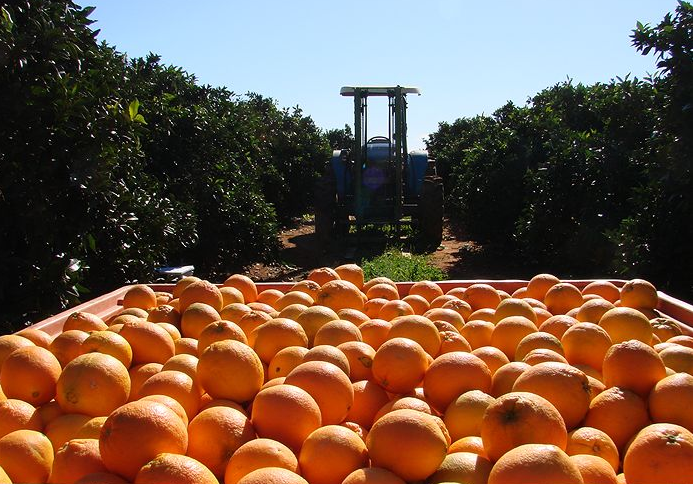
Screen Shot 2020-01-24 at 6.55.58 AMA new USDA report in January 2020 says global orange production for 2019/20 is forecast to fall 5.8 million metric tons from the previous year to 47.5 million as unfavorable weather leads to smaller crops in Brazil, Egypt, the European Union, and Morocco. Consequently, consumption, fruit for processing, and fresh exports are also forecast lower. Brazil’s production is forecast to fall 22 percent.

The report offers a reprieve for Florida ,suffering under citrus greening disease noting that U.S. production is forecast to rise 1 percent to 4.9 million tons. Orange production in Florida has been declining for years due to citrus greening, which has decimated groves and increased costs for crop maintenance. Two consecutive years of higher production are a relief after so much decline. Consumption, exports, and fruit for processing are all expected to be up with the production increase.

Juice

Global orange juice production for 2019/20 is forecast 17 percent lower to 1.7 million tons (65 degrees brix) as Brazil’s production tumbles. Consumption is projected to be flat and global trade is forecast lower with smaller imports for the United States and a sizable drop in Brazil’s exports.

Brazil’s orange juice production is forecast to drop 25 percent to 992,000 tons with fewer oranges for processing. Consumption and stocks are both forecast slightly higher while exports are forecast 27 percent lower with the drop in production. Even with lower supplies Brazil remains the largest producer and is expected to account for over three-fourths of global orange juice exports.

Although U.S. production is forecast steady at 330,000 tons, increased carry-in stocks boost total supply 5 percent. Despite higher available supply, consumption is still expected to be flat and ending stocks are consequently forecast to rise.

Screen Shot 2020-01-24 at 6.50.11 AM

Mandarins

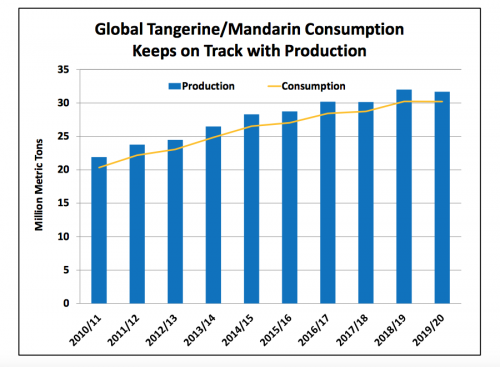
Global mandarin production for 2019/20 is forecast down 1.0 percent to 31.7 million tons with declines in the European Union, Morocco, Turkey, and the United States more than offsetting a larger crop in China. Consumption and exports are both down with the decrease in available supply.
Production has exceed consumption in recent years as world mandarin production has steadily grown.U.S. production is forecast down 14 percent to 844,000 tons due to a smaller crop in California. Consumption is down due to lower available supplies while exports remain unchanged.

Ag beat: Dry forecast / more

January 21,2020

Organic produce gains

Report says organic fresh produce notched a 7.9% sales gain at retail in 2018, according to IRI/FreshLook Marketing. That compares with a 2.85% gain for all produce sales in 2018.


Screen Shot 2020-01-21 at 8.52.04 AMForecast turns dry

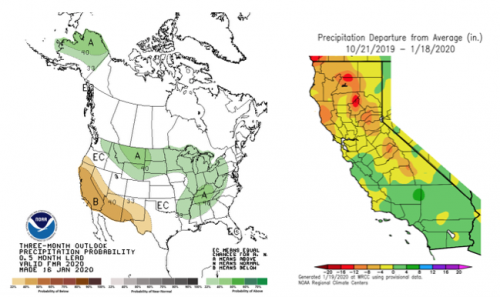
California snowpack is down to 82% of average for the date as a dry spell hits the state. Rainfalll to date this water year in reservoir rich Northern California has been particularly hard hit as this map shows. Meanwhile the NOAA forecast for the next three months (the rest of winter) is not looking good either as this map indicates below average rain for the state. 

America Drank Less Wine for First Time in 25 Years

Reports suggest  hat Millennials opted for other beverages and baby boomers pulled back as more chose non-alcoholic beverages, spirits that cater to low-calorie and natural ingredients or pot as alternatives.A downturn has hit California where we  produces 61 percent of all wine consumed in the United States, according to the Wine Institute. Younger drinkers may be preferring premium spirits and cocktails over red or white wine says one observer.

One tunnel is the plan 

Governor Newsom directed state agencies this month to pursue a single tunnel solution to modernize our water infrastructure, and when combined with the broader, statewide Portfolio approach. Newsom says this project would help safeguard a vital source of affordable water for millions of Californians,” said DWR Director Karla Nemeth. “This water supply is critical to the health of local communities, the future of the Delta ecosystem and the success of our state’s economy.”

California’s main system of water conveyance, which moves a large portion of the state’s surface water supply, continues to be under threat from flood, subsidence, earthquake, and climate change. Our state-led water system that captures precipitation from the Sierra Nevada mountains and the Sacramento and San Joaquin rivers to provide drinking water to 27 million Californians faces major vulnerabilities as it travels through the Sacramento-San Joaquin Delta.

Politico reporst that “Ag lending decreased by 5 percent during the second half of 2019 due to trade aid for farmers, as well as lower production costs and relatively strong crop yields, according to the Federal Reserve last week.”

Politoco also report sthat House Democrats are warning that raising tariffs on European wines from 25 percent to 100 percent could lead to 78,000 job losses in the U.S. The Trump administration is also threatening to slap 100 percent duties on French champagne.

Ag Beat

-January 6,2020-

Tulare County farmer now president of Sunkist

Screen Shot 2020-01-06 at 6.10.20 AMSunkist Growers now have a Tulare County farmer as president  and CEO with the  retirement of Russ Hanlin this fall. Jim Phillips of Porterville Citrus  has been selected  to head up the citrus co-optive with a big presence in Tulare County.

Chairman of Sunkist Growers Tulare Co farmer Gerald Denni said: “Russ has made tremendous contributions to Sunkist Growers and the citrus industry overall. On behalf of the board, I would like to thank Russ for his dedication to our growers, shippers, employees, and customers, and to welcome Jim to the executive leadership team at Sunkist Growers.”

Sunkist Growers also recently hired citrus-industry veteran Matt Shekoyan to serve as Vice President of Strategy for the 126-year-old citrus cooperative and Fruit Growers Supply (FGS). Both Phillips and Shekoyan worked at the Wonderful Company for years.

Screen Shot 2020-01-05 at 12.38.20 PM

A look at corn and hog prices

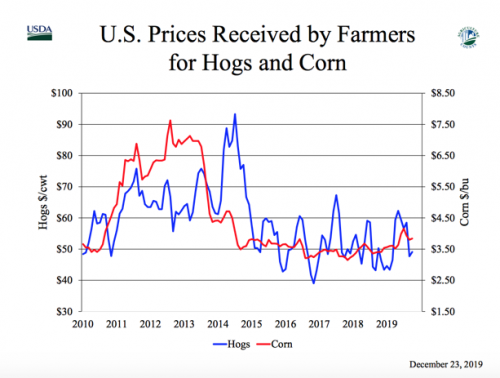
Corn and hog price remain in lock step  down from 2016 through 2019. Both farm commodities have been  hurt by the  tarrif war in the past two years.

 Screen Shot 2020-01-05 at 12.37.12 PM

Egg prices stay low

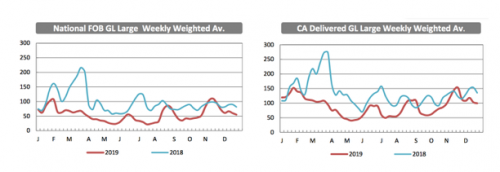
No indication that with the adoption of the California standard for hen houses that its hurt the consumer as egg prices remain lower in 2019 compared to 2018. Figures from USDA.

Citrus in Japan

A new USDA report says citrus acreage in Japan continues to decline amid decreasing consumption and aging rural population. In the 2019/20 marketing year mandarin production is forecast to hit a historic low of 740,000 metric tons. Japan’s rising demand for lemon-like citrus will be met through increasing imports and land use transition from mandarin to lemon production.

The new U.S.-Japan trade agreement includes a stepwise tariff reduction and increase in safeguard levels for U.S. orange exports to Japan. In response to reduced mandarin production and anticipated tariff reduction, Post forecasts a modest increase in U.S. orange exports to Japan in the 2019/20 MY.

Alfalfa acreage down

Central California used to be the alfalfa belt as dairymen prided themselves on raising feed near-bv in multiple cuttings for their own herd.

The Hoyt Report says California will set the record for the lowest alfalfa acres since record keeping began in 1921. The current estimate is 560,000 acres, down 10 percent. Washington state has been following that same trend as well, having the lowest acres (down 9 percent) since the mid-1970s.

The combination of fewer acres and lower yields in California this year will translate into the Golden State’s lowest production since the 1930s. Into the future California dairy operators will have to rely more on neighboring states for their alfalfa needs.

US dairy exports to China fall 50%

The US dairy industry tries to regain its mojo in the new year after losing a big export market in 2019.Exports of U.S. dairy products to China have declined over 50% in 2019.


Ag Beat

-December 23,2019-

From multiple reports

Mexican avocado exports to US surge

Mexican exports of avocados to the United States during 2018/19 were 15.97 percent higher than the previous year and are expected to increase 12.5 percent this season into 2020.

US avocado growers harvest small crop but with higher prices

The California Avocado Commission says the average price for avocados sold in 2019 was $1.71 per pound up from $1.13 the season before. In the 17/18 season the harvest added up to 338 million pounds compared to to just 217 million pounds this year.

One of the major avocado companies Calavo made the best of it reporting fourth quarter sales in the fresh segment category of $144.2 million, up from $141.1 million in the fiscal 2018 final period. The company reported fiscal 2019 revenues rose 10% to reach a record $1.2 billion, compared with $1.1 billion the previous year. 2019 was the tenth year in a row when the company’s revenues have set new record highs, according to the release.

Larger apple crop should lower prices

With the onset of cold weather the U.S. apple harvest for the 2019/20 marketing year (August-July) is wrapping up. The 2019/20 U.S. apple crop is forecast at 10.6 billion pounds, up 4 percent from a year ago as output gains in Western States (largely Washington and California) outweigh declines in Eastern States. The top apple State, Washington, expects a 7.2-billion pound crop of excellent quality, up 7 percent from last year. Overall, larger production indicates a possible downward pressure on apple-grower prices during the 2019/20 season-relative to 2018/19, likely boosting overall demand, especially in the fresh market. Pricing early in 2019/20, however, was supported by relatively strong late-2018/19 fresh apple grower prices due to tighter supplies.

Florida/ California orange growers worried about prices

Screen Shot 2019-12-23 at 12.38.12 PMCalifornia and Florida orange growers continue to be worried about the price they are getting for their crop even with different factors at work.

Florida growers face shrinking demand for juice, where most of their crop goes, with per capita consumption having dropped by two-thirds in recent years. To match this problem they also face a cut in production between hurricanes and citrus greening disease killing their trees as well as a flood of imports.

Florida Citrus Mutual says “compounding the issue is Florida is expected to produce an even larger crop this year and there is nowhere to put the fruit. The increase, coupled with declining consumer consumption and the increase in foreign imports, has resulted in a perfect storm.

Many grower contracts with processors are not being extended. This has created a wave of uncertainty throughout the industry. It is expected that 12 million boxes may not be harvested this season. This is a dreadful situation for Florida’s signature crop. Grower returns could be way below what it costs to grow a crop. I’ve heard contracts are being offered at a nickel below the futures price – that is less than a dollar!”

California Citrus Mutual’s Casey Creamer says Golden State orange growers situation is less dire but below harvest cost prices nevertheless are hurting. Most of California oranges go to the fresh market where demand is good but China’s tariffs have hurt California orange exports hard for several years running now.That has opened the door for our foreign competitors . Even though President Trump has announced a a deal with China to buy US ag goods in coming months there is yet no firm indication this includes our citrus or the timing of purchases. Citrus sales have to happen right now to make any difference for this season.Navel season in California ends in a few months.

Meanwhile like Florida,California is seeing increased competition from imports into the US. Creamer says “two years ago we had the best season ever and last year we had the worst season ever.” with below picking cost prices. So far this season that began in November there has been no price improvement ,adds Creamer.

Uncertainty is the byword this Christmas.

“At this time, it does not appear that the removal of retaliatory tariffs is a part of the Phase One agreement. However, there are reports by the Chinese media that importers may be granted waivers. There is guarded optimism that the Phase One deal will allow the California citrus industry to resume traditional exports to China.”

Where Pineapples come from

While many consumers might associate Hawaii with pineapples, virtually all of U.S. pineapple volume is supplied by imports.

As recently as 1991, Hawaii provided half of total U.S. fresh pineapple supply. That year, total supply of fresh pineapple totaled 503 million pounds, of which Hawaii accounted for 250 million pounds and imports provided 254 million pounds.

Fast-forward to 2006 and Hawaii supplied only 192 million pounds of fresh pineapples and import volume ballooned to 1.4 billion pounds.By 2015, Hawaii’s contribution to the fresh pineapple supply disappeared altogether, while imports supplied all the fresh pineapple supply of 2.3 billion pounds.

Today Costa Rica is by far the leading supplier of fresh pineapples to the U.S., providing about 82% of total fresh/frozen pineapple imports worth $668 million in 2016.Since 1990, U.S. imports of Costa Rica pineapple have grown from $29.6 million to $522 million in 2016. Mexico’s pineapple production has jumped from $554,000 in 1990 to $47.7 million in 2016. Honduras has seen growth from $5.4 million in 1990 to $24.8 million in 2016.

Fewer XMAS  trees

There were 10,000 farms cutting Christmas trees in 2017, down from about 12,000 in 2012, according to USDA data published in April. The number of harvested trees fell from 17.3 million to 15.1 million over that period. Story from Politico.


Western Growers Applauds USMCA Announcement

news release

Screen Shot 2019-12-11 at 10.55.47 AMIRVINE, Calif. (December 10, 2019) – In response to the announcement that a deal on the U.S.-Mexico-Canada Agreement (USMCA) was reached between the Administration and Congress, which received subsequent approval from the Mexican and Canadian governments, Western Growers President and CEO Tom Nassif issued the following statement:

“Western Growers applauds the Administration and a strong, bipartisan contingent of congressional representatives for their diligent work in producing an outstanding trade agreement for American agriculture. We commend President Trump, Ambassador Lighthizer, Ambassador Doud and the Administration’s team for their success in renegotiating NAFTA and securing freer and fairer trade opportunities for our country.

“In this turbulent trade environment, American farmers need certainty more than ever. The USMCA not only reaffirms our strong economic ties with our North American neighbors, it offers a new model for how U.S. trade deals should be structured in the future.

“For the fruit, vegetable and tree nut industry, this deal ensures continued access to our top two export markets while making much needed sanitary-phytosanitary (SPS) updates that will improve our defenses against devastating pests and diseases. Additionally, the USMCA achieves groundbreaking labor reforms, requiring Mexico to substantially improve its wages and labor standards, which will improve the competitiveness of our domestic growers in an increasingly global marketplace.

“We appreciate the commitment both parties have demonstrated in setting aside their political differences and negotiating this agreement in good faith. The result is a deal that addresses the concerns of all sides and will enhance economic opportunities for businesses across the country. We urge Congress to quickly approve this agreement and deliver a victory for American farmers.

“Finally, we are hopeful that this spirit of bipartisan cooperation between the Administration and Congress will extend into other public policy debates impacting the agriculture industry, including the need to resolve the labor crisis facing our nation’s farms.”

Chicken consumption soars

All meats and fish are up as well says USDA  

pastedGraphic.png

-December 10,2019-

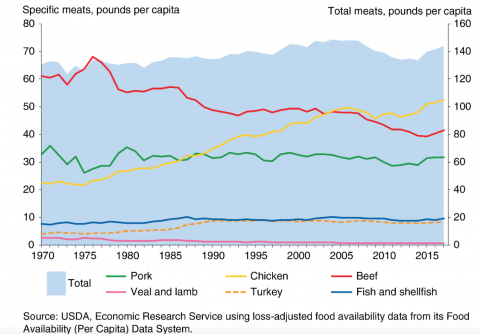
After falling from 148.6 pounds in 2004 to 133.5 pounds in 2014, the per capita supply of red meat, poultry, and fish/shellfish available for Americans to eat after adjusting for losses rose to 143.9 pounds in 2017. Red meat (beef, pork, veal, and lamb) accounted for 51 percent of 2017’s 143.9-pound total, compared with 42 percent for poultry (chicken and turkey) and 7 percent for fish and shellfish.

ERS calculates per capita loss-adjusted food availability in a given year by taking per capita supplies of food available for human consumption and adjusting for some of the spoilage, plate waste, and other losses in grocery stores, restaurants, and homes to more closely approximate consumption. Over 2015-17, beef had the largest percentage increase in per capita loss-adjusted availability—growing by 6 percent. ERS commodity analysts point to higher demand for red meat as one of the drivers of this increase. Recovering consumer incomes after the 2007-09 recession and stable or declining retail red meat prices have increased U.S. consumers’ demand for red meat in recent years.

Historical data reveal different trends for different meats and seafood. Loss-adjusted availability of beef reached a high of 67.9 pounds per capita in 1976, but trended downward to 39.3 pounds in 2015 before increasing to 41.6 pounds in 2017. Loss-adjusted availability of pork displays a relatively flat trend over the last three decades, ranging from 28.8 to 33.5 pounds per capita. Veal and lamb loss-adjusted availability is down from 2.7 pounds per capita in 1970 to less than a pound in 2017.

Loss-adjusted availability of fish and shellfish was 7.5 pounds per capita in 1970, grew during the 1970s and 1980s, and has averaged 9.4 pounds per capita since 2000. Within the fish and shellfish category, shellfish (crustaceans, mollusks, squid, and other shellfish) had the greatest increase—more than doubling from 1.3 pounds per capita in 1970 to 3.2 pounds per capita in 2017.

Screen Shot 2019-12-10 at 10.38.25 AM

Chicken went  from 22.4 pounds per capita in 1970 to 52.3 pounds per capita in 2017.

Overall, chicken and turkey had the largest gains over the last five decades. Loss-adjusted chicken availability increased from 22.4 pounds per capita in 1970 to 52.3 pounds per capita in 2017. For turkey, loss-adjusted availability doubled from 4.0 pounds per capita in 1970 to 8.2 pounds in 1989, and has remained between 8 and 9 pounds per capita since 1990. Efficiencies in chicken and turkey production have led to lower bird mortality rates and a higher average weight per bird, expanding supplies and keeping prices in check. The lower retail price for chicken and turkey compared to beef and pork may have contributed to poultry’s continued popularity. Another demand boost may have been the poultry industry’s development and marketing of convenient grocery store offerings, such as skinless, boneless breasts and ready-to-eat rotisserie chickens. Poultry consumption may have also benefited from health-related concerns: on a per-ounce basis, chicken has less total fat, saturated fat, and cholesterol than beef.

Ag News

-December 7,2019-

Tulare County hemp ordinance expected

Screen Shot 2019-12-07 at 11.52.41 AMCounty economic development chief Mike Washam says the Board of Supervisors are expected to draft a hemp ordinance for Tulare  County in the New Year that would allow some plantings by Spring, in time to make a crop. To date there has been a hold on plantings due to federal and state questions.”We have a two year moratorium in place” says Washam “but we can amend that” he expects.

Hemp, or industrial hemp, is a strain of the Cannabis sativa plant species that is grown specifically for the industrial uses of its derived products. It is

one of the fastest growing plants and was one of the first plants to be spun into usable fiber 10,000 years ago. Hemp was allowed in the 2018 Farm Bill but its appearance similar to marijuana has prompted regulatory delay.

The most popular use right now is make CDB oil, used for health issues and as a beauty product.A new CBD retail store is about  to open in Downtown Visalia. Reports of a surplus of hemp in  other parts the US have surfaced as farmers have rushed to plant their fields with a new hoped-for money maker.

Good cheer for dairymen

The latest diary market report is cheery for a change for the county’s’ number one industry.

Pass the eggnog, please. Dairy producers should be brimming with holiday spirit this year, as Christmas present promises to be much more cheerful than Christmas past. USDA announced the November 2019 Class III price at $20.45 per cwt. That’s the highest Class III price in five years and it is more than $6 – yes, $6! – above where it was a year ago. That’s a lot of Christmas cheer heading for dairy producers’ mailboxes. At $16.60, the November Class IV price pales in comparison but it is still up 21ȼ from October and $1.54 better than November 2018.

Labor bill on deck in Congress

The House Rules Committee posted that it will meet Tuesday, December 10 at 3:45 p.m. to vote on the Rule for H.R.5038, “The Farm Workforce Modernization Act.” It appears the bill will be on the House floor the following day, Wednesday, December, 11.Most ag groups in California, Tulare County and across the US are supporting the bill.

Oh Deere

Reports cite lower farm equipment sales: The world’s largest farm equipment maker, Deere and Co., expects sales of its agricultural equipment to decline by 5% to 10% globally in the year ahead due to lower demand for big machinery. “Lingering trade tensions coupled with a year of difficult growing and harvesting conditions have caused many farmers to become cautious about making major investments in new equipment,” said Chief Executive John May.

Its not just Deere.

Indian tractor maker Mahindra reported that it had sold 21,032 units during November 2019, down by 19% from 25,949 units in November 2018. Also the Association of Equipment Manufacturers reports that U.S. total farm tractor sales decreased 3.5 percent in October compared to last year while U.S. October self-propelled combine sales grew 8.1 percent.

Total U.S. sales of 2-wheel-drive tractors in October decreased 3.5 percent compared to October last year: under 40 HP 2-wheel-drive tractors decreased 3.9 percent, and sales of 40-100 HP tractors fell 4.9 percent.


Milk Specialties Global Acquires Visalia Facility

Dairy manufacturing facility gains new, committed owner

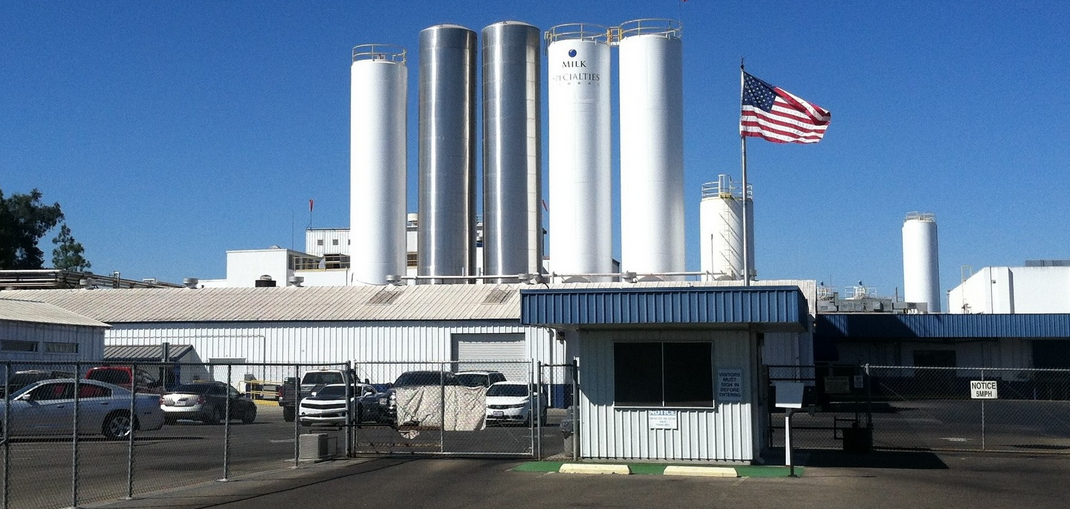
Milk Specialties Global, an industry-leading nutritional ingredient manufacturer, has acquired their manufacturing facility in Visalia, CA, that was previously being operated under a lease.  The acquisition of the facility demonstrates the Company’s commitment to continue to operate the facility that employees 74 people and processes over 2 million pounds of raw milk per day.

Milk Specialties began leasing the Visalia facility in 2012 and has made significant investments to expand production capacity, operational efficiencies and improve sustainability impact. By acquiring the facility, the company is securing this critical asset to support the long-term future growth of their business.
“After acquiring the facility, we are committed to making further investments in the operation to keep up with our customers’ growing demand while continuing to maintain our quality reputation,” states Troy Peifer, Chief Financial Officer.

Every day, Visalia processes over 2 million pounds of raw milk and manufactures the milk into high demand products like milk protein, micellar casein, and liquid calf milk replacer.

Milk protein and micellar casein are ingredients most commonly used in the ready-to-drink sports nutrition product category for a range of companies from small U.S. businesses to global nutrition leaders. The Company’s liquid milk replacer is most commonly delivered to western dairies and calf ranches.

“The Visalia facility is critical to our milk protein business and continued success in manufacturing ingredients that are used in nutritional products for consumers and animals around the world,” added Mr. Peifer.


Ag beat: Orange prices disappoint

-November 26,2019-

Here we go again. Politico reports that the FDA is warning consumers not to eat romaine lettuce harvested in Salinas California, as the agency investigates an E. coli outbreak that has sickened 40 people across 16 states.

Screen Shot 2019-11-26 at 12.38.27 PMHere we go again, again. California citrus growers are worried that early 2019/20 harvest season orange prices are heading lower following the trend we saw all of last season. Exeter-based Citrus Mutual asks “Are We Seeing a Repeat of Last Season? The start of pricing this year was eerily similar to last season and we are now, unfortunately, starting to see prices dip as companies are competing for shelf space.  Is this a repeat of last season? Is this a short-term dip?” Orange growers saw red ink last year made worse by the trade war with China. That trade war continues.

“During my two seasons with California Citrus Mutual, our growers enjoyed one of the best seasons ever and most recently endured one of the worst seasons ever” says CEO of Citrus Mutual  Casey Creamer recently.

“This last season, much of the industry saw grower returns were significantly below cost of production. Fruit was juiced in the field for returns less than the cost to harvest. This was done in order to avoid packing charges and to try and bring some stability to the market. Some growers even had to harvest fruit and drop it to the ground, suffering huge losses just to get ready for the upcoming season. 

While there were many reasons for the difficult season, trade dynamics in China and across the globe, in my opinion, is the main reason for this devastating season.”Besides the issue of exports more citrus imports helped depress our citrus prices.

“The trend of increasing competition from imports continues as more and more production is expected from developing countries around the world. This new citrus currently doesn’t have a home and the U.S. market is one of the most desirable in terms of profitability for countries who have significantly lower costs of production. The citrus market is saturated with foreign competition, with additional countries waiting to gain access to provide additional competition and thus lower returns for growers if the trend continues.”

Obesity down for WIC babies .The US CDC agency recently found that 41 U.S. states and territories saw significant declines in obesity among children (2-4 years of age) whose families participated in WIC between 2010-2016. The latest data, published in the CDC’s Morbidity and Mortality Weekly Report, also found that obesity ticked upward in this population in three states: Alabama, North Carolina and West Virginia.
“Improvements in national, state, and caregiver guidance around nutrition and physical activity may be contributing to this decline in childhood obesity,” CDC Director Robert Redfield said in a statement. “We are moving in the right direction.”

Visalia-based Edeniq Inc., a leading biotechnology company that develops processes for producing and measuring cellulosic ethanol says they’re in the process of relocating  their lab in town from 2505 North Shirk Road to 6910 W Pershing. The company employs 10 in Visalia. The company had a demonstration ethanol plant at their Shirk location they no longer need.

Robot milking machines will take the place of workers at a Valley dairy near Chowchilla. Some 10 robotic milking centers will be installed at Diamond H Dairy instead for 72 stall carousel milking parlor according to application. The robot milkers will help manage an increase from 4900 milk cows to 7278.


ag updates

Westlands won’t push Shasta expansion

From Sacramento Bee

Screen Shot 2019-11-12 at 9.27.57 AMThe nation’s largest water agency signed an agreement that legally bars it from participating in a controversial plan to raise Shasta Dam, a move applauded by environmental groups that fiercely opposed the proposal out of fears enlarging the state’s biggest reservoir would swamp a stretch of a protected Northern California river and flood sites sacred to a Native American tribe.

Late Thursday, Westlands Water District signed a legal settlement with California Attorney General Xavier Becerra that prohibits the water district from working in a formal way on planning to raise Shasta Dam near Redding.

Westlands’ participation is considered crucial to the project’s coming to fruition.

Bankruptcy for Dean Foods 

Bloomberg reports that  top U.S. milk processor Dean Foods Co. filed for Chapter 11 bankruptcy today and is in advanced talks with Dairy Farmers of America Inc. regarding a potential sale.

Dallas-based Dean listed assets and liabilities of as much as $10 billion each in court papers, and said in a statement it has commitments for $850 million in bankruptcy financing from existing lenders led by Rabobank.

“We continue to be impacted by a challenging operating environment marked by continuing declines in consumer milk consumption,” Chief Executive Officer Eric Beringause said.

Dean Foods had plant in Tulare but sold it to Saputo.

Amazon opening new grocery stores in California

news reports

An Amazon-branded grocery store will launch in the Los Angeles neighborhood of Woodland Hills in 2020, tech news source CNET reports. Amazon said the store would be different from Whole Foods and would not compete against Whole Foods, although it did not clarify what the store’s name or price range would be or what food products it would carry.

“No, this store will not compete with Whole Foods Market,” a company spokesperson told CBS News in an email. “When it comes to grocery shopping, we know customers love choice and this new store offers another grocery option that’s distinct from Whole Foods Market, which continues to grow and remain the leader in quality natural and organic food,” the person said.