Fresno-based family owned grape juice company acquires concentrate business from Constellation Brands

-July 3,2020-

Vie-Del 2020-07-02 at 2.45.34 PM
The big don’t always get bigger. Family-owned Vie-Del Company, based in Fresno, just announced they have acquired the grape concentrate and high-color concentrate business from mega-size spirits operator Constellation Brands, based in NY.

Founded in 1946, Vie-Del Company is a family-owned fruit processor, winery and distillery operated by the Nury family. One of the oldest California based grape processors and suppliers of bulk juices, concentrate, brandy, wine and spirits, the company also produces a variety of other products for sale to the wine, spirit, food and beverage industries. The company operates out of two California facilities, one located in Fresno and the other in Kingsburg.

The unique name dates from 1946 when Vie-Del was founded by Fred Vieth and Jim Riddell. Back then they were just in the specialty wine business, but have since counted on new technologies used in the fruit concentrate, wine and brandy industries.

Today the majority of the business is comprised of grape juice concentrate, brandy/high proof, and wine. However, they do work in dealcoholized wines, grape puree concentrate, not from concentrate single strength juice, and a number of other fruit products such as raisin juice concentrate, fig juice concentrate, prune juice concentrate, plum juice concentrate, peach juice concentrate, for example. The business sports a woman president -Dianne Nury.

According to the company’s news release Vie-Del plans to incorporate the MegaNatural High Color Concentrate product lines under the corporate Vie-Del Company brand and legacy product lines. This acquisition strengthens Vie-Del’s capabilities and positions the company as a leader in the high-color concentrate business. Together with Vie-Del’s existing concentrate business, these new capabilities will further enhance the company’s ability to serve the needs of the marketplace.

“This acquisition provides a seamless complement to our existing lines of grape juice concentrates, allowing our operation to further build upon the success we’ve created for more than 70 years,” said Dianne Nury, President of Vie-Del Company.

Unlike Constellation Brands with has a portfolio over 100 retail brands,Vie Del can benefit from the fact it does not compete with potential customers in this industry.

”All our products are sold in bulk, we have no labeled products. We do not compete with our customers on the shelf or out in the field” says a company spokesperson.

The company says they sell or have sold to almost every major and minor user in the beverage industry, as well as many other industries.

CALIFORNIA DAIRIES, INC. ANNOUNCES CLOSURE OF ITS ARTESIA MANUFACTURING FACILITY

Screen Shot 2020-06-30 at 12.16.23 PM

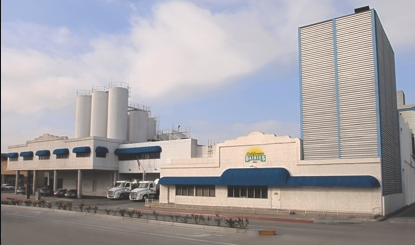
VISALIA, Calif. — June 29, 2020 — California Dairies, Inc. (CDI), today announced it will cease operations at its Artesia, California, manufacturing facility, effective immediately. The entire facility will close, affecting approximately 49 employees.

“We deeply regret the impact this decision will have on our Artesia employees and the community and are committed to supporting our employees through this transition,” said President and Chief Executive Officer, Brad Anderson. “The Artesia plant has been a valued facility with a long history that has served California Dairies and its member-owners well. This decision is not a reflection of the hard work of our talented employees in Artesia. As we navigate an ever-evolving marketplace, with shifting regional milk supplies, we continue to evaluate our asset network, and the products we produce, to maximize value to our customers and member-owners.”

The Artesia facility will cease operations immediately and will enter a period of shutdown. CDI will be working closely with impacted employees to assist them and their families with this transition.

The Artesia manufacturing facility was constructed in 1958. In 1980 California Milk Producers operated at this location before merging with Danish Creamery and San Joaquin Valley Dairymen in 1999 to become California Dairies, Inc. CDI continues to have a significant presence not only in California, but also throughout the United States and globally

The plant makes powder,condensed and fluid products

Ag updates: your news ROUNDUP/ hog prices / avocado oil / more

-June 25,2020-

Bayer to pay $11 billion to settle Roundup claims
Screen Shot 2020-06-25 at 8.29.03 AMReuters reports that “German chemical giant Bayer, after more than a year of talks, agreed to pay as much as $10.9 billion to settle close to 100,000 U.S. lawsuits claiming that its widely-used weedkiller Roundup caused cancer, resolving litigation that has pummeled the company’s share price.” The agreement says $9.5 billion will be paid to settle most of pending litigation, while $1.25 billion is earmarked for future claims as well as to research if Roundup causes cancer.The company says they will still sell Roundup

China has ways to go to buy US ag products

China has pledged to buy $36.5 billion worth of American agriculture products under the phase one deal, up from $24 billion in 2017, prior to the trade war.However to date China purchased only $4.65 billion in the first four months of the year,  according to USDAThat amounts to13% of the goal set in the trade deal and almost 40% below the same period in 2017.

Trade war redux?

President Trump is considering higher tariffs on European imports  over the aviation dispute.He also he may reimpose tariffs on aluminum imports from Canada later this weekcoming just before the North American trade deal goes into effect.

Hog prices not pretty
Screen Shot 2020-06-25 at 8.11.02 AM
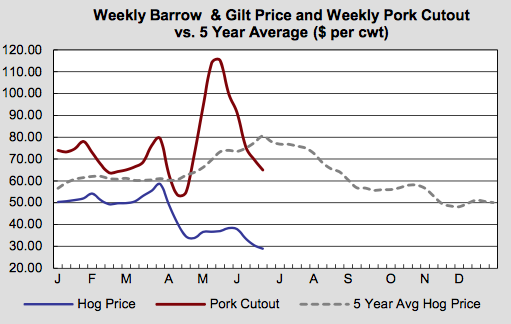
Iowa hog farms remain the epicenter for farm pain this summer as cash prices fall below $30 per cwt (see this USDA chart).That price is 62% lower than a year ago.Mid-summer 5 year average is  about to $80. Iowa is the No. 1 hog state in the country, home to one third of the U.S. herd. The National Pork Producers Council says producers face a $5 billion loss from low hog prices and costs of killing hogs that back up on farms due to processing bottlenecks.

Farm Bureau estimates the value of corn, soybeans, beef, pork and other commodities will fall by $50 billion through 2021 nationwide,They are pushing congressional leaders to give the USDA access to $68 billion to address farm losses from the pandemic.

University economists estimate that Iowa farmers — corn, soybean, pork, beef and ethanol producers — will lose nearly $7 billion due to the coronavirus outbreak. The largest hits are to ethanol producers, estimated to lose $2.5 billion, and hog producers, shorted an estimated $2.1 billion.

Corn prices no fun either

“The biggest coronavirus impact will come this fall, when farmers harvest their crops, experts say. Prices for corn, soybeans, pigs and cattle are below the cost to produce them.

“Market prices for this year’s crop have fallen tremendously,” said Dermot Hayes, an Iowa State agricultural economist.

“It looks truly awful,” he said. “Everybody who has corn and soybeans in the ground right now is going to be damaged” if another round of assistance isn’t provided.

Corn prices fell about a dollar a bushel in northwest Iowa when three of five local ethanol plants temporarily closed, said Kelly Nieuwenhuis, a corn grower and Siouxland Energy Cooperative board member.”

“Corn prices haven’t recovered yet,” said Nieuwenhuis, even though biofuels plants are restarting. The manufacture of ethanol uses about half of Iowa’s corn crop annually.

Even with assistance, Hayes expects about half of Iowa farmers to post losses this year.

That will make the state’s economic recovery tougher. Iowa is the nation’s second-largest agricultural-producing state, after California, and racked up nearly $30 billion in farm sales in 2018. Iowa is a leading producer of corn, soybeans, pork, beef, turkey, eggs, milk, ethanol and biodiesel.

Some experts estimate farming drives about 25% of Iowa’s economy, when ag equipment manufacturing, seed production, food processing, crop insurance and other business activities are added.

Farmers already hit by trade losses

The coronavirus’ hit to agriculture comes as Iowa and U.S. farmers have struggled for five years with low prices. “We’ve had a perfect storm of financial devastation,” said Burrack, the northeast Iowa farmer.

Burrack notes that U.S. trade wars with China, Mexico and Canada that began two years ago pushed prices and profits lower. Then came a battle with the oil industry over waivers that cut demand for 4 billion gallons of ethanol, and finally, the global economic fallout from the coronavirus, which has depressed exports.

The Trump administration has already sent nearly $15 billion to U.S. farmers since 2018 to offset trade losses. Iowa farmers have received about $1.6 billion from those programs.

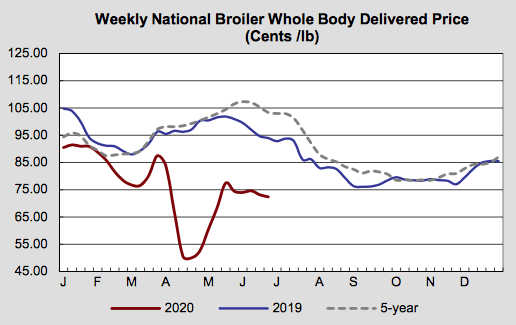
Broiler farms see low price too

Chicken farms face lower prices this summer as well as other meats. Here is the latest USDA chart.
Screen Shot 2020-06-25 at 8.22.01 AM

Avocado oil often rancid says UC study

Consumer demand is rising for all things avocado, including oil made from the fruit. Avocado oil is a great source of vitamins, minerals and the type of fats associated with reducing the risk of heart disease, stroke and diabetes. But according to new research from food science experts at the University of California, Davis, the vast majority of avocado oil sold in the U.S. is of poor quality, mislabeled or adulterated with other oils.

In the country’s first extensive study of commercial avocado oil quality and purity, UC Davis researchers report that at least 82 percent of test samples were either stale before expiration date or mixed with other oils. In three cases, bottles labeled as “pure” or “extra virgin” avocado oil contained near 100 percent soybean oil, an oil commonly used in processed foods that’s much less expensive to produce.

“I was surprised some of the samples didn’t contain any avocado oil,” said Selina Wang, Cooperative Extension specialist in the Department of Food Science and Technology, who led the study recently published in the journal Food Control. “Most people who buy avocado oil are interested in the health benefits, as well as the mild, fresh flavor, and are willing to pay more for the product. But because there are no standards to determine if an avocado oil is of the quality and purity advertised, no one is regulating false or misleading labels. These findings highlight the urgent need for standards to protect consumers and establish a level playing field to support the continuing growth of the avocado oil industry.”

Grapes can fight Alzheimer progression

A new study, published in the scientific journal Neurology found that a higher intake of plant compounds known as flavonols, is associated with a 48% decreased risk of developing Alzheimer dementia. Flavonols are a type of bioactive compound found in grapes, as well as other fruits and vegetables.

US maple syrup production higher

US maple syrup production increased in 2020 as both the number of taps and the yield per tap rose from 2019, the US Department of Agriculture said in its June 11 Crop Production report.

Maple syrup production was estimated at 4,372,000 gallons in 2020, up 4.6% from a revised 4,180,000 gallons in 2019 and the second highest on record after 4,385,000 gallons in 2017, the USDA said. The average price of maple syrup in 2019 was $31 per gallon, down $2.80 per gallon, or 8%, from $33.80 per gallon in 2019 and well below a record $40.70 per gallon recorded in 2008.

Sun-Maid offers new snack-pack

KINGSBURG, CALIF. — Sun-Maid Growers of California is introducing Sun-Maid Bites, a new snack made with ingredients including oats, nuts and fruit.

The bites feature a base of whole grain rolled oats, whole grain brown rice flour, brown rice syrup, chicory root fiber and green banana flour. All four flavors also include peanuts and California raisins.


Ag updates: nitrate control / imports / oranges

-June 6,2020-

Valley dairies prepare for nitrate management zones

Screen Shot 2020-06-07 at 7.11.33 AMAll California diaries and cattle facilities have received a letter from the California Regional Water Quality Control Board in recent weeks to advise them they are in the early stages of setting up a state nitrate control program flowing the model being used  to manage groundwater pumping on a local basis. In this case the zone will manage  drinking water quality.
By June 1 some 1650 dairies and more than 200 calf and heifer ranches and beef feedlots were notified they must comply with a new regulation dealing with nitrates in groundwater. Operations have almost year to begin the process to set up management zones in heavily manured parts of California that include Tulare and Kings counties.

Ag exports and imports

U.S. ag exports and imports fell by record amounts in April, dropping 20.5 percent and 13.7 percent, respectively. U.S. exports to China this year through April were well below the pace needed to meet the goal set in Trump’s phase one trade deal with China, says Politico.

But imports of grapes, avocados and berries and other fruits and veggies rose 6% from May 2019 through April says USDA.according to U.S. Department of Agriculture trade statistics.

Orange prices rise

Did it take a pandemic to get consumers to remember how good and healthy  oranges are for you?  Figures from IRI scan data show oranges at 79 percent higher year-over-year dollar growth and 80 percent on volume growth. But retail prices have not shined.

Produce Bluebook reports that California orange growers are seeing better returns on a FOB basis. “For both Shippers First Grade and Shippers Choice, pricing in 2020 has been consistently higher for the last two months than the same period during 2019. At the end of May 2020, First Grade priced at $25-28 per 7/10 bushel, while in 2019 the price ranged between $21-26. For shippers choice the price differential is more pronounced. While this year the range was $20-23, in 2019 the range was $16-18.”

At the retail level however orange prices are not higher .”At the end of May in 2020, the national price per pound is around $1.10, while it was around $1.30 at the same date last year. We know the pandemic has impacted retail-purchasing patterns and it is likely this is affecting retail prices.”

COVID-19 Continues to Impact Farmer Sentiment; Majority Indicate Economic Assistance Bill Necessary

Purdue Center for Commercial Agriculture

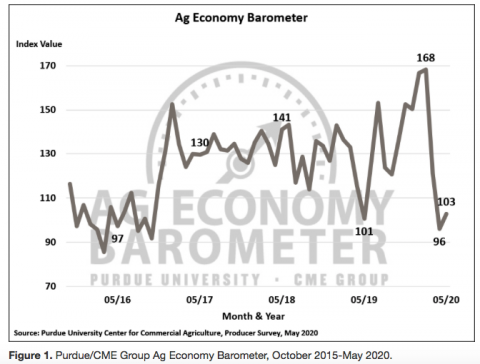
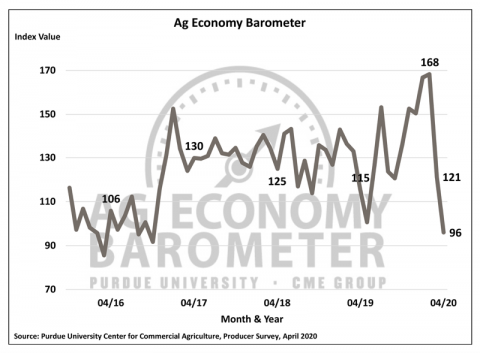
Farmer sentiment improved slightly in May after falling sharply in both March and April. The Purdue University-CME Group Ag Economy Barometer reading in May was 103, up 7 points from the April reading of 96. The barometer’s small improvement left the gauge of farmer sentiment nearly 40 percent below its February peak of 168. This month’s survey also indicated that farmer sentiment was virtually unchanged from May 2019 when the index reached its lowest reading of 2019 as U.S. farmers were in the midst of struggling through a historically difficult spring planting season. 

Screen Shot 2020-06-03 at 7.17.37 AM

California ethanol leader to retire

The CEO of Pacific Ethanol Inc.,Neil Koehler announced he will retire at the end of September. The company has had rough time in recent  months with the falloff in demand for ethanol blended with gasoline. California production of ethanol is off two thirds now from a year earlier.

Nut case – good supply with drop in demand hurts walnut and almond prices

-May 29,2020-

Walnut acres up

Screen Shot 2020-05-29 at 7.43.06 AMUSDA says California’s 2019 walnut acreage is estimated at 415,000 acres, up 3.8 percent from 2017. Of the total acreage, 365,000 were bearing and 50,000 were non-bearing.It is difficult for USDA, NASS to detect growers that are planting walnuts for the first time. The detailed data reflects tree removals from over 15,000 acres during the past two years. Of this number, some acreage was harvested in 2019 prior to being pulled out, and that acreage has already been removed from the detailed data.
Of the walnut acreage reported, Chandler continues as the leading variety with 133,609 bearing acres. Tulare overtook Hartley for second place with 29,331 bearing acres.
San Joaquin County shows the largest acreage with 14 percent of the total, followed by Butte with 13 percent and Tulare with 10 percent each.

2020 prices down

Last year’s walnut crop prices were up 40% from the previous season says USDA with an average annual price of $1,970 per ton. But in 2020 prices are lower again reported at about $0.75cents/lb – down from $1.20 last fall.

Almond prices take a hit

Screen Shot 2020-05-29 at 6.56.44 AM

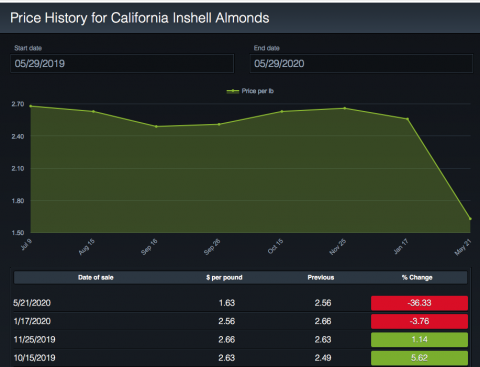
Almond prices are down as of May 2020 with a larger crop in 19/20 and export demand not as strong. A MarketWatch report earlier this year predicted the scenario for California growers this year. May 2020 prices according to the Merlo Group have dropped from $2.66/lb last fall to $1.63 this month. Almonds were the number two most valuable crop in California at $6 billion in 2019 – behind milk at $7 billion. Here is the MarketWatch report from March.

The spread of the novel coronavirus across China has slowed shipments into Chinese ports — and that could soon make products like almond milk cheaper for U.S. consumers, experts told MarketWatch.
As the second-biggest buyer of California almonds, China purchased more than 100 million pounds last year. With fewer workers in China available to retrieve shipments from the select number of ports that are still open, almond growers in the U.S. may soon have an almond surplus on their hands, which could lead to lower retail prices for U.S. shoppers, two experts told MarketWatch.
Some 80% of the almonds consumed around the world are produced in California. Last May, the U.S. Department of Agriculture predicted that the U.S. would grow 2.5 billion pounds of almonds this year — the biggest-ever harvest for a single year, up nearly 9% from last year. Producers appear to be on track to meet the USDA’s forecast, according to the Almond Board of California.
That record-setting harvest, coupled with China’s difficulties purchasing the crop, could result in unusually high inventory for U.S. growers, said Tom O’Brien, the president and co-founder of Global Resources Direct, a Chicago-based food commodity exporter, importer, supplier and trading company. To get rid of the excess supply, they will need to offer lower prices, O’Brien said.

“You could buy almond butter cheaper but you wouldn’t see it for three to four weeks,” O’Brien said. Any price drops wouldn’t appear immediately on store shelves because export contracts are often made a month in advance, he added.
Since Feb. 7 the wholesale price for certain varieties of whole natural California almonds has fallen from $2.87 per pound to $2.52, said O’Brien, who has access to advance wholesale prices of almonds that are not available to the general public. That decline is one of the fastest drops he has seen since 2015-2016, he said. At that time, the wholesale price of almonds fell from a record high of $4.70 a pound in August 2015 to $2.60 by January 2016. That was primarily due to a larger than expected harvest.

Morning Star picks up Olam tomato growers / Lompoc flower farm wilts

-May26,2020-

Lompoc flower farm closes

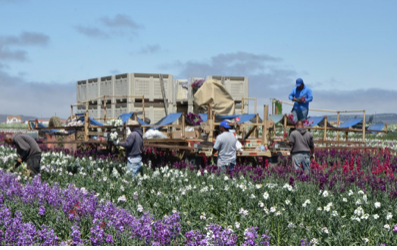
Screen Shot 2020-05-26 at 1.01.17 PMLompoc-based Ocean View Flowers, which produced 40 million stems only two years ago wont be operating anymore. Their  parent company, Santa Barbara Farms, closed the flower operation permanently. So says California Cut Flower Commission CEO Dave Pruitt.
California is America’s leading producer of high-quality cut flowers and greens – supplying over 75 percent of all domestically grown cut flowers in the United States. Foreign imports have devastated the industry and now COVID has brought some Central California operations to ruin. Pot farms have taken their greenhouse space as well.

“America’s flower farmers, the floral industry and all of their employees are teetering on economic devastation” said Pruitt. “These people literally cannot hold on without support from consumers. We urge our fellow Americans to please consider purchasing fresh American Grown Flowers and Greens the next time you’re in the store, and ask for our flowers to be added back into the distribution pipeline as a valued agricultural commodity.”

There was some success during the recent Mother’s Day holiday.


MORNING STAR PICKS UP OLAM GROWERS

Assures industry of capacity to handle the crop

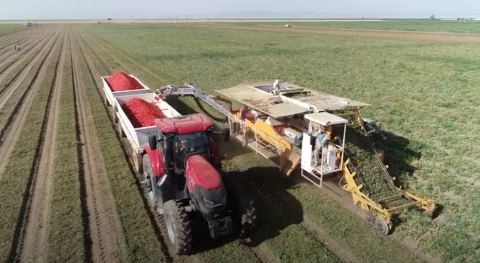
With Olam Tomatoes, one of California largest tomato processors -gone from the scene in 2020, the world’s largest player – Morning Star – has stepped in to work with growers in Fresno and Kings counties to provide a home for their summer tomato crop.

“We’ve signed up some of the Olam growers” confirms owner of Morning Star Chris Rufer.

Screen Shot 2020-05-10 at 8.07.29 AMAbout 10% of the the state’s processing capacity has been lost with the closure of the Olam plants. Olam Tomatoes, based in Singapore, announced the closure of plants in Lemoore  and Williams that together had a capacity of nearly 700 tons per hour.That compares to Morning Star’s per hour capacity of over 2000 tons.
Morning Star, based in Los Banos, operates three factories with the largest production scale in the world suppling over 40 percent of national markets with ingredient tomato paste and diced tomatoes. Morning Star is adding new capacity at its Santa Nella plant – doubling its volume.They also have plants in Williams and Los Banos.

Looking to assure the industry they can handle the volume Morning Star recently sent out a release saying “these past two years have brought our industry two supply obstacles  – Olam shutting down its industrial operations and COVID-19. Many question if processors will be able to meet demand under these conditions. Morning Star answers back with: “We built our factories to sustain us through unexpected events such as this. We have the capacity to drastically increase production and through our vertically integrated enterprises, the reach to ensure all pieces of the supply chain are properly coordinated to sustain this increase in capacity and product demand.”

Olam’s California plants had been the 7th largest tomato processor in the world according to Tomato News. Olam filed a state required WARN notice November 16. The Lemoore Kings County facility employed 230.The property is for sale but will not run this year.In October Olam announced layoffs of 102 in Woodland and 102 in Williams California – each to close by mid-December, just in time for the holidays.

California as a whole produces 96% of the total U.S. processed tomatoes and represents 1/3rd of the global market

The world ranking show Morning Star with daily capacity to  process 59 million tons with Olam plants at at 22 million tons.

USDA reports that as of January 2020, California’s tomato processors reported they have, or will have, contracts for 12.0 million tons in 2020, which is an increase of 4.3 percent compared to what was reported under contract in the August 2019 California processing Tomato Report. Processors estimate that the contracted production for 2020 will come from 235,000 acres, generating an average yield of 51.1 tons per acre. The contracted planted acreage forecast is unchanged from the 2019 acreage reported under contract in August.

The price for tomato paste has decline over the decades from over $2 a pound in the 1970s to $1 in 1989 an under 40 cents a pound by 2019.

Earlier last year President of the California Tomato Growers Mike Montna said growers were suffering from higher costs and low prices due to a surplus of product and the high value of the dollar.

Helping to push the higher volume is  the productivity of the California grower. Their yield per acre has increased more than 8-fold since the 1920s from 10 tons per acre to 50 tons per acre today.

Fresno County remains the top producer in the state harvesting over a third of the crop on 77,000 acre as of 2019 .King County is also ranked high at 26,000 acres.Harvest is expected to begin mid-July. 

Pandemic adds pressure to berry market

-May 20,2020-

from CFB
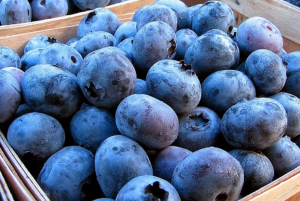
Larger volumes of blueberries have inundated markets already rattled by COVID-19, pushing prices lower for farmers as the cost to bring their crops to market has risen.

Screen Shot 2020-05-20 at 6.33.46 AMCalifornia blueberry production is expected to hit a record 77 million pounds this year, with peak production in the next two weeks, said Todd Sanders, executive director of the California Blueberry Commission.
American consumption, however, has not kept pace with the bigger volumes coming from California and other growing regions, particularly Mexico. Sanders said imports from Mexico continue to flood U.S. markets, pressuring prices.

“Growers are really struggling,” he said, adding that they’re “making economic decisions” about whether to harvest their fruit this year. “We haven’t even hit peak and we’ve seen the price drop dramatically as the volume increases.”

COVID-19 has slowed retail foot traffic, with fewer shoppers buying fruit in stores, and supply-chain problems have slowed the berries reaching supermarket shelves, he added. Another challenge, he said, has been encouraging U.S. retailers to buy local blueberries first before looking to often-cheaper Mexican imports.

Greatly reduced demand from restaurants, hotels and other food service buyers has dried up an important market that uses about 20% of the state’s blueberries, Sanders estimated. Farmers and marketers whose food-service contracts were canceled now face a difficult time finding new homes for their berries. In a more-normal year, he said, they could try to sell fruit to processors for juice or for drying, but huge volumes have easily filled that market this year.

At the farm level, social distancing and other mitigation measures to combat the coronavirus have increased production costs by 20% to 25% in the field and in the packing shed, estimated Bill Steed of Fairfield Farms, a grower/packer in San Diego County.

Assuring more spacing requires more supervision of work crews, he noted. Though there’s “ample labor” because many people are out of work, Steed said farmers are hiring pickers who are “not as skilled” or have never harvested blueberries.

“It’s expensive in every sense of it: time, materials, production levels, efficiencies, everything,” he said. “You’re paying more for that and yet the price of the product is coming down” by at least 30%.

Because people are not grocery shopping as often, Steed said, buyers have become more conservative in their purchasing, as they don’t want to be stuck with too much of a perishable product.

Changes in people’s buying habits have also agitated markets, said Randy Grimm, director of farming for Bixler Ranch in Stockton.

“Most years, you have a pretty steady stream of purchasing,” he said. “This year, it was all or nothing. You couldn’t forecast the next week.”

Bixler Ranch is about three weeks into its blueberry harvest, using hand labor only for its young plants that can’t be harvested by machine.

Though most of the state’s blueberries are still picked by hand, Grimm said farmers are trying to move to mechanical harvest, “because when you’re getting $2.50 a pound on blueberries and it costs you 90 cents to pick them, by the time you pack them and you have your cultural cost and everything else, you’re either breaking even or going in the red.”

The challenge, he said, is the “astronomical” cost of the machines—about $300,000 apiece. Because mechanical harvest “hasn’t been done a lot,” he added, many marketers are “not receptive to it,” even though “you wouldn’t know the difference” between blueberries picked by hand and those harvested by machine.

Jerry Connery, who markets berries for California Giant Berry Farms, a grower/packer/shipper in Watsonville, said he’s “not a big fan of the machines” but adds, “You will see more mechanical harvesting eventually—not yet.”

Steed said though he’s “continually evaluating” mechanical harvesters and “would love to be able to do it,” he’s not ready to go that direction. In particular, he said he doesn’t like how the machines knock off unripe fruit with the ripe.

Santa Barbara County farmer Carol Mahoney, disappointed that the price of blueberries has “bottomed out” especially during peak season in May, said this is the first year her farm is not using contract labor to pick her fruit. Wanting to “eliminate the middleman,” she said she’s also not marketing her berries wholesale for the first time this year, instead relying mostly on her U-pick operation, one farmers market and selling a small amount to another farmer who operates a roadside stand. Her U-pick business so far has quadrupled, she said.

“This year, from the moment we opened the gate, we were slammed,” Mahoney said, adding that she thinks people are “just dying to get out” of the house due to the lockdown. Whereas she used to close two days a week, she’s now open every day “because it’s been so crazy and there’s such a demand.”

Mahoney described how challenging it was to get direction from the county and other government agencies about what the U-pick operation needed to do to comply with virus-mitigation measures. But with the lateness of the crop this year, she said by the time her farm opened on April 22, people were already used to the practice and “automatically distancing themselves.”

With 15% to 20% of the state’s blueberry crop destined for foreign markets, Sanders stressed the importance of exports to take pressure off the domestic market and to help elevate grower prices. Though Canada remains the state’s No. 1 export market for blueberries, Sanders said the commission has been working to develop markets in nations including Vietnam, the Philippines and Singapore.

With the Phase 1 U.S.-China trade deal signed earlier this year, he said the two nations are on the verge of finalizing a phytosanitary protocol to allow U.S. blueberries into the Chinese market. Completion of the protocol may come “on the tail end” of the California blueberry season, he said, but should allow Oregon and Washington growers to export some of their crop.

Ag briefs

-May 8,2020-

Survey shows California farmers losing sales, income

Most farmers responding to a California Farm Bureau survey reported they had lost sales or customers during the COVID-19 pandemic. In the voluntary survey, 57% said they had seen sales drop, mainly due to stay-at-home orders that reduced restaurant demand. Another 42% of respondents to the survey said they or a family member had seen their off-farm income decline.

Drop in home building reduces timber demand

The economic impacts of the pandemic include a drop in home construction, which has hurt sales of timber. One California sawmill operator says he has had to cut production in half as a result. Though housing starts have dropped, market analysts say lumber sales at home-improvement stores have been rising, as people take on remodeling projects, including conversion of rooms into home offices.

Flower growers hope for Mother’s Day boost

With Mother’s Day approaching, California flower growers received welcome news when the state allowed florists throughout California to reopen for pickup services, beginning Friday. The California Cut Flower Commission says there will be plenty of flowers available, though transportation and sales obstacles remain. Flower sales have recovered slightly, after a sharp initial drop caused by postponement or cancellation of weddings, graduations and other events.

Farm exports to China rise, but lag behind goals

The flow of U.S. farm exports to China has increased since the two nations signed a “Phase 1” trade agreement in January, but an American Farm Bureau Federation analysis says sales to China have so far not kept pace with commitments in the agreement. The COVID-19 pandemic has played a role, AFBF says, in part because it has slowed U.S. meat processing for export.

news from CFB

Screen Shot 2020-05-06 at 8.57.54 AM

Ag Barometer plunges

The Ag Economy Barometer fell 72 points from its record high two months ago to a three-year low of 96 in April, according to the Purdue University/CME Group Ag Economy Barometer. Coronavirus concerns, commodity price declines and supply-chain disruptions were cited as reasons for the decline.

The Ag Economy Barometer is based on responses from 400 U.S. agricultural producers and this month’s survey was conducted from April 19-24, 2020.

When $4 corn turns to $3 corn

-May 6,2020-

Screen Shot 2020-05-06 at 4.59.45 PMFarmers feeling the pain this Spring of an abundance of corn in storage are expected to do what comes naturally. Plant a whole lot more this year.
The USDA says farmers indicated they intend to plant 96.99 million acres of corn in 2020, up 7.29 million acres, or 8%, from 2019. If realized, it would be the second largest corn planted area on record after 97.291 million acres in 2012.

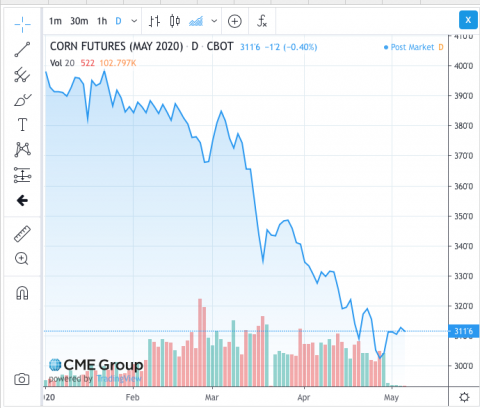
US carryover may top 4 billion bushels in 2021, and corn futures are hovering  near $3 a bushel after nearing the $4 a bushel level just a few months ago.

The trade war clobbered corn exports and now the virus has crippled fuel demand and corn based ethanol with it. We are using about half as much ethanol  as we did this time last year and that does little to suck up the corn surplus.

The US livestock and dairy industries who use corn for feed have their own demand problems. One ag news source quoted a Midwest feedlot owner.

“Pretty soon, we [may not] have enough working capital to feed the cattle anymore and the bank won’t take that risk,” says Jeff Pruess, a Clarence, Iowa, feedyard operator. “They will not lend you the money.”

Screen Shot 2020-05-06 at 4.22.33 PM
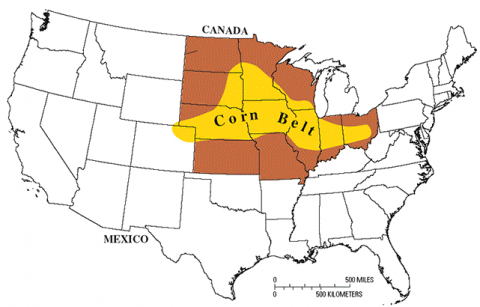
Corn futures contracts are $3 on the board and ethanol plants are sitting idle across the Corn Belt.”

Low prices for corn have fallen below $3 in Iowa says Senator Chuck Grassley. Senate Finance Committee Chairman Chuck Grassley, R-Iowa, recently  said  that the price for corn at his local elevators has fallen to $2.72 per bushel, and an aide later released charts showing that the corn price has fallen to $2.65 in Shell Rock and $2.57 in New Hartford.

Grassley says the price level reminds of the farm crisis in the 1980s.He is seeking more help from Washington to keep farmers afloat.

That is what happened for several years after President Trump’s trade war with China and other export partners.

In the middle of all this pain Mr Trump appeared to call for new tariffs at a rally a few days ago.

A press report recently said “Trump on Sunday night said he will “terminate” the “phase one” deal with China if Beijing fails to buy an additional $200 billion worth of U.S. goods and services over the next two years as promised, our Pro Trade friends tell MA. During a town hall on Fox News, Trump danced around a question from a food products business owner about whether he would consider reducing or eliminating the tariffs on $350 billion worth of Chinese goods. “We’re looking at a lot of things, but you have to remember I’ve taken those tariffs and given a lot of them to the farmers,” Trump said, referring to slightly more than $23 billion in direct payments USDA has made to farmers amid the trade war.”

Cherry harvest begins

-May 6,2020-

Growers count on domestic sales this year 

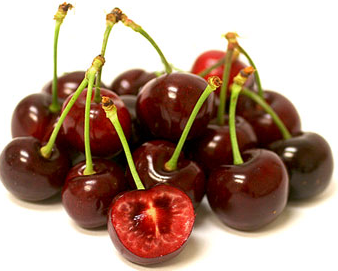
SACRAMENTO, CA–(BUSINESS WIRE)–Cherry harvest has started in California bringing with it hope, health and new beginnings – all things we need now more than ever.

“Safety is always our highest priority,” says Chris Zanobini, Executive Director of the California Cherry Board, which represent over 600 cherry growers, packers and shippers throughout the state. “This season we want everyone to know that extra precautions are being taken to prevent the spread of COVID-19 among the essential workers who bring cherries to people around the world.”

Screen Shot 2020-05-06 at 6.30.08 AMAccording to Zanobini, California cherry growers are expecting to harvest about 7 million 18-pound boxes this year.

“As much as 25 percent of California’s cherry crop is normally exported, but the pandemic is disrupting markets throughout the world,” he says. “California cherry growers will be relying much more on domestic sales this season and we’re thankful for retail distribution channels that are keeping food moving to U.S. consumers.”

Harvest of California cherries started in late April in the southern-most growing areas near Bakersfield and Fresno. Peak production is expected in mid-May when harvest will move to the state’s largest cherry-growing region near Lodi. Kings and Tulare counties have a number of cherry growers.

“Normally at this time of year, growers are worried about rain, which can cause significant crop losses,” explains Zanobini. “This year growers are focused on making adjustments to their farming and packing operations to prevent the spread of COVID-19 among workers.”

It’s pretty easy to implement social distancing while harvesting cherries since pickers are outside and work one-to-a-tree. Cherry trees are planted with ample spacing that allows workers to easily stay six feet from each other or more.

Zanobini notes that several adjustments are being made to allow harvest crews to continue social distancing during breaks and as they load trailers with fruit and move them out of the field. Additional handwashing facilities are being provided, buckets and ladders are being sanitized and care is being taken to ensure workers are using water containers safely.

Packing facilities can be more challenging to manage because these operations use teams who work together to grade, size, sort, pack and load the millions of boxes of cherries that will harvest in a short time frame spanning about six weeks.

“All of us cherry packers are working to protect our employees using a variety of methods,” says Erick Stonebarger, General Manager of Chinchiolo Stemilt California. “We’re having daily safety meetings, equipment is being sanitized frequently, additional handwashing is required, non-employees are not allowed in our facilities or offices, we’re regularly checking our workers for signs of illness.”

Stonebarger explains that his operation and many others are slowing down sorting lines so they can operate with fewer people per shift and workers can be spaced farther apart. Some packers are putting plexiglass shields to provide barriers between workers. Packers are also providing enhanced paid sick leave policies to discourage employees from coming to work if they’re ill.

“We’re doing everything we can to protect our workers and prevent spread of the virus,” he stresses. “Our workforce is critically important to us and to making sure we get this year’s crop of cherries to market.”

Zanobini emphasizes that, as always, food safety practices are in place in California cherry orchards and packing facilities and that the fruit is run through sanitized water systems before being packaged for sale.

When it comes to the safety of cherries in grocery stores, it’s important to note that health experts and government regulators have been very clear COVID-19 is not spread through food.

“Cherries are often sold in bags or clamshells and some consumers may feel more comfortable buying packaged cherry products,” says Zanobini. “Shoppers will also see bulk displays of cherries this season in their grocery stores and these are perfectly safe as well. As always, you should thoroughly wash cherries with cold running water before eating. Do not use soap, detergents or other sprays.”

Zanobini emphasizes that cherries have many health benefits and contain compounds that help build your immune system and can prevent illness. More information about California cherries including health tips, recipes and answers to questions specific to COVID-19 can be found at www.calcherry.com.