
-March 18,2021-
Goshen citrus packing plant in works
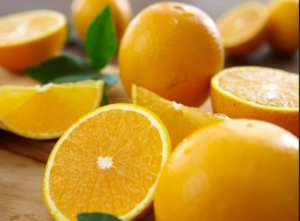 A Special Use Permit will allow a fruit packing facility on a 9-acre portion of a 42+
acre parcel, located in the AE-40 zone at 31932 Road 60, Visalia, on the southeast corner of Avenue 320 and
Road 60 and west side of State Route 99, near Goshen. 2.Surrounding properties contain agriculture (orchards)
and scattered rural residences to the north, west and south. State Route 99 lies to the east.
The applicant, M Park, Inc., proposes relocating their Orange Cove plant to the subject site. They propose adding
154,300 s.f. of structures, with a 95,465 s.f. packing area, two cold storage areas (45,402 s.f. and 9,475 s.f.), 3,930 s.f. office and lobby, a four-truck loading dock, a 125,000 gallon water storage tank for fire
suppression, and four hydrants.
Building permit applications have been submitted for a new 154,318 s.f. fruit packing facility
and a new septic system for the facility.
The applicant also proposes grading an on-site stormwater retention basin.Between 50 and 100
employees will work at the facility year round. The applicant stated there is a potential for a night shift and additional employees
during the peak citrus harvest season. The company is a family-owned corporation that farms
over 1,000 acres in the Central Valley, per their business statement. They service 2,000± acres
of outside ranches. Annual production is 1.5-2 million #40 citrus cartons (40,000 tons). Per the applicant’s Business
Statement, field bins of oranges, lemons and mandarins are received from ranches. The fruit is washed, graded,
waxed, sized and packaged. Approximately 2,000 gallons of water is used per year to rinse the fruit. Packet cartons are
shipped worldwide.
Valencia crop looks bigger
California’s Valencia orange crop looks larger says USDA at an
estimated 20 million cartons. Last year there were 18 million cartons.
Ironically this year’s higher crop estimate comes with lower
bearing acreage – down to 26,000 acres compared to 28,000 acres in
2019/20. Ten years earlier it stood at 43,000 acres.
This variety fell out of favor until COVID-19 hit and in the past year
growers cant harvest enough to meet demand.
Now California-grown citrus fruit may rise because of
crop losses in Texas caused by its mid-February freeze. Farmers in
Texas lost much of their grapefruit and Valencia orange crops.
California farms may produce more of both this season, according to
the new USDA estimate. Government forecasters also expect more
tangerine production in California, but say crops of lemons and navel
oranges could be smaller.
Ventura Coastal adds new capacity
Ventura Coastal is adding new capacity at their 2 citrus plants in Tulare
County. In Tipton the juice maker has added acesptic packaging line. In
Visalia /Cutler the company is under construction with a $8 million freezer
and warehouse.
Horticulture shrinks in California
USDA reports that horticulture operations in California sold $2.63 billion in floriculture, nursery and specialty crops in 2019, down 9% from the sales in 2014. California sold 19% of the total U.S. horticulture sales of $13.8 billion in 2019, more than any other state. In addition to sales, the number of horticulture operations in California decreased 22% during this time to 1,331, and the number of operations in the United States decreased 11% during this time to 20,655.

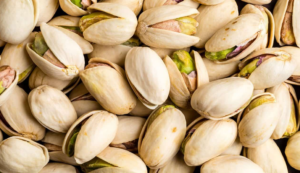 Almonds this winter are selling for $1.50 lb compared to $4 and 3 dollars a pound in recent years. The crop climbed 20% to a record last year. Walnuts are selling for 75cents compared to $2.50 a pound in 2017.
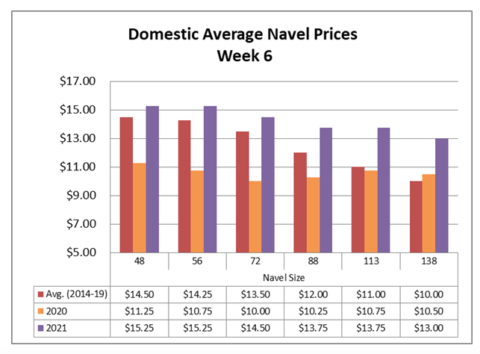 Central Valley navel orange growers are enjoying a better year as of mid-February. Prices per carton are up $4 to 5 compared to 2020 according to figures from California Citrus Mutual. The uptick amounts to a 25% increase depending on size.


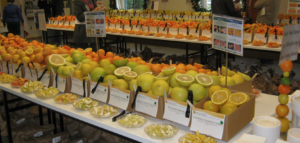 With help of researchers at the University of California, USDA and groups like Citrus Research Board the industry has grown the citrus category. Want to see the variety? Visit the citrus tasting event at Lindcove Field Station held each December.
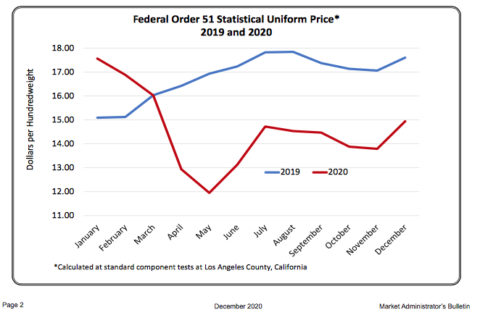 This past year Tulare County dairymen did not have a great 2020 with the pandemic causing lots of price volatility and mostly a down year. A good measure is the Class 1V milk price- the category that makes up about 70% of the average milk check.For 2020 the average Class IV milk price was $13.46 compared to $16.30 in 2019 and the lowest in five years.


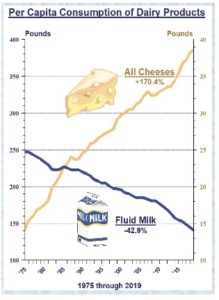 Even with the recent decline in the number of dairies, milk continues to be the top commodity in Tulare County.Now that California has joined the Federal Order to market milk for Tulare County producers, the county ranks highest in production. For 2019 Tulare County produced $881 million pounds of milk in December, the 3rd highest county in the nation churning out 2.9% of all the milk marketed under the federal order across the country according to government figures.
 Mooney Boulevard will see Ono Hawaiian BBQ drive-thru in coming months next to Habit Burger – one of 3 commercial developments being built on the former COS parking lot by JR Shannon. Also at the new center at Mooney and Myrtle the first Dutch Bros coffee store to open in town- expected in the next few weeks. A third storefront is under negotiation, he says.
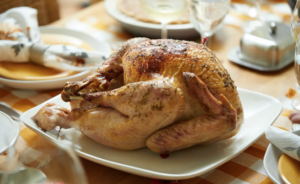 The pandemic may have put a damper on big holiday gatherings, office parties and other social events, but farmers and food marketers say they still expect people to eat—and have worked to keep up with shifts in demand.
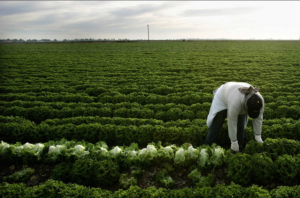 Valley farmers have had a tough time this year and those who work on those farms are fewer in number. In the 4-county South Valley, ag jobs are down 20% year-over-year – worse in some counties. EDD reports that in Kern, Tulare, Kings and Fresno counties there has been a loss of 33,000 jobs comparing Oct 2020 to Oct 2019- 164,500 in Oct 2019 vs 130,900 this October. By comparison non-farm jobs have declined 9% in this region.
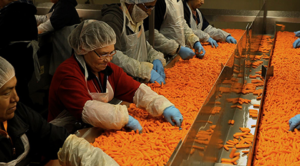 Cal Poly is set to change the landscape of organic agriculture with a $5 million donation made to the College of Agriculture, Food and Environmental Sciences by Grimmway Farms, the global leader in organic produce and the world’s largest producer of carrots.