
-January 7,2021-
An unexpected increase in major farm commodity prices this new year coupled with the falling greenback are bolstering hopes in the San Joaquin Valley farming community for a better year despite increasing likelihood of continued drought.
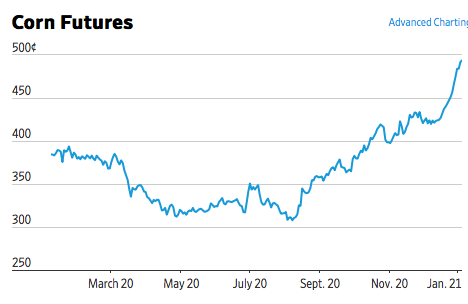
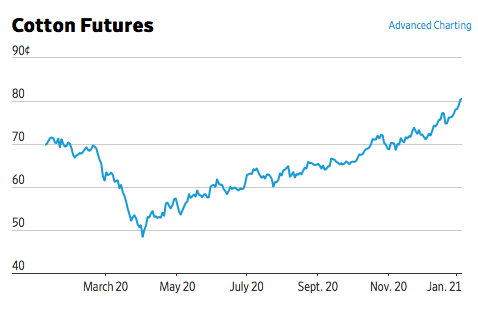
Global short supply seen in key commodities like corn and cotton have helped prices surge.This week we are seeing $5 corn and 80 cent cotton in the futures market.US Milk prices have risen as well this week.
All these commodities, important to Kings County, are in short supply due in part to dry weather driving up the price. For cotton, the USDA says this year will be the smallest crop in five years with more drought expected in 2021 with our la Nina weather pattern. Kings cotton acres were down about 20% in 2020 vs 2019.California’s cotton crop is down as well this past fall.
Another factor making fibre scarce – clothing makers are being warned not to buy Chinese cotton due to charges of forced labor.
Corn prices are up too in 2021, the highest in six years with a smaller US crop than expected and dry weather in South America further tightening supplies. Corn prices are getting a boost as well based in Chinese appetite for our corn to feed their huge and growing hog herd.
Meanwhile, exports of US beef are on track for strong start to 2021, also particularly to China
Falling dollar
Helping these US ag exports is a weakened dollar that makes our products cheaper overseas. The closely watched dollar-index that compares the value of the US dollar to a basket of world currencies has dropped to 89.5 – the lowest since April 2018. The US dollar is falling as global financial conditions are improving even as the US Federal Reserve cut interest rates to nearly zero, expanded bond purchases and has established a number of different programs to support credit. Federal spending is also said to stoke inflation in coming months.
Federal spending to prop up the US economy may be playing a part as well with USDA committed this year to buy US-grown farm goods to help the COVID’s impact on the ag economy.
The California Farm Bureau notes that the recent 5,500-page stimulus package signed by the President contains many provisions important to California farmers, ranchers and rural residents with $13 billion in assistance to help U.S. livestock, poultry, dairy and crop farmers recover from COVID-19 disruptions.
Provisions include $1 billion for contract livestock and poultry growers, to cover up to 80% of pandemic-related losses and payments to producers who lost livestock and poultry due to insufficient processing capacity during the pandemic, and includes additional inventory-based payments for cattle ranchers. The bill provided $60 million for meat and poultry processors to help them qualify for federal inspection and interstate shipments.
For dairy farmers, the package includes cash flow assistance for small and midsized dairies, plus $400 million to pay for milk to be processed into dairy products and donated to food banks and feeding programs.
Just this week, CME milk futures jumped, raising prospects of a boost in milk production in the coming months.
Ag reports say the benchmark Class III futures for milk used to make cheese jumped 4.9% on Tuesday in Chicago in their biggest gain since April after the U.S. Department of Agriculture expanded its Farmers to Families Food Box Program. The USDA will buy $1.5 billion worth of food including produce, beef, pork, seafood, milk and cheese to distribute across the country, U.S. Secretary of Agriculture Sonny Perdue said Monday in a statement.
“Weather issues, government intervention and strong export demand suggest the current commodity bull run has further to go in 2021” –Rabobank
Wall of Money?
Meanwhile Rabobank notes that that speculation has had a hand in driving up expected prices writing in a recent report that a “wall of money” is flowing into markets buoyed by the economic stimulus of all this government buying.
“Weather issues, government intervention and strong export demand suggest the current commodity bull run has further to go in 2021,” Rabobank said.
Then there is the impact of the COVID 19 vaccines on all this.
“The dollar is likely to begin a drop of as much as 20 per cent in 2021 should COVID-19 vaccines become widely distributed and help to revive global trade and economic growth” according to Citigroup Inc.
“Vaccine distribution we believe will check off all of our bear market signposts, allowing the dollar to follow a similar path to that it experienced from the early to mid-2000s” when the currency started a multi-year downturn, Citigroup strategists including Calvin Tse wrote in a report Monday.