SAN FRANCISCO, July 10, 2013 – The California Public Utilities Commission (CPUC) today issued its annual report on the progress of the California Solar Initiative, showing that the program has installed 66 percent of its total goal, with another 19 percent reserved in pending projects. This equals an estimated 1,629 megawatts (MW) of installed solar capacity at 167,878 customer sites in the investor-owned utility territories through the end of the first quarter of 2013, enough to power approximately 150,000 homes and avoid building three power plants.
In January 2007, California began an unprecedented $3.3 billion ratepayer-funded effort to install 3,000 MW of new solar over the next decade and transform the market for solar energy by reducing the cost of solar generating equipment. The CPUC’s portion of the solar effort is known as the California Solar Initiative (CSI). It is the country’s largest solar program and has a $2.2 billion budget and a goal of 1,940 MW of solar capacity by the end of 2016.
Highlights of the report issued today include:
A record 391 MW were installed statewide in 2012, a growth of 26 percent from 2011.
Pacific Gas and Electric Company achieved the most installations in the non-residential sector of any investor-owned utility, having met 70 percent of their non-residential installation goal.
Applicants to the low income portion of CSI, known as the Single-Family Affordable Solar Homes program, have received $64 million in support for their residential solar systems while the Multifamily Affordable Solar Housing (MASH) program has completed 287 projects representing a total capacity of 18.4 MW. There are an additional 83 MASH projects in process, for a total capacity of 11.3 MW. Virtual Net Metering has allowed thousands of tenants to receive the direct benefits of solar as reductions in their monthly electric bills.
In just over three years of operation, the CSI-Thermal program has received 1,215 applications for $56.3 million in incentives.
All but 92 MW, or 6 percent, of solar capacity in the state is signed up for Net Energy Metering (NEM) tariffs. Pursuant to Assembly Bill 2514 (Bradford, 2012) and CPUC Decision 12-05-036, the CPUC has initiated a study on the costs and benefits of NEM to ratepayers. The study will be released later this year.
WTI Home Cushing OK where the streets are quiet click to enlarge
Ouch!West Texas Intermediate (WTI) oil futures for August climbed to $106.73 per barrel today,a 15 month high. So you would think there is some kind of global or US oil shortage.? Or oil refineries on fire or demand that is going through the roof?
But the answer is ‘no’ to all the above.
Valley oil exec Walt Dwelle says something’s fishy about the run up in the WTI price jumping from around $95 to $106 this past month while Brent – the true global standard that typically has a sizable price premium over WTI climbing about 3 dollars in the past month to $107 per barrel today.
“If they are explaining the rise in oil prices based on what is going on in Egypt you would expect to see more action in the Brent price,not WTI measured in Cushing Oklahoma” says Dwelle whose family owns a small chain of gas stations in California and Nevada.
WTI is a better measure of US oil supply that has been bolstered in part by increasing supply from North Dakota a pipeline that now extends to Texas Gulf Coast refineries.
But Dwelle repeats what has been pointed out by many in the past year – Americans are using far less oil and gasoline than they did just a few years ago. Dwelle says US demand is “anemic – some 7 to 9% lower than it was three years ago.”
And the Egypt crisis has posed no supply disruption issues, certainly not from Cushing Oklahoma where the streets are all quiet.
Big Players Pushing The Price Around?
“Looks like some of those big Wall Street street players might be pushing the (WTI) price around” ie speculators are driving up the price figures Dwelle.
Indeed this week the US Energy Information Agency offered a preview of prices for the rest of 2013.Prices are expected to move lower in large part because the US is producing more oil at home.
A July 9 EIA report offers that (EIA) expects that the Brent crude oil spot price will average $102 per barrel over the second half of 2013, and $100 per barrel in 2014. This forecast assumes there are no disruptions to energy markets arising from the recent unrest in Egypt.
EIA adds that the discount of West Texas Intermediate (WTI) crude oil to Brent crude oil, which averaged $18 per barrel in 2012 and increased to a monthly average of more than $20 per barrel in February 2013, fell to less than $5 per barrel in early July 2013. The narrowing of the WTI-Brent price spread is supported by several factors that have depressed Brent prices or raised WTI prices.
But the EIA expects the WTI discount to widen back to $8 per barrel by the end of 2013 as crude oil production in Alberta, Canada, recovers following the heavy June flooding and as Midcontinent production continues to grow.
Meanwhile all that domestic oil and lack of demand continues to depress gas prices. Nationwide,regular-grade gasoline prices have fallen from an average of $3.66 per gallon on June 10, 2013, to $3.49 per gallon on July 8, 2013
In California motorists are also using less gas.California’s gasoline consumption declined 1.7 percent, while diesel consumption declined 0.4 percent in the fourth quarter of 2012, according to fuel tax data released by the California State Board of Equalization.
BOE Member Betty Yee said “Fourth quarter fuel consumption in California is consistent with trends of more energy efficient habits, helping families cope with higher costs.”
More US Oil On Tap
Not surprisingly US crude production continues to grow.The EIA says North America accounts for most of the projected growth in non-OPEC supply over the next two years because of continued production growth from U.S. tight oil formations and Canadian oil sands.U.S. crude oil production increased to an average of 7.3 million bbl/d in April and May 2013, which is the highest level of production since 1992.
EIA forecasts U.S. total crude oil production will average 7.3 million bbl/d in 2013 and 8.1 million bbl/d in 2014.
So these cross currents are hitting a gas pump near you.Which way will they carry you?
California motorists are now paying an extra 3.5 cents as of July 1 to boot( highest in the nation) but so far the increase is not being felt much.
In California this week gas prices are about where they were a month ago – around $3.95 a gallon on average after going first up and down again. The best prices statewide are in the Salinas area – around $3.55 per gallon. Best price in San Luis Obispo is $3.95 at Costco while in Tulare and Fresno prices are lower – down as low as $3.67.
What are refiners doing with all that gas and diesel if they cant sell it to you? Exporting it to South America in increasing amounts.
Meanwhile more more crude is being shipped in by rail into California to refiners here from North Dakota.
Despite the run up in oil in the past few weeks Dwelle agrees withe EIA and expects gas prices will head lower this year. AAA points out July 4 drivers caught a break this year with prices almost 5 cents lower than a week before.
Last year the US became a net exporter of petroleum products for the first time since 1949. There is still a ban on exporting oil.
But if refiners continue to export more – that could leave less gasoline for domestic customers. Auto Club spokesperson Jeffrey Spring notes that “Wholesale prices have risen again this week by about 20 cents on news of increased exports from local refineries and lower supply in Southern California. We’re not yet sure what impact that will have on retail prices.”
Could be going up here for a while until this oil bubble bursts.
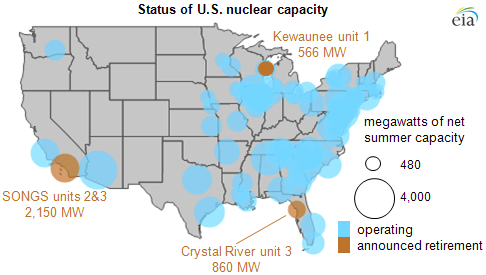
Source: U.S. Energy Information Administration, Annual Electric Generator Report (Form EIA-860) Note: One additional retirement (slated for 2019) was announced in 2010 for Oyster Creek Nuclear Generating Station (614 megawatts) in New Jersey.
Since October 2012, electric power companies have announced the retirement of four nuclear reactors at three power plants. The four reactors have a combined capacity of nearly 3,600 megawatts (MW). The recent retirements are the first since 1998. Decisions to retire the units involved concerns over maintenance and repair costs and declining profitability.
The recent reactor retirements will decrease the total number of operating nuclear reactors to 100 and will reduce total U.S nuclear net summer capacity by 3%. Specific information on each retirement is included below.
San Onofre Nuclear Generating Station (SONGS), Units 2 and 3 (2,150 MW total)
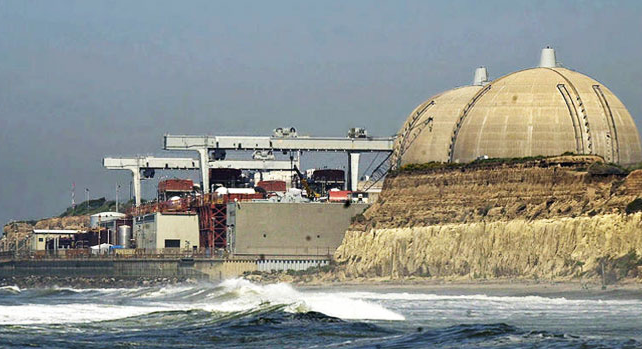
The most recent retirement announcement was issued by Southern California Edison (SCE) on June 7. SCE decided to permanently retire SONGS units 2 and 3 near San Diego. New steam generators were installed in Unit 2 in 2009 and in Unit 3 in 2010. In January 2012, a small leak was discovered inside a steam generator in Unit 3, and both units were shut down to evaluate the cause of the leakage and to make repairs. Both units have remained shutdown since then. SCE had submitted plans to the Nuclear Regulatory Commission (NRC) to restart Unit 2 at reduced power, and the NRC was reviewing the restart plans. However, concerns over the length of the review process and the high costs associated with steam generator repairs led SCE to retire both reactors. The potential effects of these units’ continued outage was explored in a previous TIE article.
Kewaunee Power Station (556 MW)
In early May, Dominion Resources retired the Kewaunee Power Station in Wisconsin because of lower wholesale power prices in the region. Kewaunee, a merchant plant no longer associated with a state-regulated utility, was licensed to operate through 2033. Many of the power purchase agreements that the plant held with load serving entities in the region were expiring, and declining profits led Dominion to retire the plant.
Crystal River Nuclear Generating Plant, Unit 3 (860 MW)
On February 5, Duke Energy announced plans to retire Crystal River Unit 3 in Florida. This was shortly after Duke had acquired Progress Energy, which had owned Crystal River. Crystal River Unit 3 was licensed to operate through 2016, and an application to extend the operating life of the unit to 2036 was under review by the NRC. Crystal River Unit 3 was shut down in September 2009 to refuel and to replace its steam generators. During the shutdown, workers discovered damage to the concrete wall of the containment building, and additional damage occurred during subsequent repairs in 2011. Although a 2012 report indicated that the damage could be repaired and the plant restored to service, the uncertainty surrounding the cost and timing of repairs ultimately led Duke Energy to retire Crystal River Unit 3. The coal-fired units at Crystal River will continue to operate.
New nuclear capacity
The loss of nuclear capacity from retirements is expected to be offset by the construction of five nuclear reactors with a combined capacity of more than 5,600 MW. The completion of construction at the Tennessee Valley Authority’s Watts Bar 2 in 2015 is expected to add almost 1,200 megawatts of new nuclear capacity. During 2012, the NRC issued combined operating licenses for four new nuclear reactors at two plants: Vogtle, units 3 and 4 in Georgia, and Virgil C. Summer, units 2 and 3 in South Carolina. The four reactors have a total capacity of almost 4,500 megawatts and are now under construction, with target dates for completion between 2016 and 2018. There are also plans for capacity uprates at existing reactors. These plans include approximately 1,000 MW of uprate capacity currently under review by the NRC. However, Exelon Nuclear, which operates 17 reactors, recently announced that uprates previously approved by NRC, at LaSalle units 1 and 2 as well as Limerick units 1 and 2, will be delayed.
A new study says the number of natural gas vehicles (NGVs) on roadways worldwide will increase steadily over the remainder of this decade, rising to 34.9 million by 2020 from 18.2 million in 2013, according to a report from Navigant Research. The numbers would rise from 18.2 million units this year to 34.9 million by 2020.
The nat gas vehicles run cleaner than the older diesel units that tend to be sootier. Now because of ample domestic supply companies are switching to nat gas because of price as well.
Also this week United Parcel Service Inc. (UPS) said it would add another 285 liquefied natural gas-powered trucks to its carrier fleet by the end of 2014.That makse near 1000 added by the end of next year.The move will nearly double the amount of total LNG-fueled semi-trail trucks UPS currently operates — already more than 1,000 worldwide — in addition to the more than 1,500 trucks powered by other alternative fuels already in the fleet across the globe.
UPS has goals in place for reduced emissions by 2020: a diesel soot reduction target of 75% and a 60% decline targeted for nitrogen oxides, which leads to smog.
SACRAMENTO – Reductions in emissions of black carbon since the late 1980s, mostly from diesel engines as a result of air quality programs, have resulted in a measurable reduction of concentrations of global warming pollutants in the atmosphere, according to a first-of-its-kind study examining the impact of black carbon on California’s climate.
The study, funded by the California Air Resources Board and led by Dr. Veerabhadran Ramanathan of the Scripps Institution of Oceanography at the University of California, San Diego, estimates that reductions in black carbon as a result of clean air regulations were equivalent to reducing carbon dioxide emissions in California by 21 million metric tons annually or taking more than 4 million cars off California roads every year.
“We know that California’s programs to reduce emissions from diesel engines have helped clean up the air and protect public health,” said ARB chairman Mary D. Nichols. “This report makes it clear that our efforts to clean up the trucks and buses on our roads and highways also help us in the fight against climate change.”
Black carbon — tiny soot particles released into the atmosphere by burning fuels — has been linked to adverse health and environmental impacts through decades of scientific research. It is also one of the major short-lived contributors to climate change. The major sources of black carbon in California are diesel-burning mobile sources, residential wood burning in fireplaces and heaters, agricultural burning and wildfires.
The 3-year-study, titled “Black Carbon and Regional Climate of California,” was conducted by UC San Diego and the U.S. Department of Energy’s Lawrence Berkeley National Laboratory and Pacific Northwest National Laboratory. It is the first comprehensive regional assessment of the climate impact of black carbon on California. In conducting the study, scientists used computer models and air pollution data collected by aircraft, satellite and ground monitors.
click to enlarge
The study’s results support a growing body of scientific evidence that suggests it is possible to immediately slow the pace of climate change regionally by reducing emissions of short-lived climate pollutants, like black carbon.
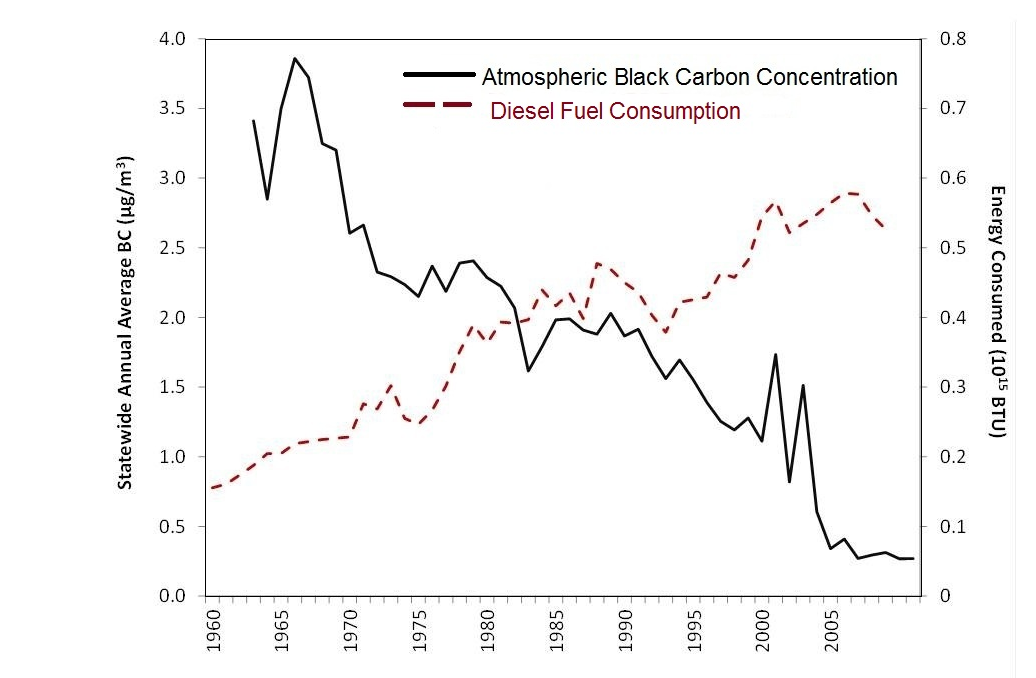
According to co-author Dr. Tom Kirchstetter of LBNL, black carbon levels have decreased by about 90 percent over a 45-year period, beginning with the establishment of CARB in 1967, mostly as a result of state regulations for diesel engine emissions. Researchers found the state’s efforts to reduce diesel emissions to have lessened the impact of global warming on California, supporting earlier theoretical computer modeling by Dr. Mark Jacobson of Stanford University that reducing black carbon from diesel combustion is a potent ‘climate cooler.’
The reductions occurred during a time when diesel fuel consumption increased by about a factor of five, attesting to the effectiveness of CARB regulations requiring cleaner fuels and vehicle technology.
The study took a conservative approach in examining the impact black carbon has on the Golden State. Researchers considered emissions only from diesel-powered trucks and buses, and off-road diesel equipment and vehicles to estimate the equivalent reduction of carbon dioxide.
When all sources of black carbon emissions from diesel fuel combustion are considered, including farming and construction equipment, trains and ships, the reduction in carbon dioxide emissions can be as high as 50 million metric tons per year over the past 20 years. That’s roughly equal to a 13-percent reduction in the total annual carbon dioxide emissions in California.
As ARB’s current efforts to clean up trucks and buses move forward, resulting in the continued cleanup and turnover of older heavy-duty diesel vehicles, California should continue to see declines in particulate matter emissions. Advanced engine emissions control systems and filters are expected to dramatically reduce emissions from all new diesel engines. Current diesel truck engines, for example, are over 90 percent cleaner than models from years when they were unregulated.
“If California’s efforts in reducing black carbon can be replicated globally, we can slow down global warming in the coming decades by about 15 percent, in addition to protecting people’s lives,” Ramanathan said. “It is a win-win solution if we also mitigate carbon dioxide emissions simultaneously.”
Black carbon has the effect of warming the atmosphere because it is effective at absorbing sunlight. However, it is emitted together with a range of other particle pollutants, including organic carbon, sulfur and other chemicals, some of which have a cooling effect, typically by reflecting sunlight. Reducing diesel emissions can therefore lead to a reduction of both warming and cooling particles. The report, however, is the first to confirm, based on both observations and computer modeling, that the warming effect of black carbon dominates, overwhelming any cooling effect of other pollutants. This confirms the positive impact reducing diesel emissions has on fighting climate change.
Other findings include:
• The study found evidence to link brown carbon — a form of organic carbon aerosols — to warming. Therefore, a commonly held view that organic particles from wildfires primarily reflect sunlight, and cause cooling, was not supported by the study.
• A finding that black carbon particles increased the number of drops of water in clouds, while decreasing the size of those drops, a condition that can reduce or delay rain.
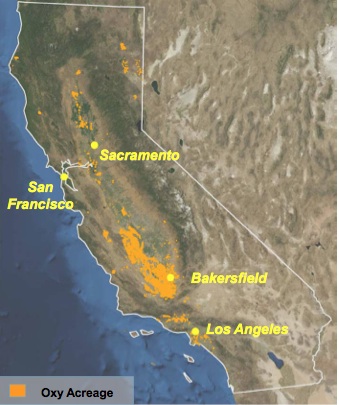
Occidental Petroleum holdings in the state include Kings County
Valley Economic Group Hears Report June 21 On Monterey Shale
Hanford:The California Partnership For The San Joaquin Valley will meet in Hanford June 21 to hear an expert panel on economic development forecasts including the potential for taping the Monterey Shale oil patch, some 10,000 feet below the ground in the Central Valley.
The partnership chaired by Fresno mayor Ashley Swearengin will gather from 10 AM to 3PM June 21 at the Hanford Civic Auditorium. Speakers include Diane Friend from the Kings County Farm Bureau,Darrel Pyle City Manager of Hanford and Kings EDC president John Lehn.
Among the guest on the panel discussing the issue will be Nick Ortiz,head of the industry group Western States Petroleum Assn.(WSPA) in Bakersfield who will speak about the group’s view that tapping the oil reserve could bring big revenues to Kings County.
According to the EIA, there are as many as 15.4 billion barrels trapped inside shale rock – more than four times the Bakken Shale in North Dakota undergoing a boom right now.
A USC study of the potential here – released in March said “the prudent development of the Monterey Shale could add hundreds of thousands of new jobs to California over the next decade while stimulating economic growth and generating significant new state and local tax revenues.”
“The trick is to unlock the deposits” says WSPA rep Nick Ortiz.
That requires use of fracturing technology that Oritiz says the public has a right to know about and ask questions.
“The petroleum industry voluntarily discloses how much water and what chemicals are used and where fracking is happening on the website fracfocus.org”
WSPA has argued for the potential benefits of California’s Monterey Shale – a 1,700 square mile oil-bearing shale formation primarily in the San Joaquin Valley from Kern to Merced counties and includes Kings County. That recent report from USC said tapping the oil over period from 2015 – 2030 could:
Create from 512,000 to 2.8 million new jobs;
Increase California’s gross domestic product (GDP) by 2.6 percent to 14.3 percent on a per-person basis;
Grow personal income by an average of 2.1 percent to 10 percent;
Generate $4.5 billion to $24.6 billion in new tax revenues for state and local government services.
This opportunity has not escaped the notice of Governor Jerry Brown, who recently said he is confident his oil and gas regulators can and will protect the environment so hydraulic fracturing can unlock the “extraordinary” opportunities offered by the Monterey’s massive oil deposits.
Despite these promising developments, there are still those who would like to ban or restrict the practice of hydraulic fracturing based on claims of risk to the environment and water quality.Hydraulic fracturing is the fracturing of rock by a pressurized liquid. The process is used on an estimated 60% of new wells but remains relatively unregulated.
Governor Brown said, it is imperative the safety of hydraulic fracturing “be decided based on science, based on common sense and based on a deliberative process that listens to people – but also wants to take advantage of the opportunities we have in this state.
Indeed supporters say a comprehensive regulatory package will sufficiently ensure that our state’s environmental health and natural resources are protected while safely using hydraulic fracturing technologies for oil production in California, including:
Pre-notification and submission of information to the Department of Oil, Gas and Geothermal Resources (DOGGR) prior to beginning hydraulic fracturing operations
Additional groundwater testing
Expanded testing of the structural integrity of wells to prevent fluid migration
Well monitoring before and after the conclusion of hydraulic fracturing operations
Full disclosure of the chemicals used in hydraulic fracturing.
While some would like to ban fracking because of the potential to hurt ground water with the chemicals they use injected in the ground, others like former Kings Supervisor Tony Oliveira favor regulation along with a small severance tax.
“California is the only major oil producing state that does not charge a severance tax.” he notes. Other oil states impose a tax on extraction including Alaska at 12.25%, Louisiana 12.5%, Oklahoma 7%, Kansas 8%, Colorado5% over a minimum payment, Texas 4.6% and Wyoming 6%.
In the past month the issue surfaced in the California State Senate with some Democrats pushing for a 9.5% severance tax. The bill failed but now there is a student-led ballot initiative for 2014 circulating that is proposing the same rate.
Oliveira says he believes the Governor who supports fracking would back a smaller oil severance tax ”perhaps 3 to 4%” and predicts that will likely be what happens
A Wall Street report says Occidental petroleum that now controls some 1.2 million acres in the Monterey Shale is the big player here with more acreage than all other companies combined. The report adds that OXY will spend $6.3 billion to develop those lands over the next four years predicting that by 2015 the company will produce 25% of tie revenues from these new fields.
The report calls the Monterey Shale “ the biggest thing to hit California since the Gold Rush.”
Oliveira who offers that he has business dealings with OXY – leases on family owned land – says while the state won’t stop fracking some small extraction tax may be warranted. Olveira says the tax could benefit cash strapped Kings County if it were structured right.
Like Brown Oliveira,a Democrat and economist, sees big benefits here saying the Monterey Shale as “worth $1 trillion dollars to the Valley in the next 30 years.”
What about water required to do the injections in a water-short Valley?
Oliveira points to the perched water supply under the Westlands Water District for example with its 35 million acre feet of salt leaden water that could be used and reclaimed with new desal’ techniques.
A proposed hydrogen plant in Kern County will be using some 7,500 acre feet of brackish water per year.
The Tulare County Board of Supervisors acting this week has denied an appeal from Sundale Vineyards – a neighbor of Harvest Power’s facility near Tulare – to deny a permit to build a biomethane digester and expand its composting facility.
Meanwhile the same week, the California Energy Commission has approved funding of more than $5.1 million to convert organic waste to biomethane via anaerobic digestion at the Harvest Power facility. The biomethane will be cleaned, compressed, and used as transportation fuel at a compressed natural gas fueling station to be constructed on site.
The company would contribute more than $9 million toward the project as well according to the CEC application.
Sundale Vineyards also located on Rd 140 east of Tulare, filed an appeal against the project with the county for a conditional use and special use permit to build the digester and CNG facility.
Attorney Tim Jones filed the Sundale appeal saying the EIR circulated on the project was flawed and that the vineyard owners were concerned about contamination from manure that will be used at the site and had concerns for the school nearby as well.
The county’s response is that the project will require some mitigation but the appeal is without merit. However the vineyard could file a challenge in court that could further delay the project.
Harvest Power notes that the digester that will accept food waste, green waste and manure and will be enclosed and manure odors should not be significant.
Harvest Power seeks to expand the capacity at its compost plant – formerly Tulare County Compost – by 156,000 tons to 216,000 tons per year, build a digester on site and supply a CNG fueling station that will offer biomethane – a natural gas substitute for for sale.
The Tulare digester is one of three such large scale digesters to be proposed in the past year in the county. Another is next to the Tulare wastewater plant scheduled to begin construction later this year and the other next to the Calgren ethanol plant near Pixley. All the projects purport to help reduce air emissions in the Valley by taking a waste product and turning it into energy. The digesters reduce air impacts by controlling the emissions in an enclosed chamber.
Largest solar project on the drawing boards click to enlarge
The Solar Energy Industries Association (SEIA) says in a May 2013 update that there are 1222 MW of utility scale solar projects operating in California, 3525 MW under construction and 14465 MW in the pipeline to be built. That’s a total of over 19,000 MWs – more than half the US pipeline.
Like California, the rest of the nation is installing solar faster than any other energy source.The U.S. installed 723 megawatts (MW) of solar energy in Q1 2013, which accounted for over 48 percent of all new electric capacity installed in the U.S. last quarter. Overall, these installations represent the best first quarter of any given year for the industry says the SEIA.
If they are closing nuclear power plants in the state they are adding new solar to replace it on the way to having 33% or more renewable energy sources.
Solar power generation on California’s grid set a new all-time high output of 2,071 megawatts at 12:59 p.m. Friday June 7, said officials at the California ISO, the state agency that balances customer demand on regulated power utilities with power generation from commercial vendors.
That nearly equals the 2,250 megawatts of nuclear-powered generation that was lost in January, 2012, when small amounts of radiation began leaking from Southern California Edison’s San Onofre Nuclear Generating Station, at Camp Pendleton.
This week SCE announced they would close the plant permanently.
Focus On Mid California
The San Joaquin Valley continues to be a hotbed for renewable power projects including solar and wind.
Over 500 megawatts of solar projects are under construction or scheduled to be built in the next few years in Kings County,mostly by major solar players Recurrent Energy and SunPower. The state’s first large solar plant was built a few years ago near Avenal.Now the owners of that project – NRG has talked to the city about expanding and adding more arrays and donated $50,000 to the town’s new skate park.
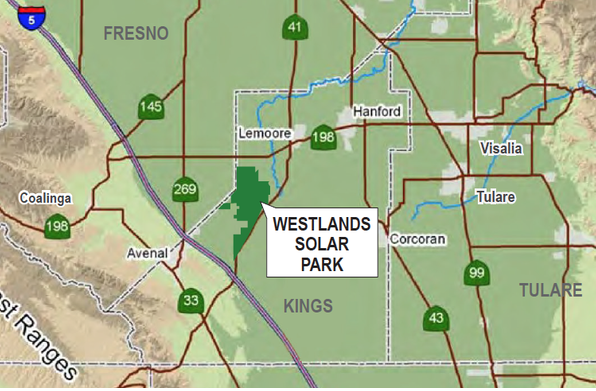
Earlier this year an EIR for a giant 2.5 thousand MW solar ” industrial park” in Westlands Water District also in Kings County got underway – by far the largest on the drawing boards,perhaps anywhere.
Next door in Fresno County there is over 1000 MW under development and several hundred MWs built in Tulare County with about the same in the pipeline.
Not all the projects are super large.
The State of California is planning to install 2.2 MW of solar arrays near the Pleasant Valley prison in Coalinga according to a public notice. The 11.1 acre project would produce direct current and convert it later to alternating current before it is delivered to the prison owned distribution system.
In Tulare County a score of 1 to 10MW solar projects scattered around the county are now being built to help bolster power to rural areas of the county. Each is a $7 million building project – good news for the local property base too.
On a much larger scale near Mojave a 450MW solar project is being proposed next to the Edwards Air Force base a public notice from Kern County says.
Kern County is the leader in renewable projects with both wind and solar.
Kern’s solar stats are impressive both in the San Joaquin Valley side and on its sunny desert lands. As of 2011 there were 12 PV projects in the Valley totaling 1033.5 MW. On the desert side there were 19 projects totaling 1813 MWs. Solar thermal permits include the Beacon Solar Energy project with 250MWs. That’s a total of almost 3100 MWs of applications
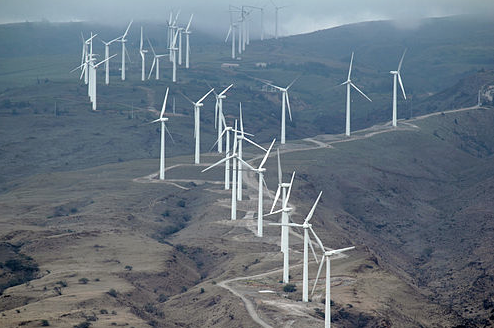
On Kern’s wind front there were 1171 MW of energy projects permitted from 2005 to 2010. Current installed capacity is 783 MW. Total wind projects with pending applications add up to 3575 MWs in the Tehachapi Wind Resource area says the Kern Wind Energy Assn.
The Alta Wind Energy Center is a wind farm located in Tehachapi Pass of the Tehachapi Mountains, in Kern County, California. As of 2013, it is the largest wind farm in the world, with a combined installed capacity of 1,320 MW (1,770,000 hp). The project, being developed near Tehachapi Pass Wind Farm – site of the first large-scale wind farms installed in the U.S. in the 1970s and 1980s – is “a powerful illustration of the growing size and scope of modern wind projects”.
Southern California Edison has agreed to a 25-year power purchase agreement for the power produced as part of the power purchase agreements for up to 1,500 MW (2,000,000 hp) or more of power generated from new projects to be built in the Tehachapi area. The project will “reduce carbon dioxide emissions by more than 5.2 million metric tons, which is equivalent to taking 446,000 cars off the road”.[1] A total of 3,000 MW (4,000,000 hp) is planned.
The wind farm is being developed by Terra-Gen Power which closed a US$1.2 billion financing deal in July 2010 with partners that included Citibank, Barclays Capital, and Credit Suisse. After many delays, the first phase began construction in 2010. Financing for additional phases of $650 million was secured in April 2012. Construction of the Alta Wind Energy Center is expected to create more than 3,000 domestic manufacturing, construction, and maintenance jobs, and contribute more than a billion dollars to the local economy.
The latest approval comes for the Alta Wind Energy project 11 miles east of Tehachapi .The BLM has approved the 153MW,2593 acre project that will tie into the SCE Windhub substation.BLM approved the latest project May 24.
Enter Warren Buffett
One major major player in California (and everywhere) is Berkshire Hathaway’s MidAmerican Renewables that has invested in both solar and wind in California in the past year.
Last November, MidAmerican Wind, a subsidiary of MidAmerican Renewables whose parent company is MidAmerican Energy Holdings Company, announced it has completed the acquisition of the 168-megawatt Alta Wind VII and the 132-megawatt Alta Wind IX projects from California Highwind Power, a subsidiary of Terra-Gen Power, LLC. The projects are located near Tehachapi, Calif., and will consist of a total of 100 Vestas 3-megawatt V90 wind turbines.
The Alta Wind VII and Alta Wind IX projects bring MidAmerican Wind’s renewable energy portfolio to 381 megawatts.
“The completion of this acquisition marks MidAmerican Wind’s second acquisition of wind generation assets in 2012,” said Tom Budler, president of MidAmerican Wind. “We are pleased to add the Alta Wind VII and Alta Wind IX projects to our generation portfolio.”
In April 2013, MidAmerican Solar and SunPower Corp. (Nasdaq: SPWR) marked the start of major construction at the Antelope Valley Solar Projects – two projects co-located in Kern and Los Angeles counties in California – with a community celebration. The 579-megawatt development will employ approximately 650 workers during a three-year construction period; generate more than $500 million in regional economic impact, the majority of which will be generated during construction; and serve California’s growing electricity demand with clean, renewable solar power.
The Antelope Valley Solar Projects make up the world’s largest solar power development under construction. When complete, the projects will provide enough energy to power approximately 400,000 average California homes.
Of course our little survey of Middle California would not be complete without mentioning some of the largest concentration of solar panels anywhere – in SLO County where 775 MWs is under construction including the huge Topaz Solar Farm,also owned by MidAmerican. A few miles north in Monterey County another 280 MW project is planned near Parkfield, famous for temblors being proposed by Element Power.
ROSEMEAD, Calif. (June 7, 2013) — Southern California Edison (SCE) has decided to permanently retire Units 2 and 3 of its San Onofre Nuclear Generating Station (SONGS).
“SONGS has served this region for over 40 years,” said Ted Craver, Chairman and CEO of Edison International, parent company of SCE, “but we have concluded that the continuing uncertainty about when or if SONGS might return to service was not good for our customers, our investors, or the need to plan for our region’s long-term electricity needs.”
Both SONGS units have been shut down safely since January 2012. Unit 2 was taken out of service January 9, 2012, for a planned routine outage. Unit 3 was safely taken offline January 31, 2012, after station operators detected a small leak in a tube inside a steam generator manufactured by Mitsubishi Heavy Industries (MHI). Two steam generators manufactured by MHI were installed in Unit 2 in 2009 and two more were installed in Unit 3 in 2010, one of which developed the leak.
In connection with the decision, SCE estimates that it will record a charge in the second quarter of between $450 million and $650 million before taxes ($300 million – $425 million after tax), in accordance with accounting requirements.
After months of analysis and tests, SCE submitted a restart plan to the Nuclear Regulatory Commission (NRC) in October 2012. SCE proposed to safely restart Unit 2 at a reduced power level (70%) for an initial period of approximately five months. That plan was based on work done by engineering groups from three independent firms with expertise in steam generator design and manufacturing.
The NRC has been reviewing SCE’s plans for restart of Unit 2 for the last eight months, during which several public meetings have been held. A recent ruling by an adjudicatory arm of the NRC, the Atomic Safety and Licensing Board, creates further uncertainty regarding when a final decision might be made on restarting Unit 2. Additional administrative processes and appeals could result in delay of more than a year. During this period, the costs of maintaining SONGS in a state of readiness to restart and the costs to replace the power SONGS previously provided would continue. Moreover, it is uneconomic for SCE and its customers to bear the long-term repair costs for returning SONGS to full power operation without restart of Unit 2. SCE has concluded that efforts are better focused on planning for the replacement generation and transmission resources which will be required for grid reliability.
“Looking ahead,” said Ron Litzinger, SCE’s President, “we think that our decision to retire the units will eliminate uncertainty and facilitate orderly planning for California’s energy future.”
Litzinger noted that the company has worked with the California Independent System Operator, the California Energy Commission and the California Public Utilities Commission in planning for Southern California’s energy needs and will continue to do so.
“The company is already well into a summer reliability program and has completed numerous transmission upgrades in addition to those completed last year,” Litzinger said. “Thanks to consumer conservation, energy efficiency programs and a moderate summer, the region was able to get through last summer without electricity shortages. We hope for the same positive result again this year,” Litzinger added, “although generation outages, soaring temperatures or wildfires impacting transmission lines would test the system.”
In connection with the retirement of Units 2 and 3, San Onofre anticipates reducing staff over the next year from approximately 1,500 to approximately 400 employees, subject to applicable regulatory approvals. The majority of such reductions are expected to occur in 2013.
“This situation is very unfortunate,” said Pete Dietrich, SCE’s Chief Nuclear Officer, noting that “this is an extraordinary team of men and women. We will treat them fairly.” SCE will work to ensure a fair process for this transition, and will work with the Utility Workers Union of America (UWUA) and the International Brotherhood of Electric Workers (IBEW) on transition plans for the employees they represent.
SCE also recognizes its continuing safety responsibilities as it moves toward decommissioning of the units. SCE’s top priority will be to ensure a safe, orderly, and compliant retirement of these units. Full retirement of the units prior to decommissioning will take some years in accordance with customary practices. Actual decommissioning will take many years until completion. Such activities will remain subject to the continued oversight of the NRC.
SCE intends to pursue recovery of damages from Mitsubishi Heavy Industries, the supplier of the replacement steam generators, as well as recovery of amounts under applicable insurance policies.
For updates, please visit www.SONGScommunity.com, or follow us on Twitter at www.twitter.com/SCE_SONGS and on www.facebook.com/SCE.
San Onofre is jointly owned by SCE (78.21 percent), San Diego Gas & Electric (20 percent) and the city of Riverside (1.79 percent).
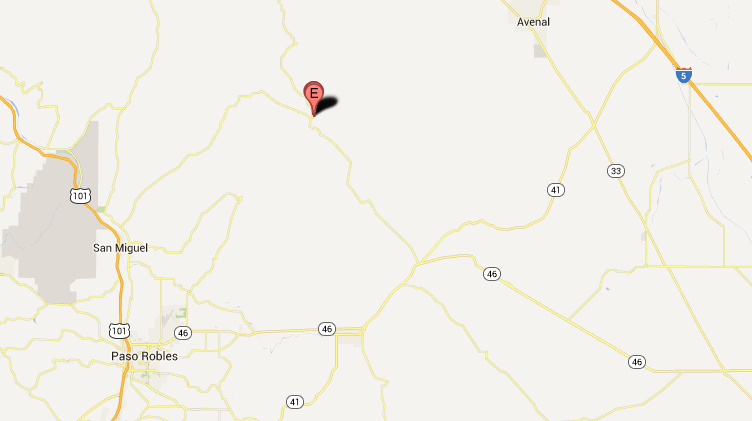
Hearst Corp’s Jack Ranch cattle ranch could be the home of a proposed 2485 acre, 280 Megawatt solar project near the earthquake prone community of Parkfleld – some 25 miles east of Paso Robles.
The utility-scale solar farm proposed by Portland base Element Power is located in southeast Monterey County just across the border from SLO County.
Monterey County is processing an environmental impact report for the project called California Flats Solar that would connect Morro Bay power line to the Gates substation inFresno County. That high voltage line now brings power from the Morro Bay power plant to the Valley .
California Flats would be the third large triple digit solar project to be built in this remote part other state with this site just a few miles north of the Carrizo Plain where two mega- solar projects are under construction.
They total 775MW.
Monterey County is expecting to see an EIR on the sprawling energy farm this fall and the applicant has said they hope to be under construction in 2014 and be in operation in 2016.
The facility would be located on grazing land southeast of shaky Parkfield and east of Turkey Flats Rd – north of of Highways 41 and 46. The business would have 8 to 10 employees but 1.2 million solar panels.

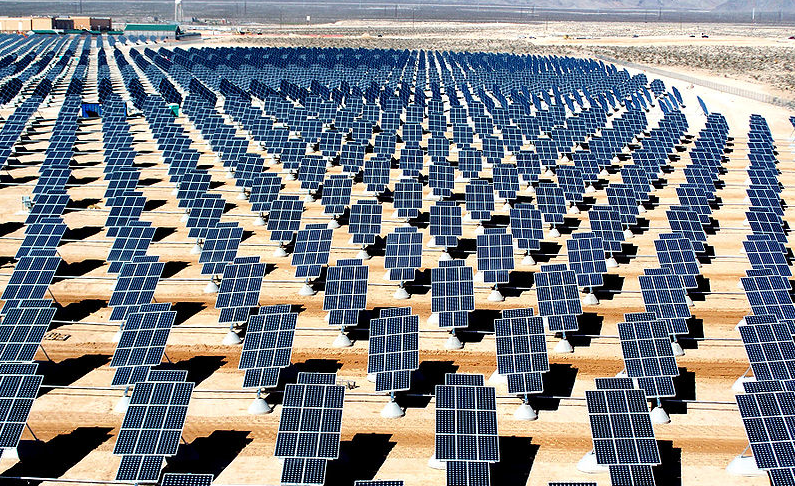 SAN FRANCISCO, July 10, 2013 – The California Public Utilities Commission (CPUC) today issued its annual report on the progress of the California Solar Initiative, showing that the program has installed 66 percent of its total goal, with another 19 percent reserved in pending projects. This equals an estimated 1,629 megawatts (MW) of installed solar capacity at 167,878 customer sites in the investor-owned utility territories through the end of the first quarter of 2013, enough to power approximately 150,000 homes and avoid building three power plants.