Consultant Nixes Hwy 99 Shopping Center… Supports Adding So Mooney Retail Zone

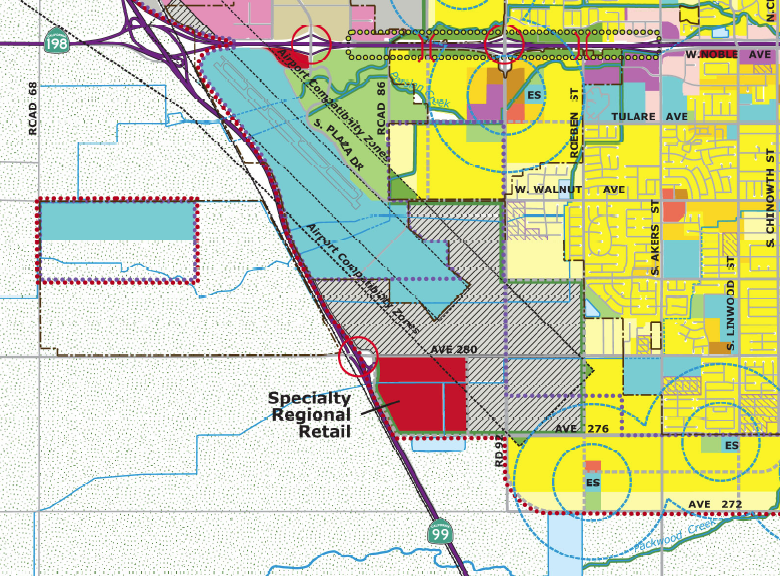
Draft plan would add large shopping center at Hwy 99 and Caldwell

Sacramento consultant firms Plescia & Co. and Gruen Gruen + Associates have filed a report with the City of Visalia assessing the  regional retail lands need for the community going forward. The report comes after a blue ribbon committee of Visalians have pushed for a  more aggressive opening up of regional retail commercial land opportunities including Hwy 99 for a shopping center as the city finalizes its 2030 General Plan Update.
The idea has sharply divided both the community and the Visalia City Council. The report amounts to a second opinion that will be considered by the General Plan Update Committee at their meeting July 26 and likely next month at a council session.
Here are some key findings of the report released July 12 that appears to offer a middle course on the pace and location of new development.
Visalia/Mooney Get Stronger

The City of Visalia has continued to capture more sales from shoppers living outside of Visalia than it has lost through leakage of sales to retailers located outside the community. Visalia’s capture of Tulare County’s annual retail sales has slightly increased over the past 10 years from approximately 42.9 percent in 2000 to 43.4 percent in 2010. While some Tulare and Kings County communities have added some large format, big box and / or general merchandise retailers, they lack the depth and variety of the retailers and retail environments present on Mooney Boulevard in Visalia.

Despite this growth of retail space in surrounding Tulare and Kings County communities, the Mooney Boulevard Corridor actually enhanced its position as the dominant retailing location within the city  and Tulare County despite competing supply additions elsewhere with the share of countywide sales going from 20 percent in 2000 to 22 percent in 2010. Also, the Corridor’s share of citywide sales increased from 42 percent in 2000 to 47 percent of total citywide sales in 2010.

Vacancy On Mooney

Approximately 200,000 to 250,000 square feet of the inventory of commercial spaces of at least 12,000sf on the Mooney Boulevard is currently vacant. The vacancy rate on Mooney fell from the peak during the Great Recession from  20 percent in 2009 to 12.3 percent in early 2012.
Approximately 441,000 square feet of previously vacant commercial retail space was re-occupied from 2009 to mid-2012 with approximately 836,000 square feet (net) of new development from 2002 to mid-2012.
The City of Visalia’s current General Plan includes approximately 47 acres of vacant land area designated for Regional Retail Commercial use on the Mooney Boulevard Corridor. However, some of these designated properties (along Stonebrook for example) may not appeal to regional retail users or uses requiring direct frontage and visibility and ideal access to Mooney.Only approximately 11 acres east of Lowe’s could accommodate  Regional Retail Commercial use appears to be suitable to the preferences of regional retail space users, say the consultants.

Growth In Demand

The report suggests unmet demand should grow to 1.45 million sf in Visalia by 2020 and 2.35 million sf by 2030. As it is, the report says the are just 300,000 sf of vacant or infill  space available on Mooney. The report does not address filling some of that demand away from Mooney – on 198 or Dinuba Blvd, for example. Mooney amounts to half the city’s retail sales so perhaps half of the that expected demand might be satisfied elsewhere in town.

Nevertheless, the report concludes that “the forecast additional retail demand exceeds the current capacity of vacant land and retail space to support additional regional retail uses within the Mooney Boulevard Corridor.”

Recommendations

.
“The City of Visalia should encourage the expansion of existing and development of future complementary clusters of retail goods and services, lodging facilities, and institutional educational and healthcare uses that reinforce each other and serve to extend the trade area served or the frequency of visitation to the Mooney Corridor.”

Regional Commercial Development South of Visalia Parkway

The consultant suggests the City of Visalia consider designating and rezoning a portion of the land area along Mooney Boulevard south of Visalia Parkway( south of Packwood Creek shopping center) currently designated Regional Retail Reserve as Regional Commercial – initially the area between Visalia Parkway and Avenue 274 (the 30-acre parcel located on the southwest intersection and a 40-acre area located at the southeast intersection of Visalia Parkway and Mooney Boulevard) within three to five years after the adoption of the Visalia 2030 General Plan Update.

The recommendation would result in opening up additional land area increasing retail location choices and enhancing the retail synergy within the Mooney Boulevard Corridor, they say.

Development of the proposed Regional Commercial land use designation area further south along Mooney Boulevard between Avenue 274 and Avenue 272 should  happen later as the General Plan envisions.

Specialty Regional Retail at Highway 99 and Caldwell Avenue

The proposed designated Specialty Regional Retail area (175 acres) at the southeast intersection of State Highway 99 and Caldwell Avenue could potentially support approximately 1.5 million square feet of additional new commercial development. However, given the retail supply demand analysis presented in the report, “sufficient unmet demand is unlikely to arise in the next 20 years to support two major retail agglomerations similar to that established on Mooney Boulevard within Visalia.”

In addition, the Highway 99 and Caldwell Avenue intersection is currently void of and will require significant and costly major infrastructure including roadways, facilities and utility improvements (including reconstruction of the existing highway interchange) that would be needed to accommodate development of the subject area.

Regarding the Hwy 99 plan the report concludes”This location should not be reserved for general regional retail, because allowing retail agglomeration on this site that mirrors the retail mix on Mooney Boulevard could potentially adversely affect the long-term economic and commercial vitality of the Mooney Boulevard Corridor.”

However,the consultant did not rule out the idea of attracting a particular specialty retailer (IKEA for example) to this site saying”We recommend that the City of Visalia consider establishing policies in the context of the Visalia 2030 General Plan Update that positions this location in the long term to capture true regional iconic destination retail uses or possibly uses such as educational institutions that derive unique advantages from highway accessibility.


Around Tulare County…AT&T,Algae,Visalia Med Clinic

New AT&T Hub In Visalia Industrial Park

Telecom company AT&T will set up a regional service center in the Visalia Industrial Park in coming months with an expected 60 to 70 employees. The office will serve customer needs for a variety of services including broadband, mobil and fixed telephone.

Realtor Doug Burr says the company will lease a 24,000 sf building on 1.7 acres at 8945 W Goshen Ave, currently empty. The company filed for tenant improvements to build out an office in about half the warehouse space this week.The building is owned by investor Danny Freitas.

“They will be dispatched to work around the county for AT&T’s bundled services” expects Burr. ”They need parking for about 75 trucks.”

The Dallas-based firm is the 7th largest company in the United States by total revenue.

Tulare Algae Farm Breaking Ground

Pacific Algae Oil has leased four acres next to the Tulare city treatment plant to build a pilot production plant that would turn algae into oils to be used for bio-jet fuel. The company uses CO2 generated from the city’s fuel cell operations and piped to to the growing area. The algae grow in tubes and are seeded to tubs where the CO2 is bubbled. Before the oil is extracted the algae are netted and dried on racks.

The pilot project has university research interest says city public works director Lew Nelson so the project has a student labor supply.

Nelson says  the company broke ground on the project this week.He expects plenty of visitors since “algae farming has worldwide interest.”

Visalia Medical Will Double Sized of Walk-In Clinic

Visalia Medical Clinic is doubling the size of its ‘Quick Care’ walk-in clinic this summer says CFO Russ Desch.”We have plenty of demand from both our Visalia Medical patients and outside patients for urgent care type service that does not require a long wait or appointment.”

The clinic is also remodeling its lobby to to accommodate patient flow he says.

“Visalia has a shortage of primary care physicians ” notes Desch and a clinic setting is a lot more cost effect and better than getting care at the hospital ER.”

Desch says Kaweah Delta herself is building several new urgent care centers in Visalia as well ”to take the pressure off of their ER.”

Under the new health care law getting regular care through a primary physician in private office or clinic setting will be encouraged.

“We should be open in fall when the sniffles and colds become a problem once again.”

The remodeling work is valued at $560,000.

Goshen To Get New Tire Store

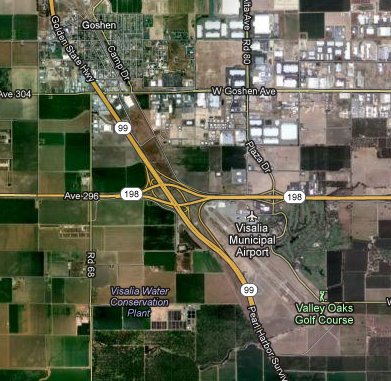
The Highway 99 community of Goshen will get a new Firestone Tire store with construction starting early next year as the Tulare-based owners  add their 11th location in the Valley. Lionel and Kevin Pires have built a network of tire stores from Delano to Merced and have now filed for a permit to build a 15,000 sf tire sales and service store on 1.77 acres on  the westside of Hwy 99 on the Frontage Rd at Ave 304.

County planner Scott Cochran says the company has to go through a county hearing because of its proximity to the  Visalia airport but” there are no issues with it.”

Currently, Tulare Firestone, Inc. operates 10 facilities and is one of the largest distributors of tires for agricultural equipment in the Western United States. A fleet of 18 service trucks provide services to farming and trucking operations throughout Central California with nearly 100 people.

“We’ve already bought the land” confirms Kevin Pires.

Cochran says although the project is located near the current Ave 304 offramp” these offramps are going away” with plans by CalTrans to widen Hwy 99 (starting this year) and relocating the Betty Drive interchange advertising for construction set for 2016 says CalTrans.

The construction of a rail overpass on Betty Drive/Riggin,complete later this year,is likely to increase truck traffic coming off of Hwy 99 in coming years, perhaps a good reason to set up a tire store nearby.

“People are going to get to Goshen from the Betty Drive interchange” expects Cochran, for now the only bridge that connects both sides of town.
Just how the closure of the Ave 304(Goshen Ave) offramps that connect to a major business street into the the Visalia Industrial Park will be compensated for – is up in the air. “it could be the Goshen Community Plan could call for an overpass on Goshen Ave to connect to both sides of the town and Visalia” suggests Cochran although “residents will have to push for it if they want it.”

“It sure would bring some new economic development to this hard hit community.”

Governor Signs High Speed Rail Bill / Kings Co Weighs Route

Governor Jerry Brown is visiting Los Angeles’ Union Station today signing the bill providing funding for construction of the first phase of a statewide high speed rail service that will connect LA to SF.

The symbolism is clear that the victory on passage in the state Senate recently came because of support in urban areas for the big project sweetened with $8 billion for upgrades to their commuter train system that will connect to the future bullet train.

In the meantime the focus this week is on Kings County where a comment period on a revised EIR has begun. While farmers and government officials have been vocal opponents of the project – it was state Senator Mike Rubio who represents Kings County who cast a deciding vote to support the project.

“The construction of the Central Valley segment will create about 100,000 year-long jobs in the Valley. Unemployment rates in Fresno, Kern, Kings and Tulare Counties are unacceptable and high speed rail guarantees jobs for the Central Valley” said Rubio.

Which alignment will the California High Speed Rail Authority pick through the South Valley to bypass Hanford when they run the bullet train route through Kings County? Originally they posed a route east of Hanford that would cross 198 just east of Hwy 43. Now they have offered a west of Hanford alternative as well,the “revised draft” released this week, crossing 198 west of Armona. The Authority board will select which one after the first of the year with the final Record of Decision on their EIR coming in March 2013.
Then expect the lawsuits to come from Kings County property owners who pretty much don’t like either route. Hanford does not want it to run through their town as Amtrak does today. Tulare County cities prefer the east of Hanford route (if they can’t get Hwy 99) for a station site that would be closer to their population cnters.
Kings County would prefer Hwy 99 routing as well but railroad giant Union Pacific won’t hear of it and the CHSRA has taken it off the table.
Resolution of the legal issues will have to happen before the 114 mile, $7 billion segment begins construction.
With funding approved now, CHSRA hopes to begin construction of the Central Valley segment that runs Fresno to Merced area late this year but also faces several lawsuits first.

Visalia Hwy 99 Widening To Begin

With $46.6 million in funding approved by the state Transportation Commission June 27, CalTrans is wasting no time to begin work to widen Highway 99 to 6 lanes around the 99/198 interchange.”We hope to start the 4 mile stretch from the town of Goshen toward Caldwell as soon as November” say project manager Phillip Sanchez.

Sanchez says the Fresno CalTrans office has four segments of 99 being widened through Tulare County with the stretch from Kingsburg to Goshen well underway. Two others are programed to start up after this latest 4 mile segment that includes the Visalia airport frontage is completed, in about 2 and one half years.

The next leg south is Caldwell Ave to Tagus.

“Hopefully the funds will be there to continue the widening one after another.”

Tulare County Association of Governments director Ted Smalley credits a partnership with CalTrans that had kept design work and right of way acquisition ahead of construction monies to be ready to build whenever funds are available.  Savings from some other regional projects help fund this one as bids continue to very competitive.

Construction of the widening at 99 at 198 will coordinate well with the completion of the 198 expressway between 99 and Hanford that will also improve connections and safety along the biggest crossroads in Tulare/Kings counties. The expressway should be complete this November after some delay over nesting birds say CalTrans.

Sanchez says Hwy 99 near198 gets an average of 53,000 vehicles a day of which about one quarter are big-rig trucks. That compares to around 39,000 vehicles a day in more rural parts of the county like around Pixley.

“We expect Hwy 99 traffic to double in the next 25 years.”

Bakersfield Highway 99 traffic far busier however with an average daily vehicle count of 142,000 he says.

Besides the safety factor, improving the freeway interchanges and highways around Visalia/Goshen should help move the large volume truck traffic in and out of the Visalia Industrial Park, a key draw for industry.

Coming in a few years, a new interchange at Betty Dr.

Rival Airline Wants To Serve Visalia

SeaPort Airlines who operates over 150 daily scheduled flights in Arkansas, Kansas, Missouri, Oregon, Tennessee, Texas, and Washington has made an application to the Department of Transportation to serve Visalia starting this fall under the Essential Air Service program

The Oregon-based airline has been talking with Visalia officials in recent weeks about their proposed air service that would be an alternative to the current operator, Great Lakes Airlines.‘We are in the process of recommending one or the other to the Department of Transportation” says Visalia airport manager Mario Cifuentes. The recommendation is due August 1 to the federal agency who will make the final decision. Two city council members serve with staff on the committee that makes the recommendation.

Seaport would require the DOT to increase the current subsidy by $100,000 annually, says Cifuentes, an added hurdle forhrt airline as rthe EssentialAir service remains controversial and under the microscope in a political year.

Cifuentes says Seaport’s plan is to operate small 9 passenger planes that would offer Visalians daily service to Oakland, Burbank and San Diego with one plane running a circuit each day.

If the airline was selected over Great Lakes, the connection to LAX, currently with 2 daily flights,would be lost notes Cifuentes,a connection long sought by Visalia. Previously the city had daily flights  only to Ontario in the Southland.

For now Visalia is served by Cheyene,Wyoming-based Great Lakes with flights to both Las Vegas and LAX.

However, sources say Great Lakes could drop Las Vegas but offer three daily flights to LA from Visalia instead of just two.Cifuentes says LA is much more important for business connections as well as to access connecting flights around the world compared to the leisure market in Las Vegas.

“That would be a plus” says Cifuentes since “flight frequency is so important to travelers, particularly business travelers.”

“Three flights a day to and from LAX offers more choice and options for people who miss a flight” making it more convenient to travel from Visalia. Great Lakes does code sharing with both United and Frontier making it convenient to to use Visalia to reach whatever destination a traveler needs without a price penalty.

Ridership with Great Lakes has improved in the past year from about 5 passengers a day to 10.5 says Cifuentes.”We had a flight with 17 passengers a few days ago, all with connecting flights.” The planes have 19 seats.

The Essential Air Service program remains under fire from conservative critics like Tom McClintock who represents part of Fresno County, who delivered these remarks on the House floor a few days ago.

“This program shells out nearly $200 million a year – including $114 million of direct taxpayer subsidies – to support empty and near-empty flights from selected airports in tiny communities – most of which are just a few hours’ drive from major airports.

A reporter recently investigating this waste took one of these flights from Ely Nevada and was the only passenger on the flight. Our constituents paid $1.8 million for this air service that carried just 227 passengers during the entire year! Ely is a three and a half hour drive from Salt Lake City International Airport.”

Because of press accounts and the political focus on the Ely market, sources say the ESA will likely drop  that community from service freeing up the Great Lakes plane that homebases there.

Bad news for Ely may be good news for Visalia.

Kings County News Update

Appeal Denied In Waste Management Suit: On July 3, 2012, the Fifth District Court of Appeal affirmed a trial court decision , denying challenges filed by El Pueblo Para El Aire Y Agua Limpio against the Kings County Board of Supervisors and Chemical Waste Management, Inc. The petition for writ of mandate challenged the Subsequent EIR prepared for the County’s approval of an expansion of the Kettleman Hills Facility, which is one of only two currently active permitted hazardous waste disposal facilities in California. The petition alleged that the project’s health-related impacts were not adequately analyzed, the daily truck traffic baseline was inflated, and the cumulative impacts analysis did not analyze all existing operations at KHF as related projects.

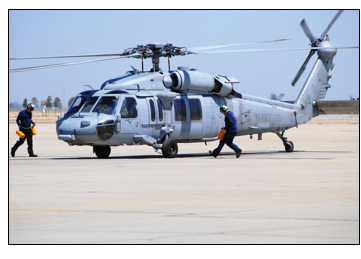
First New SAR Helicopter At NAS Lemoore: A Search and Rescue (SAR) helicopter touched down at Naval Air Station Lemoore for the first time in years last month.
The Sikorsky MH-60S Seahawk is the first of three helicopters that will comprise the new SAR unit.  With the establishment of the new unit, NAS Lemoore will soon be able to provide search and rescue capabilities to support the open water training requirements of the 15 strike fighter squadrons based at the air station.
“The SAR unit gives us the ability to take care of our own personnel and aircraft when they operate over the Pacific Ocean’s training ranges,” said Capt. Eric Venema, NAS Lemoore Commanding Officer.
The training ranges off the coast of central California have been under-utilized because of the cold water temperatures.   The SAR unit will also cover inland training ranges.
The helicopter was transferred to NAS Lemoore from Helicopter Sea Combat Squadron Six based at NAS North Island.  About 30 active-duty Navy personnel will be assigned to the unit that will be operational in October.
Hanford Costco? A Fresno based developer has filed a General Plan Amendment with the City of Hanford to develop a 500,000 sf shopping center anchored by “discount club” retailer, presumably a Costco. The application for a 58 acre parcel at the northwest corner of Hwy 198 and Hwy 43 includes the 150,000 sf store and second major anchor.
Costco is not named as the tenant and there is some doubt the retailer would select that site or even come to town.Comments on the project were due to city July 3. A hearing will be scheduled.
Hanford’s Wastewater Treatment Solar Farm is under construction this summer. The one megawatt solar farm cost $4.3 million to construct but  an agreement with Chevron Energy Solutions is a lease purchase agreement. The city received $1.64 million California Solar Initiative funding to be used to help pay for the project and savings from the power not purchased will add up to$89,000 a year to the city, explains staffer John Doyel. In year 16 through 20 the city will save over $500,00 each year.The city owns the unused property next to their WWT plant. Hanford joins other Valley cities using solar to offset power costs at their WWT plants including Tulare,Dinuba and soon Visalia.
City of Lemoore is in the process of approving new residential projects including one of the few towns of its size with several active new home subdivisions. Also this summer the city is expected to approve a new180 unit apartment complex in town reflecting investor expectation the town will grow as the  Navy air based continues to adds more people.
Kings Waste and Recycling Authority will gain title to 22 acre owned by the city of Lemoore south of their waste water treatment plant.That site was to be leased to Full Circle Energy for installation of a solar farm but the company defaulted on the agreement. As of July 25 the 22 acres will revert to KWRA as part of an earlier in JPA agreement.

High Speed Anxiety vs Reality:This Rail Has A Head Of Steam

A key state Senate vote last week made it clear – California High Speed Rail will likely be built starting next spring coming through the  Central Valley whether farmers and GOP politicians oppose it or not.

After the Assembly gave their OK Thursday by a large margin, the Senate barely passed the modified SB 1029 “rail modernization” bill by a dramatic one vote majority Friday. The legislation, backed by Governor Jerry Brown, but opposed by all Republicans, authorizes spending $1.9 billion of voter-approved Prop 1A bonds and $3.3 billion in federal grants to begin construction of the proposed Central Valley high-speed rail line. The line will eventually connect the state with a new 220mph electrified passenger train system.

After the nail biter of a vote, Brown said “In 2008, California voters decided to create jobs and modernize our state’s rail transportation system with a major investment in high-speed rail and key local projects in Northern and Southern California. The Legislature took bold action today that gets Californians back to work and puts California out in front once again.”

Winning by one vote was deja vu all over again for Brown whose father won a key legislative battle by one vote to build an equally controversial public works program – the now hugely popular State Water Project.

The revised CHSR rail plan lowers the total cost from an anticipated $100 billion to $68 billion and in an effort to get support in the state legislature from major population centers offered to do $800 million in rail connections in the larger metro areas simultaneously as the first Central Valley segment is built.

“Our new plan makes major investments in regional and local rail systems throughout the state,” said CHSRA chair Dan Richard in a statement. “In the BART system, MUNI, Caltrain, Transbay Terminal, the ACE train in the Central Valley, Metrolink in Los Angeles, the Los Angeles to San Diego Amtrak service…all of these things will benefit from the investment program that high-speed rail is leading.”

Farmer Opposition

But farmer critics of the plan refuse to give up their battle to junk the train while others in the Central Valley are busy this week figuring out how to plan to connect to the new transportation system that will have stations in Fresno,Bakersfield and likely Hanford/Tulare County.Pending now, just where in the Central Valley will CHSRA decide to place a 1500 job heavy maintenance station and will Hanford /Tulare County get a station?

Just before the July 6 vote, the California Farm Bureau voted to oppose the project due to loss of farmland and impacts on rural communities in places like Kings County where opposition has been  particularly strong.

“The high-speed rail system would change the landscape for generations across some of the most productive agricultural counties in the United States,” California Farm Bureau President Paul Wenger said. “We understand the need for transportation projects, but we should not needlessly sacrifice food production, family farmers and workers who depend on agricultural jobs.”
Wenger noted that the bond measure authorizing construction of the high-speed rail system stressed the goal to build the system along existing transportation corridors where practical. Instead, the proposed route for high-speed rail cuts through farms and ranches, requires numerous road closures and bisects canals and other water delivery systems.
“A rural road or a canal may look insignificant to a planner studying a map, but those roads and canals support farms, ranches and rural communities,” Wenger said. “The High-Speed Rail Authority has seen farmland as the path of least resistance. But farmers and ranchers are resisting. The authority needs to address the impacts that high-speed rail will force on rural communities.”
Two county Farm Bureaus—in Madera and Merced counties—are plaintiffs in a lawsuit challenging the environmental review of the Merced-to-Fresno route for the rail project. The Kings County Farm Bureau has joined county officials in expressing concerns about the impact on farmland along the proposed Fresno-to-Bakersfield route.
“In the past, California Farm Bureau has said we support the concept of high-speed rail as long as it conserves irreplaceable farmland, avoids premature conversion of farmland for urban sprawl, and complies with established environmental law. As of now, the proposed system does not meet any of those goals and we can’t support it until it does,” Wenger said.
Legal Battle Already Underway
Translation – get ready for a hard fought legal battle now that the funding has been authorized. Indeed it is already well underway.
As of last month three complaints have been filed in the Sacramento Superior Court that challenge the Merced to Fresno route section over inadequate environmental review. This would be the first leg of the bullet train’s construction. Plaintiffs include the City of Chowchilla and County of Madera. A ruling on the merits of the petitions is expected in early 2013, before the expected start of construction in the spring of 2013 say legal experts.

“We are going to protect our property,” said Frank Oliveira, a farmer and leader of the Central Valley group Citizens For California High-Speed Rail Accountability. “Somebody is coming into our area, and they are going to seize our property and say we don’t have a choice in the matter.” Oliveira told a reporter.
Both sides in this ideological battle are determined to fight this out. The law allows the taking of farmland to run a road or rail line and allows other negative impacts,noise ,dust etc, as long as those impacts are mitigated, reduced to the degree possible and compensated for.
The upshot is the California Environmental Quality Act(CEQA) under which the  plaintiffs are and will be suing the CHSRA over does not pave the way to kill the project but simply delay it until whatever court recognized shortcomings of the plan are fixed.
Already, a court found last month a Kings County suit did not pass muster but offered a chance for them to amend the suit.
Rubio’s Role
On the other side of the coin Senator Michael Rubio (D- Shafter) who represents Kings County and who arguably cast the deciding vote last week has sought to mollify critics of the project. He released this statement.
“Earlier today, I voted in favor of funding the initial phase of the high speed rail project because it provides the Central Valley with critical transportation dollars and includes provisions that protect agriculture.
I laid out early on a set of two requirements that I expected the project to meet before I would consider supporting high speed rail funding. The project needed to:
1.) Exhibit greater accountability. The Governor replaced the CEO and Chairman of the Authority and language was adopted to increase reporting and accountability.
2.) Appoint an Agriculture Czar. The Authority will develop an agriculture industry committee—headed by an individual from the Central Valley—that includes California Department of Food and Agriculture Secretary Karen Ross.
The construction of the Central Valley segment will create about 100,000 year-long jobs in the Valley. Unemployment rates in Fresno, Kern, Kings and Tulare Counties are unacceptable and high speed rail guarantees jobs for the Central Valley.”
Rubio’s decision may not be a popular one in Kings County although the district includes friendlier landscape in Kern County as well.Rubio does not have run again until 2014.
What Route?
After the vote the debate over elements of the big project continues this week.The LA Times reported Monday that The French railway recommended that the state build the rail line along the Interstate 5 corridor and partner with it or another foreign firm to hold down costs in 2010.But the CHSRA rejected the idea.
One commenter offered”The whole point of HSR is to be a viable, practical alternative to air travel. If I’m traveling from L.A. to San Francisco, I want the quickest route and no detours to places like Fresno.”
Still, Valley supporters of the planned rail route through Fresno on the Valley’s east side want their millions of constituents to enjoy access and the benefits of a rail stop and not simply be a bystander to fast train service between LA and SF. As of now, the train on this route would take your from SF to LA in 2 hrs 40 minutes.
The CHSRA has also rejected the idea of running the train down Hwy 99,popular among farm critics and some cities on the eastside like Visalia and Hanford but they have rejected that route as too costly with strong opposition from Union Pacific Railroad.
Ready to build along the currently proposed route, CHSRA chair Dan Richard remains a true believer on a project he insists will attract private investment and help clean the air.
“Not only will California be the first state in the nation to build a high-speed rail system to connect our urban centers, we will also modernize and improve rail systems at the local and regional level. This plan will improve mobility for commuters and travelers alike, reduce emissions, and put thousands of people to work while enhancing our economic competitiveness,” said  CHSRA chair Richard .

Visalia Biz Briefs… Hospital Gobbles Up Taco Bell

In-Shape Fitness Moving To Sequoia Mall. In Shape Fitness with three locations in Visalia will relocate its Caldwell near Demaree location to the former 24Hr Fitness space behind the Sequoia Mall. A spokesperson in the Caldwell Ave location office confirmed the move planned for late 2012. The gym would gain substantial space in the larger 20,000sf building that has been vacant for years.

Kaweah Delta Remodeling Mineral King Hospital Wing. Kaweah Delta hospital CEO Lindsay Mann says the district is remodeling all 6 floors of the 1969 built Mineral King wing top to bottom with interiors comparable to the new Acequia wing.”We are going floor by floor with two floors completed already and a third underway.” The complete retrofit costs about $300,000 per floor, he says.
Hospital Gobbles Up Taco Bell. Kaweah Delta has completed the purchase of the former Taco Bell property on Acequia,in the path of future expansion of the hospital. “Near term (3 years), we plan to lease it out to one of several bidders who want to use it for food services” says Mann with both national and local vendors interested. Mann also confirmed continued discussion with the property owner at Checkers Hamburgers but no sale yet. “If we buy it, Checkers would stay for some time.”
Retail On Hwy 99? The hottest debate in town will continue later this month with a new meeting of the General Plan Update Committee(GPUC) set up to advise the city on the update for the General Plan.Two big issues loom. Should the city designate more new retail commercial land including a shopping center on Highway 99?  On July 26,the committee will get a first look at a Sacramento consultants’ report on demand for retail space.  A divided Visalia City Council, who earlier this year tabled the plan,will by not take up the contentious issue until late August, if then. The second issue is new population projections that appear to show much less demographic growth in our future,less than the GPUC committee has assumed. At issue – how much new housing and new subdivision land do we need?

California Bullet Train Vote In State Senate

A critical vote in the California Senate set for this week (likely Thursday) will be a make-or-break moment for the ambitious plan to build high speed rail in the state starting late this year.
The federal government has demanded the state legislature approve or deny issuance of $2.7 billion in state voter approved bonds to match $3.3 billion in federal monies to begin the construction of the 130 mile stretch through the Central Valley.
Critics have called this segment the “train to nowhere” because this Madera to Bakersfield section would not immediately connect high speed rail to the state’s big metro areas although Amtrak would fill the gap for a while. Farmers in the Central Valley have led the charge to kill the project and have already sued over the plan they say will hurt their production.
Both Madera and Merced Farm Bureaus have sued in Sacramento court. Backed by the ag industry,Kings County has also sued to stop the project as well. Greg Gatzka, Kings County’s community development director has estimated that the train would cut across more than 7,000 acres of farm fields, resulting in an $8.2 million annual loss in production value.
But led by Governor Jerry Brown the bullet train has enough support in the state Assembly but is on the edge in the Senate where 21 votes are needed to move forward. All GOP member oppose the project requiring most Democrats to support it. Speculation has the measure short by a few votes.
“Suck it in,” Brown told an audience gathered last month for the 75th anniversary of the Golden Gate Bridge. Referring to the revised high speed rail plan he emphasized “We got to build, we got to do it right.”

The revised rail plan lowers the total cost from an anticipated $100 billion to $68 billion and in an effort to get support from major population centers offers to do $800 million in rail connections in the larger metro areas simultaneously as the first Central Valley segment is built.

“Our new plan makes major investments in regional and local rail systems throughout the state,” said CHSRA chair Dan Richard in a statement. “In the BART system, MUNI, Caltrain, Transbay Terminal, the ACE train in the Central Valley, Metrolink in Los Angeles, the Los Angeles to San Diego Amtrak service…all of these things will benefit from the investment program that high-speed rail is leading.”

“We’re talking about more than $10 Billion of investments not only in high-speed rail, but also in regional and local rail systems,” continued Richard.

Supporters says the electrified project would help clean the air and must be viewed vs simply building more freeways and airports to move people in the state in coming decades.

Critics call the project wasteful and say the state cannot afford it right now adding the money would be better used for education.

Brown remains the prime mover here walking in the footsteps of his father, the former governor, who built the state water project mired in controversy and doubt at the time – winning approval in the legislature by one vote in 1959. It remains the largest state financed project ever built and today serves about 25 million people.

If the vote in the Senate fails, the Obama administration has said it will reallocate the $3.3 billion to other states who want the money.