City of Pismo Beach Community Development Department has published an INITIAL STUDY FOR A NEW HOTEL PROJECT AT 601 CYPRESS STREET proposed by Pismo Pier Partners, LLC.The site is a parking lot currently.
The proposed project includes the development of a hotel featuring 108 lodging rooms, a business conference/social events facility (125-guest capacity), street frontage retail (898 square feet) and outdoor dining space, roof-top pool, and fitness center.
The project includes the following specifications: Lot area: 52,272 square feet (1.2 acres); Building height: 34 feet, 10 inches maximum; Building floor area: 74,230 square feet; Lot coverage: 28,901 square feet (55% of the lot). Hotel parking requirements would be satisfied entirely on-site. The project also includes proposed valet parking services. Hotel parking would consist of a one-level 35,400 square-foot subterranean garage. The parking capacity for the project totals 128 vehicles in the garage, coupled with five surface parking stalls adjacent to the main entry for a total of 133 parking spaces (City requirements for the proposed development equal 132 spaces).
No EIR
An environmental initial study has been completed for the project. The study concludes that a Mitigated Negative Declaration should be prepared. This notice replaces a previous notice on 12/17/13. An EIR will not be prepared. A copy of the Initial Study is available for review at: City of Pismo Beach Community Development Department 760 Mattie Road Pismo Beach, CA 93449 (805) 773-4658 REVIEW PERIOD: Anyone may comment on the Initial Study during the review period. Please submit comments to Mike Gruver, Associate Planner at the City of Pismo Beach Planning Division, 760 Mattie Road, Pismo Beach CA 93449 or by email at mgruver@pismobeach.org”> mgruver@pismobeach.org . Comments will be accepted until January 23, 2014. S/Mike Gruver, Associate Planner December 18, 2013 7039805
Slow growth has been the norm in SLO County for years.
The latest California Department of Finance report says the county grew by 925 people in the past year measured from July 2012 to July 2013.While the rest of the state grew by nearly 1.0% during same period,San Luis Obispo county, living up to its reputation grew by 0.34.
But growing by 925 people in 2012 is a boom compared to only391 people in 2011 and 746 in 2012.
That is about one third the expected growth at 1.0% according to Economic Research Associates that estimated back in 2005 that on average the county would gain 2700 new residents a year on the low end of estimates or on the high end – add 3654 residents every year from 2005 to 2030.
Fitting in with the cautious SLO policy to hold back residential growth at 1% or below the policy appears to have succeeded beyond dreams.
While the numbers clearly show there is little danger of exceeding that threshold a new consensus worries that without new supply the “average family” will not be able to afford a home here.
Of course the recession stalled everyone’s plans including home builders.
Nowhere is it clearer that SLO growth has ruled in SLO City than in a look at single family housing permits in recent years.
The 2012 city annual report tells the tale. From 2005 through 2012 only 181 new single family homes were permitted in the city .That is an average of around 23 homes a year.
There are around 20,671 residential units in the community. In its community profile completed in 2012 the city report listed the median home home price at $485,000. As of October 2013 the number has jumped to $570,000 according to California Association of Realtors.
SLO MO
Between the price rise and pent up demand – now 2014 looks like we will see residential projects break out of the ‘SLO-Mo’ trend. Already in 2013 Construction Monitor reports 50 new single family homes have been permitted in the city this year, double the past years trend.
A one percent growth trend in the city with its twenty thousand plus homes would be 200 homes.
Two annexations approved in past years allows development to move forward with an improving market and finally they are. Between two new plan areas in the south part of the city there are nearly 2000 homes planned.
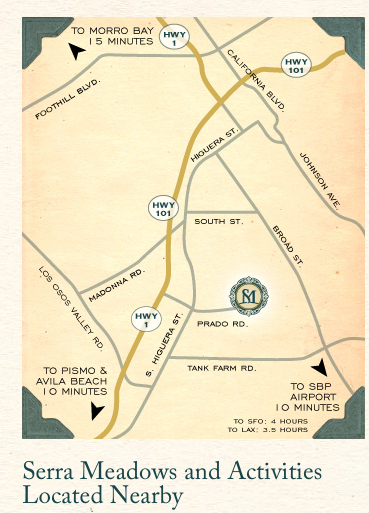
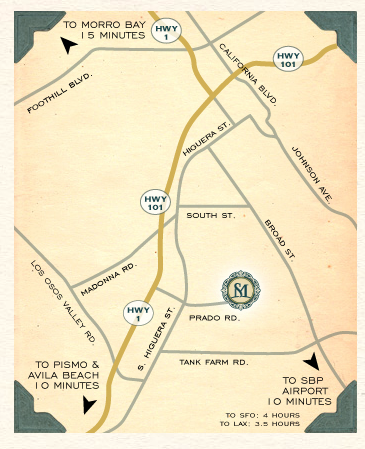
In the Santa Margarita Specific Plan area along Prado and Tank Farm Mangano Homes is already single handedly breaking the 23 home built average of the past eight years and is underway with around 40 homes and a build-out of around 180 homes. “We will do about 50 homes a year” says Craig Mangano with homes in Serra Meadow selling “like hot cakes “ in the mid $500s.
Further south in the Orcutt Specific Plan area approved in 2011 activity is stirring as well. The plans call for around 1000 homes in a 230 acre area east of the airport. This fall Wingate Homes, presented as the Atelier Development got approval to move forward on the construction of 142 new homes.
The Tribune reported in October “This is a very good beginning of more development for our city,” said Mayor Jan Marx. The project is the first residential development in the area to emerge since a specific plan was adopted in 2010 and the area was annexed by the city in 2011.”
In the Orcutt development some 140 of the 1000 homes are planned to be in the affordable category.
Another big project could be filed soon. The former Dalidio land in the county is being developed near 101 off Madonna expected to include 500 homes to be processed through the city.
While SLO County experienced slow growth in the past year neighbor Santa Barbara County experienced a bit of a boom growing by 6133 or nearly 1.5% from July 2012 to July 2013 with a turn around in net migration into the county. The year before net migration was -3,161 people compared to a plus 2310 in the latest period. Better times could mean growth here too especially given plans to grow the Cal Poly campus, recently announced.
SkyWest to Operate Additional United Express Flight from San Luis Obispo to Los Angeles Beginning Dec. 19
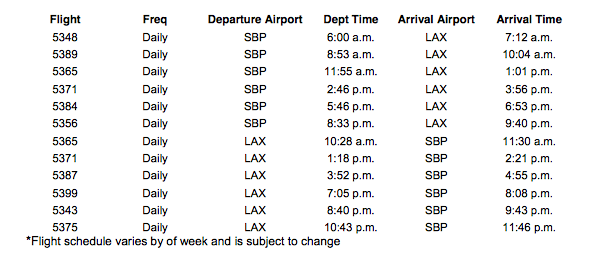
San Luis Obispo,Just in time for the holidays, SkyWest Airlines will operate an additional daily United Express flight from San Luis Obispo to Los Angeles beginning Dec. 19 – bringing the total to six roundtrip flights! Each flight, operated by SkyWest, gives travelers an opportunity to connect at United Airlines’ Los Angeles hub to hundreds of destinations around the world.
“With this additional daily flight, travelers will have more options than ever before to get anywhere in the world they want to go,” said Mike Thompson, SkyWest Airlines vice president – Market Development. “So whether you’re heading out on a business trip or plan to visit family for the holidays, starting your trip from San Luis Obispo County Regional Airport has never been so convenient.”
The flight schedule from San Luis Obispo to Los Angeles beginning Dec. 19 is as follows*:
Analysis will evaluate California for siting of national testing facility
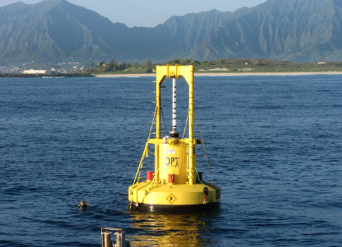
wave power buoy off Hawaii coast
SAN LUIS OBISPO — Cal Poly, San Luis Obispo’s Institute for Advanced Technology and Public Policy has been selected to receive a grant of up to $750,000 from the U.S. Department of Energy (DOE) to assess the feasibility of locating a National Wave Energy Test Facility in California (CalWave).
The Department of Energy intends to pick one site for a test facility. California is competing with Oregon and Washington and states on the Eastern seaboard to be selected.
“The California coast is ripe for realizing the promise of ocean wave energy,” said Sam Blakeslee, director of the Institute for Advanced Technology & Public Policy. “If responsibly developed, this clean and renewable energy source has the potential to connect power to millions of American homes and ensure California is competitive in the global race for renewable energy technologies. This is an exciting opportunity for our faculty and students from across a number of disciplines to be part of the unique Learn by Doing experience that is central to the institute and Cal Poly’s mission.”
Wave energy is an emerging renewable technology designed to convert energy from the ocean’s waves into electricity for consumer use. The electricity would be transmitted ashore and distributed on existing land-based transmission lines. The California Energy Commission estimates the statewide wave energy generation potential to be 7,500MW, or about three and a half times the power produced by the recently retired San Onofre Nuclear Generating Station off the coast of Southern California. According to DOE, America’s total wave-energy potential could account for as much as one-third of the United States’ yearly power usage. “California’s 745 miles of coastline is an untapped renewable energy frontier,” said Lt. Governor Gavin Newsom, a member of the Institute’s board. “CalWave has the potential to unleash a wave of energy innovation, compliment California’s ambitious Renewables Portfolio Standard, green our energy portfolios, and create thousands of new jobs.”
DOE has indicated its interest in cooperatively funding $25 million to $50 million, pending Congressional appropriations, in the expansion of wave-energy technologies through the establishment of a National Wave Energy Testing Facility. The initial grant awarded to Cal Poly, combined with other matching funds, will be used to research and determine which location along California’s coast has the best potential to accelerate the development of a commercial ocean renewable energy industry by serving as the National Wave Energy Testing Facility.
If chosen, California would become an international leader in the development of this emerging clean energy technology.
Blakeslee will serve as principal investigator for the CalWave project, leading a team of industry, academic and national laboratory experts in wave energy originally brought together by California-based Pacific Marine Renewables. Blakeslee, a former California state senator, is a geophysicist, research scientist and strategic planner and holds a doctorate in geological sciences. He is the founding director of the institute, which aims to advance insight into complex issues by bringing together cross-disciplinary, problem solving thinkers at Cal Poly.
“This is yet another example of the Central Coast leading the way in developing innovative renewable energy technology,” said Congresswomen Lois Capps. “Wave and tidal energy is already creating quality local jobs and successful small businesses. This innovative project will only build on this success and help move us one step closer to a sustainable energy future.”
CalWave aligns with President Obama’s approach to an “all-of-the-above energy strategy” for developing new sources of American-made energy. With wave power technologies already being demonstrated internationally, CalWave will be an integral step in the nation’s advancement of this sustainable, cleantech energy source. # # #
About the Institute for Advanced Technology and Public Policy The institute opened its doors at Cal Poly in 2012. Under the guidance of founding director and former State Senator Sam Blakeslee, the non-partisan, interdisciplinary organization’s mission is to develop practical solutions to societal issues by informing and driving public policy through advanced technology. Teams of Cal Poly faculty and students, together with public policy leaders and industry experts, create and promote answers to some of the world’s most intractable challenges in areas such as the environment, energy, agriculture, natural resources and government.
Members of the group’s advisory board include Gavin Newsom, California lieutenant governor | Charles Munger Jr., philanthropist and research physicist | Alissa Black, director of California Civic Innovation Project | James Boyd, former member of the California Energy Commission | Mike Florio, member, California Public Utilities Commission | Dian Grueneich, former member, California Energy Commission |Delaney Hunter, principal, Gonzalez, Quintana & Hunter, LLC | Dan Schnur, director of the Jesse Unruh Institute at the University of Southern California | Jack Scott, former chancellor of the California Community Colleges | Bob Vilhauer, retired vice president for public policy and analysis at The Boeing Co. | Dan Newman, co-founder and president of MapLight | Al Montna, former president, California State Board of Food and Agriculture.
The Mangano brothers – Andy and Craig are well known locally as one of the largest home building companies and a busy commercial developer. Today their focus is on the Central Coast in San Luis Obispo. This year Andy is the busiest home builder in that city renown for slow growth. In the past 8 years SLO city has permitted an average of under 20 new single family homes a year (Visalia will do 400 sf homes this year). In 2013 Andy has shattered the SLO trend by himself building around 40 new homes in one subdivision. Demand is strong after years of no new supply. Meanwhile Craig is completing a 2 story Downtown SLO mixed-used project on MarshSt with retail on the ground floor. Sound familiar? That is what he did on Main Street in Visalia across from the movie theater. Craig says there is second Downtown SOL mixed-use project in the works but nothing in Visalia.
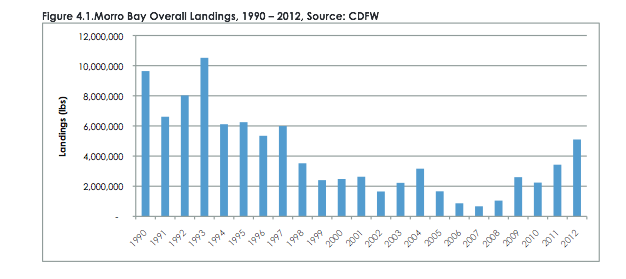
Morro Bay’s commercial fishing industry,once left for dead 10 years ago,has resurfaced from the deep and is growing again says the 2013 Morro Bay Commercial Fishery report. The annual economics-oriented report published this summer concludes that for the fifth year in a row fish landings are up.Total fish landings increased from 3.4 million pounds in 2011 to over 5 million pounds in 2012,an increase of 67%.The catch is the highest since 1997.(click on chart)
Earnings at the docks generated $6.3 million and 194 jobs. Significantly the increase in business has attracted 17 new or returning fishermen and 12 vessels in the last four years says the study. Salmon /Crab Lead The Way
So what are they catching? In 2012 there were big jumps in market squid,salmon and dungeness crab. Salmon landings in Morro Bay have been virtually non-existent for 7 years but came roaring back with the improved ocean conditions and a bountiful ocean population in 2012.The species is one of great value per pound for fishermen who got an average of $6.80 per pound.
Dungenese crabs crawled from their hiding places in 2012 with 140,000 pounds caught compared to 5 years of just about nothing. Earnings in 2012 were $600,000. Also the sole catch was at a 14 year high
The bounty works to reverse the common doom and gloom perception in the past decade that the vibrancy of small fishing towns like Morro Bay or Fort Bragg were a fading memory. A 2001 NOAA report quoted a local that frowned that” the commercial fishing culture of Morro Bay is rapidly disappearing.” Indeed in 2000 NOAA says there were some 249 commercial vessels delivering fish landings to Morro Bay with local Bay residents owning 62 commercial vessels.
Gloom & Doom?
There was talk of the collapse of the fisheries off the West Coast with dwindling catches in recent decades spurring new regulations triggered by what was characterized as overfishing.
Morro Bay’s fishery used to be dominated by trawlers that drag nets on the ocean floor. The practice is now out of favor because of environmental damage and assertion it led to over fishing.What is left is highly regulated. Today fishermen use hook and lines as well as traps to catch fish.,The Nature Conservancy group – in an effort to stabilize the industry – bought the trawling fleet of boats.
But there are still some trawl operations as described in a recent city Harbor Commission meeting.
“Mr. Rob Seitz, commercial fisherman, said he runs the 56’ trawl boat the South Bay and is in the West Coast groundfish trawl fishery. He described his gear as a funnel-shaped net that is towed across the ocean bottom at around 2,400’ depth, gathering mostly sole and cod. He said he’s a proud participant of the Individual Fishing Quota (IFQ) program; the City is acquiring a Quota from The Nature Conservancy, which will keep the fishery local. The IFQ requires a federal observer onboard his boat 100% of the time during all fishing trips, which ultimately helps to keep the fishery sustainable. Mr. Seitz also said any gear type can be used in this fishery as long as it has been approved by the Pacific Fisheries Management Council; so hooks or pots, traps or nets are used.
Chair Eckles asked Mr. Seitz to explain the observer requirements. Mr. Seitz said an observer is subcontracted to the federal government; the first year of the program NOAA paid for 90% of the bill but now the percentage is 60-40% which means Mr. Seitz pays around $200 per day. He said the federal observer basically helps prove that the fishery is legitimate and legal. He brings in 15-30,000 pounds of fish each trip; in 2012 he landed about 900,000 pounds of fish that went to local markets and restaurants.”
Back to our annual report ; By the year 2000 landings were on a downslide as can be seen from the above graph.The highest year for landings was 1993 with over 10 million pounds caught, double the year 2012 yield. On the other hand the 5 million pound fish haul caught in 2012 looks pretty good compared to 2007 that saw barley 1 million pounds.
If Morro Bay’s fishermen are catching more fish the community of Morro Bay is catching a break as well – as the state’s economy boosts travel. The city hotel bed tax reflects a steadily improved local tourism economy in the past few years as can be seen with combined receipts for July/Aug of 2011 at $4.7 million,July/Aug 2012 at $5.1 million and July/Aug of this year recorded at $5.6 million, almost a 20% improvement in a two year span.
Whale watching
Tall Fish Tale?
Sounds like a tall fish tale but the tourists are back just as the fish are coming back.
The uptick in activity dockside has spurred more visitation along the Embarcadero as small processors keep the working atmosphere alive adding jobs and stimulating more tourism and all sorts of fish/wildlife related spinoffs.
Besides commercial fishing – look at the growing for-hire fishing activity, eco-tourism that focus on birdlife based on the rich food habitat here,recreational boating ,whale watching tours, harbor tours,restaurants with a decidedly fish flavor of course,hotels and all manner of retail.Add the residential investments and rentals that help people come to take in the sea air. All this gives the town an atmosphere that keeps the visitors coming back. No wonder there has been a nice increase in hotel bookings in town in the past several years.
More harbor side activities are in the works with infrastructure improvements on the Embarcadero like a new dock at Morro Bay Landing – an operation that offers sport fishing trips and whale watching on a new boat serving the area starting this month.
At the Harbor Commission meeting one local albacore fisherman” Mr. Craig Barbre said the cycle for albacore had been very poor locally in the past 10-15 years, but the numbers have been increasing steadily over the past three years; so the fish seem to be coming back to California. He’d like to see the fishery return here so he can fish from home, but it would require a substantial freezer facility that would make this town more viable to the buyers as a hub for fishing.”
More infrastructure could pay off as well. “Mr. Barbre said his second fishery is salmon, which he was able to fish locally for the first month and a half, and this has been the best salmon season since he began fishing, having 100-fish days and the price never falling. He said the ocean is the healthiest he’s seen in years including giant balls of krill and baitfish. He described the dock for direct sales of fish to the public at Half Moon Bay, which is highly successful. He recommended that Morro Bay install a haulout facility, along with the freezer facility, and a direct-to-public fish sales dock, all of which would mean a boost for the local economy.” Shellfish Too
Besides the commercial fishing industry Morro Bay sports two oyster farms who raise the shellfish in cages in the bay .One firm – Morro Bay Oyster Co has a retail store. California’s ‘shellfish industry generates around $25 million with Morro Bay ranked third on state production behind Humboldt and Tomales Bay.
Improved infrastructure
Again the latest Harbor Commission comes a first hand account of the revival. ”Mr. Tom Roff, commercial fisherman for over 40 years, thanked the community for the wonderful support of the fishing industry. He said his 35-ton vessel is the Diane Susan, and he’s in the drift/gillnet fishery.
Mr. Roff said all the Morro Bay fisheries are highly regulated and sustainable, and a vital industry here in Morro Bay. In 2012 the local fishing industry, which includes 90 active vessels, landed over 5 million pounds of fish in Morro Bay for a $6.3 million dollar gross, which includes Dungeness crab, swordfish, albacore, squid, and king salmon just to name a few.
Mr. Roff described his drift/gillnet fishery and the strict regulations which began with the Marine Mammal Protection Act. He described his gear which includes 60 “pingers” that create an acoustic wall of sound to ward off marine mammals. He fishes 100 miles off the coast for swordfish, bluefin tuna, albacore, opah, thresher shark, among others, and that Morro Bay is the third largest swordfish landing on the West Coast.”
The Harbor Commission heard calls for more infrastructure improvements.
San Luis Obispo has no ocean front by there is a real Port of San Luis.That place is the wind-protected sister hamlet along Avila Bay to the better-known tourist haunt of Avila Beach.
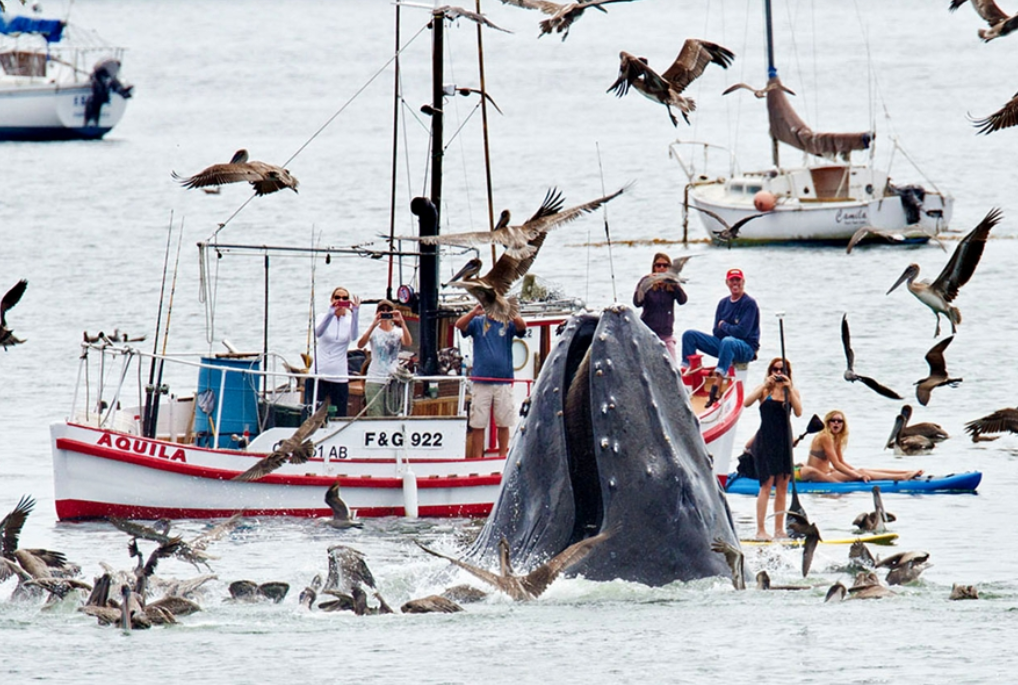
Since the August 2012 eye popping humpback whale surfacing in the bay right off the Port San Luis pier amid kayakers and boaters – word of the sitings have sparked the popular imagination after the whale photos went viral.
whales surfacing photo went viral last year
The upshot – ever since then visitors have flocked to the area wanting to get that close to nature too. While whales don’t surface next to the pier every day around here “there is an abundance of wildlife and natural beauty” that leads to opportunities, says Port San Luis district harbor manager Steve McGrath.
McGrath says projects in the planning stage,some near the construction stage and some already in place are evidence of a growing trend -ie, this place could get busier.Unlike Avila the Port of San Luis pier is commercial pier and there is definitely more commerce planned.
This past week the district’s board took up enough development projects in the works to bring out the issue of parking in the future at the pier.
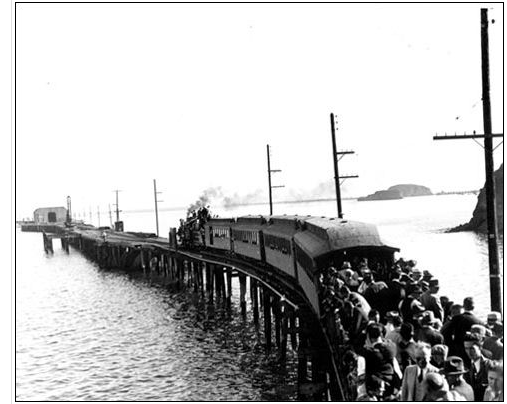
In the 1870s the pier sported a passenger/freight train carrying visitors from boat side onto the pier and into the city of San Luis Obispo – down what is now the Bob Jones Trail.The track connected in town where the Pacific Coast Center is today.
passengers flock to pier by train in late 1800s.
This week the idea of a train or shuttle of some sort to move people to and fro off the pier has resurfaced again says McGrath.”We said… Wouldn’t it be neat but it got no further than that.”
Nevertheless,the list of active projects is impressive and one can see why the local commission is concerned about parking. Here are some of the irons in the fire:
A second sit-down restaurant is in the works at the end of the pier leased by Chris Dorn of Morro Bay – the remodel plans have been submitted to the California Coastal Commission.
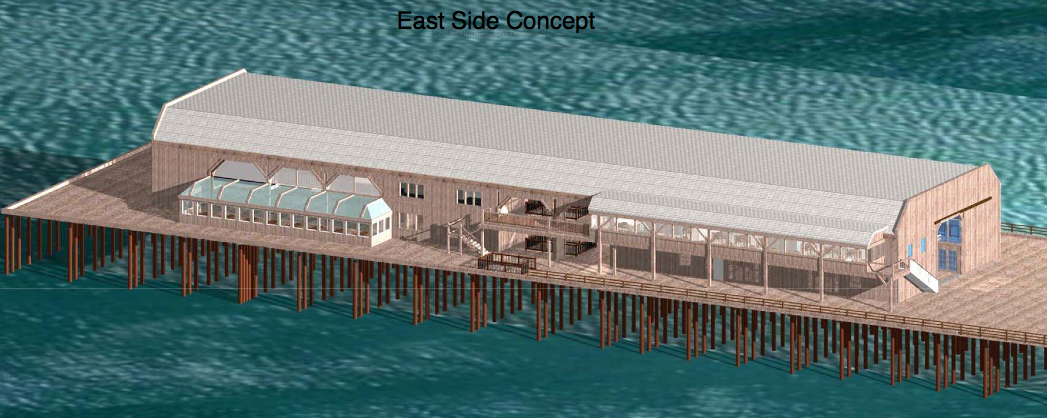
This week the district’s board – the Harbor Commission- approved a plan to do an extensive second-story addition to the pier on both the west and east sides enabling them to lease out two new spaces – one of which is likely to be a new fish market. The building plans are expected to be submitted to the Coastal Commission in the next two months.On the west side the Olde Port Inn eatery would be rebuilt.
-Besides these several new spaces – the district is removing the large old ice house on the pier that has been non-operational for years to make room for another new leased space.That demo work is beginning very soon.
-In the bay itself McGrath says a potential oyster farm in their waters has been proposed preliminarily.
-Activity has increased for customers of a district-based surfing school, kayak and paddle board rentals. “It’s way up from just three years ago” says McGrath as these sport – perfect for the mostly calm waters of the bay, have really taken off.
-On the hillside the 26 acre Harbor Terrace project has reached a critical crossroad as the district is set to decide whether to issue an RFP to develop the big campground project or develop it themselves. A decision is likely in January says McGarth. Costs to build the complex could be around $9.5 million but the district over time could net several million dollars a year from visitor revenues.The complex could handle 300 visitors at a time.
To handle all this development both on the pier, at its base and on the hillside, the San Luis Port commission realizes it is going to have parking problem.Thus, this talk of a train.
“I know that whales surfacing in the bay brought tons of visitors to the area last year and I can’t help but think it has had a residual effect.” The people keep coming.
McGrath adds,“It is clear we have a lot to offer here”
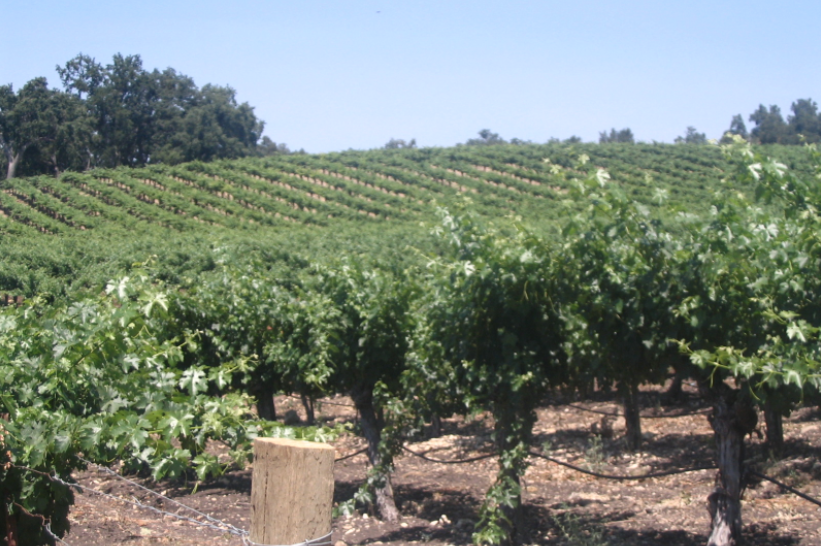
Wine Enthusiast Magazine announced this month that the Paso Robles American Viticultural Area (AVA) has received the honor of being named the 2013 Wine Region of the Year in the magazine’s annual Wine Star Awards. Paso Robles Wine Country, located along California’s famed Central Coast, is midway between Los Angeles and San Francisco with over 200 wineries and 32,000 vineyard acres. The region’s winemakers, growers and industry are ecstatic to be held in the highest regard among some of the world’s greatest wine producing regions with this incredible award.
“Since 1983, when the Paso Robles AVA was first created, the region has grown exponentially with talent, quality and artistry,” said Gary Eberle, owner of Eberle Winery.
Paso Robles as a wine region has been gaining in popularity in recent years with a number of accolades through exemplary point scores, creative video marketing initiatives and high profile articles and reports. The AVA continues to mature with a current proposal to create 11 districts within the boundaries of the Paso Robles viticultural area which will allow growers and vintners to tell their stories more clearly, which in turn will give consumers and trade a much greater understanding of Paso Robles’ diversity and complexity.
“This award is a testament to the hard work and dedication of our wineries and growers whose individual accomplishments help raise the bar of the region as a whole,” said Jennifer Porter, Executive Director of the Paso Robles Wine Country Alliance.
The Paso Robles wine region and the winners of the 2013 Wine Star Awards will be honored at an industry studded gala / black-tie awards ceremony at the New York Public Library in New York City on January 27, 2014. The Paso Robles AVA will be represented by Jennifer Porter, Executive Director and Christopher Taranto, Communications Director of the Paso Robles Wine Country Alliance, as well as a number of winery and grower representatives.
ABOUT PASO ROBLES WINE COUNTRY ALLIANCE
The Paso Robles Wine Country Alliance represents wineries, growers and businesses in Paso Robles Wine Country. Centrally located between San Francisco and Los Angeles, along California’s Central Coast, Paso Robles Wine Country is California’s third largest wine region. It encompasses more than 32,000 vineyard acres and 200 wineries. For more information, visit www.pasowine.com.
Researchers attribute failed eggshells to decades-old toxic dumpsite
What do California condors have in common with great white sharks and killer whales? They like to dine on marine mammals. Unfortunately for the condors, being in the gastronomic company of such fearsome predators has left them particularly vulnerable to toxins.
A new study by the Ventana Wildlife Society, supported in part by the Oregon Zoo Foundation, has revealed that some condors feeding on contaminated sea lion carcasses are laying eggs that don’t hatch.
Researchers linked the reproductive problems to DDT, a banned carcinogenic pesticide known to thin and weaken bird eggshells. Birds that have ingested DDT have been known to crush their own eggs when they attempt to incubate them. The chemical can also allow bacteria to penetrate the shell walls.
The source of the DDT was traced to a 40-year-old underwater Superfund site in Southern California.
“The takeaway message of this study is that any environmental catastrophe, like the recent Gulf oil spill, can have longer-lasting impacts than people think.”
—Joe Burnett, Ventana Wildlife Society
“This was where the world’s largest DDT factory discharged its waste and produced one of the world’s most toxic dump sites,” said Joe Burnett, co-author of the study. “Most California sea lions spend part of their lives breeding and feeding near that site and when they disperse north, they can pass those accumulated toxins directly onto scavenging condors.”
For the study, researchers located and measured the thickness of condor eggshells in the coastal redwood forests of Central California. At least half of the failed eggs they found were attributed to DDT.
Condors are the latest in a long list of species affected by DDT contamination over the past decades. Studies in the 1970s and ’80s found high levels of the toxin in Southern California mussels, anchovies, pelicans and eagles. Because coastal condors feed at the highest level of the food chain — on marine mammals — they are susceptible to magnified levels of the toxin. DDT has not been found in inland condors, which do not consume marine mammals.
The good news, according to the study’s authors, is that levels of DDT found in the food web have been in steady decline since the factory stopped discharging waste in 1971. Condor eggshells are expected to return to normal thickness, although the authors can’t predict when.
“Most people know something about the effect of DDT on birds based on Rachel Carson’s book Silent Spring,” Burnett said. “The takeaway message of this study is that any environmental catastrophe, like the recent Gulf oil spill, can have longer-lasting impacts than people think.”
In 2014, the zoo will support two studies investigating toxins in marine mammals in Oregon and Washington. With a grant from the Oregon Zoo Foundation’s Future for Wildlife program, the conservation group Coastal Raptors will take blood samples from vultures, ravens and eagles feeding on marine mammal carcasses along the Oregon and Washington coasts.
Pacific University and Portland State University will use their grant to directly examine stranded sea lions and harbor seals for toxins.
“Marine mammals can act as vectors for a variety of contaminants,” said Oregon Zoo deputy conservation manager David Shepherdson. “The results of these studies will provide important data for ocean health and the Oregon Zoo condor program.”
The California condor was one of the original animals included on the 1973 Endangered Species Act and is classified as critically endangered. In 1982, only 22 individuals remained in the wild and by 1987, the last condors were taken into captivity in an attempt to save the species. Biologists decided to place the remaining condors in a captive-breeding program. With the help of breeding programs like the Oregon Zoo’s, condor numbers now total around 400, counting those in breeding programs and in the wild.
More than 40 condor chicks have hatched at the zoo’s Jonsson Center for Wildlife Conservation since the program began in 2003, and more than 20 Oregon Zoo-reared birds have gone out to field pens, with most released to the wild. In addition, several eggs laid by Oregon Zoo condors have been placed in wild nests to hatch.
California condor breeding programs are also operated at San Diego Zoo’s Wild Animal Park, the Los Angeles Zoo and the Peregrine Fund’s World Center for Birds of Prey in Idaho. The Oregon Zoo received The Wildlife Society’s conservation award in 2005 for “creating the nation’s fourth California condor breeding facility.”
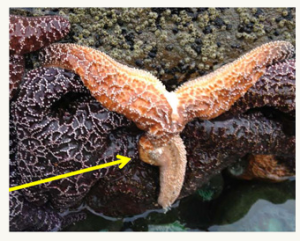
Tissue is disintegrating on two arms of this sea star affected by sea star wasting syndrome . The one below has lost most of its arms. (Photos by Melissa Miner)
A mysterious disease that causes sea stars to decay and fall apart within a few days has become widespread along the U.S. west coast over the past several months. First reported off the coast of Washington in June, the disease known as “sea star wasting syndrome” has now been observed as far north as southeast Alaska and as far south as Orange County, California.
Pete Raimondi, professor and chair of ecology and evolutionary biology at UC Santa Cruz, leads the Pacific Rocky Intertidal Monitoring Program, which has been documenting the disease at the group’s long-term monitoring sites along the west coast and collecting reports from other scientists and citizens. According to Raimondi, small outbreaks of the disease have been observed for decades, but this one is particularly troubling because it is so widespread.
“We’ve never seen it at this scale up and down the coast,” he said.
The disease has even hit sea stars in public aquariums that draw water from the ocean for their tanks, including UCSC’s Seymour Center at Long Marine Lab, the Vancouver Aquarium, and the Gulf of the Farallones National Marine Sanctuary visitor center.
Raimondi said citizens can help by reporting observations of the disease on his group’s Sea Star Wasting Syndrome web site. The site includes detailed descriptions of the disease, photographs, maps, regular updates, and instructions for tracking and documenting observations.
The cause of the disease is still unknown. Researchers think it is caused by a bacterial or viral pathogen, and several groups are working to identify the specific pathogen. Past outbreaks have been associated with warmer than normal water temperatures, but that does not seem to be the case this time, Raimondi said.
The syndrome has been reported at several sites around Monterey Bay, including sites in Santa Cruz and Monterey. It has also been reported on the U.S. east coast. At least ten species of sea stars are known to be affected by the disease. The hardest hit species on the west coast is Pisaster ochraceus, a large, common, purple-and-orange sea star that preys on mussels.
While concern about the disease has been building in the scientific community since early summer, it has only recently begun to garner widespread media attention. Raimondi said he has done nearly a dozen interviews within the past few days, including a television interview at Long Marine Lab broadcast on NBC Bay Area.

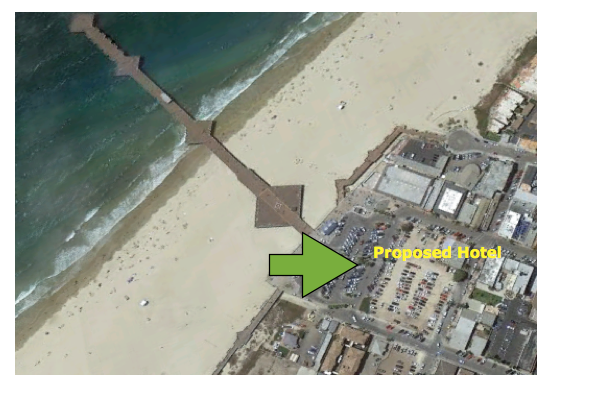 City of Pismo Beach Community Development Department has published an INITIAL STUDY FOR A NEW HOTEL PROJECT AT 601 CYPRESS STREET proposed by Pismo Pier Partners, LLC.The site is a parking lot currently.