Morro Bay’s DiStasios To Relocate To Old Paris Building

Move Sets Stage For Centennial Plaza Concept

December 9,2016-

screen-shot-2016-12-08-at-11-20-13-amOwner of local favorite DiStasios restaurant Ken MacMillan has purchased the 4000sf Old Paris building at 450 Morro Bay Blvd and will be converting it into new location for his Italian eatery. The move could also help set in motion more changes to come along the Embarcadero in Morro Bay.

“We hope to be in there by this summer” says MacMillan who runs the family owned restaurant with son Mark MacMillan.

“ We have 14 Italian restaurants in California run by members of our extended family.” His brother started landmark Rosa’s Restaurant in Visalia, for example

He says the DiStasios name comes from his mother’s side of the family.

MacMillan says the time consuming part of the conversion of the Old Paris retail building will be “starting from scratch to build a kitchen.”

“We will still specialize in Italian dishes and seafood specialties with dining inside and on the patio.”

MacMillan tried to buy his current building but was frustrated by the city who ended up with it and says now – they have other plans.

one concept for Centennial Plaza

The city wants to redevelop this part of the Embarcadero into a new plaza with multiple developments in the Distasios space, the parking lot across the street and below – toward the water – down to the plaza and lot there.

The concept is called Centennial Plaza that has ben the subject of some preliminary public hearings September.

“One idea for a new user in Centennial Plaza might be a multi-vendor marketplace like the Oxbow Public Market in Napa California” says city Community Development Director Scot Graham.

screen-shot-2016-12-08-at-11-42-05-am“The designer of the the Oxbow store actually lives in Morro Bay part of the year and has offered to build a similar store here.” Graham says there are multiple developers interested in a big project in this space that could include a hotel and even convention space.

But the city has had big ideas before say critics – noting that the Distasios building sat vacant for 13 years.

Two Developers Negotiate With Dynegy Over Morro Bay Plant Site

December 8,2016-

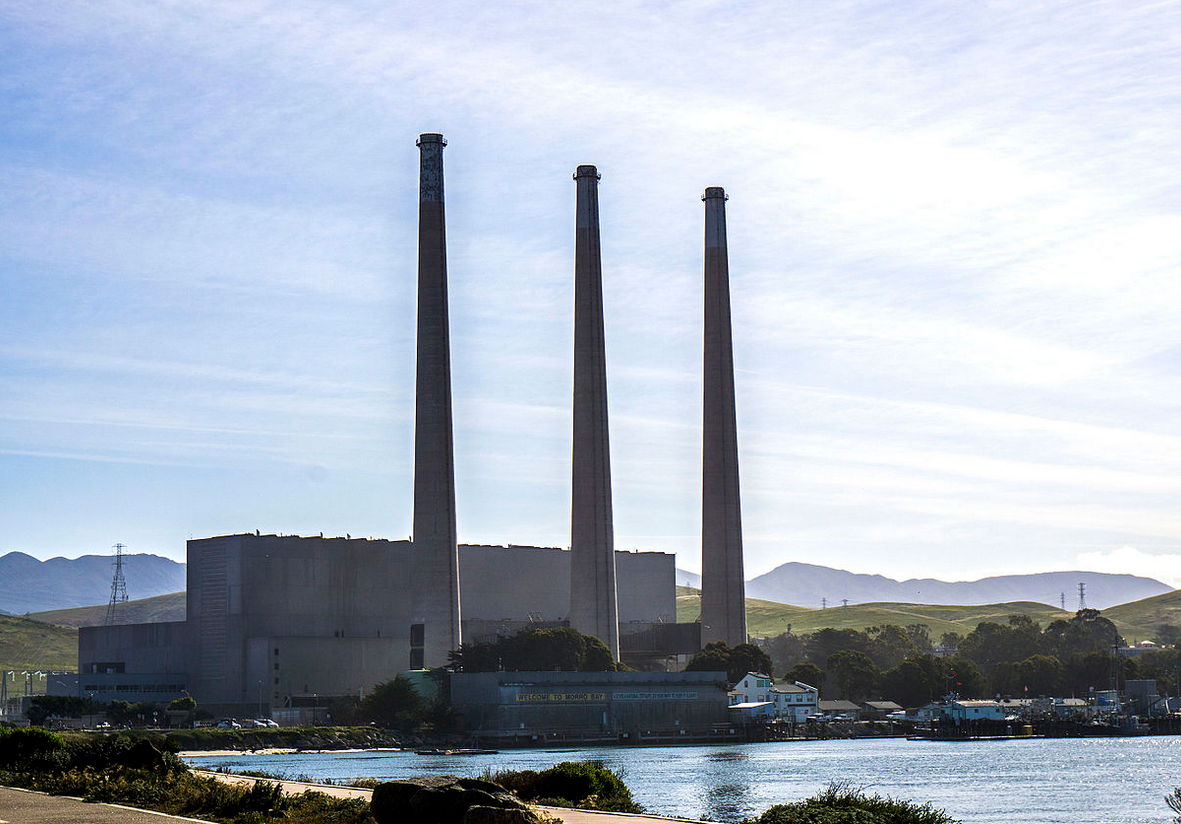
Two developers are talking to Houston-based Dynegy about buying the mothballed power plant site on Morro Bay’s waterfront.The 107 acre prime property is likely to be redeveloped for a combination of uses including a hotel.Community Development Director Scot Graham said this week that the city and the unnamed companies have been talking as well since any project would need to be approved by the city. Graham says no word on the fate of the famous 450 stacks at the plant that has been idle since 2014.Graham says Dynegy at first tried to sell all their properties in California as a package but has decided to allow sale of each site they own in the state. Earlier this year City Manager Dave Buckingham predicted some sort of deal could be announced by year’s end.

screen-shot-2016-12-08-at-8-56-07-am

Armpit Remark Hurts Carbajal in Lompoc

November 23,2016-

Salud Carbajal
Salud Carbajal

Election results are still rolling in but it looks like Santa Barbara Supervisor Salud Carbajal will be our next congressman replacing the retiring Lois Capps. The latest vote count in the district that includes Santa Barbara and San Luis Obispo Counties and a bit of Ventura show Carbajal with a commanding lead – 155,657 to 136,616. Democrat Carbajal lost San Luis Obispo County but made it up in his native Santa Barbara County, who typically votes Democratic, where he is more than 22,000 votes up.
But one Santa Barbara County city that did not support Carbajal is Lompoc who voted Democratic in the presidential race a few weeks ago but not in the congressional faceoff.
In the latest count Clinton beat Trump in Lompoc 6050 to 4788, about 56% to 44%, in the city’s 14 precincts. In the congressional race however, each party’s candidate count was reversed. Justin Fareed, the Republican candidate,beat Carbajal soundly in Lompoc with Fareed getting 6720 votes to 4840 for Carbajal, about a 58% to 42% swing with the vote totals higher than the presidential race.
The vote count in Lompoc would a head scratcher if you had not heard that Carbajal during the campaign, made a remark that was widely publicized, calling the town “the armpit” of Santa Barbara County. No matter that the joke was overheard in a private conversation at a government meeting.
Salud’s campaign told the press “The bottom line is this is completely a private joke to someone who lives in Lompoc who is a friend of his,” said Tess Whittlesey, a Carbajal campaign spokeswoman.”The remark made the news big time and forced Carbajal to apologize. The news brought out protestors who stood in front of Carbajal’s campaign headquarters in Santa Barbara in mid-Septmeber. The story was then reinforced by Justin Fareed’s ad campaign calling Salud an “elitist.”
But the damage was done and after looking at these results in Lompoc – the electorate, at least in this town, appears to have punished him for it.
Mr Carbajal will have to mend fences in Lompoc before he runs again in 2 years.

Competition Surfaces for Morro Bay Wind Farm Lease

STRUGGLE FOR POWER

Norwegian Oil Company Has Floating Wind Farms Off European Waters

November 21,2016-
The federal agency that leases US waters for energy production, the Bureau of Ocean Energy Management (BOEM), has been working with Trident Winds on a 650 to 1000 MW wind energy farm, 100 turbines, beyond the 3 mile mark off Morro Bay. After receiving an unsolicited request to lease about 56 square miles offshore back in January – BOEM put out a formal notice to see if others who would might like to bid on the same area. Last month they got their answer from Norwegian-based Statoil, a $109 billion in assets oil and gas firm who is rapidly getting their feet wet in renewable energy. Recently Statoil has been on a fast track to establish wind farms off European waters – the same rough and deep waters they have drilled successfully for North Sea oil and gas for decades.

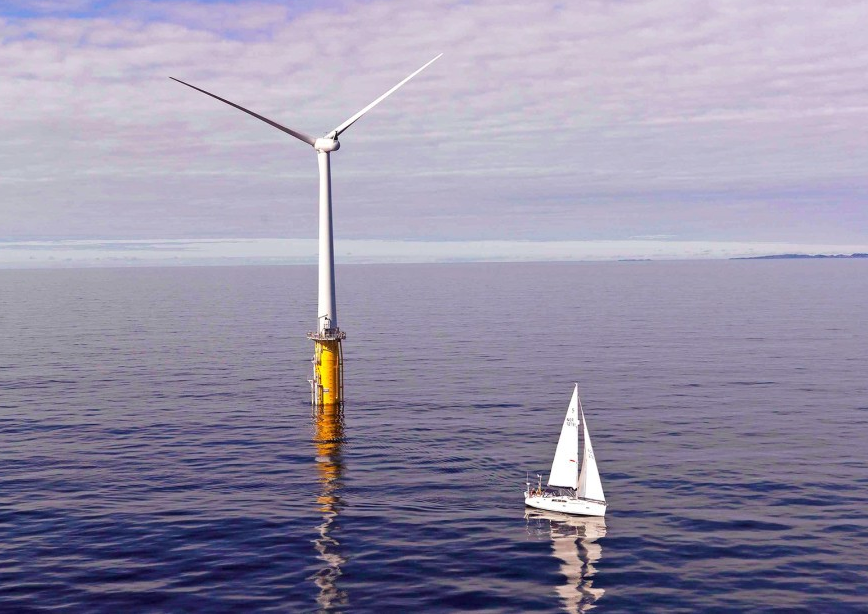
Statoil Scottish wind farm

Last month BOEM announced they had “reviewed Statoil Winds submission to assess filing completeness and has determined they are legally, technically, and financially qualified to hold an Outer Continental Shelf renewable energy commercial lease.”

26 Miles Across The Sea
The Morro Bay site is located at 2,600 – 3,300 feet water depth some 26 miles from Point Estero, California. Power would come ashore near Morro Rock connecting to a PG&E substation near the idle Morro Bay power plant.The big draw – a huge population nearby hungry for clean power and infrastructure on land to deliver that power to the grid.Then there is the matter of a retiring 2,000MW nuclear power plant here. And abundant wind energy for the tapping just offshore.

Now Statoil will have to detail their own proposal for a wind farm the way Trident has and then the bidding will begin. In the end BOEM will decide. It’s clear now that Seattle-based Trident has some serious competition from a well capitalized and experienced world energy player to build the first floating wind farm off the West Coast. And the spotlight is on little ol’ Morro Bay.
Statoil has operations in 36 countries and is 67 percent owned by the Norwegian government. Launched as an oil and gas exploration company the international firm has seen its profits dwindle with the price of oil, they lost $4.6 billion last year. In the past few years they have launched five European projects to utilize abundant wind power offshore including its first off Norway that has been generating electricity since 2009.
Earlier this year the Norwegian energy company, was granted a lease off the east coast of Scotland to build the globe’s first floating wind farm in deep waters.Called the Hywind project,the farm will feature five 6-megawatt turbines.Turbines are set to be installed next year. The project will also include a 1-MWh lithium-ion battery that is expected to improve the efficiency of the system.
Now they have their sights set on the US where Statoil has indicated strong interest in waters off New York, Hawaii and as of a few weeks ago – Central California.

Going Deep
While a number of projects offshore are being developed in shallow depths off the Atlantic Coast the US West Coast coastal waters fall off the shelf requiring new deep water technology to anchor turbines. As BOEM says on their website. “While the first offshore wind project was installed off the coast of Denmark in 1991. Since that time, commercial-scale offshore wind facilities have been operating in shallow waters around the world, mostly in Europe. With the U.S. Department of the Interior’s “Smart from the Start” initiative, wind power projects will soon be built offshore the United States. Newer turbine and foundation technologies are being developed so that wind power projects can be built in deeper waters further offshore.”
Meanwhile,with low world oil prices and their balance sheet suffering Statoil is cutting back on oil exploration while investing more in alternative energy. With their deep water experience and track record with floating wind, there is a better chance today than yesterday that someone will be building this huge project.
Whoever builds it they will need to raise money from investors and the cost won’t be cheap.To do that they need a utility to agree to buy the power when it will be available around 2025.They have to gauge the regulatory receptiveness for the renewable power project in a state that has committed to cut greenhouse gases from fossil fuels to a nation now led by a president that is not too excited about it, in fact wants more coal. It will be the Trump administration who will manage these federal waters now and may want to return to ‘drill baby drill.’
Trident has offered no estimate of the cost but Bloomberg Energy has said this technology may cost $9 million per megawatt or a cool $9 billon for 1000MW. This comes at a time when other renewable prices like utility-solar continue to fall. For ratepayers the good news is that competition offers a better chance for them to get a fair deal.
On several levels this is a struggle for power.

Around Los Osos/ New Grocer/Coffee Place/Higher Home Prices

November 3,2016

Grocery Outlet on LOVR is set to open November 10 ending the Los Osos one-store-in-town syndrome. Hoping for the best.

Bella Mundo SLO
Bella Mundo SLO

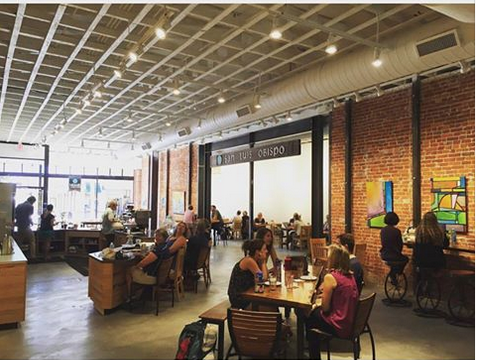
New competition for Starbucks as SLO-based Bella Mundo coffee shop plans to expand to Los Osos in the next few months. They are in there working on the store at 1230 Los Osos Valley Rd, – that’s right – the former Starbucks location. Bella Mundo has a strong following in SLO-town. Owned by Jonathon Stauf, they describe themselves as “a community focused coffee shop in San Luis Obispo, California, with friendly people, quality coffee and freshly baked treats.” A recent Yelp reviewer says Bella Mundo is ” My favorite coffee shop in town. Everything is so authentic, from their specialty coffee to their chai tea and almond milk made from scratch.  The environment is also lovely! Very roomy with lots of open space.  I like that the divide the cafe into two sections.  One section is dedicated to building personal connections with others, where laptops are prohibited! The other section is for people doing work, studying, meetings, etc. I also can’t forget to mention how great the staff is.  They always give me the impression that they love their job and love talking to people!” Sounds promising.

screen-shot-2016-11-03-at-7-21-57-am

Wow, Los Osos median home prices are up the most by percentage in the county – jumping 18.7% through October 2016 according to the real estate website run by area realtor Keith Byrd. By contrast the median price in Cambria in October 2016 fell 2.7% year over year and fell 2.7% in Arroyo Grande, down 11.2% in Cayucos and up 3% in Morro Bay. The median price in Los Osos was $550,000 in October 2016 compared to $463,500 a year ago. The rise in price appears to coincide with the coming of sewer hook ups as the town joins the 19th century.


Fish News: Morro Bay Aquarium Update / Lower Fish Landings In Morro Bay/ More

October  28,2106

Morro Bay Aquarium Seeks $20 Mil USDA Loan

Plans for a new Morro Bay Aquarium are counting on $20 million low interest loan from USDA to build and operate it.Those plans are moving forward as far as the City of Morro Bay is concerned says Harbor Director Eric Endersby. “The staff at the Central Coast Aquarium in Avila had a successful fund raiser recently and we understand USDA has indicated they will give the new Morro Bay project a loan.” Central Coast Aquarium will operate both the Avila and Morro Bay venues.
But Avila Aquarium manager Taylor Starkie says although it is true they have applied for a $20 million USDA loan – the agency has not yet approved it.
“There is still lots to do to reach our 2020 construction plan” says Starkie.
Endersby says the addition of a modern aquarium on the Embarcadero should be a huge plus for Morro Bay. He add the new facility will bear little resemblance the dated facility it replaces except for its location. Ironically it was animal welfare complaints from USDA that helped set in motion this new plan because of the old aquarium’s capture of marine animals on display.The new aquarium will feature no captured marine animals.
Endersby says the city will offer the consent of the land owner to build the new aquarium on the Embarcadero as well as work to help out with parking. The USDA loan will fund both the final feasibility plan and start on the design work.

screen-shot-2016-10-28-at-11-25-48-am

Morro Bay Fish Landings Down 2015 On Lower Squid Catch

Morro Bay’s fish landings, tracked by the state annually, declined in 2015 compared to the 2 years before. In 2015 the California Department of Fish and Wildlife reports all landings here totaled 3.4 million pounds valued at $7.8 million. That compares to 6.6 million pounds landed in 2014,valued at $8.3 million. While there was a large drop in pounds landed the value dipped only slightly. The decline is largely attributed to lower squid landings compared to 2014. In 2015 there was 1.2 million pounds of squid landed valued at $377,539. In 2014 Morro Bay’s fishermen landed 4.2 million pounds of squid valued at $1.3 million. Most squid is exported to China and the far east. The Salmon catch was up in 2015 as was Dungeness crab which gained more than $1 million in value.

U.S. SEAFOOD CONSUMPTION RISES
From Politico

The average American ate 15.5 pounds of seafood in 2015, an increase of nearly one pound over the previous year, according to NOAA’s annual Fisheries of the United States report, published Wednesday. This is attributed to an increase in availability of fresh and frozen fish, along with a growing appetite for canned products like tuna and salmon, NOAA Fisheries statistician Alan Lowther said during a call with reporters. But there is a long way to go before U.S. consumers eat what is recommended by the most recent Dietary Guidelines: 24 to 39 pounds of seafood each year (8 to 12 ounces a week).
Also in 2015, commercial fisherman landed 9.7 billion pounds of fish and shellfish valued at $5.2 billion, which is similar to levels in previous years. Lobster, crab, shrimp, salmon and Alaska pollock continue to be the most lucrative species. Dutch Harbor, Alaska, landed the most seafood, at 787 million pounds, followed by New Bedford, Mass., at 124 million pounds, a port where sea scallops fetch high prices. On the West Coast, the Pacific sardine and Dungeness crab fisheries were closed due to low abundance and high levels of domoic acid (which can be poisonous to humans), respectively. These problems were largely due to rising ocean temperatures, said Toby Garfield, director of environmental research at NOAA’s Southwest Fisheries Science Center.
“Thanks to longstanding legislation and continued innovation in fisheries science and management, we are seeing real returns on our nation’s efforts to end overfishing and make our fisheries more sustainable,” Eileen Sobeck, NOAA assistant administrator for fisheries, said in a statement.

Will More Tropical Fish Head North?

Movie watchers may have viewed the scene where the cartoon fish “Dory” was in search of her home and was told it was in Morro Bay! Wow. Typically tropical fish would not look this far north with sea temps around San Diego more to their liking.

screen-shot-2016-10-28-at-11-46-40-am
But a new report suggest waters in tropical seas may be getting a little too hot and some species may be heading north to cooler waters.
Here is one report from Texas.
Ocean warming is occurring at such a rapid rate that fish are searching for cooler waters to call home.
A group of international scientists has new evidence that coral reef fish – which struggle to adapt to the warmer ocean temperatures brought about by global climate change – may instead opt to relocate to cooler parts of the ocean.
In experiments using a common coral reef fish, the blue-green damselfish, Chromis viridis, was acclimated to 2-4 degrees Celsius above their normal summer temperatures over a 27-week period.
“When fish have to deal with increased temperature, there are physical consequences. They need more energy to cope, and they may not be able to handle stress or reproduce or even grow,” says marine scientist Jacob Johansen of The University of Texas at Austin.
Fish that were acclimated to the highest temperatures lost 30 percent of their body weight and some of them died, according to the University of Copenhagen’s Adam Habary, the lead author of a study published this week in the journal Global Change Biology.
“But we found that, when given the slightest chance, fish can seek out temperatures that they’ve evolved to be in over thousands of years, to mitigate the impact of increasing temperatures and not sacrifice critical physiological processes,” says Johansen
Most prior research has focused on the capacity for animals to adapt to increasing temperatures, given that animals have adapted to changes in temperature in the past. However, previous adaptations happened at evolutionary timescales, about 1 degree Celsius temperature change per million years. Global climate change is occurring at a much faster rate, with sea surface temperature predicted to increase 2 to 4 degrees Celsius by the end of the 21st century.
Marine fish are faced with a tough decision. They will need to adapt or move to avoid death.
Instead of looking into how fish can adapt, the new research took a different approach by asking, what if fish moved? In fact, what if entire ecosystems were capable of moving to the cooler temperatures, toward the poles or to deeper water?
There is already evidence that many coral reef fish and pelagic fish such as tuna are moving in response to warmer ocean waters, and that this is beginning to affect global fisheries. “Our study provides a mechanistic explanation for why fish may move, and a way of testing it,” Johansen says.
Picking up and moving may not be the silver bullet for some species, particularly those coral reef fish that are dependent on reefs for habitat. Corals cannot move pole-ward as fast as the temperature increases are predicted to happen, so corals and coral-dependent fish will have to adapt or move to deeper waters where living conditions are less than ideal.
In addition, ocean warming does not occur as a steady slide upward on the thermometer. It often occurs as severe and increasingly frequent heating events. “It’s these transient periods that are causing the most damage,” Johansen notes. This was seen earlier this year on the Great Barrier Reef, when temperatures rose as much as 4 degrees Celsius for several weeks, causing widespread coral bleaching and severe physiological stress in many fish.
Johansen and fisheries biologists from the University of Copenhagen and James Cook University collaborated on the just-published study titled “Adapt, move or die – how will tropical coral reef fishes cope with ocean warming?”
The research was supported by Generalmajor J.F. Classen Foundation, Frøken Ellen Backe & Margaret Munn Tovborg Jensens foundations as well as the Familien Muller-Geiels foundation and an ARC Super Science Fellowship and infrastructure and research allocation from the ARC Centre of Excellence for Coral Reef Studies at JCU.

Waves Of Wet Weather Coming Last Week Of October Thru Early November

October 18,2016

Get out the galoshes or perhaps the ‘goul-oshes’.

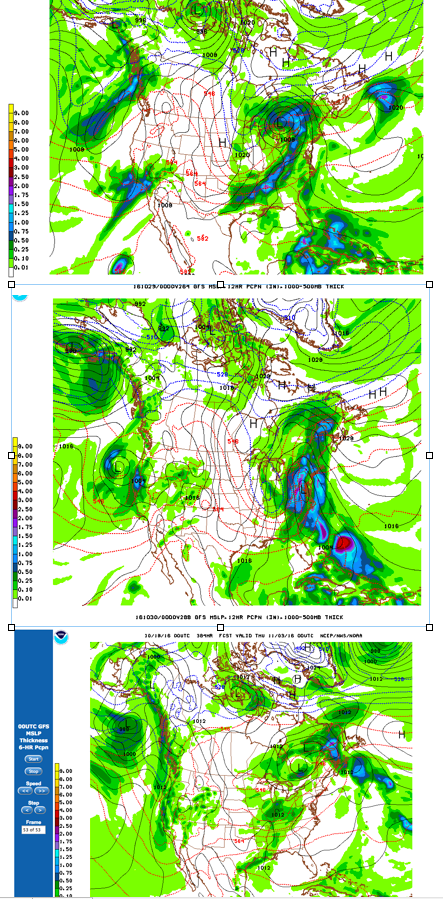
A wave of storms from both north and south will plow into the entire state of California starting around October 25 and lasting thru Halloween into early November according to the latest NOAA weather projections.

GFS maps October 29,30 and November 3- one,two ,three punch

screen-shot-2016-10-18-at-7-32-56-am


The waves includes a tropical atmospheric river pattern with a bulls-eye on southern and Central California October 29 seen in this top of page GFS model map.

Following shortly (next 2 maps) are more storms that get tangled up with their southern cousin and spiral across the state.

Atmospheric River weather patterns are credited with making a dent in our persistent years of drought because they bring in large but narrowed ribbons of water in short period.

On average, about 30-50% of annual precipitation in the west coast states occurs in just a few AR events, thus contributing to water supply says NOAA. A well-known example of a type of strong AR that can hit the U.S. west coast is the “Pineapple Express,” due to their apparent ability to bring moisture from the tropics near Hawaii to the U.S. west coast.

Fed by the remnants of Super Typhoon Songda over the West Pacific the Pacific Northwest got hammered mid-month and as much as 18 inches of rain poured down on extreme northern California October16/17. The AR reached down to the Santa Cruz mountains that saw 11.45 inches of rain.

Meanwhile most of Central and Southern California received well under an inch. Kings County in the rain shadow of the Coast mountains, got a few sprinkles.

This series looks widespread and wild.

Already this new water year is looking promising with Northern California at 345% of average as of Oct 17 and the San Joaquin index at 278%.

While the drought is not over reservoir storage looks good for this time of year for a change.

The U.S. Bureau of Reclamation’s Central Valley Project began water year 2017 on Oct. 1 with 4.9 million acre-feet of water in its six key reservoirs. The amount is 2 million acre-feet more than was in storage at the beginning of water year 2016, federal officials announced in recent days.

The amount of storage in the key reservoirs – Shasta, Trinity, Folsom, New Melones and Millerton reservoirs and the federal share of the joint federal/state San Luis Reservoir –  is 82% of the 15-year average of annual carryover of 6.0 million acre-feet.
“Although overall CVP water supply conditions improved in WY 2016 compared to WY 2015 and WY 2014, we continue to face difficult circumstances as we deal with the ongoing effects of the drought,” said Bureau Mid-Pacific Regional Director David Murillo. “We got through WY 2016 by working closely with our water users and their willingness to work together to develop creative solutions to a multitude of challenges. We hope that water supply conditions improve as we move into WY 2017 but know we could be facing a sixth consecutive year of drought. Regardless of conditions, we will continue to collaborate with our water users, stakeholders and agency partners to best manage our critical water resources.”

Below- October 29 map shows two storms heading into the state

screen-shot-2016-10-18-at-7-25-41-am

More Layoffs At Santa Maria Airplane Seat Factory

Job Transfers To Mexico?

September 14,2016-

screen-shot-2016-09-14-at-8-52-42-amMore layoffs are planned at Santa Maria’s largest private employer-Zodiac Aerospace who once employed around 2400 in town.In May the French-owned company announced the layoff of 168 workers making seats for the airplane industry.Now according to a second new state WARN notice filed this week another 205 employed at Zodiac Seat Shells US LLC will be laid off permanently as of October 26.

An employee who spoke on condition of anonymity says the international firm’s long term plan is move the division located at 2641 Airpark Dr in Santa Maria to Mexico. A second smaller division that employs around 300 also in Santa Maria is unaffected.

The seat shell facility, subject of the layoffs, had at the beginning of 2016 over 2,400 employees stretched between their storage and production plant in Santa Maria and another plant in Chihuahua Mexico.  This company manufactures the primary seat shell for business class seats that are then sent to one of 3 other Zodiac companies for final assembly of the actual seat.

The source says of the 2,400 employees over 1,000 are temporary employees hired from staffing agencies Volt, JSG (Johnson Service Group) Aerotek and a few others.  Beginning in March of 2016 Zodiac laid off over 600 of the temporary employees from these suppliers.  Then they laid off 168 full time employees from their own payroll beginning in June of 2016 and running through the end of August.

That brings the total lost jobs to near 1000 in this small community.

The source continues that since 2014 Zodiac Seat Shells opened a brand new plant in Chihuahua Mexico to offload permanent manufacturing positions and engineering from Santa Maria to Mexico to reduce cost and to outsource these American jobs.  The rate savings for Zodiac is significant as they pay the production employees $3.50 USD, compared to $11/hour in Santa Maria.

Before the latest announcement of the loss of another 205 positions the source wrote that “The layoffs that are posted are just a fraction of what has been done and what is upcoming.  The plan in the next 12-18 months is to remove another 600+ employees from Santa Maria by attrition or transferring the work to Mexico.”

Problems arose in the quality of products made in Santa Maria in a time of growing demand says our source. Now the company has lost contracts.

Reuters reported last week that “ Zodiac Aerospace (ZODC.PA) issued the latest in a cluster of profit warnings on Friday, saying its current operating income would fall short of market expectations, while sales for the just-ended financial year would be in line with forecasts.
The French supplier of aircraft interiors, which is recovering from a crisis over delays in aircraft seat production and problems with other equipment such as toilets, said a weak helicopter market had added to pressure from late deliveries.
In a statement, it said 2015-16 current operating profit would be around 10 percent lower than the consensus, for which it cited third-party estimates of 302 million euros to 303 million euros ($336.8 million-$337.9 million.”

Los Osos GM Vows To Restore CSD Bond Rating

September 14,2016-
screen-shot-2016-09-14-at-7-03-33-amLos Osos Community Service District General Manager Pete Kampa has submitted comments to the board to be heard September 15 assuring them that the agency’s past reporting delinquencies that could lead to fines or higher borrowing costs are big remedied.

Kampa says in this written report that the June suspension of the district’s bond rating is expected to be reversed soon once a required report is submitted. Kampa says it could take “up to 60 days” for the formal notice from Standard and Poors but he was hopeful it could happen sooner. Here are his comments.

“The District’s bond rating has been suspended pending the completion of what is called a “Continuing Disclosure Report”. This report was required for the first time beginning in late 2015 and the District did not have the internal expertise to complete the report, nor did we have a qualified consultant on board to assist in preparation of this very specialized report. We must meet all ongoing disclosure requirements to maintain a positive bond rating. Management determined early on that we did not have the expertise either internally or with the Wallace Group to comply with all bond disclosure requirements. Having successfully managed two 1915 Assessment Districts in the past, I was keenly aware that especially in small districts with limited and changing staffing, an experienced Assessment Administration firm is needed from the formation of the assessment district, through its maturity to ensure proper reporting and compliance.
On July 7,2016 the District entered into agreement with NBS Government Financial Group to complete the Report and assure that the District bond rating is restored. The Report was initially scheduled for completion on September 9, 2016, but has been delayed until the week of September 19 due to delays in receiving information from the Wallace Group and the County Tax Collector. Please look for a public notice to be issued when the Report has been submitted and District Bond rating returned to positive.”

Kampa says says the district has an obligation to the bond holders to maintain the rating on the existing bonds and without that it could cost the agency more to borrow money. Kampa who has been on the job for around 6 months says he came “at a time of lots of turmoil.”

Regards fines the report says ”No IRS or EDD fines issued: Although the District received notification of potential penalties and fines from the Internal Revenue Service (IRS) and Employment Development Department (EDD) due to missing filing deadlines and other matters, we have received no fines due to the fast action on the part of management, our accounting team and with office staff support to remedy the delinquent situation. No fines or penalties will be levied by these agencies against the district for the previously reported delinquencies. District office staff stepped up and assisted greatly in this effort by locating documentation and completing information requests immediately.”

Around Los Osos: Nursery Moving / Wine Tasting Store

September 10.2016

Sage Eco Nursery Moving- Ending Retail Sales

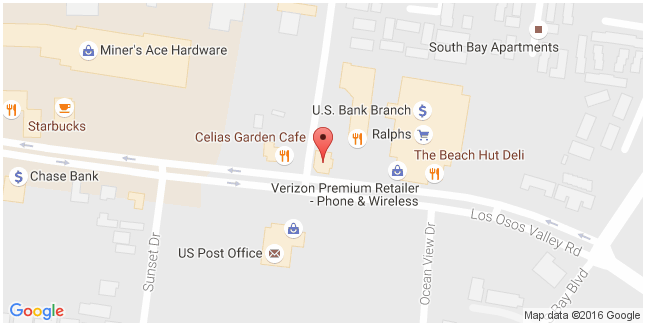
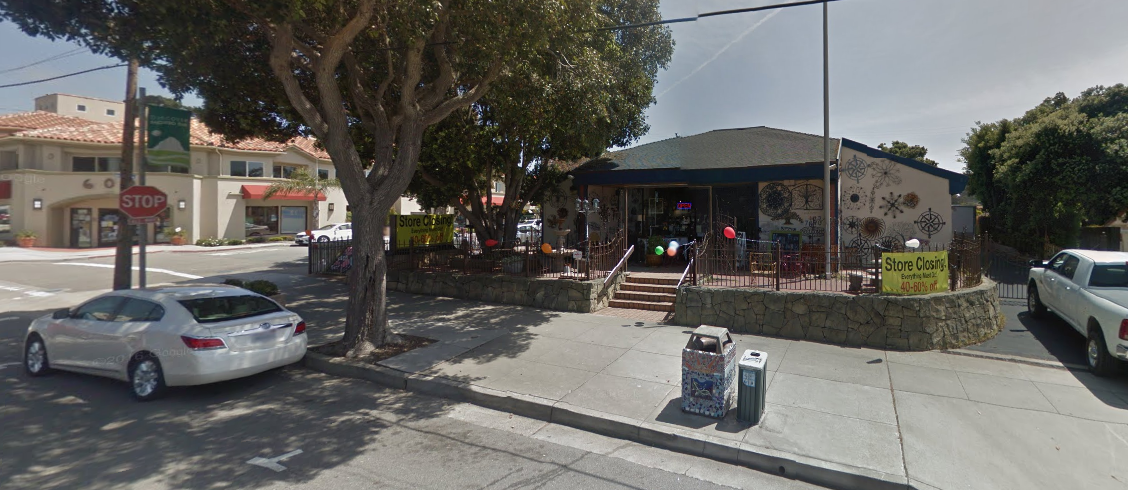
screen-shot-2016-09-09-at-3-16-16-pmLos Osos will be down to one nursery when Sage Eco-Gardens & Nursery relocates its business across LOVR and halts retail sales after 8 years. The company put up a “total liquidation” sign this week. Owner Todd Davidson says the nursery will leave its rented quarters on LOVR after purchasing land across the street where they are now constructing a new office and growing grounds.The land will be planted for visits by Sage’s landscaping business customers but will not be open as a retail nursery, he says. The move could happen by years end. That means the rented Sage office next to the former Starbucks will be vacated as well. Just what happens to these several vacated locations is not clear although Celia’s Garden Cafe is expected to remain.


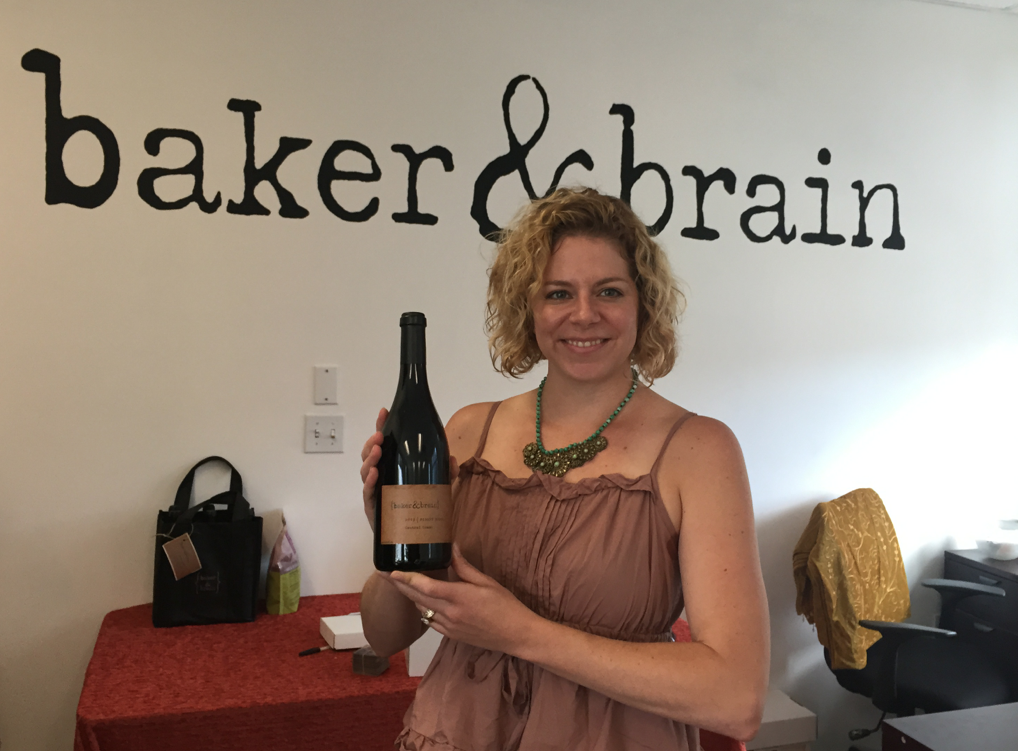
Melanie Brain at their wine tasting outlet

Wine Tasting In Los Osos

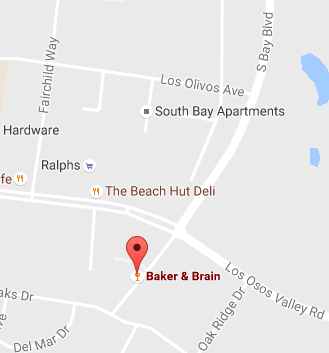
Baker & Brain Wine Tasting is open at 1333 Van Beurden Ste 102 (see map) with hours from 2 to 5PM on Friday, Saturday and Sunday. The business is owned by Los Osos residents Melanie and Matt Brain and their partner Josh Baker. Matt is an expert wine maker having taught wine making at Cal Poly and currently is Fresno State’s wine maker. He has a degree in wine making from UC Davis. You may not meet Matt this weekend if you visit, says wife Melanie, since he is knee-deep in the grape harvest at the Fresno ag campus.
Baker & Brain offers tasting of their own wine brand varieties bottled at an SLO Co-Op winery featuring 10 varieties of locally-grown wine grapes.
So why here? “Los Osos is undergoing a renascence“ suggests Melanie “and we want to be a part of it.”
Melanie says they share a two story building with artist Steven Deluque who paints upstairs and plans an open house himself soon.

screen-shot-2016-09-10-at-7-55-25-am