Vandenberg Solar Project To Supply 35% of Power Needs

Trump Backing Renewables?

May 25,2017-

Screen Shot 2017-05-24 at 5.30.43 PMDespite President Trump scoffing at government support for green energy, his Department of Defense appears to be on track to increased use of renewable power both on their bases and in the field.

In the case of the battlefield, military sources say green energy literally saves lives with the use solar power to replace diesel generators who require frequent military convoys to bring in fuel and are highly vulnerable to attack.

The clearest evidence the the US military wants to avoid the politics and think security first is news that right down the road – the Air Force is going solar.

San Jose-based SunPower Corp. has broken ground on a 28-megawatt solar photovoltaic system at Vandenberg Air Force Base near Lompoc, a project expected to create about 150 jobs at peak of construction. Upon operation, it’s anticipated to be the largest behind-the-meter solar power system in the Air Force where 100 percent of the energy generated will be consumed onsite.

“A solar project that is grid-connected to the Base enables us to meet our electric demand with renewable energy and increase our energy security,” said Ken Domako, Chief, Portfolio Optimization, Vandenberg Air Force Base. “We look forward to increasing the Air Force’s energy independence with competitively priced, dependable solar from SunPower.”

The security factor has nothing to do with politics but is important  to the military in the case the electric grid is attacked and the base needs to be self sufficient.

The SunPower’s solar power system will be installed on land that has gone unused since 2007, just outside the gates of Vandenberg where Air Force housing once stood. The Base will purchase energy generated by the plant under a power purchase agreement (PPA), providing Vandenberg with competitive, fixed electricity rates over the next 25 years. The Air Force will retain all environmental credits associated with the system.

“The Air Force has an aggressive target to meet that requires full energy assurance for key missions,” said Dan Gerdes, Air Force Civil Engineer Center rates and renewables division chief. “By diversifying our energy mix at Vandenberg to include SunPower’s high efficiency solar technology, we’re confident we’ll have the electrons we need, when we need them, creating long-term value for our operations.”

Once complete, the system will provide a projected 54,500 megawatt hours of energy annually, meeting about 35 percent of Vandenberg’s total energy needs. It will also contribute to the entire Air Force’s goal of meeting 25 percent of its electricity demand with renewables.

The Air Force has solar units at Nellis Air Force base in Nevada. In the Central Valley the Lemoore Naval Air Station will soon be developing a giant 167MW solar farm, operated by Recurrent Energy, on the base’s idled farmland due to drought.

Vandenberg has also been interested in getting ocean-based wind or wave power to help power the base in the future.

SunPower is well known on the Central Coast having built a 250 MW facility operating now in the Carrizo Plain in San Luis Obispo County.


Smaller Avocado Crop Expected

April 27,2017-

from California Farm Bureau

The California Avocado Commission estimates farmers will ship 200 million pounds of fruit this season—only about half of what they sold the previous year, in part due to the cyclical nature of avocado production. Farmers say this year’s wetter winter and other signs point to a larger crop in 2018.

Screen Shot 2017-04-27 at 7.15.41 AMThose planning Cinco de Mayo parties might want to boost their guacamole budgets: Last fall, California avocado growers foresaw lower volumes for this year, and so far those predictions are bearing fruit.
“My crop is down quite a bit,” said Paul Van Leer, who grows avocados near Gaviota along the Santa Barbara County coast, citing the impact of multiple drought years that put his trees “in a little bit of a shock situation” as salts and minerals built up in the soil.
This past winter, Van Leer said, 25-plus inches of rain fell.
“It’s definitely leached all the salts and minerals out of our root zone,” he said. “The trees are just starting to wake up. They’re starting to bloom, they’re starting to flush. They should be happy. Mind you, we had to stump a lot of trees, us personally, because of the lack of water availability.”
As of April 11, a 48-count box of avocados was bringing $50.25 to $52.25 at the point of origin, according to latest figures from the California Avocado Commission, with farmers earning $1.80 to $1.88 per pound. In April 2016, growers were earning about 64 cents per pound, according to commission figures.
Avocado grower David Schwabauer of Moorpark confirmed avocado farmers are seeing good prices.
“The challenge is you don’t have the volume of fruit that you did last year, so you hope that the increase in price is going to help compensate for the lack of volume,” Schwabauer said.
Van Leer said he recognizes that, while the prices have risen for growers, they’re not so favorable for grocery shoppers.

Sprouts Coming To San Luis Obipso

April 5,2017-

Screen Shot 2017-04-05 at 12.29.22 PMSprouts Farmers Market will lease 30,000 square feet in the Promenade shopping center on Madonna taking a portion of the vacant former Forever 21 space. The news is confirmed by commercial real estate agent Ric Cervantes of the Shopping Center Group.

“I know San Luis Obipso has lots of vacant space and we hope the city will work with Sprouts so they can get in by the end of the year or early 2018” he said. Cervantes says Sprouts has signed a lease with the owner of the shopping center.

Since its founding in 2002, Sprouts has grown
rapidly – increasing its sales, store count and profitability they claim.The company went public in 2013.

With 256 stores in 14 states as of February 23, 2017, Sprouts as one of the largest healthy grocery stores selling fresh, natural and organic food in the United States. Locally, the grocer will go head to head with nearby organic grocers including Whole Foods and Lassen’s on Foothill.

The popularity of organic foods has grown nationwide with 82% of all households with some organic products in their cupboards according to a Nielsen survey. Sprouts markets its products as “healthy living for less”. Arizona-based Sprouts says they conjures up notions of an indoor farmers market, with wooden crates stacked with fresh produce and bins and barrels full of bulk foods.

REI Coming?

Cervantes says he cannot confirm rumors that an adjacent space, some 25,000sf ,has been promised to Washington- based REI, the co-op sporting goods retailer. Other real estate agents are suggesting RIE will be part of the center using the company’s name on their marketing material.

California Strawberries Have Tough Start To Season

April 3,2017-

Screen Shot 2017-04-03 at 2.57.14 PMHit by cool and wet conditions during the early part of the growing season,
the strawberry harvest and other spring vegetables in 2107 are not as plentiful as this time in years past.

The National Berry Report shows the Santo Maria growing district has harvested 2.9 million crates through March 31 compared to 5 million crates picked by  this time in 2016. California as a whole is behind by 3 million crates with Mexico picking up the customers with a harvest for the first three months of 2017 that is 10 million crates ahead of the 2016 pace.

Local farmers say rain and muddy, wet conditions have meant trouble planting and harvesting crops including vegetables. One grower is optimistic things will pick up.

In Santa Maria, Main Street Produce Inc. says they will have a 20% increase in strawberry volume this season, said Paul Allen, president and sales director.

“We have a new ranch this year,” he told The Packer publication.
He told the paper that In early March, however, the company was running about a month behind because of rain. “We had to strip out quite a bit of green fruit that was damaged due to the rain,” Allen said.

The company should be up to speed by the first week of April, he said.

The peak harvesting season in California runs from April through June, when up to 10 million pint baskets of strawberries are shipped daily. The largest producing state, California harvests 79% of the strawberries grown in the U.S. on approximately 30,000 acres

About 4000 acres of strawberries are organic, up about 10% in the latest year and 11% of the set total strawberries.

SLO Offshore Wind Forum Planned For April 13

March 29,2017-
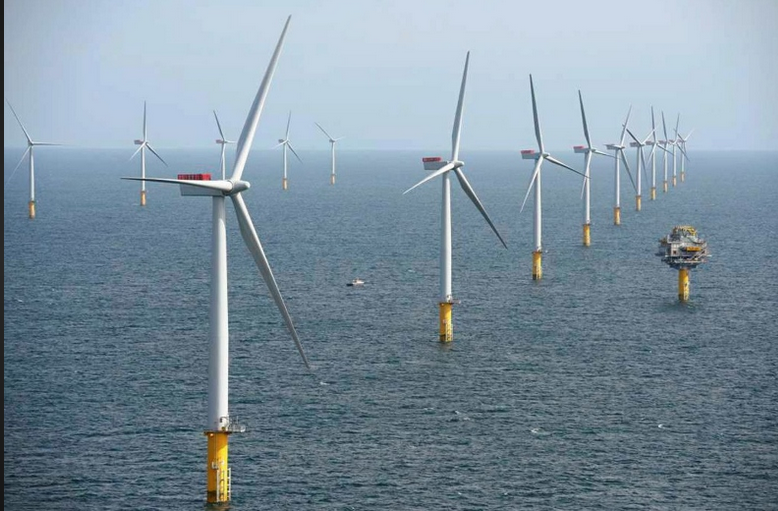
Screen Shot 2017-03-29 at 4.01.02 PMAt the invitation of California’s San Luis Obispo (SLO) County, the U.S. Department of Interior’s Bureau of Ocean Energy Management (BOEM) will join the State of California in sharing information on current planning activities for possible offshore wind development along California during a public information meeting on offshore wind energy on April 13, 2017 in San Luis Obispo, California. SLO County Supervisors Bruce Gibson (2nd District) and Adam Hill (3rd District) will host the meeting.

The forum will be held as two companies vie to build a multi-million dollar project off the Central Coast near Morro Bay. The two firms competing to lease the same offshore lands from BOEM are Trident Winds and Norway-based Statoil.

In October 2016, BOEM and the State of California convened the BOEM California Intergovernmental Renewable Energy Task Force (Task Force), a partnership of federal, state, local agencies and tribal governments, as a forum to provide information to the decision-making process for planning future offshore renewable energy development in federal waters offshore California.

BOEM and the State of California are currently gathering environmental information and ocean use data for the entire coast of California to inform the offshore wind planning process. Initial emphasis for this effort is on California’s Central Coast region due to viable wind energy resources, current commercial interest by offshore wind developers, and available existing transmission infrastructure.

SLO County Supervisor Gibson invited representatives of the Task Force to attend and share information about offshore wind planning activities with the local community. To that end, BOEM and the State of California will provide information on the planning timeline, discuss additional opportunities for public participation throughout the process, and provide a demonstration of the Data Basin Portal, a web-based spatial planning tool that will be used to collect and share information on offshore uses and resources that will inform future decision making. In addition, the public will have the opportunity to provide input and ask questions of the Task Force representatives.

This meeting is scheduled for:
Date:        Thursday, April 13, 2017
Time:        6:00 pm – 8:30 pm
Location:  San Luis Obispo County Government Center
Board
Chambers
1055 Monterey Street, Room D-170
San Luis Obispo, CA 93408
More information on the Task Force can be found a https://www.boem.gov/California/.
SLO County Supervisor Bruce Gibson represents the Second District which extends along the California coast from the Monterey County line in the north and past the City of Morro Bay and portions of the City of San Luis Obispo in the south.
SLO County Supervisor Adam Hill represents the Third District which extends along the California coast from Grover Beach in the south to areas northwest of Avila Beach.

Cal Poly Plans Fermentation Sciences Center

March29,2017-

Learn By Brewing

Screen Shot 2017-03-29 at 1.51.17 PMCalifornia is the the birthplace of the American craft brewing movement with nearly 700 craft breweries in operation across the state. Craft brew sales have steadily risen the last five years and show no sign of slowing. A growing number of craft brewing operations are popular here as well.

So its no wonder Cal Poly SLO has a fermentation class focusing on beer making.

Of course when it comes to wine, this area is no longer a backwater with the Paso Robles area alone sporting some 200 wineries.

Now comes a plan to take the fermentation sciences to the next level at Cal Poly San Luis Obispo.

Cal Poly want to build a Fermentation Sciences Center that would provide a central location for conducting education and research in fermentation sciences, and related consumer products including wine, beer, and distilled liquor.

According to an environmental document released this month the proposed project includes construction of three new structures totaling approx 42,000 sf, near the corner of Mt. Bishop Rd and Highland Dr, immediately north of the existing crop sciences building compound on the west side of Mt. Bishop Rd. Vehicular access to the site would be provided via Parking Lot H-1, which connects directly to Mt. Bishop Rd.

The proposed structures would be a single story in height, with a more steeply sloped central roof ridge and more gently sloped side wings; height to the central ridge would range from 29 to 31.5 ft for the three structures.

The new buildings would provide a single, central location for education pertaining to commercial fermentation; in particular, these extensive activities for the Wine and Viticulture Department are currently housed in several locations throughout campus. Beer making and liquor distillation education activity has been at a much lower scale, given current space limitations for these related fermentation practices. One building would provide a central classroom or meeting hall that would provide lecture space as well as two academic labs and a sensory lab. The majority of the other two buildings would be dedicated to production facilities and research, specifically one for wine- making and the other for beer and distilled spirits. The new facility may be used on a limited basis for product tasting, retail sales, or special events.

Construction of the project is anticipated to begin in the Winter / Spring of 2018 and would take approximately 24 months to complete.

The proposed project entails the addition of 42,000 square feet of academic space on campus that would provide for instruction and laboratory space for approximately 100 students and associated faculty and staff.

Around SLO County

March 9,2017-

United Will Fly SLO To Denver

Screen Shot 2017-03-09 at 2.03.22 PMUnited Airlines announced an expansion of air services in multiple markets early this month including a new once daily flight between Sam Luis Obispo and Denver. The new flight will be launched June 8. The news is being greeted with yahoos in SLO where the business community has long sought this east-west route.
In total, United is adding 47 new daily round trips to its domestic schedule. The flights will be on a variety of mainline and regional jets that will add nearly 8,700 additional seats per day and approximately 90,000 new flight miles. These flights are now available for purchase with domestic service beginning as early as June 8. United is said to want to keep up with industry leader Delta as the travel market adds more flights.

How To Predict A Wet Winter

Forecaster John Lindsey says a study of Atascadero weather can predict a wet winter. …“when the Atascadero area received more than 2 inches of precipitation during October, the rest of the rain season — which runs through June 30 of the following year — was higher than normal.” This year held true with the pattern.

Marine Sanctuary?

SLO County board of supervisors have opposed the proposed  Chumash Heritage National Marine Sanctuary by a 3 to 2 vote suggesting they would support Congressman Salud Carbajal’s plan to ban oil drilling off the Central Coast. Fishing interests fear the marine sanctuary will further restrict their fishing grounds.

Chumash Oppose Cayucos Sewer Plan

Cayucos Sanitary District wants to build a new waste water treatment plant in the Toro Creek Rd valley between Cayucos and Morro Bay. But a terse note from Fred Collins, Chumash official throws cold water on the idea. “The Cultural Recourse in this area are extremely high and the Chumash NaOon will not allow a sewer plant on our Sacred Sites, we will fight this one with every breath we take, no one came to us for one on one consultaOon, this is not good, we could have told you that we will not allow a sewer plant on a Sacred Site.”
The plan calls for construction of a water resource recovery facility for wastewater treatment to a tertiary treatment level. The site development is 8 acres including a solar array. The project includes pipeline infrastructure installed in local street and SR 1 rights of way in the county and city of Morro Bay. The treated water will be conveyed to an existing permitted ocean outfall in Morro Bay and approximately 40 AFY of tertiary water will be available for agriculture. Phase 2 of the project is construction of a treated water pipeline to CSA 10 water facility in Cayucos. Water delivery is not part of this project.

State Studies Campground At Piedras Blancas

The project will develop initial, conceptual plans and studies for a potential campground at the former Piedras Blancas Motel property.

Developer of San Luis Ranch Publishes Specific Plan EIR

The San Luis Ranch Project consists of a specific plan, general plan amendment/pre-zoning, and development plan/tentative tract map for a 131 acre project site, including annexation of the site into the city of San Luis Obispo. Formerly the Dalidio property, the project is intended to be consistent with the development parameters described in the city’s land use and circulation element (adopted in December 2014). The project includes construction of up to 580 residential units, 150,000 sf of commercial development, 100,000 sf of office development, and a 200-room hotel, with a portion of the site preserved for agriculture and open space uses. The project is planned to be constructed in six phases.

SLO City: Avila Ranch Plan Recirculated

Recirculated plan: The project involves the adoption of the Avila Ranch development plan, including an amendment to the Airport Area specific plan, a rezone, and related actions to permit a mix of residential uses (68.23 acres), neighborhood commercial (3.34 acres), and open space/park uses (71.30 acres). The project would result in construction of approximately 720 residential units. The project would also include 15,000 sf of leasable neighborhood commercial space concentrated in the eastern portion of the project site in a proposed town center. It is anticipated that the town center would provide small offices, retail shops, and service uses.

SLO Airport Adds Another SFO Flight

SLO Avialable Seats Up 35 Percent

January 26,2017-
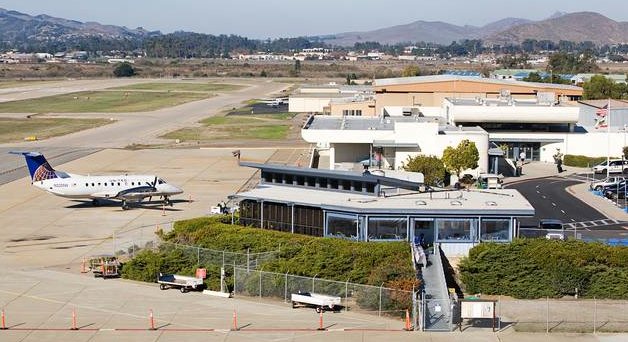
Screen Shot 2017-01-26 at 12.35.49 PMUnited Express operated by SkyWest Airlines will offer an additional daily flight between San Francisco International Airport (SFO) and San Luis Obispo County Regional Airport (SBP).
Starting March 9, United Express will now operate four roundtrips to SFO and Los Angeles International Airport (LAX). The additional flight times include a scheduled arrival from SFO at 11:35 p.m. and scheduled departure from SBP at 8:23 p.m.
With four daily flights to Phoenix Sky Harbor International Airport (PHX) rounding out the lineup, SBP passengers will then have 12 daily, non-stop jet flights to choose from.
“With the addition of this fourth daily SFO flight and the start of daily Seattle service on April 13th by Alaska Airlines,  our community will see daily seat capacity expand to approximately 750 seats, an increase of about 35 percent over the typical capacity that was available last year,” said County Airports Director Kevin Bumen.
Further flight schedule details can be found by visiting www.SLOAirport.com,

Morro Bay May Take Over State Park Marina

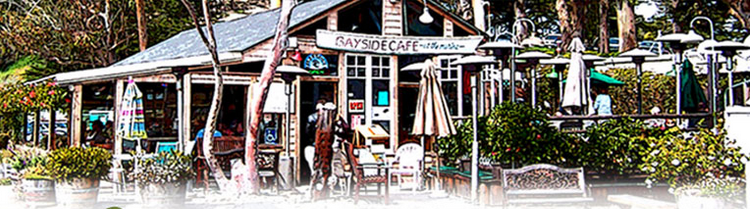
Screen Shot 2017-01-18 at 1.59.36 PMThe City of Morro Bay’s Harbor Advisory Board is recommending the City take over the operation and ownership of the concession at the State Park marina that includes the iconic Bayside Cafe eatery.
“We don’t have much choice if we want to raise funds to continue the needed dredging at the State Park Marina” says Harbor Director Eric Endersby.
The Harbor Board has forwarded a resolution to the city council who will make the final decision.
The City might buy the land and facilities from the state to help pay for the the ongoing need to dredge in this part of Morro Bay. This backwater part of bay has not been dredged since 2011 and the city estimates it could cost $3 million to carry out. Endersby had been hoping somehow to move forward on dredging this year but now that appears to be unlikely and silt continues to build up around the marina.
The need for more revenue to pay to keep the channel open is conflicting with the public’s desire to keep what has been termed this “funky” low-key and “quaint” landmark cafe just as it is. A letter writing campaign by local supporters in 2015 helped put the kibosh on any plan to open up the bidding on the concession by the state.
The cafe continues on month to month rent.
But now the city could be the decision maker putting the future of operations including the eatery, marina and kayak rental in question.At least the decision would be local.

Cal Poly Loses $40 Mil Federal Grant For Wave-Energy Test Site

January 6,2017-
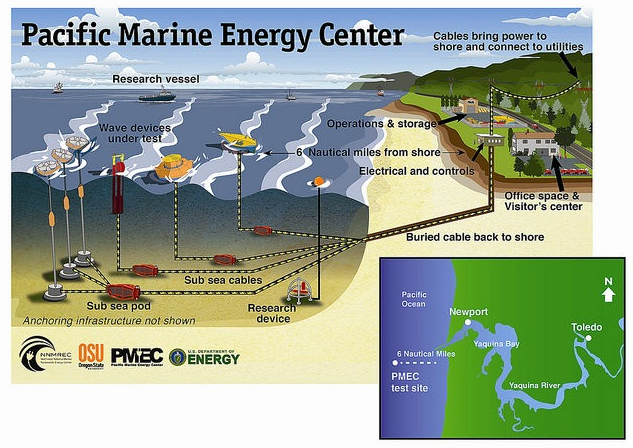
Led by CalPoly’s Institute for Advanced Technology and Public Policy, the CalWave proposed national wave energy test center project looked to be riding a wave of support of its own. For the past two years CalWave had landed back to back Department of Energy (DOE) funding for their studies totaling $2.25 million. But now CalWave has fallen short on the big prize they were competing for – a DOE grant of $40 million to actually build an offshore wave-power test site, losing out to Newport, Oregon’s Northwest National Marine Renewable Energy Center at Oregon State University.

The announcement came December 21 from the Department of Energy.

screen-shot-2017-01-06-at-12-43-25-pmThe new test facility, called the Pacific Marine Energy Center South Energy Test Site, will be constructed off the Oregon coast with a combination of federal and non-federal funds says DOE.The planned facility, to be completed by early 2020, includes four grid-connected berths where researchers can test full-scale wave energy conversion device concepts.
Here in San Luis Obispo,a local partnership had prepared a strong rival application they thought had a leg-up on Northwest test site.

The Cal Poly’s rival application sought to locate a test center for wave energy off the Central Coast adjacent Vandenberg Air Force base, five miles offshore. The site along California’s open coast was supported by a half dozen partners including the State of California seeking to advance ocean based energy here. The US Department of Defense was exited about the plan as well.

Reached with the news after the holidays, CalWave project manager Bill Toman said “ of course we are disappointed, but this is not unexpected. OSU had a big head start in time, previous DOE grants, designation as part of DOE’s Northwest National Marine Renewable Energy Center, actual permitting done, widespread PNW political support and had an effective Washington, DC lobbying firm. The $40 million grant money is contingent upon Congressional authorization which is anyone’s guess with the new Administration.”

The DOE announcement aims to move wave energy to commercial development.

“Testing innovative wave energy devices at full scale in open water is an important step toward harnessing one day a reliable energy resource. Anyone who has swum or surfed in moderate ocean waves knows something of the power they represent,” said Franklin Orr, Under Secretary for Science and Energy at the Energy Department. “This new facility will help us to advance the science and technology of wave energy devices, and to identify the challenges we will ultimately need to overcome in order to achieve commercial deployment.”
The DOE statement continues “The pre-permitted Oregon site was designed to meet the Department’s specifications as well as industry and community needs, letting researchers focus on the technological challenges inherent in testing—instead of permitting and regulatory matters. The site is expected to be a flagship test facility for wave energy converters globally, playing a critical role in advancing wave energy technology into commercial viability.

Recent studies estimate that America’s technically recoverable wave energy resource ranges between approximately 900–1,230 terawatt hours (TWh) per year, distributed across the coast of Alaska, the West Coast, the East Coast, the Gulf of Mexico, Hawaii, and Puerto Rico. For context, approximately 90,000 homes can be powered by 1 TWh per year. This means that even if only a few percent of the potential is recovered, millions of homes could be powered by wave energy as the technology progresses.”

Toman and his team led by Dr. Sam Blakeslee believed that Cal Poly’s application enjoyed some advantages in that it would be grid connected to a much larger electricity market in California as well as the potential to provide renewable energy to a key military base who very much supported the project. Toman had also raised the possibility the project could use offshore cable already in place to bring power in.

CalWave’s current funding to study the California site ends in February and before the recent DOE announcement Toman shrugged that “only one site on the West Coast is going to win.” A national wave energy test site here would have meant likely future high tech investment and jobs for this area and a clear feather in the cap for Cal Poly. Cal Wave had projected it could build a center starting in 2018 and be in operation by 2021. Companies wanting to test their technology would have flocked here.

Given the uncertainty over the nation’s energy future under Donald Trump – Toman is on the one hand unsure of federal funding for renewable projects like this – wherever they are located – but maintains that wave energy potential here is strong. Already the coast off Morro Bay is being targeted for large offshore wind energy projects and the state of California has recently signed-on to support these ocean based technologies.

The potential is great.The California Energy Commission has estimated that the California coastline could generate 7400megawatts of electricity from ocean wave,unlike solar – waves don’t shut down at night.The CalWave project was expected to generate up to 50MW.

As Toman notes, the $40 million grant offer will be managed and supported or not by Trump’s new energy secretary – Texas’s Rick Perry it looks like, who as governor supported wind energy in his state.
Now it looks like the Newport-based site will be the first open-water test facility for wave power connected directly to the power grid in the U.S. Supporters say clean, renewable energy found in waves and tidal currents holds the potential to deliver up to one-third of our nation’s electricity needs, according to the DOE.

In the summer of 2016 America’s first wave-power project went online in Hawaii.