SLO Briefs

April 20,2018-

Strawberries hurt by cold/wet weather

Screen Shot 2018-04-20 at 12.19.03 PMCold weather flowed by rain in March hurt strawberry production in the Santa Maria district this year say shippers. The district has produced 7.6 million flats so far this season as of April 20- down from 9.6 million this time last year.Info is from the National Berry Report.

Strawberry acreage in there Santa Maria area is down 3.24% this year to around 8500 acres, about 30% of the state’s acreage .

The California Strawberry Commission publishes its annual survey for the year that says: “Reported California strawberry acreage for 2018 continues the trend of increasing fruit production on decreasing planted acreage. Over the past three years, planted acreage has declined by 13% while total volume has increased by 6%, resulting in two consecutive years of record fruit production. In 2018, reported acreage continues the shift to the highest yielding varieties. With optimum weather, weekly shipment volume in summer and fall months is projected to equal or surpass 2017 totals. Total California strawberry acreage reported for 2018 is 33,791, with organic acreage maintaining a proportional share at 11.8%.”

The Santa Maria district shipped 66.7 million trays in 2017- that’s up from 60.8 million trays in 2016.

SLO jobless rate below 3 percent

The unemployment rate in the San Luis Obispo County was 2.9 percent in March 2018, down from a revised 3.2 percent in February 2018, and below the year-ago estimate of 3.8 percent. This compares with an unadjusted unemployment rate of 4.2 percent for California and 4.1 percent for the nation during the same period.SLO County sported 1800 more non-farm jobs this March than last.

Slide costs big bucks

One local visitors bureau commissioned an economic impact  study that showed Monterey and San Luis Obispo Counties would lose nearly $500,000,000 from the Hwy 1 closure due the huge rock slide.

Marine Heatwave Over

Oregon Public Broadcasting reports  that “Ocean conditions off the Pacific Northwest seem to be returning to normal after a three-year spike in water temperature.
It’s promising long-term news for fishermen who are looking ahead in the short term to yet another year of low salmon returns.
A report from the National Oceanic and Atmospheric Administration (NOAA) outlined the latest ocean observations for the organization that sets salmon catch limits off the West Coast. The extended marine heatwave of the past few years has been nicknamed “the Blob.”

The same blob has consistently blocked storms from dropping down to California.

Nurseries feed pent-up demand / Search for employees

Ag Alert reports that Randy Baldwin, president and chief operating officer of San Marcos Growers, a wholesale nursery in Santa Barbara says he was surprised that “an amazing number of people didn’t even know what the word”horticulture”” meant.”
That’s important to Baldwin and other nursery operators, because many employees are beginning to retire.
“I’ve had good retention, but a lot of (people) are aging out,” Baldwin said. “I have a lot of 61- to 65-year-old people in key positions at the nursery.”
So he’s looking to the horticulture programs at Santa Barbara City College and Mount San Antonio College, as well as the Cal Poly campuses in San Luis Obispo and Pomona, hoping to attract their interest.
Weather has affected demand for plants that save water this spring, he says.
Succulent plants are a “major rage,” Baldwin said, having gone from 2 percent of his inventory to 30 percent. He considers California’s periodic droughts to be a double-edged sword.
“Drought can be a salesperson for us, but it still dampens sales when you don’t have the water to water plants,” Baldwin said.
He said he’s not a fan of the term “drought tolerant.”
“A drought for California means no rainfall in the winter months, but really what people are thinking in their minds are plants that actually can go through a summer without regular irrigation,” Baldwin said. “There’s a number of people trying to come up with new terms like ‘summer dry’ or ‘climate appropriate.’ But for the layperson, ‘drought tolerant’ seems to be what they key in on.
“I think people are thinking differently now,” he said. “They know California doesn’t have all the water in the world.”

United adds second flight to SLO-Denver

The Tribune reports “United Airlines launched a second daily flight last week from San Luis Obispo to Denver International Airport, part of the airline’s push to expand the number of Central Coast travelers it serves.
The new, mid-day flight arrives at San Luis Obispo from Denver at 12:58 p.m. and returns to the Mile High City at 1:35 p.m.
United also started use of larger aircraft on existing flights, adding up to 360 additional passengers a day at San Luis Obispo County Regional Airport, “the largest increase ever for San Luis Obispo,” the airline said in a statement.”

More Local Institutions Adding Solar

April 2018-

Camp San Luis and Men’s Colony Join Cal Poly Along Hwy 1

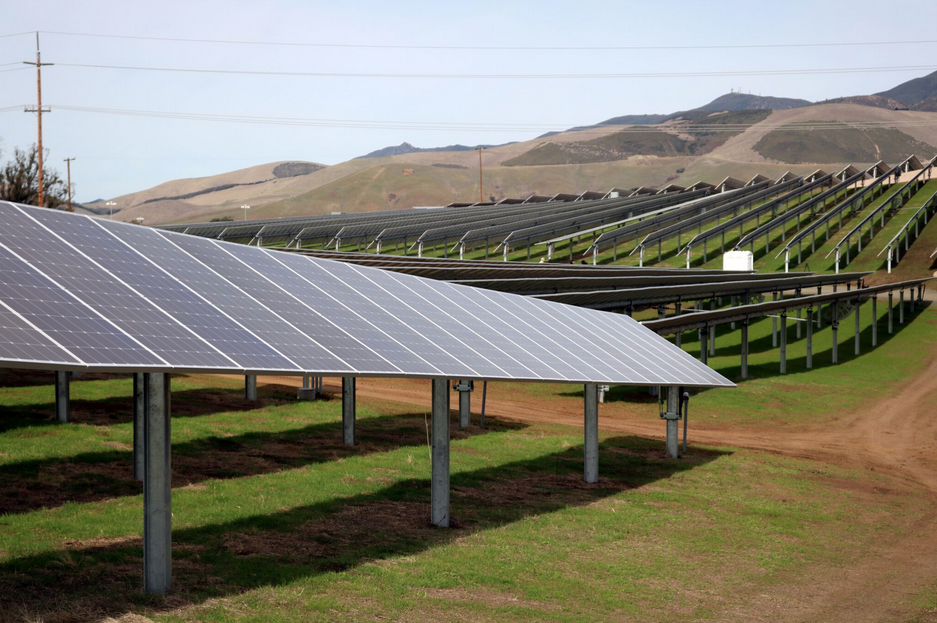
Look for more solar panels to sprout along Highway 1 this year to add to the arrays already supplying 25% of the power for Cal Poly, dedicated early this year.

Screen Shot 2018-04-14 at 11.13.43 AMHere an 18.5-acre solar farm is now generating more than 11 million kWh per year. The Cal Poly project includes more than 16,000 individual solar panels with a capacity of 4.5 megawatts (AC).

In addition to the environmental benefits, the energy it produces will provide direct savings of about $10 million on Cal Poly’s utility bills over 20 years and will create Learn by Doing opportunities for students.

PG&E’s energy load will continue to decrease locally as two more major power users nearby add solar funded through the state.

In April 2018 look for construction to start on a project for Camp San Luis Obispo.


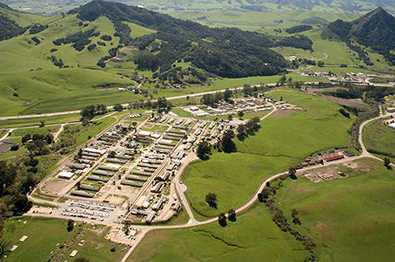
Here a solar PV system to be installed at the California Military Department’s Camp San Luis Obispo facility will consist of roof mount PV systems located on multiple buildings totaling 0.94 MW and solar PV parking canopies of 0.58 kW.

The total PV system size will be 1.52 MW and would generate over 2,800,000 kWh during its first year of operation.

The solar system will generate renewable energy that will provide approximately 73% of the annual kWh usage of the Camp San Luis Obispo facility.

Installation is planned between April and July 2018.

Also next to the new Cal Poly solar facility, a new PV system is planned for the California Men’s Colony that will be a 2.1 MW ground mount PV system and generate approximately 4,700,000 kWh/yr., which is approximately 35% of CMC’s annual electricity use.

Construction is expected to start during the third quarter of 2018 and be operational by the end of 1st quarter 2019 says Jacqueline Cummings, Public Information Officer for General Services.

This month the California Independent System Operator said solar energy supplied about half the demand in the state.

Recently it was reported the visitor complex at Hearst Castle will be solar powered as is Vandenberg Air Force base in Lompoc.

Solar energy is also happening on a smaller scale in SLO County with more than 1200 homes adding rooftop solar arrays last year actually slowing down some from 1650 the year before and 2600 homes in 2015.

Here Comes April Showers

Match 30,2018-

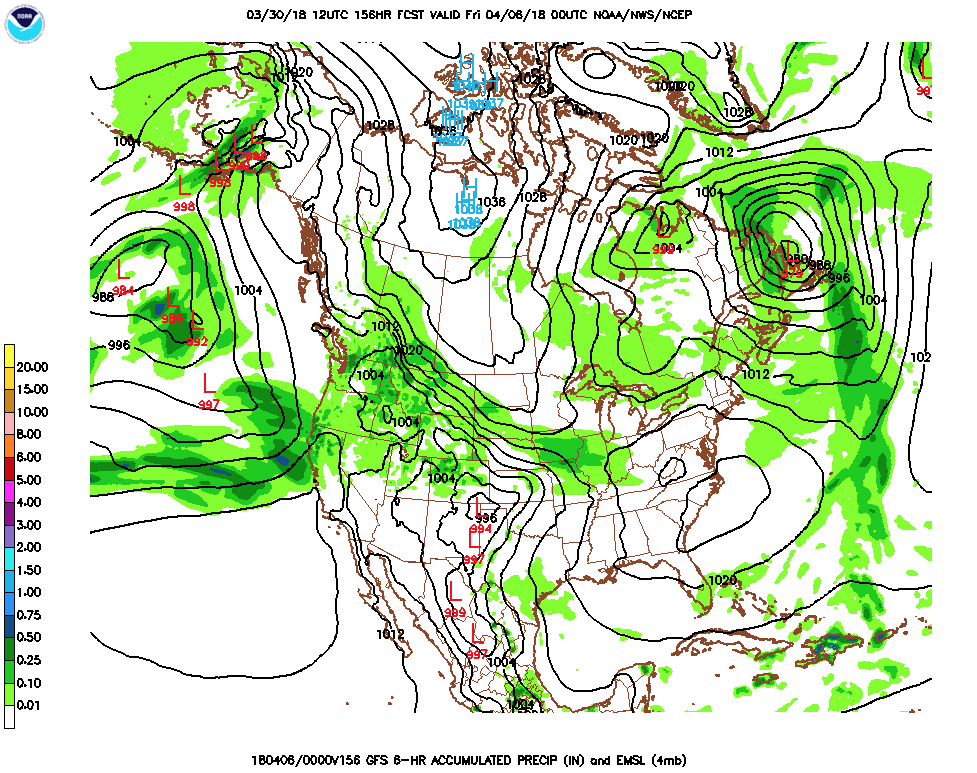
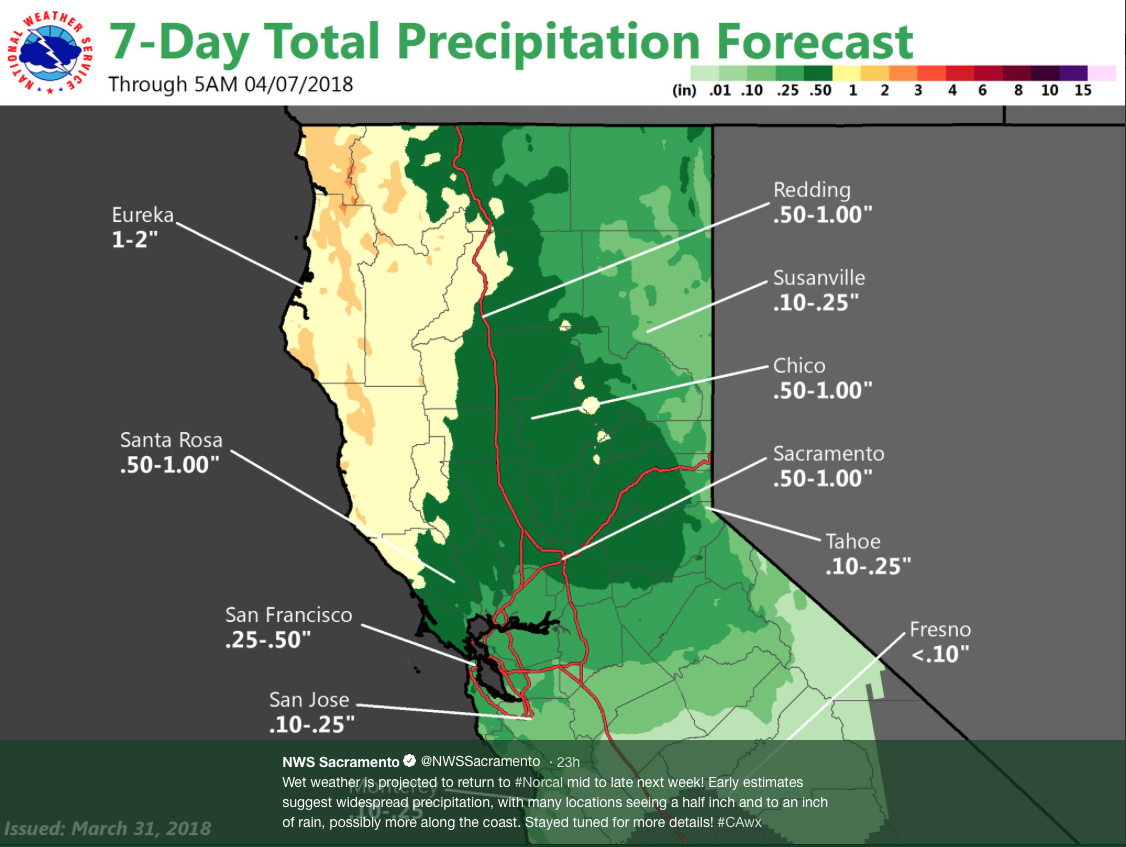
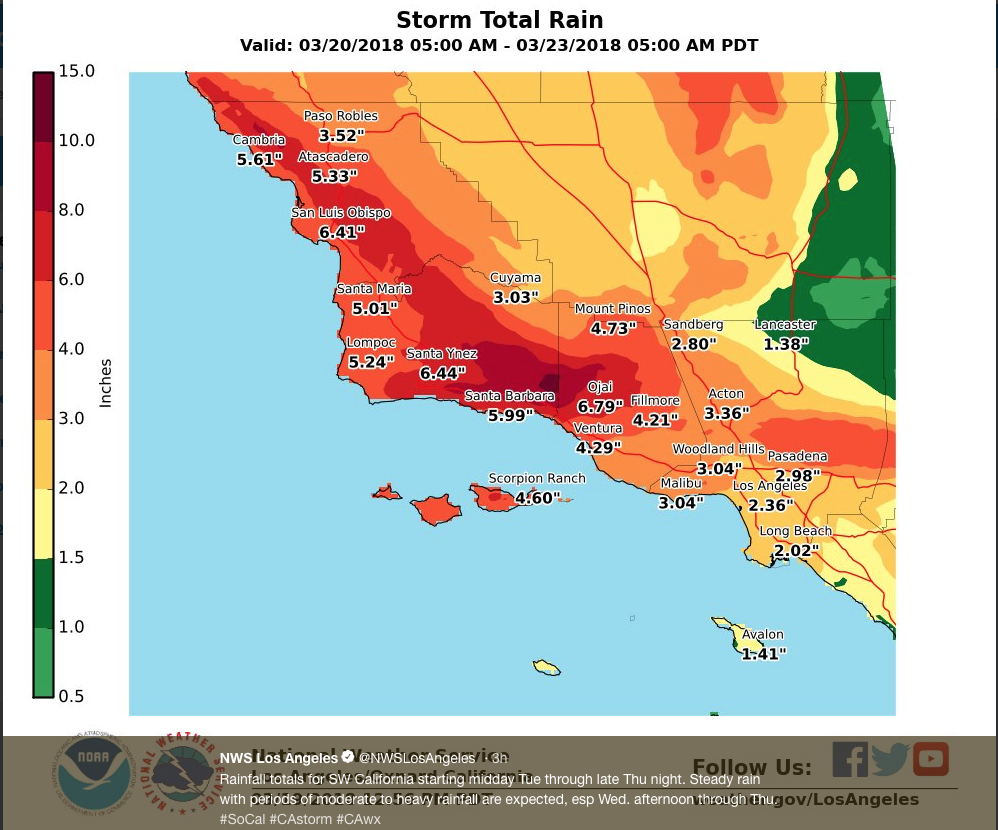
Screen Shot 2018-03-30 at 12.59.51 PM“California, including the Central Coast, could be back in a wet and unsettled weather pattern around April 7 as the storm track shifts southward.” So says PG&E meteorology John Lindsey.
Forecast models snow this current high pressure will end as soon as April 5 in northern California.
Then we will see rain April 5,6,7 and 10th,12th and 13th in the state.

The best chance for mid California is around April 7 when an atmospheric river  will enter the state from the Pacific hitting norther n California.

Screen Shot 2018-04-01 at 7.11.08 AM


West Coast ocean returning to normal but salmon catches lagging

March 2018
Contributed by Michael Milstein -Northwest Fisheries Science Center
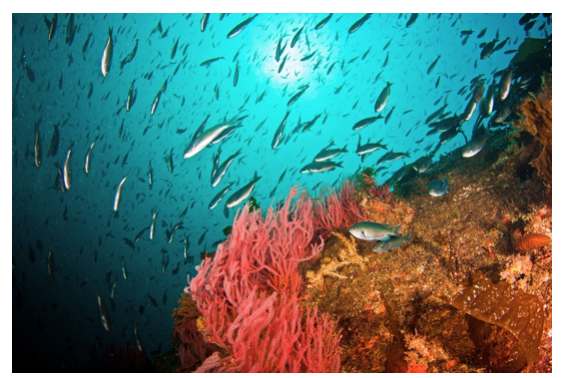
Screen Shot 2018-03-29 at 1.32.54 PMOcean conditions off most of the U.S. West Coast are returning roughly to average, after an extreme marine heat wave from about 2014 to 2016 disrupted the California Current Ecosystem and shifted many species beyond their traditional range, according to a new report from NOAA Fisheries’ two marine laboratories on the West Coast. Some warm waters remain off the Pacific Northwest, however.
The Southwest Fisheries Science Center and Northwest Fisheries Science presented their annual “ California Current Ecosystem Status Report” to the Pacific Fishery Management Council at the Council’s meeting in Rohnert Park, Calif., on Friday, March 9. The California Current encompasses the entire West Coast marine ecosystem, and the report informs the Council about conditions and trends in the ecosystem that may affect marine species and fishing in the coming year.
“The report gives us an important glimpse at what the science is saying about the species and resources that we manage and rely on in terms of our West Coast economy,” said Phil Anderson of Westport, Wash., the Council Chair. “The point is that we want to be as informed as we can be when we make decisions that affect those species, and this report helps us do that.”
Unusually warm ocean temperatures, referred to as “the Blob,” encompassed much of the West Coast beginning about 2014, combining with an especially strong El Niño pattern in 2015. The warm conditions have now waned, although some after-effects remain.

• Feeding conditions have improved for California sea lions and seabirds that experienced mass die-offs caused by shifts in their prey during the Blob.
• Plankton species, the foundation of the marine food web, have shifted back slightly toward fat-rich, cool-water species that improve the growth and survival of salmon and other fish.
• Recent research surveys have found fewer juvenile salmon, and consequently adult salmon returns will likely remain depressed for a few years until successive generations benefit from improving ocean conditions.
• Reports of whale entanglements in fishing gear have remained very high for the fourth straight year, as whales followed prey to inshore areas and ran into fishing gear such as pots and traps.
• Severe low-oxygen conditions in the ocean water spanned the Oregon Coast from July to September 2017, causing die-offs of crabs and other species.

Even as the effects of the Blob and El Niño dissipate, the central and southern parts of the West Coast face low snow pack and potential drought in 2018 that could put salmon at continued risk as they migrate back up rivers to spawn.
“Overall we’re seeing some positive signs, as the ocean returns to a cooler and generally more productive state,” said Toby Garfield, a research scientist and Acting Director of the Southwest Fisheries Science Center. “We’re fortunate that we have the data from previous years to help us understand what the trends are, and how that matters to West Coast fishermen and communities.”
NOAA Fisheries’ scientists compile the California Current Ecosystem Status Report from ocean surveys and other monitoring efforts along the West Coast. The tracking revealed “a climate system still in transition in 2017,” as surface ocean conditions return to near normal. Deeper water remained unusually warm, especially in the northern part of the California Current. Warm-water species, such as leaner plankton species often associated with subtropical waters, have lingered in these more-northern zones.
One of the largest and most extensive low-oxygen zones ever recorded off the West Coast prevailed off the Oregon Coast last summer, probably driven by low-oxygen water upwelled from the deep ocean, the report said.
While the cooling conditions off the West Coast began to support more cold-water plankton rich in the fatty acids that salmon need to grow, salmon may need more time to show the benefits, the report said. Juvenile salmon sampled off the Northwest Coast in 2017 were especially small and scarce, suggesting that poor feeding conditions off the Columbia River Estuary may be lingering.
Juvenile salmon that enter the ocean this year amid the gradually improving conditions will not return from the ocean to spawn in the Columbia and other rivers for another two years or more, so fishermen should not expect adult salmon numbers to improve much until then.
“These changes occur gradually, and the effects appear only with time,” said Chris Harvey, a fisheries biologist at the Northwest Fisheries Science Center and coauthor of the report. “The advantage of doing this monitoring and watching these indicators is that we can get a sense of what is likely to happen in the ecosystem and how that is likely to affect communities and economies that are closely tied to these waters.

More Local Institutions Adding Solar

March 21,2018-

Camp San Luis and Men’s Colony Join Cal Poly Along Hwy 1

Mens Colony in SLO
Mens Colony in SLO

Look for more solar panels to sprout along Highway 1 this year to add to the arrays already supplying 25% of the power for Cal Poly, dedicated early this year.

Here an 18.5-acre solar farm is now generating more than 11 million kWh per year. The Cal Poly project includes more than 16,000 individual solar panels with a capacity of 4.5 megawatts (AC).

In addition to the environmental benefits, the energy it produces will provide direct savings of about $10 million on Cal Poly’s utility bills over 20 years and will create Learn by Doing opportunities for students.

PG&E’s energy load will continue to decrease locally as two more major power users nearby add solar funded through the state.

In April 2018 look for construction to start on a project for Camp San Luis Obispo.

Here a solar PV system to be installed at the California Military Department’s Camp San Luis Obispo facility will consist of roof mount PV systems located on multiple buildings totaling 0.94 MW and solar PV parking canopies of 0.58 kW.

The total PV system size will be 1.52 MW and would generate over 2,800,000 kWh during its first year of operation.

The solar system will generate renewable energy that will provide approximately 73% of the annual kWh usage of the Camp San Luis Obispo facility.

Installation is planned between April and July 2018.

Also next to the new Cal Poly solar facility, a new PV system is planned for the California Men’s Colony that will be a 2.1 MW ground mount PV system and generate approximately 4,700,000 kWh/yr., which is approximately 35% of CMC’s annual electricity use.

Construction is expected to start during the third quarter of 2018 and be operational by the end of 1st quarter 2019 says Jacqueline Cummings, Public Information Officer for General Services.

This month the California Independent System Operator said solar energy supplied about half the demand in the state.

Recently it was reported the visitor complex at Hearst Castle will be solar powered as is Vandenberg Air Force base in Lompoc.

Solar energy is also happening on a smaller scale in SLO County with more than 1200 homes adding rooftop solar arrays last year actually slowing down some from 1650 the year before and 2600 homes in 2015.

Kings County to support gas tax Increase

February 13,2018-

County Legislative Platform Discussed

This week the Kings County Board of Supervisors  weighed in on the county’s legislative platform for both state and federal priority issues. Here are a few issues they addressed, some with surprising results.

Screen Shot 2017-03-08 at 1.50.51 PMKings County Weighs Support For Unpopular Gas Tax

Despite at least two initiatives looking to overturn the recently implemented increase in the state’s gas tax, Kings County, like other counties, appears ready to support the increase, saying it is “critical” to the upkeep of local roads.

The 12-cent-a-gallon increase will raise more than $50 billion  statewide over a decade, argue supporters.

“Over a ten year period it will mean an extra $36 million to maintain and improve our roads here” says Kevin McAlister, Kings County Public Works Director. He adds that protecting Senate Bill 1 that authorized the increase “is a priority for Kings County.”

If there is a vote next November the state and county have some convincing to do. A recent poll of potential voters showed 52 percent in favor of repealing the tax increase.

SB 1 defenders counter that the taxes are being spent in the local jurisdiction now.Consumers are seeing higher gas prices recently but a large part of the increase has come from surging oil prices ,not taxes.

Kings County is also proposing a change in how we pay for roads based on gas tax using some sort of a  milage-based formula that would tax electric cars as well gasoline users.

County continues oppose high speed rail

No surprise here as the BOS looks to oppose high speed rail activities in the county inter platform.Here is what they propose.

-Oppose any state funding or support of the California High Speed Rail project.

-Oppose using any State Cap-and-Trade funds on the California High-Speed Rail project. This funding stream varies widely and ends in 2020 unless renewed by the Legislature which it has, to date, refused to do. It is designed to fund short-term projects that will reduce greenhouse gases. High Speed Rail will not be operational until at least 2025, if ever.

-Oppose any legislation that attempts to modify a voter-approved state general obligation bond measure without gaining voter approval for the modification.

-Support any bills that require financial accountability.

-Support legislation which is designed to ensure that taxes and fees pay for streets, no high speed rail.

Maintain ACA funding for chronic diseases & children’s program

The platform comes to the support of programs authorized through Obamacare. The platform says they oppose “any effort to reduce the Prevention and Public Health Fund (PPHF). The PPHF, which was created by Section 4002 of the Affordable Care Act (ACA) is the nation’s first mandatory funding stream dedicated to improving our nation’s public health. This fund created an unprecedented opportunity for local health departments to augment and expand existing chronic disease programs or to participate in new programs to address longstanding chronic disease issues in their communities. However, over the years, the PPHF has become increasingly vulnerable and has been diverted to fund other purposes.”

Also the platform supports funding for Maintain Children’s Health Insurance Program (CHIP), which provides access to healthcare for pregnant women and children who are low income but above the cut-off for Medicaid eligibility.

“Elimination of CHIP in California would result in 5,996 children in Kings County going without access to medical care.”

Did Navy Sink Plans For Offshore Wind?

Screen Shot 2018-01-23 at 7.51.02 AM

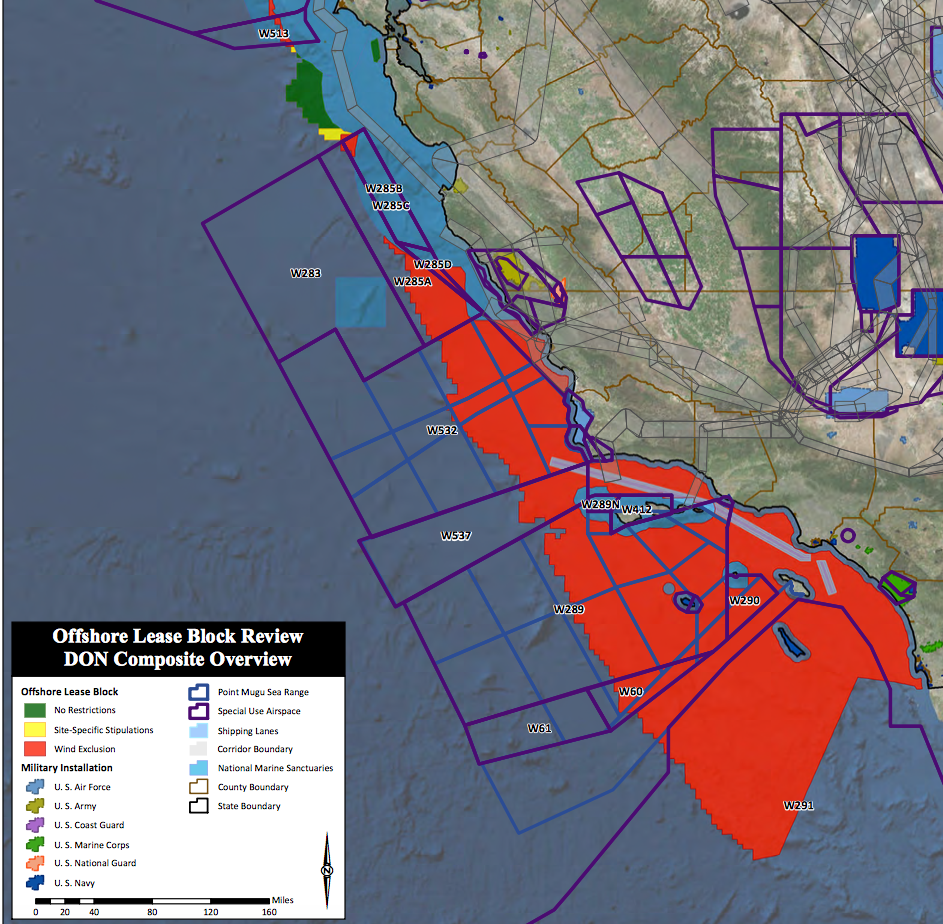
Navy map-red for non compatible with offshore wind

January 25,2018-

Plans to build arrays of wind turbines off the Central Coast and tie them into the transmission infrastructure on the Central Coast could be torpedoed by an unlikely source: the U.S. Navy.

In response to growing interest in developing wind farms off California, the Navy in August published a map that shows a compatibility assessment of where wind energy projects and Navy and Marine Corps operations would overlap.

At least at first blush, the outlook doesn’t look good for Morro Bay, where offshore power could be routed to the defunct Dynegy power plant and the PG&E substation there.

The Navy had been asked to weigh in on the windpower idea by the federal Bureau of Ocean Energy Management (BOEM). The agency serves as a gatekeeper for energy development 3 miles out and beyond and had received an unsolicited request for a commercial lease in January 2016 from Washington state-based Trident Winds, which hopes to build a 650-to 1,000-megawatt floating wind farm off Morro Bay, according to BOEM.

The agency is working with the state of California on planning for potential leasing of tracts of ocean to use for offshore wind in what has now become a competitive process.

After receiving the request from Trident Winds, BOEM said it would accept additional offers as well, and it received another one from Statoil Wind US LLC, whose parent firm is an oil and gas company based in Norway that has developed recent offshore wind energy projects in Europe and now off the U.S. East Coast.

The expectation in the past year was that BOEM was preparing for an auction of lease sites in 2017 as it was doing off the Atlantic Coast — signaling a green light for California offshore wind energy even though the new Trump administration, less favorable to renewable energy, was now in charge.

Public meetings to advance the project were expected in the summer last year. But they never happened.

The process seemed to be plodding along with potentially several rival proposals facing off on the same site. Then, without any a public announcement last summer, BOEM asked the Navy its thoughts on the plans.

Wrench in the works

To the surprise of participants — the Navy map designated large areas of the Pacific off of Southern and Central California as a red zone, meaning those sectors were “not compatible” with Navy operations.

The red zone on the map covers a huge swath of ocean from the Mexico border to just shy of Monterey Bay, about 36,000 square miles that the Navy says are “off limits” for ocean wind farms.

Other areas off Northern California are colored green on the map, while some smaller areas are colored yellow, meaning projects might be allowed under certain circumstances.

“Information provided by BOEM to the Department of Defense indicates that the unsolicited offshore wind proposal from Trident is for an area within Department of the Navy ‘wind exclusion’ areas off the coast of Central California,” said Navy spokesman Lt. Ben Anderson in early January. “These ‘wind exclusion’ areas are locations on the outer continental shelf where wind energy development will adversely impact Navy and/or Marine Corps testing, training, and operational activities.”

Asked about the news, Morro Bay Harbormaster Eric Endersby says he has talked to Trident officials, who are well aware this has become a potential roadblock to their offshore wind project here.

“It looks like the Navy claims a much larger area than we had thought ” said Endersby.

Wind competition

The California coastline offers 112 gigawatts of technical offshore wind resource potential, according to Trident. That is more than 50 Diablo Canyons — about 1.5 times the state’s electric energy consumption based on 2014 Energy Information Administration figures.

If the Navy sticks to its guns and blocks wind energy projects off the coast of both Southern and Central California, the winner may be Humboldt Bay, where BOEM has also studied potential wind projects, colored green on the Navy map.

BOEM has said that the wind off Humboldt and Crescent City blows 20 percent stronger than in the southern half of the state, giving the northern site a capacity advantage.

Southern projects, however, have a connectivity advantage.

“Grid connections and port services are more abundant and readily accessible in Southern California, which may facilitate near-term development in these areas,” a BOEM analysis says.

Meanwhile, a PG&E study found the cost to connect a Humboldt wind farm to the state grid system could run up to $1 billion.

Media report talks Up Humboldt

So does the North Coast have the advantage? A recent news report suggests that it may.

“In what could be a boon for the environment and the economy, Redwood Coast Energy Authority is in the early stages of developing a wind farm off the coast,” reported Eureka TV station News Channel 3 in December.

In October, the Redwood Coast Energy Authority agreed to a memorandum of understanding with Emeryville-based Principle Power to explore development of a floating wind farm.

“Humboldt County has actually got one of the best offshore wind resources in the entire country,” RCEA Executive Director Matthew Marshall said.

The fifteen turbines about 20 miles offshore could generate 120 megawatts of energy — or enough to power 70,000 homes.

The article says that “the abundance of offshore wind is only one of the factors working in Humboldt County’s favor. Another is the U.S. Navy’s opposition to similar developments in all waters south of San Francisco.”

Huge market potential

In recent years, sites off of the West Coast have become rivals to see who will gain the advantage of a new multi-billion dollar industry.

The global offshore wind energy market was valued at $20.3 billion in 2016 and is expected to reach $57.2 billion in 2022, growing 16.2 percent from 2017 and 2022, according to a Zion Market Research report in September 2017,

The Morro Bay project itself has been estimated by Trident in a filing with the California Energy Commission as adding 6,000 long‐term jobs with a gross domestic product impact of $39.7 billion during construction and $7.9 billion during operations over 25 years.

UC Berkeley policy analyst Rob Collier says that because of supply chain needs for floating wind technology, it will be a huge boon to wherever the staging area is for the mammoth 700-foot-tall turbines that could and should be built nearby, not imported from China or elsewhere, he argues.

Collier predicts that “California’s initial offshore wind farms are likely to be either in waters near the Diablo Canyon nuclear plant, whose reactors are slated to close in 2024 and 2025, or offshore Humboldt and Del Norte counties, near a long-closed nuclear plant that is currently undergoing its decommissioning process. In either case, the result could be retraining and re-employment for some of the nuclear plant workers.”

A 2016 estimate published by the Tribune said that the dismantling of Diablo will cost an estimated $3.8 billion. If the infrastructure grid can still be used to carry offshore wind, it would preserve those transmission assets.

The recent CPUC decision to shutter Diablo by 2025 or sooner (Mothers for Peace recommends a shutdown in 2019-20) says a decision on repurposing the infrastructure or dismantling — as well as replacing the 2200 megawatts of power — will be made later, with no timetable given.

That would include what happens to the three 500-kilovolt transmission lines, known as the Diablo Loop, that connect Diablo Canyon to the electrical grid by providing parallel transmission paths between two substations, Gates and Midway, in the Central Valley.

Clearly, offshore wind could connect here and/or potentially in Morro Bay, as Trident has proposed, depending on what happens with the Navy.


New Navy study in works

While things have been quiet since the map was published last summer, state Energy Commission staffer Scott Flint says he understands the Navy is doing a new “site-specific” study that might allow projects in some locations currently shown as red on the map. Further, he expects a public meeting to happen soon that could move the process along.

For her part, Trident Winds CEO Alla Weinstein says her company is not giving up.

Weinstein echoes the energy commission spokesman’s view that the Navy is taking a second look at the compatibility map for offshore California.

In a phone interview, she echoed the Energy Commission spokesman’s view that the Navy is taking a second look at the compatibility map for offshore California.

“This is just the beginning of the competitive process,” Weinstein said, adding that in Virginia, “the Navy’s’ original map was all red too,” before negotiations allowed a project to move forward off the coast of Virginia Beach, where the Navy has a huge presence.


Trump Wants To Drill Off Central Coast

January 4,2018-

Screen Shot 2018-01-04 at 1.46.12 PM

The Trump administration announced this week they want to allow new offshore drilling off the coasts of both Florida and California where vehement opposition is expected to the controversial proposal. Already GOP governor Rick Scott asked that Florida be removed before a multi-year study happens.

Six sites off California and one off Washington

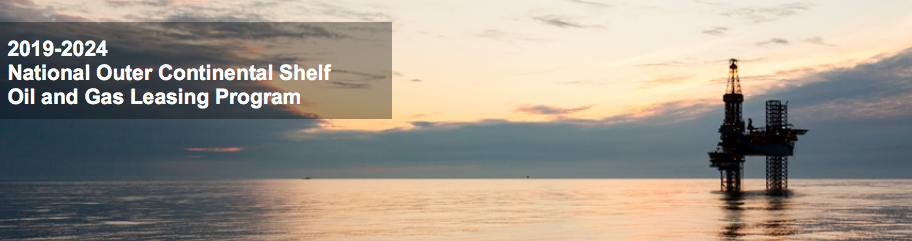
Included in the plan to drill 40 new sites in waters off the coast are Alaska, the Gulf of Mexico,Washington and 6 sites offshore of California including 2 sites in Central California.Sites could be leased in federal water, 3 miles offshore by 2021.

It was as recently as 2015 that a corroded pipeline bringing in offshore platform oil ruptured at Refugio Beach, shutting down several oil platforms. The 3400 barrel spill coated hundreds of animals along the coast with thick crude oil and many died.

But Trump officials say we need the oil.

Interior Secretary Ryan Zinke made the announcement saying that the 47 proposed leasing areas could increase federal revenue by $15 billion.

“It’s better to produce energy here and never be held hostage by foreign enemy needs,” Zinke said, adding it’s a “clear difference between energy weakness and energy dominance.”

Zinke says currently the existing program puts 94 percent of the continental shelf off limits. With this plan the Trump program is proposing the largest number of lease sales in U.S. history.

“Responsibly developing our energy resources on the Outer Continental Shelf in a safe and well-regulated way is important to our economy and energy security, and it provides billions of dollars to fund the conservation of our coastlines, public lands and parks,” said Secretary Zinke. “Today’s announcement lays out the options that are on the table and starts a lengthy and robust public comment period. Just like with mining, not all areas are appropriate for offshore drilling, and we will take that into consideration in the coming weeks. The important thing is we strike the right balance to protect our coasts and people while still powering America and achieving American Energy Dominance”

Reaction in California is expected to be swift and emphatically against the idea. Already Central Coast Congressman Salud Carbajal has issued a statement blasting the notion.

“Protecting the health and safety of our coastal communities is vital, and that is why the first bill I introduced in Congress, moved to ban future offshore oil and gas drilling off the coast of California. Coastal tourism and recreation accounts for over 80% of California’s GDP, accounting for over 800,000 jobs and billions of dollars in revenue each year.

“The Central Coast knows too well the damage caused by oil spills, our local economies and fragile ocean ecosystems cannot afford another disastrous spill. I am committed to working with my colleagues to fight this misguided decision that risks the health and safety of our coastal communities. We must prevent further expansion of drilling in our oceans and to move toward sustainable, renewable energy sources that boost job creation locally and grow our economy.”

The betting is that both state and county opposition would make it difficult for offshore drillers to bring their product ashore to be processed. Making it difficult for drillers to bring in the oil would likely force the oil companies to look elsewhere where permitting is easier and opposition is lighter.

“Californians will never let this happen,” said U.S. Rep. Jared Huffman (D-San Rafael). “This reckless proposal for a new offshore drilling spree should face widespread, bipartisan opposition. We’ll fight them in Congress, on the beaches, in the courts, and at the ballot box. I’m confident we’ll defeat this dangerous plan.”

There are 7 lease sales in the Pacific Region (2 each for Northern California, Central California, and Southern California, and 1 for Washington/Oregon). There have been no sales in the Pacific Region since 1984. Currently there are 43 leases in producing status in the Southern California Planning Area.

The US is already awash in oil and natural gas after the successful implementation of slant drilling technology that has boosted the US to the top as the world’s largest producer of oil.

Crude oil production in the US is approaching 10 million barrels day, up from 7 million barrels in January 2013 and 5.4 million barrels in 2010.To get rid of a surplus of oil, crude companies have ramped up exports increasing monthly volume exports from half a million barrels in 2016 to 1.7 million barrels as of October 2017.Almost all of the increase production is coming from onshore wells, mostly from Texas’ Permian Basin, shale deposits.

Already this week’s draft proposal has received approximately 816,000 comments from a wide variety of stakeholders, including state governments, federal agencies, public interest groups, industry, and the public. Before the program is finalized, the public will have additional opportunities to provide input. The 2017-2022 Five Year Program will continue to be implemented until the new National OCS Program is approved.