2018 California Strawberry Acreage Down But Production Grows

Labor issue is tops

August 23,2018-

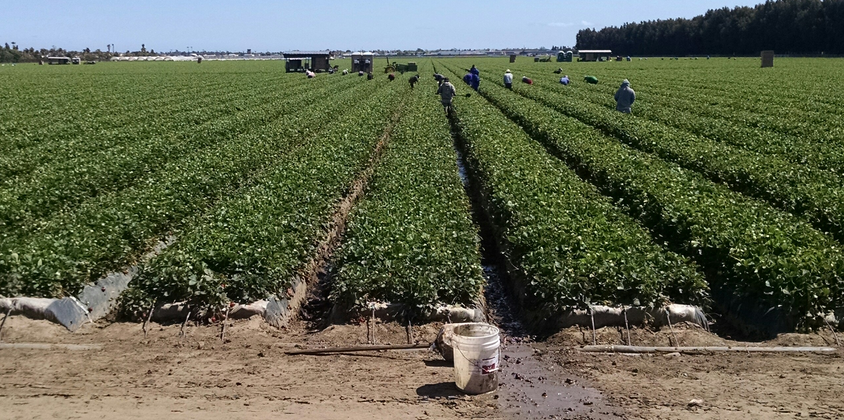
The California Strawberry Commission reports California strawberry acreage for 2018 continues the trend of increasing fruit production on decreasing planted acreage. Over the past three years, planted acreage has declined by 13% while total volume has increased by 6%, resulting in two consecutive years of record fruit production.

Screen Shot 2018-08-23 at 10.06.16 AMIn 2018, reported acreage continues the shift to the highest yielding varieties. With optimum weather, weekly shipment volume in summer and fall months is projected to equal or surpass 2017 totals. Total California strawberry acreage reported for 2018 is 33,838, with organic acreage maintaining a proportional share at 12.6.
While other berries Americans eat are increasingly coming from other countries . strawberry production from California remains top dog by far.

California strawberry production increased to 134 mil flats so far this year compared to 123 mil this time last year. The Santa Maria region grew over 50 mil trays vs 48 mil this time last year

Other berries

Meanwhile California blueberry production is down from 2017 when it was 9.4 million flats to 7 million flats so far this year. Chile remains the top producer to the US with imports of over 32 million flats through mid August.Mexico produced about 14 mil flats this year through mid August.

How about raspberries Mexico produces nearly double what California produces .California acreage has dropped from a peak of 10,000 acres to 6000 acres this year. Production of California raspberries has dropped to 15 million flats to date in 2018 compared to 17 million flats for the same period in 2017 according to the National Berry Report.

As for blackberries Mexico is to producer with 27 mil flats compared to 4.2 mil grown in California.

Labor appears to the big issue when they decide where to plant berries.

According to Migration News Raspberries are more labor intensive than strawberries, requiring up to five workers per acre to harvest them every or every other day.Raspberries that are planted in substrate in pots, usually sterilized coconut shells, generate high yields over their typical four to five harvests and make picking easier for older workers. Half of variable production costs for producing strawberries, and 65 percent of raspberry production costs, are labor cost.

Rising labor costs are an obstacle to using California’s ideal climate for summer berries. Mexico stops producing in the summer months due to high temperatures and rain.
Robotic strawberry harvesters may be used commercially within five years. Blueberries and blackberries are believed to have the greatest potential for growth, in part because machines are available to harvest both of these cane berries, and higher wages could spread mechanization.
Most strawberry growers do not provide housing or transportation and generally hire US pickers directly rather than through labor contractors. Workers wheel a small cart containing eight one-pound clamshells or 12 pints ahead of them, picking from two adjacent rows, and then put full trays on a slow-moving conveyor belt that travels ahead of the crew of 50-60 pickers.
Piece rates in the Oxnard area in June 2016 ranged from $1.65 to $1.95 a tray, with the prevailing rate found to be $1.65 a tray. At these piece-rate wages, strawberry picker earnings averaged $15 to $20 an hour, suggesting that pickers were averaging 12 or more trays an hour. Job orders for H-2A strawberry pickers often specify a minimum productivity standard of five trays an hour.

California’s King Salmon Season Reopens

July 30,2018-

Fish count double earlier estimate

Screen Shot 2018-07-29 at 12.57.04 PMReady for some good news from California for a change?

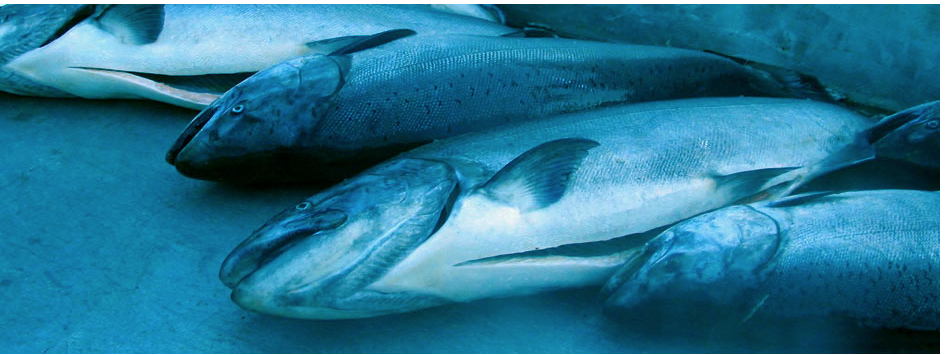
California’s commercial salmon fishermen are back and so are the King salmon.

After a mid-season break, Californias’ commercial salmon fishermen began fishing again on July 26.  Prior to the scheduled June 30 closure, the catch was more than double the projection for the May-June season in the Monterey management zone says the California Salmon Council.

“There is a larger supply of King Salmon than was anticipated, which is great news for California consumers,” said David Goldenberg, CEO of the California Salmon Council.

Regulators had estimated a smaller catch based on their models explains Goldenberg.But at the end of June fishermen were reporting big hauls, double the earlier estimates.

“I looks like the salmon population has rebounded” says Goldenberg. The season runs May to October but regulators could close sections of the coastal waters for a period to reduce over-harvesting, he explains.

Recreational fishermen are also reporting a better season than anticipated. Press reports earlier in July describe. “ After years of dire forecasts, curtailed seasons and empty fishing nets, the Bay Area’s recreational salmon fishing is booming, two weeks into the new season. Joe Rosato Jr. reports.”

“It’s been an absolutely amazing start to the salmon season this year,” said Jared Davis, skipper of the Sausalito-based Salty Lady sport fishing boat. “Nobody really expected this.”

“Since the opening of the season between Point Arena and Pigeon Point on June 17, recreational skippers have reported packed boats with anglers catching limits of two fish apiece.”

“Epic salmon fishing,” Davis said. “The best we’ve seen in a lotta, lotta years.”

Screen Shot 2018-07-29 at 12.56.44 PMThe California Salmon Council in the past few years have reported low abundance of ocean salmon with 2016 Klamath River returns just 21% of average, a continuation of the generally depressed conditions for the industry that started in 2006.

Poor runs last year appeared to spell more doom and gloom in 2018 with ocean conditions not favorable.

Commercial and sport anglers received mixed news March 1 regarding the status of Sacramento River fall Chinook and Klamath River fall Chinook – California’s two largest Chinook salmon populations. While adult returns of both stocks were well below minimum escapement goals in 2017, and projected abundance for both stocks is modest compared to historic averages, state and federal fishery scientists reported an increase in the number of jacks (two-year-old Chinook) that returned to spawn in 2017. Higher jack returns, as seen in 2017, can indicate the potential for increased abundance of adult (three years old or older) Chinook for 2018 fisheries.

Fishery experts at the CDFW’s annual Salmon Information Meeting that day suggested there are 229,400 Sacramento River fall Chinook adults in the ocean this year, along with 359,200 Klamath River fall Chinook adults. In total almost 600,000, that would make salmon more plentiful this year than they were last year, which was hailed by many as the best ocean fishing season in recent memory says Seafood News.

The persistent drought affecting river conditions and poor ocean conditions as well, have worked against the survival of the salmon.

The effects of the recent drought are still impacting California’s salmon populations. Outbound juvenile Chinook suffered unusually high mortality because of low flows and high water temperatures in both the Sacramento and Klamath watersheds in 2014 and 2015. Unsuitable river conditions, coupled with persistently poor ocean conditions during the same period, resulted in very low numbers of adult Chinook returning to spawn in both the Klamath and Sacramento River basins in 2017.

So this year’s ocean abundance is a surprise.

California is traditionally a leading state for providing wild ocean run King salmon, which are caught by dedicated commercial fishermen on barbless hooks from May through October.

Featured at local grocery stores, fish markets and fine restaurants, these fresh, wild salmon are so renowned because of their firm texture and robust flavor – in addition to containing higher levels of Omega-3 fatty acids than other salmon varieties. Caught locally off California’s coast, California’s King salmon also provide consumers with a sustainable, responsible option.

“Our hardworking fleet of fisherman have just set out into the Pacific to begin fishing during the later part of the season, so we are anticipating fish will begin appearing the marketplace early next week,” said Goldenberg.

For more information about California King salmon, recipes and where it can be purchased, visit www.calkingsalmon.org.

Heat wave cuts lemon & avocado supply

July 19,2018-

From The Packer newspaper

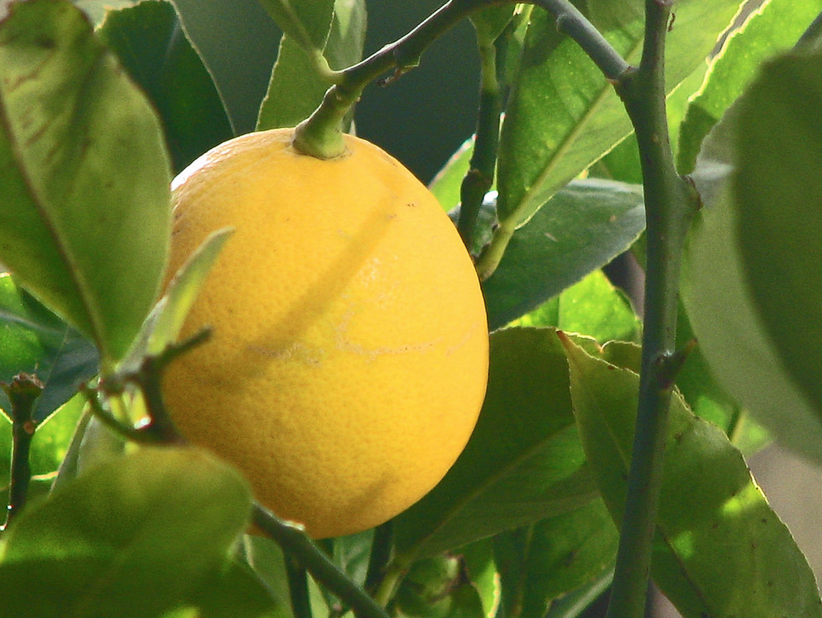
Screen Shot 2018-07-19 at 2.33.13 PMCalifornia is experiencing a summer lemon shortage in part due to the heat in the Coastal region.It also affected avocado trees.

The heat on July 6 may have caused damage to as much as 30% of the avocado crop remaining on the trees and caused a 10% reduction in the total crop, said Rob Wedin, vice president of sales and marketing with Santa Paula, Calif.-based Calavo Growers Inc.
California Citrus Mutual president Joel Nelsen says a heat wave in the coastal region this month has brought on ripening much more quickly than usual. Alex Teague, chief operating officer of Santa Paula, Calif.-based Limoneira, said the high temperatures hit around July 7.
“There’s been a lot of fruit that’s fallen off the tree,” Nelsen said. “Typically what we do is we harvest the fruit when it’s green and let it ripen under storage conditions … The fruit on the tail end of the season, it ripens on the tree, turns yellow, and you’re hoping to get it off before the heat adversely affects it.
“Well, it didn’t happen this year,” Nelsen said. Zak Laffite, chief sales officer for Delano, Calif.-based Wonderful Citrus, gave a similar account.
“Where growers had tried to extend the season with tree ripe fruit, you can see higher signs of fruit drop in the groves,” Laffite said. “This could affect the overall lemon supply for the next 12 weeks.”
He noted Wonderful has less than 20% of its crop still on the tree.
“This year’s coastal lemon crop seemed to have more early color or ripening on the tree, which forced us to speed up the rate of harvest between February and May,” Laffite said. “Early color can sometimes represent a higher risk of fruit drop later in the season.”
He estimated that imported lemons account for at least 35-40% of supplies from July to September and said weather has also hampered production in Mexico and Chile.
The shortage has increased prices.
The Packer says “on July 18, the U.S. Department of Agriculture reported f.o.b. prices at mostly $ 41.80-45.80 for cartons of shippers first grade California lemons sizes 95 and 115.
One month earlier, the prices for cartons of shippers first grade California lemons were mostly $28.80-31.80 for 95s and $29.80-32.80 for 115s.”

SLO Crop Report – Wine Grapes Top Strawberries in 2017

July 11,2018-

Wine grapes topped strawberries the 2017 San Luis Obispo County Crop Report released this week. Wine grapes led at $267 million value vs $228 million for strawberries, by far the county’s most valuable top crops.

Wine grapes climbed from $243 million in 2016 while strawberries fell from their 2016 value of at $241 million. Avocados dropped in value in 2017 due to a decrease in tonnage.Many avocado trees were stumped in 2017 due to the prolonged drought. Avo tonnage fell by more than half – in 2017 it was 9570 tons compared to 20 million tons in 2016.

The largest acreage of wine grapes in the county by far was Cabernet Sauvignon at 17,784 acres, up from 16,002 acres in 2016. This grape price per ton in 2017 was higher as was acreage.

Screen Shot 2018-07-11 at 1.34.30 PMCattle value leveled off at just under $49 million – way down from a value of $140 million in 2014.Last year the annual report explained the causes.

”The animal industry continued to struggle with drought impacts that have forced the reduction of herd sizes and sales over the past few years. The number of head sold in 2016 dropped 24%, re ecting the lowest number of head sold in the county since 1928, according to the Department’s Annual Crop Report records.

Strong consumer demand for poultry and pork contributed to a 25% drop in overall cattle value. Overall, the animal industry ended the year at $45,350,000 or 36% below that of 2015.”

The 2017 crop report says the value of nursery products was off by 5% as there was some conversion to cannabis and the nursery biz struggled to find workers.

SLO Construction Activity: Home building slowdown, Commercial projects picks up

Half Time Report

July 3,2018-

Screen Shot 2018-01-03 at 11.56.14 AMSLO builders permitted half the number of new homes in the first half of 2018 compared to the same period in 2017. Figures from Construction Monitor show 175 single-family homes were permitted around the county through June 2018 compared to 354 for the first half of last year.

On the commercial side the trend was just the opposite. For the first 6 months of 2018 some 106 major commercial remodels were underway valued at $113 million. For the same period in 2017 there 150 remodel projects but valued at just $20 million.

Weather & forecast maps show heat and dry weather in past

Possible wet weather this winter in Southern California

July 2,2018-

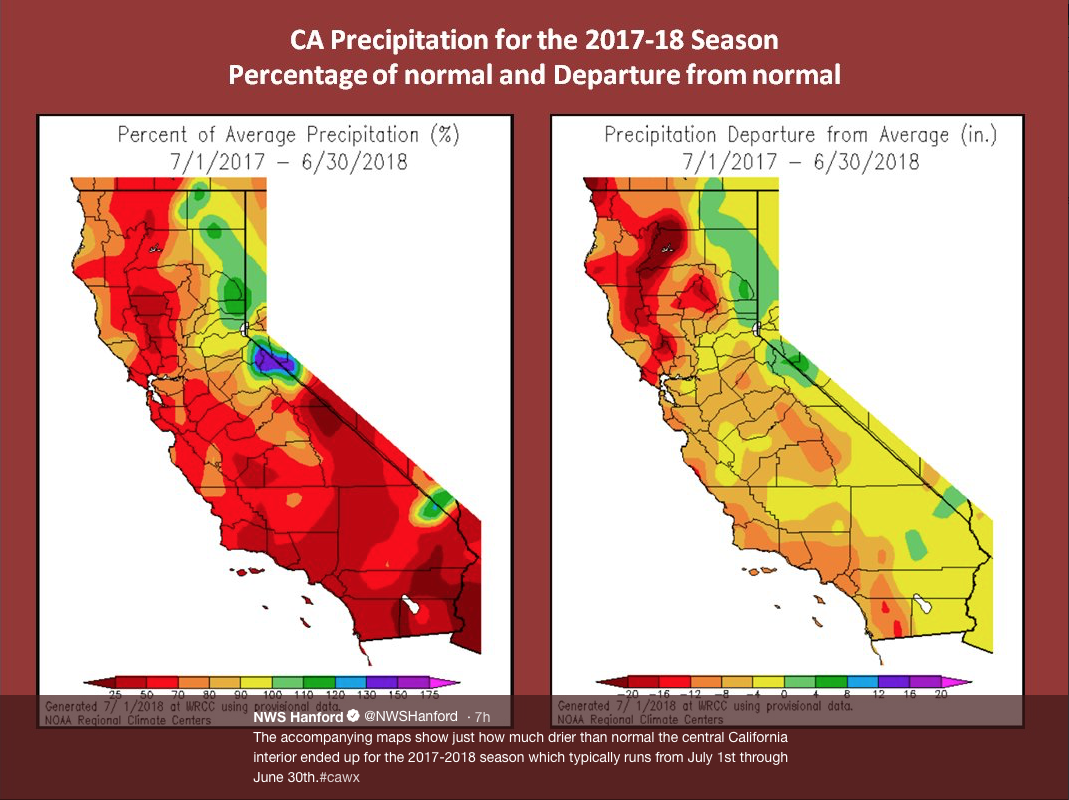
Recent NOAA and NWS maps show how dry and hot it has been across much of California for the past fiscal year ending June 30. The only exception appears to be the Tahoe area who has seen above average wetness.( click to enlarge)

Screen Shot 2018-07-02 at 6.05.31 AM


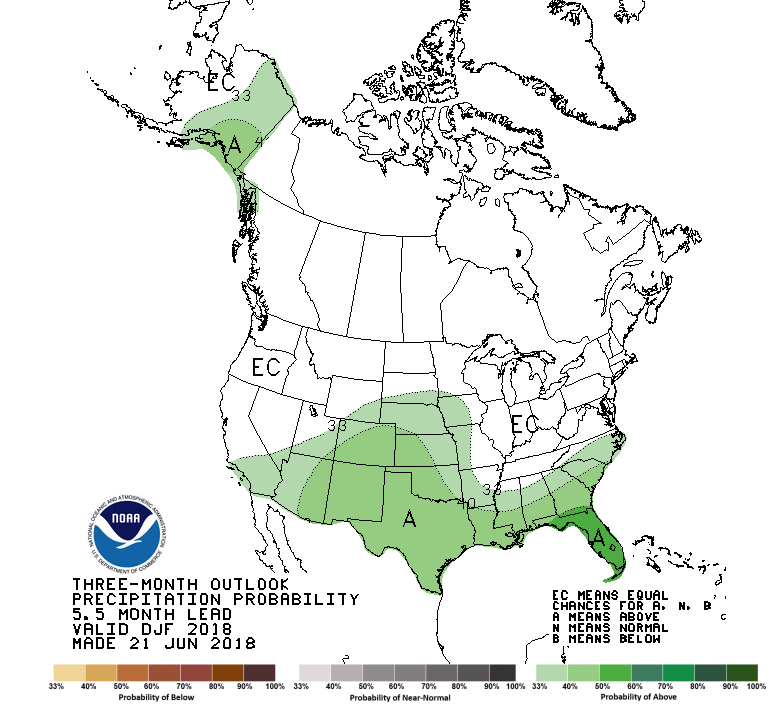
Regards the coming winter, this latest NOAA probability map uses an EL Nino forecast to suggest likely wet weather across southern California in the three-month period of December/January /February.

Screen Shot 2018-07-02 at 3.40.02 PM

Forecasters: 65% chance of El Nino this winter

June 14,2018-

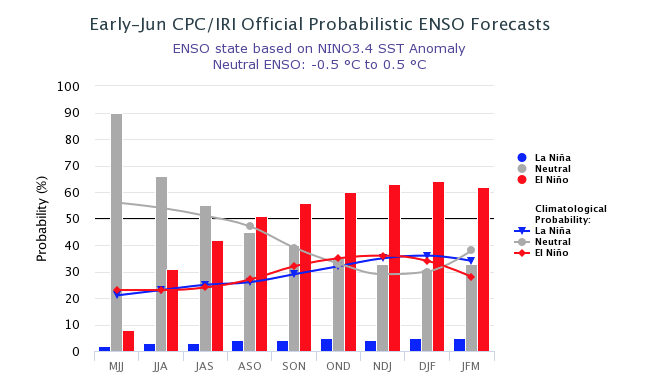
Screen Shot 2018-06-14 at 3.11.46 PMNOAA’s Climate Prediction Center released a “consensus estimate” this week predicting that the chance of an El Nino weather pattern in the Northern hemisphere is 65% as this coming winter. We are currently in a neutral state between a La Nina and El Nino phase. The forecast says equatorial sea water temps are increasing.
The forecasts are supported by the ongoing build-up of heat within the tropical Pacific Ocean. “In summary, ENSO-neutral is favored through Northern Hemisphere summer 2018, with the chance for El Niño increasing to 50% during fall, and ~65% during winter 2018-19.”

The probability has been increasing since the first of 2018 as can be seen in this graph.
An El Nino pattern makes it likely much of California gets above average precipitation.

Carbon Farming coming to Central Coast – from The Bottom Line

  by Office of Public Affairs

Note – The Bottom Line is the student newspaper at UC Santa Barbara. 

By Tanner Walker

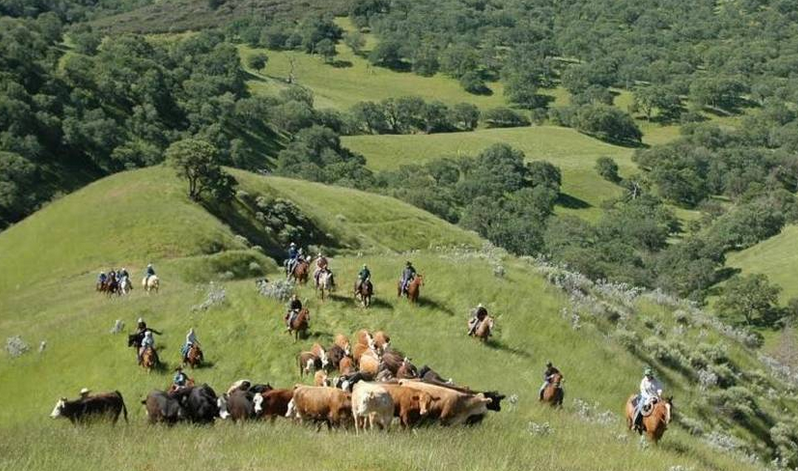
Carbon ranching is coming to Santa Barbara County, but farmers aren’t growing carbon — they’re putting it back into the ground. With the help of compost and cattle, native grasses can sequester organic carbon, enriching the soil and removing greenhouse gases from the atmosphere.

For example, a single acre of grazed grasslands can remove the equivalent of 3.9 tons of CO2 each year, according to a compost application plan outlined by the California Department of Food and Agriculture.

According to the Community Energy Council of Santa Barbara, 270,000 acres in the county are suitable for compost application. Even if only 15 percent of the available land received a single dusting of compost, their analysis “shows that the increased sequestration could offset all of the greenhouse gas emissions from the county’s agricultural sector.”

The 8,000 -acre Chamberlin Ranch in Los Olivos is currently home to carbon ranching test sites from 12 partners including UC Santa Barbara, the Santa Barbara Air Pollution Control District, and the Cachuma Resource Conservation District.

For the farm managers, Russell Chamberlin and his cousin Mary Heyden, adding a top layer of compost enriches the soil, provides more food for their cattle, and helps their business adapt to a changing climate.

“Weather systems have changed dramatically, more and more every year,” said Heyden in an interview with the Santa Barbara Independent. “In this area, with compost, the land stays cooler and wetter,” growing more robust grasses.

Chamberlin worked and went to school in northern California, where carbon ranching via compost has been well tested. “Work in Marin on compost on rangeland had generated a lot of excitement and attention … I got interested in making the ranch a learning site for these practices,” he said in an interview with the Santa Barbara Independent.

The Marin Carbon Project was started by a ranch owner whose pastures turned into a weedy mess after his cattle stopped grazing. After successful results from returning cattle herds to the farm, the owners began investigating other ways to enrich the soil and bring back native grasses, including carbon ranching via compost coverage. In a test area covered with compost, they found 45-50 percent more carbon was sequestered compared to the control area.

Adding compost greatly increases carbon sequestration, but it has other benefits that farmers are more concerned with. Soil in compost-covered areas stays cooler and holds more water than untreated areas, extending the grass growing season, reducing the need for irrigation, and providing more food for cattle.

While herds of cattle do benefit from the increased forage that compost provides, their presence is an essential part of increasing carbon sequestration.

Aldi Food Market to open in Arroyo Grande & SLO

April 25,2018-

Fast growing German grocer Aldi Food Market will open a store in Arroyo Grande in coming months, the first venture into the Central Coast. Also they have set their sights on a SLO location.

With 57 stores in southern California, Aldi is moving north says Central California Director of Real Estate Jeff Luna.

“We expect to have 7 to 8 stores on the Central Coast” says Luna, predicting locations will open in San Luis Obispo, 2 in Santa Mara, and Lompoc among others, within a three-year period.

Screen Shot 2018-04-21 at 6.18.36 AM

In Arroyo Grande the company recently signed a lease for the former Cookie Crock space, just under 24,000sf at the renovated shopping center at Elm and Grand, already home to Rite Aid, Chipotle and Five Guys.

“We expect open by fall of this year” says Luna.Not afraid of competition, Aldi’s new store will be nearby Walmart, Food 4Less and Smart and Final – all selling discount groceries. Vons is a country-block away as well.

Luna adds that Aldi is targeting a site in San Luis Obispo at Tank Farm and Broad in a new 6-acre proposed shopping center at the NWC of the intersection.

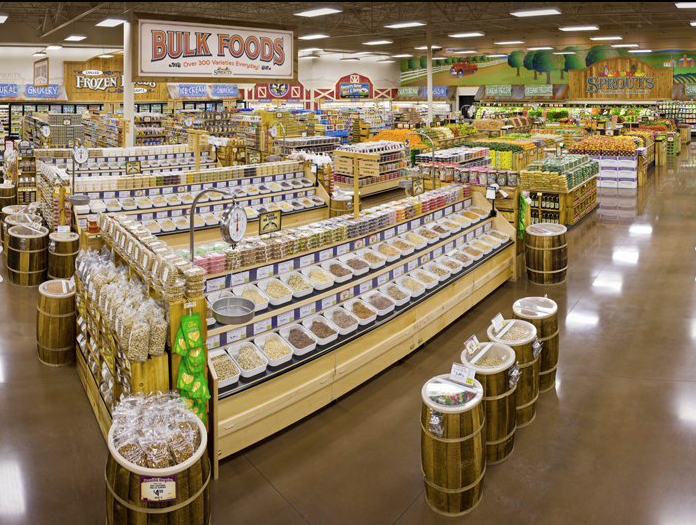
According to the real estate brochure (pictured) and the website for Pacifica Commercial Real Estate and SLO’s Rossetti Company, a 20,000sf Aldi would anchor the new 48,000sf shopping center. The center would also have drug store.

The center’s marketing material suggests some 2000 new homes are expected to be built nearby in the next few years. The Aldi would compete head to head with Von’s across the street.

Luna confirms the grocer likes the location. “We’ve signed  a letter of intent and expect to get our corporate approval for a lease” he explains. With all new construction here, it is likely we will not see Aldi open this year in San Luis Obispo.

Asked if this site wouldn’t cannibalize business from its sister company -Trader Joe’s on Higuera – Luna explains Aldi targets different shoppers with an emphasis on offering the basics and rock-bottom prices vs Trader Joe’s emphasis on specialty products, organics and wine.

Instead, Aldi sees Walmart as a key competitor. Privately-held Aldi along with Trader Joe’s is owned by Germany’s Albrecht family with a world-wide store count of over 10,000. The expect to have some 2,500 locations in the US by 2022, the nations’s third largest grocery store by count. Walmart is number one.

As they move north along the coast, Aldi is simultaneously adding stores in the Central San Joaquin Valley as far north as Fresno / Clovis ( 6 stores), three stores in Tulare County and locations in Hanford and Delano to complement several stores they already have open in Bakersfield. Luna expects 15 to 20 locations in this part of the Valley  several opening this year as well. They are also expanding into Arizona.

Each new store has 15 to 25 employees says Luna.

In Drought-Stricken Central California, Harvard Hopes to Turn Water Into Wine

April 24,2018

From The Harvard Crimson


Few people choose to live in Cuyama Valley.

With a population of less than 1,000 residents, according to the 2010 U.S. Census, the 300-square mile area is home to large, empty expanses of ranch and agricultural land. Less than a foot of water graces the parched earth of Cuyama each year, making the region one of the driest regions of Central California.

Beneath the arid ground, though, there exists great agricultural potential. Cuyama— the Chumash word for “clam”— is an apt analogy for the region. Hardened and seemingly intractable on the outside, it is full of untapped riches underneath. Ever since the region’s oil reserves declined, crops have been king.

Harvard Management Company— the stewards of the University’s $37.1 billion endowment— has positioned itself to benefit from the richness of the region.

HMC has a long-standing history of owning eclectic natural resource assets, including New Zealand cattle farms, timber, and Brazilian sugar canes. Central California—which boasts some of the world’s finest vineyards—has also become part of HMC’s extensive, and little known, asset portfolio.

In the University’s 2013 financial report, then-HMC president Jane L. Mendillo wrote that continued positive returns in the natural resources portfolio “demonstrat[es] the continued potential of this investment area.”

HMC has offloaded some of its natural resource assets after particularly poor performance in this asset class in fiscal year 2016. In 2017, HMC CEO N.P “Narv” Narvekar—who took the helm of the endowment roughly two years ago—marked down the value of natural resource investments by $1.1 billion.

But the company has retained its holdings in California vineyards, and now a number of local residents are questioning the wager Harvard is making in the county.

Since 2012, Brodiaea, Inc.—a Delaware-based company wholly owned by HMC—has spent over $60 million and purchased about 10,000 acres of vineyard land in the Paso Robles region of California. Brodiaea followed that purchase by dipping its toes into Cuyama.

Harvard’s land grab in central California has raised local concern over the University’s water well drilling and its potential impact on the region. With California confronting a water shortage crisis, residents of Cuyama have begun to band together and draft a vision for a more sustainable future—one that may challenge the vineyards Harvard holds.

‘PERFECT FOR AGRICULTURE’

Bounded to the southwest by the Sierra Madre mountains, Cuyama Valley hugs the Cuyama River and spans four counties in California. Once a hotbed for oil production, Cuyama Valley peaked in the early 1950s as California’s fourth most productive oil region. The oil boom also gave rise to New Cuyama—now the most populated city in the region with just over 500 residents. Once the oil began to dry out, though, farmers started tapping the region for agricultural use.

Stephen R. Gliessman, an agroecology professor emeritus at the University of California at Santa Cruz and a farmer in the valley who has challenged the Harvard vineyard’s water usage, said the region experimented with a variety of crops like alfalfa, oats, and carrots. Regardless of the crop, Gliessman said, one issue has persisted across California.

“In reality, the climate is perfect for agriculture—nice long dry summers, mild winters in large parts of the state,” Gliessman said. “The only problem is water. There’s not enough of it.

As the demand for water increased, the Cuyama Valley Groundwater Basin—the sole source of water supply in the region—began to dwindle in size. A 1998 Department of Water Resource study conducted by the state of California found water levels had dropped 150 feet in the west-central region of the basin and more than 300 feet in the northeastern part of the basin in the preceding 50 years. As groundwater levels decrease, growers have been forced to lower wells reaching up to 1,000 feet in depth, the Santa Maria Sun reported.

Recent precipitation data do not offer a bright vision for the future. According to data collected by the Western Regional Climate Center—a government climate research center—New Cuyama has averaged 8.35 inches of precipitation from 1981 to 2010. Between the dry months of April and September, the city sees fractions of an inch in monthly average precipitation.

The rest of California has suffered similarly dry conditions. In Jan. 2014, Governor Jerry Brown declared a drought state of emergency in California that lasted more than three years.

In the meantime, Harvard has not been deterred by the parched conditions in Cuyama. In April 2014, Brodiaea Inc. paid $10.1 million for more than 7,500 acres of vineyard land in northeast Santa Barbara County, making it one of the biggest holders of land in Cuyama Valley.

The vineyard purchase moved local residents to action.

‘NATURE IS GOING TO TAKE ITS COURSE’

Amid the water woes, residents have questioned the viability of Harvard’s vineyards in Cuyama.

Randall Tognazzini, whose family has owned a ranch in the northern part of the valley for decades, said he is unsure about the University’s purchase.

“I would love to see it work,” said Tognazzini. “Nothing would make me happier to see that work there, but I’m just extremely, extremely concerned that this money has been poorly spent there.”

Tognazzini estimated that 800 acre-feet—or nearly 35 million cubic feet—of water may be needed to grow the vineyard per year. That amount, Tognazzini said, may not be sustainable for Harvard’s vineyard project.

“They will make it as perfect as they can, but they can’t guarantee that it’s not going to fail because nature is going to take its course,” he said.

Santa Barbara County Supervisor Das Williams said his constituents are wary of the vineyard’s impacts on the valley.

“Larger agriculturists, and owners, and the townsfolk, and the farmworkers, and the everyday folks—they have very different viewpoints. The one thing they agree on is that they are afraid of the potential impact and uncertainty that the vineyard project poses,” Williams said.

Gliessman said he has heard questions about Harvard’s project since its inception.

“Nobody in our valley could understand why they were doing it, it just didn’t make sense from an environmental or agronomic perspective,” Gliessman said. “Number one, there is not enough water to support more water-intensive agriculture.”

Brenton Kelly, a farmer in the valley and vice chair of the advisory committee to the Cuyama Basin Groundwater Sustainability Agency, said the land has changed significantly since it became a vineyard.

“It’s certainly no longer phenomenal range land with wildflowers and open space,” he said. “It’s many miles of vineyard now, engineered landscape—much like the rest of the valley.”

‘CRITICALLY OVERDRAFTED’

As the valley continues to see its water disappear, its residents have mobilized to preserve it.

In Sept. 2014, California passed the Sustainable Groundwater Management Act, which for the first time provided a framework to manage groundwater use in the state. The act instructed the Department of Water Resources to categorize basins based on groundwater metrics. Basins of either “medium” or “high” priority are required by SGMA to form Groundwater Sustainability Agencies that draft Groundwater Sustainability Plans to manage use.

Jennifer Clary, a manager at the grassroots environmental advocacy group Clean Water Action, said the law will change the landscape for groundwater use in California.

“The main impact of SGMA is that for the first time it’s requiring balanced and sustainable use of groundwater,” Clary said. “The difficulty is that groundwater has always been our fallback supply.”

Cuyama Valley, along with 20 other basins, has earned the classification “critically overdrafted.” This means that, over multiple years, more water is withdrawn from the basin than is replenished, and the depletion could have significant adverse impacts. For basins in critical overdraft, the timeline is accelerated and the sustainability plan must be implemented by Jan. 2020.

The Cuyama Basin GSA, formed in June 2017, comprises representatives from the Cuyama Basin Water District, the counties that hold land in the valley, and the Cuyama Community Services District, which provides water and wastewater treatment to residents living in the New Cuyama area.

The GSA has the power to potentially tax water use, impose restrictions, and fund projects that could increase inflow of water into the valley.

To get a seat on the GSA, property owners in the Cuyama Valley formed the water district, which the county certified in 2017.

“It was partially formed because the large landowners wanted to be in the driving seat,” Williams said.

The special election to form the water district—a group of landowners who will weigh in on water issues—took place in February of last year. The district, which holds a plurality of seats on the GSA, does not include the Harvard-owned vineyard.

Harvard is not represented through the district, but rather, through the counties in which the vineyard lies.

Williams said it was unexpected to see a major landowner like the vineyard owner sitting out of the process.

“We did not anticipate that there would be large entities that didn’t participate with the district,” Williams said, adding he has met with vineyard representatives to ask them to participate directly on the GSA.

“They have come to some meetings, all of the large landowners are paying part of the cost, except for them,” Williams said. “I have asked them to participate voluntarily in the cost, that hasn’t happened.”

HMC spokesperson Patrick S. McKiernan declined to comment for this story.

The Groundwater Sustainability Agency may end up imposing water restrictions on landowners in the valley, Williams said.

And, as one of the most precious resources in the region, restrictions on groundwater could keep Harvard from turning water into wine in Cuyama.

“I do believe that the plan could impose restrictions on groundwater uses. It’s one of the most endangered groundwater basins in the state. It’s very possible,” Williams said.

In early 2016, Santa Barbara County filed a proposal with the Department of Water Resources that seeks to modify the boundary of Cuyama Valley. Their recommendation cites a recent USGS study that suggests that the Russell fault divides the groundwater basin.

The Harvard-owned vineyard has advanced a similar argument. But in June 2016, the DWR rejected the boundary change proposal, which would have split the vineyard away from the critically overdrafted Cuyama Basin.

The ruling placed the vineyard under the purview of the Cuyama Basin GSA, meaning any groundwater sustainability plan the group develops will apply to the vineyard.

Meanwhile, though, to protect its vineyard from frost, Brodiaea is applying for a permit to construct three reservoirs slated to hold over 52 million gallons of water.

—Staff writer Eli W. Burnes can be reached at eli.burnes@thecrimson.com.

—Staff writer William L. Wang can be reached at william.wang@thecrimson.com. Follow him on Twitter @wlwang20.