SLO jobless rate at record low

Screen Shot 2017-12-29 at 10.24.31 AM

December 29,2107

San Luis Obispo registered a record low 2.9 percent jobless rate in November according to the EDD. Since the agency posted numbers from 1990 onward – there has been no month with this low an unemployment rate.

There has been a dramatic decline in the number of jobless in the county, a drop of 21 percent from November 2016. That translates into a decline from 5300 persons in November 2016 to 4200 this November.

Key to the dramatic number is the fact that the SLO labor force has not grown at all( 56,000) year-over-year, while the number of jobs has grown by 1100. Some sources suggest the tight labor market could be tied to high housing costs.

Statewide,California’s unemployment rate fell to 4.6 percent in November and Nonfarm payrolls jobs increase by 47,400.
California’s jobless rate was also at record lows, falling to 4.6 percent in November – a record low in a data series dating back to the beginning of 1976.

In November 2016, the state’s unemployment rate was 5.3 percent.

California has now gained a total of 2,734,800 jobs since the economic expansion began in February 2010.

The U.S. unemployment rate was unchanged in November at 4.1 percent, while the nation’s employers added 228,000 nonfarm payroll jobs.

“The fact that California’s unemployment rate is at its lowest point since 1976 confirms that the state’s labor market reached full-employment in 2017,” said Robert Kleinhenz, Executive Director of Research at Beacon Economics and the UCR School of Business Center for Forecasting. “Nearly all the unemployment at this point is ‘frictional’, or in other words, due to people leaving their jobs voluntarily. As we leave 2017 and enter 2018, growth across the state will be constrained by limited growth in the labor force.”

Back in San Luis Obispo County year-over-year figures show a small rebound of 200 more jobs on farms,6800 compared to 6600.

Among nonfarm jobs we grew by 700 year- over-year, with an increase of 100 seen in non-durable manufacturing (likely software), 100 more in healthcare, 10o in hospitality and a surprising 300 more retail jobs this November compared with last




INTER-PLANTING COFFEE WITH AVOCADO TREES

December 21,2017-

Screen Shot 2017-12-21 at 7.10.15 AMCal Poly Pomona is hosting the “Coffee Summit” — an all-day event in January examining the opportunities and challenges of producing coffee in California, including inter-planting coffee with California avocado trees. California coffee industry leaders from Santa Barbara and San Diego Counties, as well as professionals form the University of California, University of Hawaii and the United States Department of Agriculture will share their expertise with attendees.
Topics include:
• Field trial research examining which coffee varieties are suitable for California production
• Coffee production
• Development of estate coffee
• Inter-planting coffee and avocados
• State of the coffee industry
• Pests and diseases
• Processing methods
• Marketing
The summit will be held on Thursday, January 18, 2018 at the AGRIscapes Agricultural Outreach Center at Cal Poly Pomona, located at 4102 South University Drive, Pomona, CA, 91768. The fee is $75. Interested growers can find more information and register for the event online.

Hearst Castle Visitor Center to be powered by solar

November 7,2017

Hearst Castle State Park is going green when it comes to generating its electricity and offering electric charging stations to visitors.

Facility Manager Tom Kidder says a contractor will install a 607kw solar shade structure in the Visitor Center parking lot, breaking ground as soon as this coming February.

“It will provide 100% of the power needs of the Visitor Center, Office and Maintenance Yard, as was the park’s beach facilities.”

Screen Shot 2017-12-07 at 2.51.02 PMOnce it breaks ground it is expected to be operational within a few months. The state still needs a permit from the Coastal Commission.

Like many other such facilities, the solar units, 1812 of them, will be installed on top of shaded parking canopies that will help cool cars during the hot months as well as saving the park money.

“We are getting a zero cost system” says Kidder, “under a power purchase contract with a company called Ecoplexus who will deliver the power at an annual cost of 11 cents a kwh.”

Kidder notes that the deal will save the state about 1 million dollars over the life of the contract. The park is paying PG&E 15-20 cents per kwh now.

As far as electric cars ,Hearst Castle has just installed 14 units in the parking lot, half Tesla and half standard charging units.

Asked way the state did not apply to supply power to the famous castle itself, Kidder says the net-metering rule requires all properties that are electrified to be contiguous. The visitor complex and castle on top of the hill are miles apart, with private Hearst land in between.

The contract also calls for removal of up to 70 drought impacted non-Native Cypress trees in various states of declining health from the central section of the parking area and replace them with low growing drought tolerant native shrubs; They will also  plant 90 Monterey Cypress, 48 Coast Live Oak and 50 Arroyo Willow trees around the parking lot perimeter to enhance the visual screening on Highway 1 and Hearst ranch; and Install low level lighting on the parking canopies and remove the existing taller, brighter lights to reduce light pollution.

Break in high pressure for Christmas possible

November 7,2017

California could get a break from this relentless high pressure we have been experiencing, spurring those awful wildfires in southern California.

It is two weeks out but preliminary forecasts show a storm system from the Pacific entering the state around December 20- 21 reaching southern California. Even more encouraging is a stronger one follows on the December 23 with heavy rain (colored dark green and blue) hitting mid-California and expected to move into the southland as well.  Pray for rain.

click to enlarge
click to enlarge


Screen Shot 2017-12-07 at 5.53.13 AM


Below these two maps,  here is a forecast for Christmas day that shows good rainfall for northern California and about half an inch or so in SLO /Santa Barbara area.

These long range forecasts are a crapshoot but at least there is some hope.

Screen Shot 2017-12-07 at 6.10.26 AM

Los Osos: Sweet Springs Nature Preserve To Grow To 37 Acres, Maybe More

November 10,2017-

Screen Shot 2017-11-10 at 3.29.57 PM


Sweet Springs Nature Preserve on the bay in Los Osos, is on the grow this year, adding about 8 acres with the opening of Sweet Springs East November 12. This addition, purchased in 2008, will be connected to the original (1989) Sweet Springs Preserve by walking trails.

Also under protection is the marshland to the west of there.  All these lands are now owned by Morro Coast Audubon who manages the popular nature area, open to the public.

But wait (as they say) – there is more.

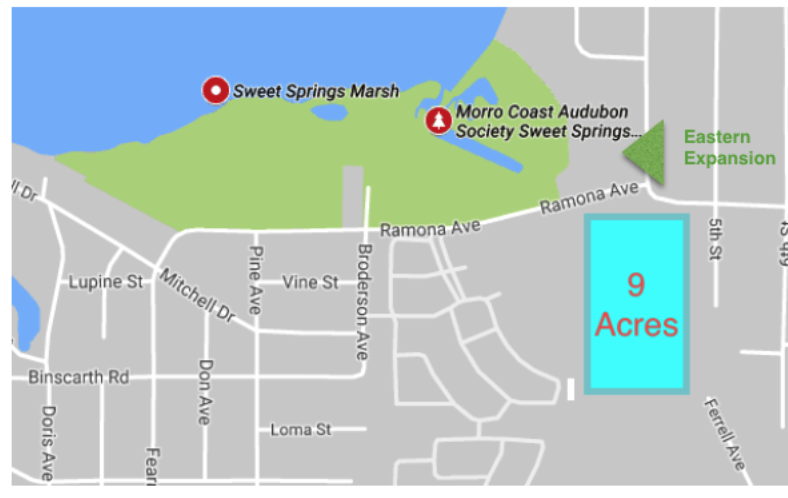
“Audubon now has an agreement with the Land Conservancy of San Luis Obispo County” says Kyle Walsh, LCSLO conservation project manger. The Land  Conservancy earlier this year acquired about 9 acres across Ramona Ave from Sweet Springs, land that had been previously zoned for housing in the future (see map).

Now that land will not be developed.

Sweet Springs General Manger Dave Clendenen says the long range plan is connect the 9 acre parcel to Sweet Springs and establish a network of trails over time with the potential of connecting all the preserve properties to LOVR by trail – perhaps around Ferrell Street (see map).

Screen Shot 2017-11-10 at 3.35.14 PM

Clendenen says the 9 acre parcel while mostly open land, has two groves of trees and “quite a bit of wildlife.”

The 9 acres abuts a 56 acre parcel once identified as a site for the town’s wastewater treatment plant. But, as is well known, that did not happen.

Now the future of the large parcel is up in the air. That property has unofficial walking trails itself that may survive or not depending on what happens with the balance of the land and extent of development.

In addition, Clendenen says Sweet Spring’s managers would love to acquire some smaller parcels down close to the bay, owned by Los Osos  pioneers – the Otto family – mostly wetlands near the north end of the preserve along 3rd street that leads to Baywood.

That could take the total amount of land at Sweet Springs under the Audubon wing to 40 acres – all connected – a key goal of wildlife habitat managers.

Back to the November 12 opening (Sunday, November 12th, 2-4pm -Corner of 4th and Ramona in Los Osos) of the Sweets Springs East expansion – it has taken 10 years to come up with a plan that all could agree on. An earlier proposal to cut down 120 eucalyptus trees was eliminated after vigorous discussion. Then permits were obtained, fund raising was successful and volunteer and professional labor completed improvements. Today we see new plantings and new benches. A path connects a new parking area and entrance to the preserve down to a bayside viewing platform with a 6 ft bird blind, the second bay platform on the preserve.

In September they announced that dogs would not be allowed on the property to protect wildlife and nesting birds, disappointing some dog walkers but now widely accepted.

Before the East Expansion opens, look for a path to connect east with west and the elimination of the chainlink fence to be replaced by a friendlier wooden fence.

SLO Weighs Increase in Bed Tax as Hotel Occupancy Falls

City Lodging Committee Says That Would Hurt Business

November 6,2017-

Hotel occupancy across San Luis Obispo County fell this past August, typically the busiest month of the year for the lodging industry.

Screen Shot 2017-11-06 at 11.38.15 AMAccording to Smith Travel Research (STR) the 8.4% decline in occupancy year-over-year in San Luis Obispo County was at least better than harder hits town like Cambria and San Simeon who saw a drop from 82.8 to 75.6 (-8.7%) in Cambria and 75.4% vs 63% (-16.4%) in San Simeon.

The City of San Luis Obispo saw a drop of 7.2% – 76.6 % occupancy this year compared to 82.5%  in August 2016.

Even booming Paso Robles, not so impacted by Hwy 1 closures, saw a decline from 88% to 76.7% occupancy in August. Both Santa Barbara and Monterey saw a modest drop and California as a whole, fell slightly from 80.7% to 80.2%.

Most of the summer was like that on the Central Coast, statistics shared regularly at the City of San Luis Obispo’s Tourism Business Improvement District Board (TBID).

The city TBID meeting in October heard discussion of the city’s Fiscal Health Response Plan that will be taken up up the SLO City Council in November and December in preparation for the new fiscal year budget next July.

Leaders are under the gun to balance a potential cut in expenses and raising city revenues to pay for what is expected to be a $8.9 million shortfall over the next three years due to rising retirement benefits for city employees.

To help bridge the gap the city would like to raise revenue from an attractive source – visitors. That would include bringing in more sales tax dollars from visitors as well as increasing the tax haul from overnight accommodations, bed tax or transient occupancy tax (TOT).

But how do you do that when fewer visitors are staying here overnight?

Earlier this year City Manager Katie Lichtig reported that in the last fiscal year bed taxes (TOT) grew by 5 percent, a strong year for hotels. But this fiscal year, that growth is 1 percent. An increase in average room rates has led to lowered occupancy and reduced growth, reported Lichtig.

The city is facing some tough realities as less sales tax comes in from brick and mortar stores due to the popularity of internet shopping. As to local hotel stays, more hotels being built and new short-term home rentals further divide the number of overnight stays.
What is a tourism board to do?

According to the SLO tourism board’s October minutes “ The two main items discussed was the support for the collection of the TOT & TBID assessments for all short-term rentals operating within the city and the idea of an increase in TOT as a new revenue source.

The committee stated that TOT & TBID assessment should be collected from all properties operating as short-term rentals and the revenue would be very impactful. Since they are operating as a lodging business within the city – legally or not- they should be paying collecting and remitting all fees and taxes required by lodging businesses in the city.

The committee also discussed their perspective as the lodging industry representatives in addressing the option to increase TOT as a source of new revenue. The committee felt very strongly that the increase in TOT would not be received well by the lodging businesses. They stated that it should become their burden to cover the new revenue and that an increase in their tax rate could likely negatively impact stays in SLO by giving a competitive advantage to other destinations locally that have a lower TOT rate.”

The TBID members “felt like an increase in TOT would directly reduce SLO’s appeal to family and budget conscious travelers. They expressed concern that in raising TOT the city could find that we reduce overnight stays and could potentially reduce the amount of TOT collected – even at a higher rate.”

The city charges a 10% bed tax and collected $6.8 million in the fiscal year 2014-15. The TBID is expected to be reauthorized November 7 at the city council meeting. The TBID board meets again November 8.

Ross & Michael’s Heading For Madonna Plaza

 October 24,2017-
 Screen Shot 2017-10-20 at 9.03.24 AM


    Here is the new retail line-up at the Madonna Plaza

The vacant Sears building in the Madonna Plaza in San Luis Obispo is slated for demolition, to be divided into three storefronts with Ross Stores and Michael’s Crafts to open stores, side by side.

Shopping center owner Schottenstein Property Group filed plans with the city and the proposed project was heard October 16 at the city’s Architectural Review Committee (ARC) meeting.The application was approved.

The proposed redevelopment includes demolition of the existing Sears structure (75,400 square-foot) and construction of a 56,257 square-foot building that provides for three new tenants including one not named.

Starting from the north, next to Petco, Ross would be 22,020 square feet, Michael’s is listed at 21,729 square feet, and Tenant C – 12,508 square feet.

With the closure of Sears this summer in San Luis Obispo as well as the shuttering of the adjacent shopping center anchor – Forever 21 in 2015,  the huge former Gottschalk’s building, the two centers (Madonna Plaza and SLO Promenade) owners have been working to rejuvenated the properties at a time when brick and mortar retail is downsizing.

So perhaps it is not surprising that the re-tenanting of Sears is looking like a shuffling of retailers already in town to the Madonna area.

Relocation Plans?

Asked if Ross and Michaels will likely shut down their existing location to make a move next year – Michael’s General Manager in San Luis Obispo, Brett Oliver, says he has been told they will relocate ”probably in about a year” he says. Oliver says the craft store in the Von’s center has 35 to 40 employees now and that the business is doing well.

”It’s exciting that we will move“ he adds. Arguably, the new location is a shopping center with more regional draw than the neighborhood Von’s center on Broad in the far north part of town.

The manager at the SLO Ross store Downton says he has not been told if the company will relocate or open a second store. Ross Stores does have a sister store, DiDi’s Discounts, that is not currently in SLO and could theoretically take one of the spots.

Located the far end of the Madonna Plaza, these two popular retailers,Ross and Michaels, draw good traffic and that should help bring more visitors to the Madonna Plaza/SLO Promenade shopping centers.

That is likely good news the may help fill several additional empty spots in the two connected centers that some have argued – because of the retail downturn nationwide – have lost their mojo in recent years.

Local commercial realtor John Rossetti says Sears had been paying a very low rental rate for years allowing the shopping center owner to re-lease the space at an improved return even with the retail downturn.Large spaces like those  that Sears and Gottschalks had, are out and 20,000 square foot spaces are in.

Around SLO: Jobless Rate Down Again / Hotel Occupancy Slides Here

October 22,2017-

The unemployment rate in the San Luis Obispo County was 3.6 percent in September 2017, down from a revised 4.3 percent in August 2017, and below the year-ago estimate of 4.1 percent. This compares with an unadjusted unemployment rate of 4.7 percent for California and 4.1 percent for the nation during the same period. SLO’s jobless rate is down over 12% from a year ago. The September report show hospitality jobs have climbed in the county  by 700 over the past year.

The September unemployment rate this year- 4.3% – is the lowest Sept number since September 2006 when it was 3.6%

Screen Shot 2017-10-22 at 8.18.03 AM

Highway 1 Closure Seen in SLO Tourism Stats

Hotel occupancy was down countywide in SLO County overall in July 2017 vs July 2016.The number show an 85% occupancy vs 85.9% a year earlier.

But Cambria was down more than 2% and San Simeon occupancy was down to 73% – more than 12% lower.Morro Bay was down by 1.3%

El Pollo Loco Coming To SLO

October 21,2017-

Screen Shot 2017-10-22 at 7.27.56 AMThe company was launched in Sinaloa Mexico in 1975.  Maybe that’s why El Pollo Loco (the crazy chicken) faire – ie, grilled, not fried chicken – taste authentically Mexican.

The company says its chicken is “citrus-marinated and fire-grilled.” They also offer other typical Mexican-style food.

Headquartered today in Costa Mesa, California, El Pollo Loco is now publicly traded, under the loco symbol. The chain has changed hands several times but now has grown to over 400 company-owned and franchised restaurants in Nevada, Arizona, Utah, Texas, and California.

Of course there are plenty of fans in San Luis Obispo who have pined for a location in town with the closest store in Paso Robles where they can get approval for a drive-thru.

Similar to SLO residents frustration over not getting an In-N-Out Burger location because of the city’s ‘no drive-thru’ rule, our long wait is apparently over when it comes to El Pollo Loco.

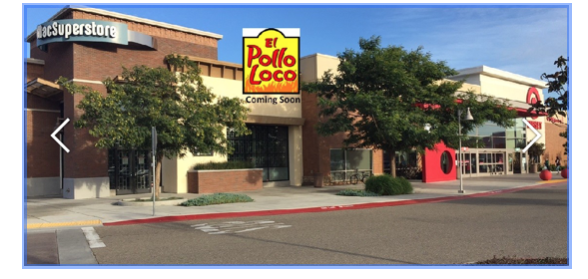
The company has signed a lease to take part of vacant space, about 2500sf, in the Target shopping center where the former Mac Superstore had been – on Los Osos Valley Rd.  Another 2700sf is still for lease next door, listed by the Rossetti Company in SLO.

Broker with Rossetti Co, John Hans, says he expects the restaurant could open by the end of the first quarter of 2018 after they get all permits and they remodel the space.

There will be plenty of parking but no drive-thru, so you will just have get out of your car like they do in Santa Barbara where the eatery has a walk-in only store on State Street.

“Some of the companies who say they won’t come here now because of the ‘no drive-thru’ rule will just have to get used to the restriction” if they want to be in our market, expects Hans

Morro Bay Picks Site For Sewer Plant

September 27,2017-

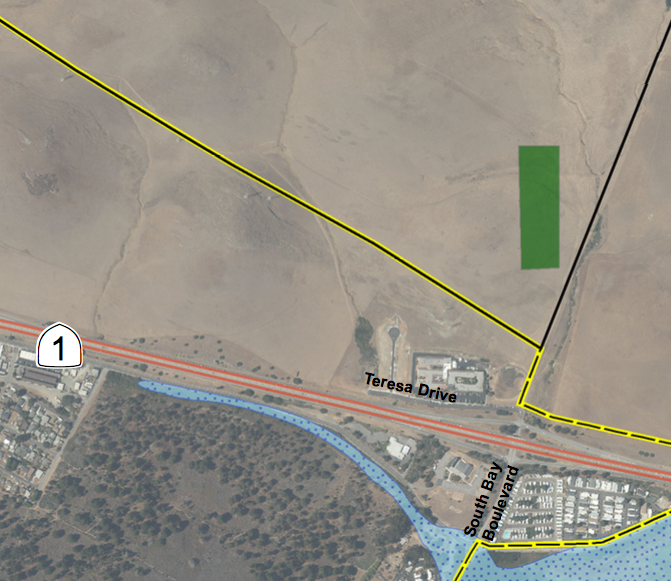
Screen Shot 2017-09-27 at 4.32.41 PMDespite a high price tag, the Morro Bay City Council this week selected the South Bay Blvd site near Highway 1 as the preferred location for the new wastewater treatment plant. The project site – just over the hill to the north of the South Bay/Highway 1 interchange, would be most costly at $150 million.This site was selected by the City Council in June 2016 as the focus for the project, and a draft Facility Master Plan was prepared in November 2016 that could be used as a basis for design and budgeting for a project at that location.

The council in a special meeting Tuesday narrowed the choice to this one from 5 sites including one near the current WWTP location next to the ocean. The five ranged in price from $124 million to $150 million.

Here are the pluses and minuses of the chosen location as outlined in the city staff report including strong support from the California Coastal Commission (CCC).

California Coastal Commission: CCC staff has been generally supportive of this site. City staff kept CCC staff apprised of progress on the project as the draft FMP was developed during 2016. CCC staff has not raised significant concerns with this location in discussions. With respect to permitting, they have been supportive of the concept of working with San Luis Obispo County on a Coastal Development Permit (CDP) based on the County’s LCP, since the site is currently in an unincorporated area. CCC staff confirmed this perspective at a conference call meeting on September 19, 2017.
CCC provided correspondence to the City Council dated July 11, 2017. Although it did not address the South Bay Boulevard location in that letter, CCC staff strongly encouraged the City to continue on the path it has been following to relocate the project away from the existing Wastewater Treatment Plant (WWTP). A new facility at the South Bay Boulevard site would be consistent with recent CCC direction.
City staff met with CCC staff on August 8, 2017 to discuss the WRF project, particularly with regard to CCC staff’s concerns expressed in their July 2017 letter to the City Council. The South Bay Boulevard site location was not the focus of that meeting, but CCC staff reiterated the concerns with shifting the focus to a site near the existing WWTP.
San Luis Obispo County. County staff has been supportive and collaborative relative to moving forward at the South Bay Boulevard location. They concur with CCC staff that it would be appropriate for the City to obtain a Coastal Development Permit for a project at this location. County staff does not anticipate substantial concerns with this process.
Regional Water Quality Control Board. Regional Board (RWQCB) staff has not focused on suitable sites as much as achieving their broad overall objectives: 1) to protect water quality; 2) to encourage a strong water reclamation component; and 3) to achieve these goals as quickly as possible. RWQCB Staff has been supportive of the City’s efforts at this site, and has coordinated closely with City staff throughout the process.
The RWQCB provided correspondence to the City Council dated July 11, 2017. Although it did not address the South Bay Boulevard location in that letter, RWQCB staff strongly encouraged the City to move forward as quickly as possible, and expressed concern that shifting focus to a new site could result in further delays that would hinder the attainment of their key objectives related to water quality and reclamation. RWQCB staff also provided testimony at the July 11 City Council meeting consistent with their letter of the same date.
Key Opportunities
Potential development on the South Bay Boulevard site presents several key opportunities, many of which are described in detail in the May 2016 Report on Potential WRF Sites. Others are drawn from more recent regulatory agency input, public outreach, or from the draft Facilities Master Plan and related technical studies. In summary, these include the following:
Facility Master Plan Has Been Prepared. One important consideration for this site is that a draft Facility Master Plan (FMP) has already been prepared, which takes into account the various physical opportunities and constraints associated with this location. The draft FMP is also based on detailed recent technical studies related to biological resources, cultural resources, and geotechnical issues. From a technical perspective, the FMP has been vetted by the WRFCAC and City Council. With some minor refinement, it can be used as the basis for the Environmental Impact Report (EIR) to further examine potential impacts associated with its implementation. This represents a likely time and cost savings relative to other sites, if only the planning effort is considered.

Far From Existing Residential Uses. The City has already conducted extensive outreach related to this site. Development at this location would neither be near nor visible to any offsite residents, and there are no homes on the site itself. The nearest residents live within Casa de Flores, a senior residential complex roughly 1,200 to 1,600 feet to the south, which is visually blocked by intervening topography. Outreach related to this site conducted in 2016 suggests that compared to other locations closer to residential neighborhoods, there would likely be less controversy or opposition as the project moves forward through the design and CEQA process. It could also reduce cost for architectural features and screening since it will be less visible.
A Large Site Providing Design Flexibility. As identified in the draft FMP, the most developable area is a gently sloping 15‐acre site, sufficiently large to allow some degree of design flexibility, particularly if no corporation yard is to be considered.
 Relatively Free of Coastal Commission Resource Concerns. The location shown in the draft FMP on the site is relatively free of issues that would be of potential concern to the Coastal Commission. It not visually prominent from Highway 1, nor does it include prime soils. It may also be possible to avoid onsite drainage features and any potential Environmentally Sensitive Habitat Area (ESHA) associated with them.
Site Acquisition is Straightforward. In 2016, the City entered into a Memorandum of Understanding (MOU) to purchase the necessary portion of the site. The MOU does not commit any City financial resources unless it purchases the needed portion of the site.
 Potential for Land Conservation. Only a portion of the roughly 28 acres addressed in the MOU would be needed for the WRF. The City could explore the potential to work with land trusts to preserve some or all of the remainder of the site that would be purchased in open space, agriculture or some other similar passive use in perpetuity.
Longer Pipeline Route but Fewer Complexities. The pipelines are longer than those to the other sites under consideration, but can be generally constructed within City rights‐of‐way with the exception of the Highway 1 freeway crossing. This requires significantly less coordination with Caltrans than constructing a pipeline along the Highway 41 corridor, particularly with respect to the Righetti site. It also will avoid the cultural resource sites identified along Highway 41 associated with that site. In addition, pipeline construction could be phased with planned repaving of streets or other capital improvements to reduce cost.
Key Constraints
The key constraints facing development at this location include:
Relatively Higher Cost. Development of a WRF at this site would be relatively more expensive than any other site now under consideration. Refined cost estimates described earlier in this report suggest that project costs would be 8 to 21% higher than at any of the other locations considered in this report, depending on the location.
Farther from Most Reclamation Opportunities. The site would be farther from the most promising reclamation opportunities identified in the draft Master Water Reclamation Plan (MWRP), including groundwater recharge into the Morro Valley aquifer to provide indirect potable reuse. While reclamation can be achieved at this location, the greater distance contributes to the higher cost estimate.

Farther from the City’s Existing Wastewater Collection System. The site is located about 2.4 miles from the existing treatment plant (the hub of the City’s wastewater treatment infrastructure network) and the ocean outfall. This distance is farther from the City’s existing wastewater infrastructure than any other site under consideration, which will increase relative potential construction and energy costs for the conveyance of raw wastewater.