How Sites Reservoir could help

-July 8,2022-

from Ag Alert

Fritz Durst is a Yolo County farmer and chairman of the Sites Joint Power Authority

Screen Shot 2022-07-08 at 7.29.58 AMCalifornia’s current water infrastructure was not designed with current or future climate conditions in mind. In recent years, the West Coast experienced a series of atmospheric river events. These storms produced powerful runoff in the Sacramento River that overtopped the flood control system, causing tremendous flooding and significant damage throughout Northern California.
It is these periods of large rainfall and runoff that we need to better capture. This is where Sites Reservoir comes in.
There is no existing infrastructure in place to capture and store excess water flows from the Sacramento River when they happen. Had Sites been in place during storm events since 2017, many flood impacts could have been avoided, and the reservoir would have stored nearly 1 million acre-feet of water to help mitigate impacts of today’s difficult drought.
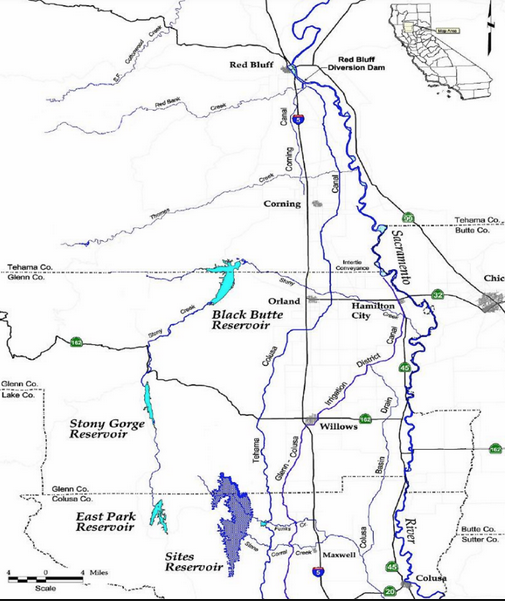
Sites Reservoir will be a multi-benefit, off-stream water storage facility located north of Sacramento in rural Colusa and Glenn counties. The reservoir will serve to capture and store stormwater and flood flows in the Sacramento River after all other water rights and regulatory requirements are met.
With a capacity of approximately 1.5 million acre-feet, Sites can store the excess stormwater without the need to dam any major rivers. Extensive modeling indicated Sites performs best and provides even greater water supply benefits to farms, people and the environment of California, under even the most challenging climate change scenarios.
Water storage flexibility is the reason Sites works well for so many varied participants. The water reserved for the environment will be managed by the state through its investment under Proposition 1, the 2014 water bond approved by California voters. The water can then be used for environmental purposes when it is needed.
The reservoir’s storage flexibility, working in concert with our existing water management systems, could also help us respond more rapidly and in an adaptive fashion to the changing hydrologic conditions and the changing needs. This becomes a win-win for the environment and statewide water operations.
The Sites Project team has made considerable progress over the past several years. We achieved critical funding objectives, including an invitation to apply for a $2.2 billion Water Infrastructure Finance and Innovation Act loan. This low-interest loan will cover half of the project’s cost. This is in addition to $875 million in Proposition 1 funding and a $449 million U.S. Department of Agriculture loan.
Our goal is to begin construction in 2024, and we are closer than ever to final approval on the project.

Kaweah Health budget projects $11.2 million loss

-July 7,2022-

Screen Shot 2022-07-07 at 9.15.53 AMVISALIA, CA –Like other hospitals across California, the Kaweah Delta Health Care District (Kaweah Health) Board of Directors has approved their 2023 operating budget with an operating loss for the coming fiscal year – the first time in Kaweah Health’s history. The new budget, which becomes effective July 1, projects an operating loss of $11.2 million for the fiscal year and it comes on the heels of a projected $17.9 million, COVID-driven operating loss for the fiscal year that ended June 30, 2022 ($35.8 million operating loss less $17.9 million in provider relief funds received from the CARES Act and American Rescue Plan Act). Despite the financial challenges, the Board and CEO say they are holding firm on providing annual employee pay increases and are unwilling to reduce employee benefits or to limit access to care.

“We are a compassionate and grateful organization. We want to continue to be a great place to work and we want to continue to attract and retain the very best employees to care for our community. The South Valley is already underserved medically, and we decided against closing services and further reducing access to care, even if some of those services lose money,” said Gary Herbst, Kaweah Health’s Chief Executive Officer. “While we have cash reserves to cover a bad year or two, it reduces our ability to invest in facilities and equipment, as well as our ability to borrow money. These losses are not sustainable in the long term.”
Kaweah Health is not alone. More than 51 percent of California hospitals are losing money. According to a recent study conducted by national consulting firm Kaufman Hall, California hospitals lost more than $20 billion in 2020 and 2021 due to COVID. These losses were only partially offset by $8 billion in Federal provider relief funds.

Around Kings County July 7

Lemoore shows they way on gas prices

Screen Shot 2022-07-07 at 9.00.24 AMCan anybody do something about these gas prices? Let the gas merchants in Lemoore run the show.Lemoore’s Fastrip is the cheapest station to buy gasoline in all of California at $5.21 gallon as of July 6. Gas prices across the US have dropped in the past week.

UPDATE: July 9- Yokut Gas is the new state low price leader today at $4.89 a gallon!

As of July 6 crude prices are down to $98 a barrel compared to a high of $120 a barrel just a few weeks ago. Chevron’s posted crude oil price in California has dropped into the $90s this week for the first time since February.

GasBuddy says the latest Energy Information Administration data says gas demand currently sits at 8.93 million b/d, which is lower than last year’s rate of 9.11 million b/d at the end of June. On the other hand, total domestic gasoline stocks increased by 2.6 million bbl to 221.6 million bbl. These supply/demand dynamics, along with decreasing oil prices, have pushed pump prices lower. If these trends continue, drivers will likely continue to see lower prices at the pump.

Now there is some relief from Sacramento.

Diesel fuelers will catch a break from the state’s sales tax as of October. Suspension of the state diesel tax will save about 23 cents a gallon. As for gasoline users twenty-three million Californians will benefit from Sacramento direct payments of up to $1,050. The tax refunds would be distributed starting in October.
The Kings EDC says Buttonwillow Warehouse Co in Corcoran continues to expand.The family-owned business has more than 50 years of experience serving California growers. BWC arrived in Corcoran in the year 2000 with a purchase of a grain warehouse in the Corcoran Industrial Park along the BNSF Railway. Since that time, they have purchased the CDR and Homac Buildings, and purchased the Mercury/Seward Building in the past year adding over 150,000 s.f. to their Corcoran holdings and increasing their employment significantly.

Kings EDC president Lance Lippincott says Kings Country is a finalist in plans to locate a large anaerobic digester project in the Valley and the company is scouting for locations here now.Statewide, studies indicate that California could produce almost 300 billion cubic feet of renewable natural gas per year from organic waste, enough to replace 75 percent of all the diesel fuel used by motor vehicles in California.

Following the$ 97.5 billion state budget surplus, California lawmakers last week agreed to spend $4.2 billion in bond funds needed to finish the ambitious high-speed rail project’s 171-mile Central Valley portion which is expected to connect Bakersfield with Merced through Hanford by 2030, according to the agency’s current estimates.

Eagle Mountain casino sets December opening

from the Porterville Recorder

July 7,2022-
Screen Shot 2022-07-07 at 8.44.00 AM Screen Shot 2022-07-07 at 8.43.12 AMEagle Mountain Casino has set the first week of December for its opening of its new, relocated casino near the Porterville Municipal Airport.
Eagle Mountain Casino Matthew Mingrone said last week on the Ralph Bailey Show which aires on KERN Radio, 1180AM-96.1 FM about the casino “we are going” to open the first week of December. Mingrone was on the show to also announce Eagle Mountain was donating $5,000 to the Honor Flight Program which provides veterans a chance to visit Washington, D.C.
Eagle Mountain has partnered with Bailey every year in his Honor Flight fundraising campaign. This year Bailey is seeking to raise $60,000 for the Honor Flight program. Over the years, Eagle Mountain has donated more than $300,000 to the Honor Flight Kern County and Central Valley Honor Flight programs.

In talking about the new casino, Mingrone said the casino was also preparing for the likely eventuality that sports betting will become legal in California. “The casino is preparing for any outcome of the November election,” Mingrone told Bailey. “We want to have as many amenities that we can offer our guests, no matter what it might be.”
“We’re making the plan,” added Mingrone about offering sports betting.
There are two initiatives that would legalize sports betting for the state’s voters to consider on the November ballot and will determined just how much control the Native American tribes have over sports betting
The initiative supported by Native American tribes would only allow in-person sports betting at tribal casinos and horse racing tracks on tribal land.  A 10 percent tax from this measure would go to pay for enforcement of gambling laws and to help people who are addicted to gambling.
Online sports betting wouldn’t be allowed and major sports betting companies like DraftKings and FanDuel would be blocked by the measure.

But major sports betting companies like DraftKings and FanDuel crave the large California market and have been able to place another measure that would not only allow sports betting at tribal casinos but on phones as well.
A tax would pay for the regulatory costs for phone usage. After that, 85 percent of tax revenue would go to combatting homelessness.
If both of the initiatives pass in November, the one that receives the most votes would go into effect.
As far as what the new casino will offer, the casino will for the first time serve alcohol. The casino will have a sports bar with 24 different kinds of beers and the casino will have a large center bar that will serve alcohol as well.
In addition the casino will have a digital hybrid version of craps. The casino will have a 2,000-seat event center as well. There is not currently a place locally that can hold as many guest as the new casino will be able to.
The casino will have more than 1,750 slot machines and 20 tables and will incorporate the Tule River Tribe’s culture throughout the casino.
Mingrone also told Bailey stages II and III, the construction of a hotel and convention center, is set for 2023-2024.

Biz & ag news roundup

-June 23,2022-

Avenal plans vote on sales and cannabis tax
Screen Shot 2022-06-24 at 8.48.57 AMThe community of Avenal is planning a November ballot vote on an increase of 1% in sales tax as well as a measure to tax cannabis sold in the city. The cannabis tax would require the city to allow dispensaries in town, not permitted now. A general sales tax increase would generate between $400,000 and $500,000 annually, indefinitely they say.

As to a cannabis tax, a staff report said “The closest comparison staff felt comfortable utilizing is Coalinga, which in FY 2021-2022 projected $1.2 million in revenues, but in years prior from 2018-2020 had averaged between $450,000 – $800,000.”

The deadline to approve a tax ordinance will be by the July 14, 2022 regular City Council meeting.

An earlier staff report said “While the City continues to manage with the funding that it has, general fund revenue growth has not kept pace with the increasing costs of providing services to a growing population and inflated prices

The City’s main sources of revenue are property taxes, sales taxes, DMV fees, and any building and services fees.

The City has the lowest per capita revenue in the County, has a little less than half the national average of police officers per capita for a City our size (18 full time positions to 34 national average), is amongst the lowest paying City employer in the County for most positions (and as such has difficulties retaining employees), and has infrastructure concerns for its buildings, park, roads, sidewalks and public facilities. There are new services that community members expect, that the City does not and cannot provide.”

 
Western Milling sold – expansion in Hanford underway
Western Milling with feed mills in Goshen, Famoso and Hanford has sold the company to Viserion Milling says former owner Kevin Kruse.Kruse says the sale did not include the Perfection Pet Food division with a big plant in Visalia that will be retained. Otherwise operations will stay the same with employees retaining their jobs.

Kruse adds that current Valley expansions underway will move forward including doubling the track at the Hanford yard enabling dual unit-trains each with 100 cars to be serviced. Also the Famoso mill will expand its manufacturing capacity.
Viserion International is a global agricultural merchant based in Boulder, Colorado.


Gas prices fall /oil takes tumble

AAA says gas prices in Kings County dropped 8 cents in the past week to $6.18. Yokut Gas is selling today for $5.59, 5th cheapest gas in California. At deadline – June 22 noon- oil prices had taken a tumble hitting their lowest levels in a month from $120 a barrel a few days ago to $106.The drop is amid mounting concerns that rising US interest rates aimed at curbing soaring inflation would cause a recession and slowdown in oil demand.In the first full week of June, gasoline sales were down 8.2%, the 14th consecutive week of lower demand.

Kings River farmer pioneers recharge

Don Cameron sparked curiosity in 2010 when he began a multi-phase project intended to capture floodwater from the Kings River during rainy seasons.
The effort, supported by state grants, unfolded as a grand experiment, as the diversified Fresno County grower flooded his permanent plantings—including pistachios and vineyards—to such an extent that they soon rested in several feet of water.
To Cameron’s relief, those plantings survived relatively unscathed. As the water percolated down, the aquifer water table rose significantly, increasing nearly 40 feet in a single year.
In drought-parched California, with surface-water reservoirs badly depleted these days, storing groundwater is becoming a norm in California agriculture. It is viewed as a key tool to help sustain farming in times of diminishing resources.
Local agencies throughout the state must bring their aquifers into balance under the 2014 Sustainable Groundwater Management Act. As urgency builds, farmers are looking at myriad ways to store water beneath their feet.
Cameron, now president of the California State Board of Food and Agriculture, said sinking excess water on empty fields or in orchards gives the state’s farmers additional insurance against reduced snowpack, shrinking runoff and intense droughts interrupted by periods of volatile precipitation.
Sinking available water means it can be pumped out later, like making banking deposits and withdrawals.
“We are on the front lines of climate change,” Cameron said. “We see the changes in the weather before anyone else because it affects our crops. There is no happy medium anymore when it comes to rain events.”
Cameron has become a leading endorser of what is now known as on-farm recharge, or OFR. The program involves filling dedicated recharge basins or ponds, directing water to unlined canals and riverbeds, injecting it through wells, and using surface water supplies—when available—to avoid pumping.
Interest is growing in spreading water on productive and fallowed fields, in natural landscapes or in permanent plantings.
“Even though our groundwater has been over-pumped, it has created space to store water underneath our feet,” Cameron said during a recent tour of his 6,000-acre Terranova Ranch.
Groundwater is a major part of California’s water supply, providing close to 40% during wet years and up to 60% in dry years.
“On-farm recharge is the lowest cost option, and it’s highly expandable and flexible,” said Philip Bachand, an environmental engineer who designed Cameron’s project and is working throughout the state on other recharge systems. He added, “You don’t have to do much to your land; you just have to manage it.” –From CFB

May Milk Production in California down 1.7 percent from May 2021

Demand is good but milk supply is down this year. USDA reported that milk production during May totaled 3.659 billion pounds, down 1.7 percent from May 2021 and up 1.2 percent from April 2022. The number of milk cows on farms in California was 1.722 million head, up 3,000 from May 2021 and unchanged from April 2022. Production per cow in California averaged 2,125 pounds, down 40 pounds from May 2021 and up 25 pounds from April 2022.

Neonicotinoid insecticides have broad reach, says EPA

Three widely used neonicotinoids are likely to adversely affect, in at least some way, most of the threatened and endangered species in the country, said the Environmental Protection Agency on Thursday. It said it was consulting with wildlife agencies about whether the insecticides,used on Valley crops like grapes and pistachios, were likely to jeopardize the species’ survival or damage their habitats.

The Environmental Protection Agency released final biological evaluations today confirming that three widely used neonicotinoid insecticides likely harm roughly three-fourths of all endangered plants and animals, including all 39 species of amphibians protected under the Endangered Species Act.

State action

Earlier this year in an effort to reduce risks to bees, the California Department of Pesticide Regulation filed an official notice of rulemaking as a first step in the regulatory process to limit how and when neonicotinoids can be used in agricultural settings.

Neonicotinoids are a group of insecticides that are widely used as an alternative to chlorpyrifos, which DPR banned in 2020.At certain levels of exposure, neonicotinoids present risks to pollinators. DPR’s proposed regulations are based on extensive scientific studies and would create new requirements and restrictions for the use of neonicotinoid products containing any of four active ingredients: imidacloprid, thiamethoxam, clothianidin and dinotefuran. DPR estimates the regulations will impact 57 products currently registered in California and will reduce the amount of neonicotinoids applied across the state by approximately 45%

The EPA’s assessments of clothianidin, imidacloprid and thiamethoxam marked the first time the agency has completed biological evaluations of any neonicotinoids’ harms to the nation’s most imperiled plants and animals. Species found to be harmed by all three of the neonicotinoids include rusty patched bumblebees, whooping cranes, chinook salmon, northern long-eared bats and orcas.

Roundup loses latest court ruling

“EPA’s determination that glyphosate was not likely to be carcinogenic was not supported by substantial evidence,” said a 9th Circuit appellate court ruling this month. The court ordered the EPA to review the chemical known by Roundup that has been blamed by some to cause cancer. The Trump era EPA had ruled that glyphosate “does not pose ‘any unreasonable risk to man or to the environment.” The chemical’s maker Bayer has said they would end sales of Roundup for lawn and garden use in 2023 in response to lawsuits.

Neonicotinoid insecticides have broad reach, says EPA

-June 19,2022-
Screen Shot 2022-06-19 at 6.51.15 AMThree widely used neonicotinoids are likely to adversely affect, in at least some way, most of the threatened and endangered species in the country, said the Environmental Protection Agency on Thursday. It said it was consulting with wildlife agencies about whether the insecticides,used on Valley crops like grapes and pistachios, were likely to jeopardize the species’ survival or damage their habitats.
 
The Environmental Protection Agency released final biological evaluations today confirming that three widely used neonicotinoid insecticides likely harm roughly three-fourths of all endangered plants and animals, including all 39 species of amphibians protected under the Endangered Species Act.
 
State action
 
Earlier this year in an effort to reduce risks to bees, the California Department of Pesticide Regulation filed an official notice of rulemaking as a first step in the regulatory process to limit how and when neonicotinoids can be used in agricultural settings.
 

Neonicotinoids are a group of insecticides that are widely used as an alternative to chlorpyrifos, which DPR  banned in 2020.At certain levels of exposure, neonicotinoids present risks to pollinators. DPR’s proposed regulations are based on extensive scientific studies and would create new requirements and restrictions for the use of neonicotinoid products containing any of four active ingredients: imidacloprid, thiamethoxam, clothianidin and dinotefuran. DPR estimates the regulations will impact 57 products currently registered in California and will reduce the amount of neonicotinoids applied across the state by approximately 45%

 
The EPA’s assessments of clothianidin, imidacloprid and thiamethoxam marked the first time the agency has completed biological evaluations of any neonicotinoids’ harms to the nation’s most imperiled plants and animals. Species found to be harmed by all three of the neonicotinoids include rusty patched bumblebees, whooping cranes, chinook salmon, northern long-eared bats and orcas.
 
“These deeply troubling findings leave no doubt that these dangerous pesticides are silencing the songs of frogs, the flutter of butterfly wings and the buzz of bees,” said Lori Ann Burd, environmental health director at the Center for Biological Diversity. “Many of the species harmed by neonicotinoids are experiencing precipitous declines, and this EPA’s choices may well determine whether or not they go extinct.”
 
Neonicotinoids, which are banned in the European Union, are the most popular insecticides in the United States. Hundreds of studies have shown they play a major role in population-level declines of bees, birds, butterflies and freshwater invertebrates. More recent studies are showing they cause significant harm to mammals as well.
The biological evaluations released today found that 67% of all endangered species — 1,225 different plants and animal species — are likely to be adversely affected by clothianidin and that the pesticide will likely adversely modify the designated critical habitats of 446 species.
 
For imidacloprid, 1,445 species, or 79% of all endangered plants and animals, are likely to be adversely affected. The pesticide will likely adversely modify the designated critical habitats of 658 endangered species.
 
Thiamethoxam was found to likely adversely affect 1,396 species, or 77% of all endangered species. The pesticide will likely adversely modify the designated critical habitats of 644 species.
Attachments area

April storms boost mid-state storage – offers relief for Friant contractors

 In praise of atmospheric rivers

-June 19,2022-
Unlike much of the state, reservoirs in the middle of California around Sacramento are near 100% of capacity this month despite California’s extreme drought.
 
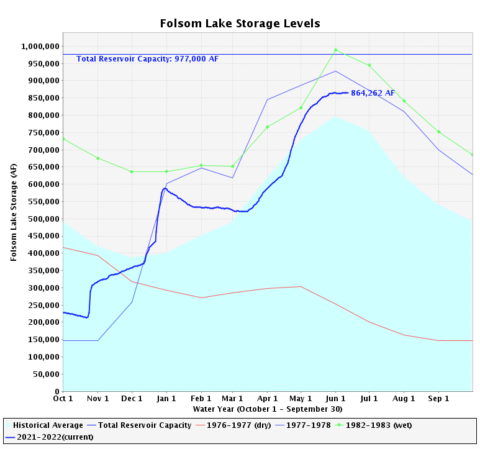
Screen Shot 2022-06-13 at 4.56.24 PMCase in point is the million-acre Folsom Reservoir that thanks to a few soaking storms went from 550,000AF in late March to 864,000AF by mid-May.That is 88% of capacity. Last year at this time Folsom held just 364,000AF.
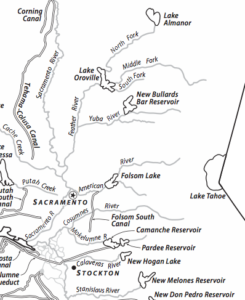
 
This spring’s boost was based on a couple of Atmospheric River (AR) storms that blew into the state targeting the Tahoe area in a limited band ranging from the Feather River north of Sacramento to the Stanislaus just north of Modesto. An AR is a narrow corridor of concentrated moisture in the atmosphere – in our case coming off the Pacific.Screen Shot 2022-06-14 at 6.13.06 AM
 
The ribbonlike storms did not help storage to the north at giant Shasta reservoir (40% of capacity today) or south of Modesto at dams like Pine Flat (62% capacity) near Fresno. Lucky the Central Valley Project (CVP), designed in 1933, can store and move water from 20 dams from north to south along the 400-mile conveyance system.
 
Boaters who frequent Folsom Lake are happy this year. Drew Lessard – area manager for the Bureau of Reclamation stated to local media “Things were looking pretty bleak on the American River and for Folsom up until April when we ended up having an above-average precipitation month.”
 
Turns out the cold storms will benefit more than weekend warriors around Sacramento. Since the Central Valley Project is tied together under Bureau of Reclamation management, farms in Tulare and Kern counties will see benefits for their water supply this summer. It’s just how the CVP system is supposed to work.
 
“Some spots got 9 inches in 24 hrs along the American River” says Tulare County water expert Dennis Keller, a Friant Water consulting engineer.The additional supply has helped the Bureau make a call this month that will allow Friant Water Authority to halt releases down the San Joaquin River that benefit the Exchange Contractors, ending the draining of the snowpack fed supply behind Friant Dam. 
 
When the federal government built the Central Valley Project in the 30s, it took San Joaquin River water from the current users around Los Banos, relocating the supply south, using the 1950 built Friant-Kern Canal to water a million acres of farms from Fresno down to Arvin in Kern County. This 150 mile canal boosted the farm economy along the east side of the Valley that otherwise faced a bleak future without this reclamation project that altered the course of rivers.
 
But to keep the farmers along the San Joaquin River north of Fresno whole, the Bureau promised to deliver water from north of the Delta to the so-called ‘Exchange Contractors’ who gave up their San Joaquin River supply in exchange for water from the Bureau typically delivered over the course of the summer from Shasta. 
 
More latitude
 
But in some years there isn’t enough water in the Bureau’s CVP system to do a 100% exchange and there have been times, like 2014,  that the Friant Kern Canal has carried zero supply from the snowpack in Friant’s own backyard due to a Bureau allocation decision. That 2014 decision was supported by a court ruling this month.
 
But this water year the Bureau has more latitude.
 
“The Folsom supply should firm up our already declared 15% supply” says Keller and possibly increase it so the region’s farms and cities can count on at least 120,000 acre/ft for their water supply and irrigation plans this hot summer. Some 15,000 farms south of Fresno can exhale just a little.

“Water Farm” for one of Valley’s driest spots – Allensworth

-June 9,2022-

Screen Shot 2022-06-05 at 6.38.08 AMAt one time Allensworth in southern Tulare County sat at the edge of Tulare Lake and enjoyed springs of artesian well water. A bright future was envisioned for this African American community. But that never happened. Then in 1966, the State of California discovered high levels of arsenic in the drinking water. Most residents left but 34 families remained, leaving Allensworth all but a ghost town.Now like other land around Corcoran, farmland around Allensworth is sinking from overpumping of groundwater by farmers in the region.

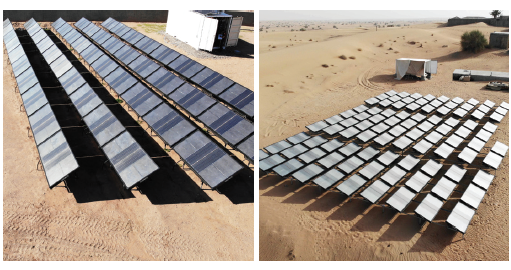
pictured: panels produce water

Lack of clean water has affected the future here. It will be 106f this week in town and everything is drying up.

Now an Arizona company wants to build a “water farm” that could provide clean drinking water pulled from the air.

The severity of the drought has pushed Californians to experiment with all kinds of new technology to make new runs at the problem from fog catcher walls to small offshore desal units the size of a large buoy and now hydropanels that work like solar panels but generate water – not electricity.

The company – Source Global – has applied to the Tulare County Planning Commission for a special use permit to erect 640 hydro panels near Allensworth on land owned by John Hancock Life Insurance Company.

Expected to be approved June 8, the applicant says it will provide farmworkers with both drinking water and ice paid for by an employer. An anticipated 200-350 farm laborers will benefit from the water production. The 1.6 acre site is located at Road 80 and Avenue 16, Earlimart, CA 93219, near Allensworth.

Source Global’s hydropanels create water out of thin air and bring it where it’s most needed.

Source says it is powered by an integral combination of solar photovoltaics and high efficiency solar thermal. The electrical and thermal power is used to efficiently produce water in a modified psychrometric cycle even in some of the driest deserts in the world.

The company claims it has hydropanels installed in 52 countries in 450 separate projects. According to CNBC, the company has raised $150 million from investors including Bill Gates’ Breakthrough Energy Ventures, BlackRock, Duke Energy and the Lightsmith Group.

CNBC says Source Global’s hydropanels create water out of thin air and bring it where it’s most needed. CEO Cody Friesen invented the panels in 2014 at Arizona State University’s Ira A. Fulton Schools of Engineering, where he’s on the faculty. A year later, he turned the science into Source Global. The start-up’s panels cost about $2,000 a piece.

“We take sunlight and air and we can produce perfect drinking water essentially anywhere on the planet,” Friesen said. “And so we take water that has historically been probably humanity’s greatest challenge and turn it into a renewable resource that is perfect essentially everywhere.”

This type of technology is desperately needed in places like India, where an estimated 800,000 villages don’t have clean drinking water. Friesen cited the World Health Organization, showing that by 2025 “half the world’s population will be in water-stressed areas.”


Around the region

Traveling to the Coast this weekend? Consider filling up in Kings County

Screen Shot 2022-05-28 at 10.46.23 AMHeading to the Central Coast this weekend for Memorial Day? You might want to fill your gas tank in Kings County where you could pay as low as $5.19 a gallon- more than a dollar cheaper per gallon than the average price in nearby San Luis Obispo County. Your Morro Bay Chevron is asking more -$6.68.


According to GasBuddy, Kings County offers some of the lowest prices in the state, likely due to the level of competition in Lemoore and Hanford. Not only does Costco have an impact on the price level in Kings -Lemoore’s Yokut Gas is often the cheapest in the area at $5.19 bringing all the other local discount brands like Fastrip and Sinclair’s prices down with them. So this county’s average price is always more competitive than the California average and a bargain compared to San Luis Obispo -one of the highest counties for gas prices in the state.

Gas prices have ramped up since the first of the year following oil prices up.WTI oil was $48 a barrel as of January 1 and $109 today thanks to the Ukraine/ Russia war. Sky high diesel prices are rippling through the economy making everything a farmer grows and stuff trucks deliver inflationary. California diesel today is a record price of $6.58. This week the White House is said to be weighing an emergency declaration to release diesel from a stockpile in a bid to address the supply crunch and blunt rising prices. Rising diesel prices are driving up inflation now at a 40-year high.


Nearly one third of California car sales electric/hybrid

Screen Shot 2022-05-20 at 7.31.20 AM
The California New Car Dealers report that nearly one third of all cars sold in the first quarter of this year were electric or hybrid powered. Some 28.3 percent of the new registrations were in this category year to date. Electric cars jumped to 14.6% so far this year from 9.5% in 2021.The trend follows record gas prices in California as drivers seek to ease pain at the pump. But the inventory of electric and hybrid cars remains an issue. All cars remain in short supply. Cox Automotive reports the supply of all new vehicles at the end of April was down 40% from the same period a year earlier to 1.13 million unsold cars and trucks. That’s about 800,000 vehicles below supply in April 2021 and 2.2 million below 2020.

Electric and hybrid sales along with higher fuel mileage gas vehicles sold is reducing the volume of gasoline sold in the state. As of Feb 2022 we are burning about 14% less gas than we did in Feb 2018, Energy Information Agency figures show. If demand is down, the sellers have clearly figured out a way to keep the money flowing in.

HSR seeks $1.3 billion in federal monies

The California High-Speed Rail Authority has submitted two applications totaling nearly $1.3 billion in federal grant funding for the nation’s first high-speed rail project. The applications are the first major push for a continued federal partnership under the newly enacted Bipartisan Infrastructure Law, signed by President Biden in November, 2021.Funds would sustain local construction.

The two applications include funding for:
• Constructing the second track for the initial operating segment between Merced and Bakersfield, beginning with the two tracks on the first 119 miles currently being built in the Central Valley.
• Advancing design work for the extensions to Merced and Bakersfield.
• Station development in Fresno and Kings/Tulare.
• Purchasing six fully electric train sets capable of speeds in excess of 200 mph.
• Advancing the next phase of design for two segments into the Bay Area (Merced to San Jose and San Jose to San Francisco) and into Southern California (Bakersfield to Palmdale and Burbank to Los Angeles).

Kings jobless rate near record low

Kings County jobless rate was down to 6.6% in April – near a record low. Historically, unemployment in Kings County reached a record high of 20% in January of 1993 and a record low of 6.1% in September of 2018. Both farm and non-farm jobs were up year over year last month.

Westland Solar Park-next in line is Cherry Solar project

Sprawling Westland Solar Park continues to build new solar farms in western Kings County,often named after commodities. Next in line is Cherry Solar project – another 250MW solar development located on poor ag land near Nevada Ave. The developer is applying for a conditional use permit through the Planning Commission.The project will likely have a a battery storage component as well.Solar projects now cover much of the road trip to Avenal from 198.

Speaking of battery storage, Kings County has bragging rights now hosting the largest combined solar /storage unit in the US. Slate Solar combines a 300MW PV system with 140MW of lithium-ion batteries designed to discharge for up to four hours. The combo was the largest hybrid project among more than a dozen added to the US electric grid this year through March, says a report. It is owned by an affiliate of Goldman Sachs.

US developers plan to bring online 5.3GW of battery power capacity at new and existing generation plants in 2022, nearly twice as much as last year, while another 4.9GW of stand-alone additions are planned, according to latest data from S&P Global Market Intelligence.

The growth of solar-battery hybrids is driven by federal tax credits that apply to energy storage when charging on PV, comparatively low contract prices, construction cost savings for combined assets, and the need for flexible generation.

Glass House takes over Lemoore pot dispensary

Screen Shot 2022-05-19 at 9.03.26 AMThis week the Lemoore City Council approved the transfer of ownership of Natural Healing Center, LLC to a Santa Barbara company – Glass House. Natural Healing Center sold several of their cannabis dispensaries including in Morro Bay and Turlock which has yet to open, along with Lemoore. The deal was said to be worth more than $22.6 million.
NHC has generated three quarters of a million dollars in taxes to the city since it opened.

Publicly-traded Glass House is said to be one of the fastest growing, vertically integrated cannabis companies in the U.S. But the company reported Net Sales decreased 8% to $14.0 million from $15.2 million in Q1 2021 and declined 24% sequentially from $18.4 million in Q4 2021.

The company CEO says “We are approaching one year since the steep decline in prices began, and the cumulative effect of low prices over the past 8-9 months is creating real distress for many operators.”

Natural Healing Center founder Helios Raphael Dayspring, pleaded guilty in October 2021 to federal charges of bribing a former San Luis Obispo County supervisor and not reporting millions of dollars of income to the Internal Revenue Service. As a result the company lost a permit to open in the City of San Luis Obispo and a building they owned is for sale, listed for $9 million.The cannabis retailer intended to open a storefront on Broad Street, but the city terminated its permit last October. The listing claims it is an “Extremely rare opportunity to own a fully entitled turnkey Retail Cannabis Location.”

Morro Bay fishermen hope to get mitigation agreement with wind power firms

-May 28,2022-

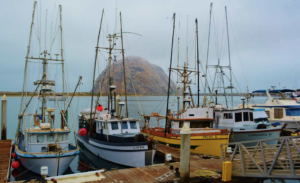
Screen Shot 2022-05-28 at 10.01.03 AMFollowing a model forged with the undersea cable industry 20 years ago, Morro Bay fishermen hope to seal a similar agreement  to mitigate loss of fishing grounds expected from the planned Morro Bay offshore wind project.  So says City of Morro Bay Harbormaster Eric Endersby who references a 2002 deal between local fishermen and the fibre-optic cable industry.Key to the agreement -if new player entered the scene they too must adopt the agreement.In factor several new companies have joined the organization over the years.

Cable companies laying undersea fiber optic cable to connect to  Asia did not want fishing trawlers to entangle with their cable lines and agreed to compensate fishermen to stay away from those areas. A committee regularly hands out grants to fishermen that benefit both parties.

In a January a letter to the federal government from the City of Morro Bay promoted a “legally binding non-profit mutual benefit organization based on the Central Coast Joint Cable-Fisheries Liaison Committee model is the best approach and have the greatest degree of success and support of the fishing industries, OSW industry and Federal, State and local regulators and agencies.”

“The fishermen have been talking with Castle Wind’s Alla Weinstein, but the thinking is all wind power companies participating in  the lease of federal waters off the Central Coast,  will be part to agreement” expects Endersby.

The City is asking that an agreement be required by all companies that bid in the Bureau of Ocean Management (BOEM) upcoming lease auction, scheduled for early fall.