-August 11,2022-
Well-known local tribes find themselves on opposing sides when it comes to hotly debated Proposition 27 on the ballot this fall.
 The proposition, backed by 7 sports betting firms, would allow digital betting online in the state. Californians are already familiar with the debate from all those competing TV advertisements featuring tribal leaders his summer.
One of a small handful of California tribes backing Proposition 27 is Lemoore’s Tachi Yokut Tribe who has a major casino on their rancheria- the Palace in Kings County.
“Prop. 27 will provide us with economic opportunity to fortify our Tribe’s future for generations and protect Tribal sovereignty,” Leo Sisco, chairman of the Santa Rosa Rancheria Tachi Yokut Tribe, stated in a press release.
“And it is the only measure that will deliver hundreds of millions of dollars each year to help solve homelessness and address mental health in California.”The tribe has counted on gaming since 1983 to raise their members out of poverty.”
Tribes supporting the measure may expect financing from some of the out of state firms to promote sports betting through the local brand providing a net positive for the tribe. If it passes, that is.
But over 50 Indian tribes from across the state strongly oppose Prop 27 because, they say it would disrupt their current casino operations, in place for decades.
Betting on their new casino
That includes opponents of Prop 27 like the Tule Tribe in Tulare Country who fear the measure would drive business away from Indian casinos and pose a threat to their self-reliance.
“The Tribe is a “No” on Prop 27” declares Neil Peyron, Chairmanof the Tule River Tribal Council.The tribe is about to open their new 40-acre casino near Porterville that will employ 750 when it opens in December. The new facility will feature 1,750 slot machines-up from 1200 at their current remote casino 12 miles east of town. Their new Tulare County casino will also sport a 2000 seat concert hall and 700 seat restaurant, a massive investment for the tribe facing an uncertain future. A new hotel will follow.
Opponents claim that out-of-state corporations have written a ballot measure to legalize online sports betting in California —but only on their terms. They say 90% of sports betting profits will be shipped out of California.
0% of sports betting profits will be shipped out of C
So how is debate going? One recent poll found 58% of respondents would vote No on Prop 27 compared to 33% Yes votes. But the pro-27 campaign scoffs. ”This isn’t worth the paper it’s printed on. Our own polling shows Californians support Prop 27 and creating permanent solutions to homelessness and mental health care by taxing and regulating online sports betting. The opposition wouldn’t be spending $100 million if they weren’t concerned our measure will pass. Look at their actions, not their press releases.”
Proposition 27, the California Solutions to Homelessness and Mental Health Support Act, will provide hundreds of millions of dollars each year to tackle California’s homelessness and mental health crises by licensing, regulating, and taxing online sports betting. So say proponents.
Another poll conducted in April by David Binder Research found that 59% of Californians would support the initiative and that the measure maintains a wide lead even after simulating multiple sports betting measures on the ballot and a well-funded NO campaign.
Just to confuse you some more, another similar measure Proposition 26, promotes in-person sports betting at California tribal casinos and a select number of California horse racing venues.
Two coalitions of tribes oppose Prop 27 with familiar Central California names like Table Mountain,North Fork Rancheria, Picayune Rancheria and the Santa Ynez Band of Chumash on the coast as well as the Tule Tribe. Numerous Democratic party groups are in the “No” coalitions too including the Kings and Tulare County Democratic Central Committees.
On the support side locally is Miguel Perez, Executive Director of the Kings/ Tulare Homeless Alliance who backs the Tachi Yokut campaign. Backers of the measure say that a $100 million licensing fee would pay for affordable housing for the homeless, mental health services and financial support for tribes.
The Yes campaign says the measure assures:
• No sports bet can be made without the participation of California Tribes. Any online platform wishing to participate in the California market must first partner with a California Tribe.
All Tribes benefit. A portion of all revenue generated from sports betting will be shared among Tribes who choose not to participate in the online sports betting marketplace. Using fiscal estimates provided by the state of California, this measure would double the amount of revenue that non-gaming Tribes receive from gaming in California.
• Each Tribe can also choose to operate their own sports betting platform without a partner and those Tribes will pay a substantially lower license fee.
CalFire & PG&E report less acreage burned
Wildfires in California as of August 8 have burned 181,252 acres in the state, down from nearly 1.4 million acres at this time last year.The five year average for the same period is 623,000 acres, says CalFire.
At PG&E, which has been hammered by utility-induced wildfires in recent years and their financial impact, the number of PG&E’s California Public Utility Commission reportable ignitions greater than or equal to 100 acres in high fire threat areas is zero so far in 2022. Fires of this size are a small percentage of ignitions, but account for more than 90% of the acres burned and more in their service area.


 to over 69 stores throughout Southern California.The company website says “ We have prospered in neighborhoods where others failed because of our commitment to, and investment in, the communities we serve.” Their closest location is in Bakersfield. Tulare will be the store’s furthest venture north.
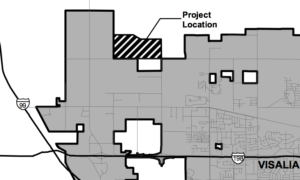 Seefried Industrial Properties will take over the development of the giant 284-acre Shirk and Riggin industrial project in Visalia on farm land owned by the Ritchie family. Seefried, based in Atlanta but managed from Phoenix, is the company who is building the new Ace Hardware distribution center about ready to open just north of Goshen Ave on Plaza.
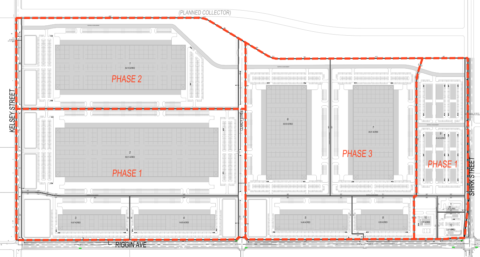 The big news this week is Seefried has come to an agreement with the Ritchie family to build a proposed 3.8 million SF industrial project north of Riggin between Kelsey and Shirk, the largest project ever expected to employ 4100. Asked about the project, Frarey said he couldn’t comment this week and there is no word if this is a joint venture that will be doing this massive development or what.

 Strong dollar hurts exports
 Stamoules Produce Co., Inc., based in Mendota was launched in the 1920s as a cantaloupe grower when the Greek founder Spero Stamoules immigrated to the US.
 Phase III of the project would include the installation of processing, sorting, and packing equipment in the pistachio processing building, as well as the construction of twelve additional silos and the installation of ten additional dryer units.
 According to a recent Securities and Exchange filing,Hanford electric car maker Faraday Future is delaying the start of production and deliveries of their high -end EV to later this year.
 Family Healthcare Network corporate office move is pending.
 With the expectation that the Great Wolf Resort project at Highway 99 and Caldwell would attract some 600,000 visitors a year, the developer has convinced the County to rebate much of the bed tax or TOT that would normally go to taxpayers over the first 15 years. Chicago-based Great Wolf says there are similar agreements with cities and counties elsewhere and that the rebates help secure financing for the huge project.
 The County justifies the incentive package since the revenue source would not exist without the project and like many other jurisdictions, has negotiated with the project developer to rebate a share of future TOT to increase initial project feasibility.
 Monsoon activity should help Arizona- Colorado drought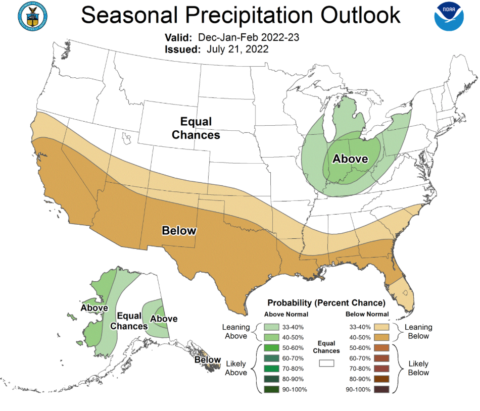

 Porterville, CA – July 12, 2022: Sierra View Medical Center (SVMC) recently welcomed 14 new Internal Medical Residents to SVMC’s accredited, community-based Internal Medical program. As of July 1, they officially started alongside supervising attending physicians and senior residents.