In the US, there have been a number of announcements about onshoring electric vehicle manufacturing, including by Toyota and Ford, while Volkswagen and Mercedes said they’ll turn to Canada for metals.
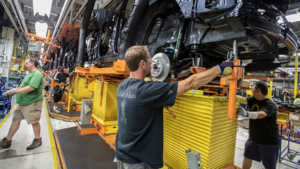
The impact of the pandemic and the war in Ukraine has disrupted supply chains significantly. This has prompted global companies to revise their supply chain strategies and prioritize having their manufacturing closer to their end-users. In the US, there have been a number of announcements about onshoring electric vehicle manufacturing, including by Toyota and Ford, while Volkswagen and Mercedes said they’ll turn to Canada for metals. Consequently, US foreign direct investment has been steadily increasing. According to data from the US Bureau of Economic Analysis, manufacturing and transportation-related FDI rose from $137 billion in 2018 to $180 billion in 2021. This is likely to increase in 2022, as the war in Ukraine has revealed the vulnerability of relying on one supplier.
Bringing manufacturing back
With the recent passing of the US Inflation Reduction Act, the US is making a strong policy push to reclaim its raw material supply chain from China to meet its energy transition targets. IRA adds to the existing USMCA, a free trade agreement with the US, Canada, and Mexico. Under the USMCA, steel and aluminum production will qualify under the agreement if the input materials are melted and poured in member countries. In addition, the Defense Production Act is meant to increase critical minerals. The US is currently 100% import reliant for 17 mineral commodities and at least 50% import reliant for an additional 30. As part of the IRA, the US added $500 million to the DPA to bolster critical mineral production in the region. This strong policy push will provide incentives for new investments in the raw-material supply chains needed to support the energy transition in countries with friendly trade relations with the US.
What it means for copper demand
We expect this regional supply chain development trend to continue and boost manufacturing in unexpected places like the US, Canada, and Europe. Demand for copper, a metal key to the energy transition, will increase in regions such as the US, where it’s expected to rise 61% by 2040 compared to 2021. This increase will result in a decline in China’s dominance in copper demand to 45% by 2040 from 53% last year. In addition, copper supply will rise in regions such as Australia, Canada, and the US at an accelerated pace due to favorable policy stances. These three countries currently have a combined reserve of 151 million metric tons of copper.
Consumers are being bludgeoned with inflationary food prices and that cup of coffee is right in there on the pain threshold.That package of coffee to grind at home is $12 to $15 at your supermarket today and that’s for a smaller package – not even a pound!

While coffee prices in the US are high, in Europe it’s even worse considering necessities like milk and sugar.
“Recent price rises might make this morning staple almost a luxury,” Eurostat said, reporting that coffee prices had on average surged 16.9% in August from a year earlier. Milk prices are up there by 22%.
Part of the problem worldwide has been reduced coffee supply in part due to weather issues and climate change. Colombia produced 834,000 60kg bags of washed coffee in a month, down 31% from the same month last year.
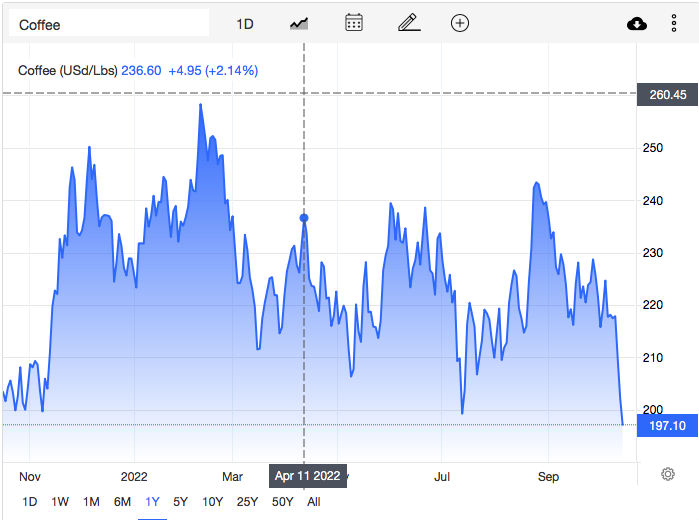
But in the past few weeks the wholesale price of coffee has been plunging from the elevated levels seen this summer. Market observers say today that Arabica coffee futures on ICE extended losses toward $2 per pound, approaching levels not seen in over six weeks, as showers in Brazil’s coffee belt may aid the crop outlook. Forecasts for rains in Minas Gerais, which accounts for about 30% of Brazil’s arabica crop, are expected to provide much-needed moisture and improve the outlook for next year’s crop in the world’s top producer.
Today – October 14 – coffee futures prices for December are below $2 to $1.97/ lb after reaching over $2.30/lb in the past month.Today’s price is lowest in a year!
UPDATE: Oct 20 – Price down to $1.85
High prices are prompting countries to export more coffee now even as demand is falling due the same high prices. Coffee prices are under pressure due to a slower economy and inflationary pressures will curb demand in the out-of-home market like coffee shops. And now increasing coffee supplies from Vietnam are bearish for prices.
I have to admit I feel like a bear when I see those coffee prices at the supermarket.It’s even worse when I can’t get that cup of java.
Whether the financial markets have correctly priced in “peak inflation” and a potential Federal Reserve pivot is a topic for another day.
But there is ample evidence that the inputs that drove inflation higher, especially in the goods sector, are heading back to Earth.
A disinflation checklist may be in order here, despite what appears to be more sticky inflation in services and wages.
Let’s start with what some, myself included, believe to be the root cause of this most recent inflation spike, the pandemic-induced disruption of global supply chains.
For instance, the New York Federal Reserve’s Global Supply Chain Pressure Index (GSCPI) has fallen for five consecutive months which, according to the New York Fed, means the following: “The GSCPI’s year-to-date movements suggest that global supply chain pressures are beginning to fall back in line with historical levels.”
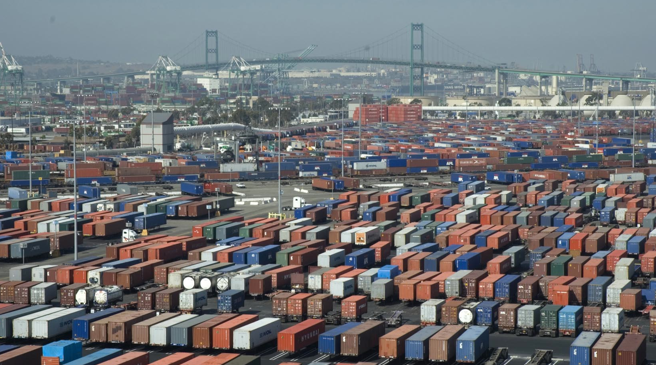
Meanwhile, the cost of shipping a container from Asia to the U.S. West Coast has reportedly fallen from about $20,000 to roughly $2,400 in just a year. At the same time, the queue of ships heading into western ports, once clogging shipping lanes, has dropped sharply.
That’s just the beginning of what’s happening to the argument that inflation will fall in a matter of months, despite what the naysayers claim.
Some semiconductor companies are now slowing chip production amid signs that a weakening global economy is leading to a glut of chips. That means that everything from auto to appliance production can proceed apace, alleviating the shortages and price hikes we’ve seen over the last 15 months.
Residential real estate is in recession, with asking prices for homes falling, purchase cancellations continuing and rents dropping in major metropolitan areas around the country. This will put downward pressure on the consumer price index, but with a multi-month lag, given how the CPI is constructed. Economist Alan Reynolds, of the American Enterprise Institute, recently said that aside from the cost of shelter, which comprises roughly 32% of CPI, the average of all other consumer prices was below zero for the last three months.
Job openings dropped by over 1 million last month, which could lead to a lessening of labor market tightness and associated wage pressures on which the Fed has been keenly focused.
Oil prices, after a surge on the OPEC + move to cut production by 2 million barrels per day, have dropped below $88, putting a lid on gasoline prices which are very tightly correlated to CPI.
Industrial commodity prices, like those of lumber and copper, often a measure of excess demand for everything from cars to computers to houses, are also down sharply from their most recent highs.
Retail inventories, especially apparel, have surged at Walmart, Target, Nike and other establishments.
The yield curve, from the 3-month T-bill rate to the 10-year note yield, has moved closer to inversion of late, a sign that recession is, again, a bigger bond market worry than inflation.
Inflation expectations, as measured by 5- and 10-year “breakevens,” remain below their February peak.
All of this suggests that inflation has indeed peaked and will fall much more rapidly in the months ahead, the latest data notwithstanding.
Indeed, headline inflation has decelerated from its highest levels this year, even as so-called “core inflation,” which excludes food and energy prices, remains sticky.
Technological innovation, whether its robots moving boxes for Amazon, or making fries for McDonald’s, will also exert downward pressure on wage inflation, possibly sooner than many expect.
It appears the Fed is looking in the rear-view mirror when it comes to the inflation fight, still comparing this period to the mid-1960s through the early 1980s – an acceleration of higher prices that lasted 15 years.
This latest bout of inflation is already starting to slow.
It’s important to avoid the policy mistakes of the past, as the Fed is attempting to do, but it’s equally key to anticipate the future, which financial markets do far better than individuals.
Markets are a discounting mechanism. The Fed should not disregard this when making plans for our economic future.
— Ron Insana is a CNBC contributor and a senior advisor at Schroders.
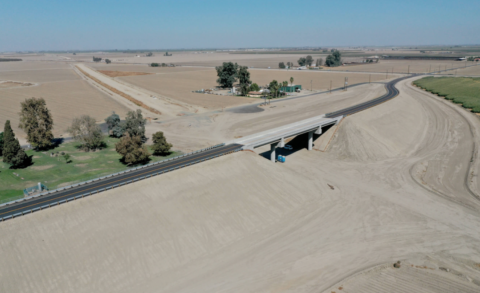
October 13, 2022 – KINGS COUNTY, Calif. –The California High-Speed Rail Authority (Authority), in collaboration with Dragados-Flatiron Joint Venture, on Wednesday announced the completion of the Kent Avenue Grade Separation – the second high-speed rail overpass to open to traffic in Kings County within the last month.
The Kent Avenue Grade Separation is located along Kent Avenue west of State Route 43 and south of Hanford. The overcrossing is 215 feet long, 35 feet wide and takes traffic over the future high-speed rail tracks. Crews placed 12 pre-cast concrete girders spanning 56 to 91 feet long to form the deck of the structure.
Overhead drone shot of the Kent Ave overpass looking down at the road
This new structure is the latest sign of progress in the Central Valley, following this summer’s completion of the Jackson Avenue Grade Separation in Kings County and the Avenue 15 ½ Grade Separation in Madera County. In addition, the Authority recently awarded contracts to advance design along the Merced to Madera and Fresno to Bakersfield project sections, expanding the 119-mile segment to 171 miles of electrified high-speed rail under development and construction.
Since the start of construction, the high-speed rail project has created nearly 9,000 construction jobs, with a majority going to residents living in the Central Valley. This includes 2,913 going to residents from Fresno County, 1,608 from Kern County, 849 from Tulare County, 380 from Madera County and 293 from Kings County.
Getting from Lost Hills in Kern County to Paso Robles will be a breeze once Highway 46 East becomes a 4-lane divided expressway from US 101 in Paso Robles to I-5 in Lost Hills. Another five mile segment was approved recently by the California Transportation Commission.
By contrast Highway 41, connecting Fresno County, Lemoore and Visalia to the coast has zero four-lane segments from Fresno County to The Wye near Cholame in San Luis Obispo County.
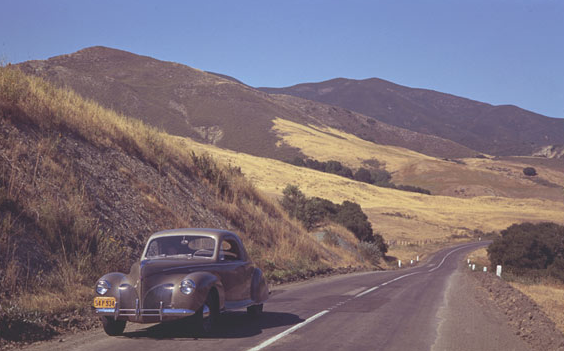
The 55 mile two-lane road winds through the hills of Kings,Kern and San Luis Obispo foothills, looking pretty much the same as it did in the 1940s.

Despite that, the highway is clogged with weekend warriors fleeing the weather in the Valley most weekends along with plenty of big-rig truck activity all the time.
Then there are those continuing horrific crashes resulting in multiple fatalities like we saw just last month north of Kettleman City. In this case, a van with three children and mother was hit by a speeding motorist traveling at 80mph and making an unsafe passing maneuver.The result was a head-on with two children suffering major injuries and one died along with the speedster.

“This is another tragic example of what happens too often on these unsafe gaps in our highway system,” commented Assembly member Jim Patterson.
Patterson has been an advocate for expanding Highway 41 to at least two lanes in both directions all the way through.
“Widening 41 will likely not happen in our lifetime” Terri King predicts
But CalTrans has no plans at all to make any segment of this stretch of Highway 41 a divided highway. Lack of political support to widen highways in Sacramento is part of the problem, says Kings County Assn of Governments (KCAG) Executive Director Terri King. Don’t look for anything much to happen beyond a few extra passing lanes, shrugs King.
“Widening 41 will likely not happen in our lifetime” Terri King predicts.
King cites another factor- lack of public demand to make Highway 41 widening a priority. King says her KCAG group will discuss the issue soon. But there is some movement in the arena .
Leading the public effort to widen Highway 41 north of 198 has been Lorna Roush who helped lead the charge to get additional funding to widen 41 in the Riverdale area now slated for construction because of a public outcry over fatal crashes there.
Roush recently told a TV news reporter that she hopes people in the Kettleman City area, where the fatal crash happened in September, will be inspired to rally around expanding their section of Highway 41.
It will take more than that to make widening happen.
For the time being this single-lane stretch between Lemoore and Cholame has few champions in Sacramento. Instead the next road south – State Highway 46 – has enjoyed multiple four-lane improvements over the past few decades.
Map: Site of deadly crash in September
Photo: Highway 41 looks the same as it did in the 1940s
U.S. retail real-estate vacancies are down, rents are up and more stores are opening than closing

Bricks-and-mortar store owners are emerging from the pandemic with surprising strength, posting some of their best numbers in years and plotting expansions as more Americans venture out to buy things again.
U.S. retail vacancy fell to 6.1% in the second quarter, the lowest level in at least 15 years, while asking rents for U.S. shopping centers in the quarter were 16% higher than five years ago, according to real-estate services firm Cushman & Wakefield.
Dreyer’s Grand Ice Cream will lay off around a thousand workers from their two plants in the South Valley including over 300 in Tulare for a few weeks. The plan comes during the slowest time of the year for ice cream sales and a time the company says it will use to install new system software for the UK-based company- Froneri -who took over operation from Nestle this past year. Workers will stay at home toward the end of November, returning in early December, says a spokesperson.

“Over the past two years we have been investing heavily to optimize our operations, and focus on growing our ice cream business and driving growth of the category. As part of this plan for growth, we have been installing new production lines, adding jobs..”
Meanwhile the Tulare plant at 970 E. Continental Avenue will get a new warehouse according to construction plans submitted to the city.The 69,000 sq ft addition to the manufacturing facility will expand existing warehouse storage space for dry goods, frozen goods. Will also provide new raw goods receiving area, warehouse receiving/logistics offices and trailer docks for Dreyer’s Grand Ice Cream, Inc. Besides the Dreyer’s brand, the company makes Haagen Dazs products in Tulare .
The Black Book wholesale price survey of RVs for August showed an astonishing motorhome price drop.Motorized unit prices fell 13.3% compared to July 2022 figures. TThe average sale price for motorhomes was $69,003. Compare that to the July average of $79,668. A year ago, the average wholesale motorhome price stood at $69,953. What a difference a few months make! Motorhome prices have been jumping like a bronco.

On the towable RV side of the fence, wholesale sale prices in August stood at an average of $20,532—down $689 from July. Again, a year’s worth of price difference shows volumes. In August 2021, the average towable price rang in at $24,280. A year and a difference of nearly 17% down in price.
Fresno residential developer Granville Homes is planning its first venture into Visalia joining a growing group of home builders targeting this fast growing community.
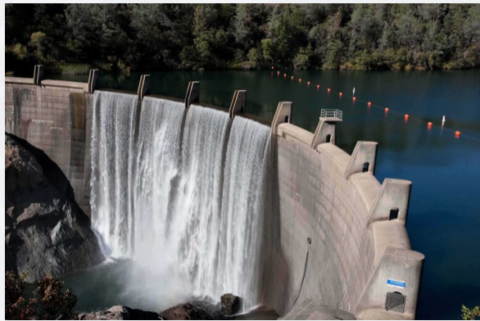
Granville’s website says in the past 45 years the builder had completed 6000 homes in the Fresno/ Clovis area. It was founded by developer Darius Assemi in 1977, current President and CEO.
In Visalia the company has filed preliminary plans to build a high density multi-family project called Hayes Ranch. It is a 29-acre development at the NE corner of Roeben and Riggin in NW Visalia.
The project plans 419 units, one of many new large multi-family developments in the works in Visalia.So far this year, Visalia has permitted almost 500 multi-family units to be built.That is more than double what was built all last year and more apartments than the city permitted from 2013 through 2020.
Besides Granville Homes, Fresno’s Bonadelle Homes recently filed to build a project in Visalia.
Fresno’s Bonadelle Homes plans second new home project in Visalia
Fresno’s Bonadelle Homes has returned to Visalia selling homes this year at Shannon Ranch near Riggin and Dinuba Blvd. The upper end developer has begun construction on 39 homes so far this year with plans to build 55 units at buildout.
Now the builder plans another larger 41-acre, 300-lot gated community project at the SE corner Caldwell and Ben Maddox on land that would be annexed into the city.The development would feature private streets outlined in plans submitted for review this week.
Bonadelle built a subdivision in Visalia at Country Club Acres near Houston and Demaree a few years back that has been closed out. This year, the well known Fresno builder has returned to the Visalia home building scene offering to sell at the top of the market at $450,000 to $500,000.
Looking for a bit of silver lining to an endless drought? Before the rainy season this winter regulators are storing more water according to the state’s latest reservoir report than they did last year. Despite dry conditions downstream a number of key Sierra reservoirs hold more water than the same time in 2021 that was also a drought year.
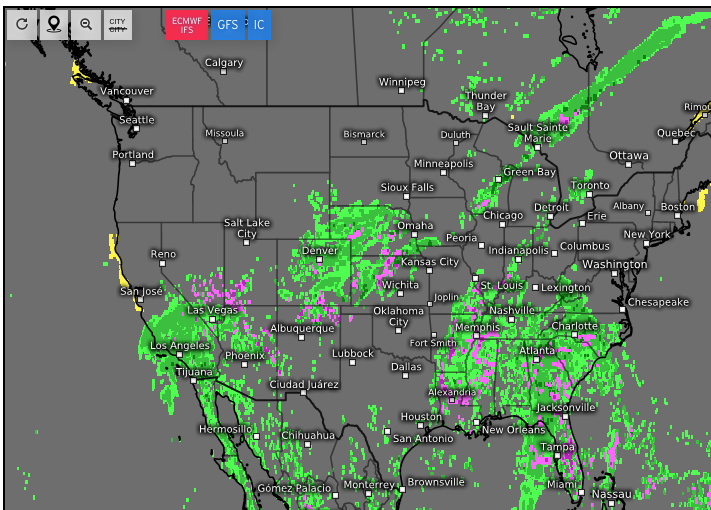
Today the state’s largest federal reservoir, Shasta, is hurting with just 1.6 milAF at 35% of capacity as of Sept 5. Still, that is improved over last year at this time when only 1.2 milAF was in storage.
Likewise at the largest California-managed reservoir – Oroville -that sits at 1.3 milAF compared to just 800,000AF as of Sept 5, 2021.
Folsom, above Sacramento, holds 423,000AF. But in September 2021 the lake held just 236,000AF.
A key Valley reservoir near Los Banos -San Luis Reservoir – holds 558,000AF compared to just 265,000AF at this time last year.
Above Fresno, Millerton is storing more with 250,00AF vs 232,000AF last year at this time. Friant Water estimates that adding what is in Millerton and the upper reservoirs on the San Joaquin watershed that there are 65,000AF more than last year at this time.
Several reservoirs are not better off in 2022 including Trinity and New Melones.
One big local reservoir that does not show improvement this year – Pine Flat – has just 132,000AF with a capacity of one millionAF. Last year at this time, it held over 200,000AF. Kings River water officials say Valley irrigators drained more of the lake this year because, of course, they needed it. With the low level in the lake now they are not likely to draw it down more this year.
By the way, Kings River watershed did get a pulse of precipitation from that August monsoon storm that hit the Valley adding up to an extra 20,000AF -unusual for summers.
Adding it all up, the latest Department of Water Resources report says California has 17.2 million acre-feet in storage this year compared to 15.4 million acre-feet this time last year.
That is 68 percent of average for this time and 45% of capacity.
This week we are all focusing on the heat- Merced was 116 degrees, which broke the previous all-time record. But there are thunderstorms in the Sierra too.
Rain expected accross middle California Sept 18
Speaking of rain,Hanford NWS forecasters are watching moisture from a Baja hurricane moving into So California and Arizona this weekend predicting the Sierra could get some modest precipitation. We’ll take it.