
-June 19,2022-
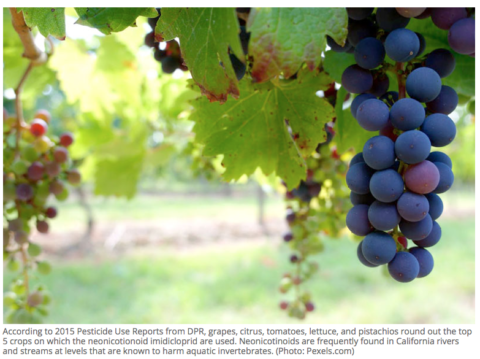 Three widely used neonicotinoids are likely to adversely affect, in at least some way, most of the threatened and endangered species in the country, said the Environmental Protection Agency on Thursday. It said it was consulting with wildlife agencies about whether the insecticides,used on Valley crops like grapes and pistachios, were likely to jeopardize the species’ survival or damage their habitats.
The Environmental Protection Agency released final biological evaluations today confirming that three widely used neonicotinoid insecticides likely harm roughly three-fourths of all endangered plants and animals, including all 39 species of amphibians protected under the Endangered Species Act.
State action
Earlier this year in an effort to reduce risks to bees, the California Department of Pesticide Regulation filed an official notice of rulemaking as a first step in the regulatory process to limit how and when neonicotinoids can be used in agricultural settings.
Neonicotinoids are a group of insecticides that are widely used as an alternative to chlorpyrifos, which DPR banned in 2020.At certain levels of exposure, neonicotinoids present risks to pollinators. DPR’s proposed regulations are based on extensive scientific studies and would create new requirements and restrictions for the use of neonicotinoid products containing any of four active ingredients: imidacloprid, thiamethoxam, clothianidin and dinotefuran. DPR estimates the regulations will impact 57 products currently registered in California and will reduce the amount of neonicotinoids applied across the state by approximately 45%
The EPA’s assessments of clothianidin, imidacloprid and thiamethoxam marked the first time the agency has completed biological evaluations of any neonicotinoids’ harms to the nation’s most imperiled plants and animals. Species found to be harmed by all three of the neonicotinoids include rusty patched bumblebees, whooping cranes, chinook salmon, northern long-eared bats and orcas.
“These deeply troubling findings leave no doubt that these dangerous pesticides are silencing the songs of frogs, the flutter of butterfly wings and the buzz of bees,” said Lori Ann Burd, environmental health director at the Center for Biological Diversity. “Many of the species harmed by neonicotinoids are experiencing precipitous declines, and this EPA’s choices may well determine whether or not they go extinct.”
Neonicotinoids, which are banned in the European Union, are the most popular insecticides in the United States. Hundreds of studies have shown they play a major role in population-level declines of bees, birds, butterflies and freshwater invertebrates. More recent studies are showing they cause significant harm to mammals as well.
The biological evaluations released today found that 67% of all endangered species — 1,225 different plants and animal species — are likely to be adversely affected by clothianidin and that the pesticide will likely adversely modify the designated critical habitats of 446 species.
For imidacloprid, 1,445 species, or 79% of all endangered plants and animals, are likely to be adversely affected. The pesticide will likely adversely modify the designated critical habitats of 658 endangered species.
Thiamethoxam was found to likely adversely affect 1,396 species, or 77% of all endangered species. The pesticide will likely adversely modify the designated critical habitats of 644 species.
Attachments area