Home prices down in California markets-sales down in Visalia

West Coast home prices down

Visalia home sales down 42%

Screen Shot 2023-02-10 at 10.58.58 AMU.S. home prices rose in the fourth quarter from a year earlier, but once-booming West Coast markets were among a growing number of metro areas to post price declines, the National Association of Realtors said Thursday.

Falling prices were especially prominent in California, where home values had been among the highest or rose the fastest before last year’s slowdown. San Francisco was the hardest hit, posting a 6.1% median single-family existing-home sales price decline. San Jose median prices fell 5.8%, and Los Angeles and Sacramento also posted year-over-year price declines in the quarter. Info from WSJ.

In Visalia in the Central Valley January’s media home price was $369,000 – up from $360,000 for the same time in 2022.However sold listings numbered 70 – down from 122 in January 2022 as the pace of sales slowed dramatically – by 42%. Info from Tulare County Association of Realtors.

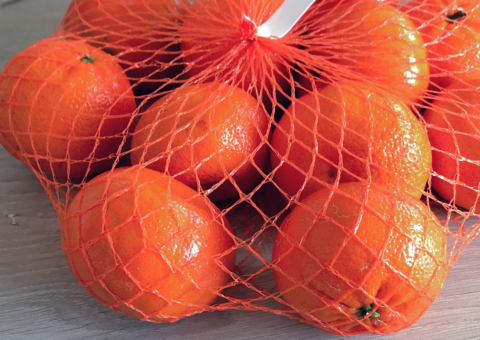
USDA makes mandarin & orange purchases

-February 3,2023-

“ By 2025… mandarins will overtake oranges as the most-consumed fresh citrus in the U.S.”

  – California Citrus Mutual President Casey Creamer

Screen Shot 2023-02-03 at 11.55.58 AMFor the first time, under authority of Section 32 of the Agricultural Adjustment Act Amendment of 1935, the U.S. Department of Agriculture will purchase up to $20 million of fresh mandarins and tangerines for distribution to food banks, schools and other non-conventional markets.

USDA also announced that it will purchase up to $20 million in oranges and $10 million in grapefruit as well.

In response to USDA’s announcement, California Citrus Mutual President Casey Creamer made the following statement, “Section 32 is an important procurement program that supports America’s farmers and provides domestic products to communities and schools. Twenty years ago, mandarins trailed all varieties of fresh citrus in per capita U.S. consumption. By 2025, however, it is anticipated that mandarins will overtake oranges as the most-consumed fresh citrus in the U.S.”

Kids love them

“USDA’s domestic nutrition programs should reflect this significant shift in citrus consumption by ensuring mandarins are made available to schools and food banks. This Section 32 purchase is an excellent first step to introducing mandarins to other procurement and food distribution programs in the future.  California Citrus Mutual applauds the USDA Agriculture Marketing Service for their efforts to bring American grown mandarins and other citrus products to all consumers.”

Meanwhile for the current crop year prices  continue to be strong   with navel oranges  fetching near $25 per cartoon for large sizes  -about $5 more than last year.

Farmers pull walnut groves as price sinks

-February 3,2023-

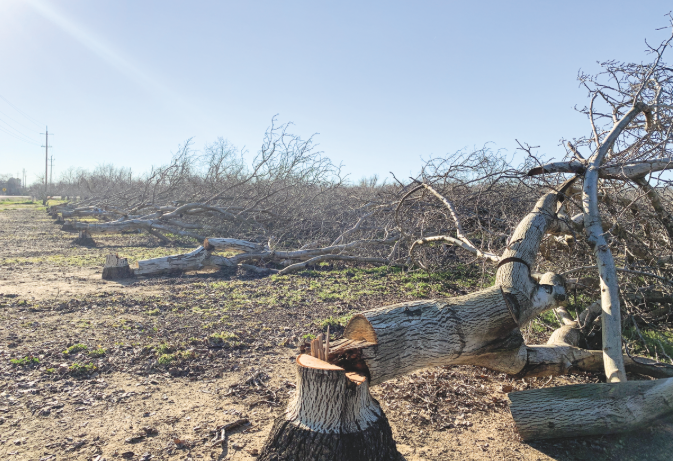
Screen Shot 2023-02-01 at 6.55.53 AMWith the price to growers for the 2022 walnut crop at about 40 cents per pound or less—well below last year’s break-even price of 70 to 90 cents per pound—walnut groves are coming out this winter

Walnut farmers are tearing out older trees and less desirable varieties as the price for the nut has plummeted well below the cost of production, causing some growers to rethink walnuts and look for alternative crops.

“I’ve seen several younger orchards that have come out already in Fresno, Merced and Madera counties,” said Kings County farmer Brian Medeiros of Hanford, who farms walnuts, almonds and row crops. “My neighbor had a walnut orchard that was about six years old, and he tore the whole thing out. He just said, ‘I’m losing money hand over fist. I’m not going to keep doing it.’”

A heat wave last September cooked the walnuts on the trees during a critical time of the growing cycle. High temperatures were followed by rain that led to mold problems.

“We had extremely high temperatures—up to 117 degrees for three to four days in some areas—and this occurred when walnuts were at their most sensitive stage in growth,” said Robert Verloop, president and chief executive officer of the California Walnut Board and California Walnut Commission. The Commission conducted their own survey suggesting that handlers opening up 100 pounds of walnuts will find 30 to 40 pounds absolutely not usable.

With the price to growers for the 2022 walnut crop at about 40 cents per pound or less—and well below last year’s break-even price of between 70 and 90 cents per pound—walnuts were the obvious choice for removal for Medeiros, he said. He pulled out 16 acres of walnut trees to scale down his water use to comply with groundwater regulations and manage his allotment.

“Our orchard is only 15 years old, so when I was pulling out those 16 acres, it literally broke my heart because I’m pulling out beautiful trees that look gorgeous, and I’m bulldozing them over,” Medeiros said.

“The (walnut) price is making it much easier, much quicker for us to move ahead because—unless this price changes dramatically in the coming year or we have some outstanding support from USDA—we’re probably pulling the rest of them out next year.”

Affecting the demand-supply problem is a carryover crop of about 135,000 tons and a 2022 crop expected to be between 750,000 tons to 780,000 tons and much larger than the 720,000-ton crop forecast last September.

If there are too many walnuts, the same appears to apply to almonds – the state’s most valuable crop. With new orchards coming online year after year the price per pound continues to drop. In 2014 almonds fetched $4/lb. That price fell to$1.71 in 2020 and stands around $1.10 today.

February is that time each winter you can drive around the Valley and see what trees are being pushed over as farmers reassess the market.

California Farm Bureau supplied much of this story

Cox Automotive Forecast: Improving January U.S. Auto Sales

Wednesday January 25, 2023

Annual vehicle sales pace in January is expected to finish near 15.6 million, up from December’s 13.3 million pace and from last year’s 12.7 million level.

Screen Shot 2023-01-26 at 5.36.21 PMImproved inventory and fleet activity are expected to contribute to a stronger sales pace.
January sales volume is expected to rise 2.7% from one year ago and reach 1.03 million units; forecast calls for a 19.8% decrease from December, which had three more selling days.
New-vehicle sales in January are expected to show a surprising gain when announced next week, even though market conditions have not appreciably changed. The January 2023 auto sales pace, or seasonally adjusted annual rate (SAAR), is expected to finish near 15.6 million, a large increase from December’s 13.3 million pace, according to a forecast released today by Cox Automotive. However, some of the gain is due to statistical adjustments that correct for expected fewer sales in January and February.

With inventories improving daily, sales in January will benefit, increasing the sales pace. Sales volume for the month is expected to rise nearly 3% over January 2022’s inventory-constrained market but with the same number of selling days. January sales are expected to fall almost 20% month over month, largely due to three fewer selling days than December and the usual post-holiday drop in activity.

As we start 2023, high interest rates continue to hold back the new-vehicle market, while some concerns with inventory supply appear to be falling away. According to Charlie Chesbrough, Cox Automotive Senior Economist: “After a slow December, a return to ‘normal’ would be welcome. With inventories improving, and more fleet activity likely, we are expecting an increase in January new-vehicle sales activity. Though some dealer lots across the country have ample inventory, some Asian brands continue to have extremely limited availability. One of the key questions for the market this year is whether some brands – particularly American ones – will be forced to increase incentives to keep supply from getting too high.”

January 2023 Sales Forecast Highlights

Light new-vehicle sales are expected to rise 2.7% from January 2022 but fall 19.8% from last month.
The SAAR in January 2023 is estimated to be 15.6 million, above last year’s 12.7 million level and up from December’s 13.3 million pace.
January 2023 has 24 selling days, equal to 2022 but three fewer than December 2022.
January 2023 Sales Forecast

Around the region: ZEVS and more

-January 26,2023-

California announced that 18.8% (345,818 units) of all new cars sold last year in California were Zero Emission Vehicles. A small number of those ZEV sales (3.89%, or 3,303 units) were made to out-of-state buyers. 40% of ZEVs sold in the US are sold in California. Three counties account for almost half of the sales. With LA County customers  acquiring almost 100,000 ZEVs. Buyers in Tulare County numbed  807 and Kings County residents bought 255 cars.

Screen Shot 2023-01-26 at 7.36.43 AMTesla will invest an additional $3.6 billion in Nevada to continue growing Gigafactory Nevada with two new factories: a 100 GWh 4680 cell (earlier post) factory (with capacity to produce enough batteries for 1.5 million light duty vehicles annually), as well as its first high-volume Semi factory.

Semi is Tesla’s fully electric Class 8 tractor, with 500 miles of range and energy consumption of less than 2 KWh per mile.

In 2014, Tesla committed to invest $3.5 billion in Nevada for its first Gigafactory, targeted at 35 GWh of battery cells annually—enough to manufacture about 500,000 vehicles per year.

The City of Visalia plans to extend Caldwell east to Lovers Lane from Santa Fe widening it to four lanes.  The city is acquiring land from Kaweah Health  to move the project forward.Widening the road to 4 lanes is part of the city strategy to provide easy circulation around all quadrants of the city. Also on deck is Riggin to Highway 99.

Lowe’s on Demaree is going solar installing  nearly 1700 solar panels on its roof in coming weeks -enough to provide a substantial percentage of the big home improvement store’s power needs.

Caldwell and West St in Visalia is about to welcome a new Starbucks.

Gary Herbst, CEO at cash-strapped Kaweah Health tells his board  they will begin to work with the Board of Supervisors to explore a sales tax initiative for the District hospitals in Tulare County.

Matheny Tract Wastewater Collection System and Pipeline Inter-tie Project with the City of Tulare will finally happen after years of discussion. The low income  community  will get a new wastewater collection system and a a new lift station along Pratt Street connected to the City’s Domestic Wastewater Treatment Plant according to a public notice.

What grape is growing in popularity? Sauvignon Blanc. Sauvignon Blanc made an impressive showing with significantly more vines planted this past year than in any other recent year say an industry report.

How big a storm hit the north Fork of the Kaweah River a few weeks ago? The North Fork of the Kaweah (which has fire impacted Redwood Mountain Grove as its headwaters) flooded enough to deposit debris on roads and properties that haven’t seen water in a long, long time.  One neighbor Sequoia Park scientist Nate Stephenson talked to found a sequoia cone and a charred piece of sequoia bark among the flood debris on her property!

What a month! More to come?

-January 24,2023-

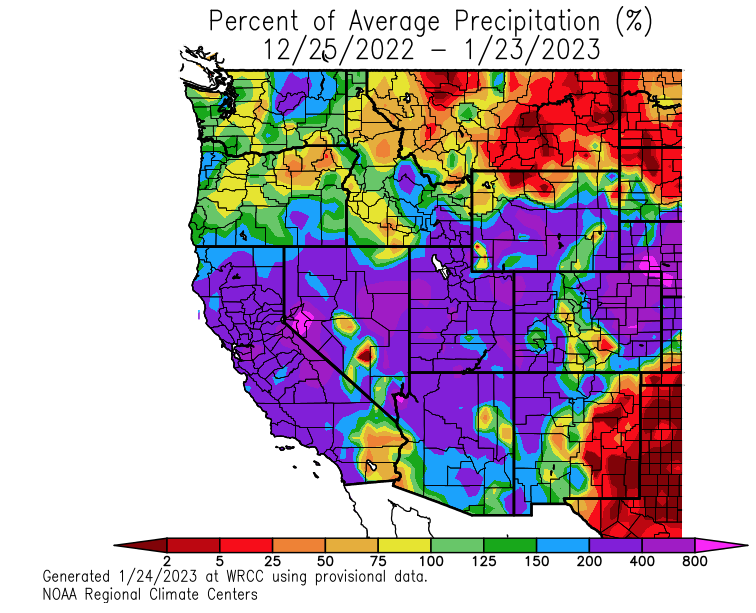
NOAA says much of California got 400 to 800% of rainfall in the past month!

Now were are on rainfall  break now until the end of January. But models are predicting several more storms, some wet ones in the first 10 days February. Climate expert Daniel Swain on Twitter says: “Strong NE Pacific ridge will persist but “retrograde” (move westward) toward Gulf of AK by early Feb. This will continue cool pattern over the West, & probably also bring a couple of modest cold storms back to CA (good mountain snow producers, but no flood threat). Others say high pressure will keep the state mostly dry in February.


Screen Shot 2023-01-25 at 6.10.13 AM

Pacific high returns off California blocking new storms until February

-January 19,2023-

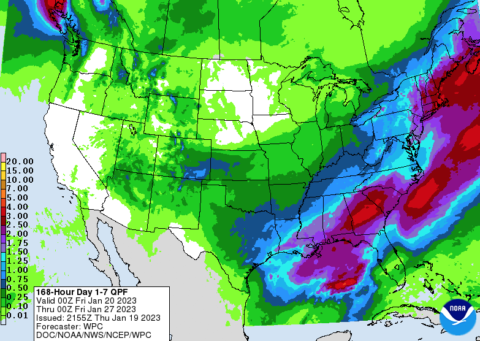
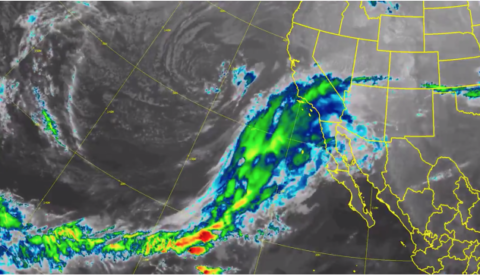
Like a switch turning on and off- our old buddy the Pacific High  “blob” is back this week off the California coast shunting new storms to our north after it allowed 9 Atmospheric River events to soak the state from top to bottom for the past three weeks. Suddenly it’s all  quite and the next two weeks looks very dry – at least until the first week of February.Then at least a couple of stormy events may re-wet a soggy California.

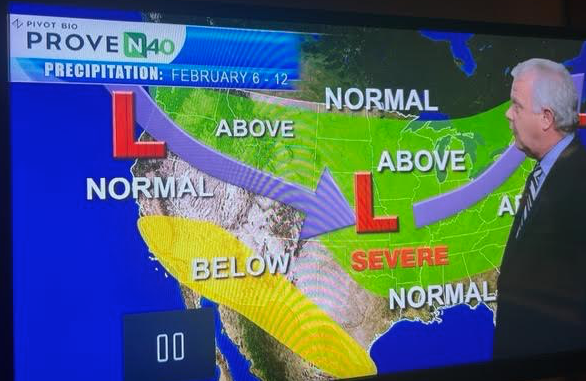
Here are precipitation totals for the next week-till Jan 27.  Ag forecaster on This Week in Agribusiness predicts a dry early February for California in this graphic.Screen Shot 2023-01-19 at 5.27.28 PM

Screen Shot 2023-01-19 at 5.00.09 PM

Overnight drought buster?

Historic rainfall causes local reservoirs to fill fast, triggering flood releases

-January 13,2023-

Reservoirs from Friant near Fresno south to Lake Isabella all got a huge pulse of runoff in the past few days transforming mostly empty foothill lakes into potential drought busters.
Screen Shot 2023-01-12 at 12.58.31 PMWater managers monitoring both the Kaweah and Kings River watersheds are pumped up over the volume of precip falling in the past few days in the Sierra. While many communities across the state are focusing understandably on flood damage from the parade of atmospheric river storms that have targeted California, it’s the potential relief from 3 years of drought resulting in a huge hardship for the local economy here that have gotten the attention of Mark Larsen on the Kaweah and Steve Haugen who oversees the Kings River.

“We’re pretty excited” says Larsen, who is GM at the Kaweah Delta Water Conservation District. “Instead of fighting over water we don’t have, we are able to focus on managing a good volume of water we do have.”

Literally overnight, both watersheds stretching north from Tulare to Fresno counties saw 8 to 10 inches of rain and then snow hit January 9/10 at measuring stations including Giant Forest in the upper Kaweah and Wishon /Courtright reservoirs on the upper Kings. Wishon has received 38 inches of precip as of January 10, up 8.5 inches from the day before.The dam had just 5 inches in the bucket December 1 – gaining 33 inches of precip since.

Screen Shot 2023-01-12 at 12.28.43 PMThe relatively warm storm dropped rain as high as 8500ft, Haugen says, sending runoff into Pine Flat Dam.Haugen is watermaster for the Kings River Water Assn. Pine Flat itself received nearly 4 inches of rain on January 9.(Pictured Pine Flat Dam)

The same storms appeared to boost reservoir levels to the north as well at the head of the CVP system – Lake Shasta in two weeks time went from 1.5 millionAF to over 2 million as of January 12. Suddenly the lake is now half full with plenty more storms in the offing.Lake Shasta is now 70% of avenge for this date – a vast improvement.

It is happening along the Central Coast as well, where Lake Cachuma,that supports Santa Barbara,adding 61,500AF – doubling the volume in the reservoir in one day. In San Luis Obispo the Salinas Dam is spilling today down the Salinas River recharging the dry landscape in this key wine region
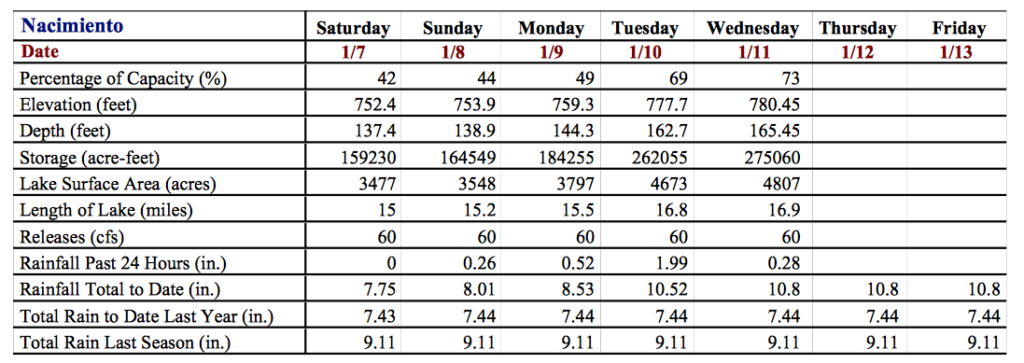
Screen Shot 2023-01-12 at 9.09.41 AMAt Lake Nacimiento in Monterey County that supplies the City of San Luis Obispo and Paso Robles, the lake level had been at an anemic 27% on December 31 but today stands at 75% full and 175% of average. The key reservoir, less than two weeks ago, had just 100,000AF. Today the lake has swelled up to near 283,000AF!

At Folsom Dam near Tahoe regulators dumped 200,000AF since Jan 1 to make room for both high volume high elevation rain as well as an expected abundant snowpack runoff in a few months.

Here is what is happening at Eastside reservoirs that supply drought-plagued rural households, cities and farms from Madera south to Arvin.

At Millerton the lake went from 370,00AF as of Dec 30 to 431,000AF Jan12. For the 7th to 9th the biblical level deluge deposited 6 to 10 inches in upper elevations.

So the Bureau Of Reclamation vacated water down the San Joaquin River and is releasing more to the Madera Canal and some to the Friant Kern Canal, constrained by construction right now. Now at 82% of capacity, Friant Dam holds only 520,000AF.

Next down the line is Pine Flat Dam on the Kings River that saw 10 inches of rain in its upper watershed and 3.65 inches at the dam on January 9. The lake that holds a millionAF went from 225,000AF to 422,000AF by January 12 adding almost 200,00 AF in less than two weeks.

Forecasters watching the next storm say it will be colder and not as robust,good news for the snowpack.

On the Kaweah, the dam above Visalia went from a puddle to a real lake – 15,000AF to 82,000AF as of Jan 12. The Kaweah River at one point registered a runoff of 22,000 CFS on January 9.The lake is at 427% of average for the date as the warm storms brought down snow while it rained heavily below as well.

On the Tule River the Richard L. Schafer Dam went from a puddle of 5,400AF on 12/30 to 43,000AF as of January 12. Right now Success Lake stands at 327% of average for the date.The lake holds 82,000AF.

At Lake Isabella above Bakersfield storage went from about 48,000AF Dec 30, almost doubling to near 91,000AF as of January 12.

As to whether all this storminess is drought buster, reports say” the series of atmospheric river storms since Christmas has significantly reduced California’s drought, the federal government concluded Thursday.

For the first time in more than two years — since Dec. 1, 2020 — the majority of the state is no longer in a severe drought, according to the U.S. Drought Monitor, a weekly report put out by the National Oceanic and Atmospheric Administration, the U.S. Department of Agriculture and the University of Nebraska-Lincoln. Overall, 46% of California’s land area remains in severe drought, the report says.”

Atmospheric River targets Central California (NOAA)

Pine Flat Dam
2
Attachments
• Scanned by Gmail


Good navel crop this year

By Ching Lee

Farm Bureau News

County is the number one citrus producer

After packing one of the smallest crops in years last season, California citrus growers and marketers say the current navel orange crop looks promising in volume and quality.
An earlier forecast by the California Department of Food and Agriculture had navel orange production up 19% from last year. But California Citrus Mutual now estimates the increase is closer to 10%, said President and CEO Casey Creamer. He described the crop as average size—and one that is “manageable” compared to some of the bumper crops seen in recent years.
“We’re optimistic that with the good quality and decent-size crop, we can fulfill consumer demand and also have a good return for growers, which is of utmost importance, to keep up with the costs of production,” Creamer said.
Jared Blumlee, who manages farming operations for Booth Ranches, which has orange orchards from Fresno to Kern counties, said the early September heat wave is one reason the crop is now shorter than the initial forecast. He said extreme heat causes trees to shut down, resulting in smaller-sized fruit.
“When you have smaller fruit, you also lose volume because it takes more of them to fill up the box,” he said. Some oranges were marred by sunburn, which will further reduce pack-outs, he added.
With larger fruit in short supply, at least during this early season, Blumlee said he expects buyers will “have to accept the smaller sizing” to meet market demand. Pricing, therefore, should hold, he said, because of the lower volume this year. He noted that pricing stayed strong through most of the season last year when volumes were similarly light.
“I see no reason to panic,” he said. “The fruit that we do have is super-high quality. It eats really good.”
Because of an excess supply of smaller fruit across the industry, Charles Duby, who markets oranges for Sequoia Orange Co., a grower, packer and marketer in Tulare County, said pricing is lower than what it should be this early in the season because there’s not much demand for the fruit.
“We all have small fruit, and the prices just fall through the floor,” he said.
Because schools were out during the Thanksgiving holiday, Duby said cafeterias that usually take some of the smaller oranges have not been ordering. Oranges also do not have as big a presence as they once did during the year-end holiday season, when the fruit used to fill more Christmas stockings and gift baskets, he said.
But Duby said he also thinks the sizing issue will improve as the crop moves into the winter season with more rain and nightime cold temperatures. His hope, he said, is that the market will “correct itself” sometime after Christmas.
Two years ago, the industry faced a much heavier crop that marketers struggled to move, especially to export markets, due to port delays and shipping logistics, Creamer said. As more fruit ended up in the domestic market, prices slid. The season was extended, with growers holding fruit on trees longer, which resulted in “significant declines” in last year’s crop, Creamer said.
“We’re sort of recovering this year from that,” he added.
With export shipping season ramping up in December, Creamer said he’s “hesitant to express too much optimism” that the transportation problems of the past two years have been resolved. But so far, he has not heard “any red alerts.”
One challenge that shippers are concerned about this year, Creamer said, is the strength of the dollar, which makes U.S. exports more expensive to foreign buyers.
Tulare County grower Chris Lange has been harvesting mandarins and early-season navel oranges, and he said he’s “off to a good start.” He also grows most other citrus varieties, including grapefruit, lemons and limes, and he said his crops “across the board all look decent.”
With hurricane damage expected in Florida’s citrus crop, Lange said the domestic market may need to look more to California this year to fill demand, “because you don’t have Florida as a contributor.”
Despite declining acreage, navel oranges remain the most widely grown citrus fruit in California. But with farmers in the San Joaquin Valley—the state’s Citrus Belt—continuing to face water shortages and soaring production costs, they have increasingly turned to growing higher-value citrus fruit such as mandarins and other specialty crops such as tree nuts that bring better returns.
Total California citrus acreage jumped 1.4% during the past two years, standing at 268,937 acres in 2022 compared to 265,141 acres in 2020, according to CDFA, which surveys growers every two years. The increased plantings have been in every citrus category except navel and Valencia oranges.
Lemon and lime acreage saw the biggest increase—up 6% and 8.5%, respectively—while mandarins, grapefruit and pummelo rose 5.2%. Meanwhile, navel orange acreage dropped 1.6% and Valencia oranges fell 4%.
“What growers are doing is responding to consumer demand,” Creamer said, noting that they’re planting varieties that earn higher prices because “that’s what the retailers want, and that’s what the consumers are buying.”
Tulare County farmer Rod Burkett said citrus groves are being pulled out “because we just don’t have water.” Some growers are drilling deeper or additional wells if they can, Creamer said. Others are looking to move water from one region to another or between ranches.
“The water issue is going to drive a lot of people out of citrus,” marketer Duby said.
Because of these challenges, Burkett, at 68, said he simply doesn’t “want to fight this thing anymore.” He’s looking to downsize and has sold ground that once held Valencias and older varieties of navels. He now grows only lemons and Cara Cara navel oranges.
“I’m chasing the dollar just like everybody else,” he said.
Farmer Blumlee of Booth Ranches said the company is trying to maintain and expand its orange acreage, though some blocks are “definitely being transitioned” to newer and better varieties “that fit our marketing plan better.” In addition to expanding its lemon acreage, he said the farm now grows Cara Caras, as they are “a little higher value.”
“For the people that are staying in the business, they’re seeking out higher returns,” Blumlee said. “You’ve got to have

Tulare County farm exports mostly to the Far East

-January 11,2023-

orange wiki 2019-08-22 at 2.40.05 PMTulare County farmers recognize their big export customers overseas. They are mostly all in the Far East according to recent county Crop Reports. The top 15 export countries for Tulare County produce are all Eastern Pacific countries except for Mexico, Canada and Guatemala.  The top three are Korea, Japan and China in that order- taking some 16 million cartons of produce in 2019. The three top non-Pacific destinations, Mexico, Canada and Guatemala took just 3 million cartons.