
-March 17,2023-
How do we increase food production by more than 50%, on a limited amount of arable land, to feed a projected 10 billion people by 2050? The solution could come in the form of nutritious and protein-dense microalgae (single-celled), grown in onshore, seawater-fed aquaculture systems.
A paper, “Transforming the Future of Marine Aquaculture: A Circular Economy Approach,” published in the September issue of Oceanography, describes how growing algae onshore could close a projected gap in society’s future nutritional demands while also improving environmental sustainability.
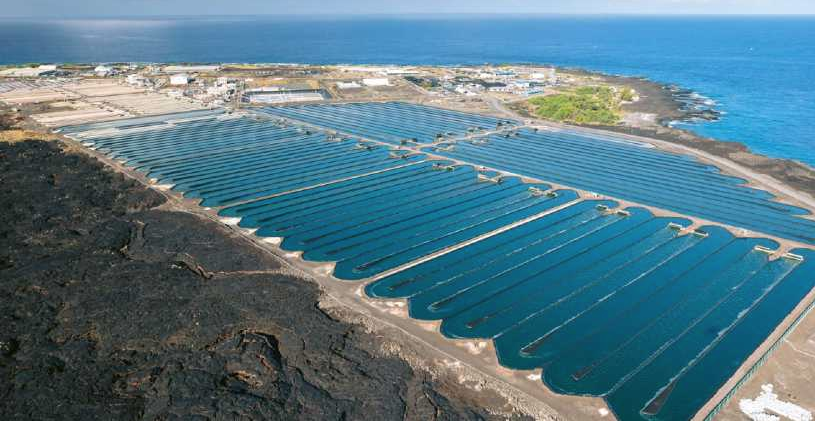
Microalgae cultivation facility along the Kona Coast of Hawaii’s Big Island (image courtesy of Cyanotech Corporation)
“We have an opportunity to grow food that is highly nutritious, fast-growing, and we can do it in environments where we’re not competing for other uses,” said Charles Greene, professor emeritus of earth and atmospheric sciences and the paper’s senior author. “And because we’re growing it in relatively enclosed and controlled facilities, we don’t have the same kind of environmental impacts.”
Even as the Earth’s population grows in the coming decades, climate change, limited arable land, lack of freshwater and environmental degradation will all constrain the amount of food that can be grown, according to the paper.
“We just can’t meet our goals with the way we currently produce food and our dependence on terrestrial agriculture,” Greene said.
With wild fish stocks already heavily exploited, and with constraints on marine finfish, shellfish, and seaweed aquaculture in the coastal ocean, Greene and colleagues argue for growing algae in onshore aquaculture facilities. GIS-based models, developed by former Cornell graduate student, Celina Scott-Buechler ’18, M.S. ’21, predict yields based on annual sunlight, topography, and other environmental and logistical factors. The model results reveal that the best locations for onshore algae farming facilities lie along the coasts of the Global South, including desert environments.
“Algae can actually become the breadbasket for the Global South,” Greene said. “In that narrow strip of land, we can produce more than all the protein that the world will need.”
Along with high protein content, the researchers noted that algae provide nutrients lacking in vegetarian diets, such as essential amino acids and minerals found in meat and omega-3 fatty acids often sourced in fish and seafood.
Algae, which grow 10 times faster than traditional crops, can be produced in a manner that is more efficient than agriculture in its use of nutrients. For example, when farmers add nitrogen and phosphorus fertilizers to grow terrestrial crops, about half runs off fields and pollutes waterways. With algae grown in enclosed facilities, excess nutrients can be captured and reused.
Similarly, carbon dioxide must be added to aquaculture ponds to grow algae. Researchers and companies have been experimenting with adding algae to construction materials and cement, where the carbon gets sequestered and removed from the atmosphere. “If we use algae in these long-lived structural materials, then we have the potential to be carbon negative, and part of the solution to climate change,” Greene said.”
when algae is added to chicken feed, hens lay eggs with triple the amount of omega-3 fatty acids as normal eggs.
One challenge is that sourcing CO2 is currently expensive and energy inefficient, but engineers are experimenting with concentrated solar technologies that use mirrors to focus and concentrate sunlight to heat a working fluid, which in turn can be used in direct air capture technologies that capture carbon dioxide from the air.
Also, while algae farming solves many food-related and environmental problems on paper, it can only be successful if people adopt it in diets and for other uses. Adding nutritious algae as a major ingredient or supplement in plant-based meats, which currently rely on less nutritious pea and soy, is one possibility.
Co-author Xingen Lei, professor of animal science at Cornell, and other colleagues have found that when algae is added to chicken feed, hens lay eggs with triple the amount of omega-3 fatty acids as normal eggs.
A follow-up perspectives piece that highlights and expands on the points of this paper, will appear in the October issue of PLoS Biology. Scott-Buechler, currently a doctoral student at Stanford, is a coauthor on both works.
The study was supported by the U.S. Department of Energy and the U.S. Department of Agriculture, among others. — By Krishna Ramanujan, Cornell University


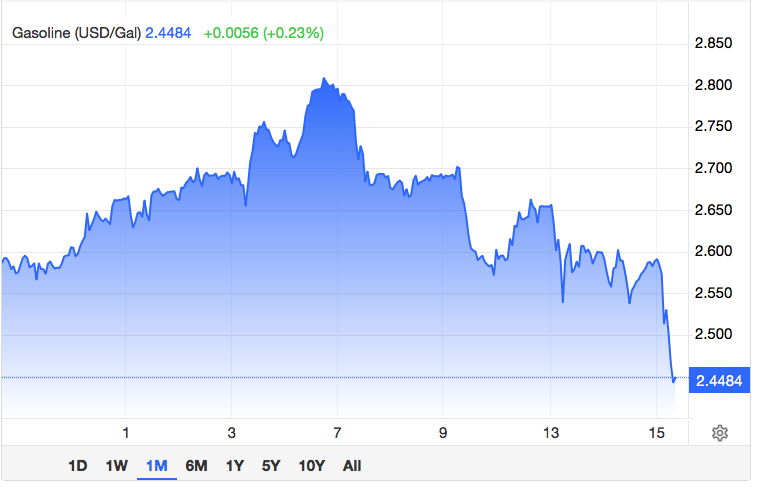 Let start with gasoline where wholesale gasoline futures slipped below the $2.5 per gallon mark, easing further from an over one-month high of $2.8 reached last week, pressured by overall weakness in energy markets due to persistent concerns about low domestic demand. Los Angles wholesale prices show a similar trend today.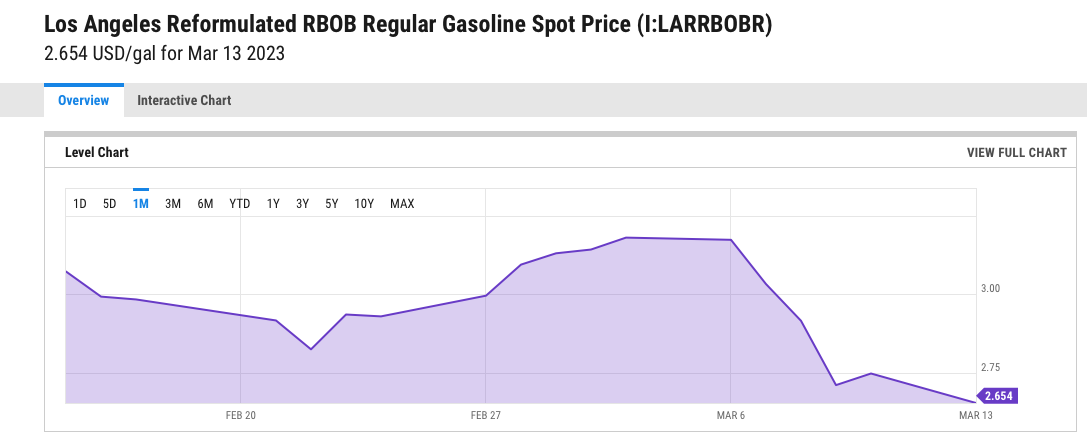
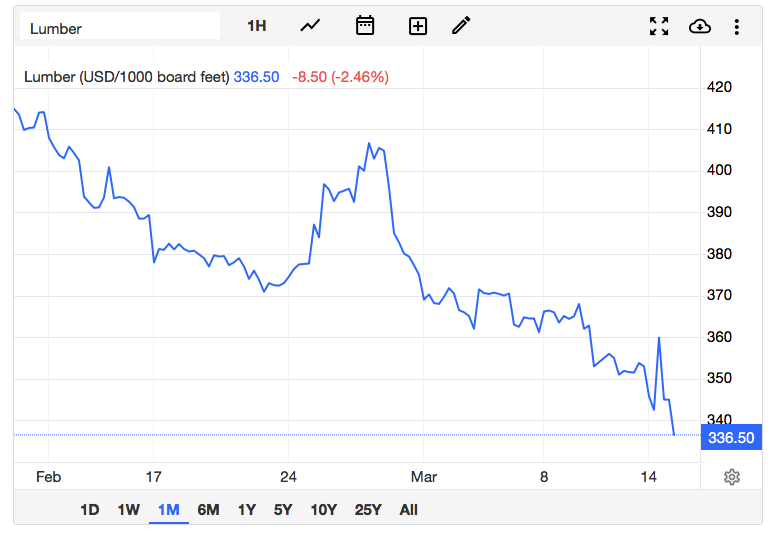 How about lumber prices– a key building material that skyrockected during the Covid day but has been falling over the past year. As you can see those 2 by 4s ought to be cheaper as the Spring building season comes around. Here is chart of wholesale prices as of today.
 How about our Wheaties? Financial reports detail today that wheat futures in the US were at $6.8 per bushel, hovering close to the 20-month low of $6.65 touched on March 9th amid expectations of strong supply. Russia reported it has no objection to extending the grain deal that places a safe trade corridor for exports of grain out of Ukrainian Black Sea ports. The news supported hopes that a steady supply of wheat will continue from one of the world’s top exporters past the March 18th deadline, as Ukraine reported to have a stronger winter wheat harvest than previously expected.
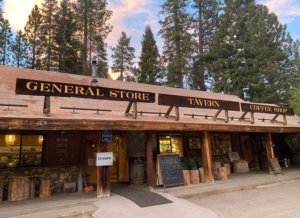 The Ponderosa Lodge was fully engulfed in flames on Friday. Reports the 5,000-square foot structure located just beyond Quaking Aspen Campground was on fire began to circulate on social media on Friday afternoon.
 Minneapolis-based U.S. Bank acquired Japanese-owned MUFG Union Bank in December and the merged company will now be closing at least 145 branches that are either U.S. Bank or Union Bank locations all over California. Likely, this is the greatest number of bank closures in the state that have been recorded.



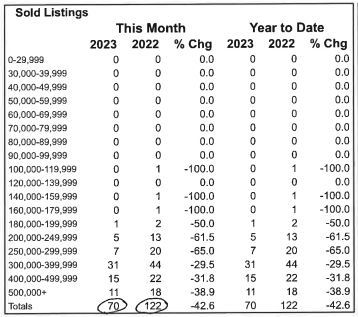 Higher interest rates are resulting in fewer homes being sold in Visalia according to the Tulare County Realtors Assn MLS. In January 2023 – 70 homes were sold compared to 122 in January 2022. That is a 42.6% drop.
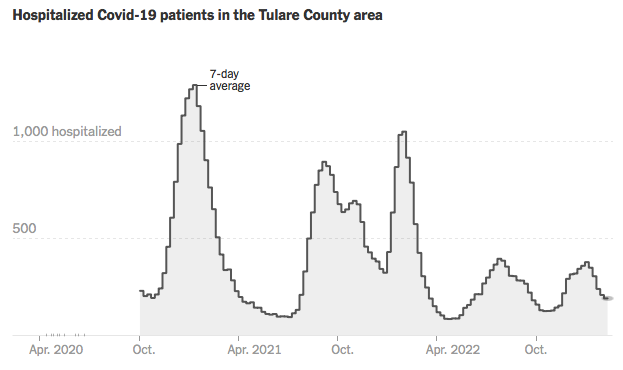 Last year at this time Covid-19 cases were overwhelming the Tulare County health system with around 1500 patients hospitalized compared to 189 as of February 18,2023.
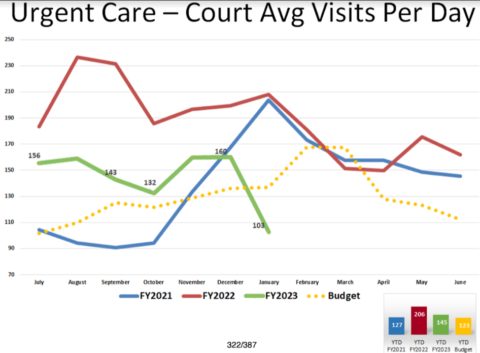 The good news at Kaweah Health is that fewer patients are requiring hospital care. The bad news is that Kaweah Health is seeing fewer patients. It’s not just due to the drop in Covid-19 patients but a decline in a number of procedures being done at the hospital both inpatient and outpatient. That includes fewer surgeries than Kaweah’s budget predicted,fewer cardiac catheterizations, a lower census overall at 425 patients when the budget number is 500. They are seeing fewer patients visiting the district outpatient facilities like the Urgent Care centers and Rural Health Clinics as well.

 -March 2,2023-
 United Health Centers has opened its first Visalia health clinic at 4038 S Mooney, remodeling the former Cost Plus store.The health clinic plans a second Visalia location at 198 and Chinowith.
 Higher mortgage rates seem to be pushing demand for new housing down, not just for existing homes. Mortgage Bankers Association says nationwide the volume of mortgage applications in late February was 44% lower than the same week one year ago, and are now sitting at a 28-year low.
 U.S. vehicle sales rose 17.7% month-on-month to 15.7 million (annualized) units in January. This was slightly above the consensus forecast which called for a gain to 15.5 million.
 Almost 4 years after the curtain fell on the Enchanted Playhouse, the former Main Street movie theater has remained dark. Purchased by Visalia developer JR Shannon a few years ago, a Tulare group is now planning a new innovative use.
 As of last October Gabriel and Silvia Diaz are the new owners of Fugazzis on Main Street as founder Mike Fligor has sold interest to longtime employees who will continue to operate different Fugazzi locations not just on Main Street in Visalia but in Tulare, Hanford and Kingsburg.