Grape Industry Offers $840K For UC Cooperative Extension Grape Advisor

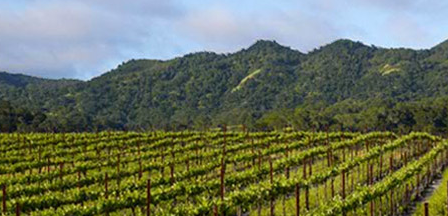
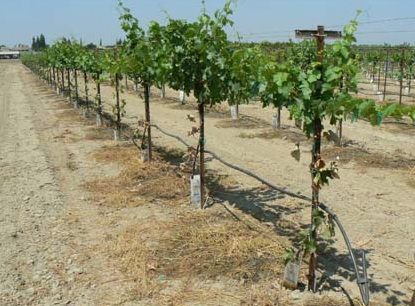
The University of California Agriculture and Natural Resources will soon be hiring a UC Cooperative Extension term area advisor specializing in table grapes in Tulare, Kern and Kings counties. Thanks to an $840,000 gift from the California Table Grape Commission, the advisor position will be funded for six years by the $1.4 billion annual table grape industry.

“The UC Cooperative Extension farm advisor system is an integral part of the growth story of the table grape industry in California,” said Kathleen Nave, president of the California Table Grape Commission. “Continuing that growth is critical to the industry but also to the rural communities in which table grapes are grown. With this gift, the University will be able to expand its ability to help growers cope with challenges such as pests, diseases, water quality and quantity, and a host of known and unknown issues that could negatively impact the industry’s ability to compete in a worldwide marketplace.”
The California Table Grape Commission-funded position will be headquartered in Tulare. UC ANR will also be hiring a UC Cooperative Extension area viticulture advisor who will be based in Kern County.
“This generous gift by the California Table Grape Commission will enable UC ANR to begin recruitment immediately,” said Barbara Allen-Diaz, University of California vice president for Agriculture and Natural Resources. “As state funding has dramatically decreased in recent years, private-sector support is becoming a critical component of funding important positions essential to the long-term health of agriculture throughout California.”
This new funding model will enable UC ANR to hire outstanding academics to continue to conduct research and deliver new knowledge that is critical to the sustainability of farmers and to California’s future.

Cunha: Obama Election Boosts Chances For Farm Labor Solution

Valley farmers may have voted 3 to1 against Mr Obama but ironically it was Obama’s big win that appears to have shaken up the GOP and boosted chances agriculture may be finally getting what they want – a legal workforce. So says a key ag industry advocate – Manuel Cunha, who heads up Nisei Farmers League.

”The GOP go their head handed to them” in the election that saw Obama win the Latino vote 71% to 27% for Mr Romney. ”If Romney had won we would have a far more difficult task ahead of us now.”

During the Republican primary process Romney seemed to move to the right on immigration, something that didn’t sit well with many Latino voters. To avoid repeating the mistake – with the election results in their hands- Republicans appear to be considering working on immigration reform as House Speaker John Boehner has now signaled. “This issue has been around far too long,” he said. “A comprehensive approach is long overdue, and I’m confident that the president, myself, others can find the common ground to take care of this issue once and for all.”Boehner told ABC a few days ago.
”Kevin McCarthy is on board too” expects Cunha speaking of the Valley-based number 3 GOP leader in the House.
Only days after the election, a top Democrat and Republican announced that they hope to start debate this year. Sen. Charles Schumer of New York and Republican Sen. Lindsey Graham of South Carolina said they will restart immigration reform talks that collapsed two years ago
Because momentum is now strong, Cunha expects “wording on a new bi-partisan bill will be ready to pass in the first 90 days in 2013.”

Cunha is working on a unique strategy to gain more backing for the ideas to support both the normalizing of current undocumented residents who have been living here as well as a guest worker plan.

“We call it the 3Bs’”

The list includes perhaps some strange bedfellows. 1.Bible – evangelicals and traditional religious groups supporting humane treatment of families. 2. Business – that includes agriculture who want a work program and 3.Badges – law enforcement who want to see this issue off their backs.

Cunha says if “all 12 million undocumented is too much to tackle in the first round” his group supports a “phased approach” that would back the Dream Act (opposed by the GOP in the past) and allowing residents with no criminal record but who have lived here for say, 20 years, to apply for citizenship, for example.

Regarding potential support from advocacy groups like the United Farmworkers, Cunha says”the front door is open” to continue to work with immigrant advocates like the UFW on a consensus. Cunha and UFW both backed Ag Jobs a few years back, the last attempt to forge a coalition.

Cunha add that Sen Diane Feinstein will play a key role in coming negotiations and that his group -Immigration Forum, will be working with the Senator and working across the aisle “to stop stonewalling on this issue.”

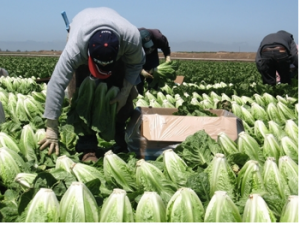
In 2012 California farmers complained they were having trouble getting enough labor with some saying new arrivals are not coming from Mexico,afraid to cross the border because of drug cartel activity near the borders. Also, farmers said more workers are now going into construction, food service or hotels so there’s more competition in finding farm laborers.

The Western Growers Association this summer told CNBC its members were reporting a 20 percent drop in laborers this year. “Stronger border controls are keeping workers from crossing into the U.S. illegally, and the current guest worker program is not providing enough bodies.”

Cunha himself said earlier this summer that he expected there would not be enough workers to harvest the raisins but later, after the harvest, suggested a smaller raisin crop this year insured an adequate supply of labor.

In May the PEW Hispanic Center released a report that said “The largest wave of immigration in history from a single country to the United States has come to a standstill. After four decades that brought 12 million current immigrants—most of whom came illegally—the net migration flow from Mexico to the United States has stopped and may have reversed, according to a new analysis of government data from both countries by the Pew Hispanic Center, a project of the Pew Research Center.
The standstill appears to be the result of many factors, including the weakened U.S. job and housing construction markets, heightened border enforcement, a rise in deportations, the growing dangers associated with illegal border crossings, the long-term decline in Mexico’s birth rates and broader economic conditions in Mexico.”
Those who wanted a stronger border first – can perhaps declare victory allowing immigration reform, to use an Obama phrase – go forward.

Dairy Co-Ops Study Federal Order System

VISALIA, Calif. — November 2, 2012 — With the recent interest in California joining the Federal Order pricing system, the CDI Board of Directors and management have taken a proactive step to investigate what impacts might be expected as a result of adopting federal milk pricing regulations. Accordingly, CDI has commissioned a comprehensive modeling study of a California federal milk marketing order, the first of its kind. Committed to working together to ensure the sustainability of the California dairy industry, Dairy Farmers of America Western Area (DFA) and Land O’Lakes (LOL) have agreed to join CDI and participate in the study.
CDI has contracted with Dr. Mark Stephenson, director of dairy policy analysis at the University of Wisconsin’s College of Agricultural and Life Sciences, and Dr. Chuck Nicholson, Clinical Associate Professor of Supply Chain Management at Penn State University, to perform the five-month study and assess what can be expected by replacing the state milk marketing order with a federal counterpart.
About California Dairies, Inc.
California Dairies, Inc. is the largest member-owned milk marketing and processing cooperative in California producing 43 percent of California’s milk. Co-owned by more than 420 dairy producers who ship more than 17 billion pounds of Real California Milk annually, California Dairies Inc. is a manufacturer of quality butter, fluid milk products and milk powders. In addition, California Dairies Inc. is the home of two leading and well-respected brands of butter – Challenge and Danish Creamery. California Dairies’ quality dairy products are available in all 50 United States and in more than 50 foreign countries. For additional information on California Dairies, Inc., visit www.californiadairies.com.
###

Ag Beat

Nurseries Sell Out Of Trees & Vines
The growing popularity of almonds, walnuts and other orchard and vineyard crops affects demand for the commercial plant nurseries that sell young trees and vines. Nurseries say demand from farmers for new trees and vines is so high that some nurseries have already sold out for new plantings to take place this winter, and are already taking orders for next year. In addition to filling customer demand, new tree and vine varieties often resist disease and drought better.
Weather, Markets Affect Raisin Crop
With the raisin harvest now complete, farmers and analysts say both weather and market forces reduced the crop. The Raisin Administrative Committee estimates this year’s crop is one of the smallest of the past decade, down about 20 percent from last year. The dry and cold winter and spring contributed to a smaller crop because the fruit was not able to develop as well as usual. And many grapes were sold to winemakers instead of being dried for raisins.
Small Raisin Crop Helped Labor Situation
Farm leader Manuel Cunha told the Capitol Press that a light raisin crop cut harvest demand this year so farmers did not feel the full impact of a perceived labor shortage.  Cunha says many growers say they were short workers this year “however crops were harvested. Cunha said he doesn’t know of any crop not harvested because of the picker shortage.”

October Farm Prices Up 8.8%
USDA reports that the preliminary All Farm Products Index of Prices Received by Farmers in October, is up 8.8 percent from September. The Crop Index is up 15 points (6.7 percent) and the Livestock Index increased 4 points (2.6 percent). Producers received higher prices for milk, hogs, grapes, and corn and lower prices for eggs, apples, lettuce, and soybeans. In addition to prices, the overall index is also affected by the seasonal change based on a 3-year average mix of commodities producers sell. Increased monthly movement of soybeans, corn, grain sorghum, and cottonseed offset the decreased marketing of wheat, milk, cattle, and grapes.
The preliminary All Farm Products Index is up 25 points (14 percent) from October 2011. The Food Commodities Index, at 194, increased 14 points (7.8 percent) from last month and increased 20 points (11 percent) from October 2011.
Prices Paid Index Up 2 Points
The October Index of Prices Paid for Commodities and Services, Interest, Taxes, and Farm Wage Rates (PPITW) is 220 percent of the 1990-1992 average. The index is up 2 points (0.9 percent) from September and 15 points (7.3 percent) above October 2011. Higher prices in October for complete feeds, concentrates, nitrogen, and feeder cattle offset lower prices for mixed fertilizer, supplements, gasoline, and diesel.

CFB contributed to this report

Hedgerows Enhance Bird Abundance & Diversity On Farms

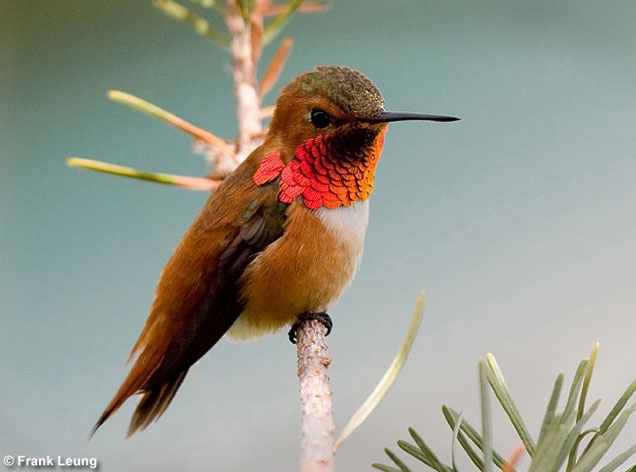
California’s Central Valley is home to a rich diversity and solid abundance of birds. Many are year-round residents, while others are migrants that winter in our valley or travel to destinations further south. Currently more than 400 species of birds call the Central Valley their home; these include raptors, songbirds, ducks, geese, shorebirds, hummingbirds, and others. (Download a checklist of Central Valley birds here.)All birds depend on habitat for food, shelter and nesting sites. With a decline in habitat in the Central Valley, primarily due to agricultural expansion, urbanization and water diversions, there has been a significant decrease in the numbers and types of birds. Many bird species are now endangered, threatened or listed as species of special concern. Approximately 36 percent of our state’s historical grasslands, 9 percent of the original wetlands, and 2 to 7 percent of the original riparian forests remain. The Central Valley alone has lost more than 90 percent of the riparian, oak woodland and shrub land habitats.

Despite this loss and fragmentation of habitat, many birds continue to use remnant or restored riparian and upland vegetation around farms. Crops such as rice and alfalfa also provide important habitat and foraging areas for birds. Interest is also surging in restoring lands to enhance habitat for birds, including planting hedgerows of California native shrubs and grasses along field edges.In a recent study by UC Cooperative Extension and Audubon California in Yolo County, researchers determined that hedgerow plantings along field margins helped increase the abundance and species richness of birds on farms, both for winter migrants and year-round species. Their data analyses, examining farms with and without hedgerows, showed that the presence of hedgerows tripled bird abundance and doubled bird species richness in these linear habitat features, but did not increase the bird abundance in the adjacent crops. Of the 2,203 birds counted during the winter and spring of 2011-12, hedgerows drew 41 species of birds, as compared to 22 species in control areas (weedy, semi-managed field edges). In addition, more than three times as many birds used the hedgerows during wintertime, compared to the spring breeding season. This highlights the importance of this habitat for migrating and overwintering birds.

Of significant interest was the finding that bird pest species were using crops regardless of field edge habitat. That is, crop fields with hedgerows showed the same numbers of bird pest species (such as blackbirds that can damage seed crops), compared to crop fields without hedgerows. The researchers observed a total of 1,642 birds, representing 30 species using the adjacent agriculture fields. The minimal species overlap indicated that a different bird community was using crop fields, regardless of the presence of hedgerows. The researchers also found that crops were more heavily used in the winter than during the breeding season.Hedgerows provide a variety of ecosystem services in agricultural landscapes, such as attracting native bees to enhance pollination and natural enemies to control pests in adjacent crops. Birds also feed on insects and rodents, potentially helping with pest control in crops. The value of hedgerows on farms for enhanced biodiversity and ecosystem services will hopefully encourage more landowners to establish them on field edges for conservation purposes.

For more information on establishing hedgerows on farms, download the free UC ANR publication Establishing Hedgerows on Farms in California. A more thorough discussion of the study results highlighted in this blog will be published in the upcoming December 2012 issue of the California Society of Ecological Restoration newsletter, Ecesis. A conservation innovation grant from the Natural Resource Conservation Service will help expand and continue this important research.

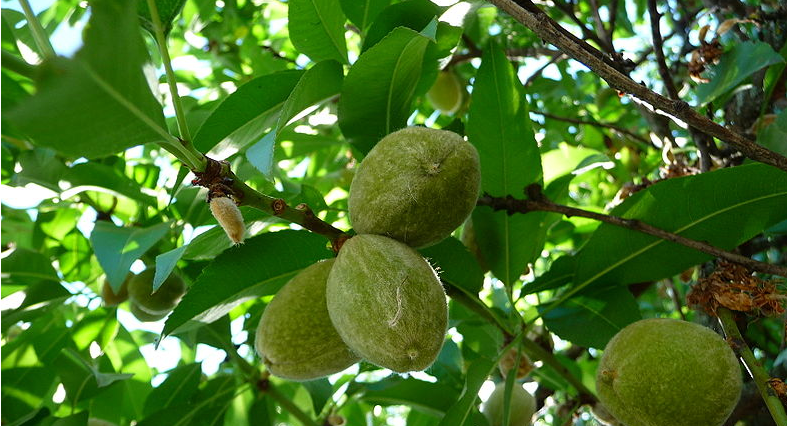
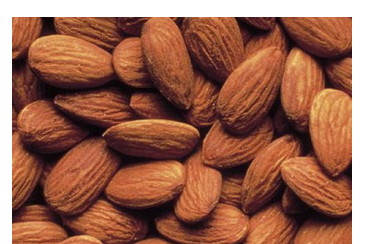
Almonds California’s Second-Most Valuable Commodity

With help from UCCE, the value of almonds in 2011 surpassed the value of grapes.
When California publishes its crop report in November, there will be a significant change in the ranking order of the state’s top agricultural commodities. In 2011, for the first time ever, the value of the California almond crop surpassed the state’s iconic grape industry to move into second place, behind dairy.

California almonds are on a roll. In the last 20 years, scientific discovery and grower ingenuity have nearly doubled almond per-acre productivity. A good yield in the 1980s was 1,400 pounds per acre. The average yield for 2011 was 2,670 pounds of shelled almonds per acre.
Forty years ago, California farmers produced less than 100 million pounds of almonds on about 200,000 acres of almond orchards. Mechanization, improved irrigation efficiency, advances in insect and disease management, pruning research and fertilization studies have fueled explosive growth in the industry. Farmers in California’s Central Valley now tend 760,000 acres of almond trees, producing about 2 billion pounds of shelled nuts a year.  The crop, which represents 100 percent of U.S. almond production and 75 to 80 percent of world production, was valued in 2011 at $3.87 billion, surpassing table, wine and raisin grapes, which were valued at $3.86 billion.
“Even with this record production, we have more demand than we have supply,” said Bob Curtis of the Almond Board. “The driver behind that is nutrition studies that show almonds are a healthy food and snack.”
A tremendous amount of UC research is behind the California almond success story, said Bruce Lampinen, UC Cooperative Extension specialist in the Department of Plant Sciences at UC Davis, an expert in almond canopy management.
“Higher density plantings of almonds and a trend towards less pruning, and improved water management have led to much higher yields,” Lampinen said.
Many almond growers have replaced flood irrigation with micro-sprinkler or drip irrigation, said Larry Schwankl, UC Cooperative Extension specialist in the Department of Land, Air and Water Resources at UC Davis. These irrigation systems increase the precision of water and fertilizer application. Over the years, UC Cooperative Extension advisors and specialists established demonstrations of micro-sprinkler and drip systems in many parts of the Central Valley and reached out to farmers to show how they could be managed to optimize production.
“Twenty years ago, we simply guessed at the amount of water that the trees needed and we applied it on a calendar basis,” said Joe MacIlvaine, president of Paramount Farming Company in Kern County, one of the state’s largest growers of almonds, pistachios and pomegranates.  “Today, we are delivering water and nutrients directly to the root zones when they are needed.”
Two decades ago, a granular form of nitrogen fertilizer was generally applied to almond orchards in the fall to allow winter rain and irrigation to move it into the soil for use by the trees in spring and early summer. Nitrogen use efficiency was believed to be about 40 percent. Now, nitrogen fertilizer is applied through the irrigation system during the growing season, when the tree needs it.
“Today, our nitrogen use efficiency can be as high as 85 percent,” said Blake Sanden, UCCE advisor in Kern County, an irrigation expert. He and Patrick Brown, UCCE specialist in the Department of Plant Sciences at UC Davis, have conducted nitrogen trials in almonds with Paramount Farming.
“When you increase the conversion of applied nitrogen fertilizer to higher crop yield, there is significantly less potential for nitrogen to leach below the rootzone and contaminate groundwater,” Sanden said. “But each field is unique and requires site-specific management to achieve these high levels of efficiency.”
Another area where UC research has led to significant crop yield growth is in canopy management and tree spacing. Research by Mario Viveros, UCCE advisor emeritus in Kern County, and other scientists showed that a tendency among growers to over prune was taking a toll at harvest time.
“A lot of farmers who are now growing almonds had experience with fresh fruits, where you do need to prune to get light on the fruit for good color. In almonds more canopy generally means more yield,” Lampinen said. “Today, most almond growers only prune when branches are growing in the way of tractors or other equipment.”
UC research also found that orchards planted with traditional wide spacing between the trees weren’t making the most efficient use of sunlight on the farms. Older orchards had 60 to 70 trees per acre. Today, almond orchards are planted at an average density of about 110 trees per acre based on results of UC research.
However, studies have also shown that crowding still more trees into orchards triggers diminishing returns. In almond production, the nuts are shaken from the trees to dry on the ground before they are harvested.
“If the orchard floor becomes too shaded by trees planted too densely, the orchard floor temperature and humidity become optimal for growth of pathogens that could become a food safety problem,” Lampinen said. “You want enough sunlight to hit the orchard floor to reduce potential pathogens, like salmonella.”
MacIlvaine acknowledged the role of UC Cooperative Extension in helping the almond industry achieve the production milestone in 2011.
“The University of California has been a wonderful partner in improving our farming practices,” he said. “The whole system is not only more efficient, but more sustainable at the same time.”

Ag: Milk Co-ops Go Retail / California’s Good Wine Grape Crop

Milk Co-ops Add Retail Focus

Both Land O Lakes and California Dairies Inc., each with a big Tulare County presence, are adding new retail/consumer oriented products to their mix to diversify the way they earn income. Visalia-based CDI has added a new spreadable butter line at its Tipton plant last month. Spreadable butter now represents 10% of all butter sales and the category is growing by 20% a year says Irv Holmes of Challenge Butter,a division of CDI.The  spreadable butter mixed with olive oil is 50% lower in fat and calories. The Challenge Butter brand overall is growing by 20% a year. At Land O Lake this summer, the company purchased  Kozy Shack Enterprises Inc., a maker of chilled dairy desserts with a plant in Turlock.The addition is new category –  refrigerated deserts – helping LOL to better diversify says co-op member Tom Barcellos.

Challenge Spreadable Butter is mixed with olive oil,cutting fat and calories 50%

Meanwhile, Deans Foods says they are selling Morningstar Foods with a plant in Tulare. Morningstar sells traditional and specialty items, including cultured dairy products, ice cream mixes, coffee creamers, aerosol whipped toppings. No buyer has yet emerged.

Wine Grapes Good Year

The wine grape harvest is winding up and it looks like a good one says Nat DiBuduo president of Allied Grape Growers. DiBuduo estimates the crop at 3.7 million tons compared to to 3.3 million tons in 2011.The 2012 crop is one of the largest in memory. In the past, a big crop might translate into low prices, but not this year. ”I have been here 13 years at Allied Grape Growers and I have never seen a crop as good as this.”He adds that prices are 10 to 25% higher this year ,depending on variety,and quality is good.”This should be a good year for both growers and wineries” says DiBuduo,in a business where they are often pitted against one another.The industry pushed over so many vines a few years ago “that we may be heading for  a shortage in some grapes.” The difference now, he says, is that growers will work to get contracts  before they go out and plant new vines to limit the big problem in the past – overproduction. One problem – increasing imports.

Climate Change Promises to be a Hot Topic at 8th Annual Sustainable Ag Expo

Industry Leaders Discuss the Science and Policy behind Climate Change
At Sustainable Ag Expo 2012 In Monterey
Climate change is already having an impact on farming around the world.
Agriculture is one of the hottest issues in the global warming debate, and one of the most intriguing. Learn how this issue applies to farmers in the Sustainable Ag Expo’s general session entitled “What Growers Need to Know About the Science and Policy of Climate Change” to be held on Tuesday, November 13, 2012 at the Monterey Conference Center, Monterey, California.
This much anticipated session will feature a diverse panel of speakers from American Carbon Registry, California Climate & Agriculture Network (CalCAN), and UC Davis. They will share their unique perspectives on climate change, as well as discuss how adaptation and mitigation efforts can be part of a plan for success in a time of uncertainty.
“Climate change is already having an impact on farming around the world,” said Renata Brillinger of CalCAN. “California farmers will be facing increasing water scarcity, new pest and disease challenges and extreme and unpredictable weather patterns.” The Climate Change panel at the Sustainable Ag Expo will provide information on how sustainable farming practices can help slow down climate change and make farms more resilient. Speakers will also summarize policies that support the efforts of California agriculture to provide climate solutions.
The 8th Annual Sustainable Ag Expo will be held November 12-13, 2012 at the Monterey Conference Center in Monterey, California. Comprised of innovative presentations and a trade show all focusing on the latest trends in sustainability, the Expo was established by Central Coast Vineyard Team as a communication nexus for sharing information and management strategies throughout the entire California agriculture industry.
Visit http://www.sustainableagexpo.org for more information on the event, including attendee registration and the schedule of events, or call 805.466.2288.

California Had 91,000 Acres Of Organic Crops In 2011

WASHINGTON: U.S. Department of Agriculture (USDA)-certified organic growers in the United States  sold more than $3.5 billion organically grown agricultural commodities in 2011, according to the results of the 2011 Certified Organic Production Survey, released today by USDA’s National Agricultural Statistics Service (NASS). NASS conducted the survey for USDA’s Risk Management Agency to help refine federal crop insurance products for organic producers.
“This is the first time we have conducted a survey focused solely on the USDA-certified organic producers,” said Hubert Hamer, Chairperson of NASS’s Agricultural Statistics Board. “With this survey’s results, policymakers will be able to better assess the Federal Crop Insurance program and its impact on the organic industry.”
Mirroring its conventional counterpart, corn leads organic field crops in sales and accounted for more than $101.5 million in 2011. The only other field crops to have more than $50 million in sales were alfalfa dry hay and winter wheat, accounting for $69.5 million and $54 million in sales respectively.
When it comes to organic field crops acreage, Wisconsin leads the nation with more than 110,000 acres harvested in 2011. Wisconsin is followed by New York, with organic growers harvesting more than 97,000 acres. California closely follows the Empire state growers with more than 91,000 acres of organic field crops harvested in 2011. These top three states illustrate just how geographically diverse organic crop production is in the United States.
In addition to looking at organically produced crops, the survey also gathered information on the organically raised livestock, which accounted for $1.31 billion in sales in 2011. Organic milk was the top livestock commodity last year, accounting for $765 million in sales. The other key organic livestock commodities were chicken eggs and broiler chickens, earning $276 million and $115 million in sales respectively.

Almond Shipments Climb 25%

The crop year report for almonds is in and it’s a record. US domestic almonds shipments of 48.3 million pounds were 11% ahead of 2011 while export shipments (91.4 million pounds ) were up 34%. Total shipments were 139.6 billion pounds or 25.2%.  Early 2012-2013 shipments are showing a slight decline so far from the record pace but it is early in the season.

The big boost is from exports of California nuts.Top destination was China.A US Trade report last month on South China’s almond consumption indicates that U.S. almonds remain among the top imported items. Shelled almond  imports increased 269% in 2012 due to favorable prices relative to other imported tree nuts.