Water Watch: Tulare Basin

Alta Irrigation Will Deliver No Water This Year

Alta Irrigation District who supplies canal water to farms in northern Tulare County and southern Fresno County will deliver no water this year, the first time in its 127 year history. Runoff on the Kings River is expected to be only 9% of average. The water district has some 250 miles of open canals supplying what is the stone fruit basket of the state. Officials worry that vigorous water pumping this  summer will cause many wells to go dry.

Tulare Basin Uses More Water Per Acre/Ft

The  hotter, drier southern part of the SJ Valley requires more water to grow the same crop vs the Sacramento Valley says a UC academic.
A senior researcher at the UC Davis Center for Watershed Sciences, Josue Medellin-Azuara, calculated that it takes 4 acre-feet of irrigation water to grow an acre of almonds or pistachios in the Tulare Basin, where nut orchards have expanded the most in the last decade. In the rest of the San Joaquin Valley, it requires 3.4 acre-feet. But in the Sacramento Valley, these nuts need only 2.4 acre-feet. That’s a difference of roughly one acre-foot, or nearly 326,000 gallons, enough to supply two households for a year

Good ol days...swimming in an Alta IDS canal
Good ol days…swimming in an Alta ID canal

Despite Record Drought Summer Fruit Season Looks Good

May 7,2015

As bad as the drought is in California,and it is, you may not have to worry just yet that the state’s farmers will have little to offer in the produce aisle this summer. Here’s a news flash – you are not going to run out of salsa or guacamole either.

In fact the drought could offer a silver lining for some growers – the perennial glut in some summer fruit won’t be there this year – no surplus for a change – and that could help push up prices the farmers receive.

In the meantime production estimates for crop after crop are not the disaster one might expect from all the gloom.

A quick look around appears to show farmers are expecting crop sizes not all that different than last year. Some are shipping more ag commodities this year than last!

This week Beacon Economics Jock O’ Connell commenting on the latest   US trade report said that “Farm exports showed an especially strong recovery. He points to industry reports indicating that foreign shipments of almonds (California’s leading agricultural export) jumped by 42.0% over last March, while walnut exports surged by 77.2%.

So how is the almond crop looking for this year?

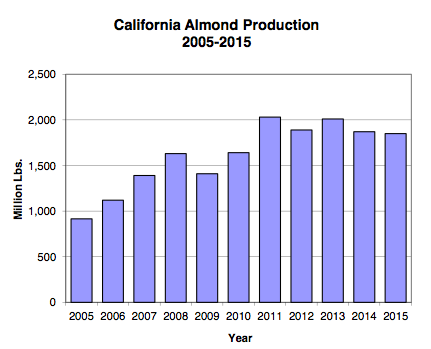
Screen Shot 2015-05-06 at 10.13.36 AM

This week USDA forecasted the 2015 California almond crop is 1.85 billion pounds – 1 percent below last year’s production of 1.87 billion pounds. Hardly a disaster. This is happening in the face of the drought and the high US Dollar making our products more expensive overseas.

Here is a look around the summer produce scene in California as Memorial Day kicks off.

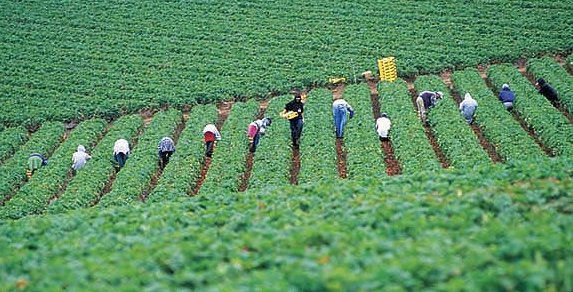
-Central Coast strawberry fields appear to be forever – producing bumper crops – up to 19.5 million flats so far this year compared to 16.3 million flats for the same period last year according to the National Berry Report.The Salinas/Watsonville fields have produced 9.3 million flats compared to 4.6 million as of this same time in 2014.

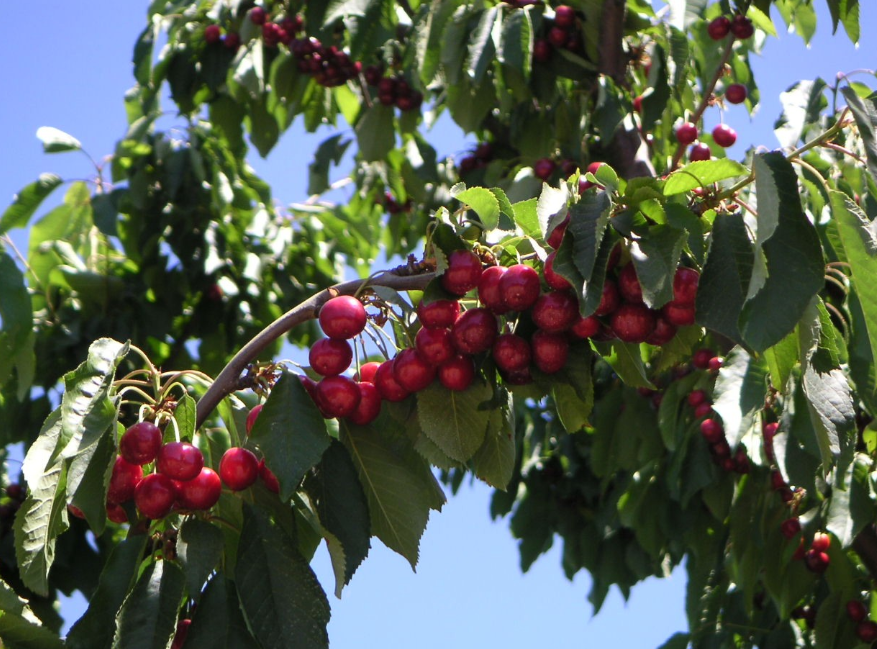
First tree fruit to show up  – Central Valley cherries are looking at  6 million to 6.5 million cartons – a much bigger crop than last year.

Screen Shot 2015-05-07 at 4.18.45 PM

-The state’s first taste of table grapes are coming off the vines in Coachella Valley, an area largely untouched by the drought growers report, due to Colorado River water supply.The crop is early and about normal size. No rain is good news they say.

-How about the San Joaquin Valley grape crop? Allied Grape Growers says they expect a similar size crop to last year noting that while growers pulled lots of vines, new ones are coming on-line.Meanwhile  the closely watched bunch count is up (more grapes per acre) from last year on almost all varieties.

-How about tree fruit, peaches ,nectarines and plums? Growers are celebrating the end of a decade of oversupply that caused so much pain.Lack of chill hours has helped create a short crop in some varieties but at least, no disaster.

-Also it looks like you are not going to run out of salsa or pizza sauce. Processing tomato production broke records in 2014 despite the drought that had gone for three years as of then.This year, initially growers said they expected to produce a record 15 million tons but now have lowered their target acreage to reach 14 million tons in 2015, a little lower than last year but higher than any other year before. The high value of the dollar is offered as the reason for the reduction – not the drought.

-Nor do you need to worry too much about that guacamole. The California Avocado Commission is estimating a crop of 327 million pounds, despite all those trees that were pruned right down to the ground. The 327 million pound number is higher than last year including the bonus of lower prices to consumers.

Mild Winter Gave Ag Pests A Head Start In 2015

May 5,2015

San Joaquin Valley farmers are facing an unusually high pest population this spring due to the milder than normal winter, and rapidly warming spring conditions, says a UC Agriculture and Natural Resources entomologist.

“I’ve never seen this happen before in the 25 years I’ve been working on citrus entomology,” said Beth Grafton-Cardwell, UC ANR Cooperative Extension citrus entomology specialist. “One pest control adviser who’s been in the business for 50 years told me this is the first time he’s seen weather conditions this extreme.”

In a normal valley winter, temperatures dip into the low 20-30s for weeks at a time. But this past winter, average daily temperatures were above the developmental threshold for many insects. Insects continued to reproduce and grow throughout the winter instead of hibernating.

“All winter long, we had fuller rose beetles emerging and laying eggs, which usually doesn’t happen,” Grafton-Cardwell said. “California red scale, citricola scale, citrus peelminer and Asian citrus psyllid were active through the winter and are all requiring treatment weeks before they normally would.”

David Haviland, UC ANR Cooperative Extension entomology advisor in Kern County, said he has received numerous calls about legions of army cutworm moths.

“People are wondering why there are so many moths buzzing around their porch lights. That’s nature for you,” Haviland said. “While many people might be frustrated by the moths, I like to think that there are a lot of happy birds out there with well-fed babies.”

Haviland said the farmers he works with are finding that the warmer-than-usual winter and early spring has sped up development of a wide assortment of insects, including navel orangeworm, beet armyworm and vine mealybug.

“Insects are part of a complex ecosystem. Every year, the factors change,” Haviland said. “This year, we have a very dry winter and a warm spring. In some cases, that plays to the advantage of pests. And sometimes the weather conditions are better for the beneficial insects.”

An initiative to manage endemic and invasive pests and diseases is part of UC Agriculture and Natural Resources Strategic Vision 2025.

Drought Takes Toll On Farm Jobs In South Valley

May 4,2015-
The California EDD reports the number of farm jobs dropped year over year in the states’s most productive farming area including Fresno,Tulare and Kern counties in March. On a year over year basis the number of farm jobs dropped by 1400 in Tulare County, a 4.6% decline;by 2500 jobs in Fresno County, a 6% drop and by 700 in Kern County, a decrease of 1.6%.
For all three counties there were a  a total of 4600 fewer ag related jobs – most drought related. All three counties showed higher employment in nonfarm jobs.

Screen Shot 2015-05-04 at 11.34.14 AM

Salt-Tolerant Dutch Potatoes Offer Hope

from news reports

April 29,2015-Screen Shot 2015-04-29 at 1.40.40 PM
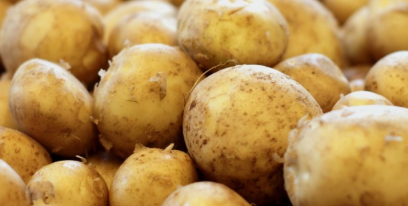
A Dutch team has developed a potato crop through traditional breeding methods that is tolerant to salt water. Their project beat more than 500 competitors from 90 countries to win an award sponsored by the US Agency for International Development (USAID). Inspired by sea kale, Dutch farmer Marc van Rijsselberghe set up Salt Farm Texel in the north of the Netherlands and collaborated with Dr Arjen de Vos from the Free University in Amsterdam to look at the possibility of cultivating crops using non-fresh water. “The world’s water is 89% salinated, 50% of agricultural land is threatened by salt water, and there are millions of people living in salt-contaminated areas.
“Up until now everyone has been concentrating on how to turn the salt water into fresh water; we are looking at what nature has already provided us with”, van Rijsselberghe told the Guardian.
The process of desalination is expensive and requires much energy. The salt-tolerant potato plants, however, were watered with diluted sea water. The variety is four times more salt tolerant than regular potato varieties. The project used a trial and error approach and then screened different potato cultivars of which only two showed increased salt tolerance and were used for further development of the saline potato. Some of the Texel seed potatoes are already on their way to Pakistan where 4.2 million hectares of land is salt affected and farmers are often forced to use brackish groundwater to water their crops, which reduces yields and the quality of the crops. If the potatoes adapt to the Asian climate, they could transform the lives of farmers not only in Pakistan. According to Dutch team, there is no risk of overdosing on salt when eating crops fed by sea water. “What we find is that, if you tease a plant with salt, it compensates with more sugar,” said de Vos. The salt is mostly retained in the leaves of the plant. Peter Melchett, policy director of Soil Association, welcomed the new potato variety: “This is another example of conventional breeding beating GM technology by years. These non-GM salt-tolerant potatoes are already being grown yet ‘saline tolerance’ has always been one of the great (as yet unfulfilled) promises of pro-GM campaigners.”

Disease Affecting 20,000 Acres of Pistachio Trees Puts Big Nursery On Hot Seat

Two Million Trees Impacted

April 29,2015 –
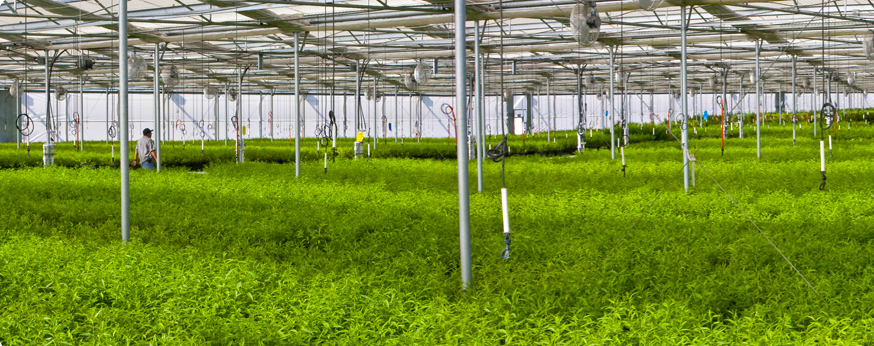
Scientists say a bacteria found its way into clonal propagated pistachio tree rootstock from Duarte Nursery, one of the largest tree nurseries in California. Some young trees sold to farmers in California and in Arizona from 2011 to 2014 exhibit what has been called Bushy Top Syndrome affecting 20,000 acres and perhaps 2 million trees according to an estimate by Robert Klein, manager of the California Pistachio Research Board.

According to Klein the affected trees exhibit short stature, stunted growth in the limbs and roots with a bushy top somewhat like a witches broom.
Screen Shot 2015-04-29 at 11.25.48 AMThe trees are weak and can be pulled up easily from the ground. Most cannot be successfully budded.

Farm advisors have recognized there is problem with the trees for some time although its cause was not known and no mention of Duarte as the source has been made public before.

Here is one description in the ag press.“Budders were having problems grafting buds onto rootstocks in several fields of young pistachio trees, which didn’t appear to be growing normally,” recalls Craig Kallsen, University of California Cooperative Extension Service farm advisor for Kern County. “As many as 60 percent of the buds didn’t take in some orchards.”

Late last year scientists announced the cause was likely from a new strain of bacterium – Rhodococcus fascians (Rf).

But Stanislaus County-based Duarte Nursery owner John Duarte, the only nursery implicated in the find, says he is not sure this is a disease. “If it is – it’s the strangest disease I’ve ever seen.”

Whatever is making this happen growers are pulling trees by the thousands wondering if getting rid of the trees will end their problem.

To make matters more complicated not all the Duarte delivered UCB1  clones exhibit severe symptoms says Klein, making it more difficult to replant,unsure if trees remaining will later show symptoms. If the problem is bacteria-based, there is also concern about spread of the disease either from the soil the trees are pulled from or farm implements.

“It’s a big can of worms” suggests Kings County pistachio grower Chuck Nichols who says he has 300 acres of trees that exhibit “significant busy top symptoms.”

Nichols says he was notified the trees had a problem by Duarte over a year ago but no compensation was agreed to. He says trees he bought from Duarte in 2007, 2008 and 2010 do not have symptoms.Of the 300 acres affected – Nichols says he has pulled out about 75 acres. With uncertainty about what to do about the rest of the acreage, Nichols sent out an ”open letter“ to pistachio growers earlier this month to see if others would join him to discuss “options” that may or may not include a lawsuit.

“I’ve heard back from 4” he says. Meanwhile, Nichols says he is aware of 6 lawsuits pending on the issue.Nichols says Duarte is not talking to him.

Duarte Nursery is a big player in the pistachio industry enjoying an estimated 70% market share for new trees by Nichols’ estimate.

Now owner John Duarte says because of the problem the nursery has suspended their clonal pistachio sales for 2015 “until we can figure out what is going on.”

Duarte has suspected the problem is a “genetic disorder” rather than a disease although he admits there are “still a lot of questions”.

If this is a disease “it’s new and unprecedented.” This bacterium never found in pistachios before, “is usually found in moist environments “ he adds, not in a dry climate like ours.

“Of course we are surprised but after all  – this is farming, there is uncertainty.”

As to the issue of compensation Duarte insists he “working with growers” but the contracts that were signed included ”limited liability” protection for the company.

“There are a number of growers we have signed settlement  agreements with and there are a handful who went out and got attorneys.”

The clonal produced trees developed by the University of California, have become the favorite of the industry in recent years.

Nichols says does not believe how the trees were propagated- as clones – makes them susceptible but has no idea how the bacteria infected this rootstock. ”It could have been spread by anything from water to bad luck.”

Klein says Duarte plantings can vary from 75% with symptoms to as low as 5%.He adds there is no reliable diagnostic test for growers to determine if a tree is affected putting farmers in a tough position.

Researchers like “ Elizabeth Fichtner, a University of California farm advisor in Tulare County, are looking at issues that include whether there is a cure for infected trees, whether it is safe to replant in the same holes from which infected trees were removed, and how likely bacteria is to be transmitted by farming tools that include pruning shears and grafting knives” says a recent ag journal.

One scientific report suggest symptoms make take a while to show up. “Within one to two years of t-budding, many trees exhibited unusual bark cracking around the bud union.”

Nichols says growers like himself are waiting to decide when to pull trees, whole groves or piecemeal, given it will take 2 to 3 years to make up for lost production.

As it is it takes 6 to7 year for healthy trees to put out a decent crop.

Because of surging overseas demand in recent years the pistachio industry in California has expanded rapidly planting thousands of new  acres.

Now a series of setbacks are likely to ratchet back production.

Besides this problem there is the drought and a continuing lack of chill hours this winter adding up to lower production estimates despite all the new orchards coming on line.Confusion reins if the will be a ‘on or off’ year in this crop’s alternate bearing pattern.

Last year the state produced about 500 million tons.

Klein muses that this year “we could see anywhere from  300 to 700 million tons.”

Then there are other factors.

Last year for the first time China went to Iran where they had a good crop, to buy pistachios- looking for a better price.They did buy some U -grown pistachios but not as much.Then there is the strong dollar that makes our goods more expensive in other country’s currencies – hurting the entire US economy right now.


Drought Triggers Need for Emergency Salinity Barrier in Delta

from ACWA
April 17,2014

Screen Shot 2015-04-17 at 7.21.40 AM
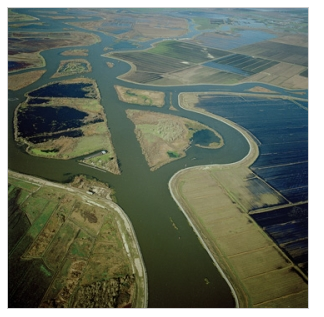
For the first time since the drought of 1976-‘77, state officials are moving ahead with plans to build a temporary rock salinity barrier in the Sacramento-San Joaquin Delta to keep saltwater from the San Francisco Bay from moving up into the Delta where it could mix with fresh water and threaten drinking water supplies.
The emergency action, announced today by the California Department of Water Resources, was reached after extensive consultation with officials from federal, state and wildlife agencies. Installation of the barrier – expected in early May across West False River – will require numerous permits from various state and federal agencies. The barrier would be removed six months later in November.
“We had hoped not to have to install any temporary emergency barriers in the Delta this year,” DWR Director Mark Cowin said in a written statement.  “But conditions stayed dry through March and April.  The West False River emergency barrier would provide a buffer that otherwise would have come from reduced Delta pumping. This summer, there is no Delta pumping to reduce.  The barrier would help afford us time to move water from Oroville and Shasta should we need to push back saltwater intruding into the Delta.”
State and federal water and wildlife officials made the decision in conjunction with the Real-Time Drought Operations Management Team.  The barrier is described as “a pile of basketball-size rocks” the would be stacked across the 750-foot-wide channel that would still allow limited water flow upstream and downstream, depending upon tides.
Keeping saltwater from reaching the central Delta is crucial since a large portion of the state’s freshwater supplies travel through this part of the Delta.  The barrier would help prevent saltwater contamination of water supplies.
Typically when saltwater threatens to encroach deeper into the Delta, water project operators try to repel it either by slowing the pumping of water from the Delta or increasing the amount of water flowing into the Delta from upstream reservoirs.
In this fourth year of drought, however, Delta pumping by the state and federal water project operators already is negligible.  It also takes three to five days for fresh water released from Lake Oroville or Shasta Lake to reach the Delta, which could be too lengthy of a time to provide needed relief.  An emergency barrier would provide an additional tool to help limit salinity intrusion prior to arrival of fresh water from upstream reservoirs, DWR officials stated in a press release.
To avoid flood season and potential harm to migratory fish, removal of the emergency barrier would finish no later than Nov. 1. The removal is expected to take 45 to 60 days. Construction, monitoring, mitigation and removal of the rock barrier are estimated to cost roughly $28 million, to be paid for with a mix of funding from Proposition 50, a $3.4 billion water bond approved by voters in November 2002, and general fund dollars.
Multiple Permits Needed
For the past year, DWR has worked closely with multiple agencies on the issue of emergency salinity barriers.  DWR must obtain permits and a Temporary Urgency Change Permit renewal from the State Water Resources Control Board, a permit for levee modification from the U.S. Army Corps of Engineers, and a California Endangered Species Act permit from the California Department of Fish and Wildlife. In addition, DWR must consult with the U.S. Fish and Wildlife Service and National Marine Fisheries Service on protections for Delta smelt, Chinook salmon and other listed species.  All of these agencies have worked cooperatively on the Real-Time Drought Operations Management Team during this last year of drought.
The permit application process is underway, and DWR hopes to begin installation of the emergency barrier on May 8.
The trapezoid-shaped barrier, about 12 feet wide at the top, also will temporarily block boat passage on West False River and be marked by warning signs, lights, and buoys.  Alternative routes between the San Joaquin River and interior Delta, including Bethel Island marinas, are available.  DWR officials said in a press release that the West False River site raises fewer concerns for threatened and endangered fish than other potential barrier sites the department considered.
Earlier Consideration of Emergency Barriers
Last year DWR studied the potential impacts of potential temporary barriers at three locations:  Steamboat Slough, Sutter Slough, and West False River.  The analysis found anticipated impacts could be mitigated to a less-than-significant level.  DWR received and reviewed considerable public comments on the Initial Study and Proposed Mitigated Negative Declaration. They are available here.
Although DWR is seeking permits from various agencies, the April 1 Executive Order by Governor Brown helps expedite installation of the West False River barrier in time to address emergency drought conditions.  The Governor’s Executive Order declared existence of conditions of extreme peril to public safety and directed DWR to implement emergency drought barriers if necessary.
The Executive Order also suspends some California Environmental Quality Act requirements for certain drought relief actions, including installation of emergency drought barriers.
DWR considered the installation of emergency drought barriers in 2014 but determined in late May of last year that they would not be needed, in part because February and March storms improved water supply conditions.
More drought information is available at DWR’s Drought website:
Information about emergency drought barriers is available here.
/node-inner, /node
/#content-inner, /#content
/#content-outer

Wet End To The Month Expected

April 16,2015

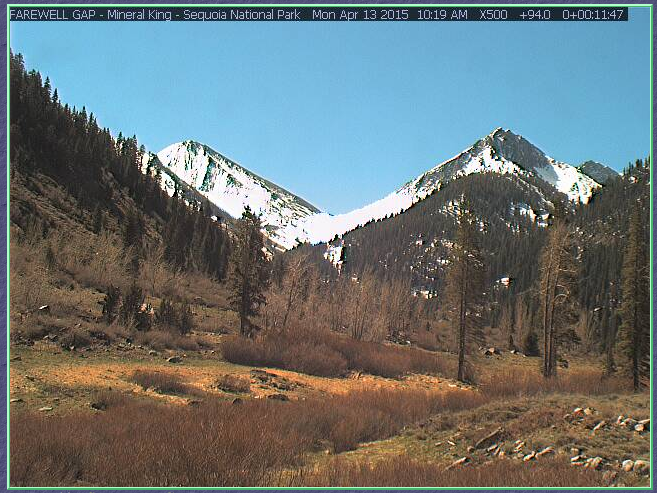
After a pitiful dry winter in California, a cold wet pattern is likely toward the middle of next week say forecasters. On the Central Coast forecaster John Lindsey expects half to three quarters of an inch starting Thursday.NOAA published this GFS forecast map for next Thursday showing  good rain in most parts of the state  and up and down the Sierra ( dark green and blue). The snowpack is non existent in some areas like the Kaweah high country – this pic of Mineral King from their webcam this week.


Screen Shot 2015-04-16 at 6.53.36 AM

Runoff on the Kaweah is expected to be an all time record low of 13 percent of average compare to 26% last year.


Mineral King webcam
Mineral King webcam

Is it too late for rain? That’s what too many news reports suggest ,too little too late – they like to repeat. But another 5 to 10 inches this water year could make all the difference for some – particularly northern California, if where many of the  most important reservoirs are gets a good soak.Those reservoirs supply the population centers and farms to the south.

Despite the nonexistent snowpack statewide, northern California rain totals this year is 75% of average for April 15. A strong storm over several days could bring it closer to average.

A few inches of rain and Shasta Dam’s precipitation total will be more than it has received for each of the past 3 water years. We are an inch away from 50 inches this water season – better  than last year when they got only 36”, 49’’ the year before and 26” the year before that. The last big year was 2011 when they got 68 inches.

The reason this is a big deal is that how much water Shasta sees determine whether and how much  LA, the Central Coast and Central Valley will receive this summer.

Friant Water District  for example is facing another zero water allocation depending on what happens in Shasta reservoir. Besides quantity that decision depends on how cold that water is – used to benefit fish in the Sacramento River. Friant officials say the Bureau of Reclamation is not saying how they will decide this key issue.

El Nino Strengthens


heating up
heating up

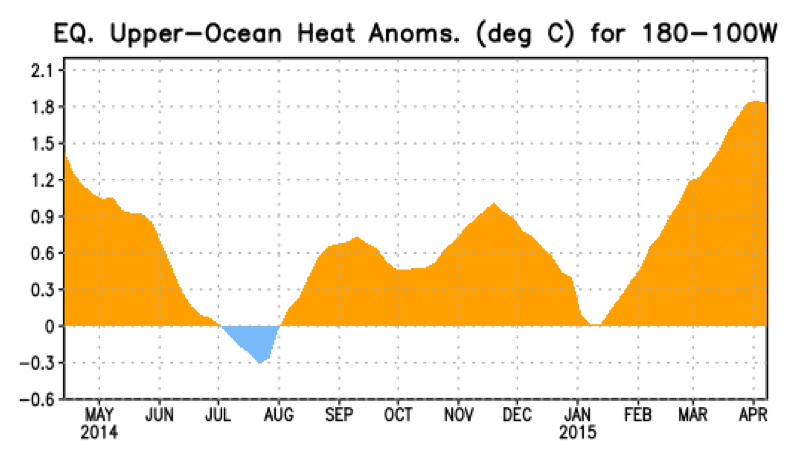
Is is too late for El Nino to heat up? That is what is happening this month ( see chart). Could that help open the storm door this late in the rainy season? An El Nino pattern could help wet southern California and Arizona – both in need of more rain.

We will be rooting for that storm door opening however late it is.Look for unsettled wet weather from April 24 into early May.

Tough Time For Citrus

April 15,2015


ACP,HLB, Port Shutdown,Brown Rot,Red Scale & Fruit Drop …. Plus No Water

There is more than drought worrying Tulare County citrus growers in this, the number-one citrus growing county.

For starters while the county is infested with Asian citrus psyllids (ACP) there is new concern about the deadly disease these critters carry.

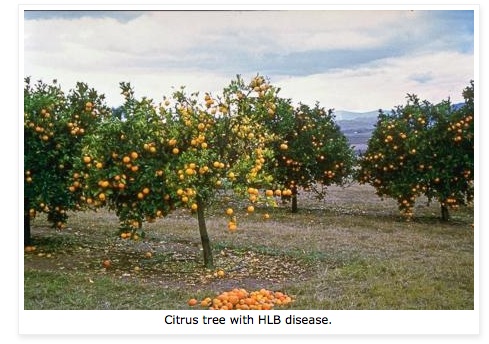
A HLB infected tree could in our midst in a backyard residence in Farmersville. The CDFA is testing the citrus tree for the presence of  HLB or citrus greening disease that has wiped out the citrus industry around the world and done $4.5 billion in damages to Florida’s citrus trees. Production in Florida is half what it was in 2005 and grower costs have skyrocketed.

HLB is spread by Asian citrus psyllids. The Farmersville home owner told officials he brought the tree from Oaxaca Mexico,a known hotbed of HLB.

HLB- USDA pic  2015-04-15 at 11.12.38 AM

“We don’t know yet if the tree has the disease but we don’t want to take any chances” says county ag commissioner Marilyn Kinoshita. Additional tests are underway through the CDFA, she adds

“Whether the tree is found to be infected, it needs to come out of the ground and be buried” says industry group Citrus Mutual spokesman Bob Blakeley.

UC Lindcove entomologist Beth Grafton Cardwell says the state of the art test we use is inadequate because symptoms may not show up for a year. “We are expecting CDFA will soon remove the tree to prevent any possible spread.”

Kinoshita says CDFA have more info soon.

Common in Florida and Texas – California has logged only one case of HLB in 2012 in a backyard in Hacienda Heights –  also involving budwood brought in illegally.

Out Of Control

In the meantime, the region’s fourth warm winter in a row is encouraging the psyllids to be flying early says Grafton Cardwell.”We would not expect this level of activity until fall.” Most of the county has been quarantined because of new finds of ACP who have set up permanent residence here.

Grafton Cardwell says the warm winters mean a host of other pests are not dying off from the cold resulting in bigger population each year. ”The red scale problem is out of control.” Left unchecked, red scale can cause trees to die back. She encourages extra treatments by growers to fight the problem.

Kinoshita says the current pest explosion includes more than bugs – squirrels chew on irrigation hoses and dig holes everywhere.

Chinese Market

Then there is the brown rot problem says Bob Blakeley. ”China just shut down all our citrus shipments from Tulare County this month” says Blakeley – due to finding a high incidence of a specific brown rot on fruit shipped into that country.

Blakeley says the brown rot – that is soil born – may have been spread by that big storm in December that splashed the spores up on the trees. Wow, what irony in this dry year!

China is the third largest export destination for our citrus crop says Blakeley, and we export about 25% of the orange crop.

To fight the brown rot problem growers are encouraged not to pick oranges from near the bottom of the tree.

Our exports are off 50% this spring” says Blakeley.

Adding to the export woes was the West Coast shutdown of the ports  that stalled more than 100 loads of oranges says Kinoshita. The upshot is  that prices went down because the domestic  market get was saturated, says Blakeley. Orange prices in 2014-15 were lower than the year before, he says.

Still more weather related problems. Fruit drop this Spring is a problem as the citrus can’t keep on the trees as long as usual and the season has been cut short.

All this and we have not touched on water which will be a big issue for this fall’s  crop if the Friant Kern Canal can’t – like last year- deliver  much water to Eastside citrus growers where more than 70% of them are.

Blakeley expects areas where there is little or no groundwater like Terra Bella, Orange Cove and Lindsay to suffer. ”We will see more orchards bulldozed.”

Farmers are looking long term as advocates encourages locals to support efforts to build more water storage.

How about some good news? This year’s citrus crop is especially good tasting most agree. Blakeley responds that he agrees as well.”But we hope we will have the opportunity to keep producing in the future.”

Coffee Plants & Avocados – Side By Side


Published on: March 13, 2015

Planting coffee shrubs right next to avocado trees is allowing a Central Coast farmer to grow a commercial crop of coffee without using any additional land, water or fertilizer, reported Parma Nagappan in TakePart.com.

The farmer, Jay Ruskey was working with UC Agriculture and Natural Resources advisor Mark Gaskell when they had a “eureka moment,” the story said. Coffee bushes can benefit from the environment created by an avocado plantation.

“I went through lots of cycles of plantings looking at options for using unused land,” Rusky said. “Interplanting works for a lot of reasons, and coffee fits perfectly with avocados because it has similar nutrition requirements.”

Americans’ coffee is typically grown in tropical areas of Hawaii, and Central and South America. Gaskell, who served in the coffee-producing West African nation of Ivory Coast as a Peace Corps volunteer before joining UC ANR, approached Ruskey with the idea of growing coffee in 2001.

“My job is to help small farms with problem solving, so I’m always looking for these kinds of synergies,” Gaskell said of the interplanting technique. “Commercial water rates are high, so ‘How are we going to get the most efficient utilization of land and water?’ is at the back of every grower’s mind.”

Gaskell said it is important to note that coffee also does just fine by itself in open field planting as long as it is irrigated. It doesn’t require avocado interplanting for success, but avocado interplanting is an additional opportunity for coffee growing in California.

In 2014, Coffee Review rated Ruskey’s coffee – sold under the name Good Land Organics – among the top 30 in the world.

The publication’s top ranking of Good Land Organics has made coffee associations elsewhere sit up and take notice of the potential for a high-quality, domestic crop, the Take Part article said.

“All of a sudden I’m thrown into the spotlight of the coffee world because I’m a disruption, which is something it needs, because it does not have a lot of research going on, like with other crops,” Ruskey said