Fresno County reported an increase in production of farm products in 2017 with sales of just over $7 billion, a 13.5% increase over 2016.
Almonds led the way valued at $1.2 billion, similar to 2016 but pistachio sales increased by over 100% to $517 million. Grapes were the number two crop again valued at $951 million while poultry was number three at $605 million.
Fresno’s vegetable crop declined in 2017 led by a drop in processing tomato acreage.Blueberry values jumped four-fold in 2017 as price doubled per ton. Cherries were up but lemon sales were down. Tangerine crop values more than doubled as both price and acreage climbed in 2017.
As for Fresno’s famous raisin crop farmers had a reason to dance as the crop was valued at $232 million compared $146 million in 2016 based on higher per acre prices. Growers pulled about 15,000 acres of wine grapes between 2016 and 2017.
The report featured a quote from the National Cattlemen….
From South Valley Water Assn newsletter SJR Settlement Offers Friant Protection from State Board Action
Upcoming:
Aug. 22-23 — State Water Resources Control Board to vote on flow requirements from tributaries to the lower San Joaquin River
The San Joaquin River Restoration settlement is looking like it may be the better game in town for Friant farmers.
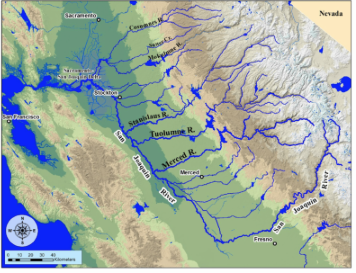
Especially now that the State Water Resources Control Board is considering a proposal to require tributary rivers to the lower San Joaquin (the Stanislaus, Tuolumne and Merced rivers) to deliver an average of 40 percent unimpaired flows to the delta.
The range is a low of 30 percent to a high of 50 percent unimpaired flows. Unimpaired flows are essentially what would come down the river naturally.
That’s a potentially huge bite out of water used by farms and cities throughout the Central Valley.
“It’s a big deal,” agreed Dan Vink, Executive Director of South Valley Water Association (SVWA). “And it’s a clear indication that if we didn’t have the settlement on the upper San Joaquin, the State Board would be in our backyard right now demanding the same type of flows.”
Vink added, “there has been a lot of talk since the settlement was agreed to about repealing it, but that perspective misses the full picture. Sure, at the time we could not have predicted what would be going on now with the State Board, but those are the facts on the ground today. Walking away without a plan makes for good political fodder, but it’s not relaitistic and would only take more water from Friant farmers than they are giving up today.”
The settlement, entered into in 2006, required South Valley farmers to give up a certain amount of river water, it’s true.
But not nearly as much as the State Board is seeking from the tribs (nearly double what growers release on the upper San Joaquin).The settlement also established a fishery habitat improvement plan and federal money was added to the mix to make it happen.
“In hindsight, we made a darn good deal,” said Alex Peltzer, General Counsel for SVWA
Actually, the state is hoping to make similar voluntary settlement deals with water users along the tributaries, according to State Water Resources Board Member Joaquin Esquivel.
“I’ve said over and over that voluntary settlements are more durable and have the potential to use less water” than the proposed 40 percent flows, Esquivel said.
Nothing is set in stone at this point, Esquivel said.
What the board really wants is a plan to improve fishery habitat and help multiple species survive. It only has authority over river flows, however.
In some cases, depending on the river landscape, how the water is used and at what times of the year, flow needs could be less than 40 percent.
“The proposal before us is just a way to define a block of water,” Esquivel said. “But the goal is functional flows, how the water is used.”
The board is scheduled to vote on the proposal toward the end of August.
Even after that vote, though, Esquivel said the board will be open to settlement proposals.
So far, settlements have been elusive even though this issue has been batted around for the better part of a decade.
In an interview on Valley Public Radio Tuesday, Cannon Micheal, farmer and Chair of the San Luis & Delta-Mendota Water Authority said settlements haven’t been forthcoming because the state is starting with a 40-percent target rather than seeking cooperation to formulate a fishery plan.
Micheal listed several areas in the state where water users have voluntarily found ways to restore fisheries, such as the salmon fishery in Butte Creek, without disruption to water rights.
That happened, he said, because water users’ options weren’t limited by an arbitrary number.
Esquivel reiterated the 40 percent figure is just a proposed starting point.
The real goal, he said, is the kind of habitat restoration Michael described.
“I get the anger, I do,” said Esquivel. “But there’s been a lot of misinformation. And, truthfully, even if the State Board decided to do nothing, there would still be the Endangered Species Act to contend with and the current ER method of addressing species survival.
“We need to all see ourselves as part of the same system. We need to get off the species treadmill.”
It seems like settlements, like the one Friant agreed to one the upper San Joaquin, may be the way of the future.
Research will help agronomists breed plants that attract their own growth-promoting microbes
August 7, 2018
University of California – Riverside
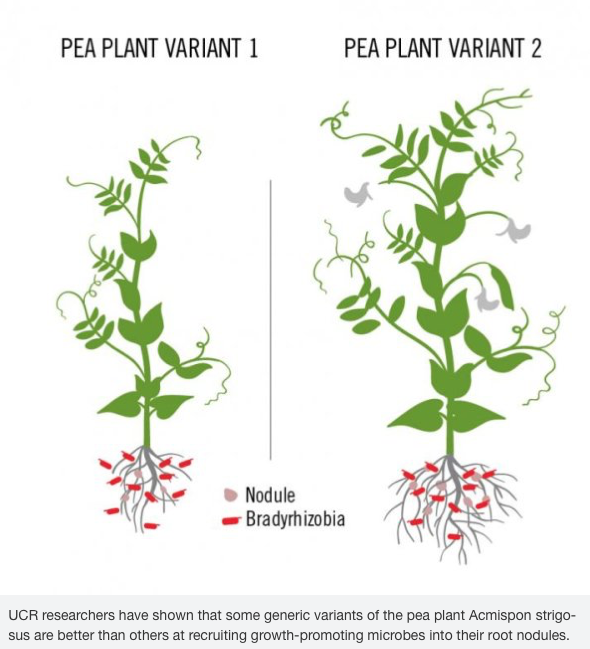
UCR researchers have shown that some generic variants of the pea plant Acmispon strigosus are better than others at recruiting growth-promoting microbes into their root nodules. Credit: UC Riverside
Beautiful things can happen when plants surround themselves with the right microbes. A study on Acmispon strigosus, a plant in the pea family, showed a 13-fold growth increase in plants that partnered with a highly effective strain of the nitrogen-fixing bacteria Bradyrhizobium.
The ability of plants to use beneficial microbes to boost their growth is not lost on agronomists. Some breeders think understanding the traits that enable crops to recruit top-performing microbes is key to the future of sustainable agriculture.
A roadblock in capitalizing on the beneficial work of microbes is the complex genetic and environmental factors that govern their role in plant growth. Left unattended, plants don’t always recruit beneficial microbes, instead surrounding themselves with a mix of both helpful and ineffective bacteria. Attempts to manage the microbial populations plants encounter in the soil — by inoculating with beneficial strains — have largely failed.
“It is very difficult to predict which combinations of microbes will be successful under field conditions, since the microbes that are beneficial to plants in the lab do not always compete successfully against microbes that already exist in the field,” said Joel Sachs, a professor of evolutionary ecology at the University of California, Riverside and member of the university’s Institute for Integrative Genome Biology. “A promising alternative is to breed plants that are better at managing their own microbial partners, an advancement that will be passed down to future generations.”
In a study published today in New Phytologist, Sachs’ team has advanced our understanding of how plant genetics and environmental factors affect microbial soil populations in the field. The paper’s first author is Camille Wendlandt, a graduate student in Sachs’ research group.
The researchers investigated whether Acmispon strigosus (the pea plant) changes how it associates with different strains of nitrogen-fixing bacteria when its environment changes. Surprisingly, they found that changing the plants’ environment by fertilizing the soil did not change how plants associated with microbes. Instead, the researchers found that genetic variation between the pea plants was most important in explaining whether plants invested in relationships with the most beneficial microbes. In other words, some variants of the plant are better than others at developing these beneficial partnerships.
The variants of pea plant that were best at investing in beneficial microbes also had very high growth benefits, in contrast to other pea plant variants that did not invest as much and gained less growth benefit.
“The fact that the traits that govern these partnerships vary between plants of the same species and are heritable shows that they can be selected for by breeders,” Wendlandt said. “Ultimately, we hope that agronomists will use this research to develop plant varieties that make the most of the soil microbes they encounter. This could reduce reliance on chemical fertilizers, which are expensive for growers and can pollute the environment.”
Future work in the lab will focus on whether the pea plants still show genetic differences when they interact with much more complex microbial communities, similar to what they encounter in field soils. The lab is also expanding its research to ask similar questions with cowpea plants, which are an important legume crop in sub-Saharan Africa.
The title of the paper is “Host investment into symbiosis varies among genotypes of the legume Acmispon strigosus, but host sanctions are uniform.” In addition to Sachs and Wendlandt, contributors are John Regus, Kelsey Gano-Cohen, Amanda Hollowell, Kenjiro Quides, Jonathan Lyu, and Eunice Adinata, all at UC Riverside. The work was funded by the National Science Foundation.
Story Source:
Materials provided by University of California – Riverside. Original written by Sarah Nightingale. Note: Content may be edited for style and length.
California farms pulled over 3400 acres of navel oranges from production between 2016 and this year says a new USDA report. Meanwhile mandarin plantings climbed by over 2,000 acres. Navel acreage in the Golden State stands now at 117,338.
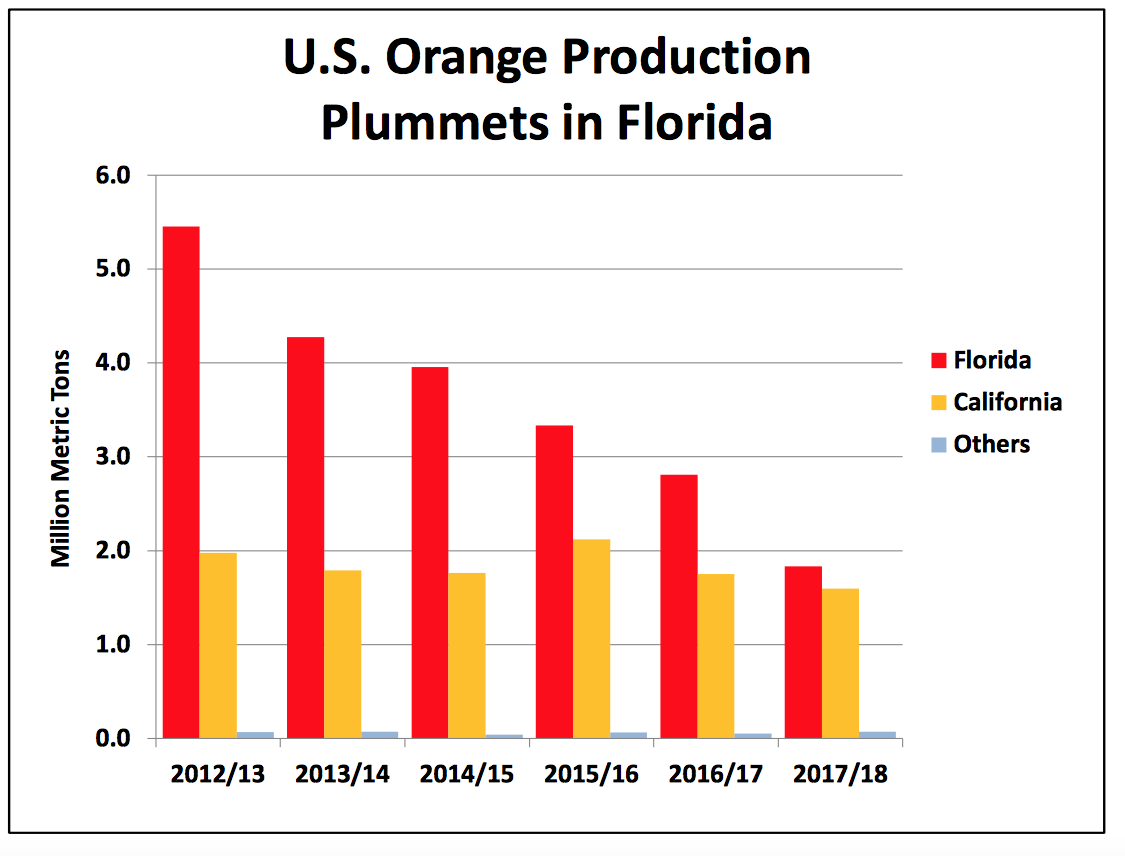
The lower acreage here comes as Florida orange production (all varieties) continues to plummet to 44,000 boxes in 17/18, virtually the same as California this year. Florida’s production was 81,700 boxes in 15/16 and 68,500 in 16/17.
Florida has been hard hit by both weather and citrus greening problems.The percentage of fruit drop has increased within the past few years to 68% from 19% in 2014.
click to enlarge
California all orange production is also down from 57,200 boxes in 15/16.
Tulare County remains the top navel orange county in the state but has over 1000 fewer navel acres planted, still more than half the state supply. Valencia acreage also fell about 1500 acres between the two-year survey period.
On the plus side, California growers continue to plant more tangerine/mandarin varieties with acreage now topping 62,000 compared to 59,000 acres in 2016. Most of that increase is seen inTulare County, up from 20,565 to 22,342 acres or over one-third of the state’ supply. Kern County is a close second with 20,000 acres.
Lemon productions up slightly with Tulare County the state leader in new lemon tree plantings at 1434 acres compared to just 560 new acres in the state lemon leader Ventura County.
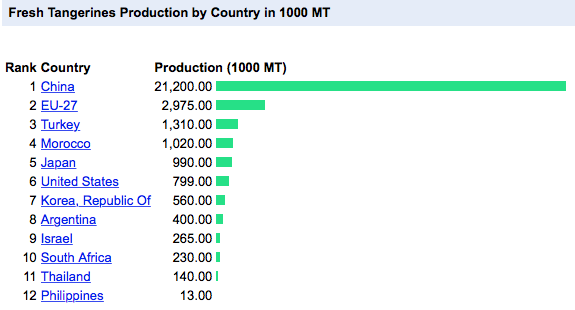
In the meantime of total mandarin production in the US is small ( 758,000 tons) compared to other nations- particularly China with 21 million tons in 2017/18 out of 30 million tons worldwide. Turkey, the EU, Morocco and Japan all produce more mandarins than the US.
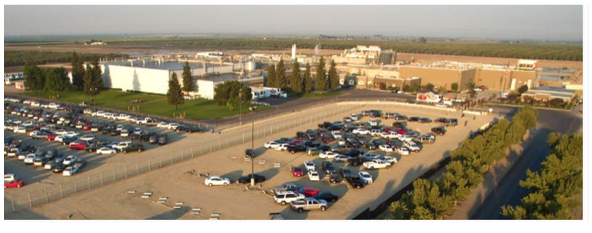
Valley beef king Harris Ranch is modernizing and expanding their big slaughterhouse and meat processing plant between Kingsburg and Selma. The company has applied to Fresno County under a mitigated negative declaration with a hearing at the Planning Commission set for August 23.
The 60-acre facility, owned by Harris Ranch Beef Company since 1976, already employs 1000 workers. Their application, despite proposing substantial improvements, says they expect to add no new employees or increase the throughput at the facility, permitted now for 900 animals a day. Still,the expansion will add 240 parking places.
The expansion includes a new 33,491sf finished goods warehouse distribution center with expanded number of truck docks, a 54,907sf processing building, 180,000sf anaerobic pond water treatment facility and 13-acre treated water basin.
According to the application, the facility will be more efficient adding 8 new truck docks for more flexibility and speed, and in the new processing plant automating the beef processing to increase efficiency. The statement says they do not expect increased truck traffic. Harris Ranch has a big cattle feeding operation in Coalinga on I-5, the source of the animals.
With annual sales in excess of $400 million, family-owned Harris Ranch Beef Company is one of the largest fully integrated beef producers in the Western United States.
July 25,2108 Dairy cooperative Land O’Lakes announced today the selection of Beth Ford as President and CEO of one of the nation’s largest food and agricultural cooperatives and #216 on the Fortune 500. The co-op has large presence in Tulare, home to one of the state’s large processing plants.
“Since she joined Land O Lakes she has done a great job and comes with a good resume” says LOL producer Tom Barcellos , a Tipton area dairyman.
Ford assumes leadership of the company following the retirement of Chris Policinski. Ford will assume the role of President and CEO effective Aug. 1.In December 2017, Ford was named Chief Operating Officer of Land O’Lakes Businesses, in which role she oversaw Land O’Lakes’ WinField United, Purina Animal Nutrition and Dairy Foods business units. Prior to that, Ford was head of Land O’Lakes’ Dairy Foods and Purina Animal Nutrition businesses, where she led record performance and growth, leveraging innovation through R&D to strengthen both brands. She also was instrumental in the acquisition of Vermont Creamery in early 2017.
Prior to joining Land O’Lakes in 2011, Ford had excelled in executive operations management and supply chain roles at International Flavors and Fragrances, Mobil Corporation, PepsiCo and Pepsi Bottling Company and Scholastic. Ford has more than 20 years’ experience specifically in the areas of technology and R&D, as well, across these four companies.
Born in Sioux City, Iowa, Beth earned an MBA at Columbia University Business School and a BBA at Iowa State University. She remains involved in both universities, sitting on the Deming Center Board of Advisors for Columbia Business School and the Dean’s Advisory Committee for the College of Business at Iowa State.
_
LOL Promotes Dairy Digesters
Land O’Lakes, Inc. and California Bioenergy LLC (CalBio) have launched a first-of-its-kind collaboration to support the financing, installation and management of on-farm methane digesters to generate renewable compressed natural gas (“R-CNG”) fuel in California – creating an innovative farmer-led model for “barn to biogas” that can shape nationwide solutions to agricultural methane emissions reduction and unlock new revenue streams for dairy farmers.
As one of the nation’s largest agricultural cooperatives, Land O’Lakes is uniquely positioned to tap into the potential power of California dairy farmers to generate renewable energy from farm waste. CalBio provides the expertise needed to develop, execute and manage on-farm methane digesters, as well as market R-CNG credits in California, in a manner that is cost effective for farmers.
This partnership with CalBio will also help Land O’Lakes dairy member-owners in California to meet new state standards that call for a 40 percent reduction in dairy and livestock manure-related methane emissions from 2013 levels by 2030.
“Land O’Lakes and CalBio are creating the end-to-end sustainability infrastructure that farmers need to make ‘barn-to-biogas’ a reality,” said Matt Carstens, senior vice president, Land O’Lakes SUSTAIN. “This is impact investing at its best – eliminating barriers to the adoption of new sustainability technology, unlocking new revenue streams for farmers, cutting emissions and creating a public good.”
“CalBio’s dairy digesters are proven in California. We are excited to expand that work even further through this collaboration with Land O’Lakes and their member-owners in California,” said Neil Black, president of CalBio. “Our expertise and ongoing operational support will help dairy farmers make the most of a significant new revenue stream through biogas generation, while allowing them to stay focused on doing what they do best – producing wholesome, delicious food in a sustainable way.”
“Working with everyone at CalBio has been an absolute pleasure. It is a breath of fresh air to work with a company that has your best interest at heart,” said Dave Ribeiro of Rib-Arrow Dairy in Tulare, California and Land O’Lakes, Inc. member-owner. “Professional, compassionate and thorough would be an understatement to describe CalBio. I am looking forward to the success this partnership will bring.”
To further its commitment to supporting member-owners around environmental sustainability, Land O’Lakes SUSTAIN recently launched Land O’Lakes SUSTAIN Innovation Financing, which offers eligible member-owners up to $3 million in financing for large-scale sustainability projects, including methane digesters. This financing is available specifically to help Land O’Lakes dairy member-owners implement new technologies or management systems focused on driving measurable outcomes for air, soil or water.
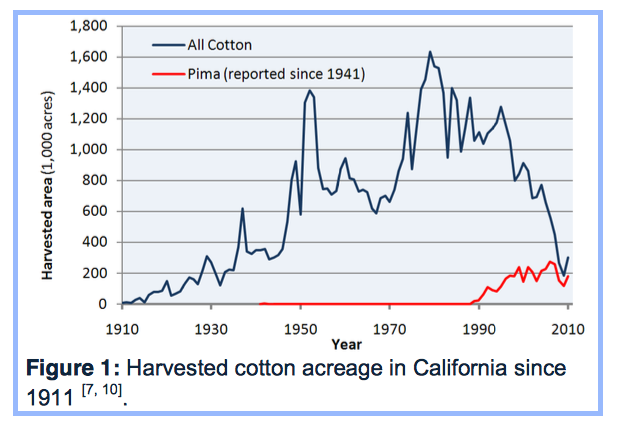
CDFA’s Pink Bollworm Program has released their state estimate of cotton plantings this year. Cotton mapping for the San Joaquin Valley was completed as of Wednesday, June 13. The current total mapped acreage is 243,918 acres (down from 283,390 acres in 2017).
The breakdown of cotton acreage is 69,165 acres in Fresno County (down from 75,055 acres in 2017), 23,655 acres in Kern County (down from 30,695 acres in 2017), 90,400 acres in Kings County (down from 110,100 acres in 2017), 950 acres in Madera County (up from 850 acres in 2017), 41,850 acres in Merced County (down from 45,860 acres in 2017), and 17,805 acres in Tulare County (down from 20,830 acres in 2017). In San Joaquin County 93 acres have been reported, but are yet unconfirmed by Pink Bollworm Program personnel.
Cotton acreage has been on a steady decline in California since the 1980s when it reached 1.6 million acres. After falling to about 200,000 acres it has ramped up a bit in recent years to 243,000 acres expected in 2018.
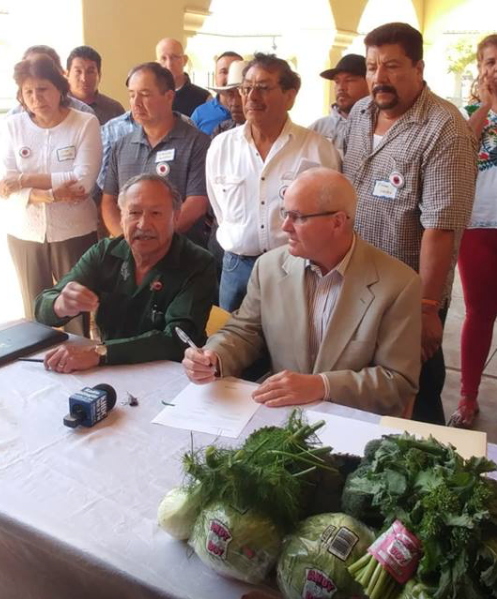
Facing labor shortages and inaction on immigration in D.C., UFW & D’Arrigo took a novel local approach with breakthrough union contract in the past few days. Bitter rivals for decades, Salinas-based D’Arrigo Bros. Co. of California President John D’Arrigo and United Farm Workers President Arturo S. Rodriguez signed a breakthrough union contract June 28. The pact ushers in a new collaborative approach with the parties working together locally to provide substantial benefits for both workers and employer said a company news release.
”It comes at a time when the industry is confronting labor shortages and both sides are frustrated by bickering and inaction over immigration reform by policymakers in the nation’s capital.”says the produce company news release.
More than 1,500 UFW members at D’Arrigo (1,200 in the Salinas Valley) will receive significant hourly and productivity pay hikes making them among the highest paid vegetable workers in California, the best family medical, dental and vision benefits for farm workers in the state 100 percent covered by the company, six paid holidays a year and other contract improvements. (D’Arrigo also employs about 350 vegetable workers in the Imperial Valley who are also included in the contract.)
D’Arrigo says they will “achieve a competitive advantage by continuing to attract and maintain a better compensated, more experienced and professional work force with higher morale and productivity, as well as a higher quality product for consumers.”
Both parties are pledging to eliminate or minimize conflicts, grievances and strife, and open a new relationship where management and union work collaboratively to help each other more effectively compete.
Moving On
The LA Times reported it this way. “The deal came after the aging patriarchs on both sides — family scion and company President John D’Arrigo and longtime UFW President Arturo Rodriguez — engaged in months of personal diplomacy this year, each seeking to relieve the economic pressures that threaten their viability, including a shrinking farm labor force.
“Arturo and I, you know, we’re getting too old to fight,” said D’Arrigo, 60, whose grandfather co-founded the company in 1927. “There’s always been a lot of propaganda, and a lot of things said — some of them true and some of them not true. All of that is in the past. We shook hands and we’re moving on.”
D’Arrigo workers first unionized in 1975 and a contract ensued. Negotiations for a new contract in 2010 ended with a petition to decertify the union resulting in years of charges, lawsuits , hearings and counter charges. Now that is behind them.
UFW President Arturo Rodriguez said “Today marks a new day in the relationship between D’Arrigo Bros and the United Farm Workers. John D’Arrigo and I along with our respective teams are committed to creating a new partnership for progress.. We are proud to have worked closely with John D’Arrigo and his negotiations team to reach this historic partnership agreement.
The new collaborative agreement focuses on major issues facing farm workers and the industry today. Most importantly coverage under the Robert F. Kennedy Medical Plan which will include the entire family for medical, dental, and vision care. D’Arrigo Farming will pay for the entire cost for the workers to have this coverage. Wage rates well above the minimum wage. 6 Holidays paid for by the D’Arrigo Farming.”
“There are many challenges confronting the AG industry around labor, immigration, food safety, foreign competition, etc. For those reasons we want to create an environment where workers can make a good living and be treated in respectful way for their professional skills and talents.
If issues of concern rise then we want to resolve them in a fair and equitable way.”
The produce company is said to have more than $200 million in sales.
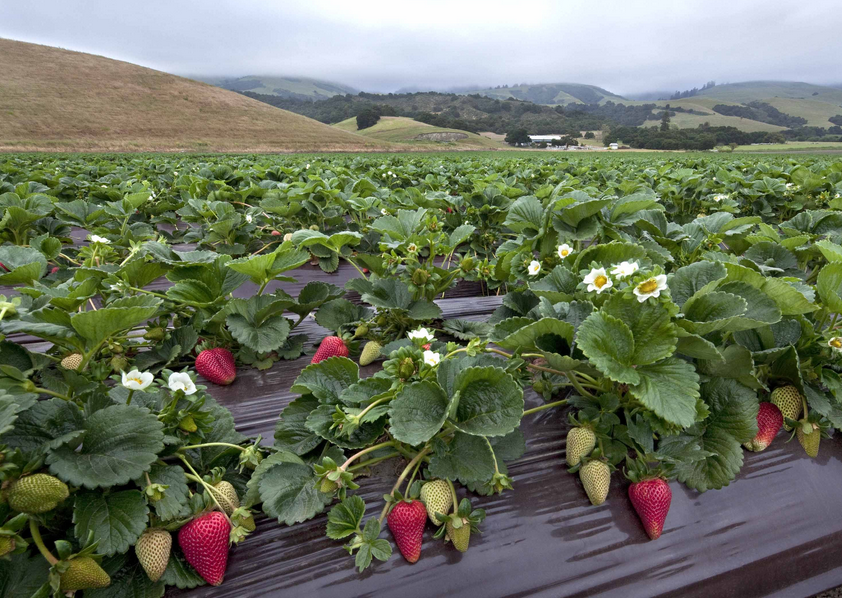
More strawberries: California is producing more strawberries this year than last. Mexico strawberry imports are small by comparison – around 38 million flats so for this year. California growers, as of July 2, have shipped 126 million flats compared to 113 million flats as of July 2, 2017. Production is up in the Santa Maria area with 40 million flats shipped so far this season compared to 38 million flats in 2017.
California Avocado shipments up Shipments of California avocados are up this year to 219 million pounds through July 1 compared to 160 million pounds this time in 2017. This year’s annual crop is expected to be 340 million pounds compared to just 216 million pounds the year before. Mexico has been increasing their acreage to about 220,000 acres compared to 168,000 acres in 2014. By comparison California has about 50,000 acres.
Trade Dispute hurts soybean prices The Wall Street Journal reports that soybean prices fell to the lowest point in almost a decade on Monday, as looming Chinese tariffs threatened to kill off demand from the U.S.’s largest customer. Futures for July fell 1.2% to $8.48 1/2 a bushel at the Chicago Board of Trade, the lowest close since March 2009.
Trump say trade barriers hurt farmers. What about commodity prices? NBC reports that in a Fox Business interview, President Donald Trump singled out trade barriers as a reason for five “very bad years” for U.S. farmers. But agricultural economists blame low farm commodity prices — not trade barriers.
In fact, U.S. agricultural exports totaled $140.5 billion in fiscal year 2017 — the third-highest amount on record. And, as it has done for decades, the U.S. agricultural sector posted an annual trade surplus of $21.3 billion in 2017, up almost 30 percent from fiscal 2016.
“Farm incomes have dropped significantly since, but most of the blame for that should go [to] consistent, near record high production for most agricultural goods,” which has “lowered prices and incomes,” ag professor Chad Hart told us in an email. “Trade is more likely to be a bright spot for ag, rather than a barrier (as the aggregate data shows).”
Agricultural crime units in Tulare and Kern counties reported thefts of thousands of dollars of agricultural equipment this month, including tractors, all-terrain vehicles, utility trailers, farm implements and more. In Tulare County this year, farmers and ranchers have reported approximately $440,000 in heavy equipment theft; of that, $275,000 worth of stolen equipment has been recovered.
National Pork Producers Council says “America’s pork producers are hurting due to current trade disputes. Think about them this Fourth of July as you plan your food choices…and put some pork on your plate! #TeamPork”
Jeremy P. Jacobs, E&E News reporterThis article was updated June 26 at 11:46 a.m. EDT.
TULARE COUNTY, Calif. — The bottom is falling out of America’s most productive farmland.
Literally.
Swaths of the San Joaquin Valley have sunk 28 feet — nearly three stories — since the 1920s, and some areas have dropped almost 3 feet in the past two years.
Blame it on farmers’ relentless groundwater pumping. The plunder of California’s aquifers is a budding environmental catastrophe that scientists warn might spark a worldwide food crisis.
“This is not sustainable,” said Jay Famiglietti, a senior water scientist at NASA’s Jet Propulsion Laboratory. “If those aquifers continue to be depleted and if we start running out of water in these big aquifer systems, the global food system is going into meltdown mode.”
Hidden from view, groundwater accounts for 30 to 60 percent of the water that Californians use every year, depending on how much rain and snow the state receives.
The invention of the centrifugal pump after World War I made industrial agriculture possible in the state’s mostly arid Central Valley, which produces a third of America’s vegetables and two-thirds of its fruits and nuts.
But groundwater has never been carefully managed, experts say. Aquifers, they say, should be buffers and a backstop in California’s drought-and-deluge climate.
Scientists use a banking analogy to explain groundwater’s role: Surface water from rain and melted snowpack should be the state’s checking account, and groundwater its savings, used only when absolutely necessary.
“The way we have been using groundwater, we are not doing that,” said Tara Moran of the Stanford University Woods Institute for the Environment. “We’re not letting the savings account build back up in wet periods.”
From 1960 to 2016, California pumped about 80 million acre-feet more than what was naturally replenished. An acre-foot is 326,000 gallons — about what two Los Angeles families use in a year.
It would take the District of Columbia 700 years to use 80 million acre-feet of water, according to Helen Dahlke, a leading researcher on the topic at the University of California, Davis.
Since the 1920s, California has pumped between 150 million to 160 million acre-feet that haven’t been replenished.
That pumping and the resulting sinking of the San Joaquin Valley is “one of the single largest alterations of the [planet’s] land surface attributed to humankind,” the U.S. Geological Survey has concluded.
For decades, California did not monitor or record groundwater pumping and levels. A first-of-its-kind NASA study last month used satellites to determine how much fresh water is being lost around the globe, including from groundwater aquifers.
It found Southern California racked up a water deficit of about 45 gigatons from April 2002 to April 2015 through excessive groundwater pumping and dry weather — an average of about 4.2 gigatons per year. A gigaton is enough to fill 400,000 Olympic-size swimming pools.
Forty-five gigatons would fill Lake Mead, the country’s largest reservoir, almost 1 ½ times.
“It’s an intense rate of depletion,” said Matthew Rodell, an author of the NASA study. “It’s a disturbing trend.”
And it has devastating environmental impacts. Because groundwater feeds rivers, depleted aquifers then decimate aquatic ecosystems and habitat for endangered species.
It also hits people hard. During California’s recent drought, hundreds of private wells in the San Joaquin Valley town of East Porterville went dry, leaving rural homeowners with no water as industrial agriculture spent millions of dollars to drill deeper wells. Recent research further suggests the pumping has led to water contaminated with higher concentrations of arsenic and other carcinogens.
Depleted aquifers also allow salt water to creep inland, rendering high value cropland — such as the Salinas Valley near Monterey — useless. And winds whipping across dried landscapes fill the sky with toxic dust.
The groundwater disaster isn’t confined to California. The NASA study found rapid groundwater use in other heavily irrigated farming areas, such as northern India and northern China. Rodell and Famiglietti concluded it is among the most pressing environmental issues facing the world.
“[T]he key environmental challenge of the 21st century may be the globally sustainable management of water resources,” they wrote.
‘A huge amount of uncertainty’
California legislators stepped up to try to curb groundwater use, passing the Sustainable Groundwater Management Act (SGMA) in 2014, the state’s first attempt at regulating groundwater use.
The law tries to address six major “sins”: water table decline, degraded water quality, land subsidence, surface water depletion, reduction in groundwater storage and seawater intrusion.
The law identifies 127 medium- or high-priority basins that account for 96 percent of the state’s groundwater use and most of its overlying population. (In total, there are 517 groundwater basins and subbasins in the state.)
Of those, 21 basins are considered critically overdrawn, which the law defines as “present water management practices [that] would probably result in significant adverse overdraft-related environmental, social, or economic impacts.”
The law gives overseers of those basins 20 years to achieve sustainability beginning in January 2020. But regulators are seeking to develop draft plans by the middle of next year.
And there are major questions and challenges ahead in those basins.
To get political support for getting the bill passed, its sponsors compromised, leaving basin plans to local managers and new entities called groundwater sustainability agencies, or GSAs. If their plans are insufficient, the state is the backstop. It can step in and require changes, but that would likely extend the timeline until meaningful reforms are implemented.
There’s a wide variation in the number and expertise of those agencies. A Stanford University study found many basins have multiple GSAs. A basin in the eastern San Joaquin Valley, for example, has nearly 20.
All GSAs in a basin must come to agreement on the groundwater sustainability plan, or GSP, submitted to the state. Some are still squabbling over what methodologies and data to use, creating what experts expect to be a breeding ground for litigation.
And there are concerns that despite provisions aimed at protecting poor communities that rely on groundwater, big agricultural companies are controlling the process. Those worries have come to a boil in the Cuyama Valley, an isolated swath of central California that’s home to one of the country’s largest carrot growers, as well as many poor people.
The valley depends entirely on groundwater. Its basin is critically overdrawn, it receives about a dozen inches of rain a year or less, and Harvard University’s endowment fund recently planted an 850-acre vineyard there.
“There is a huge amount of uncertainty around SGMA,” said Christina Babbitt of the Environmental Defense Fund.
Famiglietti, a major proponent of the bill, still cautioned that “sustainable” is a “misnomer.”
“Most people [are] thinking of sustainable, or sustainability, as not using more water than is available on a yearly basis,” he said. “That’s never going to happen in California. What we are going to have is managed depletion.”
Nowhere are these issues more apparent than the San Joaquin Valley, ground zero for SGMA implementation.
The valley accounts for half of California’s food production, but to grow those crops, farmers pull nearly 2 million acre-feet more water out of the ground than is replenished per year — a massive overdraft that some experts think will increase in the coming years.
Eleven of the state’s 21 critically overdrawn groundwater basins are in the valley, which has lost 95 percent of its natural wetlands.
While many aspects of groundwater management are complicated — how to measure it, how water moves underground, how to define basins, how to obtain accurate private well data — SGMA solutions are straightforward: Either find a way to recharge more water into the basin’s aquifer to raise the water table or use less of it.
Reducing groundwater use in the San Joaquin Valley will have major financial impacts. Some water districts have suggested that a quarter of irrigated land or more will need to be fallowed, some 700,000 acres — more than 1,000 square miles.
That has led many to focus on recharge, figuring out ways to put surplus water in wet years back into groundwater aquifers.
But to do that, arid areas here in the southern San Joaquin Valley must be able to get that water from the wet north. And subsidence affects that, as well; it has caused significant damage to crucial infrastructure that can move that water.
“The conveyance capacity is a bottleneck for recharge,” said Ellen Hanak of the nonpartisan Public Policy Institute of California (PPIC), who has written extensively about the San Joaquin Valley.
NASA’s Rodell said most of the world has yet to attempt to tackle the groundwater depletion problem as California did with SGMA. The law is driving innovative water management techniques, including groundwater trading.
“People,” he said, “will be watching to see if it works or not.”
‘Make-or-break times’
Doug DeFlitch knows a lot about groundwater depletion.
He operates the Friant Water Authority, delivering water from the Bureau of Reclamation’s Central Valley Project that was built in the 1930s and ’40s because farmers in the San Joaquin Valley were rapidly depleting their aquifers.
The plan was to capture excess stormwater and runoff from the Sierra Nevada near Fresno behind the 319-foot Friant Dam, which was completed in 1942.
Water then was sent down two canals, the 152-mile Friant-Kern and 36-mile Madera, to farms as far south as Bakersfield to supplement their water supplies and reduce the reliance on groundwater.
DeFlitch, 47, said there are parallels between then and now.
“This problem has gotten so bad that we have to do something about it,” he said. “And that’s what happened before they built the Friant-Kern Canal.”
But the canal only partially accomplished the objective of balancing groundwater use. The Friant Water Authority — which represents the majority of Friant Division water users and maintains and operates the Friant-Kern Canal — says that for 50 years, its users maintained a stable surface and groundwater supply.
Not all the farms near the canal are hooked into the system. And those that weren’t continued to pump groundwater at a breakneck pace.
Subsidence continued. By the 1970s, the Friant-Kern Canal’s capacity was significantly diminished, leading to millions of dollars in upgrades completed in 1979.
Again, that didn’t solve the problem. Farmers’ pumping went on, and so did the sinking.
Now it’s damaged again.
Sixty percent of the water that the canal was designed to move can’t get there. It runs straight into bridges. Or it laps up over the sides of the canals.
“There used to be a decent amount of freeboard under these bridge piers,” DeFlitch said on a recent spring afternoon. “We now have to run right up to them.”
It’s worst between miles 100 and 110 going south, where DeFlitch points to a lowered bridge. The gravity-fed canal is about 20 feet deep. But because of subsidence, there’s a “bowl” in the bottom of it where water gets stuck.
Combined with the sinking bridges, that bowl reduces the canal’s capacity. It was built to stream about 3,300 to 3,500 cubic feet of water per second (cfs). Last year, the water authority commissioned a study that said it could still convey up to 1,900 cfs.
DeFlitch said that day they had ratcheted up the water to about that rate.
He pointed to a water mark on the bottom of the bridge.
“We’ve hit up and have started to come back down,” he said. They were now running the canal at about 1,800 cfs, evidence the subsidence has continued since the study was finished last year.
It will take $300 million to $500 million for the fixes DeFlitch believes are needed. That money and more — up to $750 million — could come from a water bond measure on the November ballot.
DeFlitch hopes SGMA will end the cycle of groundwater depletion, subsidence and costly repairs by stabilizing the water table.
“We are in make-or-break times,” DeFlitch said. “There is marked change that needs to happen, or it just never works again.”
‘Time is our enemy’
Edwin Camp obsessively tracks how much water makes it down the Friant-Kern Canal every day.
Camp’s family has been growing almonds, grapes, tangerines and other crops in Kern County near Bakersfield for 80 years. He is also president of the Arvin-Edison Water Storage District, one of the county’s recharge facilities.
The district opened in 1942, then joined DeFlitch’s Friant Division in the 1950s when groundwater levels “started tanking.”
Arvin-Edison serves about 150,000 acres of cropland. It operates in two ways that both depend on water deliveries from the Friant-Kern Canal.
It takes surface water transported by the canal and delivers it directly to farmers so they don’t pump groundwater, a so-called in lieu program.
And in wet years, it spreads water from the canal over percolation basins, where water can seep down and replenish the aquifer.
Camp, 61, a large guy with a gray goatee, said their “very existence” depends on the canal’s deliveries. Before it was damaged, the program successfully maintained groundwater levels in the district for years. But it is now severely compromised by subsidence along the canal.
“It’s what we’ve been doing for a long time,” he said in an interview in his office. “That’s why the subsidence issue is so hard-hitting to us. Not having those wet-year supplies in the amount you count on is devastating.”
Recent research suggests that California’s boom-and-bust rain cycles may get more extreme, exacerbating the swings between intensely wet years and lengthy droughts.
From October 2016 to September 2017, the state’s wet weather allowed the San Joaquin Valley to recharge about 10 million acre-feet, bringing it into a positive groundwater balance for the first time since 2011, according to research from the nonpartisan PPIC.
But those types of years are growing scarce.
“People have been actively recharging, and that is increasing,” PPIC’s Hanak said. “But unless our weather changes dramatically, we don’t get a lot of those really wet years.”
Hanak said that on average about 500,000 acre-feet of water will be available to recharge in the valley after factors including environmental considerations are taken into account.
That’s not enough to offset the valley’s overdraft. It might account for only about a quarter of the overdraft valleywide.
And in order to do that, the water has to get from the wet north to the drier south, where most of the valley’s recharge facilities — like Camp’s — are located.
Some farming interests and their allies in Congress have pushed for building a new dam to increase surface water capture and deliveries to the area. They have pushed for years to build the Temperance Flat Dam, a 665-foot impoundment that would feed water into the northern end of the Friant-Kern Canal.
The dam would cost $2.6 billion and store 1.3 million acre-feet of water. But critics say it would increase deliveries by less than 100,000 acre-feet per year.
DeFlitch, who also supports building Temperance Flat, noted that during the wet 2017, subsidence alone prevented the canal from delivering 300,000 acre-feet.
Camp said the biggest problem is uncertainty. His basin has yet to agree on many of the underlying methodologies needed to comply with SGMA, leading to political and potentially legal conflicts.
“We’re all concerned,” he said. “You are trying to make future plans with information you don’t know today.”
When asked how SGMA will directly affect Arvin-Edison’s and his operations and whether a concrete plan would be in place by the 2020 deadline, Camp demurred.
“I wish we knew,” he said. “Time is our enemy right now.”

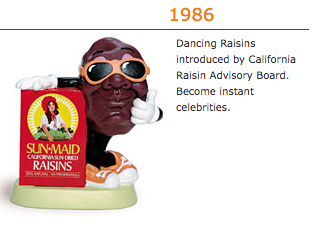 As for Fresno’s famous raisin crop farmers had a reason to dance as the crop was valued at $232 million compared $146 million in 2016 based on higher per acre prices. Growers pulled about 15,000 acres of wine grapes between 2016 and 2017.