Fewer acres-more processing tomatoes forecast in 2019

-February 12,2019-

Screen Shot 2019-02-12 at 6.50.25 AMIt is a familiar pattern. San Joaquin Valley farmers are expected plant fewer acres of processing tomatoes in 2019 according to a new USDA report.

But the tonnage of of tomatoes is expected rise to 12.1 million – a 2.5 percent increase over last year. Farmers are expecting a yield of 51.5 tons per acre in 2019, the same number as 2018.

The industry average yield has more than doubled in the past few decades. It was under 20 tons per acre in the mid 60s and in the 30s as recently as 2006. In 2017 the yield come in at 44.5 tons an acre.

Producing more than 90 percent of the nation’s processed tomatoes and nearly half the world’s total processed tomato tonnage, California’s tomato growers are among the most  efficient farmers in the world. Adoption of drip irrigation and fertilizing techniques has helped drive up yield.

The tomato is the most widely-grown vegetable in the United States.Americans eat about 75% of their tomatoes in the processed form. Consumption of processed tomatoes accelerated in the late 1980s with the popularity of pizza, pasta, and salsa.

Processing tomatoes are picked fresh and then heat-treated for use in tomato products, including tomato paste, diced and whole canned tomatoes, tomato sauces, tomato juice, tomato soup, salsas, and ketchup.

This month processor Olam in Lemoore is expected to add solar to heat their product.

The top three production counties in order are Fresno,Yolo and Kings.


–

Meeting to talk Success Dam plan

-February 2,2019-

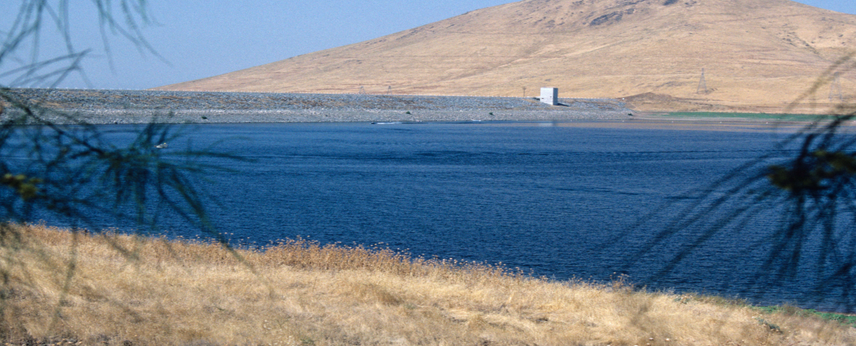
The U.S. Army Corps of Engineers Sacramento District will host a public meeting February 4 to discuss the re-initiation of the Tule River Spillway Enlargement Project, which received $74 million in appropriations in 2018 to raise Success Dam’s spillway up to 10 feet higher.

Screen Shot 2019-02-02 at 7.00.06 AMPreviously known as the Success Reservoir Enlargement Project, the effort to reduce the flood risk to downstream communities such as Porterville, while also increasing reservoir storage, has been a stop-and-go effort as the Corps looked into potential deficiencies associated with Success Dam.  Now that those studies have concluded, the Corps is ready to re-start the enlargement project.

Success Dam provides flood risk management for the City of Porterville and surrounding communities. There is currently a 1-in-50 chance in any given year that flooding will occur in Porterville from Tule River flows. The spillway enlargement project is expected to further reduce that flood risk by nearly half.  Construction is scheduled to begin in 2022 and would be complete by 2024.

The public meeting is scheduled for Monday, Feb. 4, from 4 to 7:30 p.m. and will be an open house format, meaning there will be no formal presentation given. Attendees can arrive anytime during the meeting to get an overview of the project, view maps and conceptual designs for the enlarged spillway, and ask questions of Corps team members. Attendees can also submit public comments during the meeting.

Success Dam and Lake, which was constructed by the Corps in 1961, is operated by the Corps for flood control and storage of irrigation water. Recreational facilities at the lake were added after the dam was completed. The dam is located on the Tule River about 6 miles east of the City of Porterville.

Meeting Details:

Monday, Feb. 4, 2019
4 to 7:30 p.m.
Open House format – arrive anytime
Porterville Veterans Hall
1900 W. Olive Ave

January Storms Boost Snowpack to 100%

Published:

Screen Shot 2019-02-01 at 11.39.10 AM
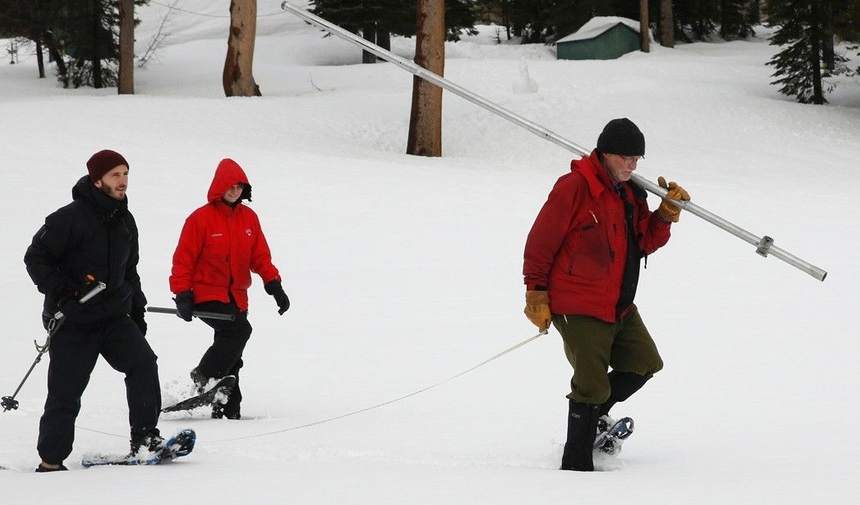
DWR staff conduct 2019’s second snow survey at Phillips Station. DWR/2019

SACRAMENTO, Calif. – Today, the Department of Water Resources (DWR) conducted the second Phillips Station snow survey of 2019. The manual survey recorded 50 inches of snow depth and a snow water equivalent (SWE) of 18 inches, which is 98 percent of average for this location. Statewide, the Sierra snowpack is 100 percent of average.

By comparison, on February 1, 2018 measurements at Phillips Station revealed a SWE of 2.6 inches, only 14 percent of the early-February average.

“The snowpack across California is on par with the historical average for this time of year, thanks in no small part to an atmospheric river that brought heavy snowstorms to the Sierra Nevada. Typically, California relies on a handful of large storms like we saw earlier this year.” said DWR Director Karla Nemeth. “It’s a start, but the next two or three months will determine what it means for our reservoirs and overall water supply.”

Results from snow surveys like the one conducted today at Phillips Station are critical to the management of California’s water. More than 50 local, state, and federal agencies work together as part of the Cooperative Snow Surveys Program to collect data from more than 300 snow courses throughout California.

“The data we collect allows us to forecast how much snowmelt will run off into our streams and reservoirs,” said John Paasch, Chief of DWR’s Hydrology and Flood Office. “Snowpack is an important factor in determining how DWR manages California’s water resources each year to sustainably meet demands.”

On average, the Sierra snowpack supplies about 30 percent of California’s water needs as it melts in the spring and early summer to meet water demands in the summer and fall.

DWR has conducted manual snow surveys at Phillips Station since 1964, recording both depth and snow water equivalent. Snow water equivalent is the depth of water that theoretically would result if the entire snowpack melted instantaneously. That measurement allows for a more accurate forecast of spring runoff.

DWR conducts five snow surveys each winter – near the first of January, February, March, April and May – at Phillips Station in the Sierra Nevada just off Highway 50 near Sierra-at-Tahoe. The Phillips snow course is one of hundreds that will be surveyed manually throughout the winter. Manual measurements augment the electronic readings from about 100 snow pillows in the Sierra Nevada that provide a current snapshot of the water content in the snowpack.

Tulare Farm Expo Near

-January 22,2019-
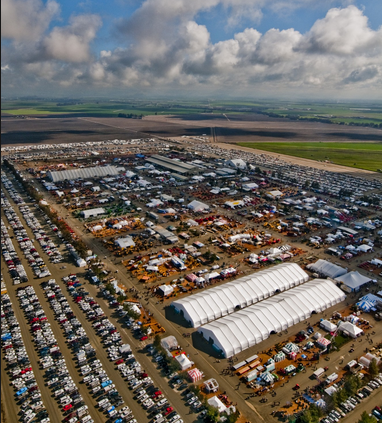
Screen Shot 2019-01-22 at 8.06.53 AMTulare, CA – The International Agri-Center® is set to hold the 52nd World Ag Expo® February 12-14, 2019. The largest annual agricultural exposition of its kind, World Ag Expo® boasts more than 1,500 exhibitors displaying cutting-edge agricultural technology and equipment on 2.6 million square feet of exhibit space. In 2018, 106,700 people came from 49 states and 63 countries to attend the 51st World Ag Expo®.

On Tuesday morning, Opening Ceremonies will kick off the show with special guest speaker, American Farm Bureau President Zippy Duvall. A variety of seminars will be offered, including dairy, water, international trade, government regulation and women in agriculture. These seminars are presented by professionals in the industry and provide attendees with valuable information to improve their operations.

New this year will be a free, one-day conference aimed at young women interested in a career in agriculture. Grow by FarmHer, is being held on the West Coast for the first time and requires pre-registration at http://bit.ly/GrowAtWAE19. Other special events include the Capitol Ministries dinner on Tuesday night, the Wednesday morning Prayer Breakfast and the California Ag Leadership breakfast on Thursday morning.

The Top-10 New Products Competition, sponsored by Bank of America, is back with products offering improved technology for the field and increased efficiencies. From a one-of-a-kind heavy-duty electric fork lift, to an affordable dairy genomic test, to a wireless irrigation valve control system, the Top-10 New Products has something to offer every type of farming operation.

“World Ag Expo® continues to provide the best platform for buyers and sellers to meet, greet, and grow the Ag industry,” says Jerry Sinift, International Agri-Center®’s CEO. “Our theme this year is ‘Harvesting Technology,’ and there is plenty of time, money and resource saving technology to find at this show. We’re impressed every year with the new innovations our exhibitors bring to World Ag Expo®.”

Attendees can look forward to new features this year, including daily livestock dog demonstrations in the new Demonstration Pavilion, Ride & Drive areas on the East and West ends of the grounds, and a wide variety of new seminars that cover everything from Cannabis to automation in the ag industry. Attendees will also be able to enjoy an additional 20 acres of parking to the East of the International Agri-Center® grounds. With the move of on-site RV camping to the South parking lot, space to the East of the grounds has been converted to day parking.

Starting February 1, World Ag Expo® attendees can get the latest news, information and updates about the show by downloading the new 2019 mobile app. The free app provides mobile access to the schedule of events, an exhibitor directory, map of the show grounds and other visitor resources. The app is available for download from the iOS and Android app stores by searching “World Ag Expo® 2019.”

For a full schedule of events, visit http://bit.ly/WAE19Schedule. For more information about the show or to purchase tickets for 2019 World Ag Expo® visit www.WorldAgExpo.org.

World Ag Expo® – bringing you the best in Ag since 1968.

KEY CALIFORNIA AG REGION PONDERS WHAT’S NEXT AFTER VOTERS SPURN BOND TO FIX SINKING FRIANT-KERN CANAL

from Aquafornia

January 21,2019-

WESTERN WATER NOTEBOOK: SUBSIDENCE CHOKES OFF UP TO 60% OF CANAL’S CAPACITY TO MOVE WATER TO AID SAN JOAQUIN VALLEY FARMS AND DEPLETED GROUNDWATER BASINS

Water laps at the bottom of a bridge that’s crossing the Friant-Kern Canal, the result of subsidence caused by overpumping of groundwater.
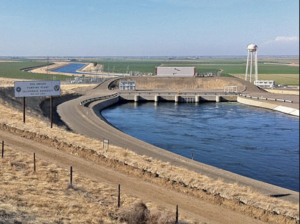
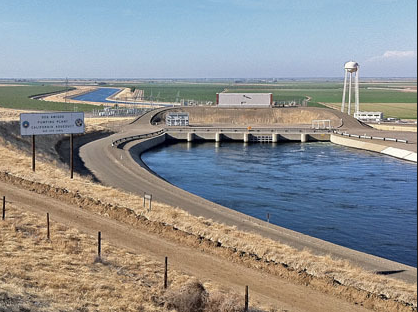
Screen Shot 2018-12-18 at 6.57.40 AMThe whims of political fate decided in 2018 that state bond money would not be forthcoming to help repair the subsidence-damaged parts of Friant-Kern Canal, the 152-mile conduit that conveys water from the San Joaquin River to farms that fuel a multibillion-dollar agricultural economy along the east side of the fertile San Joaquin Valley.

Yet the need remains to carry water from Friant Dam, northeast of Fresno, south to the 15,000 farms all the way to Bakersfield. But the carrying capacity of the Friant-Kern Canal has been reduced by as much 60 percent in some places because of the long-term overdraft of groundwater aquifers. That’s not only a problem for farmers, who need that water to grow oranges, grapes and nuts, among other valley crops, but also for those seeking to comply with the Sustainable Groundwater Management Act (SGMA).

In addition to halting overdraft, the law requires local agencies to demonstrate how they will convey water to recharge depleted groundwater basins.

“From a SGMA perspective, our success in maintaining our sustainability and keeping our permanent plantings alive and our growers growing is 100 percent reliant on a fully functional Friant-Kern Canal,” said Eric Quinley, general manager of the Delano-Earlimart Irrigation District straddling Kern and Tulare counties.

Proposition 3 would have provided $750 million to address the subsidence problems affecting the canal, but it was defeated at the polls in November in a close vote (50.6 percent to 49.3 percent), partly because of criticism by the Sierra Club and others that taxpayer dollars should not be used to deal with the problem.

Eric Parfrey, member of the Sierra Club California’s executive committee. He said city residents shouldn’t have to pay to repair canal damage caused by farmers overpumping groundwater.

“Overpumping of aquifers caused the groundwater subsidence that damaged the Friant-Kern Canal,” Eric Parfrey, then-chairman of the Sierra Club California’s executive committee, wrote in a September 2018 op-ed published in newspapers around the state. “Those who caused the damage should pay to repair the canals.”

Jerry Meral, the author of Proposition 3, acknowledged that even though it was less than 10 percent of the $8.8 billion bond, the Friant-Kern Canal portion of the initiative weighed against its passage.

“I think if the Friant provision hadn’t been in there, it would have passed,” he said. “However, without the support of the people in the Friant area, it wouldn’t have got on the ballot, so we were caught between the two conundrums there.”

In an interview, Parfrey with the Sierra Club said there might be a state role for addressing the subsidence problem, provided it comes through the legislative process subject to public review. Proposition 3, he said, “was just kind of insulting because it was so obviously a pay-to-play type of arrangement.”

Sinking an inch a month

Completed in 1949 as part of the federal Central Valley Project, the Friant-Kern Canal is operated and maintained by the Friant Water Authority. The canal starts from Millerton Lake near Fresno with a capacity of 5,300 cubic feet per second (cfs) and ends south of Bakersfield with a capacity of 2,500 cfs.

This maps shows where subsidence is worst along the Friant-Kern Canal. (Image: Friant Water Authority)

Along the way, it supplies water to three of the top crop-producing counties in California: Fresno, Tulare and Kern.

The worst subsidence area exists at the 102-mile mark, west of Porterville in Tulare County, where the canal has lost more than 1,000 cfs of capacity since 2010. Between 2015 and 2017, the canal dropped an inch per month, denying the ability to convey an estimated 300,000 acre-feet that could have been delivered during a wet 2017, according to Alex Biering, government affairs and communications manager with Friant Water Authority. That’s a problem for a canal that moves water purely by gravity.

The $750 million in Proposition 3 most likely would have been used to restore the entire capacity of the Friant-Kern and Madera canals (at an estimated cost of $450 million), with the remaining funds targeted at other conveyance capacity improvement projects in the valley, Biering said.

The authority is pursuing immediate repairs to increase the capacity of the canal to the level of historic deliveries. Part of the repair work includes adding a waterproof coating or membrane to five county bridges to help the water slide past the vertical face of the bridges that it’s now hitting.

“We can have a wet year, with plenty of water to recharge, but with capacity restrictions on the canal, we are only able to bring a portion of that water into the district. It’s like being given a full glass of water but limited to using a straw the diameter of a straight pin to drink from it.”

~Mark Larsen, general manager of the Kaweah Delta Water Conservation District in Tulare and Kings counties.

But there is the need for a “longer-term, broader fix,” Biering said.

“Whether it ends up being a full restoration of the canal’s design capacity from the dam to its terminus (4,000 cubic feet per second) or whether it will be specifically focused on the subsidence area, those are questions that remain to be answered by our board,” she said.

It also remains to be seen whether funds are found to improve the canal to help facilitate SGMA-related groundwater recharge.

“It is possible that the bigger fix to the canal could support conveying water not just to satisfy Friant contracts, but to expand water deliveries for groundwater banking to implementation of SGMA,” Biering said. “Had Prop. 3 passed, we likely would have been interested in restoring the full design capacity of the entire canal. Under that scenario, it’s possible that the additional conveyance could have helped with SGMA compliance.”

‘Needs a lot of dollars’

Water contractors south of the Delta say they have been forced to turn to groundwater pumping because of the unreliability of deliveries from state and federal pumping facilities.

Cannon Michael, chief executive officer of Bowles Farming Company in Los Banos, said subsidence is a large-scale problem that is affecting water conveyance for agriculture as well as groundwater banks and wildlife refuges.. (Image: Cannon Michael)

Cannon Michael, chief executive officer of Bowles Farming Company in Los Banos, said subsidence is a large-scale problem that is affecting water conveyance for agriculture as well as groundwater banks and wildlife refuges. As such, it is difficult for the agricultural community to pledge unlimited financial support for the solution.

“It’s one of those things that needs a lot of dollars,” said Michael, whose water deliveries arrive via the also-sinking Delta-Mendota Canal, another piece of the federal Central Valley Project. “The bond not passing was a bitter disappointment for folks, but ultimately people are still looking for the solution.”

Michael noted that the Central Valley Project was constructed in part to help slow the rate of groundwater pumping in the San Joaquin Valley. Action is needed, he said, to restore that surface water reliability.

“We need the infrastructure to function properly to do all the creative things we do … otherwise we are going miss a lot of opportunities.”

Farmers are especially concerned about their inability to take water deliveries during wet years when more is available for groundwater recharge.

“We use our contract for San Joaquin River water primarily for groundwater recharge and having limitations on the ability to push water through the Friant-Kern Canal restricts our ability to do that,” said Mark Larsen, general manager of the Kaweah Delta Water Conservation District in Tulare and Kings counties. “It strikes me that we can have a wet year, with plenty of water to recharge, but with capacity restrictions on the canal, we are only able to bring a portion of that water into the district. It’s like being given a full glass of water but limited to using a straw the diameter of a straight pin to drink from it.”

Eric Quinley, general manager of the Delano-Earlimart Irrigation District, which straddles Kern and Tulare counties.

About 50 miles south of the Kaweah district, Quinley with the Delano-Earlimart district said the constraint on the canal “eliminates one of the variables in our water portfolio,” the ability to take available flood flows.

Furthermore, there is the question of what to do about the pumping outside the Friant service area that causes the subsidence problem.

“You have a lot of lands that are planted in permanent plantings outside the irrigation district completely … that are much more reliant on groundwater or wholly reliant on groundwater,” he said. If those areas are contributing to the subsidence problems that impair the canal, “how can we put something together where we have acknowledgement and mitigation related to the potential damage that’s caused by that overdraft?”

Finding the best alternatives

While agencies such as the Friant Water Authority confront what to do about subsidence, the work on SGMA continues, including completing sustainability plans that outline how groundwater recharge will occur in the hardest-hit areas.

“The farmers created this problem of subsidence and now they are going to the city people to get a bailout to fix the problem that their overpumping created. The optics of that are not real good.”

~ Eric Parfrey, member of the Sierra Club California’s executive committee.

“SGMA has to be implemented and to do that, it is going to require more capacity in the canal,” Meral said. “The problem is the Friant-Kern people will probably only want to pay for the repair of the canal to the extent that they can get their full Class 1 (regular) and Class 2 (wet year) deliveries and not necessarily more. They’ll have to talk to people who would benefit from conveyance of extra water in Tulare and Kern counties primarily and see whether a willingness is [there] to pay and bring the canal up to a higher capacity to convey water to groundwater basins.”

The scope of repair means spreading the costs across as broad a base as possible, which will be a challenge.

“Although we’d like to have a large pool of partners sharing the costs of repairing the canal, it tends to be those most impacted that pay,” said Larsen with the Kaweah Delta Water Conservation District.  “There are some on the canal that have said they won’t be partnering on the project because they are upstream of the subsidence problems, and it does not affect them.”

Water in the Friant-Kern Canal submerges part of the concrete face of another county bridge. Friant Water Authority plans to install a waterproof membrane on the concrete face and underside of five such bridges to help water slip past the structures.

Parfrey with the Sierra Club said his organization is “totally opposed” to overturning the beneficiaries-pay principle when it comes to funding subsidence repair.

“The reason why we have subsidence down in the valley is because there has been a grotesque amount of overpumping by the farmers, so in essence when city people look at the situation they say, ‘Well, the farmers created this problem of subsidence and now they are going to the city people to get a bailout to fix the problem that their overpumping created,’” he said. “The optics of that are not real good

Robots and herbicides

from Rural Migration News 

California: Mechanization, Cannabis

January 8,2019

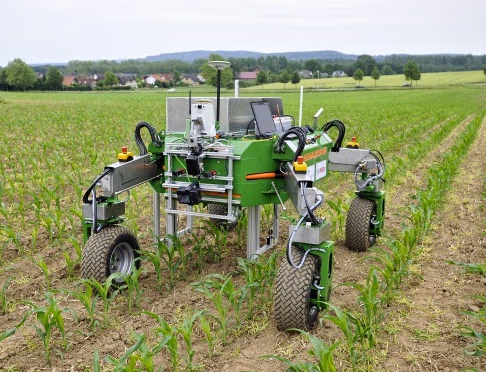
Screen Shot 2019-01-08 at 6.41.48 AMDrones and robots may transform agriculture. Drones can take photos of plants cheaply, and algorithms can process the data and adjust fertilizers and chemicals to the needs of each plant, dramatically raising yields. Similarly, sensors can provide information on each animal cheaply, allowing farmers to more precisely tailor feed and treatment.

Data on plants and animals needs to be processed and responses suggested by algorithm. Will universities develop the sensors that collect data and publish algorithms for use by farmers, or will private industry give away sensors, collect data, and provide recommended treatments to plants and animals, turning data into a profitable service?

One major focus of robotic research is weed control. Glyphosate is a herbicide sold by Monsanto since 1974 as Roundup. Monsanto developed corn, soybean and other seeds that allowed farmers to spray Roundup on the entire field and kill only weeds. However, glyphosate-resistent weeds have developed, efforts to develop robots that quickly distinguish between desired plants and weeds and eliminate the weeds mechanically.

The cost of robots is declining, while the cost of herbicides is rising, helping to explain the interest in robotic weeders. The Robovator can remove weeds between rows of crops and between plants in the row, especially if the plants have been planted by a precision machine.

Apples are being planted on V-shaped trellises to maximize sunlight reaching the fruit and to make it easier for pickers and machines to harvest them. Vertical trees in the Sacramento River Delta yield 60 bins of gala apples an acre, while V-shaped trees galas average 75 bins an acre. Trees are planted north-south so that the east side of the V gets sunlight in the morning and the west in the afternoon, with the entire tree getting maximum sunlight at noon.

Artificial intelligence combs through vast amounts of data to identify patterns and to make predictions, as when Amazon makes suggestions of what to buy based on past purchases. There are 500 million small farms with less than five acres world wide, and phone apps based on AI aim to allow them take pictures that can be sent for diagnosis of pests and diseases.

Higher land prices in coastal California encourage growers to plant high-value crops that are often labor intensive. Garrett Farms near Watsonville has 180 acres of blackberries, which yield $40,000 an acre in revenue, and raspberries, which yield $50,000 an acre. High-value crops are needed for land that rents for $3,000 an acre and sells for $60,000 an acre.

Blackberries and raspberries, which can produce for six years, are harvested from May through September by a peak 400 workers who are paid piece rate wages.

Cannabis. California’s Prop 64 in November 2016 legalized recreational marijuana beginning January 1, 2018. An estimated 13.5 million pounds of marijuana were produced in California in 2016, including 11 million pounds or over 80 percent that is produced illegally and sold outside the state.

Most marijuana is produced outdoors on plots of one-fourth acre or less. Outdoor farms produce an average 250 to 350 pounds a year, for a total of 8.1 million pounds or 60 percent of the state’s total production. The farm price of marijuana was an average $1,400 a pound or a total $11 billion in 2016. Legalization has reduced grower prices to $500 or less a pound.

California had an estimated 50,000 commercial cannabis operations in 2016; at the end of 2018, there were fewer than 2,000 licensed growers, including 1,100 licensed growers in the Emerald Triangle of Humboldt, Mendocino and Trinity counties and another 1,100 in the Central Coast. Santa Barbara county had 800 licensed growers, including some who used license stacking to combine one-acre licenses into farms with five to 10 acres.

The Bureau of Cannabis Control says that more growers are requesting temporary licenses; 2,500 were issued near the end of 2018.

Recreational marijuana has not led to the predicted $1 billion in additional state tax revenues; California is expected to receive an additional $470 million in 2018-19 from legal sales of $2.5 billion, suggesting that legal marijuana sales in 2018 may be lower than the $3 billion in sales when only medical marijuana was legal. There are many reasons for lower-than-expected sales in 2018, including high state and city fees and the requirement that retail cannabis stores obtain licenses from both the state and local governments.

Few city governments have allowed recreational marijuana shops, only 89 of the state’s 482 cities at the end of 2018.

Legal marijuana shops face high taxes that add over 30 percent to prices. For example, in the city of Los Angeles, legal shops charge a 15 percent state excise tax, a 10 percent Los Angeles city tax on marijuana, and 9.5 percent sales tax. Unlicensed delivery services do not pay these taxes. California had fewer than 550 licensed cannabis retailers at the end of 2018, less than the 600 in Oregon, which legalized recreational marijuana in 2014.

Some residents who live near greenhouses that were repurposed from growing flowers to cannabis are complaining of the smell, which some call fresh skunk. In response to complaints, some greenhouses are installing odor-control systems that were designed for garbage dumps. Some cannabis growers say that their rural neighbors should be accustomed to agricultural smells.

California’s regulations and taxes are likely to favor a few well-capitalized cannabis operations that can afford to hire compliance officers and achieve economies of scale in production.

Tulare & Fresno Ag Commissioners moving to Nebraska

January 5,2019-Screen Shot 2019-01-04 at 9.14.21 AM

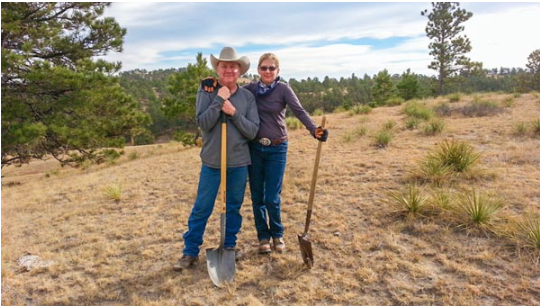
Two of the nations top ag counties will be losing their agricultural commissioners in coming weeks as both are planning to pull up stakes from the San Joaquin Valley relocating to Nebraska. While it may sound unusual, it is not.

Les Wright is Fresno County Ag Commissioner and his wife Marilyn Wright heads up the Tulare County Ag Commissioners office. Both are retiring.“We own 480 acres, a cattle ranch near the So Dakota and Wyoming border says Marilyn who has been on the job for 9 years.Their rolling rangeland includes Ponderosa pines.

Marilyn will be retiring March 29 after working with Tulare County since 1993. Fresno will be losing Ag Commissioner Les Wright in January. In honor of both of their service, funds are being raised at Fresno State to support the Fresno State Rodeo Team, which is one of Les’ passions. A retirement reception honoring Les and Marilyn will be held on January 12 at the Clovis Rodeo Hall; social and appetizers will be available from 3 – 6 p.m. and a recognition program will be held at 5 p.m.

Les recently made the news official.“It truly has been my privilege to serve the citizens of Fresno County for the last nine years. For the past five years, I have been proud to serve as Agricultural Commissioner and Sealer of Weights and Measures. Nevertheless, no career, no matter how rewarding, lasts forever and I have decided that the time has come for me to retire. I plan to leave County service on January 27, 2019.”

In 1999, Les Wright began working as a deputy agricultural commissioner in Kings County. In 2010, he joined the team in Fresno County, where he became chief deputy and was later appointed to serve as the agricultural commissioner for Fresno County on August 2, 2013. In his position, he enjoys strengthening his relationship with Fresno County farmers and ranchers. Although he has always favored livestock, he has done almost every job in the business from inspecting bee hives to inspecting pesticide applications.

“Agriculture has always been my love,” said Wright. “I’ve always been involved in agriculture and don’t see myself doing anything else.”

Marilyn came to Tulare County from Merced County where she worked the ag department as well.”I moved to Visalia because I was familiar with the community coming to town on a regular basis to have my hair done at the Don Estes studio by Dons wife Lydia Estes.”

In 2017, the latest year we have figures for – Tulare County finished second in the running for top farm production counties with Fresno County falling to third on a surge of nut planting Kern County. Kern took over bragging rights to the top spot. Tulare continues to be number one in milk production.

Marilyn grew up in Nebraska and looks forward to retiring there with Les. “I don’t mind the winter in the Midwest” she adds.

Marilyn has been busy in her position overseeing a huge increase in export shipments from Tulare County overseas in the past decade.The Ag Commissioner does inspections on the loads.

County packing houses are scrambling this year looking to replace China that had been the top destination. In 2017 China received 6.3 million cartons of fruit shipped from Tulare that year. A decade earlier the county shipped just 1.7 million cartons to China. In 2018/19 those number are likely way down.

Korea was number two in 2017 with 5.9 million cartons shipped in 2017 and probably will be number one in 2018.

The peak season for shipping citrus is coming up in March and Marilyn says packing houses are busy looking to replace those trade war losses with other buyers. “We ship to over 80 countries around the world.”

Marilyn has also been a leader in the fight to limit the spread of the Asian Citrus Psyllid, enforcing the ban on moving fruit without tarping of the trucks in the county, a rule that has been successful so far

Two highlights of Marilyn’s career include implementing an aggressive County Walnut Theft Ordinance, along with taking in over 113,000 pounds of outdated and unwanted pesticide products from Tulare County growers during the department’s Legacy Pesticide Disposal Event.

New year ag beat

December 31,2018-
Screen Shot 2018-12-31 at 12.40.55 PMWonderful Company announced recently that it will raise the minimum hourly wage for full-time and year-round workers to $15 in January.The company markets citrus, pistachios almonds, grapes and and pomegranates among other fruit. About 2,000 workers will get the raise.

Dairy giant Dean Foods stock has dropped from near $12 at the beginning of 2018 to $3.65 a share today. Zacks reports that “the company has long been grappling with escalated fuel, freight and resin costs, which along with volatility surrounding fluid milk volumes has been hurting its performance.

Dean Foods licenses the Land O’ Lakes brand.

In third-quarter 2018, the company reported disappointing results, wherein both top and bottom line deteriorated year over year due to soft volumes stemming from plant closures and associated transitionary costs.”

Pacific Ethanol hurt by trade war

Stock in Pacific Ethanol of Sacramento has dropped to under $1 in recent weeks. The company has been hurt by the on-going trade war with China, a major market for DDG, ethanol derived animal feed say CEO Neil Koehler.
The stock was given boost recently by President Trump’s decision to allow e-15 ethanol blends starting next May. Only 10% blends are allowed now along with E-85.The company did lay off some workers at a Nebraska plant due to surplus supply.

Beef ranchers face new trade threat

December 31,2018-

American farmers suffer as Trans Pacific Partnership goes into effect without US

Screen Shot 2018-12-31 at 7.07.51 AMThe trade war is already impacting many US grown crops and now America farms face a new problem as a huge Pacific trade pact goes into effect without US participation.

CNBC reports that the Comprehensive and Progressive Agreement for Trans-Pacific Pacific Partnership was ratified by seven of its member countries on Sunday. That includes Australia, Canada, Japan, Mexico, New Zealand, Singapore and Vietnam, with Brunei, Chile, Malaysia and Peru — soon to follow.

President Trump had bowed out of any plan to join the rest of these countries.

Products traded to Japan within the pact countries will now be cheaper than US producers can match. Consider beef says CNBC.

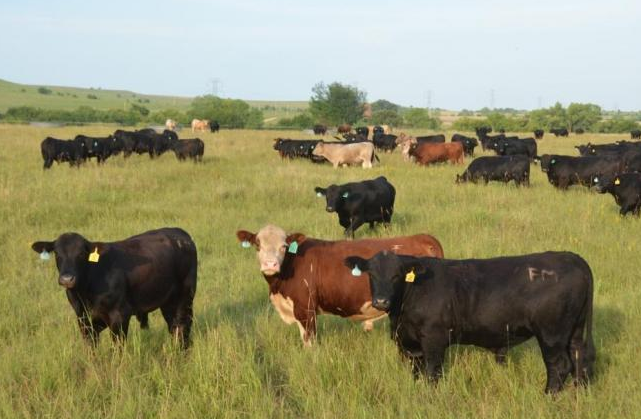
Japan is the “top market for U.S. beef, but Australia’s products could now take over America’s spot since foreign beef tariffs in Japan will be cut by 27.5 percent for Australian producers under the CPTPP, The National Cattlemen’s Beef Association has warned.

“The US beef industry is at risk of losing significant market share in Japan unless immediate action is taken to level the playing field,” Kevin Kester, the association’s president, said in a statement earlier this month.

Water Notes: Friant update/ Shasta rain

December 18,2018-

Friant Water to start on canal repairs despite Prop 3 defeat

Screen Shot 2018-12-18 at 6.57.40 AMVoters in November turned down a statewide bond that would have funded $750 million to repair subsidence issues along the Friant Kern Canal, suffering from reduced capacity. So now what?

The Friant-Kern Canal is the largest artery for water on the eastside of the Valley. It is part of an economic engine that powers the economy. Failing to fix the Friant-Kern Canal is not an option for Friant Water Authority, the districts who rely on it, and the communities it supports.

As such, Friant Water Authority says they is moving forward on several fronts regarding repairs to the canal.

Prior to the peak water season deliveries in late Spring 2019, Friant Water Authority is scheduled to complete immediate interim repairs on the areas of Friant-Kern Canal most impacted by subsidence. Completing these repairs will increase the carrying capacity of the canal Friant-Kern Canal south of Porterville from Avenue 96 through Road 80 by as much 300 cubic feet per second, which is nearly a 20% increase from the capacity seen over the last few years.

Funding for these repairs will come from $7.2 million already provided by the Bureau of Reclamation for this project last year and construction should begin by the end of this year.   

Construction work necessary to restore long-term conveyance capacity in the critical areas of the Friant-Kern Canal most impacted by subsidence is scheduled to begin in 2019. These repairs could cost as much as $200 million or more, and there are several options the organization is pursuing to finance the work. The current engineering, design, and permitting efforts are being funded by the Bureau of Reclamation.  Additionally, nearly $20 million will be available in October 2019 for canal construction as a result of the San Joaquin River Restoration Settlement. This, however, still leaves a significant funding gap to complete the critical long-term repairs. Friant Water Authority says they  continue to work with Federal representatives and the Administration to identify funding sources and financing options, including low-interest loans for infrastructure and other opportunities for cost-sharing.

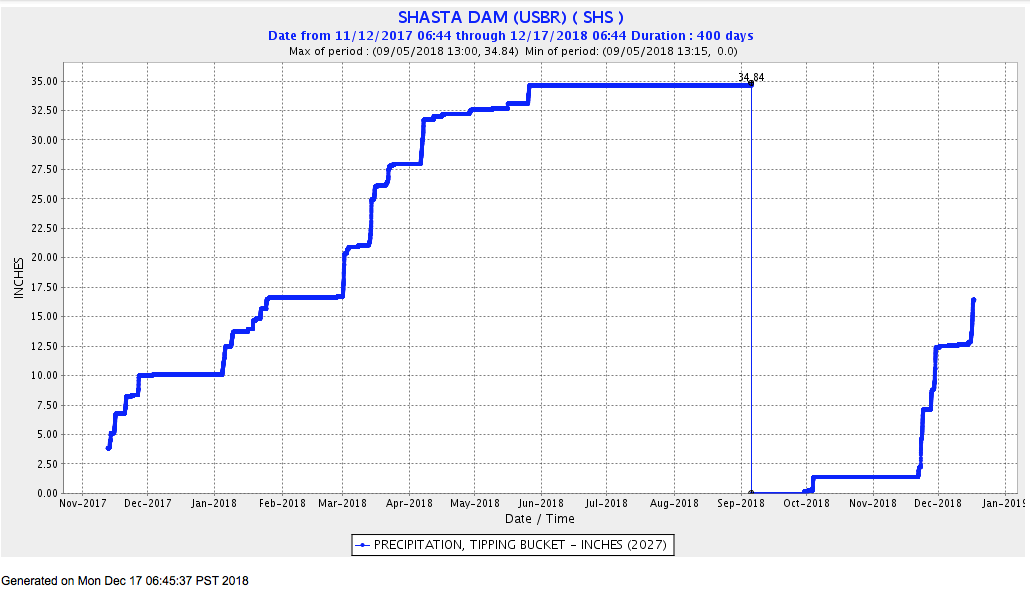
Shasta Dam rainfall ahead of last year

Shasta reservoir, the largest California dam and most important, has received over 17 inches of rain so far this year ,ahead of last year when the number was just 10 inches.

click to enlarge
click to enlarge