
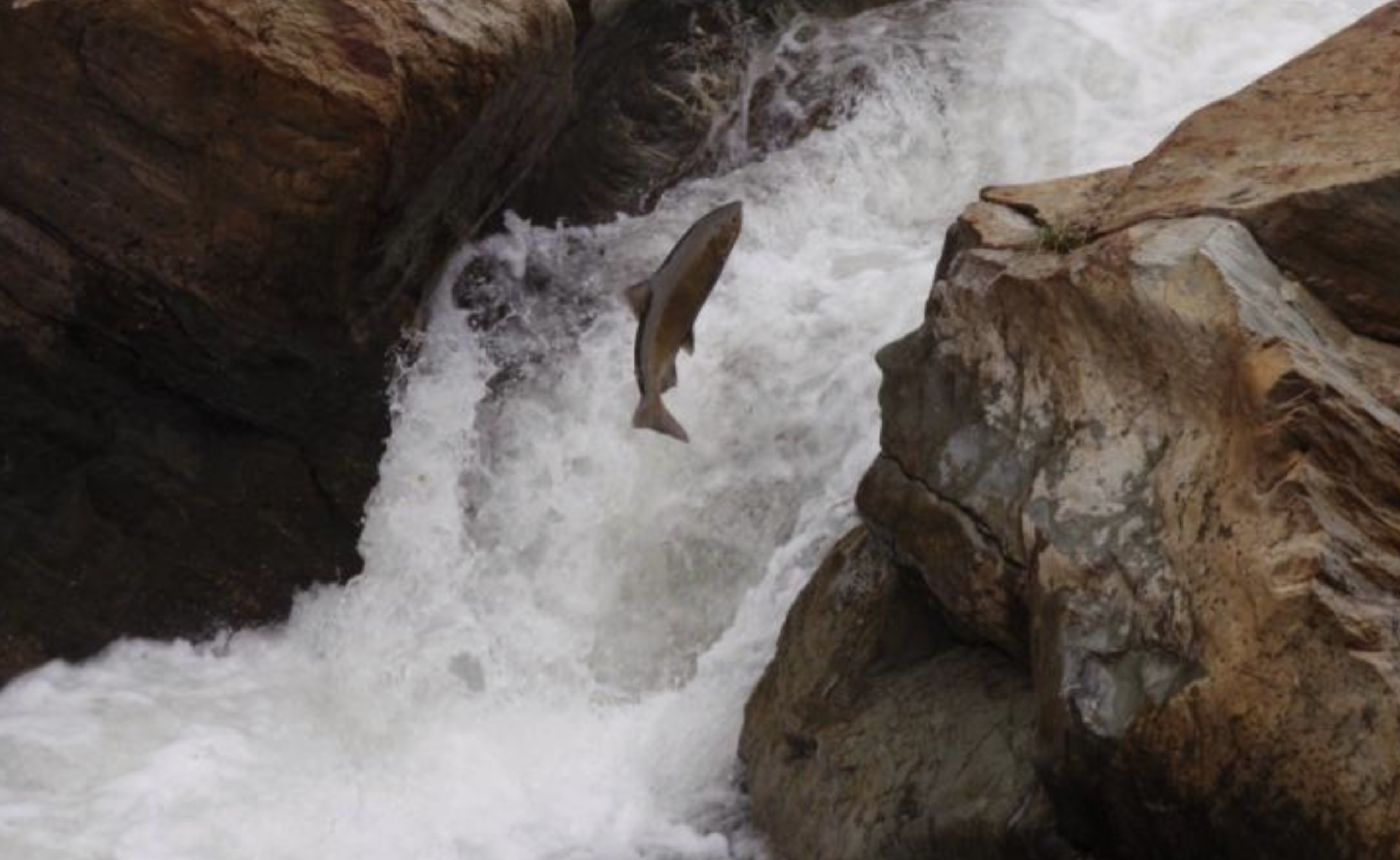
How about some good news for a change!
Information from the Golden State Salmon Association and the Pacific Fisheries Management Council forecasts a current adult salmon ocean population of 392,349 in 2026 — more than double last year’s ocean abundance estimate. The Klamath River forecast also jumped to 176,233, up from 82,672 in 2025.
For comparison, the upper Sacramento River saw a return of over 60,000 adult salmon to natural spawning areas in 2025 compared to just over 4,000 in 2024, a 15-fold increase. The number of jacks, or two-year-old sub-adult salmon, jumped almost threefold from around 5,500 in 2024 to about 14,500 in 2025. The number of returning jacks is key to forecasting the adult salmon population in the ocean now, which informs how many salmon fishery managers will allow to be caught this year.
Both some commercial and sport fishing are expected to be approved later this spring by the Pacific Fishery Management Council.
The Salmon Association put the good news down to wet years in 2023 and 2024.
“Heavy spring runoff in 2023 and 2024 moved through the Central Valley, raising river levels, reconnecting floodplains, and sending cold, turbid,oxygen-rich water downstream. For juvenile salmon migrating toward the ocean, those conditions made all the difference. Survival improved. Stronger year classes began to take shape.
That rebound wasn’t the result of chance or rhetoric. It was the predictable outcome of hydrology aligning with biology. When rivers carry enough cold water at the right time, salmon respond.
For salmon, water is not simply habitat. It is the difference between collapse and recovery.”
Young salmon were treated to several years of negative ( cool) PDO pattern, which is beneficial for survival of the fish in the ocean.
On the Klamath River fishermen say the removal of dams upstream has made a big difference in the increase of salmon returning to their home ground.In Oct 2024 free flow to over 400 miles of habitat in California and Oregon was restored with removal of four dams that also benefited tribal communities.