
-May 6,2019-
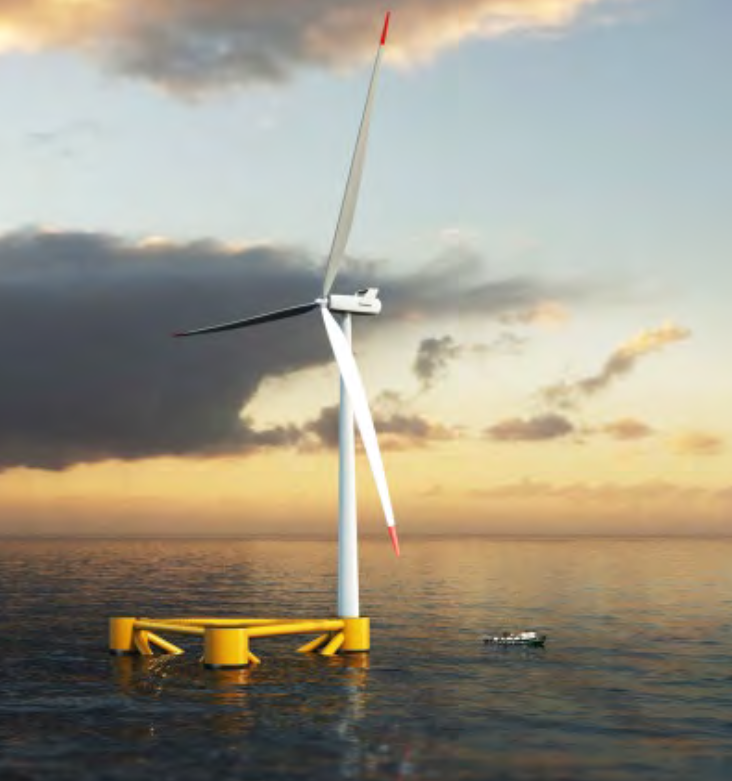 Major international companies from around the world want to develop offshore wind energy along the Central Coast.
In April the federal Bureau of Ocean Energy Management (BOEM) released a list of companies that BOEM determined were “ legally, technically, and financially qualified to hold an Outer Continental Shelf (OCS) renewable energy commercial lease.”
BOEM offered this call for applications last October and now the world has responded
BOEM offered a chance to take the first step on a future bid to develop offshore wind off three area in California – two of them off the Central Coast. The three specific sites were off Humboldt in northern California and off Morro Bay and Diablo Canyon in our neck of the woods.
Twelve of the companies want to develop projects off the Central Coast, some targeting both Morro Bay and off Diablo Canyon and two more off the Humboldt area. All have good wind speed offshore where giant turbine would be erected.
The parties who submitted interest and where they are based – is listed here. All have US affiliates but all of them also have overseas partners.
Many of the applicants are huge European players, some state affiliated, including those from Germany,England,Ireland, Portugal,Spain, France,Denmark and Norway as well as US and Canadian renewable energy firms, all with plenty of wind experience.
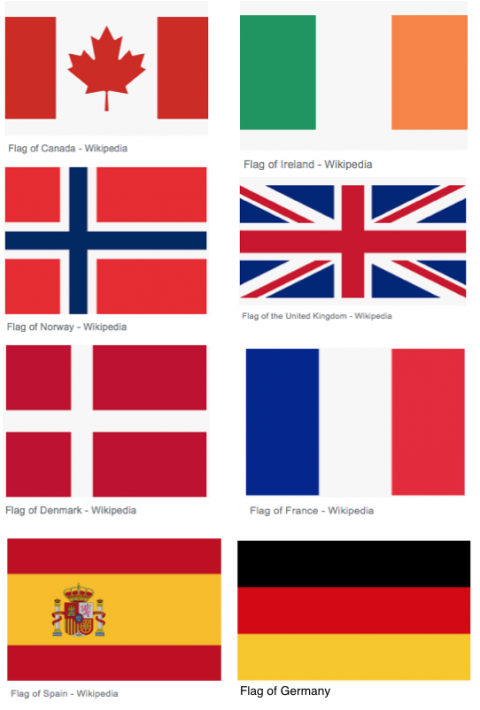
Here’s the list according to BOEM.
• Algonquin Power Fund (America), Inc.-Canada
• wpd Offshore Alpha, LLC- Germany
• Avangrid Renewables, LLC -Spain
• Castle Wind, LLC- partner from Germany
• Cierco Corporation- United Kingdom
• EDF Renewables Development, Inc.-France
– EDP Renewables North America, LLC-France
– E C & R (eON) Development, LLC- Germany
– Equinor Wind US, LLC-froley Statoil -Norway
– Mission Floating Wind, LLC=partner Denmark
• Northland Power America, Inc, Canada
– Mainstream Renewable Power, Inc. Ireland
The impressive list of applicants ”shows just how much industry interest is out there ” remarks BOEM spokesperson John Romero.
But Romero adds there remain plenty of hurdles before we see anything happen.
BOEM will next begin the environmental study of specific sites but the existing list of locations could be pared down, he says. The study might take a year to complete, he estimates.
The elephant in the room remains the US Navy that Romero says offered no comment during the recent comment period earlier this year on BOEM’s plan. ”They still have not said if they will oppose any lease.” The Dept of Defense has said the West Coast waters are vital of US Navy operations but have also indicated some possible flexibility that a small section could be carved out, that applicant, like Castle Wind (formerly Trident) are counting on.
Another huge hurdle is that Pacific Ocean seabed, unlike other offshore wind areas around the world is very deep, some 2000 feet down where the floating wind turbines would be tethered compared to 200 feet off the Atlantic shore where BOEM has leased number of sites. None of the 12 companies has experience this deep.
Even if all these problems are mastered, connecting offshore wind to the soon-to-be retired nuclear power site at Diablo Canyon while it is being decommissioned and is still hot will be a challenge, to say the least. Energy companies want to continue to connect to the transmission infrastructure from Diablo that links to the Western US as do the lines at Morro Bay. Then too there is the PG&E bankruptcy and what that means for Diablo Canyon.
Humboldt has its own challenges including the fact that the region is isolated from California’s population centers as well as facing a competing project from an onshore wind farm that could be online much sooner than it will take to permit an offshore wind project.