
California ramps up use of the biofuel
November 28,2018-
 The House Ways & Means Committee released a proposal this week to extend several expired tax credits, including the biodiesel and renewable diesel tax incentive. The National Biodiesel Board said they welcomes the proposal for a multi-year extension of this important incentive; it would keep the credit at its current rate of $1.00 per gallon for 2018 through 2021 but gradually reduce it to $0.33 per gallon by 2024 and then allow it to expire.
Made from an increasingly diverse mix of resources such as recycled cooking oil, soybean oil and animal fats, biodiesel is a renewable, clean-burning diesel replacement that can be used in existing diesel engines without modification. It is the nation’s first domestically produced, commercially available advanced biofuel.Using biodiesel can result in a a 50% reduction in diesel particulate emissions
In late September the California Air Resources Board (CARB) today approved changes to the Low Carbon Fuel Standard (LCFS) designed to make the program a more versatile, comprehensive tool in the fight against climate change.
Last year, the LCFS resulted in more than two billion gallons of petroleum and natural gas being replaced with cleaner, renewable transportation fuels.
The standard currently requires a 10 percent reduction in the “carbon intensity” of California’s transportation fuels by 2020. Carbon intensity is determined by the amount of carbon emitted throughout a fuel’s entire life cycle, from extraction or production to combustion.
The amendments approved today by the Board require a 20 percent reduction in carbon intensity by 2030, the most stringent requirement in the nation. The new requirement aligns with California’s overall 2030 target of reducing climate changing emissions 40 percent below 1990 levels by 2030, which was set by Senate Bill 32 and signed by Governor Brown in 2016.
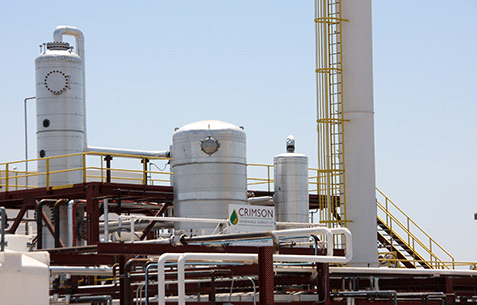
Bakersfield’s Crimson Renewables has been expanding its operation, the state’s largest, to make more of the biofuel.