
California uses 45% renewables to make electricity
By HOYU CHONG
Beacon Economics
Despite progress, California still has a long way to go before it hits the climate emergency brake. The state is going through rapid transitions, which will bring important changes to the way we fuel our cars, heat our homes, and power our industries in the coming decades.
RENEWABLES ARE PULLING AHEAD IN THE ELECTRICITY SECTOR
California’s shift toward renewables in the electricity sector has been unstoppable, to put it modestly, with significantly more renewable energy capacity being installed in recent years. Between 2012 and 2017, the state installed 9,383 megawatts of renewable portfolio standards (RPS) eligible1 nameplate capacity while fossil fuel2 installation name- plate capacity decreased 2,406 megawatts, mostly from a reduction in natural gas power generators.
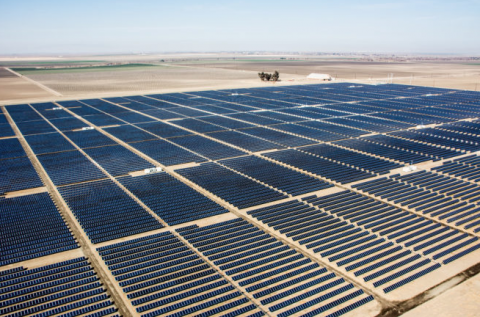
In fact, California, along with Texas, is one of the nation’s ‘Big 2’ in terms of installed renewable energy capacity. In 2017, California had 20.5 gigawatts of nameplate capacity for RPS eligible projects installed, just behind Texas at 24.3 gigawatts. Unlike Texas, where most of the renewable capacity is concentrated around wind power, California has a more diverse portfolio of renewable nameplate capacity.
RENEWABLE ENERGY IS MAKING A DENT IN ELECTRICITY
California’s ambitious growth and investments in renewable electricity puts it far ahead of the United States as a whole. Excluding conventional hydropower, RPS eligible renewables represent almost 30% of the state’s electricity power-mix, compared to less than 10% of the nation’s mix. Inclusion of conventional hydroelectric adds 14.7% and 7.5% to the renewables’ share of electricity in California and United States, respectively.
Fossil fuel is still the dominant energy source in the United States, and even in California. While RPS eligible renew- ables are 44% of electricity in California, they represented just 8.3% of total energy consumption in 2016. In the United States overall, RPS eligible renewables represented just 6.5% of total energy consumption.
However, California has reduced its reliance on fossil fuels more than the nation as a whole. While fossil fuels comprise less than 40% of electricity but 73.5% of total energy consumption in California, that is less than the United States’ total consumption of 80.9%. Ironically, energy consumption in transportation, mostly from fossil fuel sources, makes up a significantly higher share in California (40%) than in the United States (29%). California’s efforts to decarbonize the electricity grid is offset by its relatively high energy consumption in transportation.