
Late October storms expected to reverse reservoir decline, put out Sierra fires, and clear the air
Atmospheric River could wet Central California
October 20,2021
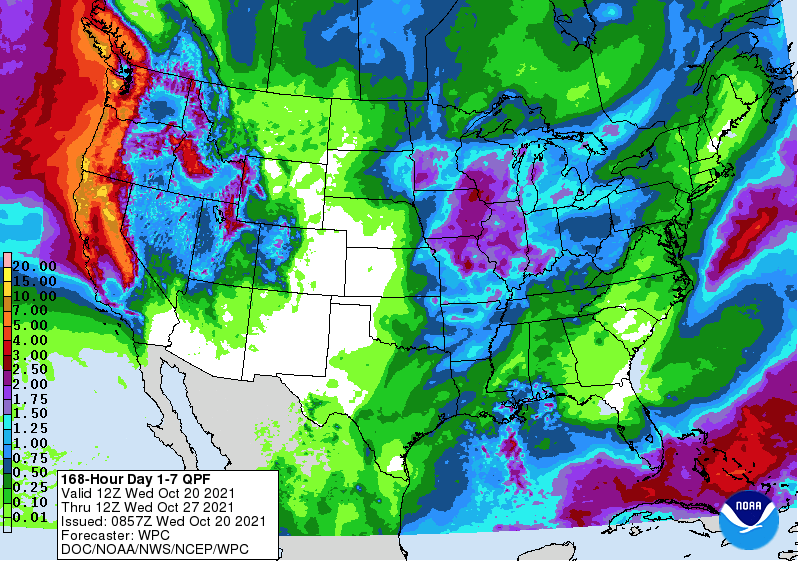
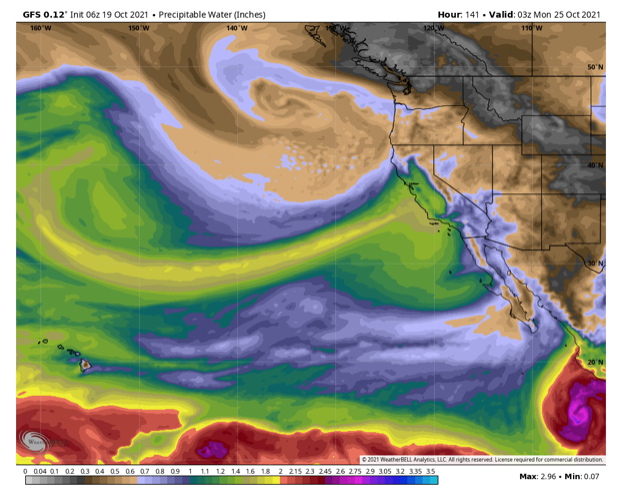
 A parade of 5 to 7 storms are blowing into northern and central California over the next 6 days ending the state’s 200-day dry spell, calming those dust storms and hopefully snuffing out the smoke and dousing those wildfires. It’s enough to cheer about although it clearly does not mean an end to the two-year”exceptional” drought in California.
But it’s a start.
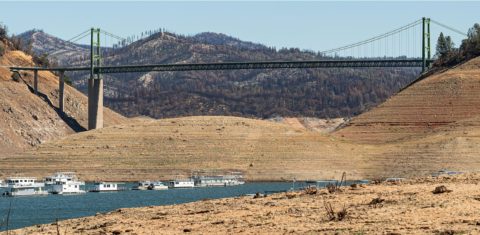
The state’s two largest reservoirs, Lake Shasta and Oroville (pictured) are at record lows, just 21% full for Shasta and 22% at Oroville. For the first time in a long time, the Shasta watershed could receive 5 to 8 inches of precip. Last year the region received just 25 inches all year. One source says the drought has dropped Lake Shasta to its second worst level since the last bucket of concrete was poured for Shasta Dam in December 1945. Lake Oroville, the state’s second-largest reservoir, this summer deactivated its hydroelectric power plant because of the low water levels for the first time in history. The drought has led to low hydroelectric power supply in the state.
For both fish and farmers the lack of water has meant devastation and real concern that both these important economies are collapsing. As a farmer told me,” if it doesn’t rain, all these nut trees are just firewood.”
Not enough, then too much?
The storms coming in through Tuesday are so vigorous there is worry that the deluge could be enough to cause slides in the Dixie and Caldor burn scar areas, says Dan McEvoy, the regional climatologist with the Western Regional Climate Center. The good news – this could end the fire season” adds McEvoy. Plus,“we will see our reservoirs filling back up.”
Some forecast models suggest rainfall up to 12 inches over the next 6 days in parts of northern California. This could be the wettest October since 2016.
California recorded its hottest summer this year, and the extreme heat has parched the landscape. Up and down the Sierra, wildfires have killed off millions of trees and caused billions of dollars in damages to structures, wildlife and tourism. Drought enhanced dust storms have caused big rigs to topple over and close highways.Idle farmland -fallow because of the drought- are seeing their topsoil blow away in the wind, reminiscent of the infamous Dust Bowl. California communities, adjacent to the Sierra wildfires, have choked on high amounts of air pollution lasting for days over the past two months.
It’s been no fun at all.
Then there are the farmers, forced to pull their trees out of the ground to save enough for another field. Perhaps hardest hit is the westside of the Valley with its low and sinking groundwater levels.Farmers, small communities and the farmworkers who live there count on some north state water here each year to make up the difference and there is a multi-billion conveyance system in place to bring the supply south- but not enough H20 in key reservoirs like Shasta and Oroville.
“After a dry 2020 water year, a critically dry 2021, and beginning the 2022 water year with one of the lowest carryover storage amounts in recent years, Reclamation remains all hands on deck and fully committed to planning for another dry year,” said Regional Director Ernest Conant. Farmers here hope this wet start could mean a better year with some allocation of surface water. But these storms are going to have to continue.
So it’s no exaggeration that many of us have been praying for rain in the Golden State. Now, it appears we will get it in spades and suddenly -like a light switch being turned on- including an Atmospheric River (AR) expected to point its fire hose into Central California his coming Sunday and Monday.There may be enough coming from that hose to douse those devastating Sequoia wildfires.ARs are relatively long, narrow regions in the atmosphere that transport most of the water vapor outside of the tropics.Last year, a January AR contributed to half the season’s snowpack, says Friant Water.
Forecasts
Forecaster John Lindsey of San Luis Obispo says It’s early, but the #ECMWF & #GFS models indicate an Atmospheric River (AR) with heavy rain and moderate gale-force to fresh gale-force (32 to 46 w/g to 55 mph) southerly winds and between 2 and 6+ inches of rain along Central Coast on Sunday into Monday.
NWS Hanford says Total rainfall accumulations around 1 inch are probable in the SJ Valley, with up to 3 inches in the foothills, and 5 inches or more at the higher elevations. Snow levels will be quite high with this event, running around 8 to 9 thousand feet, but where there is snow, accumulations up to a couple of feet will be probable.
NWS published a forecast map that says the Giant Forest area where the KNP fire is, should get 2 to 4 inches of precipitation (light snow already fell as of Oct 19). Hanford can expect 1 to 1.5 inches. Yosmite’s Tioga Pass could see up to 4 feet of snow.
The forecast through next Monday shows most of the state getting wet – finally some good news for California farmers and workers, our cities and towns and all of us.
California State Climatologist Michael Anderson said this wet storm, if it is followed by additional storms in the next month, “the precipitation would provide much-needed moisture to our very dry soils.” The lack of moisture in the soil last winter and spring contributed to the decrease in runoff from snowmelt because it was absorbed by the very dry soils, he told California Farm Bureau.
City may limit Hanford Chamber contribution
This week the Hanford City Council will weigh a limit on Chamber of Commerce funding.
The City of Hanford has already approved $20,000 of the $40,000 annual contract amount for Fiscal Year 2021/22. This action will limit the City’s contribution to the $20,000 contribution for this contract year and keep the terms of the Agreement in place until year end, including allowing the Chamber to occupy their current space rent free until December 31, 2021.
Beginning January 1, 2022 the Chamber will operate without any City funding and be free to pursue any programs that they believe best serve the business community, without oversight from the City.
The termination of the Chamber contract will result in a savings of $20,000 for FY 21/22 and $40,000 per year thereafter, says a staff report.