
 Senator Dianne Feinstein (D-Calif.) today sent a letter to Jon Leibowitz, chairman of the Federal Trade Commission, calling for an investigation into recent spikes in the price of gasoline in California.
“The recent price spike began on August 6th, when a refinery fire at Chevron’s Richmond Refinery reduced refining capacity at the state’s third largest refinery,” Senator Feinstein wrote. “However, this dangerous incident has not resulted in a reduction of gasoline supply that would explain the recent rapid price increase.”
The letter continues: “Since August 6th, gasoline prices have risen 30 cents per gallon, reaching $4.21. As a result, California has the highest gas prices in the continental United States. The increase is more than double the increase in the national average over the same period.”
Text of the letter follows:
August 28, 2012
The Honorable Jon Leibowitz
Chairman
Federal Trade Commission
600 Pennsylvania Avenue, NW
Washington, DC 20580
Dear Chairman Leibowitz:
I am writing to request that the Federal Trade Commission immediately open an investigation into recent spikes in the price of gasoline in California that appear to be unjustified by supply and demand fundamentals. The Federal Trade Commission has unique authority to investigate and prevent any manipulative or deceptive device or contrivance that could be resulting in unjustifiably high gasoline prices.
Californians filling up at the pump this month have been greeted by rapid price increases. Since August 6th, gasoline prices have risen 30 cents per gallon, reaching $4.21. As a result, California has the highest gas prices in the continental United States. The increase is more than double the increase in the national average over the same period.
The recent price spike began on August 6th, when a refinery fire at Chevron’s Richmond Refinery reduced refining capacity at the state’s third largest refinery.
However, this dangerous incident has not resulted in a reduction of gasoline supply that would explain the recent rapid price increase. The California Energy Commission’s statistics show that just before the Chevron fire, the state’s refineries were producing about 6 million barrels of gasoline per week. The previous month, they were churning out 7 million barrels per week.
In fact, the state’s refineries churned out more gasoline the week after the fire than they did the week before the fire, not less. Production of California-grade gasoline jumped 12.4 percent, nearing 6.8 million barrels for the week after the fire, according to the California Energy Commission, as other refineries saw an opportunity to increase sales. The Richmond fire, therefore, never led to a shortage – a point emphasized by Chevron’s own spokeswoman Heather Kulp, who said “There is an excess of gas on the West Coast.” If the spike in California’s gasoline prices cannot be explained by supply and demand fundamentals, I believe it is vitally important that the Federal Trade Commission look into this matter expeditiously.
I also believe the that Federal Trade Commission should investigate why California gasoline prices consistently exceed prices in neighboring states, despite dramatic shifts in California’s fuel market in recent years. Gasoline sales in California have fallen from 8.5 million gallons per day in 2006 to 4.9 million gallons per day this year, as drivers switch to more-fuel-efficient cars and elect to utilize public transit. California refiners have been exporting fuel, and have been operating well below their capacity.
Despite this drop in demand, and a clear excess in capacity, Californians have continued to endure unusually high gasoline prices when compared to their neighbors to which fuel refined in California is being exported. Department of Energy statistics show that the average price of California gasoline was 14 cents higher than other western states in 2006, when high demand in California pushed refineries to their limits. Data this year shows that the price of gasoline in California has averaged 26 cents per gallon higher than other western states.
These statistics suggest other forces are at play. In 2009, the Government Accountability Office (GAO) published a thorough econometric analysis of gasoline markets nationwide which showed that highly concentrated markets – including San Francisco, San Diego and Los Angeles – were associated with higher wholesale gasoline prices, exceeding the prices in unconcentrated markets by an estimated 18 cents per gallon. This study suggests that refineries and fuel marketers in California have accumulated the market power necessary to move prices and maximize profits at the expense of California’s consumers.
The FTC’s Prohibition on Market Manipulation Rule (16 C.F.R. Part 317) specifically prohibits a single actor or a few collusive actors from setting the market price. Given the unusually high prices in California and the GAO’s conclusions, I ask that the FTC thoroughly investigate whether the use of market power is inflating gasoline prices in California.
High gasoline prices are contributing to significant economic pain for consumers and businesses in California and are jeopardizing our fragile economic recovery. A report by the University of Southern California’s Marshall School of Business estimated that for every penny increase in a gallon of gas, as much as a billion dollars is pulled from the U.S. economy each year. Californians could be spending these dollars to keep up with mortgage payments, paying college tuition, or investing in their local communities.
It is important that the Commission use its statutory authority aggressively to pursue and remedy any market schemes or other market distorting activities that have led to either the August spike in California gas prices or the longer term trend of higher gas prices in California.
Thank you very much for your consideration of this matter. If you have any questions or concerns, please do not hesitate to contact me in my Washington, DC office. I look forward to your timely response.
Sincerely,
Dianne Feinstein
United States Senator
Category: Energy

ASSEMBLY TO VOTE ON COMMUNITY SOLAR BILL
 From Rewire
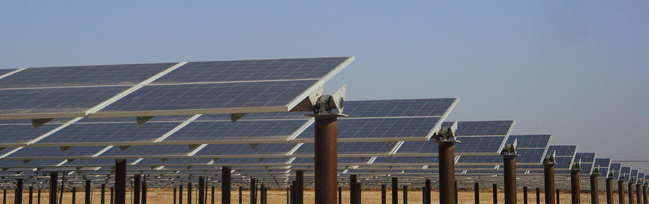
If you’d like to use electricity from rooftop solar but you don’t own a rooftop to put it on, the California Assembly will soon be deciding whether or not to help you. On Monday, August 27 the Assembly is scheduled to vote on SB 843, which would allow renters, low-income Californians and others who can’t install solar panels on their own property to buy shares in offsite solar facilities of up to 20 megawatts in size, and share in the proceeds from power sales to utilities.
SB 843, if enacted, would create the Community-Based Renewable Energy Self-Generation Program in which retail utility customers could offset up to 100% of their utility bills by buying shares in a shared facility — often referred to as a “solar garden.” The state’s Senate passed the bill in 2011. Its author is State Senator Lois Wolk; the bill was introduced in the Assembly by Members Huffman and Skinner.
Upfront costs for buying into a solar garden and the amount of credit a participant receives per kilowatt-hour generated would largely be up to the facility operator. As there’s an intermediary involved, the financial return per kilowatt of generating capacity a participant buys in a solar garden will be less than if that person sold the power to the utility directly. Then again, the same is true of solar leasing programs for homeowners, and those haven’t suffered as a result.
The state’s three major investor-owned utilities are split in their views on SB 843. San Diego Gas and Electric supports the bill, while Southern California Edison and Pacific Gas and Electric oppose it. The bill is not without its environmentalist critics either, including many clean energy advocates. An analysis of the bill by the San Francisco Bay Area group Local Clean Energy Alliance (LCEA) charges that the 20-megawatt cap is far too large to truly encourage the development of community-based solar gardens. (A 20-megawatt PV installation would cover about 160 acres of land.)
The bill also requires only that the solar facility be in the service area of the utility serving the customer, which means a PG&E customer in Oakland could buy power from a solar facility in the Mojave Desert — better than coal fired power, but not exactly a source of community development. LCEA is advocating the bill be amended to lower the capacity ceiling to encourage more development of solar facilities of 1 megawatt or less. The group also advocates a “local generation only” amendment to the bill, as well as provisions to ensure facilities are sited responsibly, on disturbed or developed lands including polluted “brownfields.”
Amended or not, if the bill passes the Assembly on Monday it will undoubtedly be signed by the governor, given his unnuanced support of all things solar.

Energy News : Oil By Rail To Kern Oil Patch / Nuke Layoffs / EPA Lowers Cellulosic Mandate
 Nuclear in California: Southern California Edison (SCE) announced this week that its” staffing and costs are significantly higher than other similar dual unit, non-fleet nuclear power plants.”. As a result, SCE announced its intent to downsize the workforce to 1,500 – a reduction of approximately 730 employees – beginning fourth quarter of 2012.
“ The steam generator issues… require that SCE be prudent with its future spending while SCE and regulators review the long-term viability of the nuclear plant. The reality is that the Unit 3 reactor will not be operating for some time.” said the company.
Kern Getting Oil By Rail From North Dakota
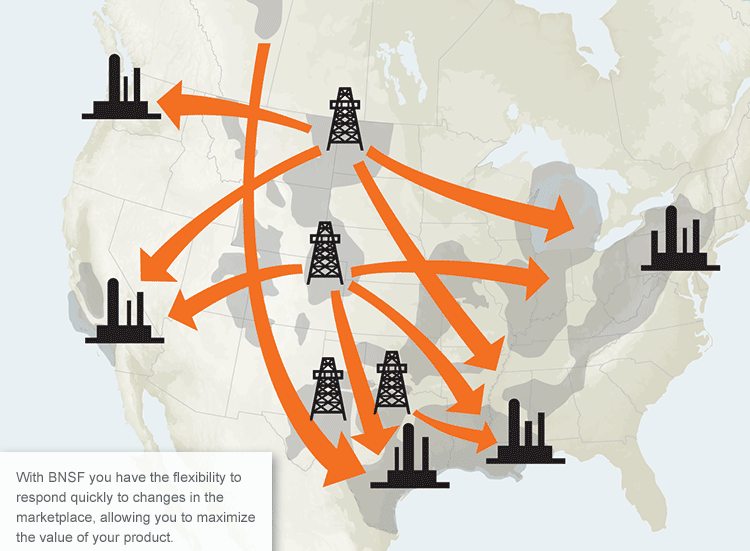
California’s oil patch is getting shipments of oil from North Dakota in 100 car unit trains since last year. That may be good news for California consumers who face higher gasoline prices this month due to a fire at a Bay Area Chevron refinery. The Bakersfield Californian says Kern Oil and Refining is getting oil shipped in by rail from the booming Bakken fields in the upper Midwest despite all the ‘Black Gold’ in Kern county.
Bakken sweet crude is selling for about $10 more per barrel than Kern heavy crude and $16 more than Alaskan crude.
A second refinery in Bako that recently reopened – owned by Alon may bring crude from the Midwest as well.The competition is pressuring Kern oil prices and could mean lower prices at the pump for West Coast motorists in the future.
North Dakota recently passed California in oil production. North Dakota’s oil production averaged 660 thousand barrels per day in June 2012 -71% over June 2011 volumes. Production gains in the Bakken formation are the result of accelerated development activity, primarily horizontal drilling combined with hydraulic fracturing. There are now in excess of 4000 oil wells -up 68% from June 2011.
Oil Rides The Rails
With all that oil and limited pipelines to carry it – the rail companies have stepped in.The U.S. Energy Information Administration says that rail deliveries of oil and petroleum products in the United States rose by 38 percent in the first half of 2012 compared to the same period last year with a rail tanker car carrying about 700 barrels.
California is not alone in receiving Midwest oil rail.Two large refiners in the state of Washington are gearing up.Tersoro who has also has refineries in Utah and LA and recently bought BP’s holdings in California – has announced it will replace Alaska crude oil with Midwest oil at its 120,000 bpd refinery in Anacortes, Washington.
Tesoro plans to begin shipments of up to 40,000 barrels per day of Bakken crude to the refinery in September 2012. BP’s Cherry point refinery may also bring in unit trains.Earlier this year that refinery also had a fire helping to spike West coast gas prices.
Unit trains can transport about 60,000 barrels of oil. Union Pacific and BNSF in the West are increasing their loads of oil even as their coal shipments decline.
A recent report suggests the ‘ shale to rail’ trend is nationwide.”Several companies have announced new investments to boost shipments of crude by rail. In April, terminal operator U.S. Development Group LLC said it finished its expansion of its St. James Rail Terminal, which receives shipments of crude from the Bakken and other regions, to handle 130,000 barrels a day of crude shipments. Union Pacific Corp. (UNP) CEO Jack Koraleski told investors last month he expects the company’s shale oil business to grow to almost 400,000 carloads this year. Recently, pipeline operator Plains All American Pipeline LP (PAA) said it is spending $125 million to build new rail facilities in Colorado and Virginia.”
Competition Works
“Competition is working to reduce crude oil costs in the state” says Walt Dwelle of Nella Oil Co. Dwelle cites the Tesoro pipeline from their Utah refinery to Las Vegas that is bringing in cheaper Midwest refined product to Nevada, a state that used to be supplied by California refiners. “That leaves more gallons of gasoline for California.”
Dwelle says the rise of Tesoro in recent years as major player in California is a turn around from a few years back when it was in financial straights.
Dwelle says gasoline futures that jumped 40 cents after the Aug 6 Chevron fire have now recovered about 25 cents of that and California gas prices should be stable to lower now with the end of summer driving season.He says Chevron has ordered stock to make gasoline at its Richmond plant even though the refinery could be shut 6 months.Oil is being shipped in by tanker.In addition the company has a plant in El Segundo that could crank.
If fracturing has helped North Dakota – California’s’ drillers hope the same thing happens in California once regulations are in place here.That would mean more cleaner burning sweet crude.
EPA Defends Decision to Reduce, Not Eliminate, 2012 Cellulosic Requirement
In a Monday, Aug 20 court filing, EPA defended its decision to massively reduce, but not eliminate, the 2012 cellulosic biofuel requirement of the renewable fuels standard (RFS2).
For 2012, EPA reduced the cellulosic biofuel requirement from 500 million gal to 8.65 million gal.
”When projecting expected cellulosic biofuel production in the context of setting the 2012 applicable volume of cellulosic biofuel, EPA reasonably considered the production capacity likely to be developed throughout the year, while API [the American Petroleum Institute] would have EPA rely narrowly and solely on proven past cellulosic biofuel production,” EPA explained in its Aug. 20 filing with the U.S. Court of Appeals for the District of Columbia Circuit.
In March, API filed its challenge against what it viewed as EPA’s “unachievable” requirements for use of cellulosic biofuels in the 2012 RFS. API and other petroleum groups view the cellulosic biofuel mandate as a tax on manufacturers of gasoline. It wants EPA to set the cellulosic biofuel requirement at a realistic volume.
Specifically, API challenged EPA on whether the agency’s determination of the cellulosic biofuel that would be sold or introduced into commerce this year was “based on” an estimate provided by EIA and was reasonable, and whether EPA reasonably determined not to decrease the volume of advanced biofuel sold or introduced into commerce this year because other advanced biofuel sources would likely make up the expected shortfall in cellulosic biofuel production.
As EPA explained, its “projected volume of cellulosic biofuel is also reasonable and supported by the administrative record. EPA examined the most current sources of information regarding anticipated cellulosic biofuel production of each company with production potential, explained its reasoning, including why its estimates deviated from the EIA’s and reasonably concluded that 8.65 million gallons of cellulosic biofuel (or 10.45 million ethanol- equivalent gallons) would likely be available in 2012,” it noted.

Drought’s Reverb…. Valley Growers Urged To Plant Sorghum For Biofuel

first published in Fresno Business Journal
The South Valley’s only ethanol production plant is encouraging local farmers to plant grain sorghum next Spring promising to buy the grain to make ethanol instead of using Midwest corn.
“We would love to buy all the sorghum they can produce” says Lyle Schlyer,president of Calgren Renewable Fuels near Pixley in Tulare County.
Currently,the 55mm gallon ethanol plant depends almost 100% on train loads of corn shipped from the Midwest to make the biofuel.”We could all benefit“ explains Schlyer – with the sky-high price of corn due to the record Midwest drought this summer, putting the hurt on the livestock industry, raising food prices and making for negative margins at most ethanol plants.
Meanwhile,ethanol makers are taking heat for high corn prices,blamed by dairymen and the livestock industry – now pressuring Washington to roll back renewable fuel requirements. Ironically, those fuel requirements were put in place to reduce carbon emissions that cause global warming,implicated in more extreme weather events like the drought.
Calgren has teamed up with the J.D. Heiskell grain company of Tulare and seed company Bill B. Vanola Grain & Seed of Stratford. Sales manager with Vanola, Jeff Chedester says 20 years ago there were tens of thousands of acres of sorghum grown in the Valley but farmers converted mostly to corn.Today, Chedester estimates we grow only about 5000 acres of grain sorghum.
Crop Could Grow To 25,000 Acres
With a strong local buyer in the ethanol plant and the costs and water savings seen in planting sorghum vs corn “I don’t see any reason why we could not grow that crop to 25,000 acres plus“ argues Chedester who for the past month has talked up the idea with area growers with some success.
Chedester – as a result of discussions earlier this year – some 1100 new acres of the crop were planted by several local growers and later this fall that sorghum will be run through the Calgren plant with the theory being that no significant modifications will be needed in the facility to make ethanol.
“We’re pretty exited about it” states Schlyer adding that “we will do a test run through the plant this year” to make sure it processes as expected, likely from Chedester’s growers local crop. ”Our target would be to offset about 20% of the 20 million bushels of corn we need to bring in.If we did a lot more – we would have to figure out how to store it but we are not putting a cap on it.”
Sorghum is used to make biofuel in some states with a larger crop.Forty-three percent of the sorghum produced in Kansas and 23 percent of the sorghum produced in Texas is used to make ethanol says one industry source.
Chedester says benefits of producing sorghum include the fact that the grain will grow in high PH – salty soil,use one third the water that corn requires,uses half the fertilizer and the seed costs about 20% of the current seed price for corn.
On the production side, farmers will get around 3 tons per acre for sorghum vs 5 tons per acre for corn but with the lower input costs and lower water use, this really does pencil out.”
Josh Dejung of J.D. Heiskell says like with grain corn – the processing of sorghum at the ethanol plant puts out a distiller’s grain feed byproduct fed to cows,nutritious and cheaper than corn distiller’s grain that is an important part of ethanol plants’ margins. Dejung says he has been spending more time in Kern county talking to farmers now that his company has a grain facility near Bakersfield after they bought an old cotton gin.
Pixley is ideally located to take in grain from Kern,Kings and Tulare counties within a 20 to 30 mile radius.
Schlyer says buying local helps save transportation costs for everyone since all California ethanol makers must pay to bring most of the feedstock in 100 car trainloads from the Midwest. Pacific Ethanol’s Paul Koehler says their company’s Stockton plant now uses about 11% locally grown corn,however. Lowering the transportation distance also makes the fuel produced more green as new state rules are phased in.
Using grain sorghum instead of corn should ease concerns of the California livestock and dairy industry,Calgren’s neighbors,who complain that using corn to to make biofuel drives up the price of rolled corn they use to feed cattle.”This should help lower the price of corn” explains Chedester who is part of a larger nationwide effort to increase sorghum planting for renewable uses.
Chedester says to increase the certainty this will happen,his firm will contract with growers sometimes even before the crop is planted.
While California farmers have had a tight water year,it is not nearly as bad as the Midwest where they do not irrigate – depending on summer rain for their crop. Watching the impending drought in the Midwest developing earlier this summer, California farmers raced to plant a late corn crop say sources, looking to reap the harvest late this fall.
That’s just one of the reverberations from the Drought of 2012 that has engulfed half the country. Besides the impact on ethanol makers, the Valley’s dairies are reliving the tough times they saw in 2009 unable to even cover the cost of feed they say, and more will likely close their barn doors.

Banner Year For U.S. Wind Industry/ California Reaches 5% Wind Contribution / Tax Extension Supported
 This week the Energy Department and Lawrence Berkeley National Laboratory released a new report highlighting strong growth in America’s wind energy market in 2011 and underscoring the importance of continued policy support and clean energy tax credits to ensure that the U.S. remains a leading producer and manufacturer in this booming global industry.
The report says “President Obama has made clear, we need an all-of-the-above approach to American energy and the U.S. wind industry is a critical part of this strategy. In fact, wind energy contributed 32% of all new U.S. electric capacity additions last year, representing $14 billion in new investment.”
In the United States, domestic clean energy production and manufacturing competitiveness work hand-in-hand. The report finds total U.S. wind power capacity grew to 47,000 megawatts by the end of 2011 and has since grown to 50,000 megawatts, enough to power 12 million homes annually—as many homes as in the entire state of California. And as wind energy capacity has grown, more and more wind turbines and components like towers, blades, gears, and generators are “Made in America.” Nearly 70% of all of the equipment installed at U.S. wind farms last year came from domestic manufacturers, doubling from 35% in 2005.
Among their findings is that California added the most wind capacity in 2011 at 921 MW for a cumulative total of nearly 4000 MW installed. Texas has more than 10,000 MW.
With the addition of 921 Megawatts (MW) of wind energy projects installed across California in 2011 – bringing the state’s total wind generation capacity to 3,927 MW – wind energy now accounts for 5% of California’s total electricity needs according to the California Wind Energy Association (CalWEA). The 921 MW built in 2011 is enough electricity to power more than 400,000 households.
“The total amount of wind energy installations in 2011 created a banner year for wind generation in California and is helping to drive California closer to reaching its goal of 33% renewable energy,” said Nancy Rader, CalWEA’s Executive Director. “There are a number of
projects on the drawing board that will continue wind capacity’s growth in 2012, but we need Congress to extend the wind energy production tax credit very soon to keep up that momentum. The investments companies are making in California to develop wind energy
projects is a boon for cleaner air and greener energy, and also for creating jobs and retooling manufacturing here and across the country.”
Most In Kern
Of the 921 MW of wind capacity built in 2011, almost 700 MW of added capacity came from the Tehachapi area of Kern County, with large new projects also installed in Solano, Contra Costa and Riverside Counties.
This year will see even more growth, with several additional projects totaling in excess of 1,600 MW of wind generation capacity slated for Kern, Solano, Riverside, Imperial and San Diego Counties in 2012, which is expected to create more than 1,000 new construction jobs, in addition to permanent and indirect jobs.More than half of that is being built in Kern.
Overall, cumulative installed wind capacity in the U.S. grew 17% from 2010, and now totals 46,919 MW. Over 100 wind projects are currently under construction across 31 states and Puerto Rico. Almost 3,500 MWs of new projects broke ground during 4Q 2011 and the year
ended with 8,320 MWs under construction.
This summer, Energy Department leaders have traveled across the country and seen firsthand how American workers and businesses are helping maintain U.S. leadership in the growing wind energy industry. In Iowa, Keystone Electrical Manufacturing Company has seen orders from the wind industry grow from almost nothing a decade ago to nearly 22% of gross sales, while, at ACCIONA Windpower’s West Branch assembly plant more than 100 workers are making wind turbines to sell here in the U.S. and around the world. Near Minneapolis, the International Brotherhood of Electrical Workers Local 343 Union facility features a 60-foot turbine tower to help train union members for new construction, installation, and maintenance jobs.
In addition to strong gains in domestic wind manufacturing and capacity, the report finds that as wind technology improves, costs are coming down. Technological innovations are helping make longer and lighter wind turbine blades, while improving turbine performance and increasing the efficiency of power generation. At the same time, wind project capital and maintenance costs have continued to decline. Smart investments are paying dividends across the U.S. wind industry. From Des Moines to Amarillo to Denver, the American clean energy economy is hard at work—creating jobs right now and ensuring our global competitiveness in the clean energy technologies of the future. We can’t afford to break this momentum.
“This is why the Obama Administration is calling for the extension of the production tax credit (PTC). Our continued support of clean energy policies like the PTC are mission critical for America’s thriving, competitive wind industry—and shows, more than ever, the promise to create the high-paying American jobs and nationwide economic growth our country needs” says DOE.
Last week both the Senate and Congress indicated some willingness to extend the tax credit in the lame duck session of Congress this year. Extension of critical tax relief to save 37,000 jobs in wind energy and continue growing U.S. manufacturing advanced in the Senate Finance Committee today with strong bipartisan support.
By an overwhelming bipartisan margin of 19-5, a Senate committee passed an extenders package that included an extension of the wind energy Production Tax Credit (PTC). On critical amendment votes, all the Democratic members and GOP Sens. Chuck Grassley (R-IA) and Pat Roberts (R-KS) supported the extension of the PTC.

Tesoro Buys Arco Brand From BP / Carson Refinery
 SAN ANTONIO – August 13, 2012 – Tesoro Corporation (NYSE:TSO) announced today that its Board of Directors has approved agreements for the Company to purchase BP’s integrated Southern California refining and marketing business including 800 ARCO stations.. The purchase price of BP’s assets is $1,175 million, plus the value of inventory at the time of closing.
Tesoro already owns 250 ARCO stations they bought earlier this year and in the past five years acquired the Shell refinery in LA and 250 Shell stations and in 2007 the bought the USA brand in California. They would now be the state’s biggest refiner.
The Tesoro news release says “At current prices, the inventory is valued at approximately $1,300 million. The transaction is subject to regulatory approval and is expected to close before mid-2013. The purchase price is expected to be financed initially through a combination of cash and debt with proceeds from the subsequent sale of the associated logistics assets to Tesoro Logistics LP (NYSE: TLLP) generating an estimated $1 billion of cash proceeds in the first year. Earnings per share accretion is expected to be about 24% in each of the first and second year of operations.
“This transaction is a unique opportunity for Tesoro to combine the best aspects of two West Coast refining and marketing businesses resulting in a more efficient integrated refining, marketing and logistics system,” said Greg Goff, President and CEO. “Given Tesoro’s existing operations on the West Coast and our understanding of the complexities and challenges of operating in California, we are well positioned to generate significant operational efficiencies, increase our ability to satisfy market demand and reduce stationary source air emissions.”
BP’s Southern California Refining and Marketing Business
The Carson refinery, located south of Los Angeles and adjacent to Tesoro’s 97 mbpd Wilmington refinery, is a 266 mbpd high conversion refinery with a Nelson complexity of 13.3. The refinery has a track record of safe and reliable operations and, according to Solomon Associates benchmarking, is ranked in the top quartile of U.S. refineries on a utilization and energy efficiency basis.
The combination with Tesoro’s current West Coast system is expected to drive significant operational synergies through the integrated supply of crude oil, enhanced optimization of intermediate feedstocks and product distribution costs, improvements in light product yield and reductions in manufacturing costs and stationary source air emissions. The combined and reconfigured operations are expected to drive annual synergies of approximately $250 million with an additional capital investment of approximately $225 million.
ARCO Brand
The transaction also includes about 800 dealer operated retail stations in Southern California, Nevada and Arizona. These high volume retail stations, averaging over 245,000 gallons per month, ensure ratable off-take for refinery gasoline production. Tesoro will also be acquiring the well-established ARCO® brand and associated registered trademarks, as well as a master franchisee license for the ampm®convenience store brand.
In addition, the purchase price includes an integrated logistics system with an estimated master limited partnership value of about $1 billion. The assets include three marine terminals; four land storage terminals; over a hundred miles of pipelines, including connected access to the Los Angeles International Airport; and four product marketing terminals, providing extensive regional product distribution capabilities. The Company intends to offer these assets to Tesoro Logistics LP in multiple transactions over the first twelve months post closing, driving a step-change in TLLP’s enterprise value.
Finally, the transaction also includes two complementary assets which are located near the Carson refinery. The first is a 51% ownership in the 400 megawatt gas supplied Watson cogeneration (cogen) facility. This company-operated cogen, the largest in California, provides reliable electricity to the Carson refinery and sells excess electricity to the local utility grid. The second is a 350,000 metric ton per year anode coke calcining operation. This asset upgrades coke from the Carson refinery into valuable calcined anode-grade coke for the aluminum industry. These assets are expected to provide additional cash flow and drive earnings diversification for Tesoro.
“This is an exciting opportunity for Tesoro to drive significant shareholder value and is well aligned with our strategic priorities,” said Goff. “Excluding the value of inventory and after the sale of the logistics assets to TLLP, the Company will have paid about $175 million to purchase a 266 mbpd high complexity refinery in Southern California, a fully integrated retail marketing network, including the ARCO® brand, and a pair of high-value complementary integrated assets.” .
Tesoro Corporation, a Fortune 150 company, is an independent refiner and marketer of petroleum products. Tesoro, through its subsidiaries, operates seven refineries in the western United States with a combined capacity of approximately 675,000 barrels per day.
Tesoro’s retail-marketing system includes over 1,375 branded retail stations, of which nearly 590 are company operated under the Tesoro®, Shell® and USA Gasoline(TM) brands.

Group Slams Union Over Solar Greenmail
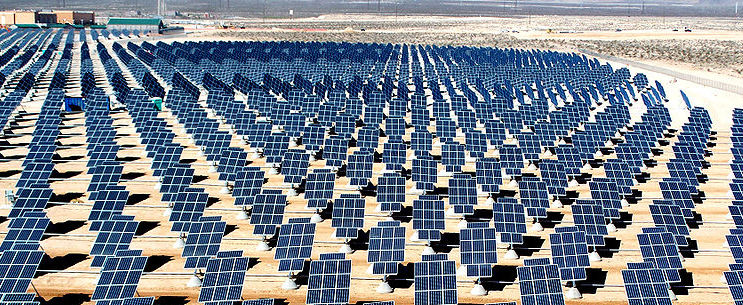 The August 6, 2012 meeting of the Kings County Planning Commission will become a forum to condemn what opponents call an” epidemic of union greenmail” against renewable energy projects in the San Joaquin Valley. The August 6, 2012 meeting of the Kings County Planning Commission will become a forum to condemn what opponents call an” epidemic of union greenmail” against renewable energy projects in the San Joaquin Valley.
Critics say construction trade unions (such as the International Brotherhood of Electrical Workers Local No. 100 in Fresno) exploit environmental laws to delay proposed projects with the objective of coercing developers to hand over monopoly control of the construction to unions through a “Project Labor Agreement.” “For too long, construction unions have claimed that solar power is bad for the environment,” said Eric Christen, executive director of the Coalition for Fair Employment in Construction. “It’s all a sham. The unions block or threaten to block solar power projects using the California Environmental Quality Act – commonly known as CEQA – until the developer surrenders to the unions and agrees to sign a Project Labor Agreement.” At their meeting on August 6, the Kings County Planning Commission will consider approval of a 160 megawatt solar power plant in Lemoore called the Mustang Solar Generation Project. The developer of the Mustang Solar Generation Project – Recurrent Energy of San Francisco – signed a Project Labor Agreement with the International Brotherhood of Electrical Workers Local No. 100 in Fresno. Read the Project Labor Agreement here. “We’re going to make sure the Kings County Planning Commission and the people of California and the San Joaquin Valley know why solar power plants are so expensive, why they are taking so long to build, and why local workers don’t get to build them” Christen said. The International Brotherhood of Electrical Workers Local No. 100 has a long history of hiring the law firm of Adams, Broadwell, Joseph & Cardozo out of South San Francisco to dig up alleged environmental problems with solar projects. One of the most prominent was the Fresno Airport Parking solar project in 2007. Adams Broadwell Joseph & Cardozo is cited in the Project Labor Agreement for the Mustang Solar Generation Project. |

Some Valley Solar Projects Remain Stalled
Where They Are Building
The Central Valley has many pending utility-scale solar projects but only a handful are under construction this year. Encouraged by a state mandate requiring utilities to get a third of their electric power from renewable sources – interest in the past several years has been strong to build both large 20 MW and bigger projects and smaller”localized” projects from 1 to 10 MW solar projects in the sunny Central Valley.
It’s the larger projects that seem to be bogged down.Seems like it is harder than you think to save the planet from greenhouse gases.
Over the past two years solar developers have lined up in Fresno County for 40 conditional use permits on farm land but at midyear 2012, only 2 small projects, not owned by the utility, have gone to construction.
Looking closer, 30 of those 40 applications are still plowing through the approval process at the county, 2 have been withdrawn and 8 have their county approvals in place but face some other hurdles.
For those who can wait the process out – there are plenty of hurdles out there – including lawsuits from multiple sources..
One of the projects, Westlands Solar Farms LLC, an 18MW project near Huron, faces a lawsuit from the California Farm Bureau who sued the county over their waiver of the Williamson Act even though the county has some discretion in deciding when the waiver is appropriate. The CFB wants the county to approve solar projects only on marginal farmland.
“Just because the developer is waving cash at him and the county, we don’t think that’s the way the Williamson Act was meant to be administered,” said a CFB attorney last year.
The applicant and county say their land has less access to water than in past years. Some farmers ask why the state Farm Bureau would stand in the way of what a farmer wants to do with his own property?
Last month a judge decided to hear the case in October, a year after the suit was filed. The uncertainty has helped put other solar projects on farmland in limbo.
Likewise. a SunPower project near Santa Nella in Merced County faces criticism from both farm interests and environmentalists.
Lawsuits from farm interests are only one problem. Solar developers face appeals and lawsuits from a statewide labor group who has been accused of “green mail” – opposing projects until they secure a contract to build the facility. Proejects in both Kings and Fresno counties have been impacted.
Then there is the hurdle of getting a power purchase agreement from a utility like PG&E. The utility is mandated to make such agreements but can pick the timing and the least expensive offer,sometimes selecting a low bidder who in the end – can not deliver when its time perform.
Then there are macro factors as to why there appears to be glut of pending applications. The reality is that the economy has slowed business investment and solar companies face financial issues caused by huge Chinese solar subsides and an end of subsides in Europe.
Impressive Numbers or Glut?
A February 2012 report from the Defenders Of Wildlife says there are 59 solar PV projects in the permitting stage within the five southern San Joaquin counties that if built would generate 2,780 MW of power.This is in addition to 45 projects in those same counties that have already been approved that would generate 1,648 MW.That’s 109 solar projects pending in the south Central Valley that add up to 4,428MW, more than double 2 Diablo Canyon nuclear power plants.
But don’t expect any kind like that number to be built, agree many.
One developer Carmine Iadarola of Solargen USA who has a several pending applications in Fresno County says ”I would be surprised if out of those 40 applications in Fresno County that one quarter of them – probably less – were built.” For solar developers who have struggled through the approval gauntlet ” the risk is too great and profit margin too small” admits a frustrated Iadorolla.The company is building two systems in the county but in the cities of Huron and Firebaugh jurisdictions instead of in the county.
One of the Fresno County solar projects being built this summer is owned by Spain’s Gestamp Solar. The company broke ground on a 1.5MW solar farm in June at Fig Avenues near Highway 41. But Gestamp has said Fresno County projects that are pending add up to 400 MW- some 10 projects in total that could be worth $2 billion if they were built. That’s a far cry from the 1.5 MW project that has actually broken ground.
Last year, a Gestamp spokesperson told PV magazine that” In order to achieve our goal, we’ve opened a project development office in Fresno and have a lot of greenfield pipeline. We have contracts and leased land tied up for around 400 MW in Fresno County. We like to think that all of it will go through. We feel that we’re going to get a very strong market out of Fresno. We’re continuing to work with utilities in getting power purchase agreements negotiated and signed.”
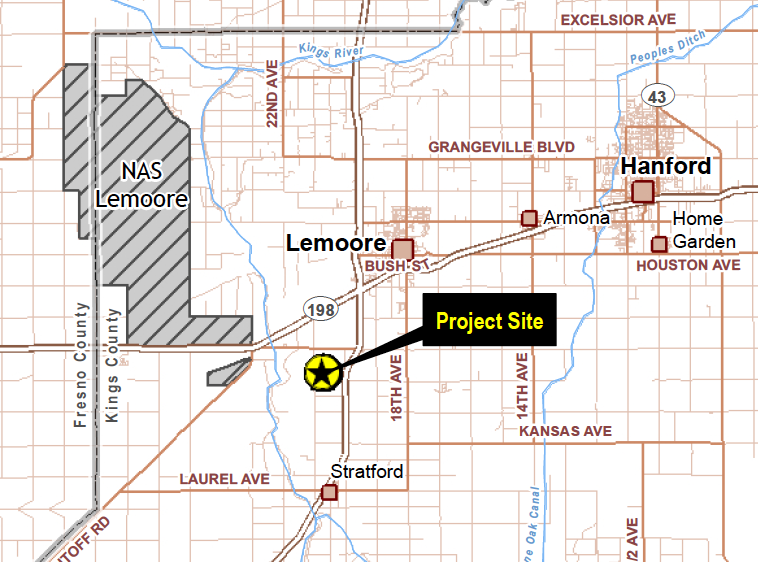
In nearby Kings County there are two side-by-side projects totaling 35 MW being built this summer by Recurrent Energy at Ave 21st and Kansas Ave near Stratford. These are projects. approved back in 2011 have a PG&E power purchase agreements. There are however, about 1000 MW of pending applications lined up in the county – that’s 35MW being hooked up to the grid out of 1000 MW.
The County says they have received no word from a number of the larger projects in some time although they are processing 337MW of solar projects at a public hearing this month.
In Tulare County there are nearly 100 MW being built this summer near Alpaugh,some nearing completion that will hook to the grid late this summer.Two of these projects were just sold (for the second time) to ConEdsion of NY.
The biggest news coming down the pike in the county is that a slew of small 1 to 6 MW distributed energy projects will likely break ground later this year being built at scores of neighborhood grid locations around the more populated eastern part of the county by Immodo Solar. These localized projects appear to face fewer hurdles.
Other well publicized mega-solar projects like 50000 MW Westland Solar Park plan in Kings County are not moving forward now admits principal Dan Kim. The group had said they were going to file their EIR earlier this year.
“It doesn’t make sense to do more with the market the way it is” shrugs Kim, saying they are still optimistic long term.
Meanwhile statewide numbers still look promising for solar energy – next article.

Transparent Solar Cells For Windows Generate Electricity
 UCLA researchers have developed a new transparent solar cell that is an advance toward giving windows in homes and other buildings the ability to generate electricity while still allowing people to see outside. Their study appears in the journal ACS Nano.
The UCLA team describes a new kind of polymer solar cell (PSC) that produces energy by absorbing mainly infrared light, not visible light, making the cells nearly 70% transparent to the human eye. They made the device from a photoactive plastic that converts infrared light into an electrical current.
UCLA researchers have developed a new transparent solar cell that is an advance toward giving windows in homes and other buildings the ability to generate electricity while still allowing people to see outside. Their study appears in the journal ACS Nano.
The UCLA team describes a new kind of polymer solar cell (PSC) that produces energy by absorbing mainly infrared light, not visible light, making the cells nearly 70% transparent to the human eye. They made the device from a photoactive plastic that converts infrared light into an electrical current.
“These results open the potential for visibly transparent polymer solar cells as add-on components of portable electronics, smart windows and building-integrated photovoltaics and in other applications,” said study leader Yang Yang, a UCLA professor of materials science and engineering, who also is director of the Nano Renewable Energy Center at California NanoSystems Institute (CNSI). Yang, who is also the holder of the Carol and Lawrence E. Tannas, Jr., Endowed Chair in Engineering, added that there has been intense world-wide interest in so-called polymer solar cells. “Our new PSCs are made from plastic-like materials and are lightweight and flexible,” he said.
“More importantly, they can be produced in high volume at low cost.” Polymer solar cells have attracted great attention due to their advantages over competing solar cell technologies. Scientists have also been intensely investigating PSCs for their potential in making unique advances for broader applications. Several such applications would be enabled by high-performance visibly transparent photovoltaic (PV) devices, including building-integrated photovoltaics and integrated PV chargers for portable electronics. Previously, many attempts have been made toward demonstrating visibly transparent or semitransparent PSCs. However, these demonstrations often result in low visible light transparency and/or low device efficiency because suitable polymeric PV materials and efficient transparent conductors were not well deployed in device design and fabrication.
A team of UCLA researchers from the California NanoSystems Institute, the UCLA Henry Samueli School of Engineering and Applied Science and UCLA’s Department of Chemistry and Biochemistry have demonstrated high-performance, solution-processed, visibly transparent polymer solar cells through the incorporation of near-infrared light-sensitive polymer and using silver nanowire composite films as the top transparent electrode. The near-infrared photoactive polymer absorbs more near-infrared light but is less sensitive to visible light, balancing solar cell performance and transparency in the visible wavelength region. Another breakthrough is the transparent conductor made of a mixture of silver nanowire and titanium dioxide nanoparticles, which was able to replace the opaque metal electrode used in the past. This composite electrode also allows the solar cells to be fabricated economically by solution processing. With this combination, 4% power-conversion efficiency for solution-processed and visibly transparent polymer solar cells has been achieved.
“We are excited by this new invention on transparent solar cells, which applied our recent advances in transparent conducting windows (also published in ACS Nano) to fabricate these devices,” said Paul S.Weiss, CNSI director and Fred Kavli Chair in NanoSystems Sciences. Study authors also include Weiss; materials science and engineering postdoctoral researcher Rui Zhu; Ph.D. candidates Chun-Chao Chen, Letian Dou, Choong-Heui Chung, Tze-Bin Song and Steve Hawks; Gang Li, who is former vice president of engineering for Solarmer Energy, Inc., a startup from UCLA; and CNSI postdoctoral researcher Yue Bing Zheng.
The study was supported by the Henry Samueli School of Engineering and Applied Science, the Office of Naval Research, and The Kavli Foundation.
UCLA Newsroom

Battle Over Avenal Power Plant Continues
 (from March 2012)
The four year battle over a Kings County gas-fired power plant continues this month.
Facing what it fears could be several years of protracted litigation and caught in the middle over an EPA approval of their operating permit, Avenal Power Center this week petitioned the California Energy Commission to OK a plan to begin construction and operate under rules as minor source of air emissions resulting in less than 100 tons per year.
Avenal Power wants to start construction on a 600 MW natural gas fired power plant just east of Highway 5 in the City of Avenal and says it has already waited four years to clear legal hurdles as it is.
Waiting longer for resolution of lawsuits against the EPA would mean they would lose their place in a long term queue to connect to the power grid and start approvals all over argues their petition to the CEC.
No Harm?
The petition says “None of the changes requested in the Amendment) in this petition) would change the scope of the Project as licensed by the(CEC) Decision. Furthermore, the Amendment would create no new adverse environmental impacts. Finally and as discussed in Section III(G) below, the Project will remain in compliance with all applicable laws, ordinances, regulations and standards (“LORS”) including the federal hourly NO2 and SO2 standards adopted after the date of the Decision).
Ironically, it was environmental groups’ contention that the Avenal project had been grandfathered by EPA and as result did not have to meet the new 1 Hr rule – a rule Avenal says they are in compliance with in any case.
The petition argues that “It took over three and a half years to obtain a final PSD Permit from the EPA. Furthermore, the PSD Permit is now being litigated in the Ninth Circuit Court of Appeals. Due to the uncertainties of litigation, Avenal Power cannot predict when the ongoing appeals to the Project’s PSD Permit will ultimately be resolved. Therefore, Avenal Power respectfully requests the Commission to extend the deadline to commence construction on the Project until five years after the Commission decision on the amendments contained in this Petition.”
“In early November 2011, three lawsuits were filed against the Project’s PSD Permit in the Ninth Circuit Court of Appeals. Although one of these Ninth Circuit appeals was dismissed as untimely, the remaining two appeals are still in the early stages of litigation. At this time it is unclear when these appeals will be resolved.”
Here is some recent history.
On May 26, 2011, U.S. District Court Judge Richard Leon ordered the USEPA to make a final permit decision, which the agency did the following day. Construction of the power plant could begin after a 60-day administrative appeal period.
Paul Cort of Earthjustice was quoted in a news story as saying that an administrative appeal would be filed, and if that is unsuccessful, the organization would appeal to the federal court.[10] In June 2011, both People for Clean Air and Water and the Sierra Club filed petitions for review with the USEPA’s environmental appeals board. The Center for Biological Diversity joined the Sierra Club’s petition. Their petition alleged that the proposed plant would emit excessive nitrogen oxides and is being wrongfully grandfathered in under old clean air rules.
On August 18, 2011, the USEPA’s environmental appeals board denied the petition. Bradley Angel renewed his vow to continue the fight in court. A news story quoted him as saying: “Basically the fix was in when EPA boss Lisa Jackson broke her commitment to environmental justice and illegally approved the permit. We’re going to continue to challenge it. It’s going to court.” On November 3, 2011, The Sierra Club, the Center for Biological Diversity and Greenaction filed suit with the Ninth Circuit Court of Appeals challenging the EPA permit.
Avenal Power says this legal battle could go on a long time.
”We note for comparison purposes that another recent NinthCircuit case challenging an EPA decision under the Clean Air Act took over three years from the time the lawsuit was filed until the time the court’s judgment went into effect.”
In addition, the Project’s Interconnection Agreement with the California Independent System Operator (“CAISO”) would be put in jeopardy, placing the Project at risk of starting over in the CAISO interconnection process that also takes several years to complete they say.
The CEC is expected to take several months to approve the request,but that approval was likely.