SLO City: Italian Deli On Monterey Coming In – Lululemon Heading Out

September 9,2014

San Luis Obispo will get an authentic Italian deli on Monterey Street  later this year as pop-up retailer Lululemon Athletica exits their location at 770 Higuera September 28.

An SLO Lululemon employee says “we always knew when the pop-up store was announced that our last day would come September 28.” The athletic clothing retailer opened here in April. The space is listed for lease by Anderson Realty on their website. The yoga gear maker seen its stock fall by about half in the past year over quality issues.

Peimonte's Deli

The new tenant on upper Monterey, Piemonte’s Italian Delicatessen was launched back in 1929 and features homemade sausage, meatballs and Italian sauces with signature sandwiches a specialty. They do catering as well.

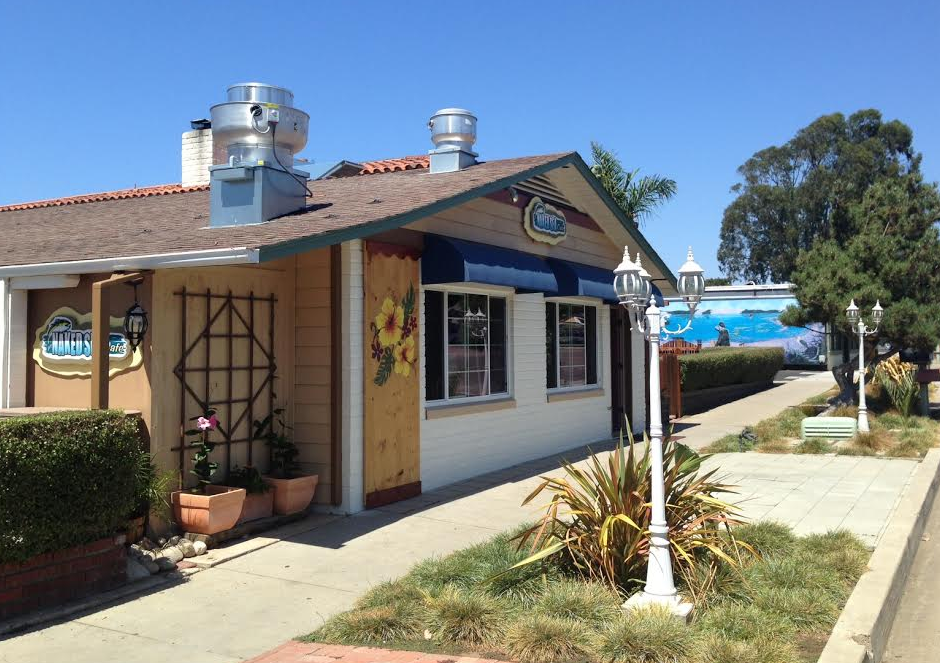
Real estate agent Preston Thomas of Rossetti Company says the Fresno-based deli has been in business in the hip Tower District in Fresno for over 80 years and will now expand to SLO in a 2900sf space in the new  Heritage Plaza at 1234 Monterey,the former Daylight Home & Garden location.

The 13,200 square foot complex has been completely remodeled into an open plaza with storefronts by owner Kurt Anslinger. Now the center has almost leased up in about a month’s time since the occupancy permit, says Thomas, with just one out 7 spaces left to be leased out.

“Demand is much stronger than we expected” says Thomas.

More on the rest of the tenants in Heritage Plaza soon.

Historic Tugboat Will Go Display In Morro Bay

September 9,2014

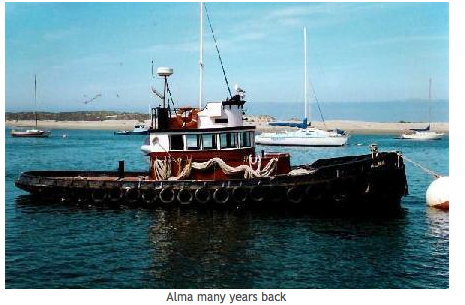
Screen Shot 2014-09-08 at 5.53.41 PMAlma,a historic sea-going tugboat, will go on display as the third vessel  holding forth in the the Central Coast Maritime Museum display area and kiosks on the Embarcadero just south of the power plant likely delighting both visitors and locals .

This week the Morro Bay City Council approved a plan to display the tug this fall along with a new kiosk to explain the tug’s history. A staff  report says the display will be free to the public although “the interior of the vessels may also be able to be viewed under Museum supervision at times and dates mutually agreeable to the City and Museum, and the Museum may charge a reasonable fee for the viewing.”

The Museum’s website tells Alma’s story.

The Tugboat Alma was built in San Francisco by the Beviacqua Brothers near Fisherman’s Warf in 1927. She was typical of the small wooden tugs and utility craft that worked in harbors along the west coast in the first half of the 20th century. The Alma was traditionally built of sawn oak frames and carvel planked with Port Orford Cedar. In 1974 the last owner operator coated her exterior with ferro cement.

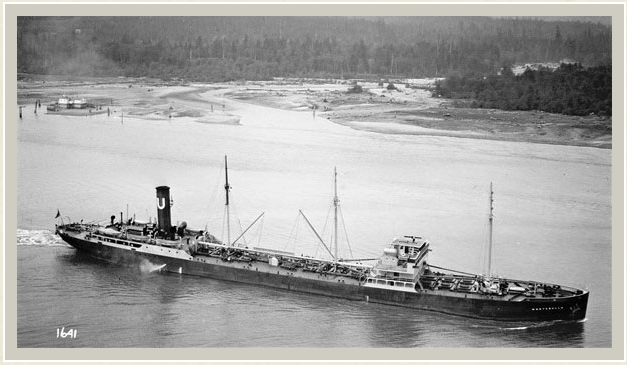
The Alma’s significant action in history came on the morning of December 23, 1941 when she dashed out from her mooring at the Cayucos Pier to search for survivors of the Union Oil tanker Montebello. The tanker had been attacked and sunk by a Japanese submarine off the coast of Cambria, California where she lies today on the bottom in 880′ of water. Of the three lifeboats carrying all 19 crewmembers the Alma picked up two. The others went to shore on their own and landed near Leffingwell just north of Cambria.

In 1995 the Alma was donated by the Kelsey Family (owners of Sylvester’s Tug Service) Today, after more than a half century of service as a line boat, fishing vessel and harbor tug, she rests on land waiting to be spruced up for presentation at the proposed maritime museum.

Specifications
Year Built:   1927
LOA:           48.0 ft.
Breadth:      13.0
Draft:          5.2 ft.
Displcmnt:   16 tons

Here is the account of the Japanese attack on the Montebello oil tanker off our coast – largely unknown to the American public.

On December 23, 1941, sixteen days after Pearl Harbor, an oil tanker belonging to the Union Oil Company (later called Unocal) was attacked by a Japanese submarine just south of Piedras Blancas Light Station. The tanker Montebello was sunk with the crew escaping in lifeboats. Survivors in three of the lifeboats were picked up and taken to Cayucos but the fourth boat foundered on the rocks just south of Cambria.
Screen Shot 2014-09-09 at 10.45.08 AMThe crew abandoned the ship and got into four life boats which moved away from the ship far enough to avoid further danger but remained in the vicinity to see if the Montebello would sink, which it did at 6:45 AM. During the interval, the submarine used its deck gun to fire on the lifeboats although it is not clear whether the target was the Montebello or its lifeboats.While no one was injured, the lifeboat containing Captain Olof Eckstrom and five other crew members was seriously damaged and began taking on water. While the crew was watching, the Montebello began taking water in the bow which began to sink, ultimately causing the stern to rise up out of the water about 150 feet. At this point the tanker went under and sank to the bottom retaining its bow-down attitude until it hit the bottom about 900 feet below. The bow buried itself in the sandy bottom and the remainder of the ship broke off at the point of the torpedo impact and settled on the bottom in an upright orientation where it remains to this day.

Granite Construction Is Low Bidder To Fix LOVR Interchange

September 5,2014

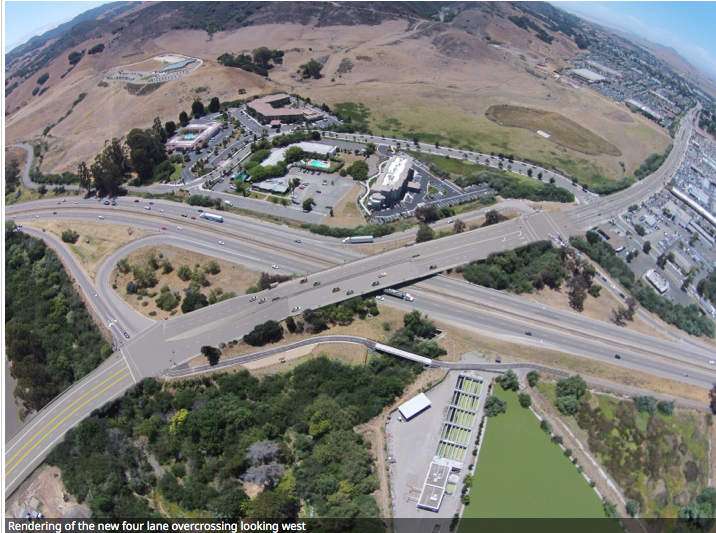
Granite Construction is the apparent low bidder to widen the LOVR interchange .Watsonville- based Granite’s bid came in around half a million lower than the engineer’s estate around $17 .1 million.The Granite bid was $16.57 million says the city of San Luis Obispo project  manager Jason Bennecke. “We are expecting the City Council to approve the contract September 16” says Jason with work on the long awaited project starting in October. Construction is expected to last 18 months to fix what everyone agrees is the towns worst bottleneck.

Bennecke expects“traffic to get worse before it gets better” as a result of the impacts of the construction project set to widen the interchange  to 4 lanes as well as adding bike lanes.

rendering of widened bridge

”We are proposing a major public outreach” to help alleviate expected congestion. The city has already launched a new website – lovr101.org – for public information.The website promises that “Traffic relief is on the way for the busy Los Osos Valley Road/U.S. 101 interchange in the City of San Luis Obispo! In addition to improvements on the northbound and southbound ramps, we’re constructing a new two-lane bridge over the 101 to add more capacity to the existing 52-year old overcrossing.”

Plans include offering a 511 phone number during business hours for advice on how to navigate through all this with info in real time. Another idea is to offer parents a dropping off point for kids heading to the middle school that is west of the interchange. A drop-off on the east side of the freeway would offer a bus that can take kids to school.This would decrease  school-bound traffic that clogs the street at certain hours.

Besides the new car and bike lanes the new bridge will offer wide sidewalks to accommodate foot traffic as well as new entry on-ramps that will help speed traffic as you join Hwy 101.

Huge Improvement in Seafood Watch Rankings for Key West Coast Fisheries

September 2, 2014

Screen Shot 2014-09-03 at 3.33.13 PM

This is one of the great success stories about ecological and economic recovery of a commercially important fishery,” said Margaret Spring, vice president of conservation and science, and chief conservation officer for the Monterey Bay Aquarium. “A huge part of the turnaround is reliance on science-based conservation and management practices that Congress endorsed in its 2006 update of U.S. fishery law.”

Just 14 years after the groundfish fishery on the U.S. west coast was declared a commercial fishery failure, the respected Monterey Bay Aquarium Seafood Watch program has upgraded 21 species in the fishery from its “Avoid” list to a “Best Choice” or “Good Alternative” ranking.
It is the most dramatic turnaround to date, and reflects significant improvements in federal fishery management to restore these economically important fisheries in California, Oregon and Washington.
With today’s release of the new science report, all groundfish caught on the West Coast assessed by Seafood Watch are rated either a “Good Alternative” or “Best Choice”. This includes a host of rockfish species – sometimes offered by restaurants and markets as “snapper” – and myriad flatfishes, including Dover sole, petrale sole, starry flounder and sand dabs.
“This is one of the great success stories about ecological and economic recovery of a commercially important fishery,” said Margaret Spring, vice president of conservation and science, and chief conservation officer for the Monterey Bay Aquarium. “A huge part of the turnaround is reliance on science-based conservation and management practices that Congress endorsed in its 2006 update of U.S. fishery law.”
In the new Seafood Watch report:
All trawl- and longline-caught rockfish assessed have been upgraded from “Avoid” to either “Good Alternative” or “Best Choice”
Flatfish species – including Dover sole, English sole, and Pacific sanddabs– have been upgraded from “Good Alternative” to “Best Choice”
Pacific grenadier has been upgraded from “Avoid” to “Good Alternative”
Spiny dogfish, a species of shark, has been upgraded from “Avoid” to “Best Choice”
In June, the Marine Stewardship Council certified 13 trawl-caught groundfish species as coming from a sustainable and well-managed fishery.
“This recognition highlights the success of the West Coast groundfish catch share program at improving the sustainability of the fishery,” said Frank Lockhart, head of the West Coast groundfish recovery effort for the National Oceanic and Atmospheric Administration Fisheries division. “Not only has it reduced impacts on the species we need to protect, but it has allowed fishermen increased flexibility to fish more effectively for the species they want – benefiting industry, fishing communities and seafood consumers.”
“Not long ago many of these species were in collapse,” said Tim Fitzgerald, who manages the sustainable seafood program for the Environmental Defense Fund – one of the organizations that worked with fishermen and fisheries managers on the turnaround. “Thanks to smarter fishing regulations and fishermen’s commitment to conservation, consumers and seafood businesses can now add West Coast groundfish to their list of sustainable choices.”
Key factors contributing to fishery improvements that led to the new recommendations include approaches that cut down on the catch of overfished species, use of area closures and creation of marine protected areas to safeguard vulnerable habitat, conservative fishing quotas that take into account uncertainty in the understanding of fish biology and fisheries, accountable catch limits, and better monitoring and control of the catch.
“It is so gratifying to see fishermen and conservation interests coming together to agree that trawl-caught groundfish – rockfishes, petrale sole, black cod and more – are harvested sustainably and with care for their habitats,” said Monterey Harbormaster Steve Scheiblauer. “These fish have been a cornerstone of Monterey’s fishing heritage and economy. It’s great to see Seafood Watch acknowledge the management changes that have brought this fishery back.”
“For chefs, this is great news,” said Richard Blais, a Top Chef All Stars winner and a member of the Seafood Watch Blue Ribbon Advisory Panel of national culinary leaders. “It gives us more sustainable seafood options to work with. More importantly, it shows that we can bring the oceans back to health and turn fisheries around when we work together.”
The West Coast groundfish fisheries were declared an economic disaster early in 2000, when landings and fishing income plummeted.
“The turnaround in such a short time is unprecedented,” said Jennifer Dianto Kemmerly, director of the Seafood Watch program. “Fishermen, federal agencies and our environmental colleagues have put so much effort into groundfish recovery, and now we’re seeing the results of their work.”
The Monterey Bay Aquarium Seafood Watch program helps consumers and businesses choose seafood that’s fished or farmed in ways that protect sea life and habitats, now and for future generations. Its recommendations indicate which seafood items are “Best Choices” or “Good Alternatives,” and other to “Avoid.”
Since 1999, Seafood Watch has distributed over 45 million consumer guides, and a free smartphone app has been downloaded more than a million times. Its business program encourages restaurants, distributors and seafood purveyors to purchase from sustainable sources. More than 1,000 businesses across North America rely on Seafood Watch science to guide their seafood purchases – including two of the largest food service companies on the continent.

Fishermen Oppose One Of Two Wave Park Plans Off Morro Bay

August 29,2014
Screen Shot 2014-08-29 at 4.13.22 PM

Estero Bay off the bluffs and Estero Point

The Morro Bay Commercial Fishermen’s Organization (MBCFO) has  penned a letter opposing one of two plans by power plant owner Dynegy to site wave parks off the Morro Bay waters. The applications have been made to the Federal Energy Regulatory Commission(FERC).

The plan by Dynegy calls for two separate wave parks with energy producing buoys offshore tied back to Dyngey’s substation on shore by underwater cable. The fishing group led by president Tom Hafer does not oppose the project proposed for sandy bottom Estero Bay but has a big problem with the proposal off Estero Point,a site that measures 4 miles by 1.5 miles and “is in the rocky reef area where there is heavy local fishing.” Estero Point is a favored fishing area, they say.

Hafer says he was surprised to see the Estero Point proposal to FERC since the concept had been floated earlier this year and “we specifically told them it wouldn’t work.”

The matter is coming to a head as the city is being asked to weigh in on the plans.The Morro Bay Harbor Commission will hear a staff report at their September 4 meeting and could make a recommendation to the city council.

The letter to FERC from fisherman Tom Hafer says “the Central Coast has already lost several  miles of fishing area to Marine Protected Areas,Rock Cod Conservation Areas, Essential Fishery Habitat and a nuclear power plant.”

“We need to protect what fishing areas we have left especially Estero Point which is one of the few area left close to port.”

The Harbor Commission staff report suggests “the City does share these concerns.” In addition they add concerns over the safety of buoys (wave energy converters) that may pose a hazard of both vessels and whales and want to know what mitigation measures might be taken.

The FERC application points out that the projects would start small with just one 1MW buoy for testing purposes.But eventually it could grow the number of buoys to 650 MW of power generated, the amount of power that they were permitted to send from their now mothballed Morro Bay Power plant.

SLO City May Ban Foam Food Containers

August 28,2014
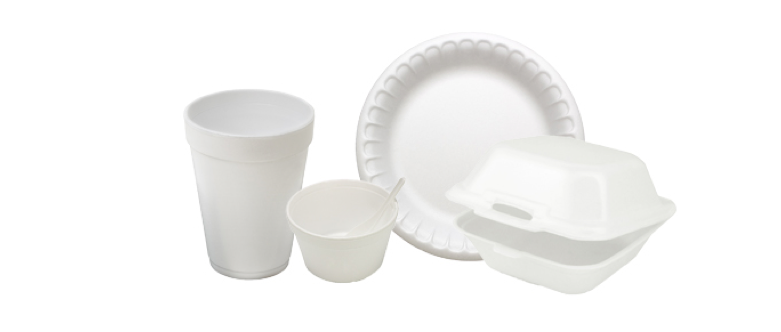
Screen Shot 2014-08-28 at 2.35.22 PMSLO City Council will  hear alternatives to limit or ban POLYSTYRENE FOOD CONTAINERS within the city limits at a September 2 study session. A staff report says in California, over 80 cities and counties have introduced regulations focused on restricting the use of food and drink containers made from EPS, commonly referred to as StyrofoamTM or plastic foam. Some of those agencies have taken the additional step of prohibiting the retail sale of most EPS products within the city.

Food and drink containers made from EPS are also uniquely problematic when they become litter as EPS is a durable material that is not biodegradable. Its foam structure allows it to break easily into small pieces, making it difficult and expensive to remove from the environment. Additionally, these pieces can be harmful to fish and wildlife as it is often mistaken as food and ingested.

According to the California Department of Transportation, EPS comprises approximately 15% of storm drain litter, In addition it is the second most common form of beach debris in California, according to a study conducted in Orange County. Also, several studies approximate that plastic products, including polystyrene, make up 80-90% of floating marine debris.

Some businesses say they want to keep the containers because they cost less than alternatives. Alternatives to EPS clamshell containers ranged from 59% to 73% more expensive.

Around Los Osos: Fish & Chips / Water Restrictions / Dog Park Update

August 26,2014

From Thai Cuisine To Fish & Chips

Screen Shot 2014-08-26 at 1.23.01 PMOwners of the famed Noi’s Little Thai Takeout eatery on 2nd St in the Los Osos district of Baywood Park are launching a second restaurant about a half block away. The site is the former Baywood Pizza location owned by local developer and community booster Bill Lee. The address is 1325 2nd St.

On the menu now is fish says Ron Miner who co-owns Noi’s with -who else -Noi,his wife.

“We hope to open Naked Sea Cafe by mid September” says Ron who is a contractor and has been doing the remodel work the past few weeks.

The name Naked Sea comes from a documentary film his father made in 1955, sort of a day in the life of fisherman that he produced and directed. You can watch it on Youtube! Ron will use some of the art work from the movie in his cafe promotion.

“Our girls are old enough to run Nois Thai themselves – setting us free  to do this big experiment” says Ron.  Since we are by the Coast he says they know their big seller will be fish and chips but they have not got rid of the pizza oven either and will have plenty more on the menu.

Noi’s opened in 1994 and developed almost a cult following and is now a landmark in town popular for home cooked Thai food by the order. Noi’s is considered a take-out place but now has a dining and banquet room they converted from a gift shop

Public Hearing Set For Sept 4 On Water Restrictions

The Los Osos Community Services District will formalize their August 7 vote to adopt restrictions in town on outdoor watering. On September 4 at 7PM the district will hold public hearing to adopt water conservation and emergency water shortage regulations pursuant to Water Code Section 375. Any person affected or concerned by this issue may bring comments to the Los Osos Community Services District before the public hearing or appear and be heard in support of or in opposition to the above-described options at the time of the hearing. The plan calls for limiting outdoor watering to 15 minutes during dark hours to Wednesday and Sunday  for even addresses and Tuesday and Saturday for odd number addresses.The mandatory restrictions are already in place says the CSD.

 Local Dog Park Steps Closer

Plans to open a new dog park in Los Osos at Pine and LOVR  are on the agenda at the the September 4th LOCSD meeting. Proponents of a dog park on the site are seeking CSD approval of plan by a Fresno developer to transfer water and sewer credits for the 5.5 acre parcel elsewhere in town. The developer says building on the site would be too expensive requiring  some $2.2 million in infrastructure costs before they can build. Instead, they want to donate the land to the community if the CSD allows the developer to build elsewhere in town.

On the group’s Facebook page August 6th there was this entry.

“As you may recall, it is our intent to move the building credits off the Pine Avenue property to infill lots within the Prohibition Zone. We have received approvals from the State Water Quality Control Board, Golden State Water Company and S&T Mutual Water Company. The Los Osos Community Services District (LOCSD) is the last agency to come-aboard. The LOCSD Intent-to-Serve letter will be on the September 4 agenda. We look forward to your attendance and support at the September 4 LOCSD meeting; 7:00pm at the South Bay Community Center.

Feel free to contact our elected officials to support the project. In doing so, the Dog Park can go from a dream to a reality.”

Supporter Daryl says “Our idea is that we could use about half the property for a dog park and allow the use of the rest for a new larger community library.” The developer has offered to clear the abandoned buildings on the acreage as part of the deal.

Morro Bay Wave Project Moves Forward

August 25,2014
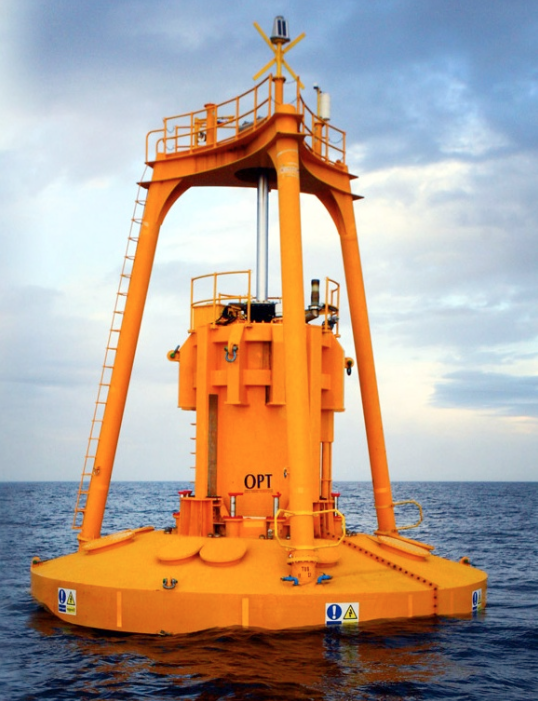
Screen Shot 2014-08-25 at 4.19.14 PMDynegy, the company that owns the mothballed Morro Bay natural gas power plant,has applied for a permit with the Federal Energy Regulatory Commission (FERC) on July 22,2014 to pursue the Estero Bay Wave Project. The Houston-based company’s application says “first, under a demonstration phase, Dynegy plans to deploy a single approximately 1-megawatt (MW) GWAVE Power Generating Vessel (wave energy converter or WEC).

Second, under a potential commercial license, Dynegy plans to deploy 10 to 16 approximately 1-MW WEC’s. Third, Dynegy plans to seek authorization to deploy additional WEC’s with a total installed capacity of 650 MW” the application states. That is about the power capacity of  2 units at the Morro Bay power plant that was shut down earlier this year. (Two other long shuttered units would put the nameplate total capacity at 1056MW.)

That is not by accident. Dyngey has the exclusive use of 650MW “injection rights” through their company switchyard behind the current power plant. A preliminary permit would allow the company three years of exclusivity to look at the project’s feasibility followed by another application if the plan is deemed feasible.

The application says two or more high voltage submarine cables would transmit power to shore, interconnecting with Pacific Gas and Electric’s switchyard facilities at Morro Bay. The requested project boundary comprises approximately 2.73 square nautical miles (1.0-mile-wide by 2.73-miles-long) of coastal waters and lands located along the coast of San Luis Obispo County, California, near the town of Morro Bay.

The notice says the permit holder would be given priority to file a license application during the permit term.” A preliminary permit does not authorize the permit holder to perform any land disturbing or construction activities or to otherwise enter upon lands or waters owned by others without the owners’ express permission.”

The FERC application says interested parties have 60 days to comment on the plan putting the deadline in late September.

Another company Archon had applied to do a wave project in the same waters but was turned down by FERC allowing the Dynegy project to progress to this next level.”We believe they influenced our application with the FERC” says president Paul Grist noting the agency turned down Archon’s February permit request about a month ago.

Paul Grist says their company is still interested in pursuing a wave project but adds there are substantial hurdles the industry still faces.

“The world’s largest wave project scheduled for the coast of Australia by Ocean Power Technologies has been canceled and this has dampened enthusiasm for quick commercial application” says Grist.
A lawsuit is pending from stock buyers who say Ocean Power did not tell the whole story when they offered their stock.

“The plaintiff that defendants may have misstated the nature and/or circumstances of an agreement between the Australian Renewable Energy Agency and Victorian Wave Partners Pty Ltd related to a planned wave power station project off the coast of Australia, that the renewable energy project off the Australian coast was not commercially viable, and that as a result, defendants’ statements concerning the Victorian Wave Partners project, and positive statements about Ocean Power Technologies Inc’s business, operations and prospects, were allegedly materially false and misleading or lacked a reasonable basis” says a filing.

Grist claims Archon still wants to work off the Morro Bay coast but anyone who tries to do it faces 2 to 3 years of work to test it. Another hurdle is the lack of a federal tax credit for renewable wave and wind power technology that is pending in Congress.

Dyngey will use the New England-based GWAVE LLC technology developed by Glenn L. Beane. The US Patent Office shows a filing of an April 2014 patent.

Deadline for filing comments, motions to intervene, competing applications (without notices of intent), or notices of intent to file competing applications: 60 days from the issuance of this notice. Competing applications and notices of intent must meet the requirements of 18 CFR 4.36. Comments, motions to intervene, notices of intent, and competing applications may be filed electronically via the Internet. See 18 CFR 385.2001(a)(1)(iii) and the instructions on the Commission’s Web site (http://www.ferc.gov/docs-filing/ferconline.asp) under the “eFiling” link.
For a simpler method of submitting text only comments, click on “Quick Comment.” For assistance, please contact FERC Online Support at FERCOnlineSupport@ferc.gov; call toll-free at (866) 208-3676; or, for TTY, contact (202) 502-8659. Although the Commission strongly encourages electronic filing, documents may also be paper-filed. To paper-file, mail an original and 5 copies to: Kimberly D. Bose, Secretary, Federal Energy Regulatory Commission, 888 First Street NE., Washington, DC 20426.
More information about this project, including a copy of the application, can be viewed or printed on the “eLibrary” link of Commission’s Web site at http://www.ferc.gov/docs-filing/elibrary.asp. Enter the docket number (P-14585) in the docket number field to access the document


Around SLO: Unemployment / Cal Poly Hotel & Events Center / Charging Stations

August 18,2014

Jobless Claims Climb

California EDD announced that the unemployment rate in the San Luis Obispo County was 6.0 percent in July 2014, up from a revised 5.3 percent in June 2014, and below the year-ago estimate of 7.2 percent. This compares with an unadjusted unemployment rate of 7.8 percent for California and 6.5 percent for the nation during the same period.
Year over year SLO lost 1000 jobs in the utilities ,trade and transportation category ,likely due to the wind down of construction on the big Carrizo Plain solar projects .Despite that total nonfarm jobs were up 2900 over the same period and despite the drought farm jobs climbed 100 in the year.

Cal Poly Wants To Build Hotel / Convention Center On Campus    

Screen Shot 2014-08-18 at 7.30.49 AMCal Poly is considering building a 145 room hotel and adjacent events center that could handle 5500 seats in basketball configuration.The integrated hotel/conference center program would measure 143,000 sq. ft. in total, including over 22,000 sq. ft. for the conference center. Within the conference center, consultant B&D recommends inclusion of a divisible, 12,000 sq. ft. ballroom to accommodate both university and commercial demand along with several additional spaces.
The study, in the works since last December says there are over 300,000 people within a 30-minute drive time of SLO, expanding to over 450,000 in a 60-minute drive time area. Currently, the City of San Luis Obispo market contains 29 hotel properties and nearly 2,100 rooms. The largest off-campus space is at the Madonna Inn Expo Center (20,000 sq. ft.) and the Embassy Suites 5,100 sq. ft. junior ballroom.
The study adds that the Cal Poly campus has a limited amount of dedicated conference space. Harman Hall is the largest space, but is often reserved for ticketed events. The most significant dedicated space is found at the University Union, which contains Chumash Auditorium, along with several small meeting spaces. In consideration of university personnel input, demand patterns from 2012 and 2013, and the existing inventory of spaces, B&D believes there is enough demand to build the project. The hotel, based on a design- build schedule would be complete in July 2020 with a projected a cost of approximately $48 million. Adding the convention center takes it $155 million.
The consultants say the complex could add substantial economic activity to the  area including 133 recurring jobs, $4.9 million in earnings and $24.4 million in economic activity. Critics say such a complex ought to be built by the private sector.

39 Charger Stations To Be Built On Central Coast

Looking to build enough charging stations statewide to accommodate one million Zero Emission vehicles by 2020 the state is planning to install 39 electric charger stations in San Luis Obispo, Santa Barbara and Ventura counties including  14 at the CalPoly SLO campus. The transportation sector is the biggest contributor to CA’s GHG emissions and accounts for approximately 40 percent of these emissions.

Plan Calls For 102 Room Hotel In SLO On Monterey St

August 14,2014

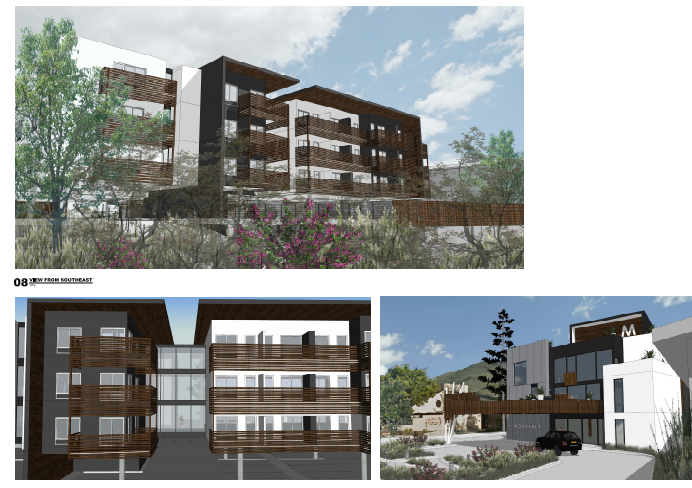
Screen Shot 2014-08-14 at 2.43.26 PMSLO’s City Administrative Hearing August 18 will get the first look at a plan for a 102 room hotel on Monterey St, north of the Apple Farm in San Luis Obispo.

The project is located on just under 2 acres and needs to provide 141 parking places mostly in the building’s basement and to the rear according to a city staff report.

The multi-story hotel carrying the ‘The Monterey’ name would replace one commercial building and a single-family home on the site with hotels already located on three sides of the proposed project. The plan will need to go to the city Architectural Review Commission.

The applicant is West Cast Asset Management, based in Montecito, and seeks a 10% parking reduction with special consideration along San Luis Creek – allowed in the CTS zone.West Coast Asset Management was co-founded by Paul Orfalea who launched Kinkos in 1970. Andrew Firestone serves as the company senior vice president. The hotel is being designed by SLO architect George Garcia.

The new hotel is one of several pending projects south of the Cuesta Grade taking shape due to the uptick in tourism in the past few years. Using the industry metric RevPAR (revenue per available room) the SLO-Paso Robles metro area is up 9.5% in the past year as of June according to Smith Travel.

Also in SLO a new extended-stay 116 unit hotel is in the works on Calle Joaquin,just off the Hwy 101/ LOVR  interchange. The project was the subject of a city Architectural Review meeting in July, the first step in getting construction approval.

North of the grade a new  130 room Springhill Suites By Marriott is under construction along Hwy 101 at the south end of Atascadero.