December 10,2014
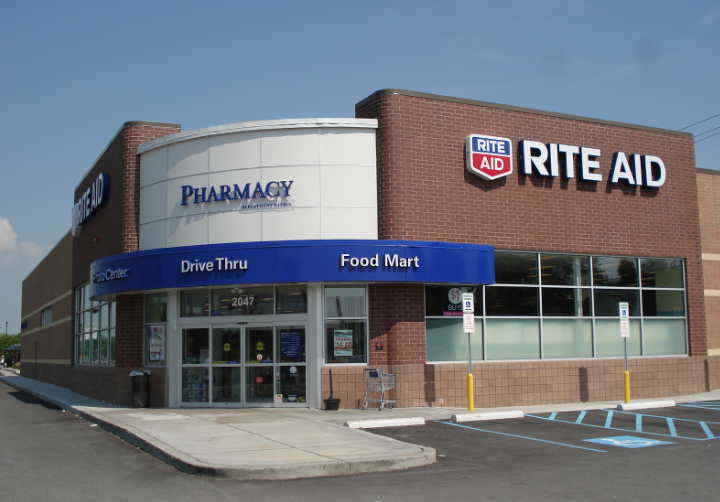
Rite Aid wants to build a new 17,000sf drug store with a drive-thru to replace their current store in the Save Mart shopping center in Exeter. The fast growing drug chain, who also has recently announced a new store in Woodlake, has filed a site-plan review to be heard by the Exeter Planning Commission at their next meeting.
The new Exeter store would be across the street from their current site to be located on the southeast corner of Visalia Rd and Belmont.
Exeter city planner Greg Collins says the company “is eager to get started” on the project. The site is already properly zoned.
The large drug chains are often replacing their shopping center in-line stores with new prototype formats that allow for a drive-thru.
The new 14,580sf Woodlake Rite Aid will be the first chain drug store in town at the corner of Antelope and Magnolia.
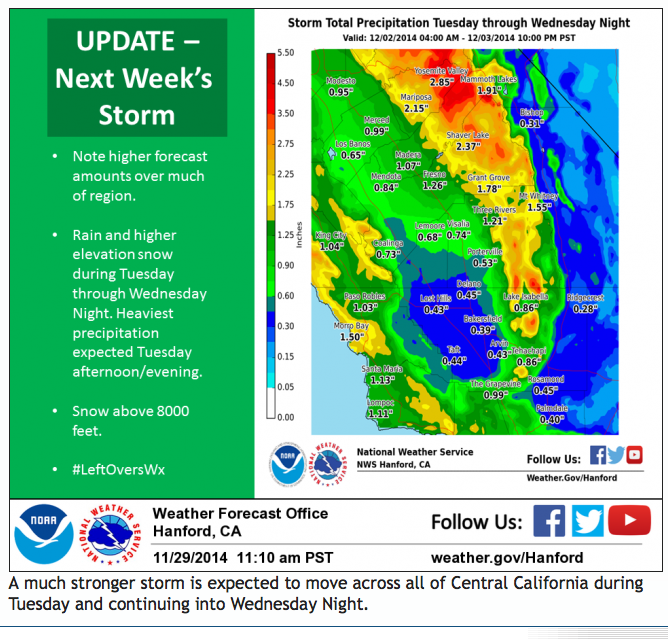
A series of storms from the north is joining up with subtropical moisture from the west this week to dump a good amount of liquid Tuesday-Wednesday on parched Central California along with much of the state.Here is the latest prediction this weekend from the NWS-Hanford.
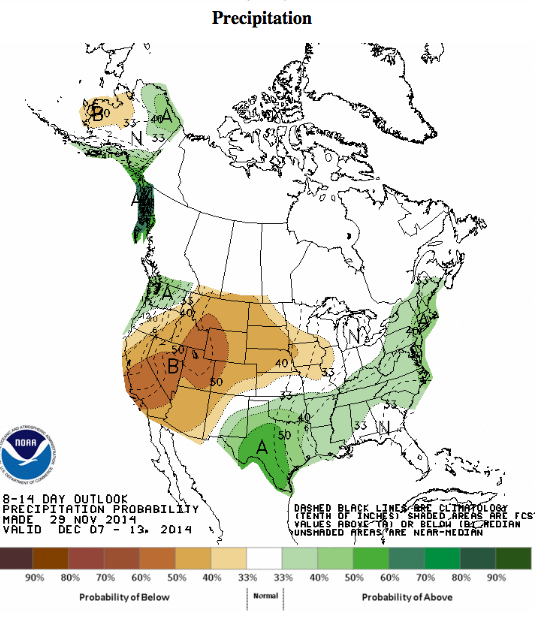
The latest prediction from the Climate Prediction Center show the spigot turning off through mid December in a series of contradictory signals
Here is their map predicting little rain after this week’s event.
California is numero uno for many crops – but not table eggs, not any more. It was number one in the 1970s when the state had more than 42 million hens.
While Newcastle Disease devastated the flock in waves in the 50s through the early 70s the state’s egg farmers built their numbers back up peaking around 1980 when the hens pumped out 9 billion eggs – some 43% more than we consumed in state. Those were the days we exported our eggs.
Since then there has been a steady decline in hen numbers impacted by urbanization and low margins here. By 1990 the state had 36 million hens, down to 24 million by 2000. By 2010 there were 19 million egg layers according to USDA figures. By then annual state production had declined to 5.2 billion from 9 billion eggs despite the fact California had a lot more egg eaters than 30-plus years earlier.
Enter Proposition 2 passed in 2008 when California voters approved an initiative to require the hens be given room to stretch their limbs and turn around in their cages persuaded by arguments from the Humane Society.The initiative passed 63.5% to 36.5% but with San Joaquin Valley counties overwhelmingly voting no.
Despite the long lead time – going on 7 years – the new hen housing regulations are only now taking effect a few weeks from now – January 1,2015.
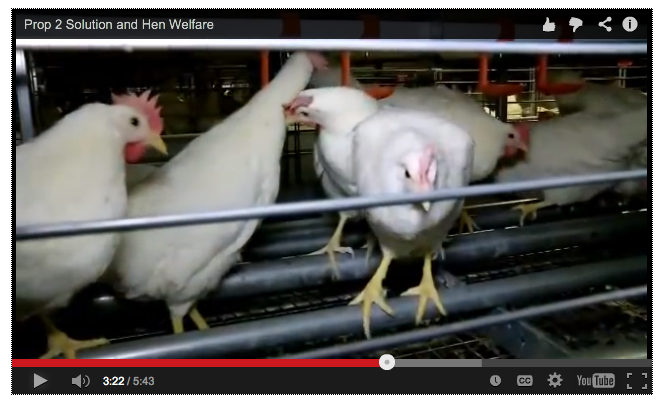
The industry has interpreted the new rules requiring cages that are double the existing 67 square inch (smaller than a 8 by 11 letter-size piece of paper) per hen density so facilities need to be expanded or rebuilt, at substantial cost
Hens have room at Modesto egg ranch run by JS West .
Hen House War In Doubt
Meanwhile to give California egg farmers a chance – the state legislature passed a law that banned the sale of eggs from any state coming from hens in conventional type cages. That has spawned several years of litigation from a number of those states including number-one Iowa who now sports 53 million layers. The California Division of Food and Agriculture (CDFA) numbers show Iowa was the source of about 30 percent of imported eggs coming into California last year; literally a ton of business at stake.
Earlier this summer a federal judge threw out that restraint of trade argument made by the Midwest state lawyers. But in recent days six states have appealed that decision putting the final hen house war in doubt.
“We don’t want a trade war in America, but we think that California is dead wrong on this,” said Iowa Gov. Terry Branstad in late October .
The impact of continued litigation may be to pause some expansion due to the uncertainty over whether the California regulations will stand.
Continuing but accelerating the trend before Prop 2, California’s hen population continues to decline with the latest count around 15.2 million hens and the volume of eggs somewhere around 4.4 billion – about half the 1990 egg count. Hen numbers in California have declined from 18 million to 15 million hens over the past 18 months says the industry newspaper Egg-Cite.
California consumes over 9 billion eggs so the other half for now will be coming from out of state or there will be a shortage. Nationwide egg consumption is at a 7-year high says the American Egg Board – at 255 per person – rising to 261 by the end of this year according to projections.
So demand is up and supply is, well – in question.
It’s A Mess
UC Davis agriculture professor Doug Sumner says the situation in California is chaotic right now not just because of uncertainly over the outcome of legal maneuvering but also a lack of any clear state agency responsibility or oversight for the new law. “Who is in charge? Nobody knows!” says the exasperated ag economist.
Sumner says this leaves producers to have to guess how to proceed. No fan of the Prop 2, Sumner says CDFA would be the logical state entity to regulate the process. However, neither CDFA nor any other entity has yet to take or be given responsibility for how the law will be monitored or enforce.
“It’s a mess”
Sumner says the new rules will raise costs for California egg eaters because housing the birds will cost “an extra $1 billion.” While some producers have acknowledged the law, such as JS West bear Modesto, Sumber argues that few producers are making the investment in this state.
The regulations themselves don’t appear to specify what size or type of cage is allowed leading to more confusion. But as we will see, some big players both in and out of the state are indeed making changes that would double the hen house size and there is a strong contingent in the industry who see consumer preference for conditions that are more humane.
Three states Michigan, Oregon and Washington have passed laws requiring more space for hens. Nationwide, the idea of a national standard was dropped from the 2014 farm bill.
Change may come but at what price?
Sumner says even though many people don’t care if their egg prices go up – those who typically buy cage-free, free-range and organic eggs – still “90% of the eggs consumed are not from cage-free chickens.”
“Eggs are the lowest cost protein source” and many families with low incomes will not be able to afford eggs that cost 20 to 40% more he argues.
California producers have the advantage of being close to their customers but they do have to bring in their feed from the corn belt unlike their competitors in the Midwest who have corn and soybean fields in their backyard.
Sumner sat on a 2010 trade panel that predicted that the majority of egg producers would leave California because of the voter passed measure.
What happens once the legal battle is over – will California production rebound?
Right now there is clearly conversion and expansion of egg farms to the new “California compliant” standards both in and out of the state.
This is happening at a time that feed costs for poultry is down substantially over this next year with a big upcoming corn crop. As of October margins have doubled. Industry newspaper Egg-Cite says that “the average of monthly feed costs during 2013 was 50.12 cents per dozen. The ten-month average feed cost for 2014 to date was 43.8 cents per dozen.Combining data from the USDA and the University of California, producers recorded a positive margin of 30.4 cents per dozen at farm level in October 2014 compared to an equivalent value of 15.9 cents per dozen in September 2014.”
In their latest forecast, USDA reports that the nation’s table egg production in third-quarter 2014 was 1.8 billion dozen, up 3.0 percent from the same period in 2013. “ A combination of strong prices and lower feed costs is expected to provide an incentive to producers to continue to expand production, and table egg production is expected to be above the previous year’s level in fourth -quarter 2014 and throughout 2015.”
So margins are up and production is expected to increase as well.
Holiday Prices Zoom Higher
As of Thanksgiving week Egg-Cite reports “Surging demand attributed to cold weather and high prices of competing proteins is responsible for increased prices and declining inventory. Supply has not kept pace since there has been only moderate new expansion and in some cases a reduction in hen numbers to comply with California regulations.”
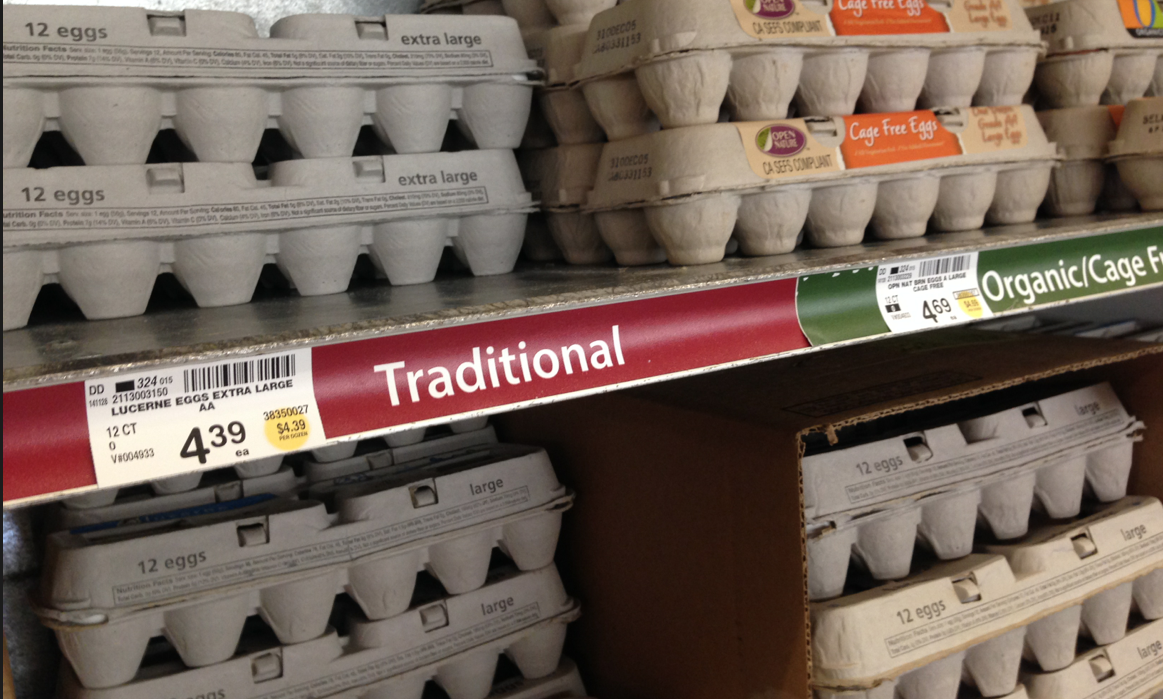
Indeed a visit to my Vons supermarket in California this week found Thanksgiving prices for a dozen large eggs closer to $4 than the more typical $2 per dozen price with organic up around $4.50. Yikes!
Producers in many sectors jack up the prices for the Holidays (lots of baking) and after the new year – price increases should be more moderate. Even this week Walmart in California is selling a dozen eggs for $1.48.
Will supply come back?
Over a longer term Egg-Cite appears more optimistic that California’s supply will be there.
“Given the rate of erecting new building and re-caging, it is evident that the Midwest and Southwest will be able to compensate for the decline in the population of hens in California” says Simon M. Shane in an article this month on his Egg-Cite website.
He adds a note of inevitability that consumer preference for eggs from comfortable hens will likely win the day nationwide.
“The Egg Bill will not be passed in 2014, (regrettably if ever), given other priorities in Congress and opposition from livestock groups including an inconsequential minority within the U.S. egg production industry wishing to retain conventional cages in perpetuity. The emphasis on space requirements and housing systems will move from the legislative arena to consumer-driven specifications and standards established by the members of the FMI, NCCR and the NRA, paralleling the situation in the poultry meat industries.”
Are critics of more commodious cages on the wrong side of history? A look at some investments offers the potential for new supply – not just to supply California but other states and even Europe who has passed a similar measure.
Expansion is happening both inside and outside California in the Southwest with a joint venture between top US egg producer Cal-Maine Foods and Hickman’s Egg Ranch called Southwest Specialty Eggs LLC. The enterprise will be supplied by farms operated by both companies in Arizona, Colorado and Utah, which are or will be “California Compliant” by January 2015.” says a news release last summer.
Hickman,who sells eggs to Costco,is building a massive a new Nevada ranch with millions of chickens.Hickman’s Desert Pride facility is slated to initially house 2.2 million laying hens in a confined area, and will eventually house nearly 12 million birds. But local activists are fighting the project.
Earlier this year Opal Foods, an entity created by AGR Partners of Visalia, in association with Rose Acre Farms and Weaver Brothers, purchased Moark’s Midwest egg production assets. Opal Foods expects annual revenues to exceed $200 million with its operations in Missouri and Colorado, as well as a new cage-free farm in Neosho. “Many of the farms purchased were recently renovated to comply with California’s future production standards, and some will be among the most modern in the country” says a release. They will be selling under the Eggland’s Best brand in California.
Within the state – Southern California Egg Cooperative in Fontana said early in 2014 they were expanding their cooperative to bring in more ranches.
“Throughout 2014, all of the cooperative’s family farms will be modifying their operations to ensure compliance with California’s approaching food safety and housing requirements. Moreover, significant expansion is under way to ensure an adequate supply for the region. New construction at multiple farms will provide housing for 500,000 organic and cage free hens along with an additional 1,000,000 conventional egg hens. This growth will continue in 2015 as the cooperative expands both its specialty and conventional production by another 1,000,000 new hens.”
For the Humane Society progress is measured more in going cage-free than using larger cages and they have been pressuring big companies to convert to cage-free eggs with some success.
For some – supporting the true local backyard egg farmer that sells at your farmers market is the only way to go. The higher prices could help more of these ‘Eat Local’ egg farmers to stay afloat.
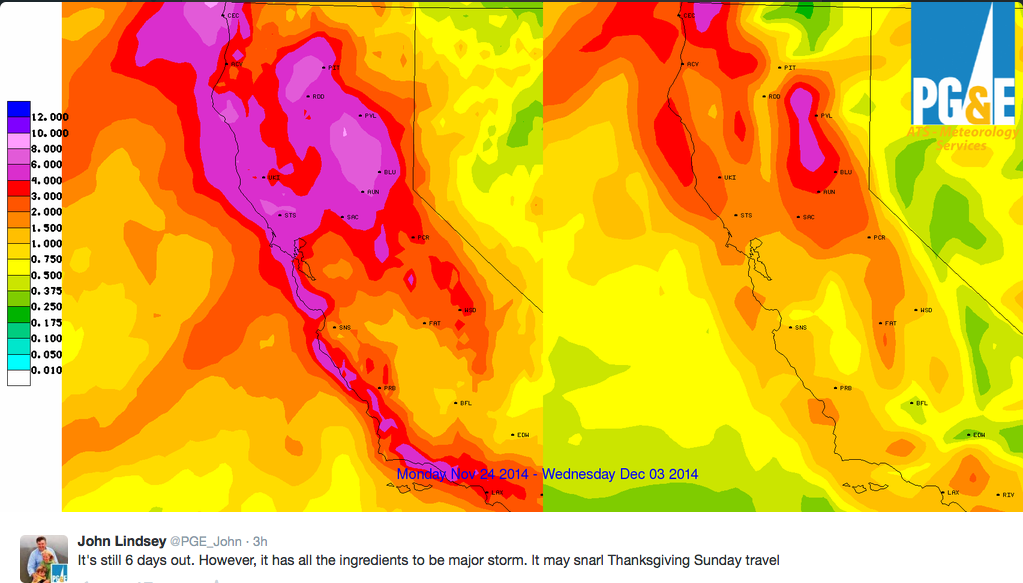
PG&E forecaster John Lindsey says a major storm with 50 mph winds may be heading our way. If it arrives as advertised it could be the season’s first real drought buster with heavy Sierra snow too. “Although it is 6 days out it looks promising” with up to 4 inches along the Central Coast and 7 inches in parts of the Bay Area and Sacramento. Most of the state would get wet.
The timetable calls for hard rain to fall as soon as Saturday and on Sunday just as many Californians are heading home after Thanksgiving. The storm is expected continue Monday through Wednesday.
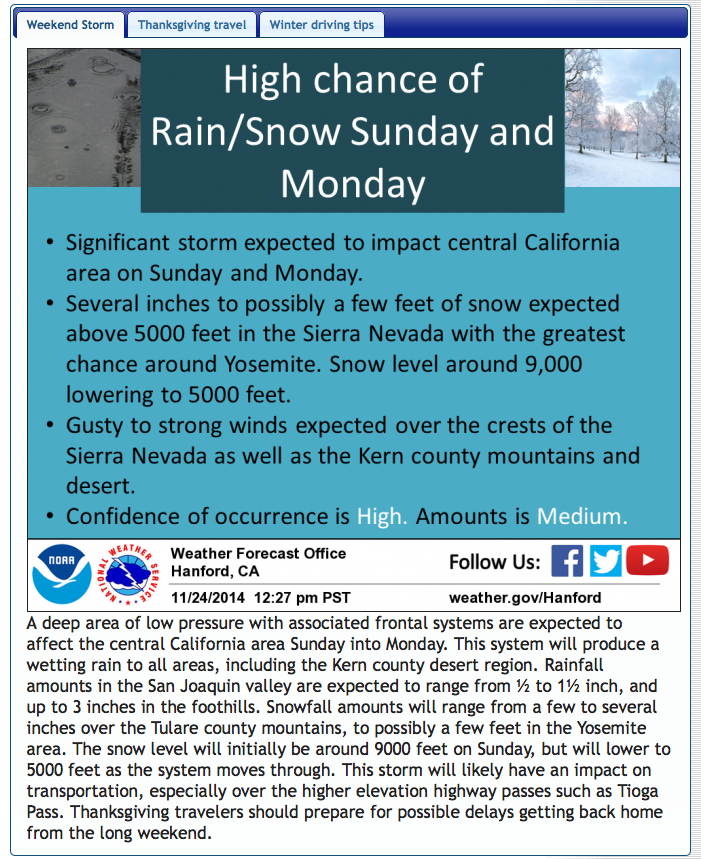
Here is what the National Weather Service Hanford posted today regards the storm that could jump start the ski season next week. Ranfall amounts in the Valley will not be as heavy as elsewhere in the state. NWS says confidence in their prediction is “high”
Here is the European model Lindsey posted on his Twitter page this afternoon. Heaviest precipitation on the map below is on Monday.
Higher Entry Fee To National Parks – Visalia Pushes For Three Park Deal – Sequoia Shuttle Has Good Year
National parks will be raising their entrance fees next year to $30 for a 7-day pass form $20 today.The annual pass will go from $30 to $50. Recently the Visalia City Council asked the NPS to consider a seven-day pass qualifying for all three local National Parks including Sequoia, Kings Canyon and Yosemite as a way to encourage distance visitors to come to the Central Valley for a vacation or long weekend, while also encouraging local residents to visit more National Parks in the area. A three park pass could be marketed by Visalia Convention and Visitors Bureau, Fresno Airport and Yosemite Sierra Visitors Bureau they say.
Meanwhile the city council heard that the Sequoia Shuttle bus service, in its 8th year this summer,showed all time high readership even though service was less. It carried nearly 10,000 passengers up the hill. Inside the park they carried 424,000 passengers – down slightly from last year. Also with a grant, 1,500 seats will be available through during the 2015 Sequoia Shuttle season to carry local school kids to the parks that many have never visited.
Faggart Buick Selling To Merle Stone In Porterville
A public bulk notice has been published announcing the sale of the Faggart Buick business to Merle Stone in Porterville. The transaction is set to be final by December 12. The dealership is located at 133 S Main but the sale does not appear to include it.
Tulare County Jobless Rate Falls To 11.6% From 13.2% In October 2013
The unemployment rate in the Tulare County was 11.6 percent in October 2014, up from a revised 11.1 percent in September 2014, and below the year-ago estimate of 13.2 percent. This compares with an unadjusted unemployment rate of 7.0 percent for California and 5.5 percent for the nation during the same period.
Homes Sales Rise In Tulare County
Tulare County home sales were up in October says DQ News. Year over year sales of all homes,new and used, was up 9.2% and the median price jumped 12.4 % to $176,500 from $157,000 a year ago. The numbers were the best in the So Valley.New homes sales were strongest at 77 compared to 53 in October 2103.The average price of a new home in the county is up 31.5% from $187,500 to $246,500. Despite the increase, the average price is one of the lowest in the state.
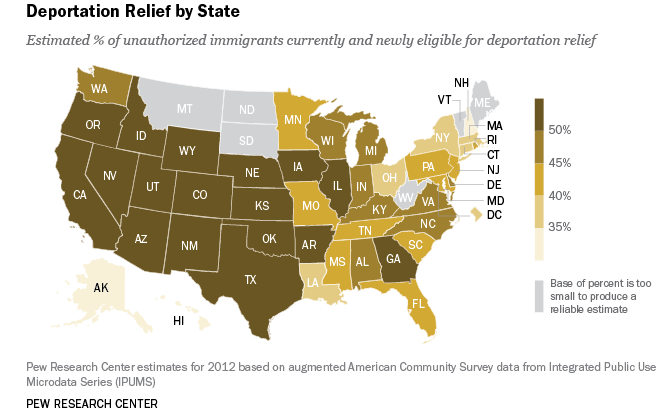
At least four-in-ten unauthorized immigrants in 12 states will be eligible to benefit from the executive order issued Thursday by President Obama, according to a new Pew Research Center analysis.
Idaho, where 46% of the state’s unauthorized immigrant population is eligible for deportation relief, tops all other states on this measure. Other states with at least four-in-ten eligible immigrants include Arizona, Arkansas, Colorado, Illinois, Kansas, Nebraska, New Mexico, Oregon, Texas, Wisconsin and Wyoming.
More than 1 million immigrant parents in California will be eligible for deportation relief says Pew.
More than 5 million unauthorized immigrants are eligible for deportation relief under Obama’s executive action announced Thursday or the president’s 2012 Deferred Action for Childhood Arrivals, which grants relief to young adults who came to the U.S. as children. The new executive action also expands the DACA program.
When we expand our analysis to those eligible under both the new executive order and those already covered the president’s DACA program, it’s clear that many Western states, including those with the highest shares of unauthorized immigrants in their total population, are affected. With both programs combined, Idaho again tops the list, with about six-in-ten (62%) unauthorized immigrants now eligible for relief, the highest share in the nation, according to the Pew Research analysis of 2012 data.
Though Idaho has the highest share of unauthorized immigrants affected by Obama’s immigration policies, it has a relatively small population of unauthorized immigrants. Idaho’s 50,000 unauthorized immigrant population is dwarfed by the 2.5 million in California and the 1.7 million in Texas. Both California (52%) and Texas (54%) are among the states where at least half of unauthorized immigrants are now eligible for relief. Nationwide, 48% of unauthorized immigrants are eligible for relief under new or existing programs.
The states that have high shares of unauthorized immigrants who are eligible for relief also have high shares of unauthorized immigrants from Mexico. People from Mexico account for two-thirds of unauthorized immigrants who will be eligible for deportation relief under Obama’s new executive action, according to a Pew Research analysis.
In Nevada, where President Obama traveled Friday to talk about his executive order, those newly eligible for relief make up 39% of the state’s unauthorized immigrant population. The state’s total of 210,000 is relatively small compared with other states. Nevada is also one of 14 states where the unauthorized immigrant population decreased from 2009 to 2012, a trend driven largely by a drop in the number of unauthorized immigrants from Mexico.
But Nevada stands out on several measures of unauthorized immigration. Nevada has the nation’s highest share of unauthorized immigrants as a share of the state overall population (8%), the labor force (10%) and K-12 students with at least one unauthorized parent (18%).
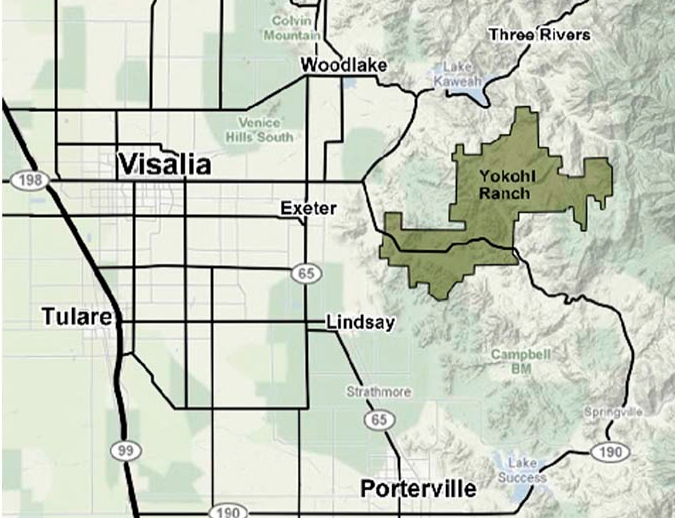
The JG Boswell Company continues to work on the draft EIR for Yokohl Ranch east of Exeter -planning a new town in rural Tulare County. The project – in the works since 2005 – may have a draft of their environmental study about a year away from being released by the County says Michael Spata,Director, Resource Management Agency.
“We’re working on it hard” says Spata.
The controversial development envisions a community of of 30,000 people in sparsely populated Yokohl Valley, some 15 miles southeast of Visalia. The big project on 36,000 acres would be phased over 25 to 30 years and keep more than half the acreage in open space.
Plans for a the ambitious project that would include 10,000 homes appeared to be sidelined by the five-year 2008 economic downturn that has now turned around but has helped delay final approval for what will be over 10 years of studies.
Release of the draft EIR will set in motion a comment period and a final hearing in front of the Board of Supervisors likely in 2016.
To date the supervisors appear to favor the project although the drought could insert a new wrinkle in the debate.
Gas prices in California are down to an average of $3.12 today from near $3.50 a month ago according to Gas Buddy. Prices have dropped as low as $2.65 at one Long Beach gas station with Costco selling gas in San Luis Obispo at $2.95 and $2.77 in Visalia. Expect the state average will hit $3 early in December.
The last time gas prices in the state were this low was 2008 when they reached $1.80 per gallon around the Holidays.
Nationwide the average gas price is $2.85