California Biz Briefs

-October 6,2023-

More hydropower

California had 94% more hydropower generation in the first six months of this year compared with the first half of last year. The forecast is for 99% more hydropower generation in California this year compared with 2022.

Friant Kern will be out of service till February

The Friant Kern Canal will be dewatered for three months this fall/winter for triennial maintenance as well as construction on the Middle Reach Capacity Correction project.  Dewatering will begin on November 1st and the canal will be back in service on February 1st.

U.S. using less gasoline
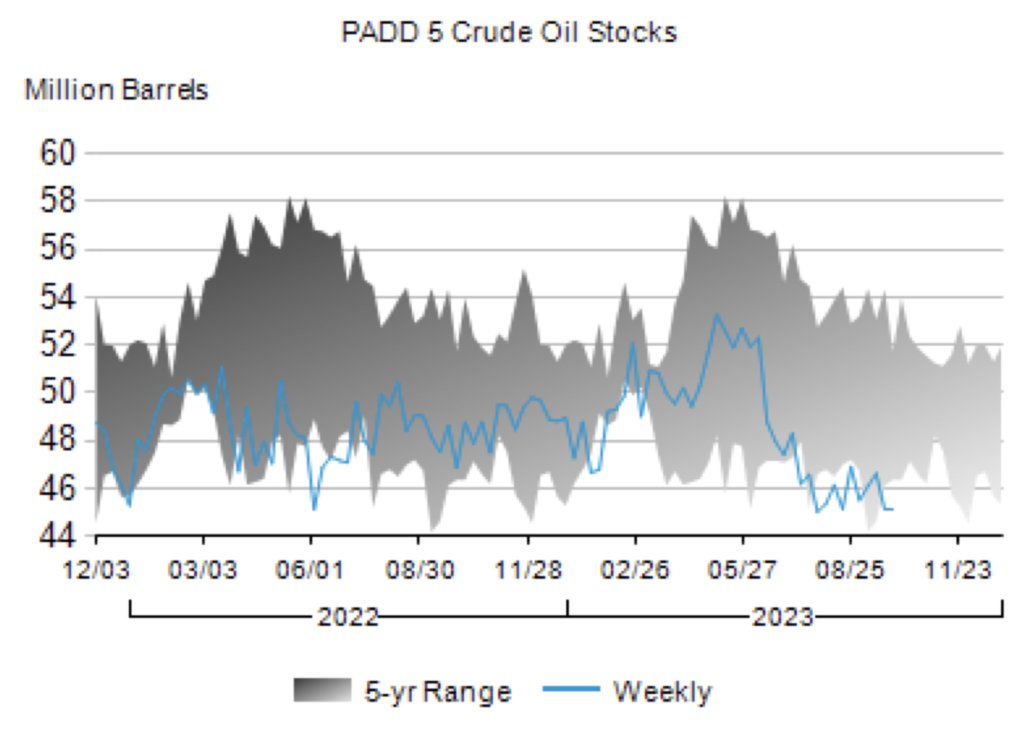
Screenshot 2023-10-06 at 6.41.25 AMEIA says over the past four weeks, motor gasoline product supplied averaged 8.3 million barrels a day, down by 5.0% from the same period last year. In the Western US (Padd 5) stocks of oil in millions of of barrels is down to about 45 mil barrels compared to 53 mil barrels at the start of summer and lower than year ago.

Nat Gas price in California down


Your heating bill should be manageable this fall.SoCal Gas reports that as of October 1, 2023, the procurement rate will decrease 10.288 ¢/therm to 38.058 ¢/therm. This decrease resulted from an overall 7.716 ¢/therm decrease in commodity price and a decrease of 2.572 ¢/therm in account adjustments. Compared to a year ago, the procurement rate is about 41.8% lower (65.420 ¢/therm) than what it was effective October 2022. Gas went sky high last winter’s rising to $3.45 compared to 38 cents today.


Egg prices way down
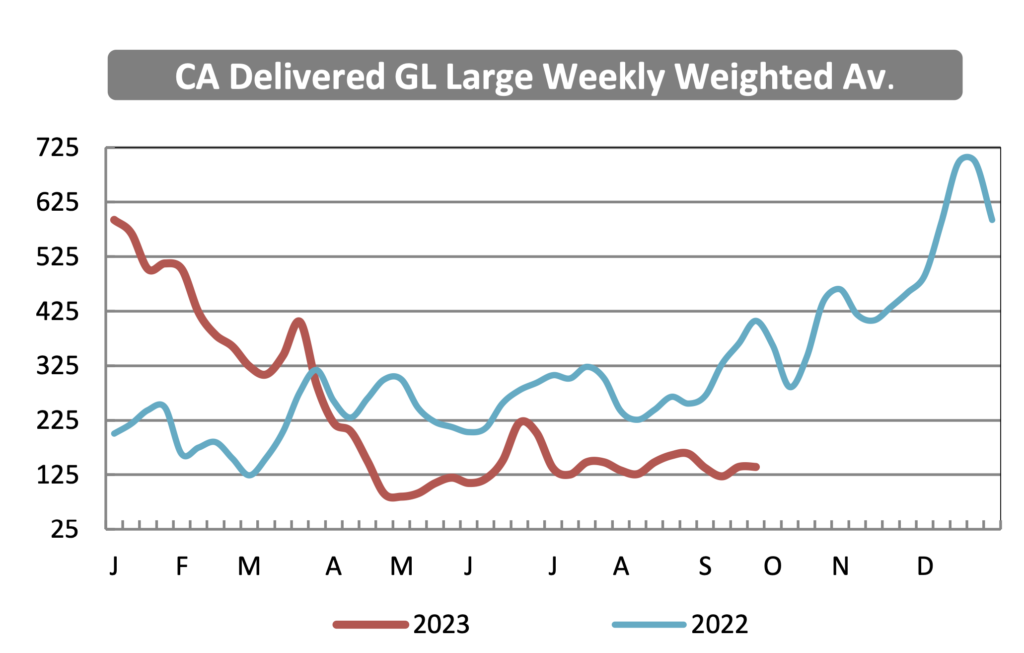
Screenshot 2023-10-06 at 6.22.57 AMDespite California’s animal welfare rules egg prices this fall are way down from the year before. While large eggs sold to stores are priced at $1.25 a dozen that compares to over $4 dozen wholesale a year ago. That was marked up when sold to the consumer last year at $7 and 8 a dozen.Today most shoppers are paying $3 a dozen.


CALIFORNIA & U.S. SUSTAIN SIMILAR DECLINES IN EXPORTS

Both California and the United States sustained broadly similar year-over-year declines in their merchandise export trades in August (the latest numbers), according to a Beacon Economics’ analysis of U.S. trade statistics released this morning by the Foreign Trade Division of the U.S. Census Bureau.The year’s eighth month saw California businesses export goods with a nominal value of $14.735 billion. That was down 5.5% from the $15.587 billion the state exported in the same month one year earlier.
By comparison, overall U.S. exports were off by 4.9% over the same period.Shipments abroad of manufactured goods from California slipped 6.7% to $9.358 billion from $10.029 billion the previous August. Exports of agricultural products and raw materials dropped by 10.3% to $1.670 billion from $1.862 billion. Re-exports, however, rose by 0.4% to $3.708 billion from $3.695 billion.
“These latest numbers are not surprising,” said Jock O’Connell, Beacon Economics International Trade Advisor. “The Commerce Department had been expecting a nominal 5.9% year-over-year fall-off in U.S. exports, and California’s experience was in line with that forecast, especially with regard to a sharp decline in farm exports.”2023 has been particularly tough on California growers with one unprecedented weather event after another disrupting normal agricultural operations. Torrential rains earlier this year caused havoc for farmers and cattle ranchers as farmlands were flooded. Hurricane Hillary hit in August just when harvests of crops such as almonds were getting under way.California accounted for 8.6% of the $171.503 billion in U.S. merchandise exports in August, identical to its share in August of last year. In pre-pandemic August 2019, California accounted for 10.8% of the nation’s merchandise exports.
Agricultural exports slid by 12.8% to $3.025 billion from $3.469 billion due to generally lower export prices of farm commodities and poor weather conditions. Shipments abroad of Food & Kindred products slumped by 14.9% to $2.690 billion from $3.162 billion.

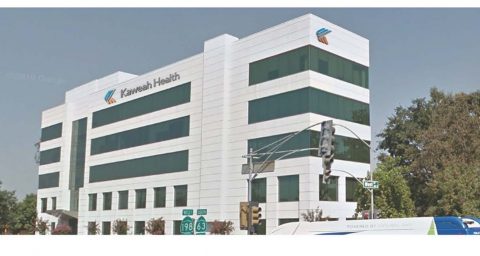
Kaweah Health sees revenue turnaround in August

State loan monies coming in October

-September 29,2023-

Kaweah Health has published financials for August showing a turnaround in the pattern of red ink that has threatened the future of the region’s largest medical center largely impacted by the pandemic.

Kaweah 2019-09-22 at 4.34.57 AMNet Patient Revenue was up 1.1%, $543,000 higher than budget primarily due to higher than budgeted revenue in the Emergency Department, Subacute Hospital, Endoscopy Service Line, NICU/OB and their Radiology Modalities (CT, MRI, PET, Xray): Other revenue was $2.2 million over budget primarily due to grant funds recognized and higher than budgeted retail pharmacy revenue. Employee expenses were below budget.
Administrator Marc Mertz confirms “ August was positive and very encouraging. The higher volumes were certainly factors, but a lot of credit goes to our employees and the Medical Staff for their hard work on our financial improvement efforts during the last 12+ months. Last August we lost more than $7 million, primarily due to the high cost of contract/travel labor. Our teams have worked tirelessly since then to reduce costs and increase revenues, and this August we had a positive operating margin and a total excess margin/profit of more than $2.2 million.”

In other news Kaweah Health is expecting funding of the Distressed Hospital Loan monies -now approved at nearly $21 million – will be in hand in October. The hospital has an 18-month grace period followed by a 5-year repayment schedule unless the loans are forgiven in the future. The receipt of these funds will increase our cash on hand to nearly 100 days.

“We are optimistic that our positive trend will continue, but we are very concerned about the possibility of Governor Newsom signing SB 525 into law. We believe that this bill would have a devastating impact on hospitals across the state, including Kaweah Health, as well as harming local business who would be forced to increase salaries to compete for employees with hospitals.”

Senate Bill (SB) 525 (Durazo, D-Los Angeles) would increase the minimum wage for all workers in all health care settings — including all paid work occurring on hospital premises (for example, delivery drivers, repair workers, and ride share or medical transport workers) regardless of whether they are employed by an entity other than the hospital — to $25 an hour starting Jan. 1, 2024.

R&N Supermarkets in Lindsay and Exeter close

Razco Supermarket takes over Lindsay
Sanger-based SaveCo to operate Exeter
-September 28,2023-
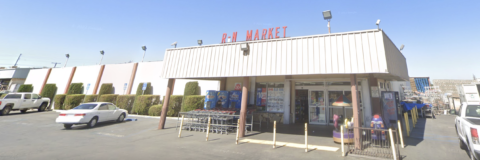
In business for more than 50 years the R&N Market in Lindsay has closed as of September 16 and a new owner has taken over. Similarly the same owners have also sold the Exeter R&N store this month.Screenshot 2023-09-27 at 3.55.39 PMNew owners in Lindsay are Saleh and Sami Ahmed,who are calling the landmark 13,000sf store” Razco Supermarket.” The couple own the Hanford store – Stop N Shop.Similar to their R&N counterparts  the Ahmeds have been in business for about 28 years.
R&N owners are CHUNG & LAU INC, founded by Raymond Chun.The store is at 765 N Harvard in Lindsay.Chun also operated the Exeter store.

The Exeter R&N on Visalia Rd was purchased this month by Sanger-based SaveCo who operate the chain of 16 State Foods Supermarkets as well as the Best Buy chain with 3 locations including Visalia, Lemoore, and Hanford.In the county there is a SaveCo store in Orosi that used to be the R&N in town.                    

State Foods has branded grocery stores in our area including in Avenal and Woodlake.

All three of the store chains are owned and operated by Muffed “Mike” Alamsi.

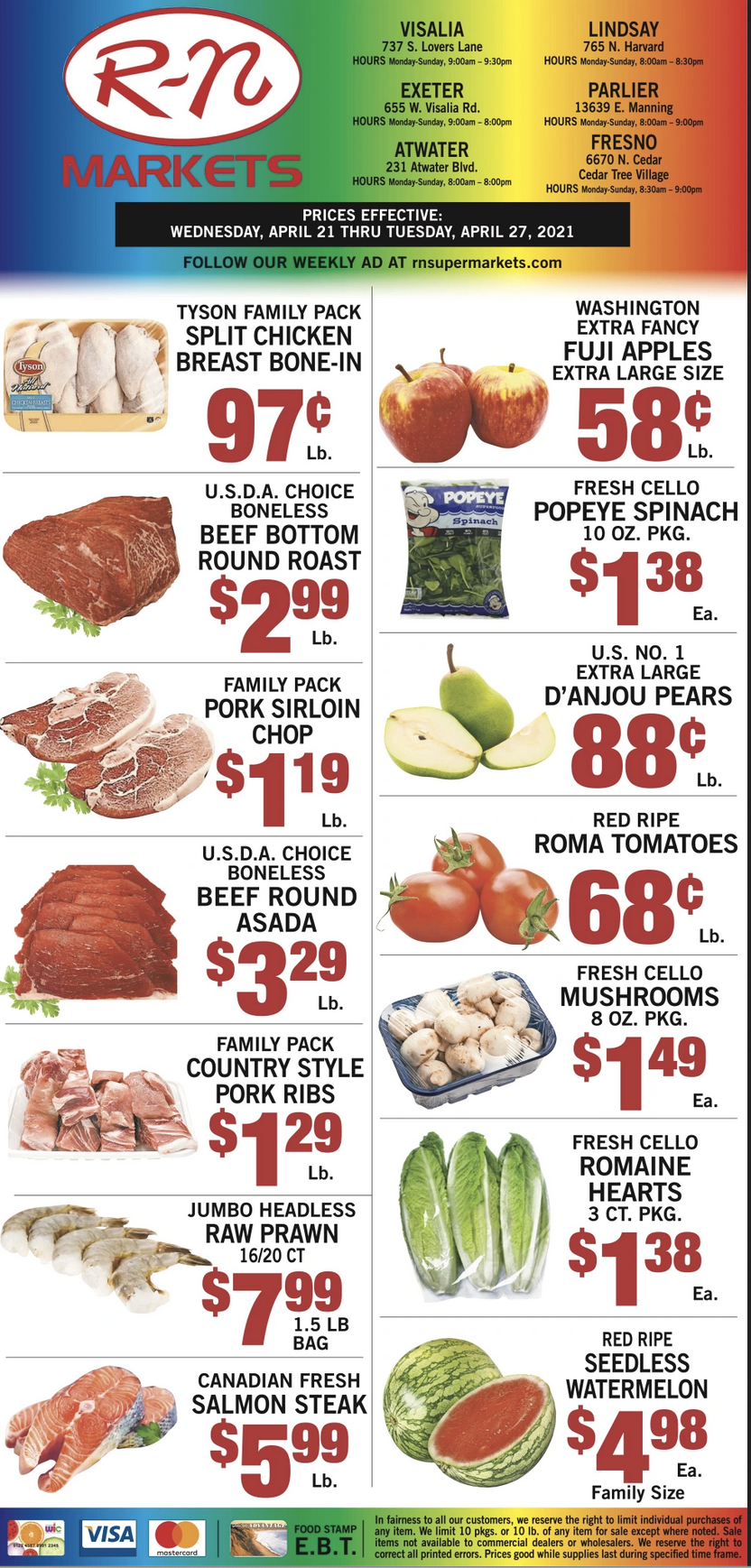
Screenshot 2023-09-27 at 5.24.15 PMLike most of the R&N Markets in the Valley, the Exeter and Lindsay stores founded by Chinese immigrants, have catered to many nearby low incomes residents offering popular Hispanic and Chinese produce and prepared foods  along with typical American food items.It was not unusual to find pigs feet in the meat counter or a hogs head looking back at you.

Besides Lindsay and Exeter, RN Market in Hanford, Tulare,Atwater and Orosi have closed over the years leaving Visalia,Parlier and Fresno still operating.

State announces deal to address insurance crisis

September 27, 2023

From California Farm Bureau 

Screenshot 2023-09-27 at 11.43.52 AM
By Caleb Hampton

California’s top insurance regulator has announced a plan intended to halt the exodus of property insurance companies from the state and improve coverage options for people in wildfire-prone areas.

The regulatory changes, announced a week after negotiations in the state Legislature on an insurance bill broke down, will allow insurance companies to incorporate forward-looking catastrophe modeling when setting insurance premium rates.

In exchange, they will be required to write a guaranteed percentage of policies covering owners of properties in high-risk areas for wildfires.

“This is a historic agreement between the department and insurance companies,” California Insurance Commissioner Ricardo Lara said Thursday at a press conference in Sacramento.

The executive action is meant to stabilize the state’s insurance market, which has collapsed under the strain of frequent wildfires and other natural disasters in recent years.

While wildfires have long been a part of California’s climate and environment, 14 of the 20 most destructive fires in state history have occurred within the past decade, according to the California Department of Forestry and Fire Protection.

Since the devastating wildfire seasons of 2017 and 2018, many property owners in fire-ravaged areas have had their insurance policies canceled.

“California’s rural communities have been impacted by wildfires damaging farm structures and crops and by farmers and ranchers being denied insurance coverage to protect their properties,” California Farm Bureau President Jamie Johansson said.

The non-renewal of insurance policies for farmers and ranchers has threatened the viability of some businesses, which rely on coverage to be eligible for the loans they need to purchase properties, structures and equipment.

As a result, many farms have turned to the California FAIR Plan, the state’s insurer of last resort. But the program’s policies, which are funded by a levy on insurance companies, are expensive and do not provide comprehensive coverage.

FAIR Plan policies are meant to be temporary. However, for some property owners, that “last resort” option has become the only option, with the number of policies in the FAIR Plan more than doubling since 2016.

Earlier this year, the property insurance crisis came to a head as several major insurance companies announced they had curtailed or completely stopped writing new policies in California.

Among the companies that have halted new business in the state are State Farm and Allstate. Last month, Johnnie White, a Napa Valley winegrape grower and California Farm Bureau board member, told members of Congress that the organization is aware of nearly two dozen insurance companies no longer writing policies in California.

Altogether, insurance companies responsible for covering an estimated 85% of the market have pulled back from taking on new policies.

“We are at a major crossroads on insurance after multiple years of wildfires and storms intensified by the threat of climate change,” Lara said. “The current system is not working for all Californians, and we must change course.”

Since 1988, California has required insurance companies to get approval from the state before raising premiums. And it has restricted the information insurance companies can use in their risk-modeling to past events, barring the companies from incorporating current or future climate-related risks in their models.

According to insurance companies, those restrictions, coupled with the increased frequency of natural disasters in California, made it too costly for them to do business in the state.

“Unlike public utilities, which are required by law to cover all consumers, insurance companies will not write insurance, especially in high-risk areas, unless they are able to ensure they have the capital and reserves to fully meet all insurance claims submitted by consumers, cover their expenses and earn a fair return,” Lara explained.

The executive actions taken last week by the California Department of Insurance are intended to convince insurers to return to the state. The regulatory changes will allow insurance companies to use catastrophe modeling and to raise their premium rates based on those models.

“The (insurance) department will be able to verify these models to make sure they’re accurate,” Lara said, adding that the models will include climate-related risks and disaster mitigation efforts that government agencies or individual property owners have undertaken.

The changes will also allow insurance companies to raise premiums in response to the rising cost of reinsurance, insurance policies that the companies themselves take out to cover their risks, and will expedite the process for insurers to get rate plans approved.

In exchange, by December 2024, insurance companies will be required to write policies in at-risk areas at 85% of the levels in which they provide coverage for properties statewide. “For example,” Lara said, “if a company writes 20 out of 100 homes statewide, it must write 17 out of 100 homes in a distressed area.”

The commitment will include helping return policyholders from the FAIR Plan to the regular insurance market.

“That’s a big win for our membership,” said Peter Ansel, policy advocate for the California Farm Bureau. He called the regulatory changes “encouraging,” adding that they could take the Department of Insurance the better part of next year to implement.

“Without insurers conducting business in California, we were in a death spiral,” he said. “There was a closed loop of non-renewal, higher premiums and never any pathway out of that.”

Now, Ansel said, “There is at least action being taken to try to bring choice and competition and the ability to get a policy back in the marketplace. The Farm Bureau will continue to work to make sure that as that happens, we’re balancing the need to protect consumers in terms of the cost of those policies.”

Gov. Gavin Newsom, who signed an executive order last week calling for regulatory action, said in a statement “it is critical that California’s insurance market works to protect homes and businesses in every corner of our state.”

He said “a balanced approach that will help maintain fair prices and protections for Californians is essential.”

Johansson applauded the state’s efforts to address the crisis.

“The California Farm Bureau welcomes Commissioner Lara’s announcement about actions the Department of Insurance will take to bring insurers back to California,” he said. “We support a competitive market that provides consumers and farmers access to comprehensive risk protection.”

(Caleb Hampton is an assistant editor of Ag Alert. He may be contacted at champton@cfbf.com.)

ECONOMIC FORECASTING WORLD FINALLY TURNS MORE OPTIMISTIC AS SOLID U.S. GROWTH TRENDS CONTINUE

From Beacon Economics
Screenshot 2023-09-24 at 10.52.59 AM
September 21, 2023—LOS ANGELES, CALIFORNIA — After more than a year of relentless predictions that an economic recession would hit the United States in 2022, and then 2023, the forecasting world has at last started to reverse itself… and with good reason, according to Beacon Economics‘ latest outlook for the United States and California. Indeed, the U.S. economy is not only far from a downturn, it’s actually stronger today than it was a year ago, says the new outlook.
That strength is showing in GDP growth, which has been lifted by robust consumer spending, slowing inflation, continued job expansion, industrial production that is near record-high levels, rising profits and wages, and U.S. debt markets that are showing little sign of stress. Moreover, according to the outlook, the economy’s vigor is moving into the second half of the year with the Atlanta Fed estimating GDP growth in the third quarter to come in between 5% and 6%.
Beacon Economics never bought into the recession hyperbole, and for more than a year has been one of the few professional forecasts to consistently (and accurately) argue that there would be no near-term recession. Of the 60 trained forecasters who contributed to the October 2022 Wall Street Journal Economic Forecasting Survey, Beacon Economics was one of two that never raised its recession probability above 20%. Almost one-third said there was a 75% or greater chance of a recession occurring by October 2023, while 4 out of 5 said there was a greater than even chance. Overall, the average recession probability in the Journal’s survey has been above 50% for a year.
Ironically, as the broader forecasting world turns more optimistic, the firm that stood against the tide is today less sanguine about the economy than it was one year ago. According to Beacon Economics’ new outlook, the U.S. economy has weathered rising interest rates so well over the past year largely because of the imbalances that were created by the Fed’s excessive $5 trillion in quantitative easing in 2020, and the 40% jump in the money supply that resulted. Those imbalances – massive government deficits and overly exuberant asset markets – have kept spending elevated but also imply that inflationary pressures are still with us, which means more Fed tightening ahead.
“To be clear, the U.S. economy is in good shape with plenty of momentum and we’re far from calling for a near-term recession,” said Christopher Thornberg, Founding Partner of Beacon Economics and one ofthe forecast authors. “However, with inflationary stresses still in the mix, we’re worried that the Fed will continue its quixotic efforts to stem inflation, despite the fact that it’s fading on its own.” The net result, says Thornberg, will be significantly higher longer term interest rates and a tightening of credit availability. The impact on asset markets and the Federal deficit could be profound depending on how far the Fed pushes it, according to the new outlook.
In California, a large outflow of domestic migrants led to population declines in 2020 and 2021. In 2021 and 2022 alone, the state saw a net outflow of more than 750,000 domestic migrants, according to the new outlook. While the California exodus might seem like an encouraging first step toward reducing the state’s chronic housing shortage, the shortage is likely too deep: the pace of residential building would need to be accelerated and sustained over a decade or longer to make an appreciable dent. What’s more, the California Department of Finance projection for flat population growth over the next several decades would need to hold.
Then there’s this: “One of the confounding aspects of California’s population decline is that it has coincided with an increase in household formation,” said Sean Windle, Economic and Revenue Forecasting Manager at Beacon Economics and one of the forecast authors. From 2020 to 2023, California lost roughly 600,000 people but it added about 263,000 new households, and the number of people per household fell from 2.86 to 2.77. “We have fewer people living in more households, pushing up housing prices and rents, and further exacerbating the state’s housing crisis,” said Windle.
Moving forward, the state’s housing situation will hinge on a tug of war between competing demographic and economic factors. A strong labor market could spur even more household formation, and Millennials, as a cohort, are still in the age range when household formation grows. On the other hand, high housing costs pose a clear constraint to new household formation.

Exeter plastic firm to close -315 jobs lost

-September 24,2023-
Screen Shot 2023-09-19 at 6.01.07 PMAn Exeter plastic manufacturing plant will close in November the owner Sonoco confirmed this week . The facility on Anderson Ave makes plastic containers for the food  and produce industry. Sonoco  purchased the plant from Peninsula Packaging in 2017. when it bought that firm.
Here is the company statement. All information below is available for your use from the source – Corporate Communications at Sonoco:
*       Sonoco Products Company is permanently closing its manufacturing plant in Exeter, California which it is has owned and operated since 2017.
*       The closure will affect approximately 315 employees.
*       The plant manufactures rigid plastic packaging for food products and will cease operations by November 1, 2023.
*       Employees will receive a severance package and outplacement assistance from Sonoco.
*       The affected employees are not represented by union and do not have bumping rights.A company spokesperson stated, “As part of our ongoing operational improvement programs, we continue to evaluate our manufacturing footprint based on long-term economic viability and the ability to cost effectively serve our customers.  Against this backdrop, we have made the difficult decision to close the Exeter facility.  We are committed to supporting our customers during this transition and providing our employees with outplacement assistance.

Visalia Retail & Restaurant News

-September 2,2023-

New storefronts in works on Mooney

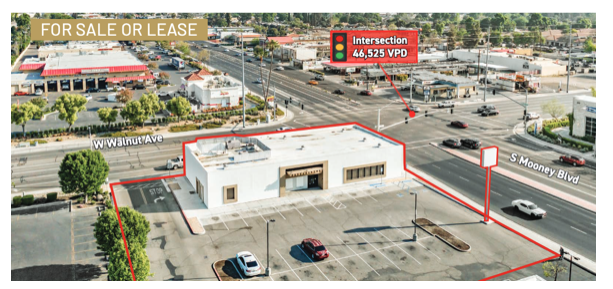
Screen Shot 2023-08-28 at 10.36.39 AMDevelopers on Mooney are looking to lease 6 new storefronts in coming months. At Sequoia Mall owner Dave Paynter has filed plans for three new retail spaces south of Hobby Lobby that are 7,800,4,588 and 4, 193 square feet. Paynter wants to host more national retailers as he rebrands the mall into an open air shopping center. Paynter is likely to rename it to something like Sequoia Commons to reflect the change . None of these spaces -all north of the Barnes and Noble bookstore under construction- have a name attached to them yet.

Further north up Mooney the Orosco Group has decided to divide up the former Union Bank building into three leased spaces at Walnut and Mooney next to the Visalia Mall.

The former bank building is 5800sf. Plans call out two 1440sf spaces for retailers or restaurants and a larger 3200sf space The property has 60 parking spaces it can use. Orosco bought the building for development about a year ago after Union Bank closed in Visalia.

Rally’s Hamburgers plans twin stores on Mooney and Dinuba Highway

Following the trend seen in the past few years Rally’s Hamburgers is wanting to duplicate their planned double drive-thru on Mooney in the fast growing north side of town.

The new location would be on Dinuba Highway at the Riverbend Village shopping center near Riggin. Their So Mooney store has yet to break ground at Visalia Parkway. Both Mooney retailers and fast food eateries have decided to build twin locations south and north ranging from Target and Ross to Panera Bread, In-N-Out and Pollo Loco.

Longtime developer plans Tulare Ave Hot Dog stand

Screen Shot 2023-08-26 at 12.13.11 PMLike the ‘Energizer Bunny’ you can’t slow down 88-year-old Johnny George as he plans his latest project. Johnny made the news recently with his audacious plan to resurrect Mearle’s Drive-In on South Mooney near Mooney’s Grove, and now is promoting a new “All American” Hot Dog stand bringing back footlong dogs.

The new hot dog stand is planned on Tulare Ave in front of Goerge’s sprawling former olive plant property. Johnny has converted the facility into a myriad of leased spaces ranging from office users, a candy distributor and cold storage clients.

Johnny plans to open the new hot dog eatery early next year. He says he came to Visalia when he was just 6 months old and lived in the “Okie Barrio” growing up here. He founded George’s Roofing company.

Co-work spaces in Visalia include Kinwork on E Main

Screen Shot 2023-08-28 at 10.43.49 AMPartners Saegan Moran, Jalisca Thomason and Megan Welker are busy planning a new co-work space called Kinwork at 607 E Main in a former thrift store space on the south side of the street. The 3500sf building will be divided into 8 private offices,3 art studios and a large conference room. The space includes an outside patio out back.

Next door will be a new sandwich shop called Subs & Stuff with Mexican dishes as well.

Seagan, an art instructor at COS says co-work space is becoming more popular particularly among the younger crowd who don’t want a full time office nor do they want to just work from home but want a flexible work space where ”community is really important to them.”

Seagan says the new complex may not open until spring or even summer because of all the construction that is needed. Permits for the work are pending.

Another co-work space is in the works as well on School Street at Johnson on the edge of Downtown. Called “The Nest “ the space includes both co-work space and a community kitchen for would-be chefs. The building is just across the street from the popular indoor soccer facility on Johnson.

California Table Grape Growers Estimate 25 Million Boxes Lost to Hurricane Hilary

-September 1,2023-

SunWorld will exit table grape biz

Fresno, CA – Hurricane Hilary delivered wind and rain to many of California’s table grape vineyards at peak harvest time for most of the 90 varieties grown in the state. The immediate aftermath of the hurricane brought additional rain and humidity to many growing areas, compounding problems and loss. “The impact of the hurricane and its aftermath is devastating and heartbreaking,” said Kathleen Nave, president of the California Table Grape Commission. “To say that the grower and farmworker community is in shock is an understatement.”
With approximately 30 percent of the crop harvested when the hurricane hit, it is projected that 35 percent of the remaining crop – 25 million boxes – has been lost. “The revised estimate for the California crop is 71.9 million 19-pound boxes,” said Nave. “The last time the crop was under 75 million boxes was 1994.”
Noting that it is typical for California to ship over 65 percent of its crop after September 1, Nave said that based on the revised estimate there are still over 45 million boxes of grapes the industry plans to ship. “Reaching consumers at retail stores is a major focus of the work done by the commission,” Nave said. “Partnering with retailers to get grapes on store shelves and to promote them to consumers is work that will continue throughout the season.”
Nave said that retailers understand the damage the storm caused and the many ways that labor costs will increase as a result. “Retailers understand that even with skilled workers it will take more time to harvest much of the remaining crop and that accordingly, to keep grapes on the retail shelves throughout the fall the price paid to growers will need to be enough to make it worthwhile to harvest.”
Nave said the industry plans to continue assessing the situation in the weeks ahead, providing updates as needed, and that the commission will continue its retail promotion activities and consumer advertising campaigns throughout the season.

Pork Price Panic !!!

BACON SCARE STORIES AIMED AT PROP 12

-August 27,2023-

Several financial news outlets are floating stories about the price of bacon blaming California’s Proposition 12 animal welfare rules. “Bacon is about to get even more expensive as wholesale pork belly prices approach record highs.” says a CNBC report this past week following up on a recent Wall St Journal article.

Fortune writes that “Wholesale prices for bacon have nearly tripled this summer” and TheStreet says “ Your Favorite Breakfast Staple May Soon Be Twice as Expensive.”

The apparent freakout over pork prices continues as California’s Proposition 12 rules approved in 2018 finally kick in.

Screen Shot 2023-08-24 at 9.25.49 AM
Target is selling one pound of bacon for $4.39 this week

Here is how the CNBC story reads.”Breakfast lovers who pig out on bacon are finding it’s becoming an expensive proposition, and one onerous state law may be driving prices sky-high.

Currently, wholesale pork belly prices (the main driver of bacon costs) stand at approximately $2.15 per pound. That’s their highest level in the last 12 months.”

California’s Proposition 12 bans the sale of pork from farms that confine pregnant sows in tiny enclosures, and spaces that are less than 24-square-feet.

This part of the law came into effect on July 1, even though other parts of the proposition — which stipulated minimum usable floorspace requirement for breeding pigs and egg-laying hens — were implemented earlier.”

This freak out over pork may well be tied to efforts to overturn Prop 12 in Congress now that the Supreme Court has allowed the law to take effect.The Wall St Journal subheadline tells it all “Wholesale pork-belly prices nearly triple as the state’s animal-welfare measure takes effect.”

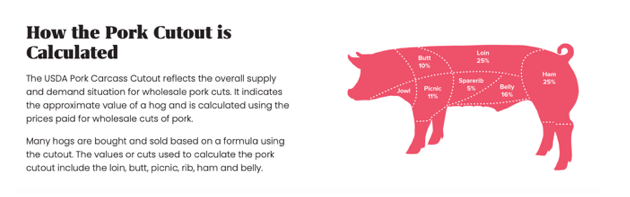
But are pork belly prices-where they get bacon- really up? Pork belly is just one cut from the hog carcass. The entire hog is priced in general as the “pork cutout ” index that includes all the cut pieces.

Screen Shot 2023-08-28 at 8.44.13 AM

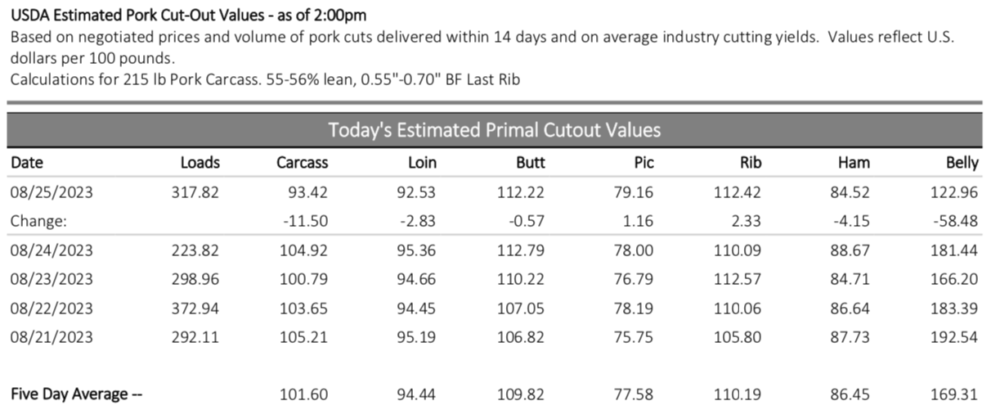
So is the pork cutout price up or down? The industry pork cutout website says it is actually down 4% from a year ago as of Aug 25. Trimmed pork loin is down 8% year over year and hams are 6% lower in price. As for belly- it’s down 20% from a week ago to $1.87 from $2.33.On yearly basis that $1.87 is up 1% from $1.85 on the same date in 2022. And if you want a deal – try St Louis spare ribs – they are down 15% says the pork industry website.

So how do these articles paint a picture of scary sky-high prices?

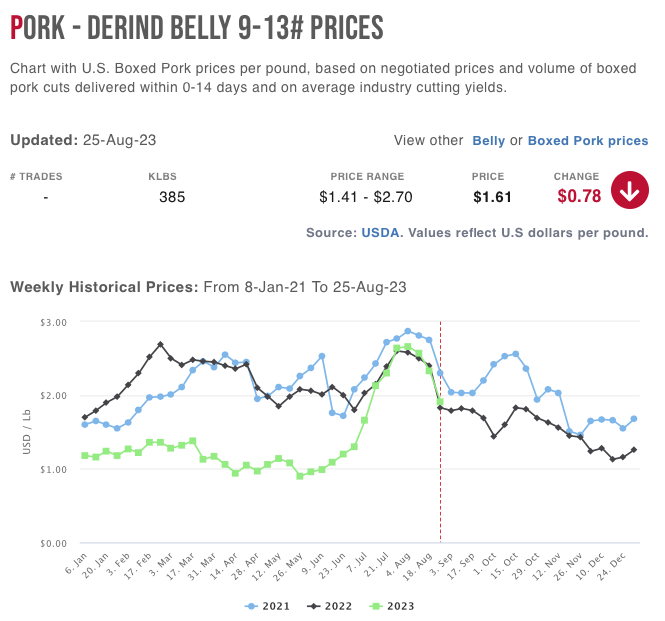
pork belly chartHere is a chart that shows the seasonality of pork prices (Pork Belly Chart) from the meat industry. They are down in the winter and spring and head high in the summer as can be seen in this 3-year chart. Come late June every year, pork prices head up. But by Sept – they fall just as hard.Note the green line that shows prices started up in mid May 2023 from about $1 per pound,historically very low compared to 22′ and 21′ when they were around $2 lb at that same time So of course, on a percent basis, they jumped more this year. They have dropped to $1.61 as of Aug 25 in a matter of days.
Screen Shot 2023-08-26 at 1.49.26 PM
What about pork belly prices that the article claimed were $2.15, highest in a year. That was a few weeks ago. In this USDA chart ,as of Aug 23 they are down 20% to $1.81 and on Aug 25, down to $1.23 following a seasonal swing according to Chart 1 for all cuts including Belly.The 5 day average is $1.69. No doubt this is a volatile commodity.

So when the article says “Pork belly prices rose over 100% year-to-date from 131.59 cents per pound to 270.89 cents at the end of July.” they don’t acknowledge the seasonality of prices or the fact pork belly prices are way down to $1.23 as of Aug 25, per USDA.

Retail prices for pork have declined by 5.0% over the past 12 months, while beef prices are up 6.2% and broiler prices are up 2.0% from June 2022, says one report. So If that bacon cheeseburger is more expensive this summer, it is just as likely you should blame beef prices.

Are bacon prices sky high? One study says retail bacon prices are not so volatile averaging $6.67 so far in 2023. Retail bacon prices averaged $7.31 in 2022- that was the highest annual average price on record.

Let’s talk about the average retail price for bacon instead of pork bellies.Bureau of Labor Statistics says July 2022 shoppers paid an average of $7.41 for one pound of bacon. The price a year later- July 2023 was $6.23. No reason to freak out.

Today a wise shopper can find bacon on sale for a reasonable price. This week Target is selling one pound of bacon for $4.39, similar to Ralphs.

YahooNews reported this week that “For now, shoppers can find bargains. Prices for bacon and related products fell nearly 11% in July from a year earlier, the largest drop since 2015, according to Bureau of Labor Statistics data released Thursday. Milk fell the most in five years while eggs costs declined further, easing what has been the worst food inflation in decades.”

Screen Shot 2023-08-25 at 6.57.03 AM

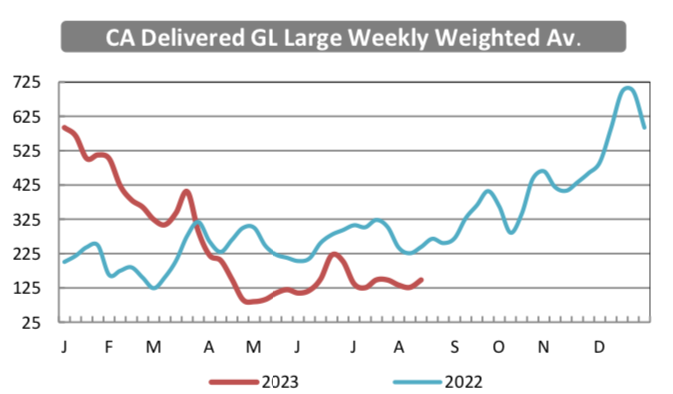
Graph:  Wholesale egg prices in California about half what they were year ago.

These same critics blamed California for high egg prices too. Today egg prices nationwide and even in California are cheap – $2.99 at Trader Joes.

The bottom line – your breakfast is getting cheaper.

The U.S. Supreme Court has ruled that California’s Prop 12 legislation will hold, it became law starting July 1, 2023. Prop 12 was voted into law in 2018. Compliance will be self-certified until the end of the year.

In May the WSJ reported US pig farmers “after years of rapid expansion” left “the $54 billion U.S. pork industry oversupplied” even as demand wanes.

Blue Shield of California is teaming up with Mark Cuban’s Cost Plus Drug Company and Amazon

from CNBC

Pharmacy — turning away from traditional drug store chains and ditching in part health giant CVS
— in a move to save on drug costs for its 4.8 million members.

Screen Shot 2023-08-17 at 8.02.32 AMThe CEO of the nonprofit health insurer, which spent over $3 billion on member prescriptions in 2022, calls the move a major milestone in its efforts to move toward a value-based model for pharmacy care.

“I expect we’re going to — when this ramps up completely — we’re going to be saving $500 million a year,” said Paul Markovich, CEO of Blue Shield of California. “So, this is a very significant reduction in cost that we ultimately, as a nonprofit that caps our income, will be putting back into our premiums.”

The health insurer will continue to use CVS Caremark
for specialty drugs to provide prescriptions and services for patients with complex conditions, but the online pharmacies will provide services for the rest.

Shares of CVS fell about 6% in early trading Thursday.

CVS Health has been Blue Shield’s pharmacy benefits partner for more than 15 years. Analysts at Evercore ISI estimate that specialty drugs represent roughly 50% of Blue Shield’s pharmacy costs.

“Helping customers achieve common goals is one of the many ways we provide value to health plans of all shapes and sizes,” said Michael DeAngelis, a spokesman for CVS Health in a statement. “We look forward to providing care for Blue Shield of California’s members who require complex, specialty medications – as we have for nearly two decades.”

Amazon Pharmacy, which launched a $35 per month insulin program this week, will provide what the companies are calling up-front pricing, free delivery and round the clock access to pharmacists through its online services.

For Cost Plus, which sells drugs at 15% above wholesale prices, California Blue Shield is only the second insurer to sign with the online pharmacy since it launched in January 2022. Capital Blue Cross based in Harrisburg, Pennsylvania, with 1 million members, signed with Cuban’s venture last fall.

“It takes time. There are a lot of bad habits they need to break,” said Cuban, Cost Plus co-founder, about the challenges of contracting with health insurance plans, which are often called payers.

“I think all payers realize that now that Cost Plus has made the price of medications transparent. Providers and patients can see what prices should be, and the entire industry will have to adjust,” Cuban said. “Other than the big three [health insurers] we will be in discussions with all other payers.”

For Blue Shield of California the transition to Cost Plus and Amazon will begin with its own workers in 2024, before being introduced to members, to ensure that the online pharmacies will have the scale to meet its members needs.

“We’re talking about life saving drugs, in many cases for people. So, making sure we get it right is important. And that’s why you need a lot of lead time,” Markovich said.

The health insurer expects to launch the program for its members in 2025.