Lower corn prices good news for livestock industry

-August 7,2023-

Both diary and hog producers are having a tough year mired in red ink. So any help on the feed side is good news for both. This week corn prices plummeted on good crop reports and poor export prospects. That may not be the best news for corn producers but it’s fine with dairy operators who are suffering this summer with milk prices far below the cost of production. USDA announced the July Class III price at $13.77 recently. Last summer dairymen were celebrating $25 per cwt milk prices.

Lower feed costs would be welcome by hog producers as well.Hoard’s reports that “THE PORK INDUSTRY IS HEMORRHAGING MONEY as hog farmers are losing $30 to $80 per head. On July 5, August lean hogs traded at 97 cents per pound and December contracts were a paltry 75 cents.”

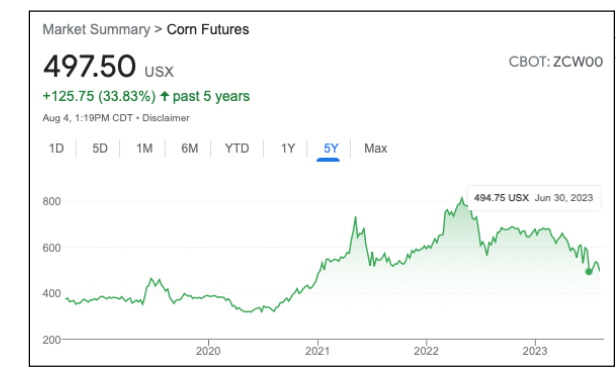
Corn prices reached $8 a bushel last summer but now are down to $4.82 as of the latest market report.California imports all their corn from the Midwest on 100-car unit trains.Feed costs are typically half the cost of producing milk.

Screen Shot 2023-08-07 at 1.50.21 PM

This week corn futures declined down to the $4.8 per bushel level in August, approaching the two-year low of $4.76 touched on July 12th amid the outlook of strong supplies for key producers and exporters. Forecasts of cooler temperatures and favorable chances of rain in growing regions of the United States pared recent threats to American corn from droughts in Midwest farms, improving the outlook on yields.

USDA has had hand in this. One analyst notes that before June 30, traders thought farmers had planted 91.85 million acres of corn. Then the USDA told us the number was 94.10.  That’s 2.4% more corn than expected. To sell that extra corn, the price needed to drop.

These lower prices not only help the livestock industry. Consumers too have been looking for lower food costs and corn is key input in so many foods

If you want a a good price on pork items-try spareribs where the wholesale price is down 30% from a year ago according to the the pork checkoff program.

Why are frozen vegetable prices so high? Blame war, fewer immigrants and California weather, say economists

Screen Shot 2023-07-20 at 8.31.27 AMFrozen vegetable prices are up 18%, on average, over the past year, according to the consumer price index for June 2023.

CNBC

July 20,2023-

-That increase is larger than all other groceries, and six times the 3% average for all consumer goods and services.

-Heavy precipitation in California — the largest U.S. vegetable producer — flooded farmland and reduced crop supply, economists said.

-Higher costs for cold storage and ripple effects on food prices from the war in Ukraine have also played a role. Immigration trends among Mexican farm laborers have also put upward pressure on labor costs, said economists.

India to remove retaliatory tariffs on almonds, walnuts

-July. 12,2023-

CFB

Screen Shot 2023-07-12 at 8.17.20 AMIndia’s agreement to remove retaliatory tariffs on some U.S. farm products is seen as a positive development, but with some trade impacts remaining, farmers and agricultural exporters say it may take time to regain market share.

Under a deal reached June 21 between the U.S. and Indian governments, the South Asian nation will drop additional duties on American almonds, walnuts, apples, chickpeas and lentils. The duties, to be lifted within 90 days of the agreement, were imposed in retaliation for U.S. tariffs on steel and aluminum imports implemented by the Trump administration in 2018.

Tariffs on American goods increase the price that importers pay, making U.S. products less competitive. The higher value of the dollar also has hurt U.S. exporters. With grower prices for almonds and walnuts on a downward trend in recent years, India’s repeal of the retaliatory tariffs would provide U.S. exporters improved access to a key market, industry people say.

India remains a top export destination for California agricultural products, including tree nuts, cotton, dairy and processing tomatoes, with total export value reaching nearly $1 billion in 2020, according to the California Department of Food and Agriculture.

“It has shown amazing growth over the last 10 years, and now it’s way in front in terms of being our No. 1 export market,” said Richard Waycott, president and CEO of the Almond Board of California.

Valued at $854 million in 2021, almond exports to India represent 46% of all U.S. agricultural exports, according to the almond board.

With the recent agreement, tariffs will drop from 42 Indian rupees per kilogram to 35 rupees per kilo for in-shell almonds. A rupee is worth $0.0121, meaning that the in-shell almond tariff will drop by 10 cents. For almond kernels, tariffs will drop from 120 rupees per kilo to 100 rupees per kilo.

Due to the higher existing tariff rates on kernels, India imports almost 100% in-shell almonds, Waycott noted.

He said though he’s pleased tariffs have come down for U.S. almonds, California farmers and shippers of the nut remain “at quite a disadvantage” to Australia, which signed a bilateral trade agreement with India that cuts tariff rates in half.

Instead of paying the current 35 rupees per kilo, for example, importers pay 17 and a half rupees per kilo for Australian in-shell almonds. With the tariff reduction, Waycott said Australian almond shipments to India have increased.

The Golden State remains the world’s largest almond producer, accounting for more than 80% of global supplies. That means there aren’t too many places India could turn to for almonds, and India will “continue to be a customer of ours regardless of the tariffs,” Waycott said.

California almond exports to India rose despite the retaliatory tariffs, the almond board reported. But with the Australia-India trade deal, it has allowed almonds from Down Under to enter India with a larger market share than they’ve had, Waycott added.

“That is a very discouraging phenomenon,” he said, considering “a lot of California grower dollars” have gone into building the India market during the past 30 years. What the industry needs, Waycott said, is “something much larger,” such as a U.S.-India bilateral agreement, “to put us on an even footing with Australia.”

But he noted the U.S. government currently “is not interested in forging those.”

Don Barton, president of GoldRiver Orchards, a walnut grower, processor and shipper in San Joaquin County, described elimination of the 20% retaliatory tariff on U.S. in-shell walnuts as “a huge lift” for those in the walnut business. He said it will now allow California growers and exporters of the nut to “compete on a level playing field with Chile,” the world’s third-largest walnut producer and one of the state’s biggest competitors in export markets.

Chileans, Barton noted, have “taken full advantage of the lower tariff they were operating under” since 2018, when India imposed the retaliatory tariffs on U.S. walnuts. Indian buyers like Chilean walnuts, he said, and Chile will “have a leg up on California for the foreseeable future, even with the removal of the retaliatory tariff.”

Robert Verloop, CEO of the California Walnut Commission, said many factors besides trade tariffs during the past few years “created a very challenging global marketplace” that affected sales and distribution of California walnuts to India, resulting in lower grower returns.

Those impacts include pandemic-induced supply chain and transportation disruptions, overstocked supply pipelines, global economic downturn, inflationary pressures, high dollar values, and persistent drought and heat that damaged the 2022-23 crop.

He said he expects the tariff reduction “will allow for more equitable access to the India market.” Plus, with the current California walnut crop looking “outstanding” and the economy growing globally and in India, he said “we hope to see demand and moderate shipment volumes to start improving immediately.”

For GoldRiver Orchards, Barton said lifting the tariff will certainly help in the long term. More immediately, impact of the change will be “minimal,” he said, because “our trade contacts in India will have to be rebuilt after a five-year hiatus due to the tariff trade barrier.”

“This will take some time,” Barton said, adding that although he anticipates doing some business in India during the 2023-24 crop year, “it will likely take another two to three years beyond this one to fully rebuild our presence in India.”

Even though California ships virtually no apples to India, withdrawal of the 20% retaliatory tariff on U.S. apples was a welcome change, said Todd Sanders, executive director of the California Apple Commission.

Nearly one-third of the nation’s apple crop goes to foreign markets, with exports valued at about $1 billion, according to the U.S. Apple Association. Prior to 2018, India was the No. 2 export market for U.S. apples—and quickly growing.

When India retaliated by bringing total tariffs on U.S. apples to 70%, sales fell to nearly zero, costing U.S. growers half a billion dollars in sales, the association said.

Most U.S. apple exports are shipped from the Pacific Northwest, and when the retaliatory tariffs “essentially vaporized” the India market, Sanders said it created a “trickle-down effect on every other state.”

“Those apples that would have normally gone to India now needed a new home, which led to the displacement of our apples,” he said.

The tariff change means more accessible markets, Sanders said, which will take pressure off the domestic market and international markets closer to the U.S., namely Mexico and Canada.

He said the commission and other apple organizations around the U.S. have been working with Congress and the Biden administration to reduce tariffs, and “we applaud the result.”

(Ching Lee is an assistant editor of Ag Alert. She may be contacted at clee@cfbf.com.)

Valley cotton acreage detailed


Screen Shot 2023-07-05 at 6.57.13 AMCotton mapping for the San Joaquin Valley by CDFA was completed the week of June 1, 2023 confirming lower planting estimates in each county.

The current total mapped acreage for the SJV is 93,229 acres (down from 125,449 acres in 2022). The breakdown of cotton acreage is 30,799 acres in Fresno County (down from 34,290 acres in 2022), 7,226 acres in Kern County (down from 9,591 acres in 2022), 34,701 acres in Kings County (down from 46,988 acres in 2022), 18,875 acres in Merced County (down from 29,113 acres in 2022), 86 acres in Madera County (down from 254 acres in 2022), and 1,542 acres in Tulare County (down from 5,213 acres in 2022)


Wet winter brings lower alfalfa prices

January 28,2023-Screen Shot 2023-06-28 at 9.12.36 AM

CFB

Thanks to more rain this year, supplies of alfalfa hay and other forages in the state have rebounded, with prices falling after climbing to record-high levels last year.

Hay growers say dairy and livestock producers are in no rush to buy much hay right now, as pastures are still flushed with grass for grazing and the price of other feeds has also dropped. What’s more, some operations need less hay because they have fewer mouths to feed after the drought forced them to reduce their herds.

“There’s nothing to eat all this food that we’ve got, and we’ve just got a glut of it right now,” said Imperial County grower Ed Hale.

That’s a complete turnaround from the past two years, when lack of rain, poor crop yields and less hay being grown diminished availability of the forage. The hay shortage forced dairy farmers and livestock ranchers to look for supplies much farther away, driving up hauling costs.

With so much rain this year, there’s “massive amounts” of all forages—not just alfalfa hay but grass hays, grain hays and silages, Hale said. This is despite a decline in state acreage of all harvested hay, estimated at 790,000 this year, down from 830,000 acres in 2022 and 2021, according to the U.S. Department of Agriculture. Alfalfa hay acreage reached 450,000 last year. That’s compared to 500,000 acres in 2021 and 475,000 acres in 2020.

Growers in the Imperial Valley harvest alfalfa hay virtually year-round, and Hale said he’s in his sixth cutting of the year. Cooler temperatures have lengthened the season for growing higher-quality hay that dairies and export markets buy, he said. Normally by this time of year, the desert region would be cutting lower-cost hay more suited for dry cows and feedlots.

Being able to sell higher-end hay has helped Imperial Valley growers up until about a month ago, when prices began falling about $30 a ton every week, Hale said. Before that, a Saudi Arabia dairy company had been buying “the vast majority of our best hay and held up the market.”

Locally, California dairy farmers have mostly been buying “hand to mouth” lately due to plummeting milk prices, he noted. Other big export markets such as China and Japan also have backed off—China because it “overbought” last year and still has enough supply, and Japan because the stronger dollar makes American hay more expensive.

The region’s best hay is now going for about $220 a ton, which Hale said is about break-even for growers. That’s compared to an all-time high of nearly $400 a ton last year. With the price drop, he said, “you have to make a decision: Are you going to stack some hay up and just hold it until wintertime when there isn’t any around and sell it then?”

That cash flow is tight on dairies hurts the hay market, said Rick Staas, president and CEO of the San Joaquin Valley Hay Growers Association. Dairies account for about 80% of the cooperative’s sales, with the rest going to beef cattle ranchers and horse owners.

Most growers in the San Joaquin Valley are on their second cutting, but harvest is about six weeks later than last year, Staas said. Usually, the association’s larger dairy customers “load up heavily” at the beginning of the season, he said, as the first two cuttings are the highest dairy-quality hay, which has the nutrients milking cows need. There’s a limited supply of this hay, but dairies have been slow to buy it as they wait for prices to bottom out, he said.

“Even the top end is sluggish because the dairy industry is struggling with their prices,” Staas said.

Afraid that 2023 would be another dry year, he said a lot of his dairy customers bought more hay than normal last year and have “plenty of inventory.” Many of them also grow almonds, the market of which “is not fantastic right now either,” he said, so they’re hurting on both sides of their business. In addition, the price of almond hulls, which dairies use as part of their feed ration, has come down. The byproduct competes with lesser-quality hay fed to dry cows, and “at these very cheap prices,” it hurts the lower-end alfalfa market, Staas said.

In Siskiyou County, grower Brandon Fawaz said hay farmers continue to fight “little rainstorms” that have resulted in “an abundance of off-quality hay.” He’s on his first cutting, with more rain in the forecast, which he said will slow harvest.

“Good winter rain and snowpack is good for the aquifer, which we need to irrigate. But once it’s time to farm and make hay, it needs to be dry, and we’re not right now,” he said.

With softening of the hay market and rain impacting harvest, Fawaz described his outlook for the crop as pessimistic. Local demand for alfalfa hay is down, he said, because many cattle ranchers in the region downsized their herds.

There’s also a surplus of grain-type hay in the state because some growers were uncertain about what their water availability would be, so they planted crops such as wheat and oats. Cereal-grain hay, he noted, can be used to supplement higher-quality alfalfa hay in beef cattle and dairy rations.

Despite his outlook, Fawaz said he’s “not convinced our price is going to be low the whole year.” For beef producers at least, cattle prices remain strong, he pointed out.

But even as walnuts and almonds face price challenges, Fawaz and Staas said they don’t expect too many farmers will replace their orchards with alfalfa. With water so tight, Staas said he thinks alfalfa acreage will continue to decline, and that means “we’ll have to continue to bring hay in from other states.”

Yolo County grower Tim Heidrick, who sells hay to mostly customers with cattle and horses, acknowledged the current hay market has been “the worst one we’ve seen in a couple of years.” Even so, he said his farm is getting ready to plant new alfalfa fields this year and next year because “we’re seeing that we have the water this year, and hopefully it leads to the climate going back to a wet pattern.”

He noted alfalfa has been profitable, but lack of water to irrigate the crop forced the farm in recent years to stretch supplies by planting less lucrative grass hay in older alfalfa fields. The farm has tree crops also, and with the drop in walnut and almond prices, he said “I would bet more on planting alfalfa and making a go of it than the nuts.”

He added, “I think the alfalfa hay market for the most part will be all right down the road.”

(Ching Lee is an assistant editor of Ag Alert. She may be contacted at clee@cfbf.com.)
Kings crops under pressure

-June 28,2023-

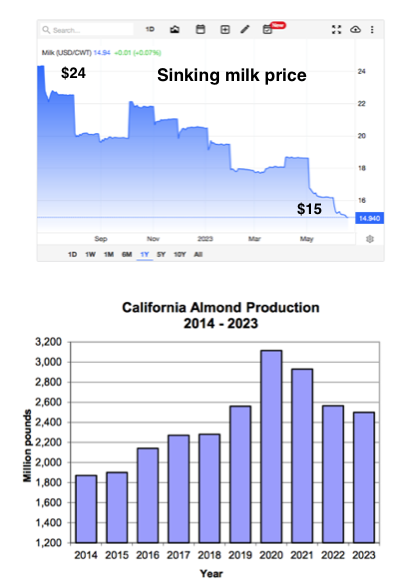
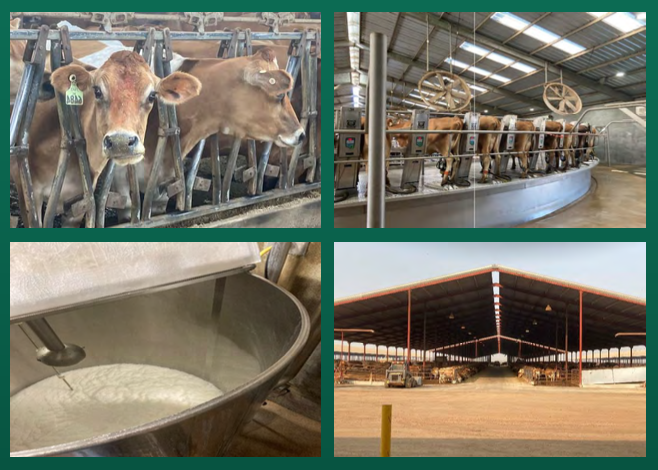
Screen Shot 2023-06-18 at 9.46.33 AMA number of Kings County’s top crops are under price and production pressure this summer. Familiar crops include cotton, processing tomatoes and numero uno – milk. The most important farm commodity here, milk- is a case in point with the price down over 38% in this past year – below $15 per cwt currently after dairymen enjoyed a price level of over $24 last summer. Trade group California Milk Producers advise that “ Dairy producers are bracing themselves for a very small May milk check.” An oversupply of products from cheese to powdered milk is the number one factor. Farmers are reducing the size of their herds in what will be a self correcting way to increase prices down the road.
Milk is not the only Kings County problem.

Almonds face a $2 billion decline in value, says a mid-May USDA report.

USDA released a forecast for 2023 California almond production reporting expected production at 2.50 billion pounds, 3% below last year’s final production of 2.57 billion pounds even though almond bearing acres stand at 1,380,000, 2% above the 2021 bearing acreage of 1,350,000.

The forecast notes that yield at 1,810 pounds per acre is down 90 pounds from last year, and the lowest since 2005.

USADA predicts the value of the almond crop- the state’s number three crop- will be just $3.5 billion – down from $5.3 billion the year before and over $6 billion in 2019.

USDA says the almond bloom began in the middle of February and peaked at the end of the month. Record level rainfall and unprecedented stormy conditions impacted pollination. Limited bee flight hours were reported in all growing regions. There were reports of downed trees due to high winds and oversaturated soil. Yields are expected to be the lowest in years, with variation observed across varieties and orchard locations.

Colder than normal temperatures continued through March and April, resulting in a delayed crop. Farmers are still evaluating their orchards for signs of disease and applying fertilizer and pest treatments as needed. Water availability is not a major concern this year.

Tomatoes getting squeezed

Then there is the situation with processing tomatoes this year. A May 30 USDA estimate says Kings County will have only 17,600 acres harvested this summer compared to 28,000 acres the year before as flooding will reduce the size of the local crop by almost a third.The state crop overall will not be impacted so much asrothe counties are picking up there slack with Fresno County’s production expected to jump from 50,000 acres in 2022 to 62,000 this year. But local growers have been hit hard.

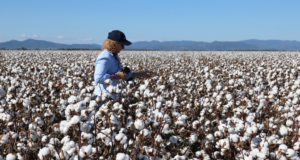
Of course cotton growers are also being hit this year with the lakebed flooded. Exact numbers are not available but it is expected to be the smallest number of cotton acres in years. Tulare Lake is said to have peaked at 182 square miles – similar in size to Lake Tahoe.

Cotton growers nationwide have been whipsawed in the past year buoyed by expected high prices planting double what they ended up harvesting in 2022 after prices dropped by half.

Tulare County dairy emissions fell 3% in a year and 19% less than 2013

-May 10.2023-

With a settlement agreement with the Sierra Club over a decade ago Tulare County has been implementing a plan to cut dairy emissions here in the biggest milk production county in the nation. The latest annual report published in late March details local dairy efforts in 2021 with financial help from CDFA.

It also evaluates the voluntary GHG emission reduction projects implemented at dairies and feedlots since 2013. The GHG inventory and evaluation of emission reductions were prepared pursuant to the 2019 Stipulated Settlement, entered into by the Sierra Club, Association of Irritated Residents, Center for Biological Diversity, and County of Tulare.

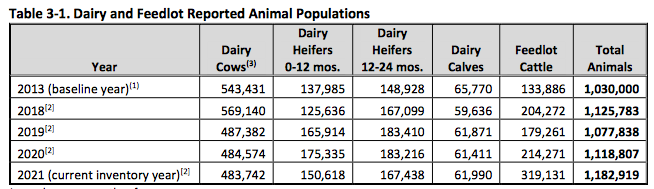
Screen Shot 2023-05-03 at 4.19.14 PMIn 2021, the overall operation of County dairies and feedlots and their support crops produced an estimated 6,052,979 metric tons of carbon dioxide equivalent (CO2e) GHG emissions. This quantity was 19 percent less than the 2013 baseline year emissions and 3 percent less than the previous inventory year (2020) emissions.
The reduction in emissions from 2020 to 2021 was primarily associated with implementation of additional digester project. that capture methane emissions.

The voluntary emission reduction projects operating at County dairies and feedlots in 2021 included 70 solar panel projects, 11 solar thermal hot water systems, 38 digester projects, and 8 Alternative Manure Management Program (AMMP) projects. These projects provided 592,131 metric tons of CO2e reductions in calendar year 2021. These reductions constituted 56 percent of the annual emission reductions needed to achieve the Dairy and Feedlot Climate Action Plan (Dairy CAP) target by 2023. To meet the target, County dairies and feedlots will need to reduce emissions by an additional 457,869 metric tons per year by the end of 2023.

At the time of this study, the known additional projects scheduled for post-2021 start-up would provide further reductions of up to 418,796 metric tons of CO2e per year when operational. This leaves only 39,073 metric tons per year of emission reductions needed from yet-to-be identified solar, digester, AMMP, or enteric projects to reach the Dairy CAP target.

In 2021, manure management operations at County dairies and feedlots produced an estimated 4,902,137 metric tons of methane CO2e emissions. This emissions quantity was 15 percent below 2013 levels.

To meet the Senate Bill 1383 target, County dairies and feedlots will need to further reduce methane CO2e emissions by an additional 1,432,137 metric tons per year by 2030. At the time of this study, the known additional projects scheduled for post-2021 start-up would provide further methane CO2e reductions of up to 414,991 metric tons per year when operational. This leaves another 1,017,146 metric tons per year of methane CO2e reductions needed from yet-to-be identified digester, AMMP, or enteric projects by 2030. Changes to the animal population would also affect emissions.The latest figures show the total cattle population of the county is climbing.

More progress needed

Screen Shot 2023-05-08 at 1.52.33 PMAlthough County dairies and feedlots have made significant progress in reducing their GHG emissions, additional reduction projects will be needed by 2023 and 2030 to meet the Dairy CAP and SB 1383 targets. The County will continue to track and regulate dairies and feedlots through its Animal Confinement Facilities Plan (ACFP) framework. Continued State and federal incentive funding will be necessary to make additional emission reduction projects economically feasible for the dairy industry.
Kings cotton acreage to fall big

Lakebed is historic home to King Cotton

-May 10,2023-

“We are looking at the lowest level of cotton acreage on record this year” predicts Roger Isom, president and CEO of the California Cotton Ginners and Growers Association.

For Kings County, typically the top producer in the state, it is hard to come up with an estimate he shrugs. More land is being flooded and the cold weather this spring put a crimp the planting of upland cotton by mid-April and now Pima by mid-May

Isom notes that growers have traditionally grown “a lot of cotton in the Tulare Lake bottom,” and with much of it being flooded “there will be no cotton there this year.”

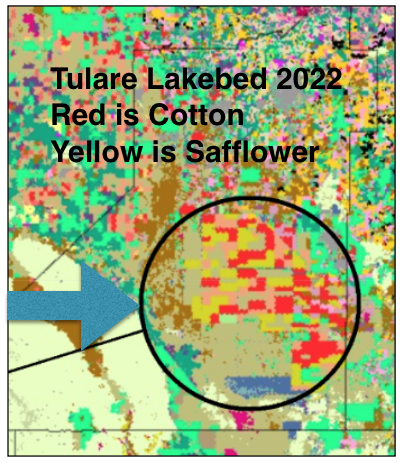
Screen Shot 2023-05-07 at 3.10.16 PMIndeed satellite landscape images published by UC Davis’ Arron Smith show how much cotton was grown just last year in the Tulare lakebed in this image colored red for cotton fields.
The lakebed historically has been drained but in very wet years like this – it returns to miles of inland sea -also ending grower’s plans.

The lakebed flooded in 1969, 1983, and 1997 and now 2023. Farmers may have to give up planting here not just this year but next or even in 2025.

We see a similar bearish viewpoint around the US cotton belt. A National Cotton Producers estimate in February predicted upland cotton plantings will be down around 17% and in California by 43.3% – an estimate done before the big floods.

USDA’s March Prospective Plantings Report indicates U.S. producers intend to plant 11.3 million cotton acres in 2023, down 18.2% from the previous year. Upland area is projected to be 11.1 million acres, down 18.2% from 2022 while extra-long staple (ELS)or Pima area is projected at 154,000 acres, a 15.8% decrease.

That report says California pima acres will be down to 90,000 and upland just 15,000 acres.

Upland prices are around 83 cents a pound.California farmers planted 116,000 acres of pima last year.The current price is about $3.50/lb.

In February Isom noted” Competition for ground with processing tomatoes may also shrink cotton acreage. Canners in January agreed to pay growers a contract price of $138 per ton for tomatoes; that’s 31.4% more than last year’s price.”

Tomatoes are soggy too

But Westside tomato growers are also facing soggy ground for their crop according to published reports.”With soil still too wet for planting, farmers postponed the season’s start by three weeks, which could translate into a shortage of tomato-based items this summer, according to individual farmers and the California Tomato Growers Association”

“Flooding also delayed planting for fresh vegetables, which could lead to a national shortage of lettuce, brussel sprouts and artichokes, said Ryan Jacobsen, the CEO of the Fresno County Farm Bureau, a nonprofit group that promotes and protects agriculture.”

While Kings County growers worried just a few months ago about too little water now they find the ground is too wet to plant.

The UC Davis’s Arron Smith survey suggests the lakebed had over 50,000 acres of cotton planted last year. This year could be dramatically less.

“I doubt we hit 100,000 acres this year,” Isom predicted, referring to statewide cotton acreage.There were 132,000 acres in the ground last year.California cotton plantings reached a peak in the late 70s and early 80s, when an amazing 1.4 to 1.6 million acres were harvested each year.

Acreage in 2022 for both Pima and upland cotton is Kings County, with 42,638 acres of Pima and 4,350 acres of upland cotton.County cotton growing land added up to 51,260 acres in 2015.That compares to around 75,000 acres in 2014, 103,000 acres in 2013, 133,000 in 2011 and just about fence-row-to-fence-row at 287,000 acres planted back in 1979.

California’s production of ELS or Pima cotton represents over 90% of the total U.S. Pima cotton production. Production of upland types in the state represents about 4% of U.S. annual production on average.

In 1963, there were 299 active cotton gins in California, the highest ever. In 2011 there were 30 active gins, and now 24. Roger Isom says the industry lost another gin in the Sacramento area in the past year.

:graphic courtesy UC Davis Arron Smith

California’s almond acreage drops with price

Local growers hit the brakes

-April29,2023-

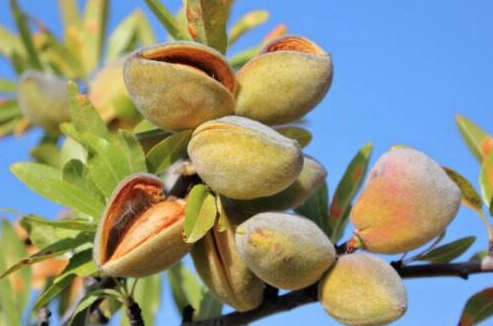
Screen Shot 2023-04-27 at 4.45.05 PMUSDA reports this week that California’s 2022 almond acreage is estimated at 1,630,000 acres, 1.2% lower than the 2021 acreage of 1,650,000.The drop comes in as a result of a 15% decline in new plantings of California’s number one nut tree paralleling lower grower prices in the past few years
California’s almond acreage decreased for the first time in more than a quarter century, notes the Almond Board of California.

Of the total acreage for 2022, 1,350,000 acres were bearing, 2.3% above 2021, and 280,000 acres were non-bearing, down 15.2% from 2021. Preliminary bearing acreage for 2023 is estimated at 1,380,000 acres.

Fresno, Kern, Stanislaus, Merced and Madera were the leading counties. These five counties accounted for 75% of the total bearing acreage.

Fresno/Tulare/Kings slowdown

A closer look at the numbers locally show that Fresno County almond growers went on a planting spree from 2014 to 2018 planting in excess of 14,000 acres yearly over the time.But in 2022 growers hit the brakes – planting just 1,800 acres.

Tulare County growers planted over 3400 acres in 2018 but last year planted just 176 acres of almonds, says the report.A similar trend was seen in Kings County where growers planted about 3500 acres in 2015 but were down to 73 new acres in 2021 and 225 in 2022.

USDA says farmers enjoyed prices in the $3 to $4 range in 2014 and 2015 but dropping to about $1.70 per pound in 2021.Most recently prices are being quoted about $1.50 per pound.

One attachment
• Scanned by Gmail

Kings River runoff trends higher

-Aprl 28,2023-

Forecasts call for snowmelt runoff of 3.2 million acre-feet down the Kings River this season.Here are some bullet points: courtesy Kings River Water Assn (KRWA).

— Pine Flat storage is just over 437,000 a.f. With higher inflow, the rate of the reservoir’s storage decrease has been reduced to 5,000 a.f. over the past 24 hours. (For the past few weeks storage has been declining about 10,000 a.f. a day because of the Corps of Engineers’ flood release and much lower inflow.) Present storage is less than 44% of capacity.

KRWA expects inflow during this first brief hot weather surge to increase to between 15,000-18,000 c.f.s. by Sunday and/or Monday.

— Inflow to Pine Flat is expected to drop next week with a return of colder weather in the mountains and even some snowfall.

— In the longer term, inflows to Pine Flat are expected to be in excess of releases for about 60 days, meaning the reservoir’s storage will be increasing during that period.

Screen Shot 2023-04-28 at 11.35.16 AM
— Releases from Pine Flat for the past 24 hours have been just over 13,000 c.f.s. More than 7,000 c.f.s. of that is flood release water with targets of 4,750 c.f.s.to the North Fork-James Bypass and 2,500 c.f.s. to the South Fork system and Tulare Lake. Total flood release is 7,250 c.f.s.

— The flow in the Kingsburg area at Highway 99 was increased a few days ago (with greater downstream irrigation demand) to about 10,200 c.f.s.

— Increased releases are expected over the next few days, with 800-900 c.f.s. expected to be ordered and diverted (above present irrigation demands) by the upper river units above Centerville, Fresno County; and about 400 c.f.s. as far west as Army and Island weirs, north of Lemoore. These increased water demands from the 28 member water agencies along the river may increase Pine Flat releases up to about 14,500 c.f.s.

–KRWA and PG&E are taking May 1 snow surveys Friday.

Watermaster Steve Haugen says the KRWA is “encouraged by where we’re at.”