UC Corn Crop Lower / California Raisin Crop To Fall 13%

Growers Expect to Produce 13 Percent Less Corn than Last Year
Washington, Aug. 10, 2012 – Affected by one of the worst droughts on record, U.S. corn growers are forecast to harvest 87.4 million acres in 2012, down 2 percent from June estimates, according to the Crop Production report released today by the U.S. Department of Agriculture’s National Agricultural Statistics Service.
The lower estimates “was about what was expected” say grain buyer for JD Heiskell Josh Dejung of Tulare. Investors had bid up corn to 8.35 a bushel, with fears of $9 corn looming, before the USDA announcement but afterwards the price  for September corn fell 14 cents after as did December corn that fell to $8.10 a bushel.
USDA says the 2012 growing season began on a very optimistic note for growers, with the fastest corn planting pace on record. The growers’ optimism waned, however, when the warm spring was followed by a very dry summer, developing into a drought throughout most of the Corn Belt states. Despite planting the largest number of acres to corn in the past 75 years, growers are forecast to produce 10.8 billion bushels in 2012, down 13 percent from 2011. Based on conditions as of August 1, corn yields are expected to average 123.4 bushels per acre, down 23.8 bushels from last year.
Just as with corn producers, soybean growers are greatly affected by the drought conditions in the United States. This year’s soybean production is forecast at 2.69 billion bushels, down 12 percent from 2011. Soybean yield is expected to average 36.1 bushels per acre, down 5.4 bushels from the 2011 crop.
In contrast to corn and soybeans, all wheat production remains largely unaffected by the drought and is forecast at 2.27 billion bushels, up 13 percent from 2011. Based on August 1 conditions, the yield for all wheat is forecast at 46.5 bushes per acre, up 0.9 bushel from last month, and up 2.8 bushels up from last year. Harvest in the 18 major producing states was 85 percent complete by July 29.

RAISIN CROP DOWN 13.4 Percent
USDA says the California raisin-type variety grape forecast is 1,900 million tons, down 13.4 percent from the 2011 final production. Based on the
objective measurement survey, bunches per vine totaled 29.1 compared to 38.7 recorded in 2011. Acreage of bearing age is 205,000.
The 2012 California raisin-type grape crop is shaping up to be the smallest crop since 2006. Some growers reported spring frost
damage. Dry, warm summer weather conditions have been good for crop development. Mildew pressure was low. The crop is a few
days ahead of normal, and significantly ahead of last year’s delayed crop. The forecast is based on the results of the Raisin Grape
Objective Measurement (O.M.) Survey conducted in July. The Raisin Administrative Committee provided funding for the 2012 Raisin


USDA says California’s Total Farm Production Expenditures totaled
$31.2 billion in 2011, up 3.2 percent from the 2010 estimate of
$30.2 billion. California had the largest percentage of the U.S.
total at 9.8 percent.
Expense items showing the largest increases from the previous year were: Feed, up $640 million;Fertilizer, Lime and Soil Conditioners, up $290 million; and Livestock, Poultry and Related Expenses, up $220 million;The three largest decreases occurred in: Labor, down $390
million from 2010; Interest, down $260 million; and Farm
Services, down $240 million.

Expenditures per California farm averaged $382,699 in 2011,
compared with $369,767 in 2010. On average, California
producers spent the most per farm on Labor at $93,620, Farm
Services at $66,871 and Feed at $62,209.

The Big Squeeze: Valley Juice Makers Adding Capacity

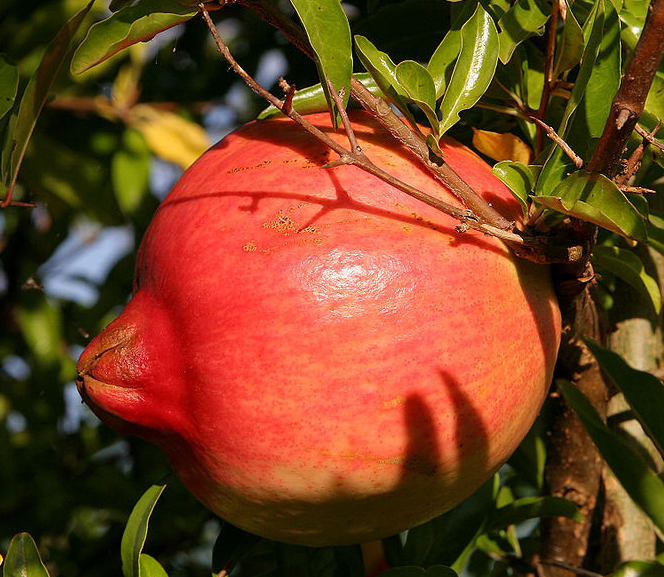
pomegranates are big money

If you want to compete in the increasingly crowded,health-conscious juice business,you better consider setting up shop near the source,in the US fruit basket called the San Joaquin Valley.
That’s what some of the biggest food makers in the world are doing,expanding existing operations,starting up new plants, joint venturing and buying into what has become a $27 billion industry.
For farmers this is good news, selling a piece of fruit that otherwise had a shelf life of a few weeks ,sometimes taking former culls,or what was cattle feed or a waste product – now transformed into premium priced juice or other byproduct in high demand.
It started with those Santa Cruz hippie-types led by Greg Steltenpohl  in 1980 who juiced fruit out of the back of their VW van and named their smoothie Odwalla for a character in a poem with the lofty goal to “help humans break free from the dull mass of over-processed foods so prevalent today.”
Amen,brother.
Odwalla now is no back yard operation.Owned by beverage giant Coca-Cola they supply the nation with refrigerated fruit smoothies from one production plant in Dinuba California, the tree fruit and grape capital of the state.
This month Odwalla announced more organic offerings with three new flavors – each with USDA seal and ”not from concentrate, gluten-free, vegan, and contain an excellent source of antioxidant Vitamin A” the company announced a few days ago.
Today,it is not just fruit smoothies that are big business anymore. Hip new drinks or ancient comebacks like pomegranate juice and teas are now manufactured a few miles down the road in Del Rey in Fresno County and supplied to the world by POM Wonderful,owned by LA billionaire Stewart Resnick. Here too, expansion is the word with a planned 7 fold increase in water thru-put being permitted this month by the Central Valley Regional Water Quality Control Board(CVRWQCB).
Acreage of pomegranates has more than tripled in Fresno County in the past 6 years.Next door in Tulare County 500 more acres of the trees were added in the past year helping supply POM, now a reported $165 million business. When the Del Rey plant is out of season it makes tea.The company won’t reveal details of its expansion plans other than what can be gleaned from the permit as of yet.
Seeds Have Value
As part of their expansion, Pom has plans to build a new 37,180sf (aril)seed processing building because of the increasing value of these seeds as a product instead of a waste problem. The company packages the arils marketed for both their sweetness and tart flavor for”all your favorite dishes. POM POMS Fresh Arils are loaded with vitamins, potassium and they’re known for their powerful antioxidants known as polyphenols.“ Chocolate covered arils are sold now at gourmet stores.
Resnick has not been shy about making health claims for pomegranate products getting POM in some hot water with a judge recently but the issues are still being resolved.
Besides the improvements at the Del Rey plant we have mentioned the company is finishing up construction of a new dining hall and gym as well as guard station and entrance gate for employees and just received the OK to put in a private air strip next to the plant.
New Juice Plant
In nearby Kern County, Resnick’s company Paramount Citrus and partner in the ‘Cutie’ brand of tangerines, Sun Pacific are in a legal tussle over who owns the Cuties label for the new fruit juice business that just started up this year. That start-up,Califia Farms, makes not just tangerine juice but now almond milk and cocoanut water expanding their reach in the health-oriented natural drinks sector.
Guess who is helping make this launch? That hippy-type who started Odwalla more than 30 years ago.
Here is how Sun Pacific is marketing their product these days.
“Odwalla founder Greg Steltenpohl has teamed with farming visionary Sun Pacific to bring you Cuties Juice™. Cuties Juice™ comes straight from the best source – Nature! We juice and blend our fruit at our Eco-Friendly juice plant in California and put it in a bottle so Cuties® can be enjoyed year-round. No need to add funny stuff, because we use the best that Nature has to offer. You got it – Cuties Juice™ has NO sugar, NO dyes, NO preservatives, or any other sneaky stuff. Our 100% Tangerine Juice is never from concentrate and our Cuties® Smoothies are 100% Juice.”

With sodas now being blamed in part for the nation’s big waistlines, Coke should have good reason to emphasize its healthier offerings like Odwalla juices. Cocoa Cola has been competing with bottled waters, flavored waters, sports drinks and teas helping to send per capita soda consumption down 17 percent since 1998, according to  Beverage Digest.
Tulare County Joint Venture

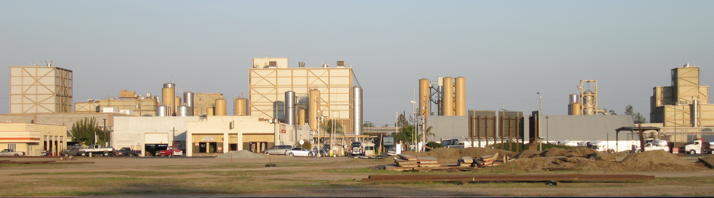
Not to be left behind, earlier this year – two of the larger orange juice processors – Sunkist and Ventura Coastal formed a new joint venture with two plant sites,one north of Visalia and one in Tipton – both undergoing expansion and adding silos as we speak.
In a deal announced this winter, Sunkist Growers and Ventura Coastal joined forces, uniting their long-time juice processing operations in a 50%/50% joint venture, headed by William Borgers, CEO of Ventura Coastal.

“The two processing facilities are extremely complimentary,” said Borgers. “Both Sunkist and Ventura Coastal bring a steady supply of products grade fruit, a skilled group of employees, state-of-the-art processing equipment and high quality products into the new company.”

“We believe the efficiencies achieved will better serve both our customers and growers,” added Sunkist President & CEO Russ Hanlin. ”

Enter Starbucks

Now Starbucks too, wants into the juice business buying a San Bernardino company last year, Evolution Fresh. Starbucks has launched their first juice bar at a Starbucks outlet on the West Coast this summer and will open in the Bay Area this fall.The juice bar will sell bottled Evolution Fresh fruit and vegetable juices, smoothies and food. Sometimes people have a smoothy to refresh or as a meal replacement or even to cleanse their diet. The juice brand will compete with rival Jamba Juice and even McDonald’s who is now in the juice biz as well.
Evolution Fresh says they cold press and squeeze the juices to retain more of the flavors, vitamins and nutrients of raw fruit and vegetables through the use of an innovative technology called High Pressure Processing (HPP), “which allows us to safely process juice without the use of heat.”
In Kern County Bolthouse Farms was recently purchased by Campbell Soup for $1.55 billion to help the firm move beyond  their line of V8 juice into refrigerated juices. Bolthouse is a major player in carrots and vegetable juices as well as other blends.
Going Year Round
Also in Kern County the CRWQCB is working on a permit for another major juice company expansion at the Spicer City Juice processing plant at 23145 Lerdo Highway between Buttonwillow and Lost Hills in Kern County. The plant seasonally produces fruit juice concentrate from pomegranates. The proposed expansion would allow the plant to process juice from other fruits and operate most of the year, increasing wastewater flows from under 0.1 million gallons per year to as much as 6.7 million gallons per year. The associated wastewater discharge would be to unlined ponds prior to reuse for irrigation of about 2,200 acres of crops. The juice company is owned by SunnyGemLLC that includes Sandridge Partners and McCarthy Farms.

UFW Seeks Contract With Fresno Tomato Grower

UFW president Arturo Rodriguez

Sacramento, CA — Dozens of workers from Manteca-based Ace Tomato Inc. traveled Wednesday to the Sacramento headquarters of the Agricultural Labor Relations Board asking the agency to obtain a court order requiring the tomato grower to implement a contract with the United Farm Workers of America.

The ALRB last month ordered the employer to put in place the agreement hammered out by a neutral mediator with the participation of the company and the union. Now the union says  Ace refuses to do so in violation of state law and after decades of delaying tactics since its workers voted for the UFW in a state-conducted election for union representation.

Leonardo Gonzalez is an Ace Tomato worker appealing to the ALRB on Wednesday. He was among the majority of 300 tomato workers who voted on Aug. 10, 1989, to have the UFW represent them. Twenty-three years later he is still waiting to enjoy the benefits of the union contract for which he voted, says the UFW.

The union claims that Ace Tomato failed to bargain in good faith for many years. Under a 2002 law allowing farm workers to bring in neutral mediators to work out union contracts when growers won’t negotiate, the mediator’s report, which becomes the legal contract, was submitted to the farm labor board in Sacramento. Ace Tomato objected to the mediator’s report, but on July 25 the ALRB rejected the objections and ordered the company to implement the final report from the mediator as the agreement. Ace Tomato still refused to implement it, says the union.

The ALRB sent the company a letter saying they would give them until 5 pm, Tuesday, August 7th, to respond to the UFW’s request.

Just  how will the news last month that the company is changing hands at the end of year will affect negotions is not clear.Reports surfaced that Florida based Lipman Produce has acquired the firm from the Lagorio family of Stockton.

The UFW has had some success in field elections this year. particularly in the tomatoes where they have long sought contracts.

In the Salinas Valley, 422 vegetable workers recently voted to bring in the United Farm Workers at Amaral Ranches. Last week the State Farm Labor Board certified the UFW as the workers representative.Then the UFW signed a first-time union contract with Pacific Triple E Tomato Co., making its 800 fresh tomato workers in the Stockton area the highest paid tomato workers in America.
Then fresh tomato workers at Gargiulo Inc. near Firebaugh in west Fresno County went on strike July 9, and after -260 voted for the UFW on July 11, 186 to 40 (or 82 percent for the union). The state farm labor board certified the UFW as the workers’ representative on July 19, 2012.
The UFW says workers at both companies have elected a committee to take part in the bargaining and they are waiting for talks to begin.

For Dairymen… Heat Wave’s Silver Lining: Screaming Ice Cream Sales

What’s the scoop on the drought and heat wave drying up half the USA this summer? The Central Valley’s dairy operators know it has suddenly pushed the price of their feed to intolerable levels wilting the  nation’s corn and soybean crops. And in the cities and towns across the country, people feel its hotter than they can remember.
This week NOAA confirmed they are right. July was the hottest month on record ever, some 3.3F degrees higher than the average in the 20th century.
What is the only thing left to do?
Scream for ice cream of course.Why not, July was national ice cream month anyway!
That is just what is happening says the CEO of Visalia-based California Dairies cooperative  Andrei Mikhalevsky.
“Milk prices are about 30% higher than a month ago” says Mikhalevsky – boosted by a ”significant decline in ice cream supply and cream supply that has helped increase butterfat prices“ he says.In addition, the searing heat has also reduced milk supplies when cows,like the rest of us,don’t like to work so hard when its hot.
The upshot is the higher demand for these milk components coupled  with reduced milk volume is helping dairymen survive a period of red ink – if they can hold on.
Indeed, the price of butter on the CME market has improved, rising from around  $1.30/lb in mid-May to $1.73 August 8. That helps boost the overall milk check for dairymen although there is a significant lag time, says Mikhalevsky
“Right now it is devastating for our dairymen with the price they get for their milk is not even covering how much they have to pay for feed.”
About 9 percent of all the milk produced by U.S. dairy farmers is used to produce ice cream, contributing significantly to the economic well-being of the nation’s dairy industry. Summer ice cream production is about 50% higher than in December typically.
USDA says the biggest jump in frozen product sales has been in frozen yogurt,up 15% as of June 2012, compared to the year before.
Small operators are reporting big sales in places like Raleigh North Carolina notes a local business paper.
“The record-setting string of 100-degree days in the Triangle has meant a business boom for Yummy Monkey, an ice cream and frozen yogurt shop in Raleigh.
Chaz Evans says sales have been up about 60 percent this week over last as Raleigh endured nine days with triple-digit temperatures. “Our biggest seller as far as ice cream is probably the Carolina Crunch,” he said.
In the ice cream parlor business sector,Baskin Robbins recently reported a 4.6% same store sales increase at their stores owned by Dunkin’ Brands.
At the supermarket and drug stores of the nation sales of ice cream for the latest 12 week period ending July 8 – sales in dollars were up 2.63% for ice cream but up 22.4% for frozen yogurt says the industry tracking group Symphony IRI Group.
In the year ending April 2012, nearly two billion servings of ice cream were ordered at U.S. foodservice outlets, a figure that was up 2 percent from the same period the year prior, according to The NPD Group’s CREST research.
Still it looks like a rocky road for our dairymen. Despite higher milk prices, Mikhalevsky worries a continuation of $8 corn with a 15% smaller crop will hurt California diary operators although export sales of dairy products remains a bight spot. In the meantime, we could see more dairy operators throw in the towel, he worries.
For the rest of us, all you ice cream eaters might as well get your licks in.

California Citrus Acreage Climbing

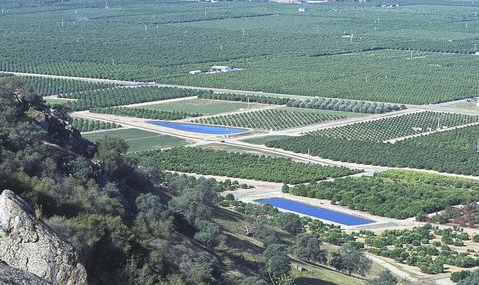
Tulare County citrus acreage around Lindcove

While Florida remains the top US state for citrus production,that state’s  orange acreage has declined in the past decade while California’s citrus acreage has diversified and grown. Per acre the Golden State’s smaller citrus crop is far more valuable.

Much of that growth came in Tulare County indicates USDA in their latest citrus acreage report. The report says Tulare County’s citrus acreage by main category in 2012 stands at 71,455 acres of navels,15,742 acres of Valencias, 5257 acres of lemons and 12,358 acres of mandarins.

By comparison, in 2004 when the USDA did another acreage survey  Tulare County had  64,360 acre of navels,15,413 acres of Valencias,3600 acres of lemons and only 4826 acres of mandarins. These four main citrus varieties are up about 16,000 acres in the county in the past 8 years.

The fastest growing category are mandarins – varieties of tangerines that came to the market through UC and industry research. Statewide, mandarin acreage has doubled from the 2004 survey from 21,799 to nearly 43,000 acres in 2012.

Within that category it has been the the success of the seedless, easy peel, Tango variety that catches the eye with a 2004 acreage at just 52 acres jumping to 5780 acres this year of with 2556 acres of young trees not yet producing. Some 1600 acres of the tango variety were planted in 2010 by growers in a fever pitch to plant.

Within the mandarin citrus category Kern County leads the state with 15,013 acres compared to Tulare’s 12,358 says USDA.

For some reason the USDA figures do not jibe with the Tulare County crop report for 2011 that shows more navels in the county than USDA at 78,000 acres and more mandarin varieties coupled with tangelos at 15,425 acres.The value of the Tulare County citrus crop approaches $750 million. The ag commissioner’s report lists total citrus acres in the county at 119,086. In 2011, USDA says California citrus acreage was 267,000 acres so Tulare County accounts for about 45% of all California production.

Citrus growers appear to be experimenting more with niche citrus fruit with the acreage of “other” in the survey growing faster in recent years as non fruit-bearing acres.


Impacted by Hurricanes, freezes and menacing citrus diseases- the more tropical in climate Florida has seen its citrus production  drop from around 300,000 boxes of fruit in the late 1990s to 159,000 boxes in 2010 and an estimated 146,500 boxes this year, a decline of better than 50%.

USDA says California citrus production this year should be around 58,000 boxes.

While Florida’s citrus production far eclipses California, most the fruit is processed to orange juice while the more valuable fresh eating citrus crop is only a third the size of California’s fresh offerings. USDA says California’s fresh tonnage adds up to 3 million tons vs Florida’s 787 thousand tons in 2011. So the value of California’s total citrus production at $1.3 billion is only slightly smaller in value than Florida’s total of $1.5 billion

Reports so far are favorable about the sizing and quantity of this falls citrus crop.

Of course, California has its own boom and bust periods in citrus. In 1946 just 16% of the state’s citrus acreage was in Central California and now Orange County has very few oranges. Some nasty freezes of our own saw citrus production fall abruptly and tristeza and worries about citrus greening continue to cast a big shadow here.

Land O’Lakes Net Earnings Decline 22%, Dairy Foods Sales Down 7%

LOL Tulare

Land O’Lakes, Inc. this week reported continued strong sales across its business portfolio, with net sales up for both the second quarter and the first half of the year. The cooperative has a major presence in Tulare County and one of the world’s largest milk processing plants in Tulare.
Net sales were $3.6 billion for the second quarter, up from $3.5 billion for the same quarter last year. Net sales for the first half of the year (through June) were $7.5 billion, up 8% from $6.9 billion for the first half of 2011. In the Company’s core businesses, first half sales were up 11% in Feed, 15% in Crop Inputs and 17% in Layers, while Dairy Foods sales were down 7%, primarily because of market conditions.
Lower quarterly and first half earnings were attributable to the overall economic environment, declining markets and excess milk supplies which impacted the Company’s Dairy Foods business. These factors were partially offset by exceptionally strong earnings in the Company’s Crop Inputs business, WinField Solutions, which benefited from the early Spring and favorable early growing conditions.
For the second quarter, Land O’Lakes reported earnings of $47.3 million compared with $67.1 million for the same period in 2011. Year-to-date net earnings (through June) were $131.9 million, compared with earnings of $168.1 million during the first half of 2011.
“At the mid-point of the year, we are pleased to report solid sales, with particularly strong results in core branded and proprietary product lines,” said Land O’Lakes President and Chief Executive Officer Chris Policinski.. “We are continuing to successfully introduce innovative new products and build our brands with new revenue generating strategies,” he added.
“Earnings across business units are mixed as we face continuing challenges from the struggling national economy and volatile markets,” Policinski added. “We are addressing these challenges by focusing on growing revenues, reducing costs, improving efficiencies and streamlining processes as part of our Company-wide initiative called Total Margin Management.”
Land O’Lakes is committed to balancing the near-term investment requirements of growth with the long-term objective of maintaining a strong balance sheet. Land O’Lakes’ total debt as of June 30, 2012, was $1.38 billion, up $0.32 billion from the same date one year ago. The increase was due to several acquisitions which are now generating additional cash flow, as well as higher working capital needs related to growth and increased commodity prices.
Land O’Lakes’ second quarter financial results can be found at www.landolakesinc.com. Click on Investors and Quarterly Financial Statements.
Land O’Lakes, Inc. (www.landolakesinc.com) is a national, farmer-owned food and agricultural cooperative with annual sales of nearly $13 billion. The nation’s second-largest cooperative and number 210 on the Fortune 500, Land O’Lakes does business in all 50 states and more than 60 countries. It is a leading marketer of a full line of dairy-based consumer, foodservice and food ingredient products across the United States; serves its international customers with a variety of food and animal feed ingredients; and provides farmers and ranchers with an extensive line of agricultural supplies (feed, seed, and crop protection products) and services. Land O’Lakes also provides agricultural assistance and technical training in more than 25 developing nations

Fresno St Breaks Ground On Foster Farm Poultry Facility

Ground was broken today, July 27, at Fresno State on the innovative Foster Farms Poultry Education and Research Facility, which is scheduled to open in the spring 2013, semester.

This state-of-the-art educational facility is made possible by a generous gift to Fresno State from Foster Farms, which is contributing to the engineering, design and construction as well as providing ongoing program support.

The 16,000 square-foot building will house an eco-friendly research and training center that replicates professional poultry production for students and faculty in the Jordan College of Agricultural Sciences and Technology. The new unit will have advanced temperature control and monitoring systems, along with ultra-efficient LED lighting optimized for poultry production.

“Our students and faculty are thrilled about this exciting addition to our college,” said Dr. Charles Boyer, dean of the Jordan College. “The center will allow students to perform in-depth research, participate in hands-on learning and gain job skills in one of the leading agricultural industries.”

The Foster Farms Poultry Education and Research Facility will be situated on the Fresno State campus, north of Barstow Avenue west of the dairy unit (between Woodrow and Chestnut avenues).

“The facility will provide students with invaluable experience and will further research advancements in animal welfare, nutrition and environmental practices,” Boyer said.

Foster Farms’ Mike Pruitt, the senior vice president for live poultry operations, represented the company at the ground breaking ceremony. “Foster Farms is very pleased to be able to provide the funding for this facility and looks forward to the contributions that the faculty and students will make in advancing poultry science and husbandry,” he said.

A 2009 report by the American Meat Institute says poultry is one of the fastest-growing segments in California’s agricultural industry, contributing nearly 25,000 direct jobs to the state.

“Our students directly benefit from the close relationship our faculty members have with industry leaders like Foster Farms,” said Dr. Arthur Parham, chair of the Jordan College’s Department of Animal Sciences and Agricultural Education. “Hands-on experience in this field will help our graduates find employment and succeed in a variety of agricultural careers.”

Based in Central California, Foster Farms is one of the state’s leading providers of fresh chickens and turkeys.

The addition of the poultry facility at Fresno State builds upon the relationship between the company and the university. Foster Farms actively recruits Fresno State graduates and has a steady base of students participate in the company’s internship program each year.

Brown Offers $14 Billion Tunnels Plan… Get’rrr Done

tunnels would bypass Delta to move water south

In a joint news conference this week Gov Edmund Brown and Department of the Interior Secretary Ken Salazar outlined their ”path forward” on fixing the Delta, managing wildlife and providing for more water for the state under a revised Bay Delta Conservation Plan (BDCP).

Bringing back a variant of the 1980’s Peripheral Canal idea, Brown unveiled a pair of 37 mile tunnels that could cost $14 billion to be financed by water users including farmers. Habitat and other conservation measures in the BDCP would be financed in part by the water contractors, but would mostly be paid by the state over a period of 40 years, with likely additional investment by the federal government through existing programs, said a news release. A reported $9 billion for environmental protections would be added to $14 billion.

The proposal “will undergo a rigorous public environmental review in the coming months” Brown and Salazar announced. Critics include northern California interest who fear a water grab by southern California cites and Valley farmers.

Ready to charge forward on the idea as he recently was with high speed rail ,Brown startled the news conference audience with the statement ”I want to get shit done.”

The tunnels construction could start in 2017 and be complete by 2026.

There are “dual goals” in the BDCP said Brown – a reliable water supply for California and a healthy California Bay Delta ecosystem that supports the State’s economy.”

The dual tunnels,side-by-side would be 33 ft wide and connect the Sacramento River to the pumps around Tracy without impacting the sensitive Delta lands in between, say supporters.

Farmer Reaction

While some Central Valley farmers oppose Brown on high speed rail, they are supportive of this water project.

“Westlands greatly appreciates the leadership demonstrated by Governor Brown and Secretary Salazar in reaching this point. They had to know that today’s announcement would not be well received by many interested parties, including some public water agencies that had hoped for more certainty with regard to future water supplies. But leadership involves making difficult decisions with the best information available, and Governor Brown and Secretary Salazar have met that responsibility.” said Westlands Water District president Tom Birmingham.

More guarded is Friant Water Authority general manager Ron Jacobsma who notes details need to be sorted out on how much water would be conveyed and who would pay.”We want a fair shake and expect to pay for benefits received but we are supportive of the current process.”Jacobsma says Friant wants more certainty over how the Exchange Contractors would be dealt with.

Balanced Approach?

“A healthy Delta ecosystem and a reliable water supply are profoundly important to California’s future,” said Governor Brown. “This proposal balances the concerns of those who live and work  in the Delta, those who rely on it for water and those who appreciate its beauty, fish, waterfowl and wildlife.”

“As broken and outdated as California’s water system is, we are also closer than ever to forging a lasting and sustainable solution that strengthens California’s water security and restores the health of the Delta,” said Secretary Salazar. “Through our joint federal-state partnership, and with science as our guide, we are a taking a comprehensive approach to tackling California’s water problems when it comes to increasing efficiency and improving conservation. Today marks an important step forward in transforming a shared vision into a practical, effective solution. With California’s water system at constant risk of failure, nobody can afford the dangers or costs of inaction.”

“The status quo isn’t working for fish, communities around or dependent upon the Bay Delta, economic development, or water resources management,” said Dr. Jane Lubchenco, Under Secretary of Commerce for Oceans and Atmosphere and NOAA Administrator. “Our proposed changes to the BDCP reflect important improvements in shaping a comprehensive strategy to fix a broken system. Because this is a complicated issue and we do not have all the answers today, we will continue to evaluate and refine the proposal. We call upon the many participants throughout California to join us in staying focused on science-based solutions.”

Improved Water Management Statewide

The news release offers water management savings.”State and U.S. governments will continue to explore new ways to satisfy competing water demands, including commitments to an Integrated Water Management approach, reducing water demand, increasing water supply, and improving efficiency of operations. The Metropolitan Water District of Southern California and the Santa Clara Valley Water District – the two largest urban regional water agencies– have committed to exceed the urban water savings target established in the 2009 Delta Reform Act by saving 700,000 acre-feet a year based on predicted future demands. This includes a commitment by Southern California to annually save more water through conservation and recycling than it receives, on average, from Northern California, as well as a commitment from the Santa Clara County Water District to meet Silicon Valley’s future increases in demand through conservation and recycling. With respect to agricultural water use, the Bureau of Reclamation has worked with local water agencies to invest close to $50 million over the last eight years in efficiency improvements in California. Reclamation is now partnering with the Natural Resources Conservation Service to provide funding for projects that improve water management and create new supplies for agricultural irrigation. In the last two years, approximately $15 million in federal funding has been invested in this effort. The State of California has invested more than $47 million in similar programs since 2001.”

Conservation: “The BDCP will contain biological goals and objectives to improve the status of a wide variety of listed species and species of concern under the Endangered Species Act, and will quickly implement new habitat projects in the Suisun Marsh and the Delta upon completion of appropriate environmental reviews. “

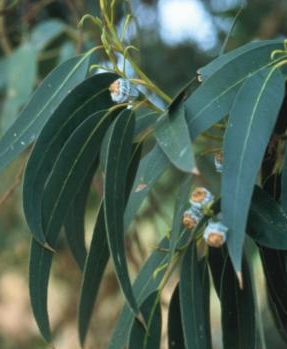
Is California Eucalyptus The Target Of Biological Terrorism?

Over the years, Timothy Paine, professor in the UC Riverside Department of Entomology, has become increasingly convinced that someone or some group has brought a series of pests from Australia to California to get rid of California’s eucalyptus trees, according to a story on NPR’s All Things Considered.

“You can find alternative explanations for all of this, no question about it,” Paine said. “This is something we think is likely to have happened, but we don’t have a smoking gun.”

Paine’s suspicions were raised by introductions of 16 eucalyptus pests over the past 25 years. The pests were introduced a few at a time in batches from different regions Down Under.

“They would be from Queensland, or they would be from New South Wales, or South Australia,” he says.

The demise of eucalyptus in California, where they aren’t native species, isn’t Paine’s greatest worry.

“But if you’re talking about a major food crop, or a disease organism, the prospects are very, very disturbing,” he said.

Midwest Corn Crop Condition Worsens

Hurt by hot weather and drought the USDA reported today that 38% of the corn crop across the 18 largest corn growing states was either in very poor to poor condition.That compares to 30% a week ago in a USDA estimate. Only 31% of this year’s crop is in good to excellent shape.That compares to 40% a week ago and 66% a year ago says USDA.

Some states have been hit even harder with 72% of this years corn crop in either vey poor to poor condition in Missouri and 77% in Kentucky. Only 11% of the Texas corn crop is in that category.

In California the latest USDA report says farmers planted 610,000 acres of all types of corn, down 3% from last year but expect to harvest 20% more grain corn than last year. Across the US, USDA had expected to harvest 6% more corn than last year but the drought appears  to be putting a big dent in that prediction.

Corn for December delivery moved to $7.86 per bushel on the Chicago Board of Trade today up form just $5.20 in June.

More alfalfa hay in California this year – 980,000 acres – up 100,000 acres (11%) from last year, a size crop that could reduce the sky high price for this important dairy feed. China has been importing more US grown alfalfa hay,177 thousand metric tons last year.

Last year dairy leaders urged dairymen to plant more of their own feed to offset the high prices for both corn and hay in the marketplace.