
-February 7,2019-
 Eight Tulare/Kings & Fresno County communities impacted by high nitrate contamination in their well water, a problem attributed in part to overuse of farm fertilizers, will get drinking water kiosks in coming months.The funds will come from a legal settlement between local farmers and the State Water Resources Control Board announced in recent days.
The water stations are expected to provide drinking water to between 12,000 and 24,000 people, with each kiosk serving up to 3,000 impacted residents. Installation of the kiosks will get underway in April. Just which towns will get the new water supply has not yet been made public yet.
Fertilizer to blame?
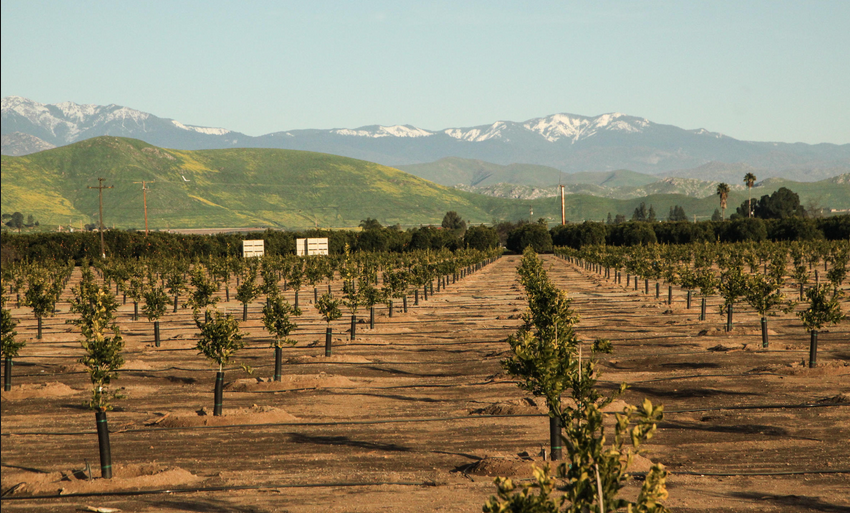
The news comes after years of wrangling over who is to blame for high nitrate levels found in groundwater in the Central Valley. At issue are high levels particularly in the citrus producing areas closer to the foothills from Orange Cove down to Porterville. Despite the agreement farmers are not ready to accept the blame.
The farmers are represented by the Kaweah Basin Water Quality Association, Tule Basin Water Quality Coalition, and Kings River Watershed Coalition Authority – coalitions of San Joaquin Valley growers created to help comply with water quality regulations.
Under terms of the settlement, the groups are not assuming liability or responsibility for the nitrate impacts, which the board had alleged nearly two years ago, was caused in part by agricultural fertilizer use.
The first three water supply stations are required to be operational by April 30, 2019, with the remaining stations being phased in by January 31, 2020. The coalitions will provide water for at least four years, with options to extend until 2028. Bottled water may be provided by the coalitions under certain conditions where an individual is unable to utilize a kiosk.
For starters it is likely there will be one station in each of the jurisdictions, one in the Kings River watershed , one in the Kaweah region and one in the Tule area around Porterville.
The settlement eliminates enforcement liability from the State Water Resources Control Board for any grower who is a member of the coalition and is complying with the Irrigated Lands Regulatory Program.
In 2016 the state told some Tulare County farmers, about half citrus growers, that their operations caused nitrates to get into drinking water, and that the contamination had to be replaced with clean water.The other half receiving notice were dairymen, stone fruit and nut farmers.
The citrus belt around Woodlake and the eastern foothills in Tulare County appears to be most affected by higher nitrate levels although many point to dairies as the big problem. But a 2013 UC Davis study found “Tul/Kings wells designated as non-dairy had a significantly higher median nitrate value than wells designated as dairy…. ” This study made it clear – Tulare County statistical data indicate that elevated nitrate levels in domestic well water are most strongly associated with citrus orchards when located in areas with a very shallow (≤21 m) water table.
In 2016 the State Water Resources Control Board told growers they would enforce a solution to insure health impacts would not effect local communities. Nitrates in drinking water can harm human health, and in infants causes blue-baby syndrome. Children, pregnant women and the elderly may be affected most.
Nitrates can come from fertilizers used in agriculture for years although they also occur naturally in some soils.
Installing the water kiosks is an” interim solution” says the State Board.
“Ensuring that communities have safe, affordable drinking water is a high priority of the State Water Board. This settlement and other similar enforcement actions are critical components of the State Board’s strategy to ensure those in need are provided interim sources of safe drinking water until a permanent solution is found,” said Jonathan Bishop, the board’s Chief Deputy Director.
Attorney with the State Board Julie Macedo says the goal of the program is “to insure there is no disproportionate affect on any community” who in the past might have suffered decades of bad water.She adds that the settlement requires community outreach to let people know they will have the opportunity to get clean water nearby at no cost to them.
The settlement comes after the failure of a general obligation bond last November lost at the polls. The $8.9 billion water bond would have dedicated $750 million in funding for safe drinking water, particularly for those living in disadvantaged communities, including Tulare County and the Central Valley. Farmers felt the sting in not getting public funding to tackle this issue along with loss of state funds to repair the Friant Kern Canal in the same bond.
Still pending is a possible state tax on on dairy producers and fertilizer manufacturers being discussed by state legislators now. Newly installed Governor Newsom remarked in recent days he has made it a priority to improve drinking water in the Valley.
“It’s only day five or six of the administration but, look, the issue of safe drinking water, affordable drinking water, is top of mind,” Newsom said. “I made that a point in yesterday’s budget. I made a point to emphasize that it’s a disgrace that in a state as wealthy and resourceful as ours that a million-plus people don’t have access to safe, clean drinking water.”