December 17,2014
from ACWA
In a move aimed at reducing risk to Delta smelt and potentially avoiding more severe water supply impacts later, operators of the State Water Project and Central Valley Project will proactively reduce pumping in the Delta over the next several days.
According to a Dec. 15 announcement, combined pumping levels for both projects will decrease from about 11,000 cubic feet per second (CFS) to roughly 7,000 CFS by Tuesday, Dec. 16.
The curtailment, which comes as modest storms are expected to increase runoff, is designed to avoid drawing turbid storm runoff toward the pumps in the south Delta that supply 25 million Californians and 3 million acres of irrigation farmland with all or part of their water.
“The turbidity generated by this first set of big storms is very high and presents a significant risk of creating a turbidity bridge in the central and south Delta,” the announcement said. “Creating an expansive turbidity plume into the central Delta may make future management of smelt distribution difficult. The turbidity generated as these first big storms of the season churn streambeds and sweep away debris may draw smelt closer to the water project pumps in the south Delta. By curbing pumping levels now, water project operators hope to avoid a situation that would lead to a marked increase in entrainment of either Delta or longfin smelt at the pumping plants and force a longer, more drastic cutback of pumping.”
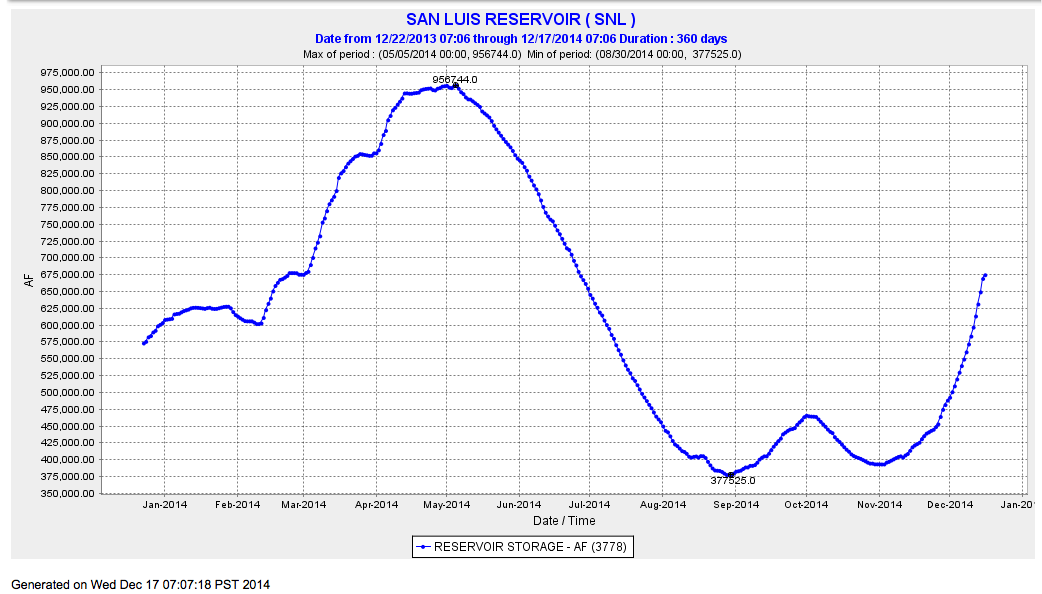
San Luis Reservoir south of the Delta is suppled strictly by pumping water south of the outflow to the Pacific to be used by California water users later in the year. The reservoir had been draining since May of 2014 from nearly 1 million acre ft down to 377,000. With the recent storms some 300,000 additional acre ft has been pumped into the lake mostly since the first of December. Now that flow will be reduce.But regulators say avoiding impacts on the fish will pay off later.
The curtailment, which could result in tens of thousands of acre-feet of water going uncaptured over the next several days, may allow water project operators to avoid the loss of hundreds of thousands of acre-feet of water supply later in the winter.
The Department of Water Resources and the U.S. Bureau of Reclamation, which operate the SWP and the CVP respectively, are coordinating Delta operations closely with federal and state wildlife agencies.
In December 2012, a plume of turbidity that extended into the central Delta led to severe pumping curtailments in order to avoid harm to smelt. As a result, hundreds of thousands of acre-feet of water were not moved into reservoir storage. Conditions quickly turned severely dry. In 2013, urban and agricultural water districts that depend upon the SWP and CVP got a small fraction of the supplies for which they contract.
Officials will continue to monitor turbidity levels in the Delta and the movement of Delta and longfin smelt, and will adjust pumping levels accordingly.